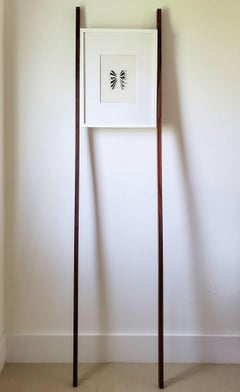
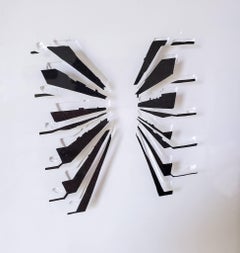
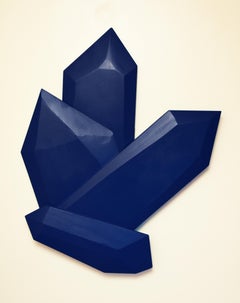
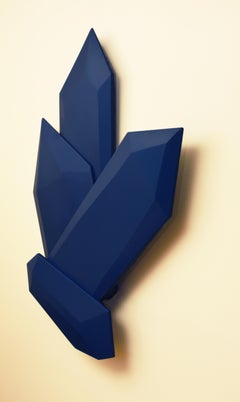
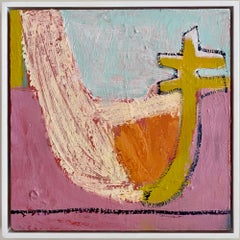
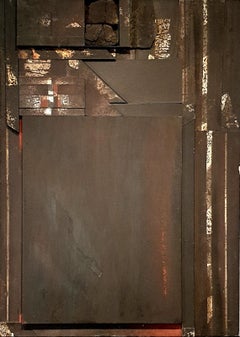
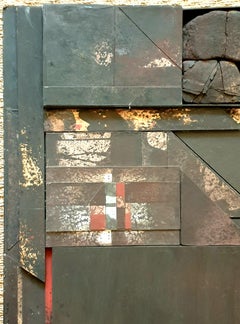
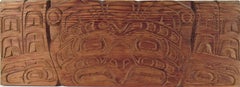
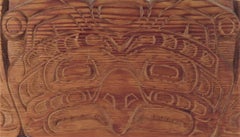
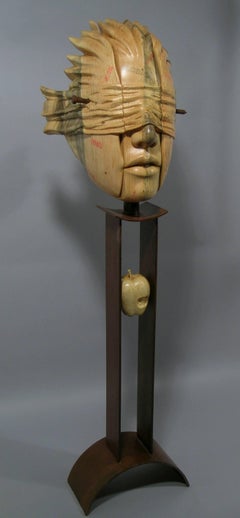
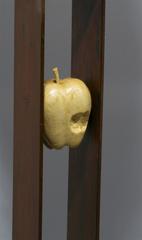
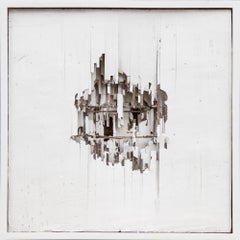
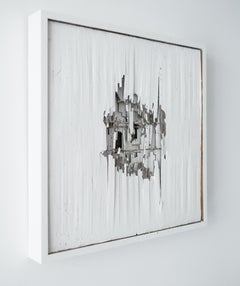
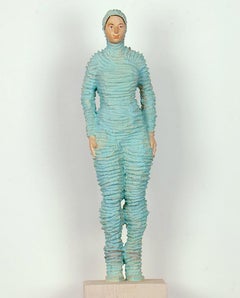
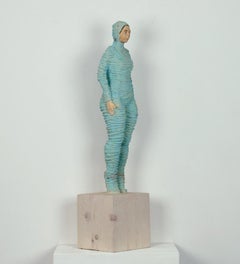
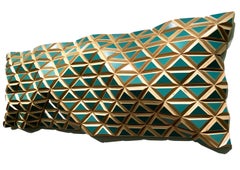
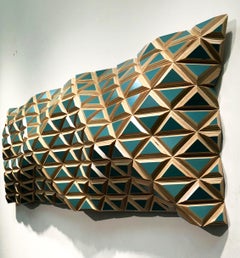
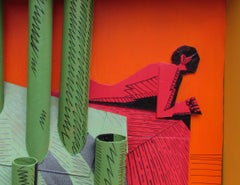
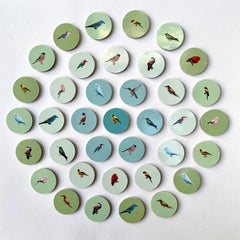
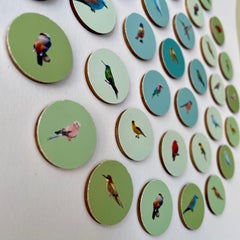
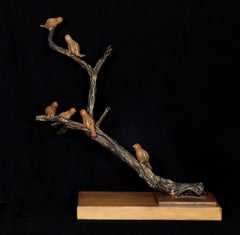
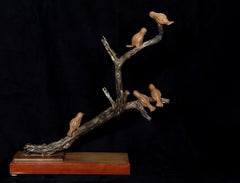
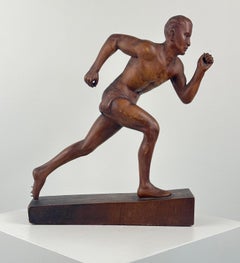
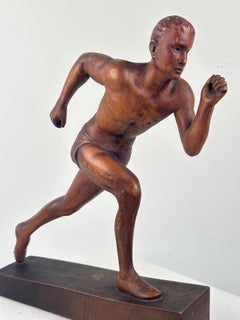
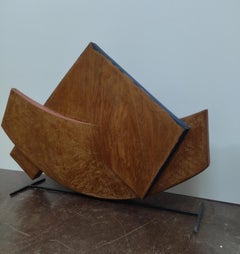
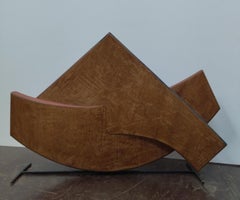
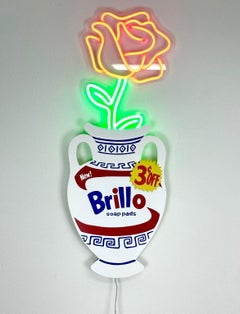
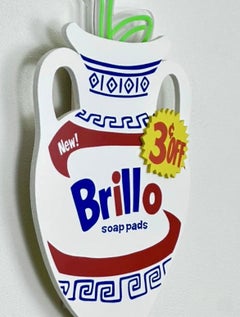
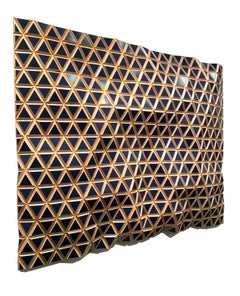
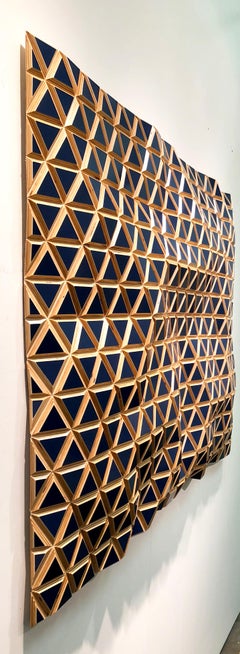
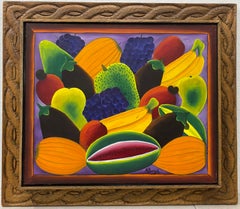
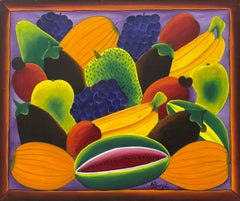
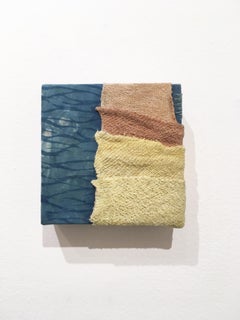
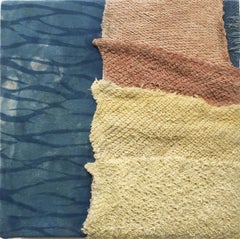
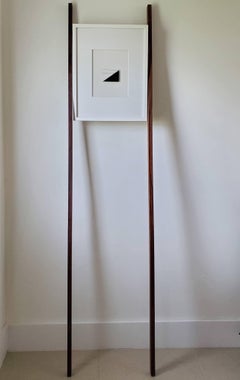
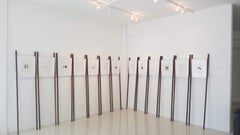
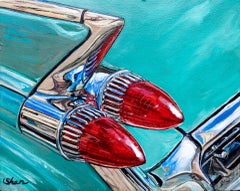
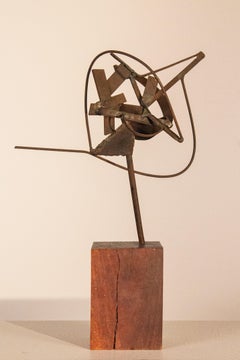
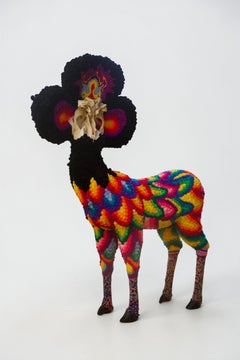
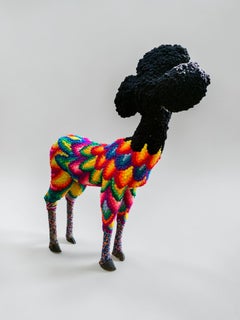
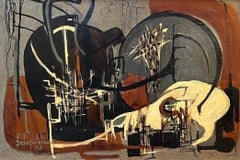
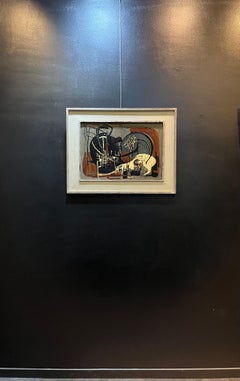
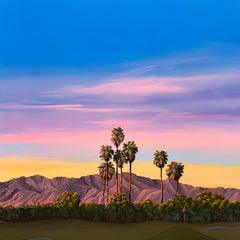
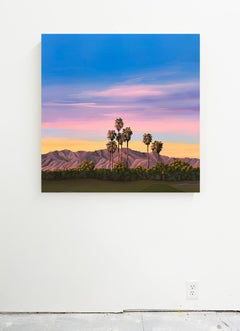
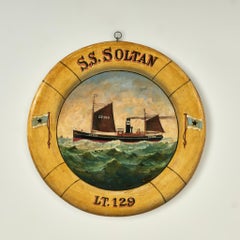
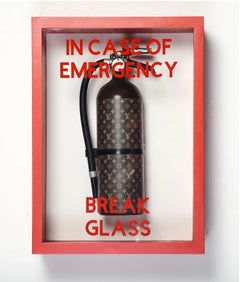
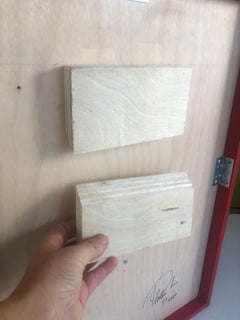
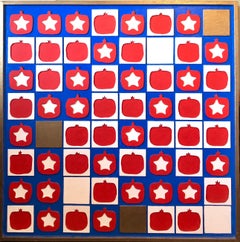
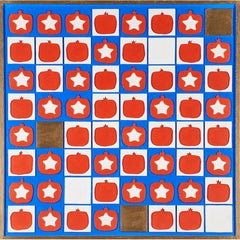
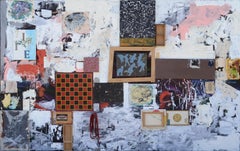
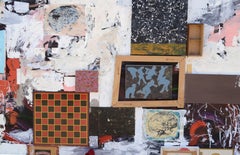
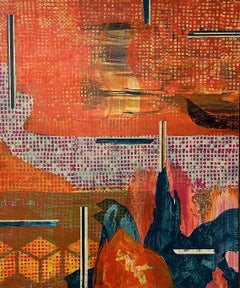
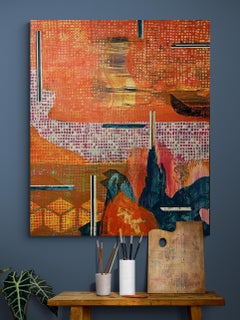
Painted wood wall hanging sculpture
"Red, White and Blue," (and gold) 2008
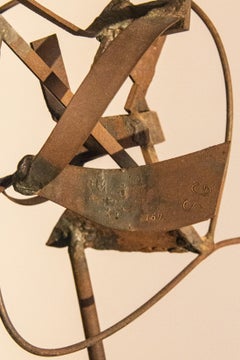
Stamped signed with initials, date and edition 2/5
Oded Halahmy, Abstract Modernist artist, was born in Iraq in the old city of Baghdad in 1938, the artist came from a family of Orthodox Jews with deep roots in ancient Babylonian culture. His father, Salech Haskel Chebbazah, was a prosperous goldsmith in Baghdad and a Jewish member of the Communist Party when Jews comprised more than a quarter of the population of Baghdad. He refers to his home as the “land of wheat, barley, grapes, figs, pomegranates, olives and dates.”, Oded moved with his family to Israel in the 1950s, was educated at St. Martin's School of Art in London which was then a leading center for sculpture, led by Anthony Caro and Philip King and having links to Henry Moore. He taught sculpture are in the collection of the Guggenheim Museum, the Hirshhorn Museum, and the Israel Museum in Jerusalem, as well as many other public and private collections worldwide. He currently lives in New York City and Old Jaffa, Israel.
Like countless New Yorkers who arrived from distant lands, Oded Halahmy has a rich personal history of exile, migration and travels. Although New York has been his home for over 45 years, memories of Iraq left an indelible imprint on his life and work. Known for his dynamic yet often playful figurative pop art style sculptures in wood and bronze, he fills his work with images — albeit abstracted from reality — that evoke the landscape, architecture and rich colors of the Middle East. Palm trees, doves, pomegranates, temples and age-old symbols abound along with deep reds, amber, sky blue and the familiar greenish-blue hues of aged bronze.
SELECTED SOLO EXHIBITIONS
Dates-Pomegranates-Olive Oil: Chanukah Lamps, Yeshiva University Museum, New York, NY
District of Columbia Jewish Community Center Ann Loeb Bronfman Gallery, Washington, D.C.
Homeward: Baghdad - Jerusalem - New York, Sundaram Tagore Gallery, New York, NY
Homelands: Baghdad-Jerusalem-New York, A Retrospective, The Ann Loeb Gallery, Washington,
Homelands: Baghdad-Jerusalem-New York, A Retrospective, Yeshiva University Museum, NY
The Common Ground; The Sculpture Of Oded Halahmy, Sundaram Tagore Gallery, New York, NY
Herr-Chambliss Fine Arts, Hot Springs, AR
Artists Studio, Old Jaffa, Israel
Byer Museum of Art, Evanston, IL
The Aldrich Museum of Contemporary Art, Ridgefield, CT
Tomasulo Gallery, Union College, Cranford, NJ
Martha White Gallery, Louisville, KY
Louis K. Meisel Gallery, New York, NY
New England Center for Contemporary Art, Brooklyn, CT
Hebrew Union College, New York, NY
Bicentennial Tribute, United States Federal Plaza, New York, NY
Horace Richter Galleries, Jaffa, Israel, 1976
Parsons School of Design, New York, NY
America-Israel Culture House, New York, NY
Herbert F. Johnson Museum of Art, Cornell University, Ithaca, NY
Louis K. Meisel Gallery, New York, NY
Gallery Moos, Toronto, Canada
Old Jaffa Gallery, Jaffa, Israel
Pollack Gallery, Toronto, Canada
SELECTED GROUP EXHIBITIONS
2006 Iraqi Art...
Category
Early 2000s Pop Art Art by Medium: Wood