Fabric More Art

3,589 Results
to
1,352
491
464
788
569
1,346
Overall Width
to
Overall Height
to
29
61
350
3,218
5
1
4
7
2
14
35
47
42
40
13
1,080
706
489
109
76
53
27
23
17
12
7
3
2
1,466
1,113
957
74
53
40
34
32
26
23
17
13
13
11
11
11
10
8
7
7
7
7
7
9,427
4,250
3,858
3,658
3,514
155
54
46
41
40
50
1,295
606
Medium: Fabric
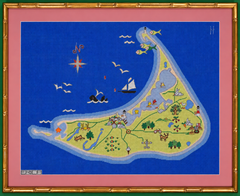
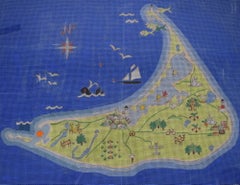
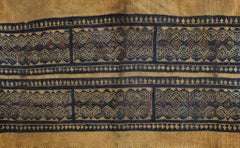
19th Century Woolie with Curtain Bordered Ship

19th Century Woolie with Curtain Bordered Ship

Located in Austin, TX

19th Century British Woolie featuring a curtain border and floral accents Medium is wool and is considered traditional folk art made by British Royal ...

Category

Mid-19th Century Folk Art Fabric More Art

Materials

Wool

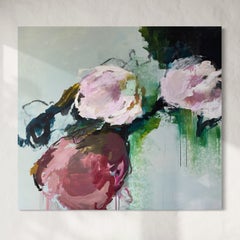
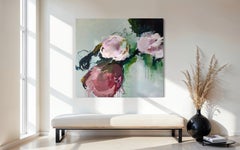
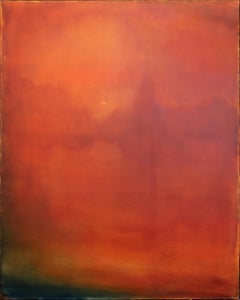
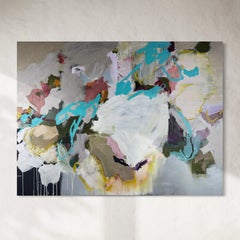
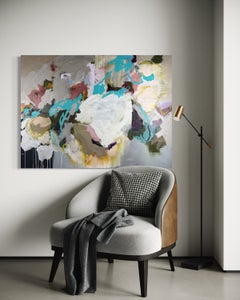
The Last Warmth - original abstract impressionism landscape oil - contemporary

The Last Warmth - original abstract impressionism landscape oil - contemporary

By Louise Fairchild

Located in London, Chelsea

We offer complimentary worldwide shipping and cover all tariffs and import taxes for this artwork. This exceptional artwork is currently on display and available for sale at Signet C...

Category

21st Century and Contemporary Abstract Impressionist Fabric More Art

Materials

Canvas, Linen, Oil

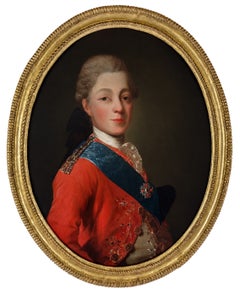
Portrait Painting Grand Duke Pavel Petrovich, Later Emperor Paul I, 18th century

Portrait Painting Grand Duke Pavel Petrovich, Later Emperor Paul I, 18th century

Located in London, GB

Portrait of Grand Duke Pavel Petrovich (1754–1801), later Emperor Paul I of Russia After Alexander Roslin (1718–1793) Oil on canvas, oval, late 18th century This is an exceptionally handsome and historically resonant eighteenth-century portrait, uniting the immediacy of an intimate likeness with the authority of one of the defining dynastic images of Imperial Russia. Grand Duke Pavel Petrovich, the future Emperor Paul I, turns towards the spectator with a composed, almost conversational expression, his youthful face emerging softly from the restrained brown background. The rich scarlet of his coat, the deep blue of the sash and the flashes of gold, lace and jewelled decoration give the picture remarkable visual distinction, while the oval format concentrates attention upon the sitter’s face and magnificent ceremonial attire. Painted during the eighteenth century, the present work is a contemporary reduced version of Alexander Roslin’s monumental state portrait of 1777, now in the State Hermitage Museum, St Petersburg. Roslin’s full-length original measures approximately 265 by 168 centimetres; here, its essential elements have been reformulated as a more intimate portrait suitable for display within an aristocratic residence, diplomatic household or private cabinet. Pavel is dressed in the height of European court fashion of the later 1770s. His scarlet habit à la française comprises a close-fitting coat and elaborately embroidered waistcoat, enriched with scrolling metallic ornament, floral motifs and a sequence of large decorative buttons. The shoulder is finished with a densely worked epaulette-like band, while a white linen stock and delicate lace jabot frame the face. His powdered hair is dressed in the fashionable bag-wig, drawn back and tied with a broad black silk ribbon. Although the costume is unmistakably Russian in its dynastic significance, its cut and ornament belong to the international language of court dress then prevailing from Versailles and Vienna to Stockholm and St Petersburg. In Roslin’s original full-length composition, the costume was completed by matching scarlet breeches, silk stockings, buckled shoes, a sword and a plumed tricorne, all identifying Pavel as both a prince of the blood and a cultivated participant in the ceremonial life of Europe’s great courts. Across his breast passes the broad blue watered-silk sash of the Imperial Order of St Andrew the First-Called, the senior Russian order of chivalry established by Peter the Great. The sash, conventionally worn from the right shoulder towards the left hip, proclaimed the sitter’s position at the summit of the imperial hierarchy. Superimposed upon it is the red-enamelled cross of the Order of St Anna, surrounded in the portrait by scintillating, jewel-like highlights. The cross had a particular dynastic resonance: the order had been founded by Pavel’s paternal grandfather, Duke Karl Friedrich of Holstein-Gottorp, in memory of his wife Anna Petrovna, daughter of Peter the Great. Pavel’s display of the two orders therefore asserted not only rank and honour, but his descent from the founder of Imperial Russia and his inheritance through the Romanov and Holstein-Gottorp lines. Contemporary portraits similarly identify Pavel through the blue sash and star of St Andrew and the red cross of St Anna. Born in St Petersburg in 1754, Pavel Petrovich was the only son of Grand Duke Peter Fyodorovich, later Emperor Peter III, and Grand Duchess Catherine Alexeyevna, the future Catherine the Great. Through his father he was a great-grandson of Peter the Great and inherited the Romanov and Holstein-Gottorp bloodlines; through his mother, born Princess Sophie of Anhalt-Zerbst, he was connected to the extensive network of German princely houses that shaped eighteenth-century European dynastic politics. His childhood was dominated by the uncertainties of imperial succession. Soon after his birth, the Empress Elizabeth removed him to her own household and assumed control of his upbringing. Educated under the statesman Nikita Panin, Pavel studied history, geography and mathematics and became fluent in Russian, French and German. He was eight when his father ascended the throne in 1762, only to be deposed by Catherine within months and to die shortly afterwards in confinement. Although Pavel remained the acknowledged heir, Catherine ruled for another thirty-four years and excluded him from meaningful political authority. He was therefore publicly honoured as the future sovereign while being denied the practical experience of government. In 1773 he married Princess Wilhelmina Louisa of Hesse-Darmstadt, who converted to Orthodoxy as Grand Duchess Natalia Alexeievna. She died in April 1776 after a prolonged labour, together with her stillborn child, leaving Pavel widowed and the succession unsecured. A second marriage was arranged within months. His new bride was Duchess Sophie Dorothea of Württemberg, daughter of Friedrich Eugen, later Duke of Württemberg, and Friederike Dorothea of Brandenburg-Schwedt. Raised at Montbéliard in a cultivated German princely household, she converted to Orthodoxy as Maria Feodorovna and married Pavel in October 1776. The union strengthened Russia’s links with Württemberg and Brandenburg-Prussia, but also became an enduring domestic and cultural partnership. Maria was intelligent and artistically gifted, practising drawing, embroidery, ivory carving and hardstone work, while collecting books and decorative art and later supporting charitable and educational institutions. The couple had ten children, nine of whom survived childhood. Their eldest son, Alexander, succeeded Pavel as Emperor Alexander I and ruled during the Napoleonic era; their younger son Nicholas later became Emperor Nicholas I. Constantine Pavlovich became a prominent military figure and briefly stood at the centre of the succession crisis of 1825. Their daughters married into leading European dynasties: Alexandra into the Austrian imperial family, Elena into Mecklenburg-Schwerin, Maria into Saxe-Weimar-Eisenach, Catherine into Württemberg and Anna into the Dutch royal house. Through their children, Pavel and Maria extended Romanov influence across much of Europe. The birth of Alexander in 1777 secured the succession and prompted Catherine to give the couple the estate that became Pavlovsk, south of St Petersburg. Its Neoclassical palace, begun by Charles Cameron in the early 1780s, became closely associated with Maria’s artistic interests, family life and refined sociability. Gatchina, by contrast, reflected Pavel’s more martial character. There he developed his own court and pursued his interests in military organisation, ceremony and administrative discipline. In 1781–82 Pavel and Maria travelled through Europe as the Count and Countess of the North, visiting royal courts, artists, manufactories and antiquities collections. They acquired paintings, furniture, bronzes, sculpture, textiles and porcelain, helping to make Pavlovsk one of Russia’s most sophisticated expressions of international Neoclassical taste. Yet Catherine continued to restrict their independence, taking charge of the upbringing of Alexander and Constantine just as Empress Elizabeth had once removed Pavel from his own parents. This repetition deepened the estrangement between mother and son. Pavel finally succeeded Catherine in 1796, aged forty-two. His reign lasted little more than four years, but his Act of Succession of 1797 established male-line primogeniture and ended much of the uncertainty surrounding the Russian imperial succession. His attempts to regulate the court, army and administration, and to reverse elements of Catherine’s policies, alienated powerful members of the nobility and officer corps. In March 1801 he was assassinated during a palace coup at the Mikhailovsky Castle and was succeeded by Alexander. This knowledge lends the portrait particular poignancy: Pavel appears not as the embattled emperor of his final years, but as the elegant young heir at a moment when marriage, dynasty and the anticipated birth of a son seemed to promise stability and renewal. Roslin’s portrait should be understood within this urgent dynastic context. The Swedish painter had travelled to St Petersburg in 1775 at the personal invitation of Catherine II and was commissioned to paint monumental state portraits of the Empress, Pavel and Maria Feodorovna. The pendant portraits of the young couple presented the heir and his new wife as the polished, fertile and internationally connected future of the Romanov dynasty. Roslin recorded in 1777 that the ruling family had ordered multiple copies. At least six versions of Pavel’s portrait and twelve of Maria’s are known, and such replicas were distributed as courtly and diplomatic gifts. A pair was presented to James Harris, later First Earl of Malmesbury, then the British ambassador to Russia. The existence of numerous eighteenth-century replicas was therefore not accidental or merely commercial: repetition was integral to the commission’s political purpose. Each version extended the official image of succession from the imperial palace into allied courts, embassies and aristocratic collections. The present portrait belongs to that wider culture of dynastic dissemination. Rather than reproducing Roslin’s entire monumental setting, with its architectural balustrade, extensive Neva prospect, sword, hat and full ceremonial costume, the painter has selected the head and upper body and adapted them to an oval. This transformation changes the character of the image. The grandeur of the original remains legible in the orders, costume and confident turn of the figure, but the reduced composition produces a greater sense of proximity to Pavel himself. The face becomes dominant, and the future emperor appears less as a remote emblem of state than as a recognisable young man. The type also circulated through prints: an oval engraved version published in 1781 and now represented in the British Museum demonstrates how rapidly Roslin’s conception entered the broader visual culture of late-eighteenth-century Europe. The artistic economy in which the portrait was created differed substantially from the modern open market. In Catherine’s Russia, the most prestigious portrait production was sustained by imperial commissions, aristocratic patronage and diplomatic gift-giving. Roslin’s success was extraordinary: during approximately two years in Russia he received around seventy-five commissions, many of which had to be completed after his return west. The appetite for his work reflected both the wealth of the Russian court and its determination to present itself through the most polished international style available. Alongside imported masters such as Roslin, Russia was developing its own institutional artistic culture. The Academy of the Three Noble Arts had been founded in St Petersburg in 1757 and was elevated by Catherine in 1764 to the Imperial Academy of Arts. It recruited European teachers, trained Russian...

Category

18th Century Old Masters Fabric More Art

Materials

Oil, Canvas

Monet's Garden II
Monet's Garden II

Monet's Garden II

Located in Atlanta, GA

Claude Monet's painting of his lily pond at Giverny is transformed into this beautiful dramatic jacquard tapestry woven in Belgium. Monet painted many scenes from his home at Givern...

Category

Early 2000s Impressionist Fabric More Art

Materials

Tapestry

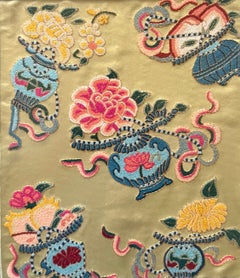
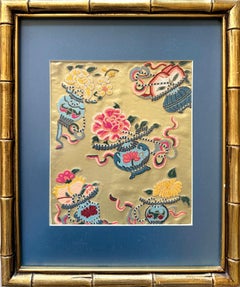
“Forbidden Stitch Chinese Embroidery”

“Forbidden Stitch Chinese Embroidery”

Located in Southampton, NY

Here for your consideration is a vintage Chinese forbidden stitch silk embroidery metallic couching textile badge on a pure silk panel. Under glass. C...

Category

1960s Academic Fabric More Art

Materials

Silk, Thread

Village, 80x120 cm, oil on canvas

Village, 80x120 cm, oil on canvas

By Elizeveta Pugacheva

Located in Yerevan, AM

My work touches on the importance of home and a sense of security. I believe it is a basic human need to feel like someone is waiting for you. I depict not only my homeland, but also...

Category

2010s Contemporary Fabric More Art

Materials

Canvas, Oil

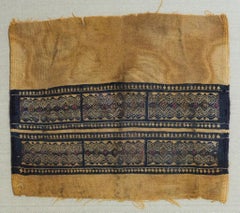
3rd to 5th Century Coptic Egyptian Textile fragment beige dark blue Brocade

3rd to 5th Century Coptic Egyptian Textile fragment beige dark blue Brocade

Located in Austin, TX

Textile size 8.5 x 10 in. Frame size 13.5 x 15 in. This piece is an ancient Coptic Egyptian textile fragment, dating from the 3rd to 5th century CE. It is composed of a coarse, plai...

Category

15th Century and Earlier Fabric More Art

Materials

Textile, Linen, Dye

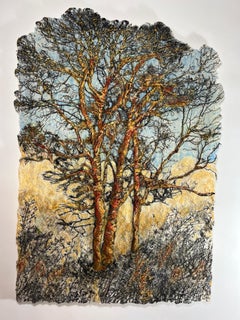
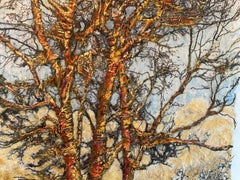
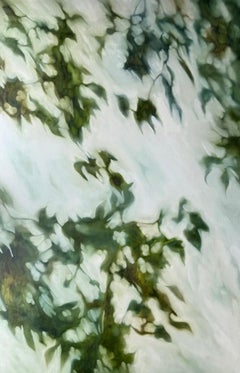
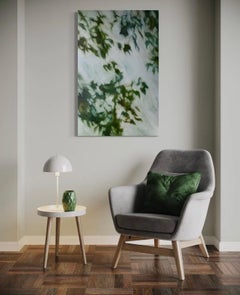
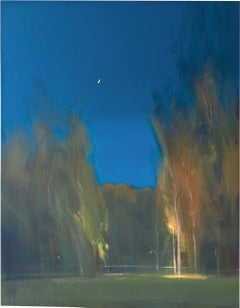
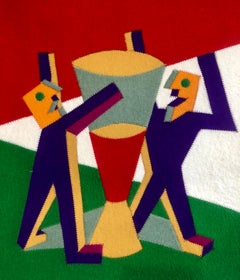
Birch Study 2 - Original Abstract Tree Landscape Nature Still Life Oil Painting

Birch Study 2 - Original Abstract Tree Landscape Nature Still Life Oil Painting

By Beth Munro

Located in Los Angeles, CA

Beth Munro’s original paintings, whether composed of still life, landscape, or abstract forms, focus on pattern, color and texture. Munro is inspired by everything from the impressio...

Category

21st Century and Contemporary Abstract Fabric More Art
Materials

Canvas, Oil

Contemporary Abstract Oriental Signed Painting

Contemporary Abstract Oriental Signed Painting

By Kozo Inoue

Located in Roma, IT

Wonderful contemporary abstract signed painting Series of 4 canvas assembled to form a single painting signed Kozo Inoue dated 1974 This painting, never before on the market, comes f...

Category

Mid-20th Century Abstract Fabric More Art

Materials

Canvas, Oil

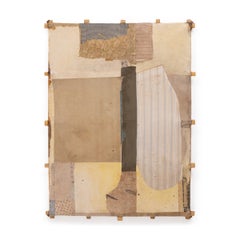
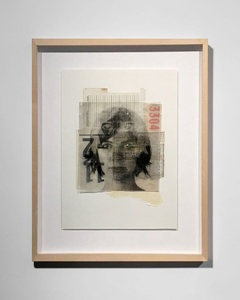
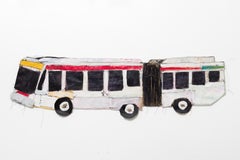
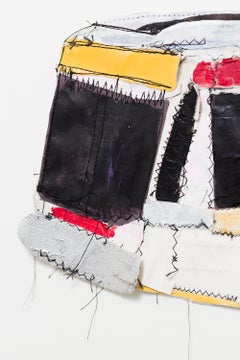
"Scholar, " Mixed Media Collage

"Scholar, " Mixed Media Collage

By Michael Thompson

Located in Chicago, IL

Based in Chicago, IL, contemporary artist Michael Thompson creates unique kites, collages and mixed media works assembled from material fragments of past and present collected in his...

Category

21st Century and Contemporary Qing Fabric More Art

Materials

Fabric, Wood, Paper, Paint

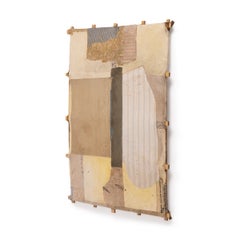
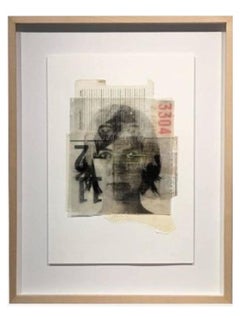
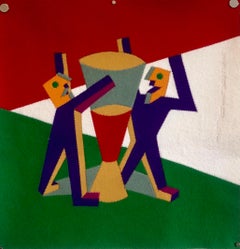
"Doublure, " Mixed Media Collage

"Doublure, " Mixed Media Collage

By Michael Thompson

Located in Chicago, IL

Based in Chicago, IL, contemporary artist Michael Thompson creates unique kites, collages and mixed media works assembled from material fragments of past and present collected in his...

Category

21st Century and Contemporary Abstract Fabric More Art
Materials

Fabric, Silk, Wood, Paper, Pigment

"I Love My Garden and My Garden Hates Me", Mixed Media Dyed Fabric, 2022

"I Love My Garden and My Garden Hates Me", Mixed Media Dyed Fabric, 2022

Located in Astoria, NY

Lila de Magalhaes (Brazilian, b. 1986), "I Love My Garden and My Garden Hates Me", Mixed Media Dyed Fabric, 2022, signed, titled, and dated verso, unframed. 59" H x 48" W x 1" D. P...

Category

21st Century and Contemporary Contemporary Fabric More Art

Materials

Textile, Dye

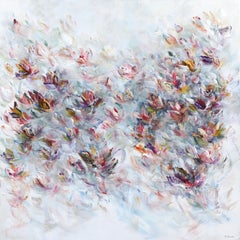
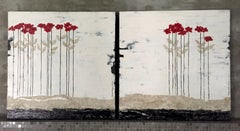
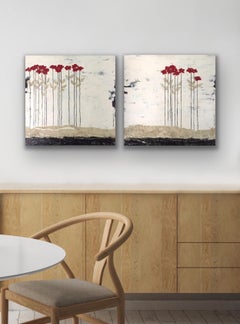
Live Passionately - Red Abstract Floral Painting

Live Passionately - Red Abstract Floral Painting

By Vè Boisvert

Located in Los Angeles, CA

Drawing inspiration from an immersive and impressionistic interpretation of nature, Canadian artist Vé Boisvert paints textural original artworks that capture the fleeting effects of...

Category

2010s Abstract Fabric More Art

Materials

Canvas, Acrylic

Havana No 4, Yellow - bold, bright, colorful, abstract, modernist, oil on canvas

Havana No 4, Yellow - bold, bright, colorful, abstract, modernist, oil on canvas

By David Sorensen

Located in Bloomfield, ON

A vibrant culture is captured in colour and dynamic form in this lively abstract painting by David Sorensen. After visiting Cuba in 1999, the Canadian artist created a series of paintings. The light, the bright colours and the rich atmosphere of life in Havana inspired Sorensen’s colour palette—a brilliant square of yellow in the center, surrounded by graphic shapes in red, orange, lime green, blue and black. Lines of blue and black create a grid-like pattern that runs both horizontally and vertically across the canvas. “Through the medium of his art, a bridge is built between inner sensation and outer world experience, illusion and reality, what we cannot see and what we see, life and afterlife.” John K. Grande, Montreal poet and writer Born in Vancouver Sorensen (1937-2011) studied at UBC and the Vancouver School of Art. His teachers were renowned—Arthur Erikson...

Category

1990s Contemporary Fabric More Art

Materials

Canvas, Oil

1024 Colors - Tufted Carpet by Vorwerk - Unframed

1024 Colors - Tufted Carpet by Vorwerk - Unframed

By Gerhard Richter

Located in Winterswijk, NL

Gerhar Richter, in collaboration with Vorwerk, made a special edition titled: 1024 Colors. The color palette by Richter is brought in with high quality pieces of carpet. *The images...

Category

20th Century Art Deco Fabric More Art

Materials

Textile, Mixed Media

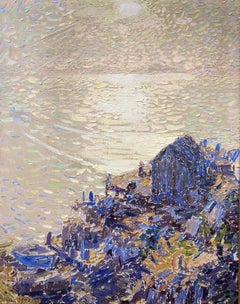
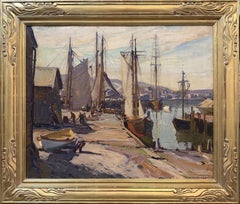
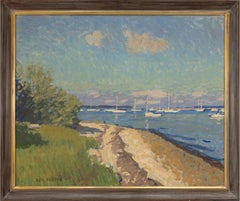
Emile Albert Gruppe Cape Ann Marine Oil Painting, Boats at Dock

Emile Albert Gruppe Cape Ann Marine Oil Painting, Boats at Dock

By Emile Albert Gruppe

Located in Milford, NH

A fine impressionist marine painting of boats at dock on Cape Ann by American artist Emile Albert Gruppé (1896-1978). Gruppé was born in Rochester, NY, and is renowned for his New En...

Category

Mid-20th Century American Impressionist Fabric More Art

Materials

Canvas, Oil

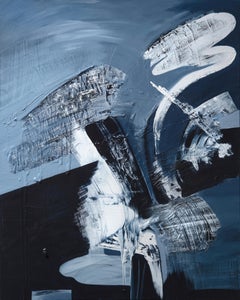
Cooler Heads Prevail - Large Abstract Expressionist Textural Painting in Blue

Cooler Heads Prevail - Large Abstract Expressionist Textural Painting in Blue

By Marc Raphael

Located in Los Angeles, CA

Los Angeles artist Marc Raphael's abstract expressionism paintings are influenced by New York's abstract expressionist movement. After encountering Jackson Pollock’s work for the fir...

Category

2010s Abstract Expressionist Fabric More Art

Materials

Canvas, Acrylic, Latex

Vintage Silk Child's Kimono Robe - Framed Wall Hanging

Vintage Silk Child's Kimono Robe - Framed Wall Hanging

Located in Soquel, CA

Beautiful and charming, this woven silk child's kimono robe in frame makes a wonderful accent. Circa 1970. Presented in wooden frame under glass with ornat...

Category

1970s Other Art Style Fabric More Art

Materials

Silk, Wood

"Boomy67", Game Boy Color Crocheted Fiber Art Still-Life Wall Sculpture

"Boomy67", Game Boy Color Crocheted Fiber Art Still-Life Wall Sculpture

By Nicole Nikolich, Lace in the Moon

Located in Philadelphia, PA

This piece titled "Boomy67" is a one-of-a-kind original piece by Nicole Nikolich (Lace in the Moon) and is made from crocheted acrylic on MDF with 27 colors, 10,880 stitches using a ...

Category

21st Century and Contemporary Contemporary Fabric More Art

Materials

Textile, Yarn, Found Objects, Wood

Player

Player

By Paula Cahill

Located in Los Angeles, CA

Cahill strives to extend the historical conversation with line and elevate the integral role it has played in art, design, and the sciences since its early appearance in rock and cav...

Category

2010s Abstract Fabric More Art

Materials

Canvas, Oil

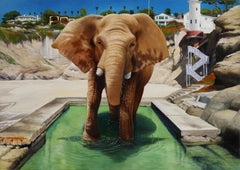
Blush – original surrealism wildlife painting for sale - contemporary artwork

Blush – original surrealism wildlife painting for sale - contemporary artwork

By Hallie Packard

Located in London, Chelsea

We offer complimentary worldwide shipping and cover all tariffs and import taxes for this artwork. This exceptional artwork is currently on display and available for sale at Signet C...

Category

21st Century and Contemporary Surrealist Fabric More Art

Materials

Canvas, Acrylic

Winter Solstice - Large Original Minimalist Contemporary Blue Abstract Painting

Winter Solstice - Large Original Minimalist Contemporary Blue Abstract Painting

By Clara Berta

Located in Los Angeles, CA

Clara Berta’s acrylic and mixed-media paintings blend texture and color to create harmony, mystery, and depth on the painted surface. Her paintings transform spaces into Zen environm...

Category

21st Century and Contemporary Abstract Expressionist Fabric More Art

Materials

Canvas, Acrylic

Fiber Art Collage Israeli Modernist Vibrant Colorful Tapestry Wall Hanging Rug

Fiber Art Collage Israeli Modernist Vibrant Colorful Tapestry Wall Hanging Rug

By Smadar Livne

Located in Surfside, FL

Smadar Livne, an Israeli born artist, is currently living and creating in Owings Mills, Maryland. An award winning artist, she is recognized as one of today’s leading Judaica artists. Educated at Haifa University, Livne has degrees in art, literature, and architecture. She has continued her education of philosophy through Baltimore Hebrew University. Portraying scenes from her life and learning is what gives her work an edge. Livne’s works are vibrant and exciting, and express the joy that Livne sees in life. Not only are the works beautiful, but subtle messages are also painted into each piece, and require time for observation and reflection. Technique sets Livne apart from the rest. Using bold, bright colors and wide strokes, she adds other items in a layering technique. The eye catching result contains layers of paint, fabric, wool and other materials objects, and meaning. Following in the manner of Calman Shemi and before him Kopel Gurwin, Itche Mambush and Georges Goldstein...

Category

20th Century Abstract Fabric More Art

Materials

Textile

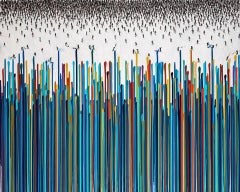
Coral Glim - Marilyn Monroe - Artist Proof (4/15 AP)

Coral Glim - Marilyn Monroe - Artist Proof (4/15 AP)

By Craig Alan

Located in Santa Monica, CA

Craig Alan Coral Glim – Marilyn Monroe – Artist Proof (4/15 AP), 2018 is a captivating giclée on canvas that showcases Craig Alan's celebrated "Populus" style, where hundreds of meti...

Category

21st Century and Contemporary Fabric More Art
Materials

Canvas

Fabric more art for sale on 1stDibs.
Find a wide variety of authentic Fabric more art available on 1stDibs. While artists have worked in this medium across a range of time periods, art made with this material during the 21st Century is especially popular. If you’re looking to add more art created with this material to introduce a provocative pop of color and texture to an otherwise neutral space in your home, the works available on 1stDibs include elements of blue, orange, red, green and other colors. There are many well-known artists whose body of work includes ceramic sculptures. Popular artists on 1stDibs associated with pieces like this include Andrea Stajan-Ferkul, Lida Pshenichka, Ana Seggiaro, and Irina Yakovleva. Frequently made by artists working in the Contemporary, Abstract, all of these pieces for sale are unique and many will draw the attention of guests in your home. Not every interior allows for large Fabric more art, so small editions measuring 0.1 inches across are also available Prices for more art made by famous or emerging artists can differ depending on medium, time period and other attributes. On 1stDibs, the price for these items starts at $1 and tops out at $929,058, while the average work can sell for $1,100.