Metal Paintings

to
411
739
438
434
449
1,138
Overall Width
to
Overall Height
to
59
65
260
2,814
5
3
17
6
4
12
12
30
35
83
24
1,204
887
98
84
52
50
40
31
30
30
15
12
2
1
1,311
904
739
540
343
215
182
164
97
96
96
91
89
82
75
70
62
61
51
41
38
34
34
379,919
155,201
94,314
71,710
67,905
68
55
52
39
35
970
638
1,941
968
Medium: Metal
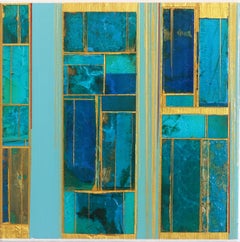
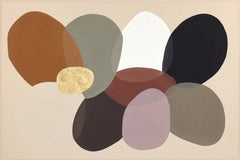
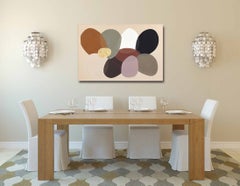
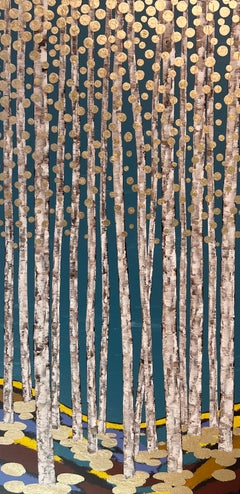
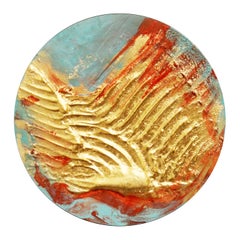
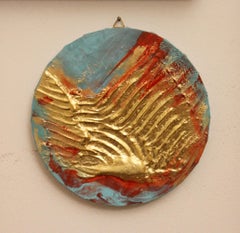
Elements No. 13 -Turquoise Blue Gold Organic Abstract Geometric Original Artwork

Elements No. 13 -Turquoise Blue Gold Organic Abstract Geometric Original Artwork

By Alexander Eulert

Located in Los Angeles, CA

Alexander Eulert's original mixed media paintings on wood panels are abstract propositions of worlds where divergent forces coalesce into harmonious geometric interactions. He draws ...

Category

21st Century and Contemporary Contemporary Metal Paintings

Materials

Metal, Gold Leaf

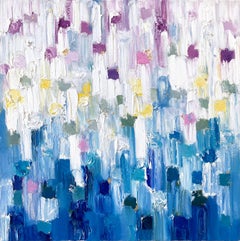
"Sky Drama 1" By Brian O'Neill, Original Acrylic Painting with 24K Gold Leaf

"Sky Drama 1" By Brian O'Neill, Original Acrylic Painting with 24K Gold Leaf

Located in Denver, CO

Brian O'Neill's "Sky Drama 1" is a captivating original artwork created in 2024. This piece measures 12 x 12 x 1.50 inches (30.48 x 30.48 x 3.81 cm) and features a sophisticated comb...

Category

2010s Abstract Impressionist Metal Paintings

Materials

Gold Leaf

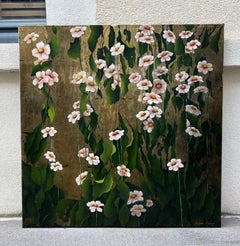
"Evanescent Poppies" 2025

"Evanescent Poppies" 2025

By Marilla Palmer

Located in New York, NY

Marilla Palmer Evanescent Poppies, 2025 pressed foliage, 12K gold leaf, acrylic on Ampersand panel 16 x 12 in. (pal248) Marilla Palmer lives and works in Brooklyn, NY and has shown...

Category

2010s Contemporary Metal Paintings

Materials

Gold Leaf

Nicholas Bodde Triptych Color Field on Aluminum

Nicholas Bodde Triptych Color Field on Aluminum

Located in Detroit, MI

SALE ONE WEEK ONLY "Untitled" by Nicholas Bodde depicts vibrant layers of color on narrow aluminum strips. These pieces are interchangeable and can be hung in various ways. Each is signed on the verso and was created in 2013. All three are sold as a set. Each aluminum panel measures 39 " h x 2.5" w. Bodde was born in New York he lives and works in Germany. He considers himself a German painter, who uses lacquered aluminum to create works that are beautiful in their simplicity and in their joyful exploration of color. The artist drives upon the tradition of European constructivism as well as Colour Field Painting, noting influences by Mark Rothko and Barnett Newmann. Bodde claims that his paintings “reveal themselves differently from close up and from a distance. When viewed from a distance they clearly appear related to constructivist geometric tendencies. But from close proximity, one notices that my main objective is painting and not construction.” The artist has reduced his subject to parallel vertical or horizontal lines and fields that race across the hard surface in a controlled riot – as if the viewer were looking out of a fast moving car while driving by fields of colorful flowers. Bodde constantly questions the colors, focusing on creating a construction through using different colors. He sees his creations as a mode of communication with the world. He paints on aluminum plates by successive coats of painting that he applies with different utensils to finally obtain a result that imprints itself into the eye’s retina. The game of colorful stripes, more or less large, sometimes with the feeling of the brush, sometimes flat, reflects the light differently on each lap. The brightness of his palette, a willful choice, accentuates the vitality that emanates from this painting. His works hesitate between the vibrating and nearly irritating colors and the calm of a monastic construction.   Bodde received his formal education from the University of Arts in Bremen (1989) and has been exhibited in numerous solo and group shows across the world, including venues such as the Yeh Gallery in Seoul, Planet Art...

Category

Late 20th Century Abstract Expressionist Metal Paintings

Materials

Metal

Finding the Sun

Finding the Sun

Located in Atlanta, GA

Gwen Wong's work is both painterly and allegorical, caught somewhere in the middle between the representational painter and the narrator. "I am inspired by the idea of a childhood re...

Category

2010s Contemporary Metal Paintings

Materials

Gold Leaf

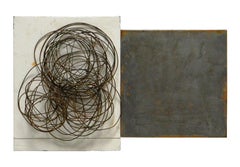
ORBE N°1 and N°2 Diptych Wall sculpture. Metal Intervened with pigments on wood.

ORBE N°1 and N°2 Diptych Wall sculpture. Metal Intervened with pigments on wood.

By Fanny Szyller Finkelman

Located in Miami Beach, FL

The artist finds inspiration in the exploration of various discarded materials, transforming them into three-dimensional sculptures full of transparency and life. She uses small piec...

Category

2010s Minimalist Metal Paintings

Materials

Metal

Untitled 19. From the  Mexican Ryōan-ji Series.

Untitled 19. From the Mexican Ryōan-ji Series.

By Francisco Larios

Located in Miami Beach, FL

Ryōan-ji is the Japanese Zen temple in Kyoto, a monastery that gave rise to the idea of ​​the purely abstract Zen garden that inspired this series Francisco Larios’ works are done by...

Category

2010s Abstract Metal Paintings

Materials

Gold Leaf

Sweet Grass-original modern abstract floral oil painting - contemporary Art

Sweet Grass-original modern abstract floral oil painting - contemporary Art

By Antoinette Ferwerda

Located in London, Chelsea

We offer complimentary worldwide shipping and cover all tariffs and import taxes for this artwork. This exceptional artwork is currently on display and available for sale at Signet C...

Category

21st Century and Contemporary Abstract Expressionist Metal Paintings

Materials

Copper

Ex-Voto; Offering in Thanks for the Healing of a Gall Bladder Illness

Ex-Voto; Offering in Thanks for the Healing of a Gall Bladder Illness

Located in Denver, CO

This rare 19th-century Mexican ex-voto retablo, titled Offering in Thanks for the Healing of a Gall Bladder Illness, is an evocative example of devotional folk art created circa 1866...

Category

1930s Folk Art Metal Paintings

Materials

Metal

Mirage

Mirage

Located in Atlanta, GA

Gwen Wong's work is both painterly and allegorical, caught somewhere in the middle between the representational painter and the narrator. "I am inspired by the idea of a childhood re...

Category

2010s Contemporary Metal Paintings

Materials

Gold Leaf

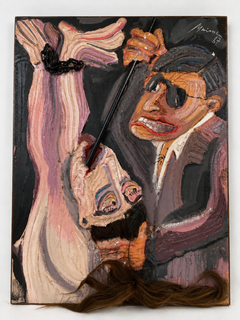
"Mona Lisa, Gioconda"  - Tag: basquiat style

"Mona Lisa, Gioconda" - Tag: basquiat style

Located in OIA, ES

This bold reinterpretation of Leonardo da Vinci’s Mona Lisa comes from Diego Tirigall, an artist whose rise in the contemporary art world is garnering significant attention. Drawing ...

Category

2010s Street Art Metal Paintings

Materials

Enamel

Inextricable V
Inextricable V

Inextricable V

By Frédéric Choisel

Located in Burlingame, CA

Mixed media: oil, fiberglass, metallic pigments on panel, and framed in artist fabricated silver aluminum. Inspired by the cities of France, New York and the Bay Area, French Am...

Category

21st Century and Contemporary Contemporary Metal Paintings

Materials

Aluminum, Metal

Portal-Glyph IV
Portal-Glyph IV

Portal-Glyph IV

By Casper Brindle

Located in Santa Monica, CA

Working within the constraints of unyielding ninety-degree angles, Brindle applies color with a Fauvist abandon, creating works with an otherworldly presence.

Category

2010s Abstract Geometric Metal Paintings

Materials

Silver, Gold Leaf

"Elvis", Denied Andy Warhol Silver & Black Pop Art Painting by Charles Lutz

"Elvis", Denied Andy Warhol Silver & Black Pop Art Painting by Charles Lutz

By Charles Lutz

Located in Brooklyn, NY

Elvis, Metallic Silver and Black Full Length Silkscreen Painting by Charles Lutz Silkscreen and silver enamel painted on vintage 1960's era linen with Artist's Denied stamp of the Andy Warhol Art Authentication Board. 82" x 40" inches 2010 Lutz's 2007 ''Warhol Denied'' series gained international attention by calling into question the importance of originality or lack thereof in the work of Andy Warhol. The authentication/denial process of the [[Andy Warhol Art Authentication Board]] was used to create value by submitting recreations of Warhol works for judgment with the full intention for the works to be formally marked "DENIED". The final product of the conceptual project being "officially denied" "Warhol" paintings authored by Lutz. Based on the full-length Elvis Presley paintings by Pop Artist Andy Warhol in 1964, this is likely one of his most iconic images, next to Campbell's Soup Cans and portraits of Jackie Kennedy, Marilyn Monroe, Liz Taylor, and Marlon Brando. This is the rarest of the Elvis works from the series, as Lutz sourced a vintage roll of 1960's primed artist linen which was used for this one Elvis. The silkscreen, like Warhol's embraced imperfections, like the slight double image printing of the Elvis image. Lutz received his BFA in Painting and Art History from Pratt Institute and studied Human Dissection and Anatomy at Columbia University, New York. Lutz's work deals with perceptions and value structures, specifically the idea of the transference of values. Lutz's most recently presented an installation of new sculptures dealing with consumerism at Frank Lloyd Wright's Fallingwater House in 2022. Lutz's 2007 Warhol Denied series received international attention calling into question the importance of originality in a work of art. The valuation process (authentication or denial) of the Andy Warhol Art Authentication Board was used by the artist to create value by submitting recreations of Warhol works for judgment, with the full intention for the works to be formally marked "DENIED" of their authenticity. The final product of this conceptual project is "Officially DENIED" "Warhol" paintings authored by Lutz. Later in 2013, Lutz went on to do one of his largest public installations to date. At the 100th Anniversary of Marcel Duchamp's groundbreaking and controversial Armory Show, Lutz was asked by the curator of Armory Focus: USA and former Director of The Andy Warhol Museum, Eric Shiner to create a site-specific installation representing the US. The installation "Babel" (based on Pieter Bruegel's famous painting) consisted of 1500 cardboard replicas of Warhol's Brillo Box (Stockholm Type) stacked 20 ft tall. All 1500 boxes were then given to the public freely, debasing the Brillo Box as an art commodity by removing its value, in addition to debasing its willing consumers. Elvis was "the greatest cultural force in the Twentieth Century. He introduced the beat to everything, and he changed everything - music, language, clothes, it's a whole new social revolution." Leonard Bernstein in: Exh. Cat., Boston, The Institute of Contemporary Art and traveling, Elvis + Marilyn 2 x Immortal, 1994-97, p. 9. Andy Warhol "quite simply changed how we all see the world around us." Kynaston McShine in: Exh. Cat., New York, Museum of Modern Art (and traveling), Andy Warhol: Retrospective, 1996, p. 13. In the summer of 1963 Elvis Presley was just twenty-eight years old but already a legend of his time. During the preceding seven years - since Heartbreak Hotel became the biggest-selling record of 1956 - he had recorded seventeen number-one singles and seven number-one albums; starred in eleven films, countless national TV appearances, tours, and live performances; earned tens of millions of dollars; and was instantly recognized across the globe. The undisputed King of Rock and Roll, Elvis was the biggest star alive: a cultural phenomenon of mythic proportions apparently no longer confined to the man alone. As the eminent composer Leonard Bernstein put it, Elvis was "the greatest cultural force in the Twentieth Century. He introduced the beat to everything, and he changed everything - music, language, clothes, it's a whole new social revolution." (Exh. Cat., Boston, The Institute of Contemporary Art (and traveling), Elvis + Marilyn 2 x Immortal, 1994, p. 9). In the summer of 1963 Andy Warhol was thirty-four years old and transforming the parameters of visual culture in America. The focus of his signature silkscreen was leveled at subjects he brilliantly perceived as the most important concerns of day to day contemporary life. By appropriating the visual vernacular of consumer culture and multiplying readymade images gleaned from newspapers, magazines and advertising, he turned a mirror onto the contradictions behind quotidian existence. Above all else he was obsessed with themes of celebrity and death, executing intensely multifaceted and complex works in series that continue to resound with universal relevance. His unprecedented practice re-presented how society viewed itself, simultaneously reinforcing and radically undermining the collective psychology of popular culture. He epitomized the tide of change that swept through the 1960s and, as Kynaston McShine has concisely stated, "He quite simply changed how we all see the world around us." (Exh. Cat., New York, Museum of Modern Art (and traveling), Andy Warhol: Retrospective, 1996, p. 13). Thus in the summer of 1963 there could not have been a more perfect alignment of artist and subject than Warhol and Elvis. Perhaps the most famous depiction of the biggest superstar by the original superstar artist, Double Elvis is a historic paradigm of Pop Art from a breath-taking moment in Art History. With devastating immediacy and efficiency, Warhol's canvas seduces our view with a stunning aesthetic and confronts our experience with a sophisticated array of thematic content. Not only is there all of Elvis, man and legend, but we are also presented with the specter of death, staring at us down the barrel of a gun; and the lone cowboy, confronting the great frontier and the American dream. The spray painted silver screen denotes the glamour and glory of cinema, the artificiality of fantasy, and the idea of a mirror that reveals our own reality back to us. At the same time, Warhol's replication of Elvis' image as a double stands as metaphor for the means and effects of mass-media and its inherent potential to manipulate and condition. These thematic strata function in simultaneous concert to deliver a work of phenomenal conceptual brilliance. The portrait of a man, the portrait of a country, and the portrait of a time, Double Elvis is an indisputable icon for our age. The source image was a publicity still for the movie Flaming Star, starring Presley as the character Pacer Burton and directed by Don Siegel in 1960. The film was originally intended as a vehicle for Marlon Brando and produced by David Weisbart, who had made James Dean's Rebel Without a Cause in 1955. It was the first of two Twentieth Century Fox productions Presley was contracted to by his manager Colonel Tom Parker, determined to make the singer a movie star. For the compulsive movie-fan Warhol, the sheer power of Elvis wielding a revolver as the reluctant gunslinger presented the zenith of subject matter: ultimate celebrity invested with the ultimate power to issue death. Warhol's Elvis is physically larger than life and wears the expression that catapulted him into a million hearts: inexplicably and all at once fearful and resolute; vulnerable and predatory; innocent and explicit. It is the look of David Halberstam's observation that "Elvis Presley was an American original, the rebel as mother's boy, alternately sweet and sullen, ready on demand to be either respectable or rebellious." (Exh. Cat., Boston, Op. Cit.). Indeed, amidst Warhol's art there is only one other subject whose character so ethereally defies categorization and who so acutely conflated total fame with the inevitability of mortality. In Warhol's work, only Elvis and Marilyn harness a pictorial magnetism of mythic proportions. With Marilyn Monroe, whom Warhol depicted immediately after her premature death in August 1962, he discovered a memento mori to unite the obsessions driving his career: glamour, beauty, fame, and death. As a star of the silver screen and the definitive international sex symbol, Marilyn epitomized the unattainable essence of superstardom that Warhol craved. Just as there was no question in 1963, there remains still none today that the male equivalent to Marilyn is Elvis. However, despite his famous 1968 adage, "If you want to know all about Andy Warhol, just look at the surface of my paintings" Warhol's fascination held purpose far beyond mere idolization. As Rainer Crone explained in 1970, Warhol was interested in movie stars above all else because they were "people who could justifiably be seen as the nearest thing to representatives of mass culture." (Rainer Crone, Andy Warhol, New York, 1970, p. 22). Warhol was singularly drawn to the idols of Elvis and Marilyn, as he was to Marlon Brando and Liz Taylor, because he implicitly understood the concurrence between the projection of their image and the projection of their brand. Some years after the present work he wrote, "In the early days of film, fans used to idolize a whole star - they would take one star and love everything about that star...So you should always have a product that's not just 'you.' An actress should count up her plays and movies and a model should count up her photographs and a writer should count up his words and an artist should count up his pictures so you always know exactly what you're worth, and you don't get stuck thinking your product is you and your fame, and your aura." (Andy Warhol, The Philosophy of Andy Warhol (From A to B and Back Again), San Diego, New York and London, 1977, p. 86). The film stars of the late 1950s and early 1960s that most obsessed Warhol embodied tectonic shifts in wider cultural and societal values. In 1971 John Coplans argued that Warhol was transfixed by the subject of Elvis, and to a lesser degree by Marlon Brando and James Dean, because they were "authentically creative, and not merely products of Hollywood's fantasy or commercialism. All three had originative lives, and therefore are strong personalities; all three raised - at one level or another - important questions as to the quality of life in America and the nature of its freedoms. Implicit in their attitude is a condemnation of society and its ways; they project an image of the necessity for the individual to search for his own future, not passively, but aggressively, with commitment and passion." (John Coplans, "Andy Warhol and Elvis Presley," Studio International, vol. 181, no. 930, February 1971, pp. 51-52). However, while Warhol unquestionably adored these idols as transformative heralds, the suggestion that his paintings of Elvis are uncritical of a generated public image issued for mass consumption fails to appreciate the acuity of his specific re-presentation of the King. As with Marilyn, Liz and Marlon, Warhol instinctively understood the Elvis brand as an industrialized construct, designed for mass consumption like a Coca-Cola bottle or Campbell's Soup Can, and radically revealed it as a precisely composed non-reality. Of course Elvis offered Warhol the biggest brand of all, and he accentuates this by choosing a manifestly contrived version of Elvis-the-film-star, rather than the raw genius of Elvis as performing Rock n' Roll pioneer. A few months prior to the present work he had silkscreened Elvis' brooding visage in a small cycle of works based on a simple headshot, including Red Elvis, but the absence of context in these works minimizes the critical potency that is so present in Double Elvis. With Double Elvis we are confronted by a figure so familiar to us, yet playing a role relating to violence and death that is entirely at odds with the associations entrenched with the singer's renowned love songs. Although we may think this version of Elvis makes sense, it is the overwhelming power of the totemic cipher of the Elvis legend that means we might not even question why he is pointing a gun rather than a guitar. Thus Warhol interrogates the limits of the popular visual vernacular, posing vital questions of collective perception and cognition in contemporary society. The notion that this self-determinedly iconic painting shows an artificial paradigm is compounded by Warhol's enlistment of a reflective metallic surface, a treatment he reserved for his most important portraits of Elvis, Marilyn, Marlon and Liz. Here the synthetic chemical silver paint becomes allegory for the manufacture of the Elvis product, and directly anticipates the artist's 1968 statement: "Everything is sort of artificial. I don't know where the artificial stops and the real starts. The artificial fascinates me, the bright and shiny..." (Artist quoted in Exh. Cat., Stockholm, Moderna Museet and traveling, Andy Warhol, 1968, n.p.). At the same time, the shiny silver paint of Double Elvis unquestionably denotes the glamour of the silver screen and the attractive fantasies of cinema. At exactly this time in the summer of 1963 Warhol bought his first movie camera and produced his first films such as Sleep, Kiss and Tarzan and Jane Regained. Although the absence of plot or narrative convention in these movies was a purposely anti-Hollywood gesture, the unattainability of classic movie stardom still held profound allure and resonance for Warhol. He remained a celebrity and film fanatic, and it was exactly this addiction that so qualifies his sensational critique of the industry machinations behind the stars he adored. Double Elvis was executed less than eighteen months after he had created 32 Campbell's Soup Cans for his immortal show at the Ferus Gallery, Los Angeles in July and August 1962, and which is famously housed in the Museum of Modern Art, New York. In the intervening period he had produced the series Dollar Bills, Coca-Cola Bottles, Suicides, Disasters, and Silver Electric Chairs, all in addition to the portrait cycles of Marilyn and Liz. This explosive outpouring of astonishing artistic invention stands as definitive testament to Warhol's aptitude to seize the most potent images of his time. He recognized that not only the product itself, but also the means of consumption - in this case society's abandoned deification of Elvis - was symptomatic of a new mode of existence. As Heiner Bastian has precisely summated: "the aura of utterly affirmative idolization already stands as a stereotype of a 'consumer-goods style' expression of an American way of life and of the mass-media culture of a nation." (Exh. Cat., Berlin, Neue Nationalgalerie (and traveling), Andy Warhol: Retrospective, 2001, p. 28). For Warhol, the act of image replication and multiplication anaesthetized the effect of the subject, and while he had undermined the potency of wealth in 200 One Dollar Bills, and cheated the terror of death by electric chair in Silver Disaster # 6, the proliferation of Elvis here emasculates a prefabricated version of character authenticity. Here the cinematic quality of variety within unity is apparent in the degrees to which Presley's arm and gun become less visible to the left of the canvas. The sense of movement is further enhanced by a sense of receding depth as the viewer is presented with the ghost like repetition of the figure in the left of the canvas, a 'jump effect' in the screening process that would be replicated in the multiple Elvis paintings. The seriality of the image heightens the sense of a moving image, displayed for us like the unwinding of a reel of film. Elvis was central to Warhol's legendary solo exhibition organized by Irving Blum at the Ferus Gallery in the Fall of 1963 - the show having been conceived around the Elvis paintings since at least May of that year. A well-known installation photograph shows the present work prominently presented among the constant reel of canvases, designed to fill the space as a filmic diorama. While the Elvis canvases...

Category

21st Century and Contemporary Pop Art Metal Paintings

Materials

Enamel

"Instant Gratification" Abstract Geometric Oil Painting

"Instant Gratification" Abstract Geometric Oil Painting

By Ned Martin

Located in Westport, CT

This abstract geometric painting by Ned Martin is made with oil on aluminum and board, and features a cool blue-grey palette. It is signed by the artist on the back of the board and ...

Category

2010s Abstract Metal Paintings

Materials

Metal

"Navidad".  Figurative painting inspired in Christmas and a modern Holy Family

"Navidad". Figurative painting inspired in Christmas and a modern Holy Family

By Goyo Dominguez

Located in Segovia, ES

"Navidad". Figurative painting inspired in Christmas and an modern Holy Family. Acrylic and gold leaf on wood panel. Author: Goyo Dominguez. Measurements in centimeters: 81 x 65 x 0...

Category

Early 2000s Other Art Style Metal Paintings

Materials

Gold Leaf

Departure 2 - Colorful Red Organic Abstract Landscape Painting

Departure 2 - Colorful Red Organic Abstract Landscape Painting

By Alexander Eulert

Located in Los Angeles, CA

Alexander Eulert's original mixed media paintings on wood panels are abstract propositions of worlds where divergent forces coalesce into harmonious geometric interactions. He draws ...

Category

21st Century and Contemporary Abstract Metal Paintings

Materials

Metal, Gold Leaf

"Climbing Clematis" Abstract Encaustic Painting

"Climbing Clematis" Abstract Encaustic Painting

Located in Westport, CT

This abstract floral encaustic painting by Linda Bigness features a cool green and blue palette, with subtle warm muted orange accents and large organic botanical forms and line work...

Category

2010s Abstract Metal Paintings

Materials

Silver

Portrait of King Edward VI, Oil on panel with Gold Leaf, 18th Century English

Portrait of King Edward VI, Oil on panel with Gold Leaf, 18th Century English

Located in London, GB

Oil on oak panel Image size: 25 1/2 x 19 inches (37.5 x 27 inches) 18th Century Auricular gilt frame Provenance New York private collection This portrait of the King Edward VI depicts the boy-king standing in a black and gold embroidered doublet, wearing a jewelled cap. King Edward holds a staff with a globus cruciger set on the table beside him. No expense has been spared in the making of this piece, with gold leaf being applied in many areas to give the effect of the costume's gold embroidery, chain of office and other metal accessories. As the precious male heir to the Tudor dynasty...

Category

Early 18th Century English School Metal Paintings
Materials

Gold Leaf

Teal Landscape
Teal Landscape

Teal Landscape

Located in Deddington, GB

Teal Landscape by Catherine Ruth Church [2020] original Acrylic, gouache, Gold Leaf Image size: H:60 cm x W:60 cm Complete Size of Unframed Work...

Category

21st Century and Contemporary Abstract Metal Paintings

Materials

Gold Leaf

"Spicy Asian Food" (FRAMED) Abstract Painting 72 x 48 in by Yoram Katz

"Spicy Asian Food" (FRAMED) Abstract Painting 72 x 48 in by Yoram Katz

Located in Culver City, CA

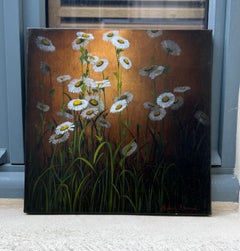
"Spicy Asian Food" (FRAMED) Abstract Painting 72 x 48 in by Yoram Katz Medium: Used items, Enamel and Spray paint on Canvas Size framed: 73 x 49 in Recycling Series ABOUT THE ART...

Category

21st Century and Contemporary Abstract Expressionist Metal Paintings
Materials

Enamel

Nestled In

Nestled In

Located in Atlanta, GA

Gwen Wong's work is both painterly and allegorical, caught somewhere in the middle between the representational painter and the narrator. "I am inspired by the idea of a childhood re...

Category

2010s Contemporary Metal Paintings

Materials

Gold Leaf

Paths of Memory  - Tag: basquiat style

Paths of Memory - Tag: basquiat style

Located in OIA, ES

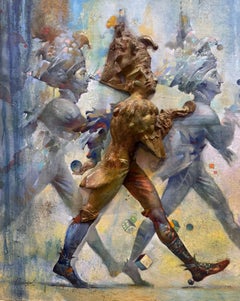
🔸 _Title: Paths of Memory 🔸 _Artist: Diego Tirigall 🔸 _Year of Creation: 2024 🔸 _Dimensions: 200 x 160 cm 🔸 _Medium: Acrylic, Enamel, Oil Pastel, ...

Category

2010s Street Art Metal Paintings
Materials

Enamel

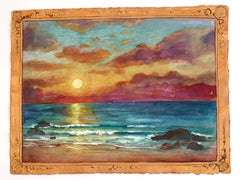
Sunset Allegory
Sunset Allegory

Sunset Allegory

Located in Zofingen, AG

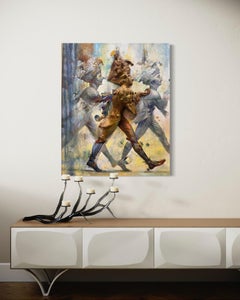
"What inspired the creation of this landscape abstraction: The wonderful golden light of sunset in combination with the blue sea. Dimensions in inches: 26 x 33 Details: - Materials u...

Category

2010s Abstract Metal Paintings
Materials

Bronze

Balance
Balance

Balance

By Greg Decker

Located in Atlanta, GA

"Greg Decker is a visionary painter. His work epitomizes the passion that comes from a deep love of art, poetry, and music. His paintings show how art is both the consolation for, ...

Category

2010s Contemporary Metal Paintings
Materials

Metal

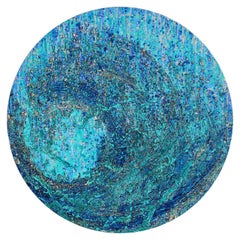
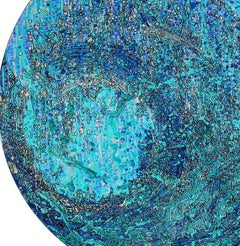
Shimmer Abstraction, Photorealist Acrylic Painting on Aluminum by David Kessler

Shimmer Abstraction, Photorealist Acrylic Painting on Aluminum by David Kessler

Located in Long Island City, NY

Shimmer Abstraction David T. Kessler, American (1950) Date: 2005 Acrylic on Brushed Aluminum mounted to board, signed, titled and dated on verso Size: 48 x 72 in. (121.92 x 182.88 cm)

Category

Early 2000s Photorealist Metal Paintings
Materials

Metal

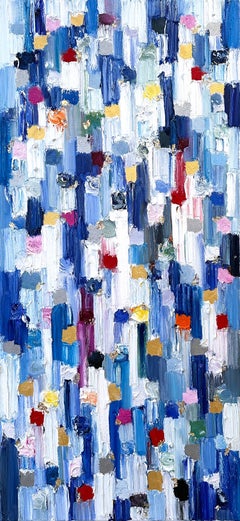
Modernist Persian Iranian Middle Eastern Abstract Fereydoun Assa Oil Painting

Modernist Persian Iranian Middle Eastern Abstract Fereydoun Assa Oil Painting

Located in Surfside, FL

Fereydoun (Fred) Rahimi Assa (Iranian, b. 1936) "Lonely Soul in Desert" Oil and mixed media on canvas, Hand signed lower left Framed : 40-1/2"h x 30-1/2"w Sight: 40"h x 30"w Made with metallic foil or paint, the patchwork-like piece bears geometric designs and symbols. Born in Baku, Azerbaijan, Fereydoun Rahimi Assa (b. 1936) moved to Tehran at the age of three. He attended the College of Decorative Arts, Tehran in the same year group as well-known formidable masters, Hossein Zenderoudi and Massoud Arabshahi. After being awarded a travelling scholarship in 1964, Rahimi-Assa went to Israel for three months of study. Although Rahimi-Assa saw success through the several exhibitions he held in Israel, unable to secure a long-term visa and not keen to return to Iran, he found himself in the US – in no small part, thanks to the help of Eric Azari in obtaining a long-term residency visa. Fred Rahimi-Assa went first to New York and later settled in New Jersey. While in New York, he worked in some capacity at Columbia University’s Painting department where he also exhibited several times, including a solo show in 1968. In the same year, Rahimi-Assa participated in a group exhibition of Modern Persian painting, sponsored by the Centre for Iranian Studies at Columbia University – founded that year by Professor Ehsan Yarshater (Hagop Kevorkian Professor of Iranian Studies, Columbia University). After moving out of the City, to New Jersey in the 1970s, Rahimi Asa continued to exhibit with local institutes and organized art seminars in the homes of various artists. His work was included in the Middle East auction held by Sotheby's. It includes pioneering artists such as Egyptian Mahmoud Mokhtar, Moroccan modernism, Mohamed Melehi...

Category

20th Century Modern Metal Paintings
Materials

Foil

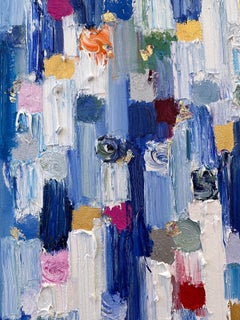
Chene de Versailles 6 - An Oil Painting on Gold Leaf

Chene de Versailles 6 - An Oil Painting on Gold Leaf

Located in New York, NY

This work is a unique piece. It is an oil painting on linen canvas gilded with 24 carat gold leaf. CS Art comprises of two artists, one French, the other Norwe...

Category

2010s Contemporary Metal Paintings
Materials

Gold, Silver, Foil, Gold Leaf

Metal paintings for sale on 1stDibs.
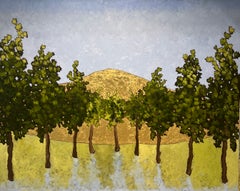
Find a wide variety of authentic Metal paintings available on 1stDibs. While artists have worked in this medium across a range of time periods, art made with this material during the 21st Century is especially popular. If you’re looking to add paintings created with this material to introduce a provocative pop of color and texture to an otherwise neutral space in your home, the works available on 1stDibs include elements of blue, purple, red, orange and other colors. There are many well-known artists whose body of work includes ceramic sculptures. Popular artists on 1stDibs associated with pieces like this include Topher Straus, Sax Berlin, Jimi Gleason, and Bruce Murphy. Frequently made by artists working in the Contemporary, Abstract, all of these pieces for sale are unique and many will draw the attention of guests in your home. Not every interior allows for large Metal paintings, so small editions measuring 0.1 inches across are also available
Read More