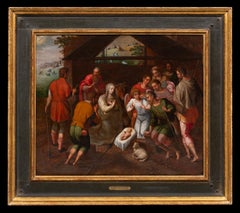
16th Century Art

to
54
162
90
27
23
33
Overall Width
to
Overall Height
to
7,583
21,319
165,000
236,580
2,063
2,321
4,989
6,483
5,866
15,321
21,063
26,227
18,960
14,167
5,376
136
17
1
158
146
3
248
119
91
83
74
45
32
30
23
21
20
19
18
17
14
13
11
11
10
9
120
101
91
51
42
80
6
5
4
3
118
88
260
80
Period: 16th Century
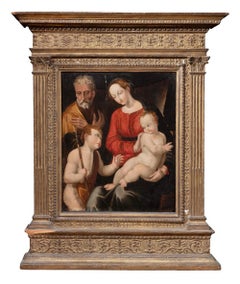
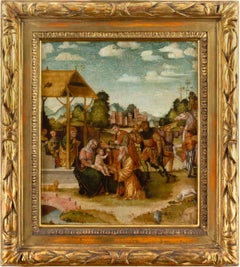
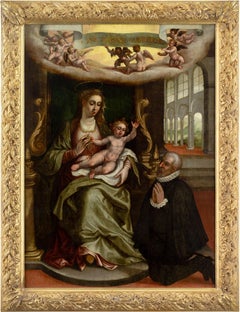
16th-Century Tempera on Panel, Italian Religious Painting, "Sacred Conversation"

16th-Century Tempera on Panel, Italian Religious Painting, "Sacred Conversation"

Located in Vicoforte, IT

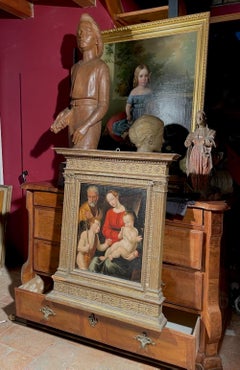
An important 16th-century Italian painting. A tempera-on-panel artwork of remarkable pictorial quality, featuring monumental original carved and gilded woodwork. The altarpiece depic...

Category

16th Century Art

Materials

Wood, Tempera

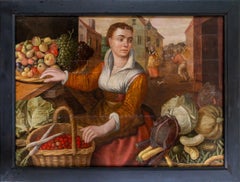
Huge 16th Century Flemish Old Master Oil on Panel The Vegetable Seller Market

Huge 16th Century Flemish Old Master Oil on Panel The Vegetable Seller Market

Located in Cirencester, Gloucestershire

The Vegetable Seller Circle of Joachim Beuckelaer (Flemish 1534-1574) Oil on cradled oak panel Framed: 35 x 47 inches Canvas: 29 x 41 inches Provenance: Private collection, France. C...

Category

Flemish School 16th Century Art

Materials

Oil

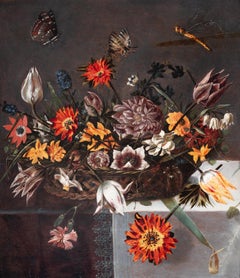
Still life of flowers on a ledge

Still life of flowers on a ledge

Located in Stoke, Hampshire

Attributed to Francesco Codino (c.1590-c.1631) Still life of flowers on a ledge Oil on panel Painting Size - 15 1/2 x 14 in Framed Size - 22 x 20 in Provenance With Jocelyn Fielding...

Category

Old Masters 16th Century Art

Materials

Oil

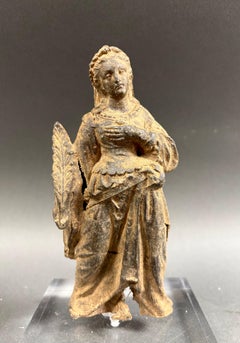
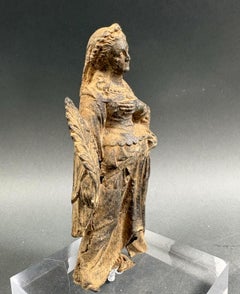
Small Renaissance Lead Sculpture Florence 16th century

Small Renaissance Lead Sculpture Florence 16th century

Located in Pistoia, IT

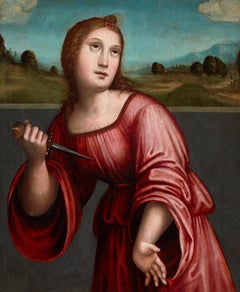
Small and fine lead sculpture from the Renaissance period, Italy, Florence, 16th century. It depicts a young woman, richly attired, with the palm of martyrdom and a hand over her he...

Category

Renaissance 16th Century Art

Materials

Iron

The Flight into Egypt

The Flight into Egypt

By Hans Lautensack

Located in Middletown, NY

Etching on handmade cream laid paper with a deckle edge, and an elaborate and large watermark of a crowned figure with a harp, and letters A S, 11 3/4 x 8 inches (298 x 204 mm); shee...

Category

Old Masters 16th Century Art

Materials

Handmade Paper, Laid Paper, Etching

Frankfort, Germany: A 16th Century Hand-colored Map by Braun & Hogenberg

Frankfort, Germany: A 16th Century Hand-colored Map by Braun & Hogenberg

By Franz Hogenberg

Located in Alamo, CA

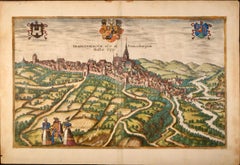
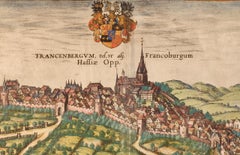
This is a 16th century original hand-colored copperplate engraved map of Frankfort, Germany entitled "Francenbergum, vel ut alij Francoburgum Hassiae Opp" by Georg Braun & Franz Hogenberg, from their famous city atlas "Civitates Orbis Terrarum", published in Cologne, Germany in 1595. This is an English translation of an excerpt from the original text in the atlas: "Frankenberg or, according to others, Francoburgum, a town in Hesse. Charlemagne vested the town of Frankenberg with many freedoms and privileges, which it still enjoys to this day, and on account of its valiant and victorious soldiers awarded a signet, upon which there formerly appeared a golden castle with a tower, together with the letter F and a golden crown. Frankenberg, seen here from the northeast, lies on a hill above the River Eder. The hillside is covered with fields neatly separated by bushes and fences. Soaring above the town is the massive Liebfrauenkirche, which was modelled on St Elizabeth's church in Marburg. The New Town was founded in 1335 at the foot of the hill (right) and merged with the Old Town as late as 1556. Frankenberg was founded by Conrad of Thuringia in 1233/34 to prevent the archbishops of Mainz from expanding their sphere of influence...

Category

Old Masters 16th Century Art

Materials

Engraving

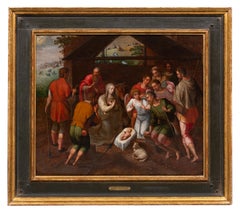
Nativity Jesus David Paint 16/17th Century Oil on copper Old master Flemish Art

Nativity Jesus David Paint 16/17th Century Oil on copper Old master Flemish Art

Located in Riva del Garda, IT

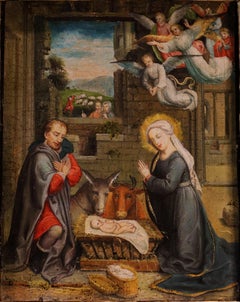
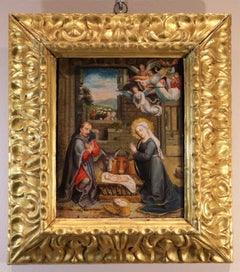
The Nativity of Jesus Flemish school, late 16th/early 17th century Gerard David (Oudewater, c. 1460 - Bruges, 1523) Follower of Oil on copper 30 x 25 cm. - In frame 47 x 42 c...

Category

Old Masters 16th Century Art

Materials

Oil

Holy Family with the Infant Saint John – Bolognese School, Second Half 16th Cent

Holy Family with the Infant Saint John – Bolognese School, Second Half 16th Cent

Located in Firenze, IT

Holy Family with the Infant Saint John – Bolognese School, Second Half of the 16th Century Oil on wooden panel with two horizontal braces on the reverse Bolognese School, second hal...

Category

Italian School 16th Century Art

Materials

Oil, Board

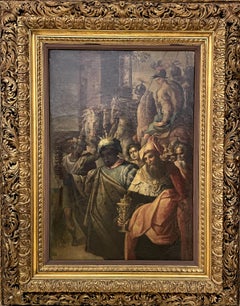
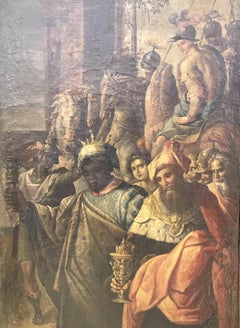
Mid-16th-Century Romagnola School The Adoration Of The Magi, Nativity

Mid-16th-Century Romagnola School The Adoration Of The Magi, Nativity

Located in Cheltenham, GB

This exquisite early 16th-century Italian panel captures one of Christianity’s most cherished moments - the Adoration of the Magi. Painted around 1530, this panel belongs to a moment...

Category

Renaissance 16th Century Art

Materials

Oil, Panel

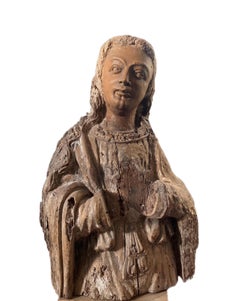
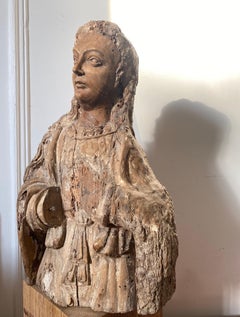
Gothic Renaissance wooden sculpture: bust of a young Saint or Angel

Gothic Renaissance wooden sculpture: bust of a young Saint or Angel

Located in Norwich, GB

This remarkable, deeply evocative fragment is a hand-carved piece of religious statuary from 16th Century France. It depicts the torso of a serene figure, likely a Saint or Archangel...

Category

Renaissance 16th Century Art

Materials

Wood

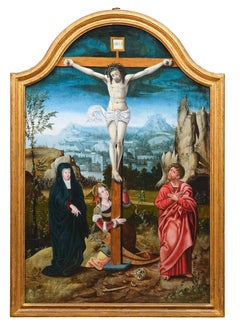
Painted Christ Crucified with Saints oil on panel 16th century

Painted Christ Crucified with Saints oil on panel 16th century

Located in Milan, IT

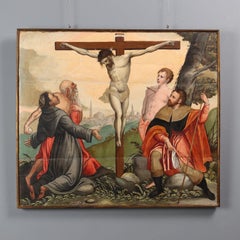
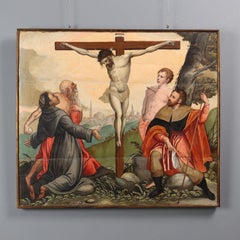
Oil on Board. Venetian school of the mid-16th century. The crucified Christ in the center of the scene is surrounded by four saints identifiable by their iconographic signs: on the l...

Category

Other Art Style 16th Century Art

Materials

Oil

Portrait du Prince de Phalsbourg

Portrait du Prince de Phalsbourg

By Jacques Callot

Located in Chicago, IL

Watermark: Lion and Star (Lieure 38) References: Lieure No. 505 Notes: An early impression of the only state of this major work. According to Lieure (Jacques Callot: Catalogue de l...

Category

Old Masters 16th Century Art

Materials

Etching

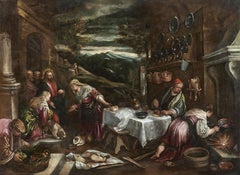
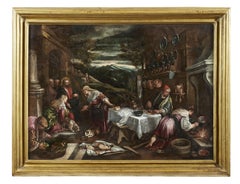
16th Century Christ in Mary's House Francesco Bassano Magdalene Oil on Canvas

16th Century Christ in Mary's House Francesco Bassano Magdalene Oil on Canvas

Located in Sanremo, IT

Painting oil on canvas, measuring 82 x 112 cm without frame and 100 x 130 cm with contemporary frame, depicting Christ in the house of Mary and Magdalene by the painter Francesco Bas...

Category

Old Masters 16th Century Art

Materials

Canvas, Oil

"Adoration of the Magi"

"Adoration of the Magi"

Located in Edinburgh, GB

Attributed to Francesco Mazza, called "Il Parmigianino" (1503-1540) – "Adoration of the Magi" Medium: Oil on canvas Dimensions: 88 x 134 cm (unframed), 205 x 149 cm (framed) Proven...

Category

Realist 16th Century Art

Materials

Canvas, Oil

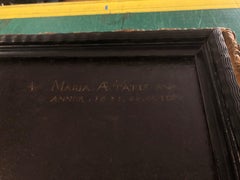
Framed Rubbing of 1550 Brass Monument in Grote Kerk Church, Breda, Netherlands

Framed Rubbing of 1550 Brass Monument in Grote Kerk Church, Breda, Netherlands

Located in Alamo, CA

This is an engraving of a tomb monument rubbing that has been highlighted with gold color on a dark grey to black background. The rubbing is of a brass plaque on a stone slab. It has...

Category

Northern Renaissance 16th Century Art

Materials

Engraving

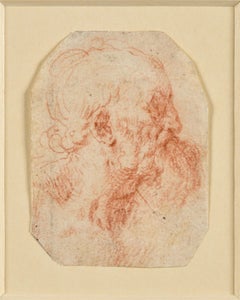
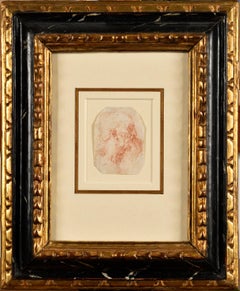
Bearded Man in Profile, Red Chalk on Paper, 16th Century, Framed

Bearded Man in Profile, Red Chalk on Paper, 16th Century, Framed

By Leonardo da Vinci

Located in Paris, Île-de-France

Circle of Leonardo da Vinci (Vinci, 1452 – 1519, Clos-Lucé) First half of the 16th century Study of a Bearded Man in Profile, Facing Right Red chalk on paper 8 × 6 cm Unsigned Provenance: Private collection This delicate drawing belongs to the Lombard school and was created by an artist working under the influence of Leonardo da Vinci, very likely within his close circle. The profile recalls the Apostle at the far left of The Last Supper, and may even derive directly from Leonardo’s own compositional sketches for the mural (Gallerie dell’Accademia, Venice, inv. 254). While Leonardo’s version carries a profound religious and political message, this sheet reveals a more naturalistic interpretation. The precise outlines and the controlled hatching distinguish it from the master’s hand, yet the subtle modeling of the face in red chalk shows clear echoes of Leonardo’s refined technique. Comparable examples are preserved in the Royal Collection Trust, Windsor, including The Head of an Old Man Crowned with a Wreath of Laurels (recto) and The Head of an Old Man in Profile, both originally from Francesco Melzi...

Category

Old Masters 16th Century Art

Materials

Chalk, Laid Paper

Portrait Dante Alighieri Cristofano Papi Dell'altissimo Paint 16/17th Century

Portrait Dante Alighieri Cristofano Papi Dell'altissimo Paint 16/17th Century

Located in Riva del Garda, IT

Florentine school of the sixteenth century Cristofano di Papi dell'Altissimo (Florence 1525 – 1605) workshop Portrait of Dante Alighieri (Florence 1265 - Ravenna 1321) Oil o...

Category

Old Masters 16th Century Art

Materials

Oil

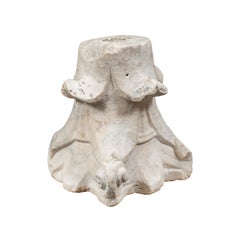
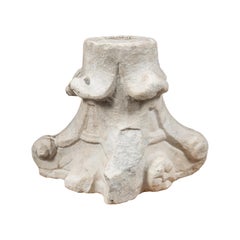
Italian carved stone capital - 16th-17th century architectural fragments

Italian carved stone capital - 16th-17th century architectural fragments

Located in Varmo, IT

Carved stone capital. Italy, 16th-17th century. 30 x 25 x h 25 cm. Entirely carved in stone, some breaks and losses. The lawful provenance of the object has been verified and conf...

Category

Renaissance 16th Century Art

Materials

Stone

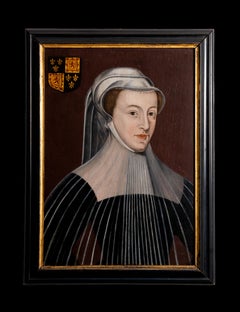
En Deuil Blanc Portrait of Mary, Queen of Scots (1542-87)

En Deuil Blanc Portrait of Mary, Queen of Scots (1542-87)

Located in Oxford, GB

English School ‘En Deuil Blanc’ Portrait of Mary, Queen of Scots (1542-87) Oil-on-panel 14 x 10 in. c.1600 Provenance Christie’s, South Kensington, November, 2011; Private collecti...

Category

16th Century Art

Materials

Oil

Girl in Chair, Flemish School Oil Painting, Renaissance, 16th Century

Girl in Chair, Flemish School Oil Painting, Renaissance, 16th Century

Located in Brooklyn, NY

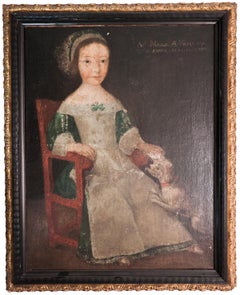
This exquisite oil painting on wood, created by an unknown Flemish artist in 1594, depicts a young girl seated in a chair. The artwork is in very good condition, though some modest r...

Category

Renaissance 16th Century Art

Materials

Oil

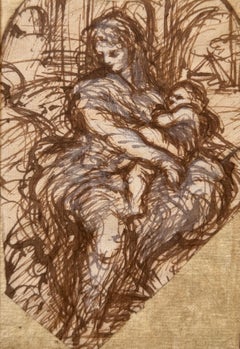
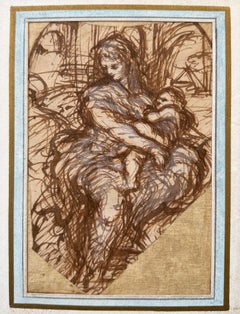
16th Century Italian Renaissance Pen and Ink Study of Figures

16th Century Italian Renaissance Pen and Ink Study of Figures

Located in Paris, Île-de-France

Italian School, 16th Century Studies of Figures Pen and ink on paper, 23 × 24 cm Unsigned A finely executed sheet presenting vigorous figure studies, drawn with assured pen strok...

Category

Old Masters 16th Century Art

Materials

Ink

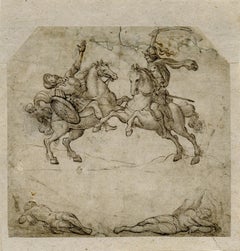
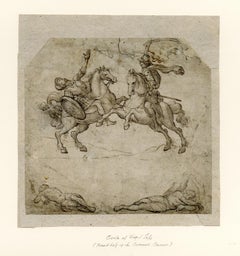
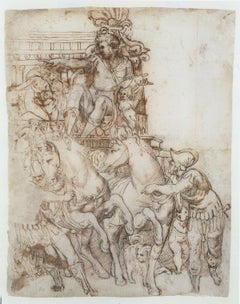
Mythological combat scene with Roman soldiers on horseback.

Mythological combat scene with Roman soldiers on horseback.

By Virgil Solis

Located in Middletown, NY

Pen and brownish black ink on grayish-cream laid paper, 6 1/2 x 8 inches (165 x 175 mm), irregular hexagonal sheet with margins. Some archival repairs along the top sheet edge, scatt...

Category

Old Masters 16th Century Art

Materials

Ink, Laid Paper, Pen

Conestabile Madonna Old Master Renaissance

Conestabile Madonna Old Master Renaissance

By (after) Raphael (Raffaello Sanzio da Urbino)

Located in London, GB

After Raphael Conestabile Madonna 1483 - 1520 Oil on poplar panel Image size: 8 x 8 inches (20.5 x 20.5 cm) Original ornate hand carved gilt frame Conestabile Madonna Made in compos...

Category

Old Masters 16th Century Art

Materials

Canvas, Oil

Sensus Victoria - Etching - 16th Century

Sensus Victoria - Etching - 16th Century

Located in Roma, IT

Etching on paper realized by an unknown italian master in the early 16th century after Battista Franco. Not signed. Full margins, very good condition.

Category

Modern 16th Century Art

Materials

Etching

16th Century Italian Renaissance Old Master Portrait of a Procuratore

16th Century Italian Renaissance Old Master Portrait of a Procuratore

By Jacopo Bassano

Located in London, GB

Jacopo BASSANO (c. 1510-1592, Italian) Portrait of a Procuratore Oil on canvas 30 ¼ x 26 inches (including frame) Provenance: Lucien Bonaparte’s Collection (as Portrait of Doge Priuli, Tiziano); Rich-mond, Virginia Museum, Portrait of Doge Lorenzo Priuli. The painting is a portrait of a man half-length, on a black background. It is a three-quarter portrait, according to a custom very common in the genre of portraiture in sixteenth century. The man is wearing a decorated...

Category

Old Masters 16th Century Art

Materials

Oil

Fenzoni, Painting AND preparatorial Drawing, John the Baptist, Italy Renaissance

Fenzoni, Painting AND preparatorial Drawing, John the Baptist, Italy Renaissance

By Ferrau Fenzoni

Located in Greven, DE

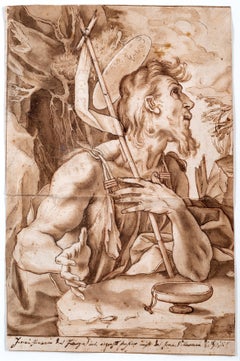
The painting and the preparatory drawing are offered together. Provenance Private collection, Germany, Trier, c. 1980- 2013 Saint John the Baptist Brown ink and wash over red chalk on oatmeal paper 31 x 20.5 cm Inscribed: „Ferrau Fenzonio da Faenza invt. esque … imp. da Fran. Villamena …“. bears the collector's mark of Henry Scipio Reitlinger (1882-1950; Lugt 2274a) on a tiny label glued to the verso On the reverse is a partial drawing of a Pieta, pricked for transfer. Provenance New York, Doyle, 14. October 2015, No. 6 The painting and the preparatory drawing resemble the composition of an engraving after Ferraù Fenzoni by Francesco Villamena. Drawing, engraving and painting are almost identical, except for minor differences. Even the measurements nearly correspond: painting (32 x 25,5 cm), drawing (30 x 20,5 cm), engraving (31,1 x 23,5 cm). Dr. Guiseppe Scavizzi confirmed the attribution of the present panting to Fenzoni and he dates it to c. 1590. The inscription on the drawing reads “Ferrau Fenzonio da Faenza invt. esque. . . imp. da Fran: Villamena . . .”. The engraving’s inscription also lists place and date “Ferra Fensionius inventor/F. Villamoena sculpsit Rome/Aspectu fruitur… antra puer/cum Privilegio… 1613”. Interestingly, the engraving is not mirrored as it is in most printing processes. Painting, drawing and engraving are not reversed but the same. It is remarkable to note that there are further paintings by Fenzoni which were engraved in the same order and not reverted. They also show strong parallels regarding the compositions and the measurements (see for example “Deposition of Christ” ). Ferraù Fenzoni was an Italian painter mainly active in Todi. He is also called Il Faenzone after his birthplace (Faenza). He apprenticed in Rome during the papacy of Gregory XIII and contributed to numerous fresco cycles under pope Sixtus V, such as the Loggia della Benedizioni in the Lateran Palace, the frescoes on the walls and vaults of the Scala Santa of the adjacent Basilica of San Giovanni in Laterano, and the decoration in the Sistine library. His expressive canvases straddle the styles of Mannerism and Baroque. In 1594, he moved to Todi. A “Last Judgement” by him is housed in the cathedral of Todi. He returned to Faenza in 1599, where he decorated chapels in the cathedral from 1612 to 1616. In 1622, he completed a “Deposition”, now in the local Pinacoteca. In 1640, Fenzoni was named “cavaliere dello speron d’oro” by Cardinal Colonna and, on 25th April 1634, he was nominated vicar and “castellano of Granarolo”. Fenzoni‘s style is characterized by a mixture of the Mannerism of the Northern Netherlands and the Italian Baroque. Saint John the Baptist, Old Master, 17th Century, By Fenzoni, Religious Scene, Rome Art...

Category

Mannerist 16th Century Art

Materials

Canvas, Oil, Handmade Paper

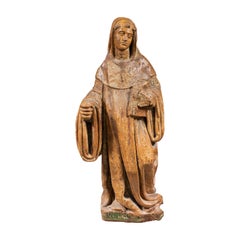
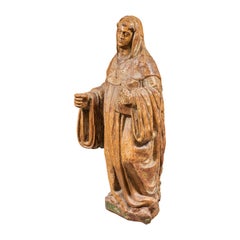
Italian Baroque carved wood sculpture - Saint Robert - 16th century

Italian Baroque carved wood sculpture - Saint Robert - 16th century

Located in Varmo, IT

Italian sculptor (16th century) - Saint Robert. 54 x 30 x h 112 cm. Full-length figure in carved, lacquered, and painted wood. Saint Robert is depicted standing in full figure, id...

Category

Renaissance 16th Century Art

Materials

Wood, Paint

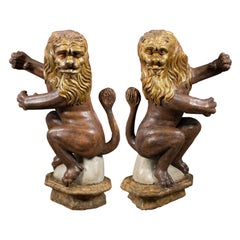
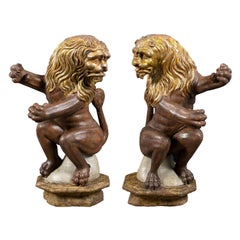
Pair of Venetian 16th Century carved and gilded wood heraldic lions

Pair of Venetian 16th Century carved and gilded wood heraldic lions

Located in Varmo, IT

Venetian sculptor (late 16th century) - Pair of flag-bearing lions. 40 x 30 x h 75 cm. Full figures in carved, painted and gilded wood. The two lions, conceived as a mirrored pair...

Category

Renaissance 16th Century Art

Materials

Wood

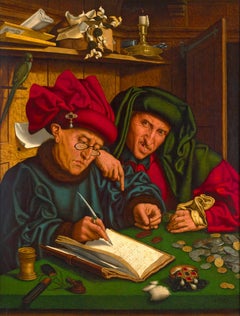
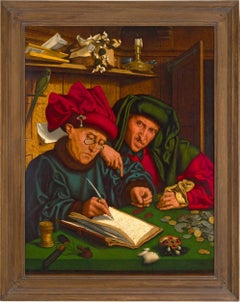
The Tax Collectors attributed to Marinus van Reymerswaele

The Tax Collectors attributed to Marinus van Reymerswaele

Located in New Orleans, LA

Marinus van Reymerswaele c.1490 – c.1546 Dutch The Tax Collectors 16th century Oil on wood panel Marinus van Reymerswaele stands among the greatest and most beloved artists of 16th-century Antwerp. Entitled The Tax Collectors, this oil on board original exudes the technical skill and life-like vibrancy for which the artist is renowned. In a quiet interior scene, two men sit at a green table covered in coins, jewels, and empty moneybags. While the man in the red turban...

Category

16th Century Art

Materials

Oil, Wood Panel

16th Century Cristofano Roncalli Saint Catherine of Siena Oil on Panel

16th Century Cristofano Roncalli Saint Catherine of Siena Oil on Panel

Located in Milano, Lombardia

Cristoforo (Cristofano) Roncalli (Pomarance, Italy, 1552 - Rome, Italy, 1626) Title: Saint Catherine of Siena chooses the crown of thorns Medium: Oil on wood Dimensions: without frame 101.5 x 59.5 cm - with frame 120 x 76 cm Shaped, carved and sculpted wooden cassetta frame, partly gilded and partly ebonized wood Not signed Expertise by Marco Ciampolini and Alessandro Nesi, art historians The marvellous scene that opens before our eyes is that of Christ's apparition to Saint Catherine of Siena; she must choose between a golden crown, the symbol of earthly royalty, and a crown of thorns, the symbol of virtuous Christian sacrifice. Catherine does not hesitate to choose the crown of thorns, her life in imitation of...

Category

Old Masters 16th Century Art

Materials

Oil

16th Century Italian Old Master Drawing Attributed to Benedetto Caliari

16th Century Italian Old Master Drawing Attributed to Benedetto Caliari

Located in Paris, Île-de-France

Benedetto Caliari (Verona 1538 – 1598 Venice) Portrait of a Woman Pen and brown ink, brown ink wash, heightened with white gouache, on prepared brown paper 22.4 × 30 cm Provenance...

Category

Old Masters 16th Century Art

Materials

Ink, Gouache, Washi Paper, Laid Paper

Lady Dormore - A 16th Century Portrait of a key member of Shakespeare's England

Lady Dormore - A 16th Century Portrait of a key member of Shakespeare's England

Located in London, GB

Lady Dormer, Mary Browne c. 1592 oil on panel 35 x 29 inches, unframed; 41 x 34.75 inches, inc. frame Inscribed 'Lady Dormore' Mary married Henry Wriothesley, 2nd Earl of Southampton who gave birth to Henry Wriothesley, 3rd Earl of Southampton - one of the great figures in Shakespears"s circle and founder of the Virginia company, developers of Virginia USA. Henry Wriothesley, born 6 October 1573 at Cowdray House, Sussex, was the only son of Henry Wriothesley, 2nd Earl of Southampton, by Mary Browne, the only daughter of Anthony Browne, 1st Viscount Montague, and his first wife, Jane Radcliffe.[5] He had two sisters, Jane, who died before 1573, and Mary (c. 1567 – 1607), who in June 1585 married Thomas Arundell, 1st Baron Arundell of Wardour.[6] After his father's death, Southampton's mother married firstly, on 2 May 1595, as his second wife, Sir Thomas Heneage (d. 17 October 1595), Vice-Chamberlain of the Household, and secondly, between 5 November 1598 and 31 January 1599, Sir William Hervey. She died in November 1607.[7] Early life When his father died on 4 October 1581 Southampton inherited the earldom and landed income valued at £1097 6s per annum. His wardship and marriage were sold by the Queen to her kinsman, Charles, Lord Howard of Effingham, for £1000. According to Akrigg, Howard then "entered into some further agreement, of which no documentation can now be found, which transferred to Lord Burghley personally the custody and marriage of the young Earl, but left Howard holding his lands", and late in 1581 or early in 1582 Southampton, then eight years of age, came to live at Cecil House in the Strand.[8] In October 1585, at age twelve, Southampton entered St John's College, Cambridge,[9] graduating M.A. on 6 June 1589.[10] His name was entered at the Gray's Inn legal society before he left the university, and he was admitted on 29 February 1588.[11] On Southampton's 16th birthday, 6 October 1589, Lord Burghley noted Southampton's age in his diary, and by 1590 Burghley was negotiating with Southampton's grandfather, Anthony Browne, 1st Viscount Montague, and Southampton's mother, Mary, for a marriage between Southampton and Lord Burghley's eldest granddaughter, Elizabeth Vere, daughter of Burghley's daughter, Anne Cecil, and Edward de Vere...

Category

Old Masters 16th Century Art

Materials

Oil

Christ De Vos Paint 16/17th Century Oil on canvas Old master Flemish school Art

Christ De Vos Paint 16/17th Century Oil on canvas Old master Flemish school Art

Located in Riva del Garda, IT

Maarten de Vos (Antwerp, 1532–1603) workshop Christ Expelled from the Temple in Jerusalem (Or The Stoning of Christ) Oil on canvas 109 x 86 cm. Framed: 121 x 97 cm. Anyone pa...

Category

Old Masters 16th Century Art

Materials

Oil

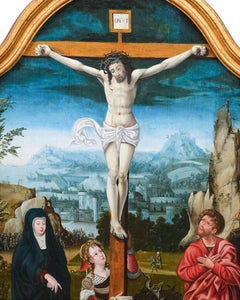
Crucifixion, Antwerp, Flemish 16th century, oil on panel

Crucifixion, Antwerp, Flemish 16th century, oil on panel

Located in PARIS, FR

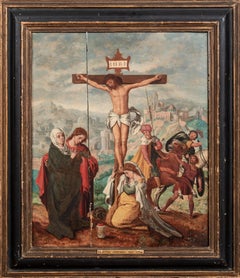
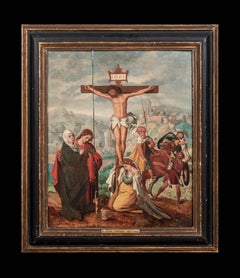
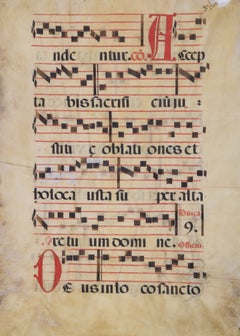
Crucifixion, studio of the Master of the Half-Figures (Antwerp, active 1500-1550), not signed Antwerp School, mid-16th century Oil on oak panel , h. 88 cm, w. 59 cm Original frame, framed: h. 98 cm, w. 68 cm A rare example of Antwerp painting from the first half of the 16th century, our Crucifixion captivates as much by the quality of its expansive river landscape as by the delicacy of its figures and the brilliance of its palette. The richness of the colors, the balance between devotion and narrative, and the subtlety of the atmospheric effects make it a particularly representative work of the artistic refinement developed in the workshop of the Master of the Half-Figures. Through its remarkable synthesis of the world-landscape inherited from Patinir and the expressive gentleness characteristic of the Master of the Half-Figures, this composition stands out as a particularly accomplished example of the Antwerp Flemish Renaissance. Our painting of the Crucifixion is organized around the central figure of Christ nailed to a high cross erected atop Golgotha. His slender, pale body stands out against a blue-green sky that lightens towards the horizon, creating an atmospheric depth characteristic of Flemish painting of this period. The bowed head, encircled by the crown of thorns, expresses agony in a restrained pose. The white loincloth, tied at the front according to a recurring motif in the work of the Master of the Half-Figures, has one end drawn between the legs before billowing outwards in a movement lifted by the wind, subtly animating Christ's silhouette. At the foot of the cross, a skull and a few bones evoke Adam and the redemption of humanity through Christ's sacrifice. To the left stands the Virgin Mary, enveloped in a flowing blue-green mantle whose heavy folds accentuate her contemplative posture. Her pale face, framed by a white veil, expresses silent sorrow. Kneeling at the center of the composition, Mary Magdalene embraces the cross in a gesture of fervent devotion, while to the right, Saint John, clad in a richly textured red cloak, gazes up at Christ, his hands folded across his chest. Contrary to the iconography typically found in 16th-century Antwerp workshops, he appears here as a bearded, middle-aged man. This relatively rare characteristic, however, is found in several works by the Master of the Half-Figures. The Virgin's face displays the typical characteristics of the Master of Half-Figures' repertoire : a high forehead, full cheeks, a rounded chin, and a gentle expression tinged with restrained melancholy. This youthful, feminine physiognomy is found in numerous depictions of Virgins, Magdalenes, and other saints from his workshop. The figures are also distinguished by their smooth complexions, elegant proportions, and attention to the richness of the fabrics, favoring formal refinement over dramatic expressiveness. The background unfolds according to the world-landscape formula inherited from Joachim Patinir. A vast panorama, blending a fortified city, estuary, winding paths, rocky outcrops, and bluish hills, stretches behind the sacred figures. At the heart of this lively river landscape, a small port, quays, and several boats also appear, their silhouettes punctuating the waterway and testifying to the attention paid by Antwerp painters to the commercial and maritime activities that ensured the city's prosperity. The composition is structured by a succession of narrative planes that invite the viewer's eye to move through the image as a continuous story, a technique characteristic of Antwerp painting in the first half of the 16th century. Behind the main scene appears the episode of the Carrying of the Cross, depicted by a group of soldiers and horsemen, with Golgotha rising on the mountain to the left, while to the right, in a grotto carved into the rocks, unfolds the Entombment of Christ. This multifaceted narrative, integrated into the landscape, enriches the meditative dimension of the work while highlighting its kinship with the inventions of Patinir. The attribution to the workshop of the Master of the Half-Figures seems all the more plausible given that several art historians, notably Robert Koch and Walter Gibson...

Category

Old Masters 16th Century Art
Materials

Oil, Wood Panel

The Virgin and Child Enthroned

The Virgin and Child Enthroned

Located in London, GB

Studio of Adriaen Isenbrandt 1510 - 1551 The Virgin and Child Enthroned Oil on oak panel, wax seal verso Image size: 10 3/4 x 8 inches (27 x 20.5 cm) Contemporary style frame (image below) POA Provenance Collection of Mrs Marianne Hudson Mary, holding Jesus in her arms, is centrally positioned against a gold detailed architectural backdrop, reflecting the traditional iconography of the enthroned Virgin and Child. This composition suggests the theme of “Maestà” or “Majesty,” emphasising the figures religious significance. In the painting from the studio of Adriaen Isenbrandt, the artist masterfully infuses the scene with rich symbolism and hidden meanings that reflect the cultural and religious context of the period. The infant Christ, seated on the Virgin Mary’s lap, is draped in a delicate, translucent white garment that symbolises his purity. In his hand, he clutches a piece of coral, a multifaceted symbol representing immortality, youth, and health. Notably, coral was also a common teething tool during that era, adding another layer of contemporary relevance. A scarlet-headed blackbird, native to South America, perches gracefully on Christ’s outstretched finger. This bird is a potent symbol of creation and protection, enhancing the divine narrative of the scene. Mary, with a tender and loving gesture, caresses Christ’s back while gazing adoringly at her son, underscoring her role as the nurturing mother of God. Mary is centrally positioned within an architectural alcove, which subtly suggests a heavenly halo without explicitly depicting one. The alcove’s niches, traditionally used to emphasise the importance of sculptures, further highlight her significance. She is adorned in a voluminous red gown, with the undulating folds of the fabric accentuated by white highlights. The red colour of her dress symbolises maternal qualities, while the iridescent blue undercoat, visible in certain areas, signifies sanctity and purity due to its rarity and expense at the time. Moreover, Mary is depicted as the epitome of contemporary Medieval...

Category

Dutch School 16th Century Art

Materials

Oil, Wood Panel

Illuminated Manuscript Painting by the German School

Illuminated Manuscript Painting by the German School

By German School

Located in New Orleans, LA

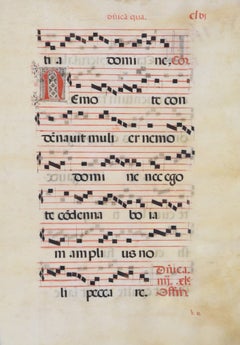
Extraordinary in its beauty and rarity, this early 16th-century German painting of an illuminated manuscript showcases a masterful trompe l’oeil effect. Unequivocally among the finest of only 17 known works of its kind, the oil on panel is both rare and captivating. With illusory pages that appear to leap from the panel, this virtuosic painting of a hand-colored book suspended into space is exceptional. Created more than four centuries ago, the composition evokes a strong sense of realism. Executed by a masterful Northern Renaissance artist of the German school, the illuminated manuscript pictured shows the astonishing splendor of the historical books of the period. Sumptuously decorated with scrolling floral motifs in the margins, the manuscript appears before a deep black background, heightening the trompe l’oeil illusion of depth through its strong contrast and the naturalistic shadows falling across the fluttering pages. It has been said that of the 17 known versions of this composition, ours stands alone in its precision in both perspective and the play of light and shadow. The visible folios feature choral arrangements and other texts, indicating the pictured manuscript likely served a role in the celebration of church services. In fact, other examples of manuscript paintings...

Category

Renaissance 16th Century Art

Materials

Oil, Panel

Madonna In Glory Angels Balducci Paint 16/17th Century Oil on table Old master

Madonna In Glory Angels Balducci Paint 16/17th Century Oil on table Old master

Located in Riva del Garda, IT

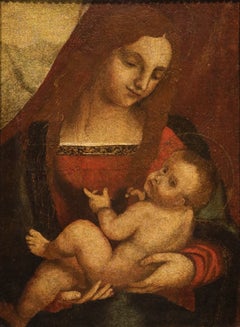
Giovanni Balducci, known as Il Cosci (Florence, 1560 – Naples, after 1631) Madonna in Glory Surrounded by Angels Oil on panel (48 x 37 cm. - In frame 68 x 57 cm.) We are offer...

Category

Old Masters 16th Century Art
Materials

Oil

Saint John Baptist Venusti Paint 16th Century Oil on canvas Old master Italy Art

Saint John Baptist Venusti Paint 16th Century Oil on canvas Old master Italy Art

Located in Riva del Garda, IT

Marcello Venusti (Mazzo di Valtellina 1510 - Rome 1579) workshop/circle Saint John the Baptist Oil on canvas (65 x 50 cm. -  In frame 74 x 58 cm.) The work depicts Saint John...

Category

Old Masters 16th Century Art
Materials

Oil

Ca. 1578 Old Master Engraving "Siculus" After Jan vander Straet (Strandanus)

Ca. 1578 Old Master Engraving "Siculus" After Jan vander Straet (Strandanus)

By Jan Van der Straet

Located in Chicago, IL

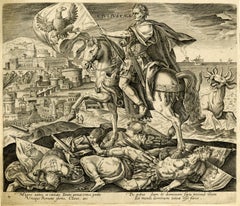
Circa. 1578, Engraving "Siculus" - from the portfolio “The Stables of Don John of Austria” (Equile Austriaci Caroli V)" After Jan van der Straet (Stradanus). An Old Master print from the series of 43 engravings depicting horses of different breeds from the stables of John of Austria (1547-1578), son of Emperor Charles V. Each print shows a horse in the foreground on a hilltop overlooking a distant landscape. Each bears it's title breed, centered upper edge, with two columns of brief explanatory Latin texts in the lower margins. Published by Philips Galle...

Category

Old Masters 16th Century Art
Materials

Engraving, Paper