Early 1800s Art

154 Results
to
14
100
37
7
6
6
Overall Width
to
Overall Height
to
7,798
22,016
167,703
237,618
2,158
2,349
4,720
6,443
5,970
16,017
21,427
26,887
19,424
14,221
5,591
37
14
98
50
50
25
19
18
18
17
17
12
11
9
9
9
8
8
6
5
5
4
84
67

Use search to find more

15
6
6
5
4

Use search to find more

Period: Early 1800s
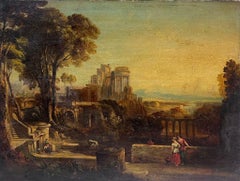
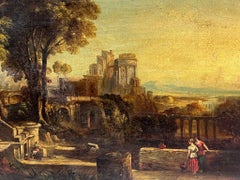
Fine 1800's Italian Grand Tour Oil Painting Figures before Classical Buildings

Fine 1800's Italian Grand Tour Oil Painting Figures before Classical Buildings

Located in Cirencester, Gloucestershire

The Arcadian View Italian School, circa 1800 Grand Tour subject oil on canvas, unframed canvas : 12 x 16 inches provenance: private collection, UK condition: very good and sound cond...

Category

Old Masters Early 1800s Art

Materials

Oil

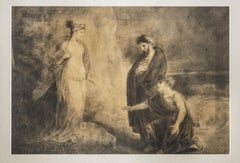
William Hamilton Classical Greek Vase-Painting Engraving

William Hamilton Classical Greek Vase-Painting Engraving

By Pierre Francois Hugues D'Hancarville (author)

Located in Melbourne, Victoria

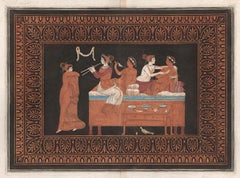
Subject : Ancient Greek vase-painting depicting (left) Europa garlanding the bull, Eros flying between Zeus and Aphrodite, (right) Dionysus, Eros, satyr and maenades, from an Apulian...

Category

Other Art Style Early 1800s Art

Materials

Engraving

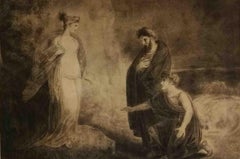
William Hamilton Classical Greek Vase-Painting Engraving

William Hamilton Classical Greek Vase-Painting Engraving

By Pierre Francois Hugues D'Hancarville (author)

Located in Melbourne, Victoria

Subject : Ancient Greek vase-painting depicting a warrior, seated young man, and young woman. Technique : Copper-line engraving with original hand-colouring Background informatio...

Category

Other Art Style Early 1800s Art

Materials

Engraving

Pair of Grand Tour Italian Neapolitan Costal Landscape

Pair of Grand Tour Italian Neapolitan Costal Landscape

Located in Roma, IT

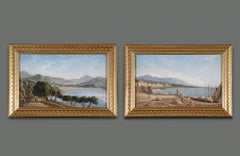
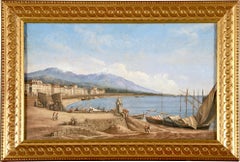
An important and extremely rare pair of Italian landscapes from the Neoclassical period, painted using the refined technique of tempera. They depict views of the Tyrrhenian coast ne...

Category

Old Masters Early 1800s Art

Materials

Paper, Tempera

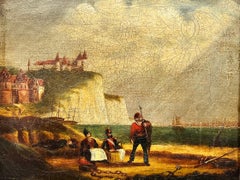
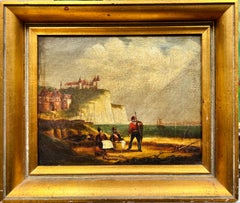
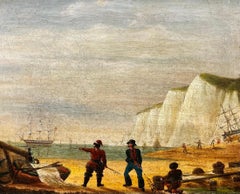
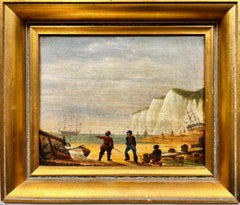
Napoleonic Wars Marine 1800's Oil Painting Soldiers on Beach War Ship at Sea

Napoleonic Wars Marine 1800's Oil Painting Soldiers on Beach War Ship at Sea

Located in Cirencester, Gloucestershire

English School, circa 1800 Napoleonic Wars Marine Scene oil on canvas, framed framed: 10.5 x 13 inches canvas: 8 x 10 inches private collection, England condition: The painting is i...

Category

Victorian Early 1800s Art

Materials

Oil

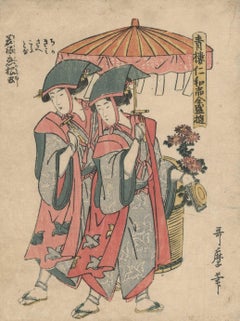
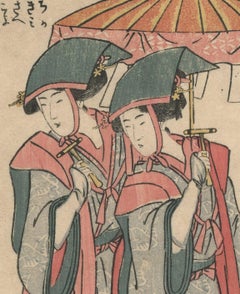
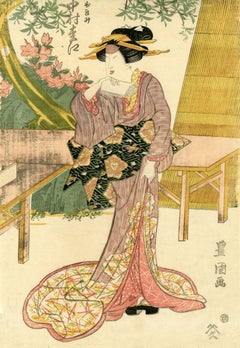
Famous Japanese woodcut artist Kitagawa Utamaro festival in the Yoshiwara

Famous Japanese woodcut artist Kitagawa Utamaro festival in the Yoshiwara

By Kitagawa Utamaro 1

Located in Fairlawn, OH

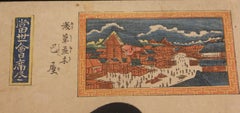
Kitagawa Utamaro (1750-1806) Wakamurasaki, Matsukaze ("Young Murasaki" and "Wind in the Pines.") Color woodcut, c. 1800 Signed in the block, Utamaro fude (see photo) Series: Seirō Niwaka Zensei Asobi ( "Popular Entertainment at the Niwaka Festival, Yoshiwara".) (Green Houses) is a poetic term for the pleasure quarters, specifically the Yoshiwara district."Niwaka" refers to amateur theatrical performances and parades held during the Niwaka festival Format: chuban Fresh colors and condition Housed in an 8 ply rag mat with OP3 Acrylic in a rounded corner Hackman 1" metal leaf frame Image size: 9 x 7 inches Frame size: 14-1/4 x 16-7/8 x 3/4" These are names of chapters from the classic 11th-century novel The Tale of Genji (Genji monogatari). The women in the print are likely performing a parody (mitate) or "modern" version of these classic themes. The print depicts two beauties in elaborate costumes, carrying umbrellas and flowers, typical of the processions held during the Niwaka festival in the Yoshiwara. Kitagawa Utamaro (1750-1806) Kitagawa Utamaro is highly appreciated as the dominating ukiyo-e artist of the late eighteenth century. Yet little is known about his life. Neither the precise date of Utamaro's birth, his birthplace, nor any substantial information about his parents are known. Utamaro’s original name was Ichitaro Kitagawa. It is generally agreed that he started his career as a pupil of the painter Toriyama Sekien. His early known works are actor portraits and theater programs, published under the name of Utagawa Toyoaki. In 1781/82 he changed his name to Kitagawa Utamaro. Around 1783 Utamaro started a successful cooperation with the publisher Tsutaya Juzaburo. Together they published several book illustrations. The early works of Utamaro were influenced by Torii Kiyonaga and Harunobu Suzuki...

Category

Other Art Style Early 1800s Art

Materials

Woodcut

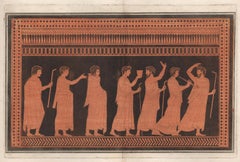
William Hamilton Classical Greek Vase-Painting Engraving

William Hamilton Classical Greek Vase-Painting Engraving

By Pierre Francois Hugues D'Hancarville (author)

Located in Melbourne, Victoria

Subject : Ancient Greek vase-painting depicting three draped young men and cortege of banqueters from an Attic column krater now in the British Museum. Technique : Copper-line engra...

Category

Other Art Style Early 1800s Art

Materials

Engraving

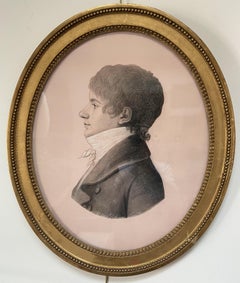
Early 19th century French School, Portrait of a man in profile, oval drawing

Early 19th century French School, Portrait of a man in profile, oval drawing

Located in Paris, FR

Early 19th century French School, Portrait of a young man in profile charcoal on cut paper applied to pink tinted paper Oval 58 x 47 cm (overall size) the portrait itself 41.5 x 28...

Category

Old Masters Early 1800s Art

Materials

Charcoal

William Hamilton Classical Greek Vase-Painting Engraving

William Hamilton Classical Greek Vase-Painting Engraving

By Pierre Francois Hugues D'Hancarville (author)

Located in Melbourne, Victoria

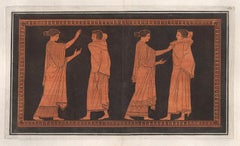
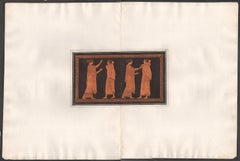
Subject : Ancient Greek vase-painting depicting two women and two youths from an unidentified vase. Technique : Copper-line engraving with original hand-colouring Background inf...

Category

Other Art Style Early 1800s Art

Materials

Engraving

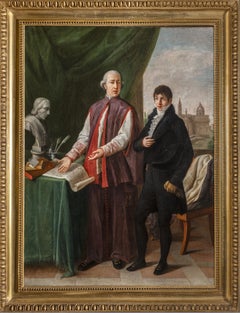
Portrait of a priest during his sermon

Portrait of a priest during his sermon

Located in BELEYMAS, FR

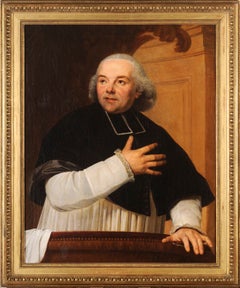
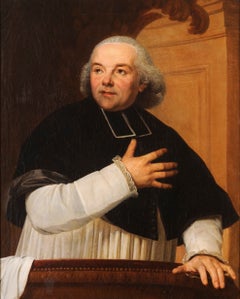
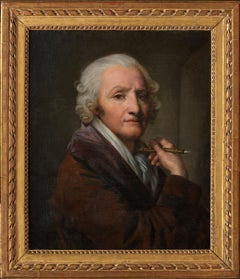
Claude François Henry PETIT de VILLENEUVE (Paris 1764 – Paris 1820) Portrait of a Priest During His Sermon Oil on canvas H. 83 cm; W. 68 cm Signed bottom center, dated 1808 Exhibiti...

Category

French School Early 1800s Art

Materials

Canvas, Oil

Ritratto di Donna, Oil on Canvas, Framed, 19th Century, Signed

Ritratto di Donna, Oil on Canvas, Framed, 19th Century, Signed

Located in Milan, IT

Olio su tela firmato in basso a destra dall'artista milanese Roberto Fontana, noto per aver iniziato la sua carriera nel romanticismo storico e successivamente affermatosi nella pitt...

Category

Other Art Style Early 1800s Art

Materials

Oil

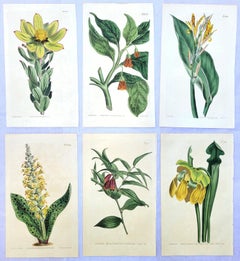
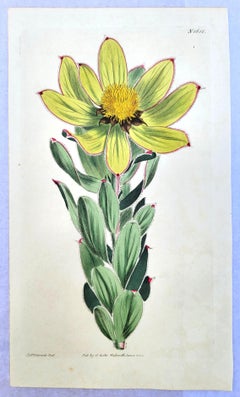
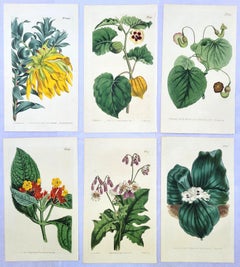
Set of Six Hand-Colored Engravings from Curtis's Botanical Magazine /// Botany

Set of Six Hand-Colored Engravings from Curtis's Botanical Magazine /// Botany

By William Curtis

Located in Saint Augustine, FL

Artist: William Curtis (English, 1746-1799) Title: Set of Six Hand-Colored Engravings Portfolio: The Botanical Magazine; or, Flower-Garden Displayed Year: 1803-1819 (Second series) M...

Category

Victorian Early 1800s Art

Materials

Watercolor, Engraving, Intaglio

Portrait of a Young Man, Charcoal 1800 French School, Romanticism

Portrait of a Young Man, Charcoal 1800 French School, Romanticism

Located in London, GB

Charcoal and grey wash on paper Image size: 14 3/4 x 13 3/4 inches (37.5 x 36 cm) Hand made gilt frame Provenance Private collection, Washington DC. C.G. Sloan & Co., Sept. 1980. T...

Category

Early 1800s Art

Materials

Charcoal, Paper

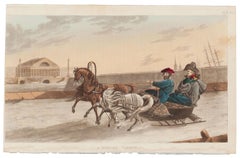
A Winter Sledge

A Winter Sledge

By Rudolph Ackermann

Located in Columbia, MO

Rudolph Ackermann (20 April 1764 in Stollberg, Electorate of Saxony – 30 March 1834 in Finchley, London)[1] was an Anglo-German bookseller, inventor, lithographer, publisher and busi...

Category

Early 1800s Art

Materials

Lithograph

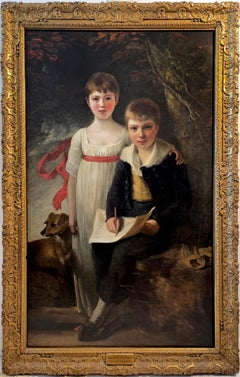
British Portrait of Two English Children Dog - Circle Sir William Beechey

British Portrait of Two English Children Dog - Circle Sir William Beechey

Located in Miami, FL

This charming portrait is a statement piece for any space. The two elegantly handsome sitters are brother and sister and are accompanied by their loyal dog. With 18th and 19th century British portraiture, it's the sitters' attractiveness that makes a painting desirable and drives price. There are lively brush strokes with impasto in the trees The nameplate identifies the sitters as Robert & Marianne Lawrence-Townsend - The Family of Lawrence-Townsend were originally descendants of the Lawrence Family of Wiltshire who inherited the name Townsend along with an estate, Steanbridge House near Stroud in Gloucestershire. Robert would appear to be the son born in 1797, educated at Eton and Christ Church, Oxford, former Captain in the British Army and who became a Magistrate for Gloucester. Condition is good with some old repairs. painting beckons with vibrancy. Presents very well and is best viewed with a top key light. Private collection and perhaps Phillips Auctioneers New York 1995 per letter. Framed Size 66 x 43.5 x 4 W.R. Peddigrew, Western Cardiff, South Wales Provenance: The Estate of Mrs. Eleanor Goddard Daniels, Worcester, Massachusetts. Sotheby Parke-Bernet, New York, June 1981 The uploaded video on 1stDibs is coming up a bit off color. Refer to the still images for more accurate color Originally this work was attributed to Sir William Beechey...

Category

Old Masters Early 1800s Art

Materials

Canvas, Oil

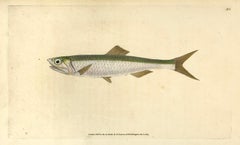
50: Clupea encrasicolus, Anchovy

50: Clupea encrasicolus, Anchovy

By Edward Donovan

Located in Columbia, MO

Edward Donovan (1768–1837) was an Anglo Irish writer, natural history illustrator and amateur zoologist. Born in Cork, Ireland, Donovan was an avid collector of natural history speci...

Category

Naturalistic Early 1800s Art

Materials

Color, Etching

48: Salmo eperlanus, Smelt

48: Salmo eperlanus, Smelt

By Edward Donovan

Located in Columbia, MO

Edward Donovan (1768–1837) was an Anglo Irish writer, natural history illustrator and amateur zoologist. Born in Cork, Ireland, Donovan was an avid collector of natural history speci...

Category

Early 1800s Art

Materials

Color, Etching

Set of Six Hand-Colored Engravings from Curtis's Botanical Magazine /// Botany

Set of Six Hand-Colored Engravings from Curtis's Botanical Magazine /// Botany

By William Curtis

Located in Saint Augustine, FL

Artist: William Curtis (English, 1746-1799) Title: Set of Six Hand-Colored Engravings Portfolio: The Botanical Magazine; or, Flower-Garden Displayed Year: 1801-1809 (Second series) M...

Category

Victorian Early 1800s Art

Materials

Watercolor, Engraving, Intaglio

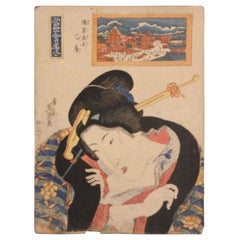
Biensennyo-ko Japanese Woodblock Print

Biensennyo-ko Japanese Woodblock Print

By Keisai Eisen

Located in Houston, TX

Japanese Woodblock print of a Biensennyo-ko a powder face women. Behind the women is a framed cityscape. The print is possibly from the series "Eight Favorite Things in the Modern World". The woodblock print is printed on rice paper. The print is not framed. Artist Biography: Keisai Eisen...

Category

Edo Early 1800s Art

Materials

Woodcut

Jean-Henri Cless (1774-1812) Portrait of a young woman, signed drawing

Jean-Henri Cless (1774-1812) Portrait of a young woman, signed drawing

Located in Paris, FR

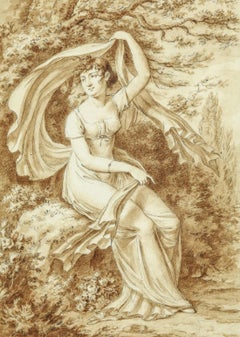
Jean-Henri Cless (1774-1812) Portrait of a young woman in a landscape signed "Cless fec" for fecit on the lower left Brown ink and brown ink wash on paper Size of the sheet : 31.5 x 22 cm Size of the motive : 24.5 x 17 cm very simply framed under glass without actual frame 32 x 22.5 cm This pre...

Category

Old Masters Early 1800s Art

Materials

Ink, Pencil

William Hamilton Classical Greek Vase-Painting Engraving

William Hamilton Classical Greek Vase-Painting Engraving

By Pierre Francois Hugues D'Hancarville (author)

Located in Melbourne, Victoria

Subject : Ancient Greek vase-painting depicting young nude man with thyrsus and flowers, opposite two young women with fillet, situla, phiale and thyrsus. Above left, Hercules in Nem...

Category

Other Art Style Early 1800s Art

Materials

Engraving

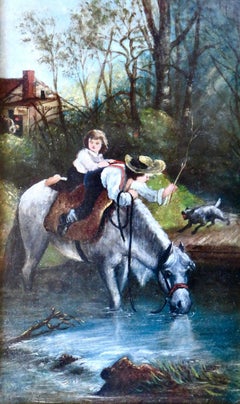
British Oil On Board Painting. Rural Subject, "Boys on Horseback" Circa 1800

British Oil On Board Painting. Rural Subject, "Boys on Horseback" Circa 1800

Located in Incline Village, NV

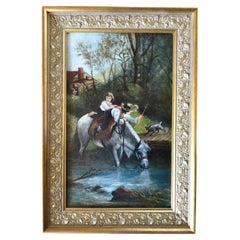
Charming early 19th century fine quality British oil on board; small painting with a lot going on; subject matter. rural scene of two young boys frolicking on white horseback down by...

Category

English School Early 1800s Art

Materials

Oil, Board

Early-19th-Century British Watercolour, Near Ingleton, Yorkshire

Early-19th-Century British Watercolour, Near Ingleton, Yorkshire

Located in Cheltenham, GB

US buyers pay no import tariffs on this item. This fine early 19th-century watercolour by British artist Amos Green (1735-1807) depicts an asperous gorge near Ingleton in Yorkshire....

Category

English School Early 1800s Art

Materials

Paper, Watercolor, Ink

1804 Etching St George's Chapel Windsor Castle Architectural Prince Harry Meghan

1804 Etching St George's Chapel Windsor Castle Architectural Prince Harry Meghan

By Frederick Nash

Located in London, GB

From a series of architectural prints of St George's Chapel; to see some others, scroll down to "More from this Seller" and below it click on "See all from this Seller." Frederick Nash (1782-1856) Drawn and etched Engraved by F C Lewis Arches and Columns London Published by F Nash, No 6 Asylum Buildings, Westminster Road July 12 1804 55x39cm Frederick Nash was born in Lambeth. Initially studying architectural drawing under Thomas Malton he subsequently enrolled at the Royal Academy of Arts. From 1801 to 1809 he worked with the antiquarians John Britton...

Category

Realist Early 1800s Art

Materials

Engraving, Etching

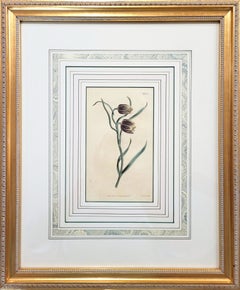
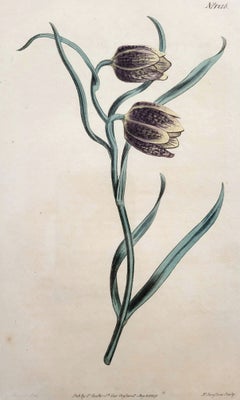
Fritillaria Racemosa Oriental Fritillary (Slender Fritillary) /// Curtis Flower

Fritillaria Racemosa Oriental Fritillary (Slender Fritillary) /// Curtis Flower

By William Curtis

Located in Saint Augustine, FL

Artist: William Curtis (English, 1746-1799) Title: "Fritillaria Racemosa Oriental Fritillary (Slender Fritillary)" (Vol. 30, Plate 1216) Portfolio: The Botanical Magazine; or, Flower...

Category

Victorian Early 1800s Art

Materials

Watercolor, Engraving, Intaglio

A Full-Length Portrait of Nicholas I of Russia in a Classical Setting

A Full-Length Portrait of Nicholas I of Russia in a Classical Setting

Located in London, GB

A Full-Length Portrait of Nicholas I of Russia in a classical setting. Pietro Labruzzi (1739–1805). 1802.    Signed, located and dated lower left: ‘Pietro Labruzzi Roma Pinx Anno 1802.’ Oil on canvas.   Dimensions:  Unframed: 135.7 x 98.5 cm.; 53½ x 38¾ in. Framed: 151.6 x 115.6 cm.; 59¾ x 45½ in. Description:  Nicholas I (Russian: Nikolay Pavlovich) (1796-1855), Russian Emperor...

Category

Early 1800s Art

Materials

Canvas, Oil

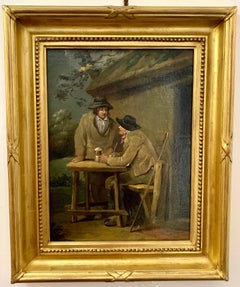
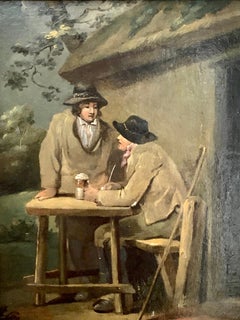
19th Century English Antique, Two Country farmers drinking beer in a landscape

19th Century English Antique, Two Country farmers drinking beer in a landscape

By George Morland

Located in Woodbury, CT

Attributed to George Morland. 19th Century English Antique, Two Country farmers drinking beer in a landscape. Wonderful early 19th-century original oil on canvas. A classic 'Morland' composition as the painter was a big fan of English Pub scenes...

Category

Old Masters Early 1800s Art

Materials

Canvas, Oil

Brookshaw Botanical, Natural History, Aquatint, Still Life, large folio

Brookshaw Botanical, Natural History, Aquatint, Still Life, large folio

By George Brookshaw

Located in Fairlawn, OH

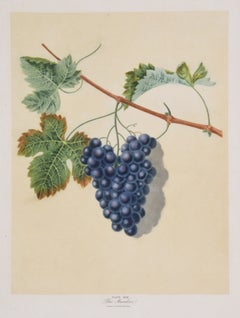
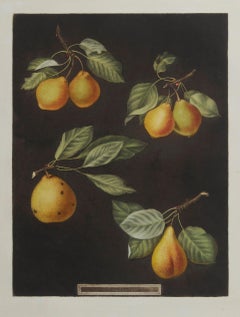
George Brrokshaw (1751-1823) Plate LVII, Black Frontiniac Aquatint printed in color on heavy laid paper watermarked J. Whatman 1809 Signed in the plate lower center margin (see photo) From: Pomona Britannica or A Collection of the Most Esteemed Fruits (90 Plates) Published: White, Cochrane & Co., E. Lloyd and W. Lindsell, London: [1804-] 1812 Format: Folio size, 1st edition Printer: Thomas Bensley (active c. 1760-1935) Considered to be a masterpiece of natural history illustration Condition: Excellent Never framed, fresh colors, full margins Image size: 17 3/4 x 13 3/4 inches Sheet size: 21 1/4 x 17 1/8 inches Provenance: W. Russell Button Gallery, Chicago Regerence: Dunthrone: 1938.050 Publication legend lower center: “Painted & Published as the Act Directs by the Author G. Brookshaw” followed by date, varying from 1804 to 1812. Title page credits: “Printed for the author by T. Bensley, Bolt Court, Fleet Street. Published by White, Cochrane and Co. Fleet Street; E. Lloyd, Harley Street; and W. Linsell, Corner of Wigmore Street.” George Brookshaw (1751-1823) (after) from Pomona Britannica; Or, a collection of the most esteemed fruits at present cultivated in this country… selected principally from the Royal Gardens at Hampton Court T. Bensley, London (printer) White, Cochrane & Co., E. Lloyd and W. Lindsell, London: [1804-] 1812 Folio edition Stipple engravings, printed in color, finished by hand 17.5 x 14 inches, plate mark, average approximate 22 x 17 inches, overall, average approximate Pomona Britannica, or a Collection of the Most Esteemed Fruits at present cultivated in the country…selected principally from the royal gardens at Hampton Court…accurately drawn and coloured from nature, with full descriptions was published in London from 1804—1812. Comprising 90 aquatint engravings, including 256 depictions of British fruit, after paintings by George Brookshaw. Published in London and engraved by R. Brookshaw and H. Merke. George Brookshaw (1751—1823) was born in Birmingham, England where he was apprenticed to Samuel Troughton (d. 1783), a Birmingham painter and japanner. According to a recent blog post related to St. Philips Cathedral, Birmingham, England, entitled In Search of Sobieski Brookshaw, by Gill Partridge, he may have received some art training from his father, also named George Brookshaw, who is listed as an engraver in a document dated 1751. George Brookshaw’s brother, Richard Brookshaw (1736—c.1804) was a portrait painter and engraver well versed in mezzotint and copperplate engraving techniques, and may have instructed his brother. In 1777, Brookshaw moved from Birmingham to London and began a celebrated career building fine cabinets detailed with hand-painted botanical and pomological motifs. Shortly afterward, in 1778, he married Sobieski Grice (1749—1811), daughter of William Grice, a prosperous gunsmith.The Prince of Wales was the most distinguished of Brookshaw’s well-heeled patrons, and today examples of Brookshaw’s cabinetry may be seen at the Victoria & Albert Museum, London. According to church records noted in Gill Partridge’s post, both George Brookshaw and Sobieski Grice were baptized at the Birmingham Cathedral. In his cabinet-making shop, Brookshaw also offered lessons in flower painting to ‘Ladies of Taste and Fashion’. During the mid 1790s, it appears his furniture-making business went bankrupt, and he led his life under an assumed name, G. Brown. In 1991, Lucy Wood wrote two articles in which she drew the connection between G. Brown and George Brookshaw. During his years of anonymity, Brookshaw worked as an illustrator of botanical books and gave flower-painting lessons, which may have been his primary source of income. Apparently, the marriage dowry he enjoyed while married to Sobieski Grice was lost after their marriage dissolved. Brookshaw returned to public view as the earliest parts of Pomona Britannica were issued. In Flower and Print Books of the 18th and Early 19th Centuries, Gordon Dunthorne extolls the virtues of George Brookshaw’s large folio edition. “One of the eminent English artists of the early nineteenth century is George Brookshaw, who issued in 1812, Pomona Britannica. Ninety aquatint plates, printed in colour and on a scale comparable to Thornton’s Temple of Flora...

Category

Other Art Style Early 1800s Art
Materials

Aquatint

Whimsical, Polychrome Wall Plaques

Whimsical, Polychrome Wall Plaques

Located in Los Angeles, CA

Charming, early 19th century, hand carved, gessoed, and 22-karat gold gilded, polychrome wall plaques featuring nature spirits surrounded by foliate wreaths. Each with wonderful, mis...

Category

Early 1800s Art

Materials

Gesso, Wood, Oil

Friends
Friends

Friends

By William Etty

Located in Miami, FL

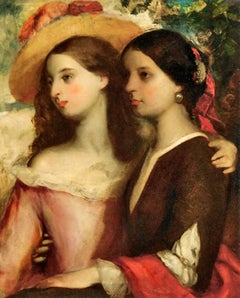
The Condition is fair. work has been slightly over-cleaned. A heavy layer of glossy varnish. The surface of the canvas is undulated and most apparent from extreme side view . Yet in...

Category

Romantic Early 1800s Art

Materials

Oil, Canvas

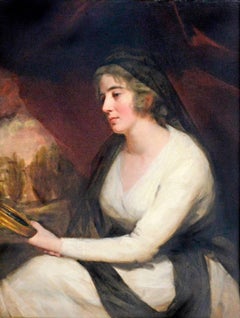
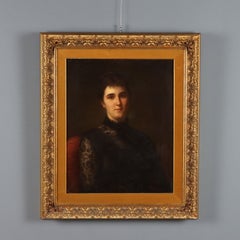
Painting: Portrait of a Lady, oil on canvas. A 19th-century English school.

Painting: Portrait of a Lady, oil on canvas. A 19th-century English school.

Located in Milan, IT

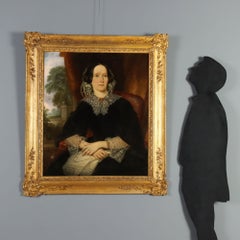
Oil on Canvas. A 19th-century English school. Half-length portrait of a woman sitting by a window that overlooks a glimpse of a landscape of a an English-style countryside scene; th...

Category

Other Art Style Early 1800s Art

Materials

Oil

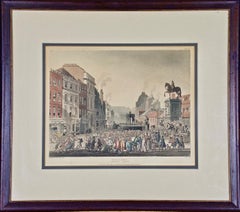
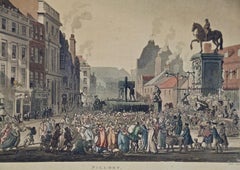
"Pillory, Charing Cross" by Rowlandson from "The Microcosm of London"

"Pillory, Charing Cross" by Rowlandson from "The Microcosm of London"

By Thomas Rowlandson

Located in Alamo, CA

"Pillory, Charing Cross" is an illustration (Plate 62) from "The Microcosm of London", published in London in 1809 by R Ackermann's Repository of Arts. The scene was created by one of the most famous British satirists and caricaturists of the late 18th and early 19th centuries' Georgian Period, Thomas Rowlandson, who drew the figures, while Augustus Charles Pugin drew the architecture. The plate was then created by Hill, Stadler and Bluck using a combination of aquatint and etching and was then hand colored with watercolor. Scenes illustrated in "The Microcosm of London" gives an accurate and often comical view of everyday life in London during the Regency Period of the early 19th century. While Pugin’s excellent architectural drawings capture the size and shape of the exterior as well as the interior of London’s principal buildings, Thomas Rowlandson’s insightful and often whimsical and satirical view of the city's inhabitants depicts the color and vitality of the late Georgian society, both rich and poor alike. This print depicts the "Pillory, Charing Cross", where criminals were brought and placed on display while secure in the stocks, as are seen in this print. A crowd is present in the square jeering at the prisoners. A statue of Charles I on horseback stands atop a very large pillar to the right. Shops with apartments are seen on the left. Young wealthy people frolic around and on a carriage on the right in front of the statue of King...

Category

Other Art Style Early 1800s Art

Materials

Etching, Aquatint

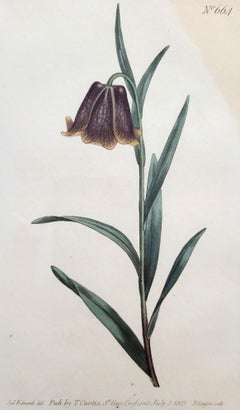
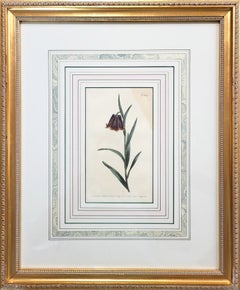
Fritillaria Pyrenaica (Pyrenean Fritillary) /// William Curtis Flower Engraving

Fritillaria Pyrenaica (Pyrenean Fritillary) /// William Curtis Flower Engraving

By William Curtis

Located in Saint Augustine, FL

Artist: William Curtis (English, 1746-1799) Title: "Fritillaria Pyrenaica (Pyrenean Fritillary)" (Vol. 18, Plate 664) Portfolio: The Botanical Magazine; or, Flower-Garden Displayed Y...

Category

Victorian Early 1800s Art

Materials

Watercolor, Engraving, Intaglio

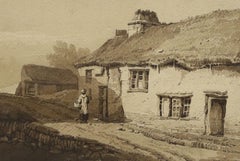
Cottages in Devon
Cottages in Devon

Cottages in Devon

By Samuel Prout

Located in Middletown, NY

An early Devonshire landscape, ex-collection West Collection of British Watercolors & the Fine Art Society, London. Circa 1800 Ink and brown wash on paper, 7 1/8 x 10 1/4 inches (...

Category

Realist Early 1800s Art

Materials

Ink, Watercolor, Graphite

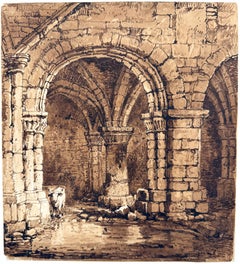
The Crypt at Kirkstall Abbey, Yorkshire

The Crypt at Kirkstall Abbey, Yorkshire

By Samuel Prout

Located in Middletown, NY

Pen and ink with black and brown ink and brown wash on buff wove paper, 10 3/8 x 9 3/8 inches (262 x 232 mm), the full sheet. Signed in brown ink in the lower right image area. In ve...

Category

English School Early 1800s Art

Materials

Ink, Watercolor, Handmade Paper

"A Great Man on The Turf": A 19th Century James Gillray Hand-colored Etching

"A Great Man on The Turf": A 19th Century James Gillray Hand-colored Etching

By James Gillray

Located in Alamo, CA

This framed hand-colored etching and aquatint entitled "A Great Man on The Turf or Sir Solomon in all his Glory" by James Gillray was published in London by Hanna Humphrey, 27 St. James Street on July 7th 1803. The print is signed in the plate in the lower right. It depicts a man, possibly a caricature of the racehorse breeder Sir Solomon. However, there has been some controversy about the identity of the central figure on the mound. Traditionally the man has been thought to represent John Russell, 6th Duke of Bedford...

Category

Early 1800s Art

Materials

Etching

19th century Victorian English Antique landscape with cottage, figure and cows

19th century Victorian English Antique landscape with cottage, figure and cows

By George Morland

Located in Woodbury, CT

Wonderful and outstanding example by one of England's known and much-loved 18th and 19th-century painters. Morland was an English painter who became one of the most popular artists o...

Category

Victorian Early 1800s Art

Materials

Oil, Canvas

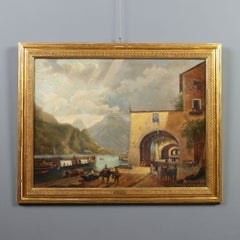
Lecco Imbarcadero 1837 Painting attributed to Giuseppe Canella

Lecco Imbarcadero 1837 Painting attributed to Giuseppe Canella

By Giuseppe Canella

Located in Milan, IT

Oil on Canvas. At the bottom left, you'll find the signature, date, and title. Giuseppe Canella is one of the most important Veronese landscape and cityscape painters of the 19th ce...

Category

Other Art Style Early 1800s Art

Materials

Oil

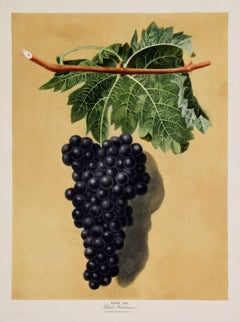
Brookshaw Botanical, Grapes, large folio, Natural Hisotry, Fruit Specimen

Brookshaw Botanical, Grapes, large folio, Natural Hisotry, Fruit Specimen

By George Brookshaw

Located in Fairlawn, OH

George Brookshaw (1751-1823) Plate XLIX Blue Muscadine Aquatint, engraving with some stipple, printed in colors with hand finishing on J Whatman 1809 paper 1804-1812 Signed in the plate lower center margin (see photo) From: Pomona Britannica or A Collection of the Most Esteemed Fruits (90 Plates) Published: White, Cochrane & Co., E. Lloyd and W. Lindsell, London: [1804-] 1812 Format: Folio size, 1st edition Printer: Thomas Bensley (active c. 1760-1935) Considered to be a msaterpice of natural history illustration Reference: Dunthrone 1938.50 Condition: Excellent Image size: 18 3/4 x 17 inches Sheet size: 21 1/4 x 17 inches Provenance: W. Russell Button Gallery, Chicago Notes: Publication legend lower center: “Painted & Published as the Act Directs by the Author G. Brookshaw” followed by date, varying from 1804 to 1812. Title page credits: “Printed for the author by T. Bensley, Bolt Court, Fleet Street. Published by White, Cochrane and Co. Fleet Street; E. Lloyd, Harley Street; and W. Linsell, Corner of Wigmore Street.” George Brookshaw (1751-1823) (after) from Pomona Britannica; Or, a collection of the most esteemed fruits at present cultivated in this country… selected principally from the Royal Gardens at Hampton Court T. Bensley, London (printer) White, Cochrane & Co., E. Lloyd and W. Lindsell, London: [1804-] 1812 Folio edition Stipple engravings, printed in color, finished by hand 17.5 x 14 inches, plate mark, average approximate 22 x 17 inches, overall, average approximate Pomona Britannica, or a Collection of the Most Esteemed Fruits at present cultivated in the country…selected principally from the royal gardens at Hampton Court…accurately drawn and coloured from nature, with full descriptions was published in London from 1804—1812. Comprising 90 aquatint engravings, including 256 depictions of British fruit, after paintings by George Brookshaw. Published in London and engraved by R. Brookshaw and H. Merke. George Brookshaw (1751—1823) was born in Birmingham, England where he was apprenticed to Samuel Troughton (d. 1783), a Birmingham painter and japanner. According to a recent blog post related to St. Philips Cathedral, Birmingham, England, entitled In Search of Sobieski Brookshaw, by Gill Partridge, he may have received some art training from his father, also named George Brookshaw, who is listed as an engraver in a document dated 1751. George Brookshaw’s brother, Richard Brookshaw (1736—c.1804) was a portrait painter and engraver well versed in mezzotint and copperplate engraving techniques, and may have instructed his brother. In 1777, Brookshaw moved from Birmingham to London and began a celebrated career building fine cabinets detailed with hand-painted botanical and pomological motifs. Shortly afterward, in 1778, he married Sobieski Grice (1749—1811), daughter of William Grice, a prosperous gunsmith.The Prince of Wales was the most distinguished of Brookshaw’s well-heeled patrons, and today examples of Brookshaw’s cabinetry may be seen at the Victoria & Albert Museum, London. According to church records noted in Gill Partridge’s post, both George Brookshaw and Sobieski Grice were baptized at the Birmingham Cathedral. In his cabinet-making shop, Brookshaw also offered lessons in flower painting to ‘Ladies of Taste and Fashion’. During the mid 1790s, it appears his furniture-making business went bankrupt, and he led his life under an assumed name, G. Brown. In 1991, Lucy Wood wrote two articles in which she drew the connection between G. Brown and George Brookshaw. During his years of anonymity, Brookshaw worked as an illustrator of botanical books and gave flower-painting lessons, which may have been his primary source of income. Apparently, the marriage dowry he enjoyed while married to Sobieski Grice was lost after their marriage dissolved. Brookshaw returned to public view as the earliest parts of Pomona Britannica were issued. In Flower and Print Books of the 18th and Early 19th Centuries, Gordon Dunthorne extolls the virtues of George Brookshaw’s large folio edition. “One of the eminent English artists of the early nineteenth century is George Brookshaw, who issued in 1812, Pomona Britannica. Ninety aquatint plates, printed in colour and on a scale comparable to Thornton’s Temple of Flora...

Category

Other Art Style Early 1800s Art
Materials

Aquatint

Brookshaw Botanical, Fruit, Grapes, Aquatint, 1st Edition, Natural History

Brookshaw Botanical, Fruit, Grapes, Aquatint, 1st Edition, Natural History

By George Brookshaw

Located in Fairlawn, OH

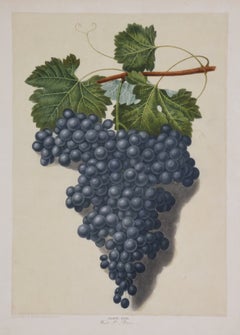
George Brookshaw (1751-1823) Plate LVIII West St. Peters Aquatint, engraving with some stipple, printed in colors with hand finishing, 1809 Signed in the plate Engraved signature on the bottom center margin From: Pomona Britannica or A Collection of the Most Esteemed Fruits (90 Plates) Published: White, Cochrane & Co., E. Lloyd and W. Lindsell, London: [1804-] 1812 Format: Folio size, 1st edition Printer: Thomas Bensley (active c. 1760-1935) Considered to be a msaterpice of natural history illustration Condition: Excellent Image size: 18 3/4 x 15 7/8 inches Sheet size: 21 1/4 x 17 inches Provenance: W. Russell Button Gallery, Chicago Reference: Dunthorne: 1938.050 Publication legend lower center: “Painted & Published as the Act Directs by the Author G. Brookshaw” followed by date, varying from 1804 to 1812. Title page credits: “Printed for the author by T. Bensley, Bolt Court, Fleet Street. Published by White, Cochrane and Co. Fleet Street; E. Lloyd, Harley Street; and W. Linsell, Corner of Wigmore Street.” George Brookshaw (1751-1823) (after) from Pomona Britannica; Or, a collection of the most esteemed fruits at present cultivated in this country… selected principally from the Royal Gardens at Hampton Court T. Bensley, London (printer) White, Cochrane & Co., E. Lloyd and W. Lindsell, London: [1804-] 1812 Folio edition Stipple engravings, printed in color, finished by hand 17.5 x 14 inches, plate mark, average approximate 22 x 17 inches, overall, average approximate Pomona Britannica, or a Collection of the Most Esteemed Fruits at present cultivated in the country…selected principally from the royal gardens at Hampton Court…accurately drawn and coloured from nature, with full descriptions was published in London from 1804—1812. Comprising 90 aquatint engravings, including 256 depictions of British fruit, after paintings by George Brookshaw. Published in London and engraved by R. Brookshaw and H. Merke. George Brookshaw (1751—1823) was born in Birmingham, England where he was apprenticed to Samuel Troughton (d. 1783), a Birmingham painter and japanner. According to a recent blog post related to St. Philips Cathedral, Birmingham, England, entitled In Search of Sobieski Brookshaw, by Gill Partridge, he may have received some art training from his father, also named George Brookshaw, who is listed as an engraver in a document dated 1751. George Brookshaw’s brother, Richard Brookshaw (1736—c.1804) was a portrait painter and engraver well versed in mezzotint and copperplate engraving techniques, and may have instructed his brother. In 1777, Brookshaw moved from Birmingham to London and began a celebrated career building fine cabinets detailed with hand-painted botanical and pomological motifs. Shortly afterward, in 1778, he married Sobieski Grice (1749—1811), daughter of William Grice, a prosperous gunsmith.The Prince of Wales was the most distinguished of Brookshaw’s well-heeled patrons, and today examples of Brookshaw’s cabinetry may be seen at the Victoria & Albert Museum, London. According to church records noted in Gill Partridge’s post, both George Brookshaw and Sobieski Grice were baptized at the Birmingham Cathedral. In his cabinet-making shop, Brookshaw also offered lessons in flower painting to ‘Ladies of Taste and Fashion’. During the mid 1790s, it appears his furniture-making business went bankrupt, and he led his life under an assumed name, G. Brown. In 1991, Lucy Wood wrote two articles in which she drew the connection between G. Brown and George Brookshaw. During his years of anonymity, Brookshaw worked as an illustrator of botanical books and gave flower-painting lessons, which may have been his primary source of income. Apparently, the marriage dowry he enjoyed while married to Sobieski Grice was lost after their marriage dissolved. Brookshaw returned to public view as the earliest parts of Pomona Britannica were issued. In Flower and Print Books of the 18th and Early 19th Centuries, Gordon Dunthorne extolls the virtues of George Brookshaw’s large folio edition. “One of the eminent English artists of the early nineteenth century is George Brookshaw, who issued in 1812, Pomona Britannica. Ninety aquatint plates, printed in colour and on a scale comparable to Thornton’s Temple of Flora...

Category

Other Art Style Early 1800s Art
Materials

Aquatint

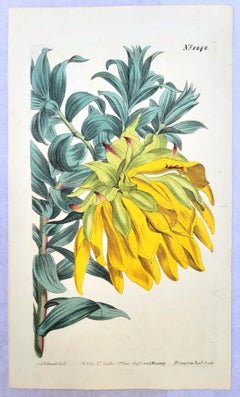
Flowering Air Plant: A 19th Century Hand-colored Engraving by William Curtis

Flowering Air Plant: A 19th Century Hand-colored Engraving by William Curtis

By William Curtis

Located in Alamo, CA

This early 19th century hand-colored double fold-out botanical engraving is entitled "Pendulous-flowered Bryophyllum", plate 1409, published in London in 1809 in William Curtis’s 'The Botanical Magazine, or Flower-Garden Displayed'. Bryophyllum pinnatum, also known as the air plant...

Category

Naturalistic Early 1800s Art

Materials

Engraving

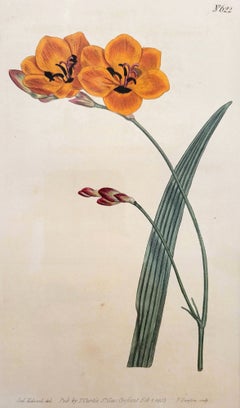
Tritonia Deusta Copper-Colour Tritonia /// William Curtis Flower Engraving Orang

Tritonia Deusta Copper-Colour Tritonia /// William Curtis Flower Engraving Orang

By William Curtis

Located in Saint Augustine, FL

Artist: William Curtis (English, 1746-1799) Title: "Tritonia Deusta Copper-Colour Tritonia" (Vol. 17, Plate 622) Portfolio: The Botanical Magazine; or, Flower-Garden Displayed Year: ...

Category

Victorian Early 1800s Art

Materials

Watercolor, Engraving, Intaglio

Page from The History of Rama, Java

Page from The History of Rama, Java

Located in Fairlawn, OH

Page from The History of Rama, Java Gold and colors on uncoated paper, 19th century Unsigned (as usual) This document is an illuminated manuscript page from the Ramayana, a major anc...

Category

Other Art Style Early 1800s Art

Materials

Ink

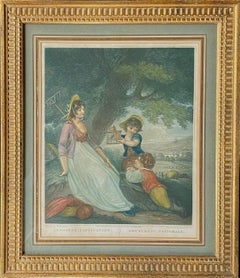
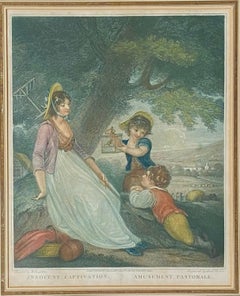
“Innocent Captivation Amusement Pastorale”

“Innocent Captivation Amusement Pastorale”

By Anthony Cardon

Located in Southampton, NY

Original stipple engraving on a verge type of hand laid paper. The overall size of the engraving is 15.75 inches by 12.75 inches The image size of the engraving is 14 inches by 12 i...

Category

Academic Early 1800s Art
Materials

Engraving, Laid Paper