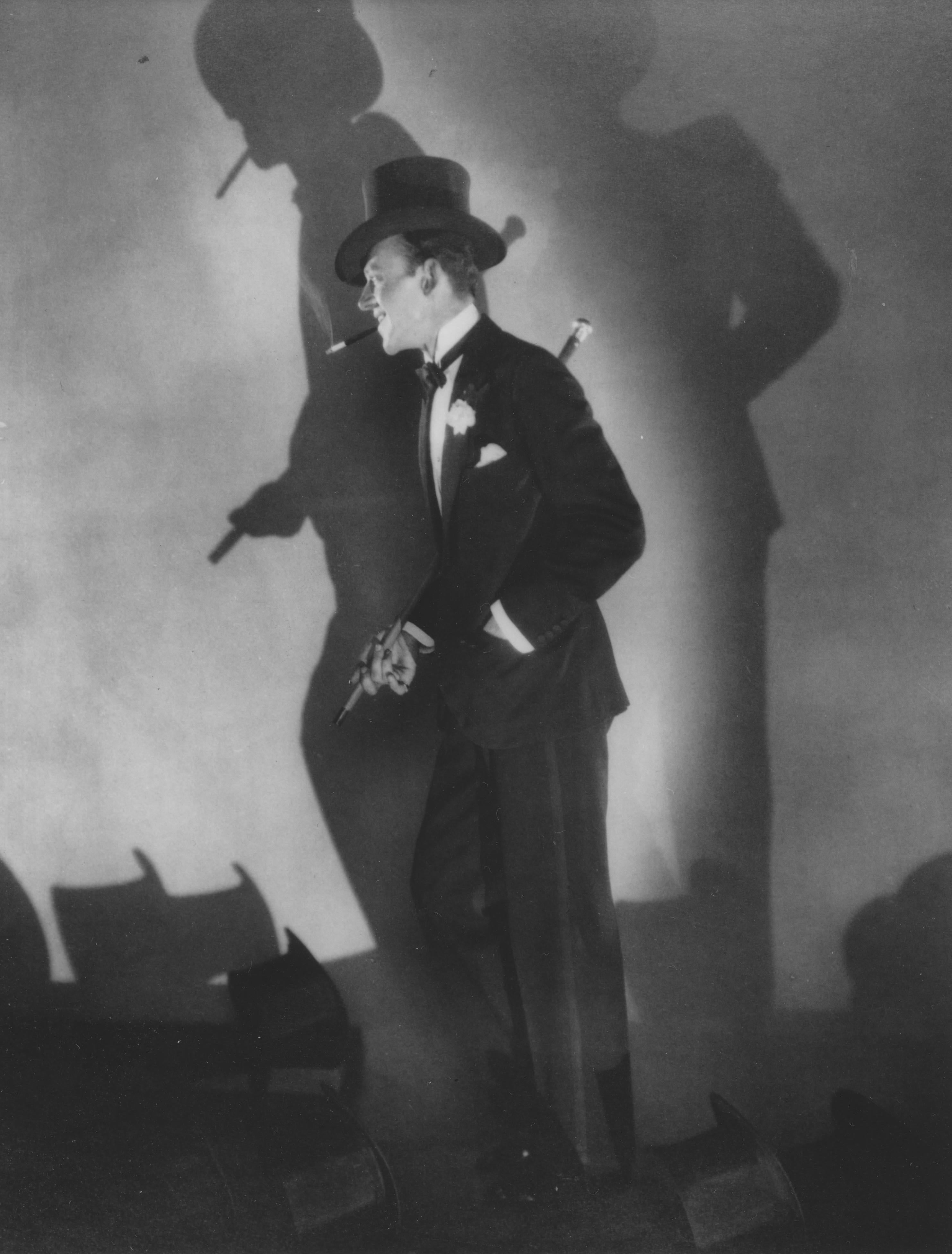
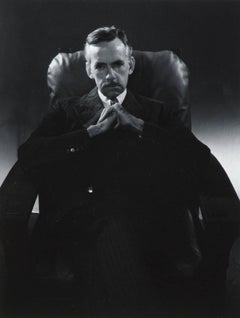
Eugene ONeill
By Edward Steichen
Located in Palm Desert, CA
Silver gelatin print Provenance: General Electric Corporate Collection Heather James Fine Art
Category
20th Century Contemporary Portrait Photography
Materials
Silver Gelatin
1925/1982
Though he began his artistic career as a painter, training at the Académie Julian in Paris, Edward Steichen is also known for his role in revolutionizing photography from a commercial tool into an artistic medium.
Famed artist and gallerist Alfred Stieglitz often featured Steichen’s artwork in the magazine Camera Work, published from 1903 to 1917 as photography gained popularity. Over the years, Steichen served as the chief photographer for Vogue and Vanity Fair as well as the Director of Photography at the Museum of Modern Art in New York.
Steichen’s dramatic, highly stylized compositions and curatorial eye catapulted photography into greater prestige. An art critic quipped in 1905: "One should not say that he recalls Rembrandt but rather, at this rate, that Rembrandt will, in time, remind us of Steichen."
As Steichen shifted his artistic focus to photography, he destroyed nearly all of his painted compositions. Beethoven represents one of the very few surviving paintings and is considered his most remarkable.
Simultaneously realistic and symbolic, Beethoven reflects Steichen’s unmistakable talent for composition, balance and hue. He completed the painting in 1902, immediately receiving critical praise for its commanding nature. Beethoven was hung prominently beside his photos at Steichen’s first solo show in June 1902 at La Maison des Artistes. The artwork was then proudly exhibited at the St. Louis World’s Fair in 1904, and later at the "National Arts Club Special Exhibition of Contemporary Art" in 1908.
Find original Edward Steichen photography and other art on 1stDibs.
(Biography provided by M.S. Rau)
Eugene ONeill
By Edward Steichen
Located in Palm Desert, CA
Silver gelatin print Provenance: General Electric Corporate Collection Heather James Fine Art
Silver Gelatin
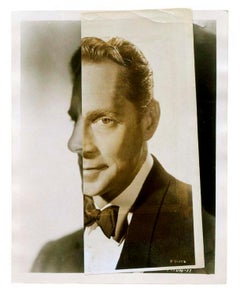
Untitled
Located in Palm Desert, CA
A mixed media collage by John Stezaker. “Untitled” is a film portrait collage in black and white by artist John Stezaker. The artwork is unsigned. John S...
Mixed Media
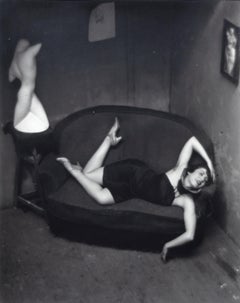
Satiric Dancer
By Andre Kertesz
Located in Palm Desert, CA
"Satiric Dancer" is a photograph by Andre Kertesz. The photograph is signed verso, "Paris 1926, A. Kertesz". The framed piece measures 18 1/4 x 15 1/4 x 3/4 in. Kertész's work was i...
Silver Gelatin
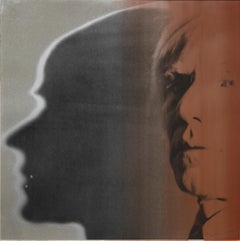
The Shadow (from Myths)
By Andy Warhol
Located in Palm Desert, CA
A color screen print with diamond dust by Andy Warhol. "The Shadow" is a self-portrait print executed in a dark, bold palette of browns and blacks by American Pop Artist Any Warhol. ...
Screen
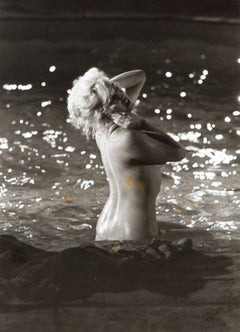
Marilyn Monroe
Located in Palm Desert, CA
A photograph by Lawrence Schiller. ""Marilyn Monroe"" is a nude, figurative vintage silver gelatin photograph in black and white by American Post-War artist Lawrence Schiller. Lawrence Schiller only remembers the 60s in this way: Fast. As in: Blur. Which is, for those who lived through it, as accurate a description as one is likely to find about the decade that began with optimism and ended in chaos. It was ten years of turmoil and exploration. And through this turbulent and tumultuous decade, it often seemed that whenever a headline-making news event occurred, Lawrence Schiller was there. Schiller was not just lucky to be in the right place at the right time; he was prescient. He was there to cover the event, to add to it, to help us see it, to aid its meaning and its depth. ""It was a time in which things happened awfully fast,"" Schiller says of the decade. ""It was a wild, wild period; an uncontrolled period. I don’t think you had any sense of perspective in the 60s. You had to wait and look back at it, because it was a period in which things were happening that had no rhyme or reason to it. But by the end of the ‘60s I had covered so many stories, had so many magazine covers, I had somehow become part of that decade’s history. And I already had my eye on the future."" When Lawrence Schiller got the assignment from the French magazine, Paris Match to photograph Marilyn Monroe on the 20th Century Fox set of Something’s Got to Give, he thought nothing of it. It wasn’t to be a private, studio shoot. He wasn’t going to set up lights, create backgrounds, or use a tripod. Just another assignment, he figured. Monroe by then was firmly established as a figment in the imagination of most young men. The orphan Norma Jean had recreated herself as the blonde bombshell Marilyn Monroe. She’d appeared in twenty-nine films by the time Schiller photographed her in black and white and color in May, 1962. The world was unprepared for the moment when Marilyn jumped in the swimming pool in a flesh-colored bikini and came up out of the water au natural. She was all smiles and in her element: the sex goddess...
Silver Gelatin
Music
By Robert Kushner
Located in Palm Desert, CA
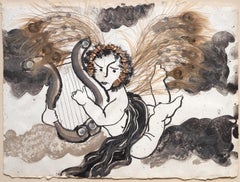
"Music" is a lithograph made by Robert Kushner in 1981. The work is number 2 from an edition of 25. Signed in pencil, lower right, "Robert Kushner". The artwork size is 26 x 31 3/4 i...
Lithograph
Painting and Sculpture, Shepherd Gallery
By Bruce Cratsley
Located in New York, NY
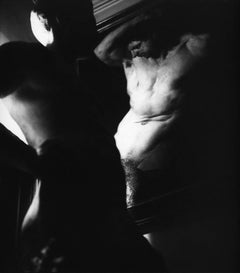
Gelatin silver print Signed, titled and dated, verso of mount This photograph is offered by ClampArt, located in New York City. Over the course of more than two decades, Bruce Crats...
Silver Gelatin
Vintage Silver Gelatin Signed Photograph Edward Steichen, MoMA Photo
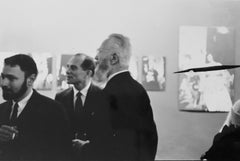
By Fred McDarrah
Located in Surfside, FL
Edward Steichen, John Durniak, Monroe Wheeler and Edward D. Museum of modern art on Feb 10, 1962 Photographer Fred McDarrah Over a 50-year span, McDarrah documented the rise of the Beat Generation, the city’s postmodern art movement, its off-off-Broadway actors, troubadours, politicians, agitators and social protests. Fred captured Jack Kerouac frolicking with women at a New Year’s bash in 1958, Andy Warhol adjusting a movie-camera lens in his silver-covered factory, and Bob Dylan offering a salute of recognition outside Sheridan Square near the Voice’s old office. Not just a social chronicler, McDarrah was a great photo-journalist. For years, McDarrah was the Voice's only photographer and, for decades, he ran the Voice’s photo department, where he helped train dozens of young photographers, including James Hamilton, Sylvia Plachy, Robin Holland and Marc Asnin. His mailbox was simply marked "McPhoto." An exhibit of McDarrah’s photos of artists presented by the Steven Kasher Gallery in Chelsea was hailed by The New York Times as “a visual encyclopedia of the era’s cultural scene.” artists in their studios, (Alice Neel, Philip Guston, Stuart Davis, Robert Smithson, Jasper Johns, Franz Kline), actors (Dustin Hoffman, Robert De Niro on the set of “Taxi Driver”), musicians (Janis Joplin, Alice Cooper, Bob Dylan) and documentary images of early happenings and performances (Yayoi Kusama, Charlotte Moorman, Al Hansen, Jim Dine, Nam June Paik). The many images of Andy Warhol include the well-known one with his Brillo boxes at the Stable Gallery in 1964. Woody Allen, Diane Arbus, W. H. Auden, Francis Bacon, Joan Baez, Louise Bourgeois, David Bowie, Jimmy Breslin, William Burroughs, John Cage, Leo Castelli, Christo, Leonard Cohen, Merce Cunningham, William de Kooning, Jim Dine, Mark di Suvero, Marcel Duchamp, Bob Dylan, Federico Fellini, Allen Ginsberg, Robert Indiana, Mick Jagger, Jasper Johns, Kusama, John Lennon, Sol Lewitt, Roy Lichtenstein, Nam June Paik, Elvis Presley, Claes Oldenburg, Yoko Ono, Robert Rauschenberg, Lou Reed, James Rosenquist, Mark Rothko, Ed Ruscha, Robert Smithson, Susan Sontag, Andy Warhol, and others. McDarrah’s prints have been collected in depth by the J. Paul Getty Museum and the National Portrait Gallery, Washington. His work is in numerous public and private collections. Edward Jean Steichen (March 27, 1879 – March 25, 1973) was a Luxembourgish American photographer, painter, and art gallery and museum curator. Steichen's were the photographs that most frequently appeared in Alfred Stieglitz's groundbreaking magazine Camera Work during its publication from 1903 to 1917. Together Stieglitz and Steichen opened the Little Galleries of the Photo-Secession, which eventually became known as '291', after its address. Steichen laid claim to his photos of gowns for the magazine Art et Décoration in 1911 being the first modern fashion photographs ever published. From 1923 to 1938, Steichen was a photographer for the Condé Nast magazines Vogue and Vanity Fair while also working for many advertising agencies including J. Walter Thompson. During these years, Steichen was regarded as the best known and highest paid photographer in the world. In 1944, he directed the war documentary The Fighting Lady, which won the 1945 Academy Award for Best Documentary. From 1947 to 1961, Steichen served as Director of the Department of Photography at New York's Museum of Modern Art. While at MoMA, he curated and assembled exhibits including The Family of Man, which was seen by nine million people. In 1904, Steichen began experimenting with color photography. He was one of the earliest in the United States to use the Autochrome Lumière process. In 1905, Stieglitz and Steichen created the Little Galleries of the Photo-Secession, which eventually became known as 291 after its address. It presented some of the first American exhibitions of Henri Matisse, Auguste Rodin, Paul Cézanne, Pablo Picasso, and Constantin Brâncuși. He worked with Robert Frank even before his The Americans was published, exhibited the early work of Harry Callahan and Aaron Siskind, and purchased two Rauschenberg prints...
Silver Gelatin
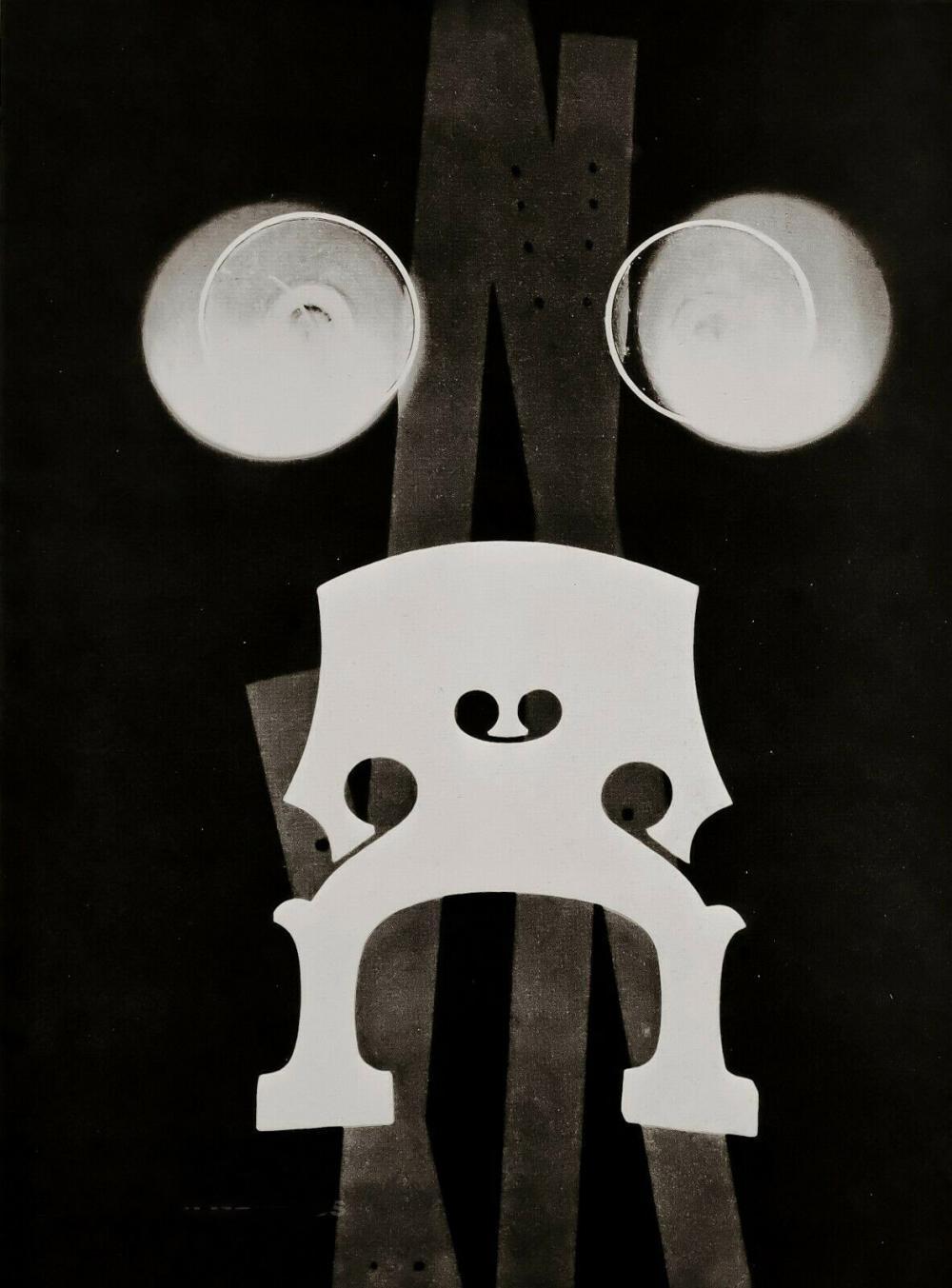
M
By Michael Jackson
Located in Sante Fe, NM
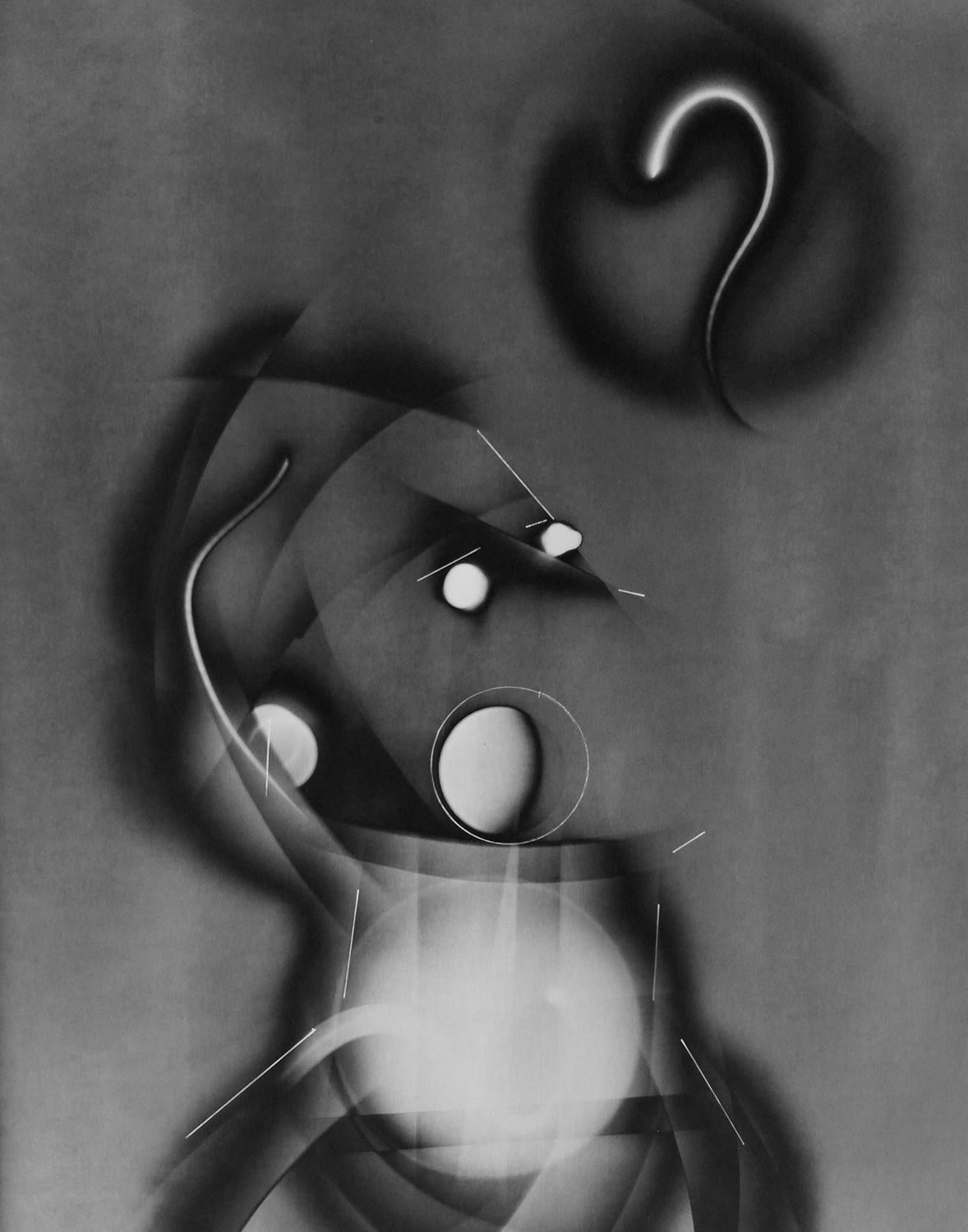
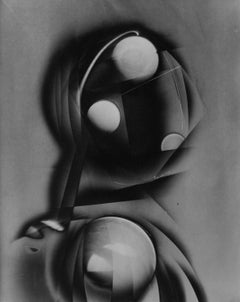
This is a one of a kind luminogram
Silver Gelatin
Untitled (Film Noir #1419)
By Bill Armstrong
Located in New York, NY
Type-C print Signed, titled, dated, and numbered, verso 24 x 20 inches (Edition of 10) 36 x 30 inches (Edition of 5) 48 x 40 inches (Edition of 5) This photograph is offered by ClampArt, located in New York City. “Film Noir...
C Print
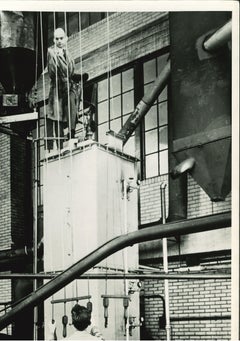
Theory and Practice are Combined at an American Research Ins - Mid 20th Century
Located in Roma, IT
Theory and Practice are Combined at an American Research Institute- American Vintage Photograph is an original black and white photograph realized in the U.S in the Mid-20th Century ...
Photographic Paper
Untitled (Film Noir #1408)
By Bill Armstrong
Located in New York, NY
Type-C print Signed, titled, dated, and numbered, verso 24 x 20 inches (Edition of 10) 36 x 30 inches (Edition of 5) Sold out 48 x 40 inches (Edition of 5) This photograph is offered by ClampArt, located in New York City. “Film Noir...
C Print
This piece may look like Pop art fun, but embedded within is a message of a planet on the brink.
More than three decades after his death, the prolific Pop artist and cultural icon's body of work continues to captivate. Here's a primer of some of his most notable motifs and mediums.