Found Objects Landscape Photography

to
1
3
2
1
Overall Width
to
Overall Height
to
7
1
3
2
2
2
2
1
1
1
1
1
1
1
1
1,102
7,832
6,912
6,703
5,097
1
7
Medium: Found Objects
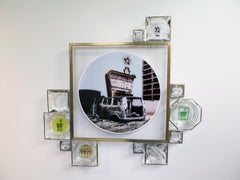
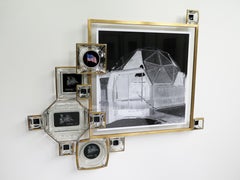
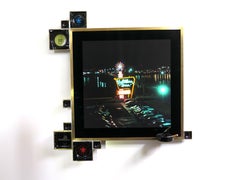
Richard Klein, Holiday Inn Beirut, 2017, Found and altered objects assemblage

Richard Klein, Holiday Inn Beirut, 2017, Found and altered objects assemblage

Located in Darien, CT

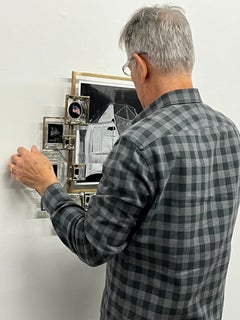
In the mid 1990s Richard Klein started working with found glass objects, including bottles, drinking glasses, ashtrays, and eyeglasses. Initially, Klein rejected any object with commercial or advertising content, but in 2015 he became fascinated with the promotional content that was screen printed on ashtrays from the 1950s, 1960s and early 1970s. This period was before smoking was looked at as being primarily a negative habit, and iconic American businesses, including Howard Johnson’s, International House of Pancakes (iHop) and Holiday Inn, all produced promotional ashtrays printed with their graphic identity. By the time Klein became interested in these objects, the businesses had either ceased to exist, or had changed their logos, and many of their signature buildings, which where examples of classic, “Pop” roadside architecture, has been torn down or repurposed. The artist wanted to connect the glass objects with the business’s sites that were still recognizable and spoke of their history, so he began researching where original buildings still stood. Klein then embarked on a series of road trips to photograph these sites with the intention of combining the photographs with the promotional glass objects. This led him to as far south as Maryland and as far north as upstate New York from his home in Connecticut. In the case of Holiday Inn, it wasn’t their buildings, but their iconic illuminated sign that appeared on ashtrays, so he sought out a standing example of the sign he could photograph. As it turned out all had been removed years before from the hotels' properties and the only working example was indoors at the Henry Ford Museum in Dearborn, Michigan. He did, however, find out that there was one still standing, surprisingly, in Beruit, Lebanon. He found an image of it on the web and used it to make Holiday Inn (Beruit). In 1973 Holiday Inn changed their tagline from “The Nations Innkeeper” to “The World’s Innkeeper” as they expanded overseas, including the Mideast. For the hotel chain it was bad timing: the disastrous Lebanese civil war began in 1975. In the war, the different Lebanese militias involved in the conflict, including the Nasserites, Christian Phalangists, and the Lebanese National Movement engaged in what came to be called “The Battle of the Hotels” where they each occupied a major high-rise hotel in central Beruit. The Phalangists commanded the Holiday Inn, which they used to fire with both light arms and heavier weapons at the militias in neighboring hotels. Klein used the photo of the heavily damaged Holiday Inn sign as I thought it spoke in a curious, offhanded way about American cultural imperialism in juxtaposition with an ashtray that proclaimed Holiday Inn to be “The World’s Innkeeper.” In the work Holiday Inn (Nocturne) the artist utilized a found, 35mm slide of a Holiday Inn sign at night at an unknown location as the basis of the photograph in the work. Richard Klein is a Connecticut-based artist, independent curator and writer. As an artist, he has exhibited widely, including the Neuberger Museum of Art at SUNY Purchase; Caren Golden Fine Art, New York; the John Michael Kohler Arts Center, Sheboygan, WI; Hales Gallery, London; Gavlak Gallery, Palm Beach, FL; deCordova Sculpture Park and Museum, Lincoln, MA; James Barron Art, Kent, CT; The Portland Institute of Contemporary Art (PICA), Portland, OR; Schoolhouse Gallery, Provincetown, MA; Stephan Stoyanov Gallery, NY; Katonah Museum of Art, Katonah, NY; Brattleboro Museum and Art Center, Brattleboro, VT; Ortega y Gasset Projects, Brooklyn, NY; Exhibit by Alberson Tulsa, OK; Incident Report/Flow Chart Foundation, Hudson, NY; ICEHOUSE Project Space, Sharon, CT; Kenise Barnes Fine Art in Kent, CT and with ODETTA Gallery at the Equity Gallery in New York City.. Reviews of his work have appeared in Two Coats of Paint, Whitehot Magazine, The New York Times, Sculpture Magazine, Art in America, and The New Yorker. In the summer of 2024 he will be the first Artist-In-Residence at Peck Ledge Light...

Category

2010s Assemblage Found Objects Landscape Photography

Materials

Metal
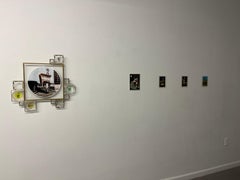
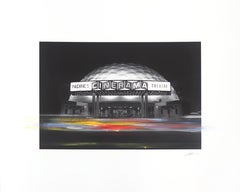
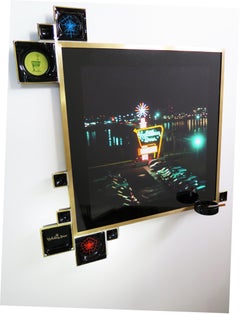
Richard Klein, Holiday Inn Nocturne, 2020, Found and altered objects assemblage

Richard Klein, Holiday Inn Nocturne, 2020, Found and altered objects assemblage

Located in Darien, CT

In the mid 1990s Richard Klein started working with found glass objects, including bottles, drinking glasses, ashtrays, and eyeglasses. Initially, Klein rejected any object with commercial or advertising content, but in 2015 he became fascinated with the promotional content that was screen printed on ashtrays from the 1950s, 1960s and early 1970s. This period was before smoking was looked at as being primarily a negative habit, and iconic American businesses, including Howard Johnson’s, International House of Pancakes (iHop) and Holiday Inn, all produced promotional ashtrays printed with their graphic identity. By the time Klein became interested in these objects, the businesses had either ceased to exist, or had changed their logos, and many of their signature buildings, which where examples of classic, “Pop” roadside architecture, has been torn down or repurposed. The artist wanted to connect the glass objects with the business’s sites that were still recognizable and spoke of their history, so he began researching where original buildings still stood. Klein then embarked on a series of road trips to photograph these sites with the intention of combining the photographs with the promotional glass objects. This led him to as far south as Maryland and as far north as upstate New York from his home in Connecticut. In the case of Holiday Inn, it wasn’t their buildings, but their iconic illuminated sign that appeared on ashtrays, so he sought out a standing example of the sign he could photograph. As it turned out all had been removed years before from the hotels' properties and the only working example was indoors at the Henry Ford Museum in Dearborn, Michigan. He did, however, find out that there was one still standing, surprisingly, in Beruit, Lebanon. He found an image of it on the web and used it to make Holiday Inn (Beruit). In 1973 Holiday Inn changed their tagline from “The Nations Innkeeper” to “The World’s Innkeeper” as they expanded overseas, including the Mideast. For the hotel chain it was bad timing: the disastrous Lebanese civil war began in 1975. In the war, the different Lebanese militias involved in the conflict, including the Nasserites, Christian Phalangists, and the Lebanese National Movement engaged in what came to be called “The Battle of the Hotels” where they each occupied a major high-rise hotel in central Beruit. The Phalangists commanded the Holiday Inn, which they used to fire with both light arms and heavier weapons at the militias in neighboring hotels. Klein used the photo of the heavily damaged Holiday Inn sign as I thought it spoke in a curious, offhanded way about American cultural imperialism in juxtaposition with an ashtray that proclaimed Holiday Inn to be “The World’s Innkeeper.” In the work Holiday Inn (Nocturne) the artist utilized a found, 35mm slide of a Holiday Inn sign at night at an unknown location as the basis of the photograph in the work. Richard Klein is a Connecticut-based artist, independent curator and writer. As an artist, he has exhibited widely, including the Neuberger Museum of Art at SUNY Purchase; Caren Golden Fine Art, New York; the John Michael Kohler Arts Center, Sheboygan, WI; Hales Gallery, London; Gavlak Gallery, Palm Beach, FL; deCordova Sculpture Park and Museum, Lincoln, MA; James Barron Art, Kent, CT; The Portland Institute of Contemporary Art (PICA), Portland, OR; Schoolhouse Gallery, Provincetown, MA; Stephan Stoyanov Gallery, NY; Katonah Museum of Art, Katonah, NY; Brattleboro Museum and Art Center, Brattleboro, VT; Ortega y Gasset Projects, Brooklyn, NY; Exhibit by Alberson Tulsa, OK; Incident Report/Flow Chart Foundation, Hudson, NY; ICEHOUSE Project Space, Sharon, CT; Kenise Barnes Fine Art in Kent, CT and with ODETTA Gallery at the Equity Gallery in New York City.. Reviews of his work have appeared in Two Coats of Paint, Whitehot Magazine, The New York Times, Sculpture Magazine, Art in America, and The New Yorker. In the summer of 2024 he will be the first Artist-In-Residence at Peck Ledge Light...

Category

2010s Assemblage Found Objects Landscape Photography

Materials

Metal

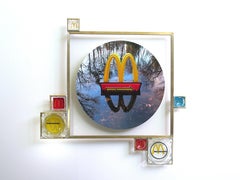
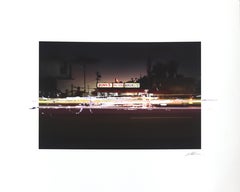
Richard Klein, McDonalds (El Nino), 2024, Found and altered objects assemblage

Richard Klein, McDonalds (El Nino), 2024, Found and altered objects assemblage

Located in Darien, CT

In the mid 1990s Richard Klein started working with found glass objects, including bottles, drinking glasses, ashtrays, and eyeglasses. Initially, Klein rejected any object with commercial or advertising content, but in 2015 he became fascinated with the promotional content that was screen printed on ashtrays from the 1950s, 1960s and early 1970s. This period was before smoking was looked at as being primarily a negative habit, and iconic American businesses, including Howard Johnson’s, International House of Pancakes (iHop) and Holiday Inn, all produced promotional ashtrays printed with their graphic identity. By the time Klein became interested in these objects, the businesses had either ceased to exist, or had changed their logos, and many of their signature buildings, which where examples of classic, “Pop” roadside architecture, has been torn down or repurposed. The artist wanted to connect the glass objects with the business’s sites that were still recognizable and spoke of their history, so he began researching where original buildings still stood. Klein then embarked on a series of road trips to photograph these sites with the intention of combining the photographs with the promotional glass objects. This led him to as far south as Maryland and as far north as upstate New York from his home in Connecticut. In the case of Holiday Inn, it wasn’t their buildings, but their iconic illuminated sign that appeared on ashtrays, so he sought out a standing example of the sign he could photograph. As it turned out all had been removed years before from the hotels' properties and the only working example was indoors at the Henry Ford Museum in Dearborn, Michigan. He did, however, find out that there was one still standing, surprisingly, in Beruit, Lebanon. He found an image of it on the web and used it to make Holiday Inn (Beruit). In 1973 Holiday Inn changed their tagline from “The Nations Innkeeper” to “The World’s Innkeeper” as they expanded overseas, including the Mideast. For the hotel chain it was bad timing: the disastrous Lebanese civil war began in 1975. In the war, the different Lebanese militias involved in the conflict, including the Nasserites, Christian Phalangists, and the Lebanese National Movement engaged in what came to be called “The Battle of the Hotels” where they each occupied a major high-rise hotel in central Beruit. The Phalangists commanded the Holiday Inn, which they used to fire with both light arms and heavier weapons at the militias in neighboring hotels. Klein used the photo of the heavily damaged Holiday Inn sign as I thought it spoke in a curious, offhanded way about American cultural imperialism in juxtaposition with an ashtray that proclaimed Holiday Inn to be “The World’s Innkeeper.” In the work Holiday Inn (Nocturne) the artist utilized a found, 35mm slide of a Holiday Inn sign at night at an unknown location as the basis of the photograph in the work. Richard Klein is a Connecticut-based artist, independent curator and writer. As an artist, he has exhibited widely, including the Neuberger Museum of Art at SUNY Purchase; Caren Golden Fine Art, New York; the John Michael Kohler Arts Center, Sheboygan, WI; Hales Gallery, London; Gavlak Gallery, Palm Beach, FL; deCordova Sculpture Park and Museum, Lincoln, MA; James Barron Art, Kent, CT; The Portland Institute of Contemporary Art (PICA), Portland, OR; Schoolhouse Gallery, Provincetown, MA; Stephan Stoyanov Gallery, NY; Katonah Museum of Art, Katonah, NY; Brattleboro Museum and Art Center, Brattleboro, VT; Ortega y Gasset Projects, Brooklyn, NY; Exhibit by Alberson Tulsa, OK; Incident Report/Flow Chart Foundation, Hudson, NY; ICEHOUSE Project Space, Sharon, CT; Kenise Barnes Fine Art in Kent, CT and with ODETTA Gallery at the Equity Gallery in New York City.. Reviews of his work have appeared in Two Coats of Paint, Whitehot Magazine, The New York Times, Sculpture Magazine, Art in America, and The New Yorker. In the summer of 2024 he will be the first Artist-In-Residence at Peck Ledge Light...

Category

2010s Assemblage Found Objects Landscape Photography

Materials

Metal

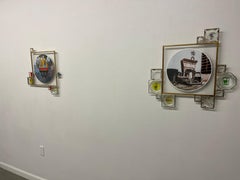
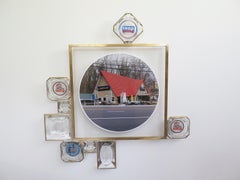
Richard Klein, iHop II, 2018, Found and altered objects assemblage

Richard Klein, iHop II, 2018, Found and altered objects assemblage

Located in Darien, CT

In the mid 1990s Richard Klein started working with found glass objects, including bottles, drinking glasses, ashtrays, and eyeglasses. Initially, Klein rejected any object with commercial or advertising content, but in 2015 he became fascinated with the promotional content that was screen printed on ashtrays from the 1950s, 1960s and early 1970s. This period was before smoking was looked at as being primarily a negative habit, and iconic American businesses, including Howard Johnson’s, International House of Pancakes (iHop) and Holiday Inn, all produced promotional ashtrays printed with their graphic identity. By the time Klein became interested in these objects, the businesses had either ceased to exist, or had changed their logos, and many of their signature buildings, which where examples of classic, “Pop” roadside architecture, has been torn down or repurposed. The artist wanted to connect the glass objects with the business’s sites that were still recognizable and spoke of their history, so he began researching where original buildings still stood. Klein then embarked on a series of road trips to photograph these sites with the intention of combining the photographs with the promotional glass objects. This led him to as far south as Maryland and as far north as upstate New York from his home in Connecticut. In the case of Holiday Inn, it wasn’t their buildings, but their iconic illuminated sign that appeared on ashtrays, so he sought out a standing example of the sign he could photograph. As it turned out all had been removed years before from the hotels' properties and the only working example was indoors at the Henry Ford Museum in Dearborn, Michigan. He did, however, find out that there was one still standing, surprisingly, in Beruit, Lebanon. He found an image of it on the web and used it to make Holiday Inn (Beruit). In 1973 Holiday Inn changed their tagline from “The Nations Innkeeper” to “The World’s Innkeeper” as they expanded overseas, including the Mideast. For the hotel chain it was bad timing: the disastrous Lebanese civil war began in 1975. In the war, the different Lebanese militias involved in the conflict, including the Nasserites, Christian Phalangists, and the Lebanese National Movement engaged in what came to be called “The Battle of the Hotels” where they each occupied a major high-rise hotel in central Beruit. The Phalangists commanded the Holiday Inn, which they used to fire with both light arms and heavier weapons at the militias in neighboring hotels. Klein used the photo of the heavily damaged Holiday Inn sign as I thought it spoke in a curious, offhanded way about American cultural imperialism in juxtaposition with an ashtray that proclaimed Holiday Inn to be “The World’s Innkeeper.” In the work Holiday Inn (Nocturne) the artist utilized a found, 35mm slide of a Holiday Inn sign at night at an unknown location as the basis of the photograph in the work. Richard Klein is a Connecticut-based artist, independent curator and writer. As an artist, he has exhibited widely, including the Neuberger Museum of Art at SUNY Purchase; Caren Golden Fine Art, New York; the John Michael Kohler Arts Center, Sheboygan, WI; Hales Gallery, London; Gavlak Gallery, Palm Beach, FL; deCordova Sculpture Park and Museum, Lincoln, MA; James Barron Art, Kent, CT; The Portland Institute of Contemporary Art (PICA), Portland, OR; Schoolhouse Gallery, Provincetown, MA; Stephan Stoyanov Gallery, NY; Katonah Museum of Art, Katonah, NY; Brattleboro Museum and Art Center, Brattleboro, VT; Ortega y Gasset Projects, Brooklyn, NY; Exhibit by Alberson Tulsa, OK; Incident Report/Flow Chart Foundation, Hudson, NY; ICEHOUSE Project Space, Sharon, CT; Kenise Barnes Fine Art in Kent, CT and with ODETTA Gallery at the Equity Gallery in New York City.. Reviews of his work have appeared in Two Coats of Paint, Whitehot Magazine, The New York Times, Sculpture Magazine, Art in America, and The New Yorker. In the summer of 2024 he will be the first Artist-In-Residence at Peck Ledge Light...

Category

2010s Assemblage Found Objects Landscape Photography

Materials

Metal

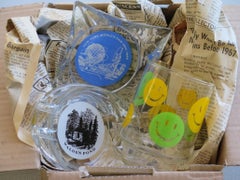
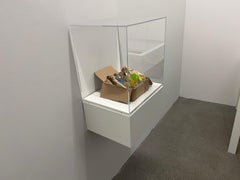
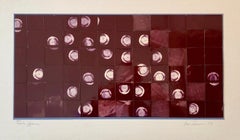
Richard Klein, American Glassware, 2010-2024, Found and altered objects

Richard Klein, American Glassware, 2010-2024, Found and altered objects

Located in Darien, CT

In the mid 1990s Richard Klein started working with found glass objects, including bottles, drinking glasses, ashtrays, and eyeglasses. Initially, Klein rejected any object with commercial or advertising content, but in 2015 he became fascinated with the promotional content that was screen printed on ashtrays from the 1950s, 1960s and early 1970s. This period was before smoking was looked at as being primarily a negative habit, and iconic American businesses, including Howard Johnson’s, International House of Pancakes (iHop) and Holiday Inn, all produced promotional ashtrays printed with their graphic identity. By the time Klein became interested in these objects, the businesses had either ceased to exist, or had changed their logos, and many of their signature buildings, which where examples of classic, “Pop” roadside architecture, has been torn down or repurposed. The artist wanted to connect the glass objects with the business’s sites that were still recognizable and spoke of their history, so he began researching where original buildings still stood. Klein then embarked on a series of road trips to photograph these sites with the intention of combining the photographs with the promotional glass objects. This led him to as far south as Maryland and as far north as upstate New York from his home in Connecticut. American Glassware (2010-present) which is presented in a small, wall-mounted vitrine. American Glassware is composed of three glass objects: a “souvenir” Walden Pond ashtray made by me as a multiple; a real souvenir ashtray from the 1964-65 New York World’s Fair; and an authentic “Happy Face” drinking glass from the same era. They are all nestled in crumpled, vintage newspaper from 1967, and are presented together in a dilapidated cardboard box, as if they have been found in someone’s attic or basement. Once again, in a similar manner to the Glass House Ashtray, versions of his Walden Pond ashtray (Walden Pond Souvenir) have been injected into the collectable stream of tag sales and flea markets, creating a souvenir that never existed. The ashtray is screenprinted with an image of Thoreau’s cabin on Walden Pond as pictured on the title page of his book Walden, or Life in the Woods (1854). (The original illustration was created by Thoreau’s sister, Sophia.) Walden Pond Souvenir was originally produced for the 2010 exhibition Renovating Walden at the Tufts University Art Gallery in Medford, MA. Richard Klein is a Connecticut-based artist, independent curator and writer. As an artist, he has exhibited widely, including the Neuberger Museum of Art at SUNY Purchase; Caren Golden Fine Art, New York; the John Michael Kohler Arts Center, Sheboygan, WI; Hales Gallery, London; Gavlak Gallery, Palm Beach, FL; deCordova Sculpture Park and Museum, Lincoln, MA; James Barron Art, Kent, CT; The Portland Institute of Contemporary Art (PICA), Portland, OR; Schoolhouse Gallery, Provincetown, MA; Stephan Stoyanov Gallery, NY; Katonah Museum of Art, Katonah, NY; Brattleboro Museum and Art Center, Brattleboro, VT; Ortega y Gasset Projects, Brooklyn, NY; Exhibit by Alberson Tulsa, OK; Incident Report/Flow Chart Foundation, Hudson, NY; ICEHOUSE Project Space, Sharon, CT; Kenise Barnes Fine Art in Kent, CT and with ODETTA Gallery at the Equity Gallery in New York City.. Reviews of his work have appeared in Two Coats of Paint, Whitehot Magazine, The New York Times, Sculpture Magazine, Art in America, and The New Yorker. In the summer of 2024 he will be the first Artist-In-Residence at Peck Ledge Light...

Category

2010s Assemblage Found Objects Landscape Photography

Materials

Metal

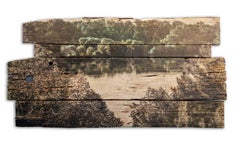
Hoyt Lake Buffalo New York

Hoyt Lake Buffalo New York

By Max Collins

Located in Buffalo, NY

A unique wheat pasted photograph onto found wood by American conceptual artist Max Collins (b.1988). This work was featured in a unique exhibition curated...

Category

2010s Conceptual Found Objects Landscape Photography

Materials

Found Objects, Photographic Paper

Richard Klein, Expo 67, 2017, Found and altered objects assemblage

Richard Klein, Expo 67, 2017, Found and altered objects assemblage

Located in Darien, CT

In the mid 1990s Richard Klein started working with found glass objects, including bottles, drinking glasses, ashtrays, and eyeglasses. Initially, Klein rejected any object with commercial or advertising content, but in 2015 he became fascinated with the promotional content that was screen printed on ashtrays from the 1950s, 1960s and early 1970s. This period was before smoking was looked at as being primarily a negative habit, and iconic American businesses, including Howard Johnson’s, International House of Pancakes (iHop) and Holiday Inn, all produced promotional ashtrays printed with their graphic identity. By the time Klein became interested in these objects, the businesses had either ceased to exist, or had changed their logos, and many of their signature buildings, which where examples of classic, “Pop” roadside architecture, has been torn down or repurposed. The artist wanted to connect the glass objects with the business’s sites that were still recognizable and spoke of their history, so he began researching where original buildings still stood. Klein then embarked on a series of road trips to photograph these sites with the intention of combining the photographs with the promotional glass objects. This led him to as far south as Maryland and as far north as upstate New York from his home in Connecticut. In the case of Holiday Inn, it wasn’t their buildings, but their iconic illuminated sign that appeared on ashtrays, so he sought out a standing example of the sign he could photograph. As it turned out all had been removed years before from the hotels' properties and the only working example was indoors at the Henry Ford Museum in Dearborn, Michigan. He did, however, find out that there was one still standing, surprisingly, in Beruit, Lebanon. He found an image of it on the web and used it to make Holiday Inn (Beruit). In 1973 Holiday Inn changed their tagline from “The Nations Innkeeper” to “The World’s Innkeeper” as they expanded overseas, including the Mideast. For the hotel chain it was bad timing: the disastrous Lebanese civil war began in 1975. In the war, the different Lebanese militias involved in the conflict, including the Nasserites, Christian Phalangists, and the Lebanese National Movement engaged in what came to be called “The Battle of the Hotels” where they each occupied a major high-rise hotel in central Beruit. The Phalangists commanded the Holiday Inn, which they used to fire with both light arms and heavier weapons at the militias in neighboring hotels. Klein used the photo of the heavily damaged Holiday Inn sign as I thought it spoke in a curious, offhanded way about American cultural imperialism in juxtaposition with an ashtray that proclaimed Holiday Inn to be “The World’s Innkeeper.” In the work Holiday Inn (Nocturne) the artist utilized a found, 35mm slide of a Holiday Inn sign at night at an unknown location as the basis of the photograph in the work. Richard Klein is a Connecticut-based artist, independent curator and writer. As an artist, he has exhibited widely, including the Neuberger Museum of Art at SUNY Purchase; Caren Golden Fine Art, New York; the John Michael Kohler Arts Center, Sheboygan, WI; Hales Gallery, London; Gavlak Gallery, Palm Beach, FL; deCordova Sculpture Park and Museum, Lincoln, MA; James Barron Art, Kent, CT; The Portland Institute of Contemporary Art (PICA), Portland, OR; Schoolhouse Gallery, Provincetown, MA; Stephan Stoyanov Gallery, NY; Katonah Museum of Art, Katonah, NY; Brattleboro Museum and Art Center, Brattleboro, VT; Ortega y Gasset Projects, Brooklyn, NY; Exhibit by Alberson Tulsa, OK; Incident Report/Flow Chart Foundation, Hudson, NY; ICEHOUSE Project Space, Sharon, CT; Kenise Barnes Fine Art in Kent, CT and with ODETTA Gallery at the Equity Gallery in New York City.. Reviews of his work have appeared in Two Coats of Paint, Whitehot Magazine, The New York Times, Sculpture Magazine, Art in America, and The New Yorker. In the summer of 2024 he will be the first Artist-In-Residence at Peck Ledge Light...

Category

2010s Assemblage Found Objects Landscape Photography

Materials

Metal

Related Items
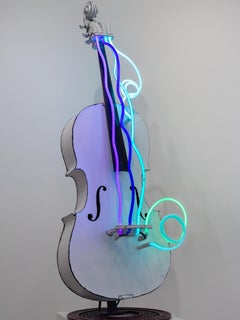
Cantabile
Cantabile

Rod LathimCantabile, 2025

$4,600

H 50 in W 16 in D 10 in

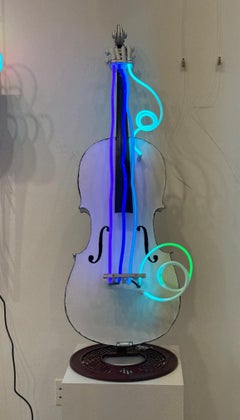
Cantabile

Located in West Hollywood, CA

Rod Lathim’s Cantabile transforms a repurposed cello into a radiant sculpture where light and music converge. Painted in luminous white with edges subtly traced in black, the instrum...

Category

21st Century and Contemporary Assemblage Found Objects Landscape Photography

Materials

Found Objects, Neon Light

Robert Mapplethorpe, Poppy Flower Porcelain Plate

Robert Mapplethorpe, Poppy Flower Porcelain Plate

Located in Long Island City, NY

Artist: after Robert Mapplethorpe, American (1946 - 1989) Title: Calla Lily Date: circa 2000 Medium: Porcelain Plate, printed signature verso Edition Size: 500 Diameter: 8.25 inches ...

Category

Early 2000s Modern Found Objects Landscape Photography

Materials

Porcelain

Robert Mapplethorpe, Calla Lily Porcelain Plate

Robert Mapplethorpe, Calla Lily Porcelain Plate

Located in Long Island City, NY

Artist: after Robert Mapplethorpe, American (1946 - 1989) Title: Calla Lily Date: circa 2000 Medium: Porcelain Plate, printed signature verso Edition Size: 500 Diameter: 8.25 inches ...

Category

Early 2000s Modern Found Objects Landscape Photography

Materials

Porcelain

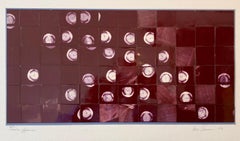
Downtown LA Split 2 - Original Urban Landscape Photography Mixed Media Artwork

Downtown LA Split 2 - Original Urban Landscape Photography Mixed Media Artwork

By Pete Kasprzak

Located in Los Angeles, CA

Pete Kasprzak’s passion for city life is expressed in his dynamic urban artworks. Kasprzak’s artworks express energy and life with animated brush strokes. He adds dynamic movement an...

Category

2010s Contemporary Found Objects Landscape Photography

Materials

Mixed Media, Acrylic, Photographic Paper

"Autumn Landscape" Chauncey Foster Ryder, Fall Colors, Post-Impressionist

"Autumn Landscape" Chauncey Foster Ryder, Fall Colors, Post-Impressionist

By Chauncey Foster Ryder

Located in New York, NY

Chauncey Foster Ryder Autumn Landscape, circa 1925 Signed lower right Oil on canvasboard 12 x 16 inches Provenance Private Collection, Massachusetts Private Collection, Great Neck, ...

Category

1920s Post-Impressionist Found Objects Landscape Photography

Materials

Canvas, Oil, Board

Santa Maria al Bagno diptych - large scale Mediterranean beach scene (framed)

Santa Maria al Bagno diptych - large scale Mediterranean beach scene (framed)

By Massimo Vitali

Located in San Francisco, CA

large format photography diptych by Italian photographer Massimo Vitali, renowned for his grand scale topographical observations of the rites and ritua...

Category

21st Century and Contemporary Contemporary Found Objects Landscape Photography

Materials

Plexiglass, Photographic Film, Photographic Paper, Wood, Archival Paper

Troubadour - Original Night Life Landscape Photography Mixed Media Art on Paper

Troubadour - Original Night Life Landscape Photography Mixed Media Art on Paper

By Pete Kasprzak

Located in Los Angeles, CA

Pete Kasprzak’s passion for city life is expressed in his dynamic urban artworks. Kasprzak’s artworks express energy and life with animated brush strokes. He adds dynamic movement an...

Category

2010s Contemporary Found Objects Landscape Photography

Materials

Mixed Media, Acrylic, Photographic Paper

Palms 2 IV - Colorful Sunset Still Life Photography Mixed Media Trees Artwork

Palms 2 IV - Colorful Sunset Still Life Photography Mixed Media Trees Artwork

By Pete Kasprzak

Located in Los Angeles, CA

Pete Kasprzak’s passion for city life is expressed in his dynamic urban artworks. Kasprzak’s artworks express energy and life with animated brush strokes. He adds dynamic movement an...

Category

2010s Contemporary Found Objects Landscape Photography

Materials

Mixed Media, Acrylic, Photographic Paper

Journey
Journey

Mark BartkiwJourney, 2018

$3,200

H 36 in W 36 in

Journey

By Mark Bartkiw

Located in Bloomfield, ON

A ferry crosses an expanse of sea towards distant mountains in this photo based artwork by Mark Bartkiw. The high viewpoint, as though flying over the water, adds to the dream-like ...

Category

2010s Contemporary Found Objects Landscape Photography

Materials

Plexiglass, C Print

Wrapped Coast in Australia, 1990

Wrapped Coast in Australia, 1990, 1990

$1,900

H 18.12 in W 26.38 in

Wrapped Coast in Australia, 1990

Located in New York, NY

Silkscreen on carton

Category

1990s Contemporary Found Objects Landscape Photography

Materials

C Print, Cardboard

Walt Disney Concert Hall -Urban L.A. Landscape Photography Mixed Media Artwork

Walt Disney Concert Hall -Urban L.A. Landscape Photography Mixed Media Artwork

By Pete Kasprzak

Located in Los Angeles, CA

Pete Kasprzak’s passion for city life is expressed in his dynamic urban artworks. Kasprzak’s artworks express energy and life with animated brush strokes. He adds dynamic movement an...

Category

2010s Contemporary Found Objects Landscape Photography

Materials

Mixed Media, Acrylic, Photographic Paper

Found Objects landscape photography for sale on 1stDibs.

Find a wide variety of authentic Found Objects landscape photography available on 1stDibs. While artists have worked in this medium across a range of time periods, art made with this material during the 21st Century is especially popular. There are many well-known artists whose body of work includes ceramic sculptures. Popular artists on 1stDibs associated with pieces like this include and Max Collins. Not every interior allows for large Found Objects landscape photography, so small editions measuring 0.4 inches across are also available