1940s Prints and Multiples

to
667
1,349
363
415
131
102
Overall Width
to
Overall Height
to
1,043
192
90
62
49
30
29
21
12
7
2
1
102
43
35
34
23
4,714
10,387
58,499
25,223
726
1,008
2,298
2,359
2,364
4,794
7,932
13,575
8,402
4,707
3,912
1,711
639
9
1,090
525
465
374
341
246
234
224
175
169
136
129
123
121
112
108
81
66
60
57
1,434
361
331
156
118
202
341
1,413
885
Period: 1940s
lithograph

lithograph

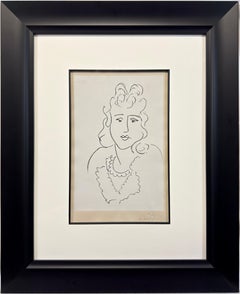
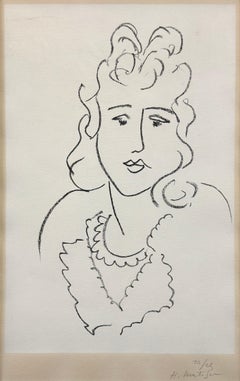
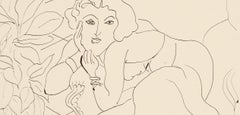
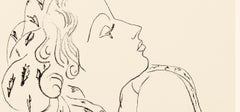
By (after) Pierre Bonnard

Located in Henderson, NV

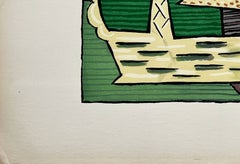
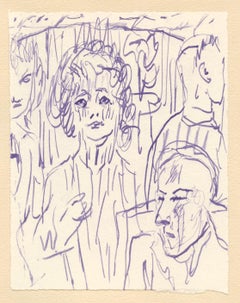
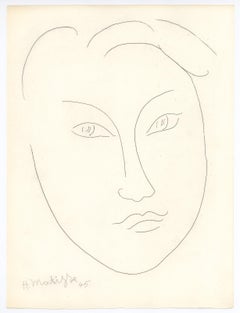
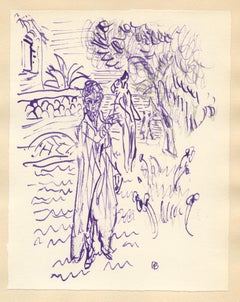
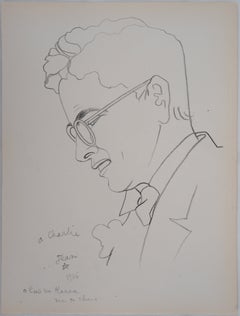
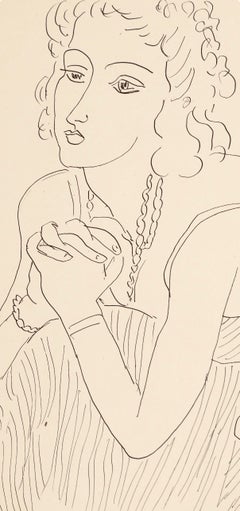
Medium: lithograph (after the drawing). This impression in violet ink was printed in France in 1944 for the rare "Correspondances" portfolio, published by Teriade in a limited editio...

Category

1940s Prints and Multiples

Materials

Lithograph

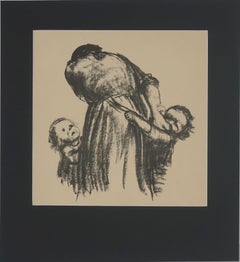
Kathe Kollwitz, Mother with Child, from Ten Lithographs, 1941 (after)

Kathe Kollwitz, Mother with Child, from Ten Lithographs, 1941 (after)

By Käthe Kollwitz

Located in Southampton, NY

This exquisite lithograph after Kathe Kollwitz (1867–1945), titled Mutter mit Kind (Mother with Child), from the folio Kathe Kollwitz, Ten Lithographs, originates from the 1941 edition published by Henry C. Kleemann, New York, and Curt Valentin, New York; printed by Duenewald Printing Corporation, New York. The composition reflects Kollwitz’s profound engagement with themes of maternal protection, tenderness, and human vulnerability, rendered with stark emotional intensity and a powerful graphic economy that underscores her enduring social message. Executed as a lithograph on velin paper, this work measures 19 x 16 inches (48.26 x 40.64 cm), overall; 13 x 10.5 inches (33.02 x 26.67 cm), image. Unsigned and unnumbered as issued. Artwork Details: Artist: After Kathe Kollwitz (1867–1945) Title: Mutter mit Kind (Mother with Child), from Kathe Kollwitz, Ten Lithographs Medium: Lithograph on velin paper Dimensions: 19 x 16 inches (48.26 x 40.64 cm), overall; 13 x 10.5 inches (33.02 x 26.67 cm), image Inscription: Unsigned and unnumbered as issued Date: 1941 Publisher: Henry C. Kleemann, New York, and Curt Valentin, New York Printer: Duenewald Printing Corporation, New York Condition: Well preserved, consistent with age and medium Provenance: From the folio Kathe Kollwitz, Ten Lithographs, 1941 About the Publication: Kathe Kollwitz, Ten Lithographs, published in New York in 1941 by Henry C. Kleemann in collaboration with Curt Valentin, represents an important early American presentation of Kollwitz’s graphic work at a time when her reputation was expanding internationally. Issued during the turbulence of the Second World War and following the suppression of her work in Germany under the Nazi regime, the folio played a crucial role in introducing her imagery to a broader audience outside Europe. The publication gathers a selection of her most powerful lithographic compositions, emphasizing her mastery of tonal contrast, expressive line, and psychological depth. Produced with careful attention to print quality by Duenewald Printing Corporation, the edition reflects the continued transmission of European modernist printmaking traditions into the American context, serving both as a document of artistic excellence and as a vehicle for the preservation and dissemination of Kollwitz’s humanistic vision. About the Artist: Kathe Kollwitz (1867–1945) was a German draughtsman, printmaker, and sculptor whose profoundly moving imagery, exceptional technical mastery, and unwavering social conscience established her as one of the most important and influential artists of the twentieth century, widely recognized as a master of modern printmaking and one of the most powerful visual chroniclers of human suffering, war, and social injustice. Born in Konigsberg, East Prussia, into a progressive and intellectually engaged family, Kollwitz was encouraged from an early age to pursue art and developed a deep awareness of social inequality that would shape her entire career, studying in Berlin and Munich at a time when women were largely excluded from formal academies while mastering drawing and graphic techniques with extraordinary discipline. Her breakthrough came with the monumental graphic cycle A Weavers’ Revolt (1893–1897), followed by The Peasants’ War (1901–1908), works that combined complex narrative structure with extraordinary technical command in etching, aquatint, and lithography, establishing her reputation as one of Europe’s leading graphic artists. Throughout her career, Kollwitz remained committed to portraying the lives of workers, mothers, and victims of poverty and conflict with unflinching honesty, creating compositions defined by bold, sculptural line, dense shadow, and unparalleled psychological depth that conveyed grief, resilience, and dignity. Working during a period transformed by the radical innovations of Pablo Picasso, Alexander Calder, Alberto Giacometti, Salvador Dali, Joan Miro, Wassily Kandinsky, Marcel Duchamp, and Man Ray, Kollwitz maintained a resolutely figurative and human-centered approach, aligning more closely with German Expressionism and artists such as Ernst Barlach, Max Liebermann, and Edvard Munch, whose emotional intensity and symbolic treatment of the human figure profoundly shaped her artistic language. Her later work, particularly the woodcut cycle War (1922–1923), stands among the most powerful anti-war statements in the history of art, reflecting both personal tragedy, including the death of her son in World War I, and a universal condemnation of violence and loss. In addition to her prints, Kollwitz created deeply moving sculptures that extended her exploration of grief and maternal protection into three dimensions, reinforcing her status as a multidisciplinary artist of exceptional range. She achieved significant recognition during her lifetime, becoming the first woman elected to the Prussian Academy of Arts, though her work was later condemned by the Nazi regime as degenerate, leading to her forced resignation and the removal of her works from public collections, yet her reputation expanded internationally after World War II and she is now regarded as a central figure in modern art. Her influence has been profound and far-reaching, shaping later artists including Francis Bacon, Anselm Kiefer, Leon Golub, Kiki Smith, and numerous contemporary figurative and socially engaged artists who continue to explore themes of trauma, memory, and human vulnerability. Today her works are held in major museum collections worldwide, including the Kathe Kollwitz Museum in Berlin, the Museum of Modern Art in New York, the British Museum in London, and the Art Institute of Chicago, and remain highly sought after by collectors for their emotional intensity and historical significance. The highest auction record for a work by Kathe Kollwitz is held by her sculpture Mutter mit totem Sohn (Mother with Dead Son), which achieved approximately 1.2 million EUR at auction, confirming her enduring importance. Kathe Kollwitz Mutter mit Kind 1941 lithograph German Expressionism social realism print.

Category

Expressionist 1940s Prints and Multiples

Materials

Lithograph

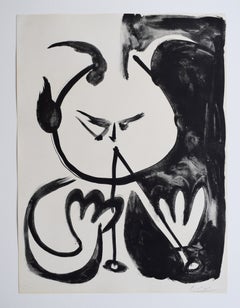
Pablo Picasso, Head, from Not Wanting, 1942

Pablo Picasso, Head, from Not Wanting, 1942

By Pablo Picasso

Located in Southampton, NY

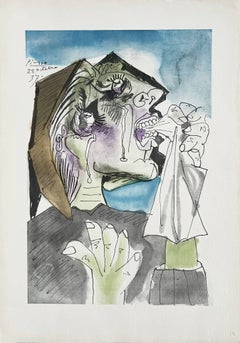
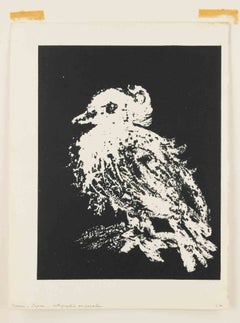
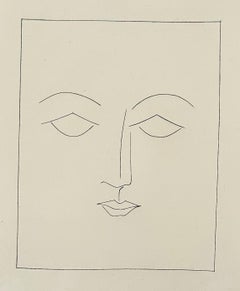
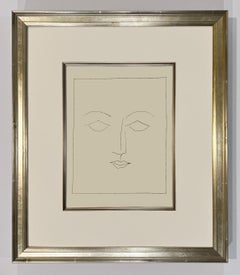
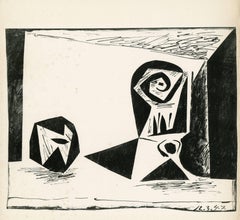
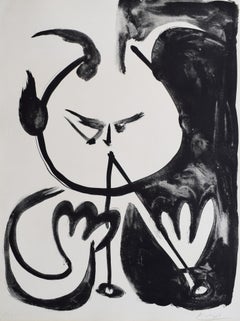
This exquisite zincograph by Pablo Picasso (1881–1973), titled Tete (Head), from the album Non vouloir (Not Wanting), originates from the 1942 edition published by Editions Jeanne Bu...

Category

Cubist 1940s Prints and Multiples

Materials

Lithograph

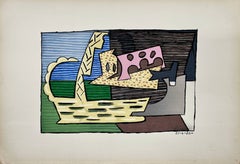
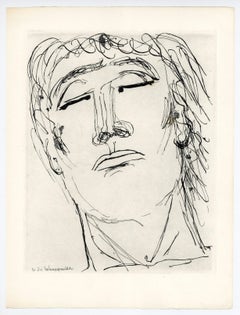
original etching

original etching

By Henry de Waroquier

Located in Henderson, NV

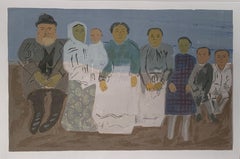
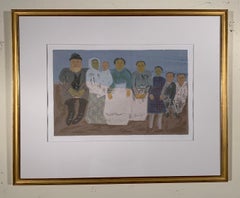
Medium: original etching. Printed in 1946 at the atelier Quesneville on BFK Rives paper and published in a limited edition of 300 for the "Alternance" portfolio (a collective art and...

Category

1940s Prints and Multiples

Materials

Etching

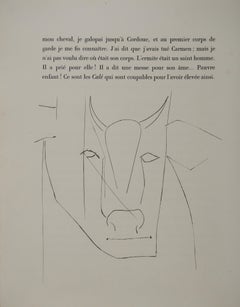
Carmen, Cubist Face - Original Etching (Cramer #52)

Carmen, Cubist Face - Original Etching (Cramer #52)

By Pablo Picasso

Located in Paris, IDF

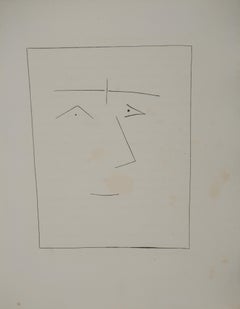
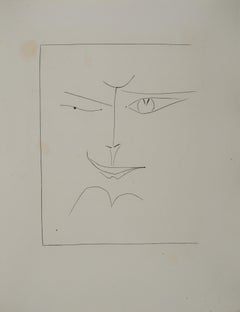
Pablo PICASSO Carmen, Cubist Face , 1949 Original burin engraving (Atelier Lacourière, Paris) Unsigned On Montval wove paper 33 x 26 cm (12.9 x 10.2 in) REFERENCES : - Catalog rai...

Category

Modern 1940s Prints and Multiples

Materials

Etching

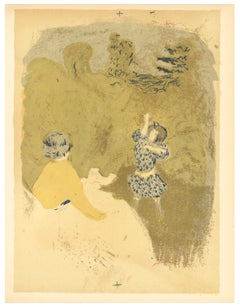
"La petite fille au volant" lithograph

"La petite fille au volant" lithograph

Located in Henderson, NV

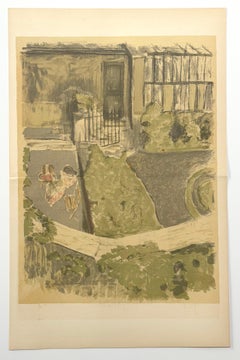
Medium: lithograph (after the original Edouard Vuillard lithograph). Printed on Renage wove paper in 1948 by the atelier Mourlot and published in an edition of 2500. Size: 12 3/8 x 9...

Category

1940s Prints and Multiples

Materials

Lithograph

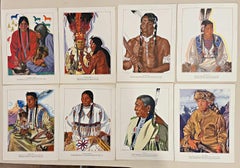
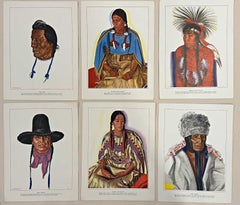
Blackfeet Indians, Great Northern Railway 14 prints

Blackfeet Indians, Great Northern Railway 14 prints

By Winold Reiss

Located in Spokane, WA

A group of 14 Blackfeet Indians prints created by the artist Winold Reiss. The Great Northern Railway printed and released these prints in c. 1940. This is for the entire group...

Category

American Realist 1940s Prints and Multiples

Materials

Lithograph

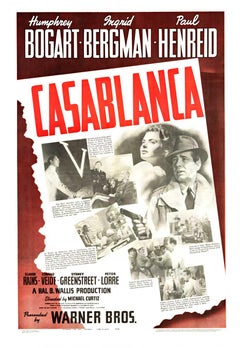
Original 1942 "CASABLANCA" vintage Academy Award winning movie poster

Original 1942 "CASABLANCA" vintage Academy Award winning movie poster

Located in Spokane, WA

Original 1942 CASABLANCA vintage movie poster. Archival linen backed in very good condition, ready to frame. The original production fold marks have been touched up and restored. This is an authentic vintage 1942 issue of Casablanca for sale. "Casablanca" is widely regarded as one of the greatest films in cinema history. It received critical acclaim upon its release and won three Academy Awards, including Best Picture, Best Director for Michael Curtiz, and Best Adapted Screenplay. The cast's performances, memorable dialogue, and timeless romance have contributed to the film's enduring popularity. "Casablanca" remains a cultural touchstone and is often referenced in popular media. • Rick Blaine (Humphrey Bogart): The owner of Rick's Café Américain, an establishment known for its lively atmosphere. Rick is initially portrayed as detached and cynical, but his past is revealed as the story progresses. • Ilsa Lund (Ingrid Bergman): A Norwegian woman with a complicated history with Rick. She is caught in a love triangle between Rick and her husband, Victor Laszlo. • Captain Louis Renault (Claude Rains): The corrupt and witty French police captain in Casablanca. He adds a layer of humor to the film and undergoes a moral transformation as the story unfolds. Over the years, the Casablanca poster...

Category

American Realist 1940s Prints and Multiples

Materials

Offset

Original Cultivez des Oleagineux French mid-century vintage poster

Original Cultivez des Oleagineux French mid-century vintage poster

Located in Spokane, WA

Original 'La France Manque d’Huile, cultivez des Oleagineux' vintage French poster. Linen backed in excellent condition, ready to frame. FREE Continential USA shipping. Transpor...

Category

American Modern 1940s Prints and Multiples

Materials

Lithograph

Pablo Picasso, Untitled, from Carmen, 1949

Pablo Picasso, Untitled, from Carmen, 1949

By Pablo Picasso

Located in Southampton, NY

This exquisite engraving by Pablo Picasso (1881–1973), titled Sans titre (Untitled), from the folio Picasso, Carmen (Picasso, Carmen), originates from the 1949 edition published by L...

Category

Cubist 1940s Prints and Multiples

Materials

Engraving

Pablo Picasso, Untitled, from Carmen, 1949

Pablo Picasso, Untitled, from Carmen, 1949

By Pablo Picasso

Located in Southampton, NY

This exquisite engraving by Pablo Picasso (1881–1973), titled Sans titre (Untitled), from the folio Picasso, Carmen (Picasso, Carmen), originates from the 1949 edition published by L...

Category

Cubist 1940s Prints and Multiples

Materials

Engraving

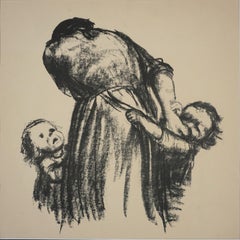
"Bread" lithograph by Käthe Kollwitz

"Bread" lithograph by Käthe Kollwitz

By Käthe Kollwitz

Located in Soquel, CA

Bold lithograph titled "Bread" by Kathe Kollwitz (German, 1867-1945). This piece is one of the Lithographic reproductions of the original lithographs, plate 2 from a series of 10, pr...

Category

Expressionist 1940s Prints and Multiples

Materials

Paper, Ink, Lithograph

1945 travel poster by L. F. Dominique - SNCF Ile de France

1945 travel poster by L. F. Dominique - SNCF Ile de France

Located in PARIS, FR

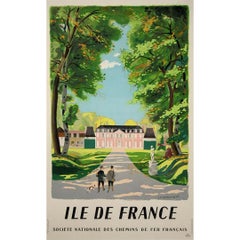
This charming 1945 travel poster by L. F. Dominique was created to promote tourism in the Île-de-France, the cultural and historical heart of the country. Produced for the French nat...

Category

1940s Prints and Multiples

Materials

Linen, Paper, Lithograph

Pablo Picasso, Untitled, from Carmen, 1949

Pablo Picasso, Untitled, from Carmen, 1949

By Pablo Picasso

Located in Southampton, NY

This exquisite engraving by Pablo Picasso (1881–1973), titled Sans titre (Untitled), from the folio Picasso, Carmen (Picasso, Carmen), originates from the 1949 edition published by L...

Category

Cubist 1940s Prints and Multiples

Materials

Engraving

"La Partie de dames" lithograph

"La Partie de dames" lithograph

Located in Henderson, NV

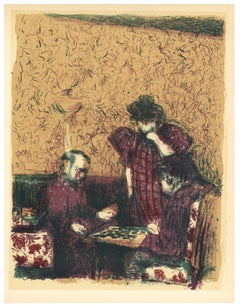
Medium: lithograph (after the original Edouard Vuillard lithograph). Printed on Renage wove paper in 1948 by the atelier Mourlot and published in an edition of 2500. Size: 12 3/8 x 9...

Category

1940s Prints and Multiples

Materials

Lithograph

Kathe Kollwitz, Self-Portrait, from Ten Lithographs, 1941 (after)

Kathe Kollwitz, Self-Portrait, from Ten Lithographs, 1941 (after)

By Käthe Kollwitz

Located in Southampton, NY

This exquisite lithograph after Kathe Kollwitz (1867–1945), titled Selbstbildnis (Self-Portrait), from the folio Kathe Kollwitz, Ten Lithographs, originates from the 1941 edition published by Henry C. Kleemann, New York, and Curt Valentin, New York; printed by Duenewald Printing Corporation, New York. The composition reflects Kollwitz’s profound engagement with themes of identity, introspection, and human vulnerability, rendered with stark emotional intensity and a powerful graphic economy that underscores her enduring social message. Executed as a lithograph on velin paper, this work measures 19 x 16 inches (48.26 x 40.64 cm), overall; 10.5 x 9 inches (26.67 x 22.86 cm), image. Unsigned and unnumbered as issued. Artwork Details: Artist: After Kathe Kollwitz (1867–1945) Title: Selbstbildnis (Self-Portrait), from Kathe Kollwitz, Ten Lithographs Medium: Lithograph on velin paper Dimensions: 19 x 16 inches (48.26 x 40.64 cm), overall; 10.5 x 9 inches (26.67 x 22.86 cm), image Inscription: Unsigned and unnumbered as issued Date: 1941 Publisher: Henry C. Kleemann, New York, and Curt Valentin, New York Printer: Duenewald Printing Corporation, New York Condition: Well preserved, consistent with age and medium Provenance: From the folio Kathe Kollwitz, Ten Lithographs, 1941 About the Publication: Kathe Kollwitz, Ten Lithographs, published in New York in 1941 by Henry C. Kleemann in collaboration with Curt Valentin, represents an important early American presentation of Kollwitz’s graphic work at a time when her reputation was expanding internationally. Issued during the turbulence of the Second World War and following the suppression of her work in Germany under the Nazi regime, the folio played a crucial role in introducing her imagery to a broader audience outside Europe. The publication gathers a selection of her most powerful lithographic compositions, emphasizing her mastery of tonal contrast, expressive line, and psychological depth. Produced with careful attention to print quality by Duenewald Printing Corporation, the edition reflects the continued transmission of European modernist printmaking traditions into the American context, serving both as a document of artistic excellence and as a vehicle for the preservation and dissemination of Kollwitz’s humanistic vision. About the Artist: Kathe Kollwitz (1867–1945) was a German draughtsman, printmaker, and sculptor whose profoundly moving imagery, exceptional technical mastery, and unwavering social conscience established her as one of the most important and influential artists of the twentieth century, widely recognized as a master of modern printmaking and one of the most powerful visual chroniclers of human suffering, war, and social injustice. Born in Konigsberg, East Prussia, into a progressive and intellectually engaged family, Kollwitz was encouraged from an early age to pursue art and developed a deep awareness of social inequality that would shape her entire career, studying in Berlin and Munich at a time when women were largely excluded from formal academies while mastering drawing and graphic techniques with extraordinary discipline. Her breakthrough came with the monumental graphic cycle A Weavers’ Revolt (1893–1897), followed by The Peasants’ War (1901–1908), works that combined complex narrative structure with extraordinary technical command in etching, aquatint, and lithography, establishing her reputation as one of Europe’s leading graphic artists. Throughout her career, Kollwitz remained committed to portraying the lives of workers, mothers, and victims of poverty and conflict with unflinching honesty, creating compositions defined by bold, sculptural line, dense shadow, and unparalleled psychological depth that conveyed grief, resilience, and dignity. Working during a period transformed by the radical innovations of Pablo Picasso, Alexander Calder, Alberto Giacometti, Salvador Dali, Joan Miro, Wassily Kandinsky, Marcel Duchamp, and Man Ray, Kollwitz maintained a resolutely figurative and human-centered approach, aligning more closely with German Expressionism and artists such as Ernst Barlach, Max Liebermann, and Edvard Munch, whose emotional intensity and symbolic treatment of the human figure profoundly shaped her artistic language. Her later work, particularly the woodcut cycle War (1922–1923), stands among the most powerful anti-war statements in the history of art, reflecting both personal tragedy, including the death of her son in World War I, and a universal condemnation of violence and loss. In addition to her prints, Kollwitz created deeply moving sculptures that extended her exploration of grief and maternal protection into three dimensions, reinforcing her status as a multidisciplinary artist of exceptional range. She achieved significant recognition during her lifetime, becoming the first woman elected to the Prussian Academy of Arts, though her work was later condemned by the Nazi regime as degenerate, leading to her forced resignation and the removal of her works from public collections, yet her reputation expanded internationally after World War II and she is now regarded as a central figure in modern art. Her influence has been profound and far-reaching, shaping later artists including Francis Bacon, Anselm Kiefer, Leon Golub, Kiki Smith, and numerous contemporary figurative and socially engaged artists who continue to explore themes of trauma, memory, and human vulnerability. Today her works are held in major museum collections worldwide, including the Kathe Kollwitz Museum in Berlin, the Museum of Modern Art in New York, the British Museum in London, and the Art Institute of Chicago, and remain highly sought after by collectors for their emotional intensity and historical significance. The highest auction record for a work by Kathe Kollwitz is held by her sculpture Mutter mit totem Sohn (Mother with Dead Son), which achieved approximately 1.2 million EUR at auction, confirming her enduring importance. Kathe Kollwitz Selbstbildnis 1941 lithograph German Expressionism social realism print.

Category

Expressionist 1940s Prints and Multiples

Materials

Lithograph

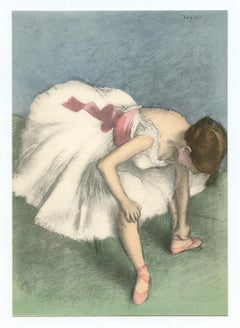
pochoir

pochoir

By (after) Edgar Degas

Located in Henderson, NV

Medium: pochoir (after the drawing). A soft and delicate impression, printed in Paris in 1948 and published in an edition of 1200 by Braun et Cie. Size: 6 1/2 x 4 1/2 inches (164 x 1...

Category

Impressionist 1940s Prints and Multiples

Materials

Lithograph, Stencil

pochoir

pochoir

By (after) Edgar Degas

Located in Henderson, NV

Medium: pochoir (after the painting). A soft and delicate impression, printed in Paris in 1948 and published in an edition of 1200 by Braun et Cie. Size: 6 1/2 x 4 1/2 inches (164 x ...

Category

Impressionist 1940s Prints and Multiples

Materials

Lithograph, Stencil

Pays Basque - Circa 1940 Original Poster - Fishing - Tourism - Sea

Pays Basque - Circa 1940 Original Poster - Fishing - Tourism - Sea

Located in PARIS, FR

This stunning original poster by Julio Garcia, dating from around 1940, is a rare and vivid celebration of the Basque Country’s strong ties to the sea. With its bold colors and styli...

Category

1940s Prints and Multiples

Materials

Linen, Paper, Lithograph

Henri Matisse, Series E, Var. 7, Drawings, Themes and Variations, 1943 (after)

Henri Matisse, Series E, Var. 7, Drawings, Themes and Variations, 1943 (after)

By Henri Matisse

Located in Southampton, NY

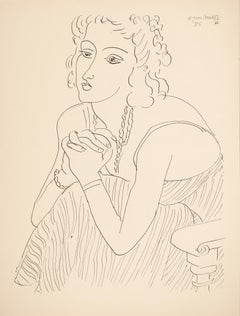
This exquisite lithograph after Henri Matisse (1869–1954), titled Serie E, var. 7 (Series E, Variation 7), from the album Henri Matisse, Dessins, Themes et Variations (Drawings, Them...

Category

Modern 1940s Prints and Multiples

Materials

Lithograph

Henri Matisse, Series H, Var. 4, Drawings, Themes and Variations, 1943 (after)

Henri Matisse, Series H, Var. 4, Drawings, Themes and Variations, 1943 (after)

By Henri Matisse

Located in Southampton, NY

This exquisite lithograph after Henri Matisse (1869–1954), titled Serie H, var. 4 (Series H, Variation 4), from the album Henri Matisse, Dessins, Themes et Variations (Drawings, Them...

Category

Modern 1940s Prints and Multiples

Materials

Lithograph

Edgar Degas, Three Dancers, 1945 (after)

Edgar Degas, Three Dancers, 1945 (after)

By Edgar Degas

Located in Southampton, NY

This exquisite lithograph after Edgar Degas (1834–1917), titled Trois danseurs (Three Dancers), originates from the 1945 folio Degas, Ten Ballet Sketches. Published by The Studio Publications, Inc., New York, rendered and printed by Albert Carman, City Island, 1945, this work reflects Degas’s sensitive mastery of line, movement, and the intimate psychological nuances of the ballet studio. Executed as a lithograph and pochoir on velin paper, this work measures 13 x 17 inches (33.02 x 43.18 cm). Signed in the plate and unnumbered as issued. Rendered and printed by Albert Carman, City Island. Artwork Details: Artist: After Edgar Degas (1834–1917) Title: Trois danseurs (Three Dancers), from Degas, Ten Ballet Sketches, 1945 Medium: Lithograph and pochoir on velin paper Dimensions: 13 x 17 inches (33.02 x 43.18 cm) Inscription: Signed in the plate and unnumbered as issued Date: 1945 Publisher: The Studio Publications, Inc., New York Printer: Albert Carman, City Island Condition: Well preserved, consistent with age and medium Provenance: From the 1945 folio Degas, Ten Ballet Sketches, published by The Studio Publications, Inc., New York Notes: Excerpted from the album, Born in Paris in 1834, Edgar Degas lived, and surely loved the life of that city during most of his years. These continued somewhat sadly beyond those of most of his friends— into the debacle of the first World War, during which he died in 1917. Judging by the frequency with which he used them as models, he must have had an especial admiration for the ballet girls who followed a profession that at the time brought none of the glory and prosperity which attend it today. New aspects of the human body, revealed in movement, fascinated him. But his occupation with the simply anatomical side of his subjects never resulted in a cold interpretation. On the contrary there is a warmth and sympathy that pervades all of his work. The drawings here represent the painter in one important phase of his multi-sensitive view of life; and permit an insight which a more ambitious work might not do-into the operation of the creative process, the artist's transformation of reality as it passes through the mesh of his sensibilities. The Edition of this Portfolio is limited to MMMD examples. Rendered by Albert Carman. About the Publication: Degas, Ten Ballet Sketches (1945) is one of the earliest and most significant American postwar fine art portfolios devoted to Edgar Degas’s intimate works on paper. Published by The Studio Publications, Inc., New York, and rendered and printed by Albert Carman at City Island, the album sought to faithfully reproduce a group of Degas’s ballet-related drawings through a combination of lithography and hand-applied pochoir coloring. This hybrid technique allowed the edition to preserve the immediacy, tonal subtlety, and gestural delicacy central to Degas’s draftsmanship. Conceived as a fine art publication rather than a commercial book, the portfolio provided American audiences unprecedented access to Degas’s private, spontaneous studies—images that reveal the artist’s fascination with movement, anatomy, and the psychological atmosphere of the rehearsal studio. The album exemplifies the mid-20th-century revival of pochoir as a means of recreating the texture and coloristic nuance of original works on paper, and it remains an important document of how Degas’s legacy was translated into high-quality printed form for collectors, museums, and connoisseurs. About the Artist: Edgar Degas (1834–1917) was a French painter, draughtsman, printmaker, and sculptor whose groundbreaking fusion of classical draftsmanship, modern experimentation, and psychological depth helped define the trajectory of Western art, positioning him as one of the most influential figures of the nineteenth and early twentieth centuries; renowned for his depictions of ballet dancers, racehorses, theater scenes, cafe life, domestic interiors, milliners, laundresses, and women at their toilette, Degas reimagined observational realism through radical compositional innovation—employing extreme cropping, asymmetrical framing, oblique viewpoints, and dramatic lighting that anticipated photographic and cinematic language long before these technologies shaped visual culture, and although associated with Impressionism, he rejected plein-air spontaneity in favor of studio-based discipline rooted in the linear precision of Jean-Auguste-Dominique Ingres, the expressive chromaticism of Eugene Delacroix, and the modernity of Edouard Manet while also drawing inspiration from Japanese ukiyo-e prints, classical sculpture, and early photography; his independent artistic philosophy resonated with and helped shape the innovations of Pablo Picasso, Alexander Calder, Alberto Giacometti, Salvador Dali, Joan Miro, Wassily Kandinsky, Marcel Duchamp, and Man Ray, whose explorations of movement, form, dream logic, abstraction, and conceptualism all find antecedents in Degas’s investigations into seriality, temporality, and the fragmented figure, and his pioneering use of pastel, monotype, and wax sculpture fundamentally transformed each medium, influencing artists from Henri Matisse, Francis Bacon, Lucian Freud, and Giacomo Manzu to Paula Rego, contemporary realists, experimental photographers, and choreographers; his works are held in nearly every major museum collection worldwide—including the Musee dOrsay, the Louvre, the Metropolitan Museum of Art, the National Gallery of Art, the Art Institute of Chicago, the Courtauld Institute, and the National Gallery, London—affirming his central place in the history of art, and the highest auction record for Degas was achieved at Sothebys London on February 3, 2015, when Danseuses en Bleu sold for 37,033,000 GBP, cementing his status as one of the most sought-after and enduringly significant artists of the Western canon. Degas pochoir, Degas lithograph...

Category

Impressionist 1940s Prints and Multiples

Materials

Lithograph

Old Injun
Old Injun

Old Injun

By Charles Banks Wilson

Located in Myrtle Beach, SC

Charles Banks Wilson, 'Old Injun', lithograph, 1948, edition 250, Hunt 39. Signed in pencil. A fine, richly-inked impression, on off-white wove paper, with full margins (1 3/4 to 2 inches), in excellent condition. Published by Associated American Artists. Impressions of this work are in the permanent collections of the following institutions: Ackland Art Museum, Georgetown University...

Category

American Realist 1940s Prints and Multiples

Materials

Lithograph

Pierre Bonnard, Sunset Over the Mediterranean, Verve, Revue Artistique, 1940

Pierre Bonnard, Sunset Over the Mediterranean, Verve, Revue Artistique, 1940

By Pierre Bonnard

Located in Southampton, NY

This exquisite lithograph by Pierre Bonnard (1867–1947), titled Coucher De Soleil Sur La Mediterranee (Sunset Over the Mediterranean), from Verve, Revue Artistique et Litteraire, Vol...

Category

Post-Impressionist 1940s Prints and Multiples

Materials

Lithograph

'Taos Placita' — American Southwest Regionalist Masterwork

'Taos Placita' — American Southwest Regionalist Masterwork

By Gustave Baumann

Located in Myrtle Beach, SC

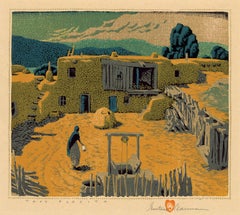
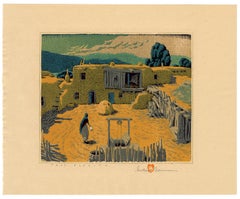
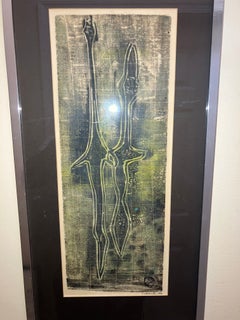
Gustave Baumann, 'Taos Placita', color woodcut, 1947, edition 125. Baumann 132. Signed, titled, and numbered '20-125' in pencil; with the artist’s Hand-in-Heart chop. A superb, richly-inked impression, with fresh colors, on fibrous oatmeal wove paper; the full sheet with margins (2 to 3 1/8 inches); slight rippling at the left sheet edge, in excellent condition. Matted to museum standards, unframed. Image size 9 5/8 x 11 1/4 inches (244 x 286 mm); sheet size 13 1/4 x 17 inches (337 x 432 mm). Collections: Harwood Museum of Art, New Mexico Museum of Art, Phoenix Art Museum, Scottsdale Art Museum, Wichita Art Museum. ABOUT THE ARTIST Gustave Baumann (1881-1971) was a renowned printmaker and a leading figure of the American color woodcut revival whose exquisite craftsmanship and vibrant imagery captured the essence of the Southwest. "A brilliant printmaker, Baumann brought to the medium a full mastery of the craft of woodworking that he acquired from his father, a German cabinetmaker. This craftsmanship was coupled with a strong artistic training that resulted in the handsome objects we see in the exhibition today. After discovering New Mexico in 1918, Baumann began to explore in his woodblock prints of this period the light. color, and architectural forms of that landscape. His prints of this period are among the most beautiful and poetic images of the American West." —Lewis I. Sharp, Director, Denver Art Museum Baumann, the son of a craftsman, immigrated to the United States from Germany with his family when he was ten, settling in Chicago. From 1897 to 1904, he studied in the evenings at the Art Institute of Chicago, working in a commercial printmaking shop during the day. In 1905, he returned to Germany to attend the Kunstwerbe Schule in Munich, where he decided on a career in printmaking. He returned to Chicago in 1906 and worked for a few years as a graphic designer of labels. Baumann made his first prints in 1909 and exhibited them at the Art Institute of Chicago the following year. In 1910, he moved to the artists’ colony in Nashville, Indiana, where he explored the creative and commercial possibilities of a career as a printmaker. In 1915, he exhibited his color woodcuts at the Panama-Pacific International Exposition in San Francisco, winning the gold medal. Among Baumann’s ongoing commercial activities was his work for the Packard Motor Car Company from 1914 to 1920 where he produced designs, illustrations, and color woodcuts until 1923. In 1919, Baumann’s printmaking work dominated the important exhibition of American color woodcuts at the Detroit Institute of Arts. Twenty-six of his prints were included, far more than the works of any other artist. A set of his blocks, a preparatory drawing, and seven progressive proofs complemented the exhibition. That same year, Baumann worked in New York and, over the summer, in Provincetown, Massachusetts. His airy images of Cape Cod employed soft, pastel colors and occasionally showed the influence of the white-line woodcut technique. Many of his Chicago artist friends had traveled to the southwest, and Baumann became intrigued by their paintings, souvenirs, and stories of an exotic place named Taos, New Mexico. In the summer of 1918, he spent the summer in Taos sketching and painting before visiting Santa Fe. Paul Walter, the director of the Museum of New Mexico, offered him a studio in the museum's basement. Inspired by the rugged beauty of the Southwest—the vibrant colors and dramatic landscapes of the region became a central theme in his work, influencing his artistic style and subject matter for the remainder of his career. Later in the decade, he traveled to the West Coast and made prints of California landscape. Baumann's prints became synonymous with the Southwest, capturing the spirit of its place in America's identity with a unique sense of authenticity and reverence. His iconic images of desert vistas, pueblo villages, and indigenous cultures served as visual tributes to the region's rich cultural heritage, earning him a dedicated following among collectors and curators alike. A true craftsman and artist, Baumann completed every step of the printmaking process himself, cutting each block, mixing the inks, and printing every impression on the handmade paper he selected. His dedication to true craftsmanship and his commitment to preserving the integrity of his artistic vision earned him widespread acclaim and recognition within the art world. About the vibrant colors he produced, Baumann stated, “A knowledge of color needs to be acquired since they don’t all behave the same way when ground or mixed...careful chemistry goes into the making of colors, with meticulous testing for permanence. While complicated formulae evolve new colors, those derived from Earth and metal bases are still the most reliable.” In the 1930s, Baumann became interested in puppet theater. He designed and carved his own marionettes and established a little traveling company. From 1943 to 1945, the artist carved an altarpiece for the Episcopal Church of the Holy Faith in Santa Fe. In 1952, a retrospective exhibition of his prints was mounted at the New Mexico Museum of Fine Arts. Throughout his prolific career, Baumann executed nearly four hundred color woodcuts. Baumann’s woodcuts...

Category

American Modern 1940s Prints and Multiples
Materials

Woodcut

Edgar Degas, Dancer Arranging Her Dress, 1945 (after)

Edgar Degas, Dancer Arranging Her Dress, 1945 (after)

By Edgar Degas

Located in Southampton, NY

This exquisite lithograph after Edgar Degas (1834–1917), titled Danseuse arrangeant sa robe (Dancer Arranging Her Dress), originates from the 1945 folio Degas, Ten Ballet Sketches. Published by The Studio Publications, Inc., New York, rendered and printed by Albert Carman, City Island, 1945, this work reflects Degas’s sensitive mastery of line, movement, and intimate observation, capturing the grace, poise, and psychological immediacy that define his iconic ballet imagery. In Danseuse arrangeant sa robe (Dancer Arranging Her Dress), Degas reveals gesture and inner emotion through economical contour and lyrical nuance. Executed as a lithograph and pochoir on velin paper, this work measures 17 x 13 inches (43.18 x 33.02 cm). Signed in the plate and unnumbered as issued. Rendered and printed by Albert Carman, City Island, one of the notable American ateliers specializing in fine art lithography during the mid-20th century. Artwork Details: Artist: After Edgar Degas (1834–1917) Title: Danseuse arrangeant sa robe (Dancer Arranging Her Dress), from Degas, Ten Ballet Sketches, 1945 Medium: Lithograph and pochoir on velin paper Dimensions: 17 x 13 inches (43.18 x 33.02 cm) Inscription: Signed in the plate and unnumbered as issued Date: 1945 Publisher: The Studio Publications, Inc., New York Printer: Albert Carman, City Island, 1945 Condition: Well preserved, consistent with age and medium Provenance: From the 1945 folio Degas, Ten Ballet Sketches, published by The Studio Publications, Inc., New York Notes: Excerpted from the album, Born in Paris in 1834, Edgar Degas lived, and surely loved the life of that city during most of his years. These continued somewhat sadly beyond those of most of his friends— into the debacle of the first World War, during which he died in 1917. Judging by the frequency with which he used them as models, he must have had an especial admiration for the ballet girls who followed a profession that at the time brought none of the glory and prosperity which attend it today. New aspects of the human body, revealed in movement, fascinated him. But his occupation with the simply anatomical side of his subjects never resulted in a cold interpretation. On the contrary there is a warmth and sympathy that pervades all of his work. The drawings here represent the painter in one important phase of his multi-sensitive view of life; and permit an insight which a more ambitious work might not do-into the operation of the creative process, the artist's transformation of reality as it passes through the mesh of his sensibilities. The Edition of this Portfolio is limited to MMMD examples. Rendered by Albert Carman. About the Publication: Degas, Ten Ballet Sketches, published in 1945 by The Studio Publications, Inc., New York, stands as one of the most elegant and scholarly mid-century American fine art folios devoted to the ballet imagery of Edgar Degas. Conceived as a high-quality interpretive portfolio, the album presents a series of lithograph-and-pochoir renderings based on Degas’s original drawings, executed with exceptional attention to tonal subtlety, contour fidelity, and the emotional interiority that defines the artist’s draftsmanship. Rendered and printed by Albert Carman on City Island, the publication embodies an American postwar effort to restore and celebrate European masterworks through meticulous handcraft and artisanal color application, honoring Degas’s distinctive line and the atmospheric delicacy of his studio-based studies. Produced in a substantial edition of MMMD examples, the portfolio offered audiences rare access to Degas’s private working drawings—images rarely seen outside institutional collections—while exemplifying the technical refinement and interpretive care characteristic of Carman’s workshop. Today, Degas, Ten Ballet Sketches remains a sought-after historical publication, valued for its craft, fidelity to Degas’s aesthetic, and its role in preserving and disseminating the artist’s intimate ballet imagery in a beautifully executed mid-century fine art format. About the Artist: Edgar Degas (1834–1917) was a French painter, draughtsman, printmaker, and sculptor whose groundbreaking fusion of classical draftsmanship, modern experimentation, and psychological depth helped define the trajectory of Western art, positioning him as one of the most influential figures of the nineteenth and early twentieth centuries; renowned for his depictions of ballet dancers, racehorses, theater scenes, cafe life, domestic interiors, milliners, laundresses, and women at their toilette, Degas reimagined observational realism through radical compositional innovation—employing extreme cropping, asymmetrical framing, oblique viewpoints, and dramatic lighting that anticipated photographic and cinematic language long before these technologies shaped visual culture, and although associated with Impressionism, he rejected plein-air spontaneity in favor of studio-based discipline rooted in the linear precision of Jean-Auguste-Dominique Ingres, the expressive chromaticism of Eugene Delacroix, and the modernity of Edouard Manet while also drawing inspiration from Japanese ukiyo-e prints, classical sculpture, and early photography; his independent artistic philosophy resonated with and helped shape the innovations of Pablo Picasso, Alexander Calder, Alberto Giacometti, Salvador Dali, Joan Miro, Wassily Kandinsky, Marcel Duchamp, and Man Ray, whose explorations of movement, form, dream logic, abstraction, and conceptualism all find antecedents in Degas’s investigations into seriality, temporality, and the fragmented figure, and his pioneering use of pastel, monotype, and wax sculpture fundamentally transformed each medium, influencing artists from Henri Matisse, Francis Bacon, Lucian Freud, and Giacomo Manzu to Paula Rego, contemporary realists, experimental photographers, and choreographers; his works are held in nearly every major museum collection worldwide—including the Musee dOrsay, the Louvre, the Metropolitan Museum of Art, the National Gallery of Art, the Art Institute of Chicago, the Courtauld Institute, and the National Gallery, London—affirming his central place in the history of art, and the highest auction record for Degas was achieved at Sothebys London on February 3, 2015, when Danseuses en Bleu sold for 37,033,000 GBP, cementing his status as one of the most sought-after and enduringly significant artists of the Western canon. Edgar Degas lithograph...

Category

Impressionist 1940s Prints and Multiples

Materials

Lithograph

Adolf Dehn, Lake Tarryall, 1941 mid-century lithograph of Colorado mountain lake

Adolf Dehn, Lake Tarryall, 1941 mid-century lithograph of Colorado mountain lake

By Adolf Dehn

Located in New York, NY

Lake Tarryall, a 1941 lithograph by Adolf Dehn (1895-1968) was made while he was teaching in Colorado. A native of Waterville, Minnesota, Dehn attended the Minneapolis School of Art ...

Category

American Modern 1940s Prints and Multiples

Materials

Lithograph

Pablo Picasso, Untitled, from Carmen, 1949

Pablo Picasso, Untitled, from Carmen, 1949

By Pablo Picasso

Located in Southampton, NY

This exquisite engraving by Pablo Picasso (1881–1973), titled Sans titre (Untitled), from the folio Picasso, Carmen (Picasso, Carmen), originates from the 1949 edition published by L...

Category

Cubist 1940s Prints and Multiples

Materials

Engraving

Pablo Picasso, Bather, from Not Wanting, 1942

Pablo Picasso, Bather, from Not Wanting, 1942

By Pablo Picasso

Located in Southampton, NY

This exquisite zincograph by Pablo Picasso (1881–1973), titled Baigneuse (Bather), from the album Non vouloir (Not Wanting), originates from the 1942 edition published by Editions Je...

Category

Cubist 1940s Prints and Multiples

Materials

Lithograph

pochoir

pochoir

By (after) Edgar Degas

Located in Henderson, NV

Medium: pochoir (after the pastel). A soft and delicate impression, printed in Paris in 1948 and published in an edition of 1200 by Braun et Cie. Size: 6 1/2 x 4 1/2 inches (164 x 11...

Category

Impressionist 1940s Prints and Multiples

Materials

Lithograph, Stencil

Braque, Composition, Du cubisme (after)

Braque, Composition, Du cubisme (after)

By Georges Braque

Located in Southampton, NY

Aquatint, Etching on vélin du Lana Papiers Spéciaux pure rag paper. Unsigned and unnumbered, as issued. Good Condition. Notes: From the folio, Du Cubisme, 1947. Published by Compagni...

Category

Modern 1940s Prints and Multiples

Materials

Etching, Aquatint

Original "Me Travel?  not this summer  Vacation At Home vintage poster  1945

Original "Me Travel? not this summer Vacation At Home vintage poster 1945

Located in Spokane, WA

Original World War Two, U. S. Military poster: ME TRAVEL? … NOT THIS SUMMER, VACATION AT HOME. Artist Albert Dorne. This is the large format printing (26" x 37") of this poster...

Category

American Realist 1940s Prints and Multiples

Materials

Offset

Taos Pueblo
Taos Pueblo

Taos Pueblo

By Anna Barry

Located in Fairlawn, OH

Taos Pueblo Screen print in colors, c. 1945 Signed and titled in pencil by the artist Printed in Taos Taos is the oldest continually inhabited city/village in North America. How old ...

Category

American Modern 1940s Prints and Multiples
Materials

Screen

Original 'Map of the United States as Californians See It' vintage map poster

Original 'Map of the United States as Californians See It' vintage map poster

Located in Spokane, WA

Original vintage poster: "Map of the United States as Californians See It". 1947, artist: Oren Arnold. Size: 16.5" x 20.5", R. H. MOEBUS COMPANY This poster is not linen-backed. This poster is in very good fine condition, ready to frame. A humorous satirical pictorial map from 1947 with the golden sun on the upper left, gives a detailed depiction of California, its relative size to the rest of the United States, showing Florida as "Death Valley", the rest of the United States as "Unexplored" 'Unimportant anyway, not in California". The image has your Mexican singer; bikini-clad bathers and others set in the image. Shows rivers, lakes, harbors, landmarks, parks, recreational activities, and local people. This map shows Los Angeles’ city...

Category

American Modern 1940s Prints and Multiples
Materials

Offset

Pablo Picasso, Untitled, from Carmen, 1949

Pablo Picasso, Untitled, from Carmen, 1949

By Pablo Picasso

Located in Southampton, NY

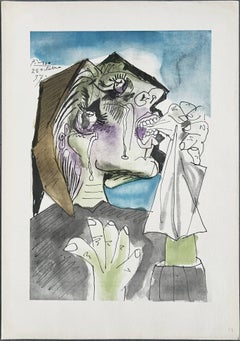
This exquisite engraving by Pablo Picasso (1881–1973), titled Sans titre (Untitled), from the folio Picasso, Carmen (Picasso, Carmen), originates from the 1949 edition published by L...

Category

Cubist 1940s Prints and Multiples
Materials
Engraving