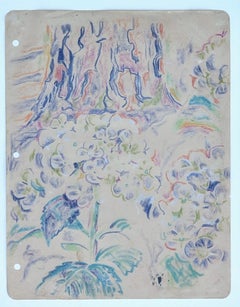
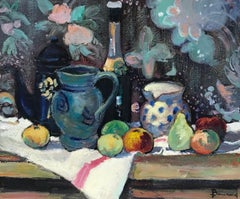
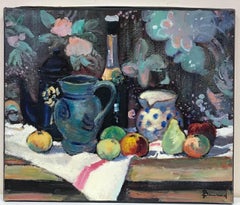
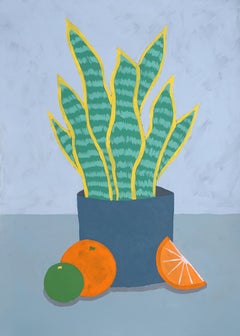
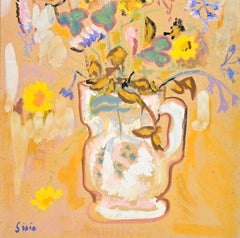
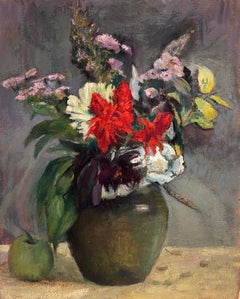
Walter Anderson ( American, 1903 - 1965)
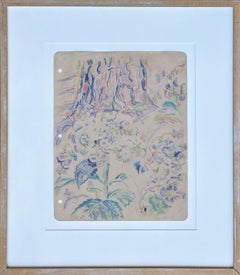
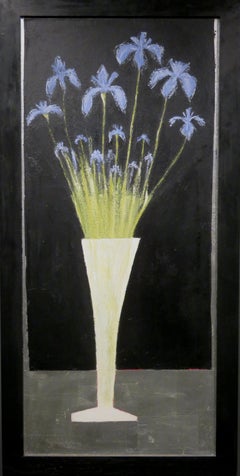
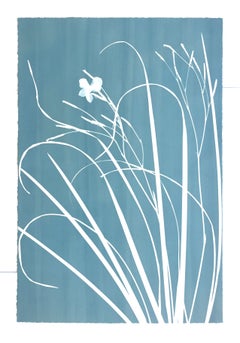
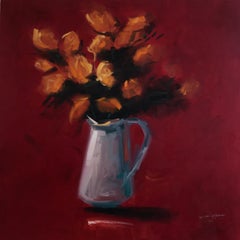
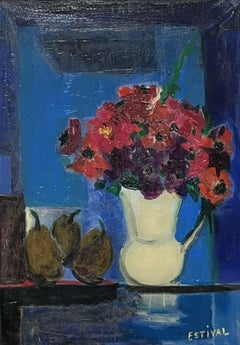
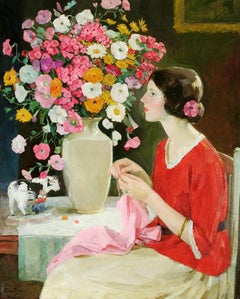
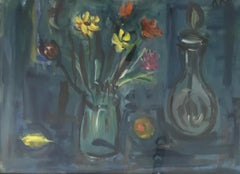
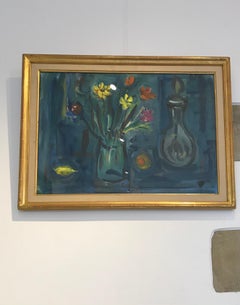
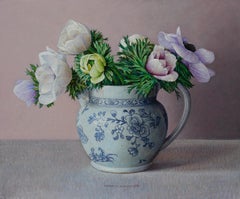
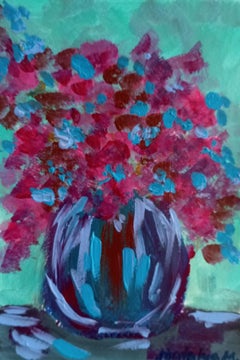
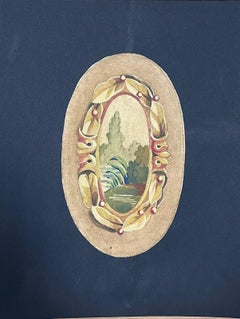
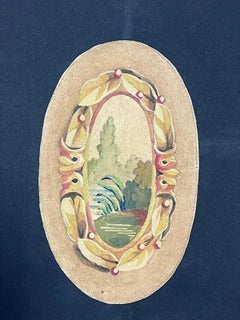
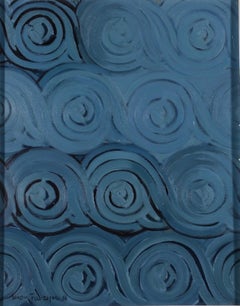
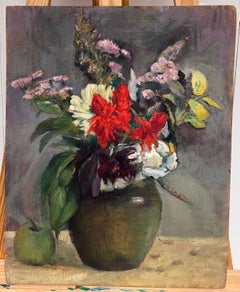
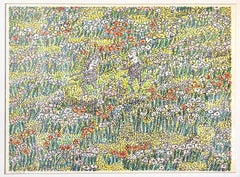
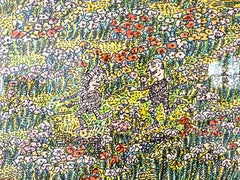
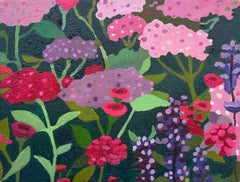
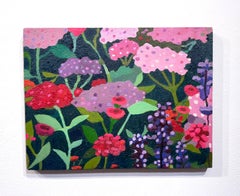
Hydrangeas, circa 1950
Mixed media on paper
11 x 8 1/2 inches
Provenance:
Luise Ross Gallery, New York
Private Collection, New Jersey
Acquired from the estate of the above, 2021
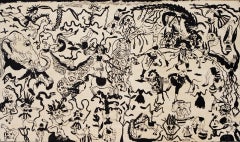
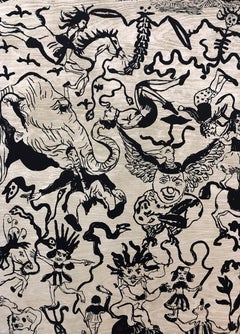
Walter Anderson firmly believed that quality art was an important part of life and should be made available to everyone. As he said, "There should be simple, good decorations, to be sold at prices to rival the five-and-ten." Noticing that only poor quality art was available in stores and little was available for children, he resolved to make art which could be reproduced easily and sell inexpensively — linoleum block prints. This technique enabled him to provide affordable, quality art.
The technique of linoleum block printing is a simple concept; however, it requires much skill and talent to actually produce memorable art. Anderson purchased surplus "battleship linoleum," thicker than ordinary linoleum with a burlap backing for better support, to create his blocks. During the mid-1940s, he created almost 300 linocuts working in the attic of the sea-side plantation house, Oldfields, his wife's family home in Gautier. Masses of linoleum chips accumulated at the foot of the attic stairs as he often worked night and day. He began with sketching out a design directly on the linoleum. Once he had carved the image into the surface, he used the back of faded, surplus stock wallpaper that a friend sent him, laying long strips on top of the inked linoleum. A roller made of sewer pipe filled with sand served as his press. When the print was completed, he often colored it by hand with bold strokes and vivid colors. The prints were sold at Shearwater Pottery, the family business, for a mere dollar a foot.
But "what about a well-designed fairy tale for a child's room?" he asked himself. Since there was a lack of affordable art for children, much of his work with linoleum blocks focused on subjects for children. He depicted fables and fairy tales ranging from Arabian Nights, to Germany and the Grimm Brothers' Rapunzel, to the French story of The White Cat, to the Greek tales such as Europa and the Bull, and to tales from China, India, and other cultures. Anderson also created "mini" books featuring the alphabet and Robinson Cat. The blocks are not only alive with the story being depicted, but they are also filled with designs taken from Best-Maugard's Method for Creative Design. Swirls, half-circles and zig-zag lines fill every available space on the linoleum block making them come alive and capture their audience.
But fairy tales, children's verses and the "mini" books, consisting of about 90 blocks, were not the sole subject of Anderson's linoleum block prints. In total, he created approximately 300 linoleum blocks with subjects ranging from coastal flora and fauna, coastal animals, and sports and other coastal activities. Anderson even created linoleum blocks to be used to print tablecloths and clothing, some worn by his own children. Color and subjects of the linoleum block prints were not the only things that got them noticed.
In 1945 when Anderson was creating these prints, the standard size of linoleum block prints was only 12 by 18 inches. These small dimensions were due to the common size of the paper available and the restrictions made by national competitions. Since Anderson used wallpaper...
Category
Mid-20th Century American Modern Landscape Paintings