
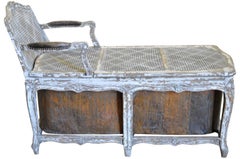
Exceptional Regence Chaise Lounge, Bath Tub
Located in Round Top, TX
An extremely rare and very sensational early 18th century French Regence chaise longue, bath tub.
Category
Antique Early 18th Century French Chaise Longues
Materials
Copper
Exceptional Regence Chaise Lounge, Bath Tub
Located in Round Top, TX
An extremely rare and very sensational early 18th century French Regence chaise longue, bath tub.
Copper
From cupolas to cookware and fine art to filaments, copper metal has been used in so many ways since prehistoric times. Today, antique, new and vintage copper coffee tables, mirrors, lamps and other furniture and decor can bring a warm metallic flourish to interiors of any kind.
In years spanning 8,700 BC (the time of the first-known copper pendant) until roughly 3,700 BC, it may have been the only metal people knew how to manipulate.
Valuable deposits of copper were first extracted on the Mediterranean island of Cyprus around 4,000 BC — well before Europe’s actual Bronze Age (copper + tin = bronze). Tiny Cyprus is even credited with supplying all of Egypt and the Near East with copper for the production of sophisticated currency, weaponry, jewelry and decorative items.
In the 15th, 16th and 17th centuries, master painters such as Leonardo da Vinci, El Greco, Rembrandt and Jan Brueghel created fine works on copper. (Back then, copper-based pigments, too, were all the rage.) By the late 19th and early 20th centuries, decorative items like bas-relief plaques, trays and jewelry produced during the Art Deco, Arts and Crafts and Art Nouveau periods espoused copper. These became highly valuable and collectible pieces and remain so today.
Copper’s beauty, malleability, conductivity and versatility make it perhaps the most coveted nonprecious metal in existence. In interiors, polished copper begets an understated luxuriousness, and its reflectivity casts bright, golden and earthy warmth seldom realized in brass or bronze. (Just ask Tom Dixon.)
Outdoors, its most celebrated attribute — the verdigris patina it slowly develops from exposure to oxygen and other elements — isn’t the only hue it takes. Architects often refer to shades of copper as russet, ebony, plum and even chocolate brown. And Frank Lloyd Wright, Renzo Piano and Michael Graves have each used copper in their building projects.
Find antique, new and vintage copper furniture and decorative objects on 1stDibs.
Sit back, relax and get all of the ergonomic support you could ever need by introducing an alluring antique or vintage chaise longue in your living room or by your outdoor fire pit.
The chaise longue is an upholstered piece of furniture that was made popular in France in the early 16th century. This low reclining seat — a “long chair” in English — boasts an elongated form and low back that extends about half the length of the furnishing, affording the welcome opportunity for a sitter to put their feet up and relax. A comfortable common ground between sofas and daybeds, early iterations of chaise longues were discovered in Ancient Egypt and were later frequently used in both Greece and Rome.
In the late 1700s, the first chaise longues were imported to America, and English speakers have struggled with the name ever since. (In the United States, the term is frequently spelled “chaise lounge.”) So, how do you pronounce chaise longue? It sounds like “shayz lawng,” but limiting it to shayz is perfectly acceptable in the States.
Antique Victorian chaise longues and 19th-century chaise longues bring luxury and perhaps extravagance to your living space while mid-century modern chaise longues, designed by the likes of Adrian Pearsall, Vladimir Kagan or Milo Baughman, can alter an interior with dazzling geometric contours and richly varied textures.
On 1stDibs, find many kinds of chaise longues for your home — from sculptural works by Charlotte Perriand to plush and velvety Louis XVI pieces to minimalist contemporary versions to suit your understated decor.
Modern icons are showing up in gracefully layered dining nooks, living rooms and lounges — proof that great design only gets better with context.
Andrianna Shamaris has filled her epic new home with pieces of her own design.
Top interior designers show — and tell — us how to create delectable spaces for hosting dinner parties.
With its plush cushions, cane details and dazzlingly colorful back, it’s inviting from every angle.
You know the designs, now get the stories about how they came to be.
The plush Cove Slipper 2.5 Seater sofa is just one of many convenient combinations from the London-based maker.
Sam Klemick's cool stool is edgy, cozy and environmentally sustainable all at once.
From his massive collaborative workshop in a former paper factory, the designer concocts funky furniture from disused materials, as well as luxe hotel interiors like the new Mix Brussels.