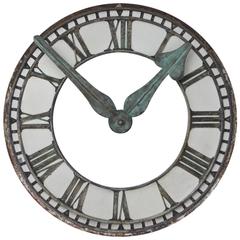
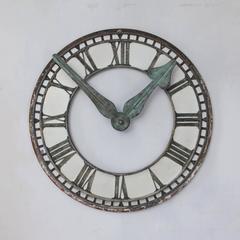
Copper Clock Face
Sold|$3,012
Copper Clock Face
Located in Stamford, GB
A rare verdigris copper and milk glass clock face from the original Acton tram station in London
Category
Early 1900s English Antique Copper Clock
Materials
Copper
Sold|$3,012
Copper Clock Face
Located in Stamford, GB
A rare verdigris copper and milk glass clock face from the original Acton tram station in London
Copper
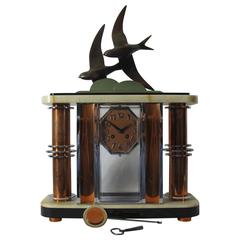
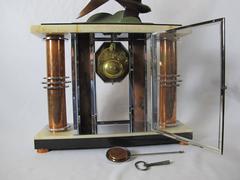
Art Deco Mantel Clock, Signed F. Guy, Marble Copper and Bronze
Located in Heukelum, Gelderland
Mantel clock of the Art Deco period, circa 1925. Made of marble, bronze and copper. Restored
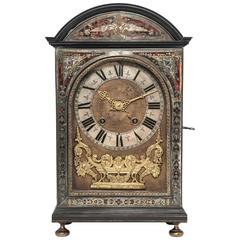
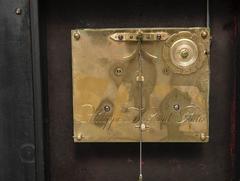
Fantastic Untouched French So-Called "Religieuse" Mantel/Wall Clock, circa 1680
By Philippe Tiblemont Paris 1
Located in Amsterdam, Noord Holland
Fantastic untouched French so-called "Religieuse" Mantel/Wall Clock, circa 1680 signed "Philippe
Copper

Sold|$1,750
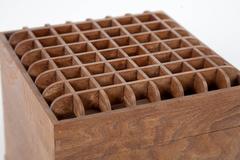
19th Century Japanese Incense Clock
Located in Scottsdale, AZ
Antique Japanese incense clock with copper liner and drawer with bronze knob.
Bronze, Copper
A sophisticated clock design, whether it’s a desk clock, mantel clock or large wall clock for your living room, is a decorative object to be admired in your home as much as it is a necessary functional element. This is part of the reason clocks make such superb collectibles. Given the versatility of these treasured fixtures — they’ve long been made in a range of shapes, sizes and styles — a clock can prove integral to your own particular interior decor.
Antique and vintage clocks can whisk us back to the 18th and 19th centuries. When most people think of antique clocks, they imagine an Art Deco Bakelite tabletop clock or wall clock, named for the revolutionary synthetic plastic, Bakelite, of which they’re made, or a stately antique grandfather clock. But the art of clock-making goes way back, transcending continents and encompassing an entire range of design styles and technologies. In short, there are many kinds of clocks depending on your needs.
A variety of wall clocks can be found on 1stDibs. A large antique hand-carved walnut wall clock is best suited to a big room and a flat background given what will likely be outwardly sculptural features, while Georgian grandfather clocks, or longcase clocks, will help welcome rainswept guests into your entryway or foyer. An interactive cuckoo clock, large or small, is guaranteed to bring outsize personality to your living room or dining room. For conversation pieces of a similar breed, mid-century modern enthusiasts go for the curious Ball clock, the first of more than 150 clock models conceived in the studio of legendary architect and designer George Nelson.
Minimalist contemporary clocks and books pair nicely on a shelf, but an eye-catching vintage mantel clock can add balance to your home library while drawing attention to your art and design books and other decorative objects. Ormolu clocks dating from the Louis XVI period, designed in the neoclassical style, are often profusely ornate, featuring architectural flourishes and rich naturalistic details. Rococo-style mantel clocks of Meissen porcelain or porcelain originating from manufacturers in cities such as Limoges, France, during the 18th and 19th centuries, exude an air of imperial elegance on your shelves or side tables and can help give your desk a 19th-century upgrade.
On 1stDibs, find a range of extraordinary antique and vintage clocks today.
The French sculptor shaped dense blocks into tactile forms meant to be used and held.
After synthetic dyes changed fashion, home goods and printed matter, it was only a matter of time till glass caught up.
The brilliantly simple design turns a modest bouquet into a major statement.
The Greek tragedian is said to have been handsome in his day.
Even for those who don’t indulge, elegant smoking accessories and audacious art portraying cigar enthusiasts hold a nostalgic allure.
It’s an excellent example of the sought-after ceramics coming out of South Africa’s KwaZulu-Natal province.
Thanks to its new leadership, the Spanish maker of figurines, busts and lighting is on a mission to update the art of porcelain for the 21st century.
The free-form stoneware piece is inspired by the magnolia tree and its associations with home.