South Carolina

to
321
997,119
717,723
2,267
1,276
1,232
1,131
740
624
534
473
318
300
263
211
184
183
162
114
112
104
97
94
87
87
78
76
71
70
65
63
62
51
47
42
40
25
22
22
19
18
17
15
14
13
11
10
7
4
4
3
3
1
1
1
917
829
335
54
45
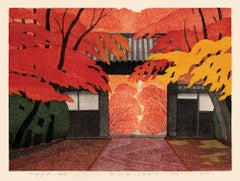
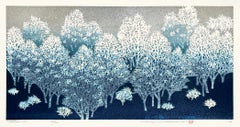
Winter Trees — Sōsaku Hanga Japanese Woodblock Print

Winter Trees — Sōsaku Hanga Japanese Woodblock Print

Located in Myrtle Beach, SC

Hajime Namiki, 'Tree Scene 159', color woodcut, edition 200, 2022. Signed in pencil and with the artist’s red seal. Titled, numbered '37/200' and dated, in pencil. A very fine impres...

Category

21st Century and Contemporary Contemporary South Carolina

Materials

Woodcut

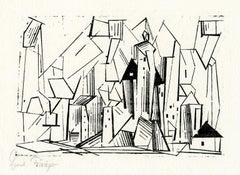
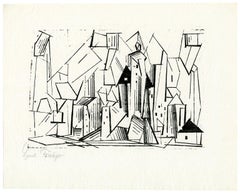
'Die Architektur' (Architecture) — Bauhaus Modernism

'Die Architektur' (Architecture) — Bauhaus Modernism

By Lyonel Feininger

Located in Myrtle Beach, SC

Lyonel Feininger, 'Die Architektur' (Architecture), also 'Stadtbild' (Cityscape), woodcut, edition proofs only in 1920; 50 in 1921. Prasse W 232. Signed in pencil. A fine, black impression, on off-white Japan, with full margins (1 1/4 to 2 1/8 inches), in excellent condition. Matted to museum standards, unframed. Image size 6 x 8 7/8 inches (152 x 229 mm); sheet size 9 1/2 x 11 7/8 inches (241 x 302 mm). No. 11 of the portfolio 'Zwolf Holzschnitte von Lyonel Feininger', 1921. Provenance: Peter Deitsch collection; exhibited Weimar Museum, 1968. Impressions of this work are in the permanent collection of: Busch-Reisinger Museum (Cambridge, Mass.), Bauhaus-Archiv (Germany), Hamburger Kunsthalie (Germany), Pfaizische Landesgewerbeanstalt (Germany), Kaiser Wilhelm Museum (Germany), Staatliche Graphische Sammlung (Germany), Philadelphia Museum of Art. ABOUT THE ARTIST Lyonel Feininger was born in New York City into a musical family—his father was a violinist and composer, his mother was a singer and pianist. He studied violin with his father, and by the age of 12, he was performing in public, but he also drew incessantly, most notably the steamboats and sailing ships on the Hudson and East Rivers, and the landscape around Sharon, Conn., where he spent time on a farm owned by a family friend. At the age of 16 he left New York to study music and art in Germany, from where his parents emigrated. Drawn more to the visual arts, he attended schools in Hamburg, Berlin, and Paris from 1887 to 1892. After completing his studies, Feininger began his artistic career as a cartoonist and illustrator, his originality leading him to great success. In 1906, after working for a dozen years in Germany, he was offered a job as a cartoonist at the Chicago Tribune, the largest circulation newspaper in the Midwest. He worked there for a year, inventing what became the standard design for the comic strip: in the words of John Carlin, “an overall pattern. . . that allowed the page to be read both as a series of elements one after the other, like language and as a group of juxtaposed images, like visual art.” His originality did not end there: he went on to become one of the great abstract painters. Like Kandinsky, music was his model, but Kandinsky only knew music from the outside—as a listener (inspired initially by Wagner, then by Schoenberg)—while Feininger knew it from the inside. He lived in Paris from 1906 to 1908, during which time he met and was influenced by the work of progressive painters Robert Delaunay and Jules Pascin, as well as that of Paul Cezanne and Vincent van Gogh. He began painting full-time, developing his distinctive Iyrical style based on Cubist and Expressionist idioms and a concern for the emotive qualities of light and color. He exhibited with the Der Blaue Reiter group in 1913, and in 1917, he had his first solo exhibition at Galerie Der Sturm in Berlin. One year after his solo exhibition, in 1918, Feininger began making woodcuts. He became enamored with the medium, producing an impressive 117 in his first year of exploring the printmaking medium. In 1919 at the invitation of the architect Walter Gropius, he was appointed the first master at the newly formed Staatliches Bauhaus in Weimar. His woodcut of a cathedral...

Category

1920s Bauhaus South Carolina

Materials

Woodcut

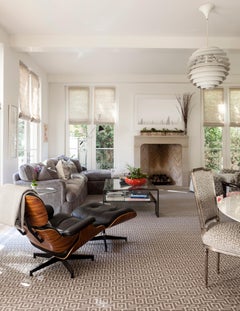
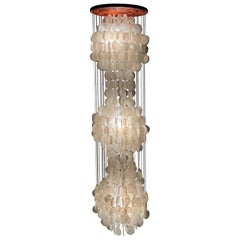
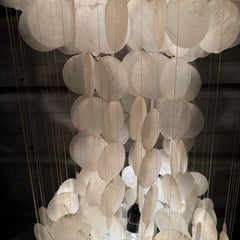
1960s Italian Capiz Shell Chandelier in the Style of Verner Panton

1960s Italian Capiz Shell Chandelier in the Style of Verner Panton

Located in Cordova, SC

Spectacular three tier capiz shell chandelier, reminiscent of Panton’s 1964 ‘3DM’ design, is made circa 1965. The circular capiz shell discs are mounted on a wooden ceiling plate by ...

Category

1960s Vintage South Carolina

Materials

Other

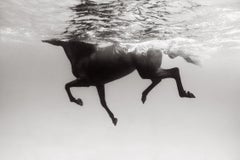
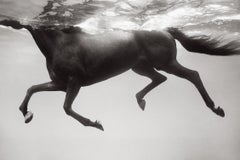
Black and white profile image of a beautiful horse swimming in clear water

Black and white profile image of a beautiful horse swimming in clear water

By Drew Doggett

Located in US

"""Tranquility"" Black and white profile image of a beautiful horse swimming in clear water Profile image of a dark horse swimming in crystal clear water taken, captured underwate...

Category

2010s Minimalist South Carolina

Materials

Archival Pigment

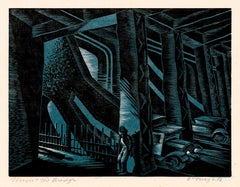
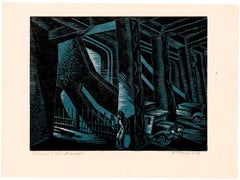
'Under the Bridge' — 1930s Chicago, Modernist Color Woodcut

'Under the Bridge' — 1930s Chicago, Modernist Color Woodcut

By Charles Turzak

Located in Myrtle Beach, SC

Charles Turzak, 'Under the Bridge', color woodcut, edition c. 50, 1934. Signed and titled in pencil. A fine, richly-inked impression, with fresh colors, on cream wove Japan paper; th...

Category

1930s American Modern South Carolina

Materials

Woodcut

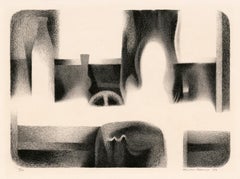
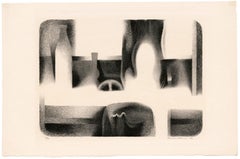
'September Still Life' — Mid-Century Modernism

'September Still Life' — Mid-Century Modernism

By Clinton Adams

Located in Myrtle Beach, SC

Clinton Adams, 'September Still Life', lithograph, 1956, edition 20. A superb impression, on cream wove paper, with full margins (1 1/2 to 3 1/8 inches);...

Category

1950s American Modern South Carolina

Materials

Lithograph

Portrait of a long-horned cow looking toward the camera in South Sudan

Portrait of a long-horned cow looking toward the camera in South Sudan

By Drew Doggett

Located in US

"""Mundari's Pride"" Portrait of a long-horned cow looking toward the camera in South Sudan Long-horned cow looking towards the camera with a black & white coat in the cattle camp...

Category

2010s Minimalist South Carolina

Materials

Archival Pigment

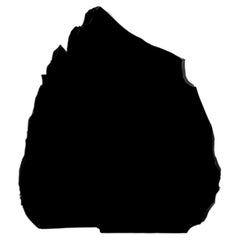
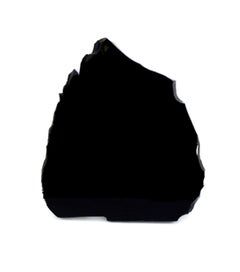
Large Polished Black Obsidian Mirror

Large Polished Black Obsidian Mirror

By Interi

Located in Dublin, Dalkey

A large black polished obsidian slab. This piece of obsidian is reflective in nature and it is similar to what the indigenous Mexican Native Americans used for their mirrors. Obsid...

Category

21st Century and Contemporary Mexican Organic Modern South Carolina

Materials

Rock Crystal, Lava

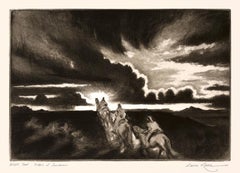
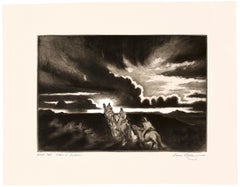
'Riders at Sundown' — Mid-Century Southwest Regionalism

'Riders at Sundown' — Mid-Century Southwest Regionalism

By Gene Kloss

Located in Myrtle Beach, SC

'Riders at Sundown', aquatint and drypoint, edition 75, 1953, Kloss 451. Signed, titled, and annotated 'Artist's Proof' in pencil. A superb, richly-inked, atmospheric impression, in ...

Category

1950s American Modern South Carolina

Materials

Drypoint, Aquatint

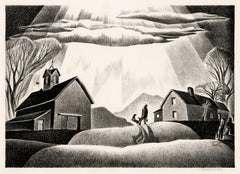
'Partners' — Mid-Century Modernist Regionalism

'Partners' — Mid-Century Modernist Regionalism

By Dale Nichols

Located in Myrtle Beach, SC

Dale Nichols, 'Partners', lithograph, edition 250, 1950. Signed in pencil. A fine, richly-inked impression, on cream wove paper; the full sheet with margins (7/8 to 1 5/8 inches); tw...

Category

1950s American Modern South Carolina

Materials

Lithograph

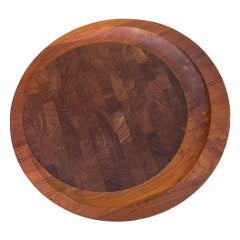
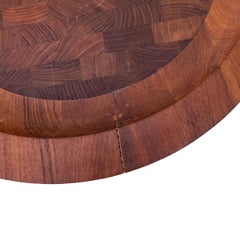
Vintage Danish Dansk Teak Cutting Board Tray Platter by Jens H. Quistgaard

Vintage Danish Dansk Teak Cutting Board Tray Platter by Jens H. Quistgaard

By Dansk, Jens Quistgaard

Located in Cordova, SC

Mid-Century Modern footed cutting board tray in teak designed by Jens H. Quistgaard for Dansk, Denmark. This versatile piece is the perfect tool for carving and serving featuring a h...

Category

Mid-20th Century Danish Mid-Century Modern South Carolina

Materials

Teak

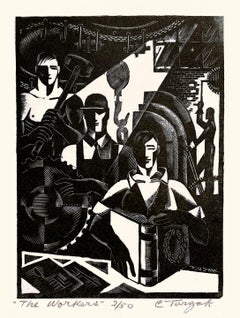
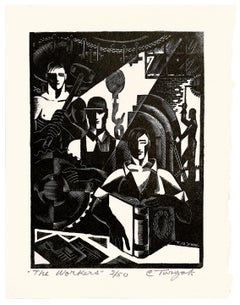
'The Workers (No. 2)' — 1930s WPA Modernist Woodcut

'The Workers (No. 2)' — 1930s WPA Modernist Woodcut

By Charles Turzak

Located in Myrtle Beach, SC

Charles Turzak, 'The Workers (No. 2)', woodcut, edition 50, c. 1935. Signed and numbered 2/50 in pencil. A fine, richly-inked impression, on cream wove Japan paper, with full margin...

Category

1930s American Modern South Carolina

Materials

Woodcut

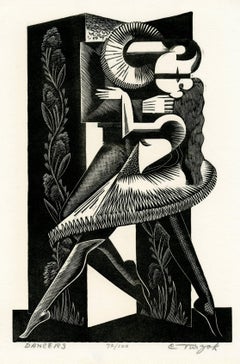
'Dancers' — 1930s American Modernism

'Dancers' — 1930s American Modernism

By Charles Turzak

Located in Myrtle Beach, SC

Charles Turzak, 'Dancers', 1939, wood engraving, edition 100. Signed, titled, and numbered 72/100 in pencil. A fine, richly-inked impression, on off-white Japan paper, with full marg...

Category

Mid-20th Century Art Deco South Carolina

Materials

Woodcut

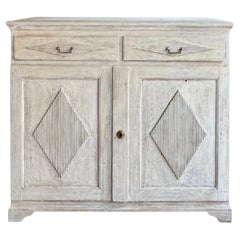
Early 19th CenSwedish Gustavian Period 1820 Sideboard with Carved, Reeded Panels

Early 19th CenSwedish Gustavian Period 1820 Sideboard with Carved, Reeded Panels

Located in Charleston, SC

A richly, exclusively carved Swedish Gustavian period sideboard has reeded paneled doors and drawers with central diamond shape lozenges in hand scraped patina - in classic Gustavian...

Category

Early 19th Century Swedish Gustavian Antique South Carolina

Materials

Bronze

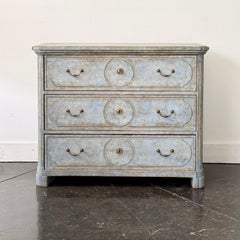
19th Century Swedish Gustavian Style Painted Chest of Drawers, Circa 1830-40

19th Century Swedish Gustavian Style Painted Chest of Drawers, Circa 1830-40

Located in Charleston, SC

This Gustavian style chest of drawers from Sweden ca 1830-40 in pine wood, painted finish in soft blue with classic details as fluted corners, shaped top, three large drawers with ci...

Category

Early 19th Century Swedish Gustavian Antique South Carolina

Materials

Bronze

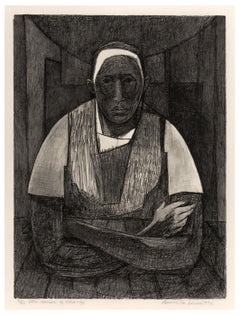
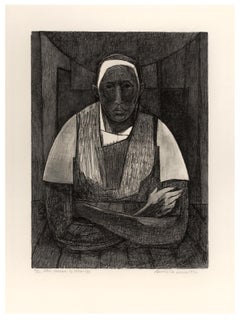
The House of Shango — African American artist

The House of Shango — African American artist

By Samella Lewis

Located in Myrtle Beach, SC

Samella Sanders Lewis, 'The House of Shango', lithograph, 1992, edition 60. Signed, dated, titled, and numbered '31/60' in pencil. A superb, richly-inked impression, on Arches cream wove paper; the full sheet with margins (1 1/4 to 3 1/2 inches), in excellent condition. Image size 24 x 18 inches (610 x 457 mm); sheet size 30 inches x 22 1/4 inches (762 x 565 mm). Archivally matted to museum standards, unframed. ABOUT THIS WORK “The title of this piece is an unmistakable harkening to African roots. Shango is a religious practice with origins in Yoruba (Nigerian) belief, deifying a god of thunder by the same name. Shango has been adopted in the Caribbean, most notably in Trinidad and Tobago, a fact that underscores the importance of transnationalism to Samella Lewis’s piece. Her work often grapples with issues of race in the U.S., and The House of Shango is no exception. Through a reliance on the gradual transformation of Shango—one that took place across continents and time—Lewis’s piece forms a powerful link between black Americans and their African and Caribbean counterparts. The figure depicted in the piece appears to emerge, quite literally, from the house of Shango. Given the roots and transformative process of the religion, The House of Shango can draw attention to the historical intersections to which black American culture is indebted.” —Laura Woods, Scripps College, Ruth Chander Williamson Gallery, Collection Highlights, 2018 ABOUT THE ARTIST Samella Lewis’ lifelong career as an artist, art historian, critic, curator, collector, and advocate of African American art has helped empower generations of artists in the United States and worldwide, earning her the designation “the Godmother of African American art.” Born and raised in Jim Crow era New Orleans, Lewis began her art education at Dillard University in 1941, transferring to Hampton University in Virginia, where she earned her B. A. and master's degrees. She completed her master's and a doctorate in art history and cultural anthropology at Ohio State University in 1951, becoming the first female African American to earn a doctorate in fine art and art history. Lewis taught art at Morgan State University while completing her doctorate. She became the first Chair of the Fine Arts Department at Florida A&M University in 1953. That same year Lewis also became the first African American to convene the National Conference of African American artists held at Florida A&M University. She was a professor at the State University of New York, California State University, Long Beach, and at Scripps College in Claremont, California. Lewis co-founded, with Bernie Casey, the Contemporary Crafts Gallery in Los Angeles in 1970. In 1973, she served on the selection committee for the exhibition BLACKS: USA: 1973 held at the New York Cultural Center. Samella Lewis's 1969 catalog 'Black Artists on Art', featured accomplished black artists typically overlooked in mainstream art galleries. She said of the book, "I wanted to make a chronology of African American artists, and artists of African descent, to document our history. The historians weren't doing it. It was really about the movement." From the 1960s through the 1970s, her work, which included lithographs, linocuts, and serigraphs, reflected her concerns with the values of human dignity, democracy, and freedom of expression. Between 1969 and 70, Lewis and E.J. Montgomery were consultants for a groundbreaking exhibition at the Oakland Public L designed to create greater awareness of African American history and art. Lewis was the founder of the International Review of African American Art in 1975. In 1976, she founded the Museum of African-American Art with a group of artistic, academic, business, and community leaders in Los Angeles, California. Lewis, the museum’s senior curator, organized exhibitions and developed new ways of educating the public about African American art. She celebrated African American art as an 'art of experience’ inspired by the artists’ lives. And she espoused the concept of African American art as an 'art of tradition', urging museums to explore the African roots of African American art. In 1984, Lewis produced an extensive monograph on Elizabeth Catlett, her beloved mentor at Dillard University. Lewis has been collecting art since 1942, focusing primarily on the WPA era and work created during the Harlem Renaissance. Pieces from her collection were acquired by the Hampton University Museum in Virginia, the world’s earliest collection of African American fine art...

Category

1990s Realist South Carolina

Materials

Lithograph

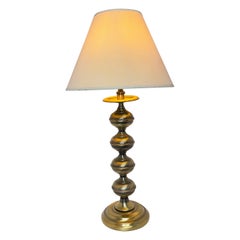
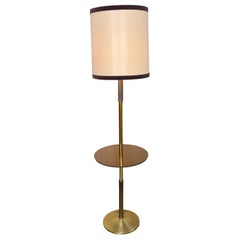
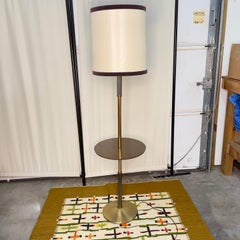
Mid Century Modern Brass Turned Table Lamp With Shade- 2 Pieces

Mid Century Modern Brass Turned Table Lamp With Shade- 2 Pieces

By Stiffel

Located in Cordova, SC

Possibly by Stiffel but, it’s unmarked. Lamp is in great shape. I didn’t notice any dents and no discoloration. It’s in overall very good condition and includes a lamp shade. Height...

Category

1970s Unknown Hollywood Regency Vintage South Carolina

Materials

Brass

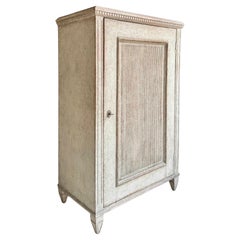
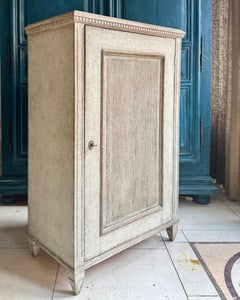
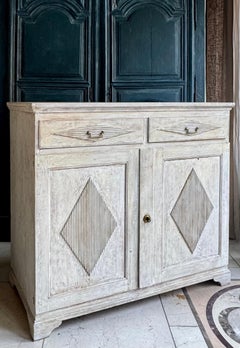
19th Century Swedish Neoclassical Cabinet With Reeded Door Panel

19th Century Swedish Neoclassical Cabinet With Reeded Door Panel

Located in Charleston, SC

19th-century Swedish cabinet with reeded doors, in the Gustavian / neoclassical style with carved post and dentil carving - featuring vertical, carved reeds on the door panel in a mu...

Category

Late 19th Century Neoclassical Antique South Carolina

Materials

Pine, Paint

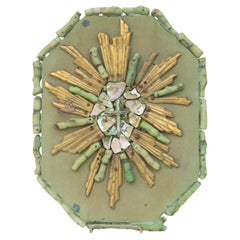
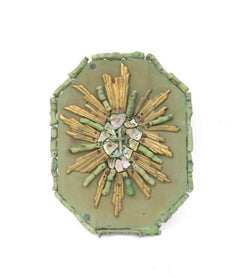
18th Century Italian Green Wall Decor with Gilded Sunrays, Green Gems, and Coral

18th Century Italian Green Wall Decor with Gilded Sunrays, Green Gems, and Coral

By Interi

Located in Dublin, Dalkey

18th century Italian silk-wrapped octagonal wall piece with original gilded sunrays and adorned with coordinating mother-of-pearl with gold highlights and a cross-shaped baroque pear...

Category

18th Century Italian Rococo Antique South Carolina

Materials

Coral, Rock Crystal

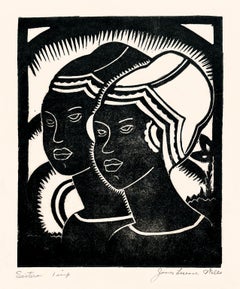
'Sisters' — Renowned Black American, Harlem Renaissance Artist

'Sisters' — Renowned Black American, Harlem Renaissance Artist

Located in Myrtle Beach, SC

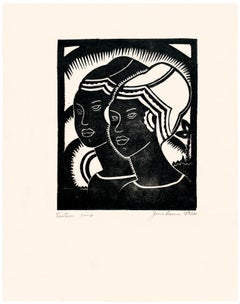
James Lesesne Wells, 'Sisters', linocut, edition not stated but small, 1928. Signed, titled, and annotated 'imp' in pencil. A fine impression on off-white wove Japan paper, with wide margins (1 7/8 to 3 3/4 inches), in excellent condition. Printed by the artist. Very scarce. Matted to museum standards, unframed. Image size 8 3/16 x 6 3/4 inches (208 x 171 mm); sheet size 13 1/2 x 10 3/4 inches (343 x 273 mm). Exhibition and Literature: 'Narratives of African American Art and Identity: The David C. Driskell Collection,' The Art Gallery at the University of Maryland, extensive touring exhibition, 1998-2000. Collections: Pennsylvania Academy of the Fine Arts, Smithsonian Institution (Anacostia Community Museum). ABOUT THE ARTIST “Wells is more than an artist with a deep concern for his fellow man. He carries many of his themes a step further into an apocalyptic world, a world of revelation and shifting lights. … He works on large blocks in a bold free style. … His work has a vigor, therefore, that is not often used in the medium today.” —Jacob Kainen (painter, critic, and collector) from Richard J. Powell’s 1986 essay Phoenix Ascending: The Art of James Lesesne Wells. James Lesesne Wells was an American painter, printmaker, educator, and pioneering figure of the Harlem Renaissance, whose work established a vital connection between African heritage, modernist form, and African American cultural identity. Known for his innovative use of linoleum and woodblock printing, Wells played a key role in shaping 20th-century African American art and inspired countless students throughout his lengthy career as a teacher at Howard University. Born in Atlanta, Georgia, Wells' early exposure to the arts came through church and community, where African American cultural traditions were central. He pursued formal artistic training at Lincoln University in Pennsylvania (earning a B.A. in 1924), followed by studies at the Pennsylvania Academy of the Fine Arts and the Barnes Foundation, where he encountered European modernists as well as traditional African sculpture, which profoundly influenced his style. Wells moved to New York in the late 1920s, swiftly immersing himself in the lively artistic and intellectual scene of Harlem. There, he became associated with artists, writers, and thinkers of the Harlem Renaissance, contributing to the growth of Black cultural identity. Considered a mentor to many famed artists of the Harlem Renaissance, Wells served as director of a summer art workshop in Harlem where his assistants included Charles Alston, Jacob Lawrence, and Palmer Hayden...

Category

1920s American Modern South Carolina

Materials

Linocut

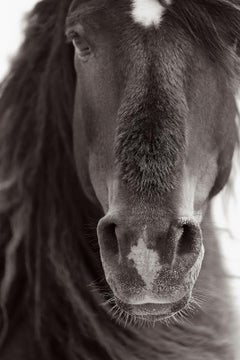
Lone Wild Horse Looks Over Tall Grass, Meditative, Calming, Equestrian

Lone Wild Horse Looks Over Tall Grass, Meditative, Calming, Equestrian

By Drew Doggett

Located in US

"Windy Solitude" This best-selling image features a single horse on Sable Island as he looks back at the camera. " The print series Discovering the Horses of Sable Island documents...

Category

2010s Contemporary South Carolina

Materials

Archival Pigment

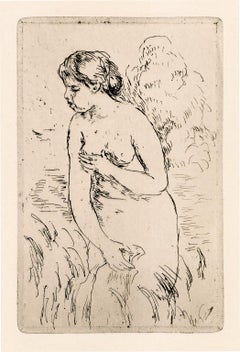
'Baigneuse Debout, à Mi-Jambes' — French Impressionism

'Baigneuse Debout, à Mi-Jambes' — French Impressionism

By Pierre-Auguste Renoir

Located in Myrtle Beach, SC

Pierre Auguste Renoir, 'Baigneuse Debout, à Mi-Jambes (Woman Bathing, Standing Up to Her Knees in Water)', 1910, etching, edition not stated, Delteil 23. Unsigned as published. A fin...

Category

1910s Impressionist South Carolina

Materials

Etching

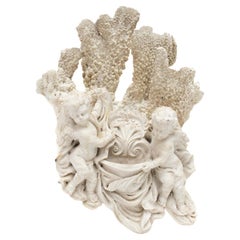
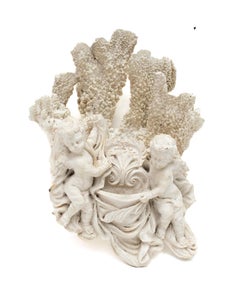
18th Century Italian Holy Water Font with Angels Framed with Fossil Coral

18th Century Italian Holy Water Font with Angels Framed with Fossil Coral

By Interi

Located in Dublin, Dalkey

18th century Italian holy water font with two angels framed with polished agate coral wings on fossil coral.  The Italian holy water front is from a historical Italian church and is...

Category

18th Century Italian Rococo Antique South Carolina

Materials

Agate, Coral

World-Class Yachts in Fog at the Regatta, Iconic Black and White Print

World-Class Yachts in Fog at the Regatta, Iconic Black and White Print

By Drew Doggett

Located in US

"White Out" As a thick fog enveloped the harbor, the yacht Victory and other 12-Meter boats lined up waiting for the regatta to start. The suspense and excitement hung in the air. ...

Category

2010s Contemporary South Carolina

Materials

Archival Pigment

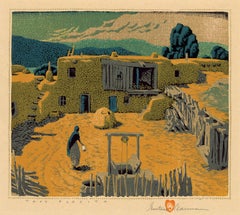
'Taos Placita' — American Southwest Regionalist Masterwork

'Taos Placita' — American Southwest Regionalist Masterwork

By Gustave Baumann

Located in Myrtle Beach, SC

Gustave Baumann, 'Taos Placita', color woodcut, 1947, edition 125. Baumann 132. Signed, titled, and numbered '20-125' in pencil; with the artist’s Hand-in-Heart chop. A superb, richly-inked impression, with fresh colors, on fibrous oatmeal wove paper; the full sheet with margins (2 to 3 1/8 inches); slight rippling at the left sheet edge, in excellent condition. Matted to museum standards, unframed. Image size 9 5/8 x 11 1/4 inches (244 x 286 mm); sheet size 13 1/4 x 17 inches (337 x 432 mm). Collections: Harwood Museum of Art, New Mexico Museum of Art, Phoenix Art Museum, Scottsdale Art Museum, Wichita Art Museum. ABOUT THE ARTIST Gustave Baumann (1881-1971) was a renowned printmaker and a leading figure of the American color woodcut revival whose exquisite craftsmanship and vibrant imagery captured the essence of the Southwest. "A brilliant printmaker, Baumann brought to the medium a full mastery of the craft of woodworking that he acquired from his father, a German cabinetmaker. This craftsmanship was coupled with a strong artistic training that resulted in the handsome objects we see in the exhibition today. After discovering New Mexico in 1918, Baumann began to explore in his woodblock prints of this period the light. color, and architectural forms of that landscape. His prints of this period are among the most beautiful and poetic images of the American West." —Lewis I. Sharp, Director, Denver Art Museum Baumann, the son of a craftsman, immigrated to the United States from Germany with his family when he was ten, settling in Chicago. From 1897 to 1904, he studied in the evenings at the Art Institute of Chicago, working in a commercial printmaking shop during the day. In 1905, he returned to Germany to attend the Kunstwerbe Schule in Munich, where he decided on a career in printmaking. He returned to Chicago in 1906 and worked for a few years as a graphic designer of labels. Baumann made his first prints in 1909 and exhibited them at the Art Institute of Chicago the following year. In 1910, he moved to the artists’ colony in Nashville, Indiana, where he explored the creative and commercial possibilities of a career as a printmaker. In 1915, he exhibited his color woodcuts at the Panama-Pacific International Exposition in San Francisco, winning the gold medal. Among Baumann’s ongoing commercial activities was his work for the Packard Motor Car Company from 1914 to 1920 where he produced designs, illustrations, and color woodcuts until 1923. In 1919, Baumann’s printmaking work dominated the important exhibition of American color woodcuts at the Detroit Institute of Arts. Twenty-six of his prints were included, far more than the works of any other artist. A set of his blocks, a preparatory drawing, and seven progressive proofs complemented the exhibition. That same year, Baumann worked in New York and, over the summer, in Provincetown, Massachusetts. His airy images of Cape Cod employed soft, pastel colors and occasionally showed the influence of the white-line woodcut technique. Many of his Chicago artist friends had traveled to the southwest, and Baumann became intrigued by their paintings, souvenirs, and stories of an exotic place named Taos, New Mexico. In the summer of 1918, he spent the summer in Taos sketching and painting before visiting Santa Fe. Paul Walter, the director of the Museum of New Mexico, offered him a studio in the museum's basement. Inspired by the rugged beauty of the Southwest—the vibrant colors and dramatic landscapes of the region became a central theme in his work, influencing his artistic style and subject matter for the remainder of his career. Later in the decade, he traveled to the West Coast and made prints of California landscape. Baumann's prints became synonymous with the Southwest, capturing the spirit of its place in America's identity with a unique sense of authenticity and reverence. His iconic images of desert vistas, pueblo villages, and indigenous cultures served as visual tributes to the region's rich cultural heritage, earning him a dedicated following among collectors and curators alike. A true craftsman and artist, Baumann completed every step of the printmaking process himself, cutting each block, mixing the inks, and printing every impression on the handmade paper he selected. His dedication to true craftsmanship and his commitment to preserving the integrity of his artistic vision earned him widespread acclaim and recognition within the art world. About the vibrant colors he produced, Baumann stated, “A knowledge of color needs to be acquired since they don’t all behave the same way when ground or mixed...careful chemistry goes into the making of colors, with meticulous testing for permanence. While complicated formulae evolve new colors, those derived from Earth and metal bases are still the most reliable.” In the 1930s, Baumann became interested in puppet theater. He designed and carved his own marionettes and established a little traveling company. From 1943 to 1945, the artist carved an altarpiece for the Episcopal Church of the Holy Faith in Santa Fe. In 1952, a retrospective exhibition of his prints was mounted at the New Mexico Museum of Fine Arts. Throughout his prolific career, Baumann executed nearly four hundred color woodcuts. Baumann’s woodcuts...

Category

1940s American Modern South Carolina
Materials

Woodcut

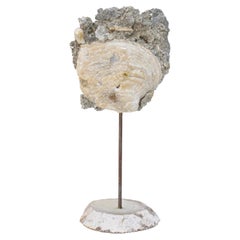
Fossilized Clamshell with Naturally Formed Pearl on Polished Agate Base

Fossilized Clamshell with Naturally Formed Pearl on Polished Agate Base

By Interi

Located in Dublin, Dalkey

Fossilized clamshell with a natural forming pearl and mounted on a polished agate base. This unique type of fossilized clamshell can be up to 1.5 to 2 million years old. The striki...

Category

15th Century and Earlier American Organic Modern Antique South Carolina

Materials

Agate, Metal

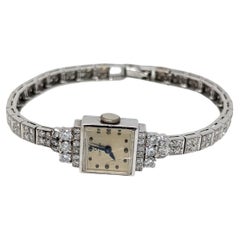
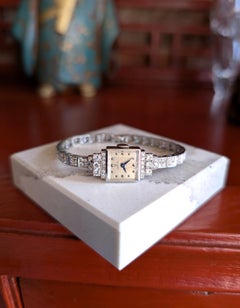
Antique Platinum Diamond Omega Ladies Wrist Watch Vintage Art Deco

Antique Platinum Diamond Omega Ladies Wrist Watch Vintage Art Deco

Located in Greer, SC

" Lady's dress watch by Omega measures 6.5 inches long. It weighs 13.3 pennyweights. It has a rectangular platinum case measuring 13.62 by 13.21 mm with bead set round diamond lugs. ...

Category

Early 20th Century Unknown Art Deco South Carolina

Materials

Diamond, Platinum

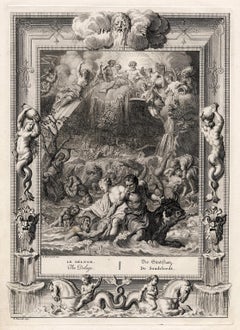
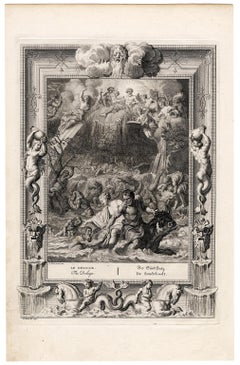
'The Deluge' from 'The Temple of the Muses' — 18th Century Engraving

'The Deluge' from 'The Temple of the Muses' — 18th Century Engraving

By Bernard Picart

Located in Myrtle Beach, SC

Bernard Picart, 'The Deluge' from 'The Temple of the Muses', engraving, 1730. Signed in the plate and dated '1730' lower left. Titled in French, English, German, and Dutch. A superb...

Category

1730s Baroque South Carolina

Materials

Engraving

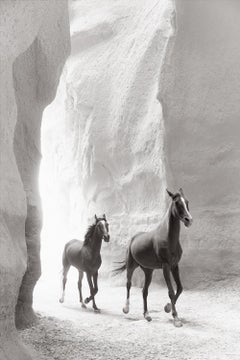
Black and white image of a mare and her foal walking into a slot canyon

Black and white image of a mare and her foal walking into a slot canyon

By Drew Doggett

Located in US

"Black and white image of a mare and her foal walking into a slot canyon An inspiring capture of a mare and her young foal walk into an ethereal slot canyon This powerful global s...

Category

2010s Minimalist South Carolina

Materials

Archival Pigment

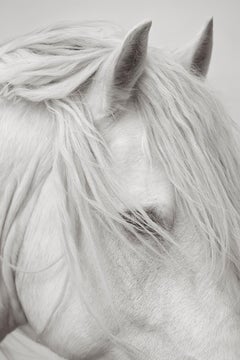
Portrait of a White Horse, Black and White Photography, Ethereal, Fashion

Portrait of a White Horse, Black and White Photography, Ethereal, Fashion

By Drew Doggett

Located in US

"Ethere" This best-selling, award-winning image is an intimate portrait of an iconic all-white horse native to the Camargue region in the South of France. The award-winning print ...

Category

2010s Contemporary South Carolina

Materials

Archival Pigment

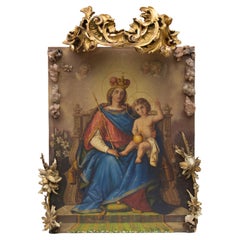
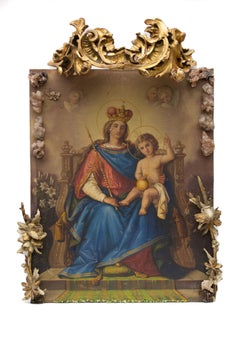
19th Century Italian Painting of Mary and Jesus with a Rococo Giltwood Crown

19th Century Italian Painting of Mary and Jesus with a Rococo Giltwood Crown

By Interi

Located in Dublin, Dalkey

19th century Italian painting of Mary and Jesus on canvas with barite, selenite blades, scolecite, green aventurine, and aragonite and framed with 18th century Italian hand-carved fl...

Category

19th Century Italian Baroque Antique South Carolina

Materials

Rock Crystal, Gold Leaf

Beautiful Morning Light on the Pacific Coast, Iconic, Classic, Americana

Beautiful Morning Light on the Pacific Coast, Iconic, Classic, Americana

By Drew Doggett

Located in US

"Coastal Rays" In this best-selling print, the mist of the Pacific Northwest lends a textural effect to the air and light. Experience the photographic journey through the cultura...

Category

2010s Contemporary South Carolina

Materials

Archival Pigment

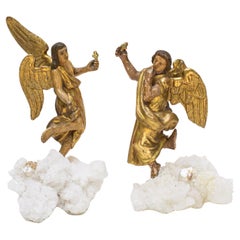
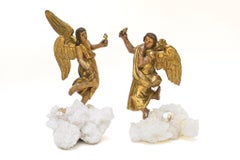
Pair of 18th Century Italian Dancing Angels with Baroque Pearls on Aragonite

Pair of 18th Century Italian Dancing Angels with Baroque Pearls on Aragonite

By Interi

Located in Dublin, Dalkey

Pair of 18th century Italian dancing angels with coordinating baroque pearls on aragonite crystal clusters. The dancing angels are hand-carved wood, polychromed and gilded, original...

Category

18th Century Italian Rococo Antique South Carolina

Materials

Rock Crystal, Gold Leaf

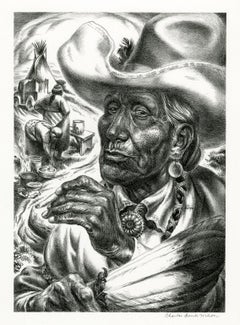
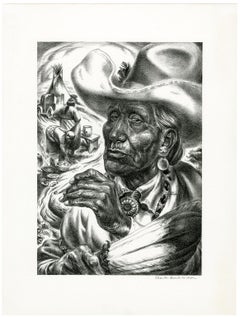
Old Injun
Old Injun

Old Injun

By Charles Banks Wilson

Located in Myrtle Beach, SC

Charles Banks Wilson, 'Old Injun', lithograph, 1948, edition 250, Hunt 39. Signed in pencil. A fine, richly-inked impression, on off-white wove paper, with full margins (1 3/4 to 2 inches), in excellent condition. Published by Associated American Artists. Impressions of this work are in the permanent collections of the following institutions: Ackland Art Museum, Georgetown University...

Category

1940s American Realist South Carolina

Materials

Lithograph

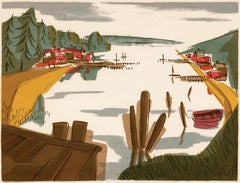
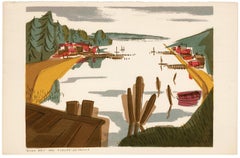
'River View' — Mid-Century American Modernism

'River View' — Mid-Century American Modernism

By Edward August Landon

Located in Myrtle Beach, SC

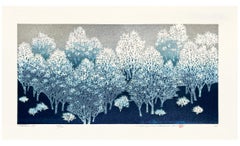
Edward Landon 'River View, color serigraph, 1942, edition 50, Ryan 159. Signed in pencil in the image, lower right. Titled, dated, and annotated '9 COLORS – 50 PRINTS' in the screen,...

Category

1940s American Modern South Carolina
Materials

Screen

Two wild horses nuzzling together, one rearing up on Sable Island

Two wild horses nuzzling together, one rearing up on Sable Island

By Drew Doggett

Located in US

"""Rendezvous"" Two wild horses nuzzling together, one rearing up on Sable Island In this incredible encounter between two wild horses, you see their wildness and human-like capaci...

Category

2010s Minimalist South Carolina

Materials

Archival Pigment

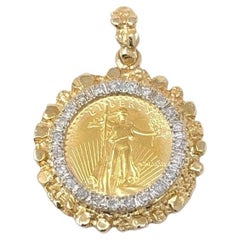
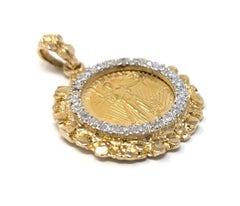
22k Gold US 5 Dollar Lady Liberty Coin in 14k Diamond Gold Frame Pendant

22k Gold US 5 Dollar Lady Liberty Coin in 14k Diamond Gold Frame Pendant

Located in Greer, SC

Stunning 22k gold 5 Dollar Lady Liberty coin in a 14k yellow gold and diamond frame pendant. Measures 1.25 inches from top to bottom by .9 inch in width and 3mm in depth. Stamped / h...

Category

20th Century Unknown South Carolina

Materials

Diamond, 14k Gold, 22k Gold, Yellow Gold

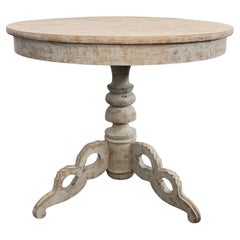
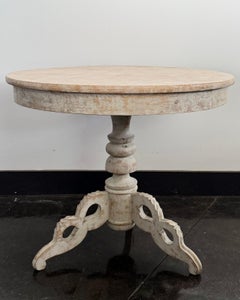
19th Century Swedish Painted Pedestal Centre Table

19th Century Swedish Painted Pedestal Centre Table

Located in Charleston, SC

This elegant 19th-century Swedish center table has a round top, 35” in diameter, supported by nicely carved base and four curving legs with delicate carved details. The apron is wide...

Category

Mid-19th Century Gustavian Antique South Carolina

Materials

Pine, Paint

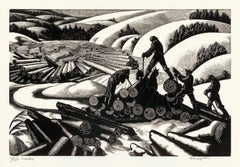
'Landing' from the 'Lumber Camp' series — American Modernism

'Landing' from the 'Lumber Camp' series — American Modernism

By Clare Leighton

Located in Myrtle Beach, SC

Clare Leighton, 'Landing' from the series 'Lumber Camp', wood engraving, edition 100, 1931. Signed, titled, and numbered 75/100 in pencil. A fine, richly-inked impression, on off-whi...

Category

1930s American Modern South Carolina
Materials

Woodcut

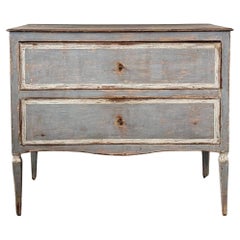
18th century Italian Neoclassical Painted Chest Of Drawers

18th century Italian Neoclassical Painted Chest Of Drawers

Located in Charleston, SC

Charming 18th century Italian Neoclassical style painted chest of drawers having two long drawers with white decorative trimmings, raised on square tapering legs, that gives to its g...

Category

18th Century Neoclassical Antique South Carolina

Materials

Wood, Paint

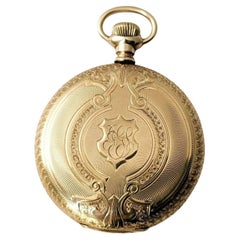
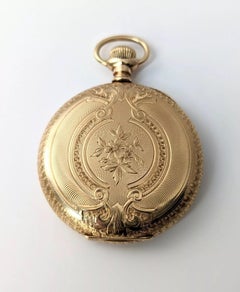
Antique 14k Solid Yellow Gold Waltham Pocket Watch Keystone Hunter Case Monogram

Antique 14k Solid Yellow Gold Waltham Pocket Watch Keystone Hunter Case Monogram

By Waltham

Located in Greer, SC

Beautifully crafted antique Waltham pocket watch in a stunning solid 14k yellow gold hunters case by Keystone (for repair). This pocket watch is circa late 1800's to early 1900's and features a monogram front with floral back, very ornately engraved. Hefty in size measuring 2 inches in diameter by half an inch in depth, 2.7 inches in total length with the bow and crown. This classic pocket watch winds up...

Category

Early 20th Century Unknown South Carolina

Materials

14k Gold, Yellow Gold

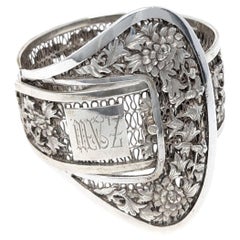
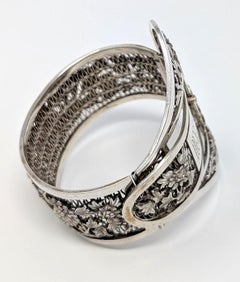
Vintage to Antique French Indochina Sterling Silver Bracelet Cuff Filigree

Vintage to Antique French Indochina Sterling Silver Bracelet Cuff Filigree

Located in Greer, SC

Stunning large antique French Indochina buckle bracelet with a filigree design in sterling silver. Features a floral motif throughout along with the monogram MVZ in the center. A won...

Category

Early 20th Century Asian Art Deco South Carolina

Materials

Sterling Silver

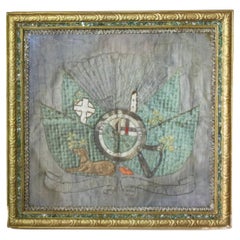
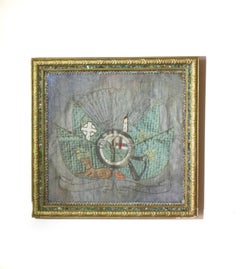
19th Century Irish "Erin go Bragh" Silk Embroidered Picture with Green Gems

19th Century Irish "Erin go Bragh" Silk Embroidered Picture with Green Gems

By Interi

Located in Dublin, Dalkey

19th century Irish embroidered silk picture with a gold frame adorned with an antique silver braid and aventurine, emerald, and topaz polished stones. The picture shows the phrase, ...

Category

19th Century Italian Folk Art Antique South Carolina

Materials

Multi-gemstone

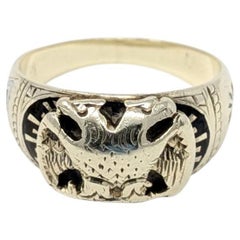
Vintage 14k Scottish Rite Pinky Ring Solid Yellow Gold 32nd Degree Us Size 3.25

Vintage 14k Scottish Rite Pinky Ring Solid Yellow Gold 32nd Degree Us Size 3.25

Located in Greer, SC

Vintage 14k solid yellow gold 32nd Degree Scottish Rite pinky ring with enamel. Best fits a US size 3.25 finger, measures 8mm at its tallest points by 2mm at its smallest points. Mar...

Category

Mid-20th Century Unknown South Carolina

Materials

14k Gold, Yellow Gold

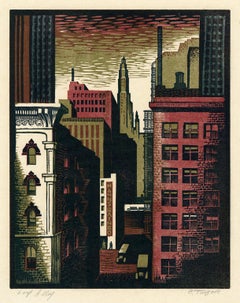
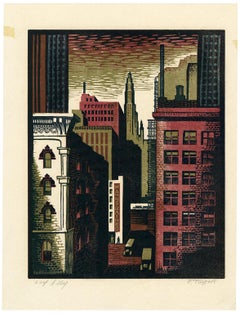
'Loop Alley' — Modernist Chicago Cityscape, WPA

'Loop Alley' — Modernist Chicago Cityscape, WPA

By Charles Turzak

Located in Myrtle Beach, SC

Charles Turzak, 'Loop Alley (Chicago)', color woodcut, edition c. 25, c. 1935. Signed and titled in pencil. A fine, richly-inked impression, with fresh colors, on cream wove Japan pa...

Category

1930s American Modern South Carolina
Materials

Woodcut

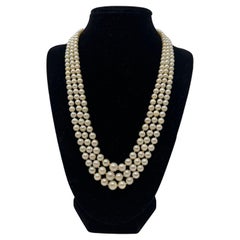
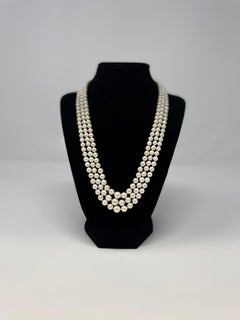
Three Strand Graduated Pearl Necklace

Three Strand Graduated Pearl Necklace

Located in Greer, SC

Three Strand Graduated Pearl Necklace ranging from 7.5mm-4.5mm in size. The clasp is an 18kt white gold clasp with a 13mm round scallop style...

Category

Early 20th Century Unknown South Carolina
Materials

Pearl, 18k Gold

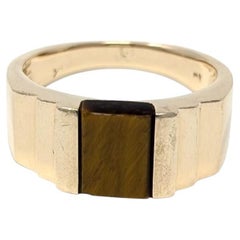
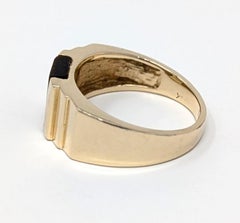
Vintage 14k Tiger's Eye Ring Modernist Solid Yellow Gold Men's US Size 11.75

Vintage 14k Tiger's Eye Ring Modernist Solid Yellow Gold Men's US Size 11.75

Located in Greer, SC

Vintage 14k solid yellow gold ring featuring a tiger's eye centerpiece in a modernist style design. Best fits for a US size 11.75 finger, measures 10.5mm at its tallest points by 3.5...

Category

20th Century Unknown South Carolina
Materials

Tiger's Eye, 14k Gold, Yellow Gold

19th Century Louis XVI Style Painted Commode

19th Century Louis XVI Style Painted Commode

Located in Charleston, SC

Charming, small painted French Louis xvi style commode with three drawers.

Category

19th Century French Louis XVI Antique South Carolina
Materials

Bronze

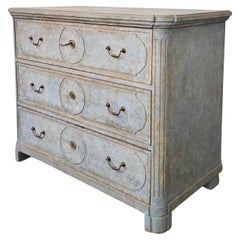
19th Century Swedish Neoclassical Style Painted Three-Drawer Chest of Drawers

19th Century Swedish Neoclassical Style Painted Three-Drawer Chest of Drawers

Located in Charleston, SC

A Swedish neoclassical style painted chest of drawers, dated around 1890, with shaped top, canted corners and fluted side posts. Three drawers with classical hardware, resting on sho...

Category

Late 19th Century Swedish Neoclassical Antique South Carolina
Materials

Bronze

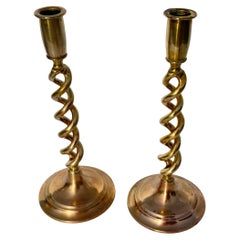
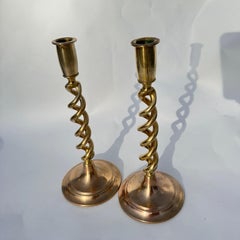
Pair of 19th C English Brass Barley Twist Candlesticks

Pair of 19th C English Brass Barley Twist Candlesticks

Located in Cordova, SC

Pair of antique brass barely twist candlestick holders. Both are are in good condition. Both have been polished. The base on both seem to be a different shade, probably due to there ...

Category

19th Century English Victorian Antique South Carolina
Materials

Brass

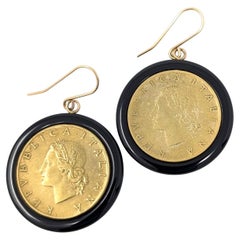
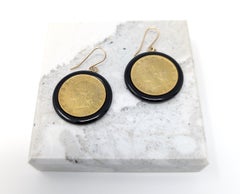
Vintage 14k Milor Italy Lira Coin & Onyx Earrings Drop Dangle Yellow Gold Signed

Vintage 14k Milor Italy Lira Coin & Onyx Earrings Drop Dangle Yellow Gold Signed

Located in Greer, SC

Striking Milor Italy dangle earrings featuring an Italian Lira coin (non precious metal) encased in smooth black onyx, accented by 14k solid yellow gold ear wires. Signed " 14KT ITAL...

Category

20th Century Italian South Carolina
Materials

Onyx, 14k Gold, Yellow Gold