In 1860, a 24-year-old son of a farmer, Louis-Ulysse Chopard (1836–1915), established the L.U.C. company — now known simply as Chopard, rather than by the founder’s initials — in Sonvilier, Switzerland. His initial work evolved from making mechanical movements to building the watches themselves, concentrating on making the pocket watch slimmer to carry for everyday use while also ensuring it was precise and reliable.
Early successes for Chopard included providing watches for the punctuality needs of the Swiss Railway Company. Recognizing the international market for Swiss watchmaking, Chopard traveled across Europe and Russia, with Czar Nicholas II becoming a client in 1912.
Chopard’s son, Paul-Louis, took over after Louis-Ulysse’s death in 1915 and expanded the business to La Chaux-de-Fonds. In 1937, the company relocated to the watchmaking center of Geneva, where they could mark their work with the prestigious Geneva Seal. (Paul-Louis’s son, Paul-André, took the reins in 1943.) Business thinned in the postwar years, and Paul-André’s sons declined the opportunity to take over for their father.
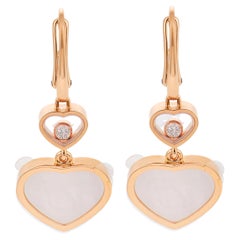
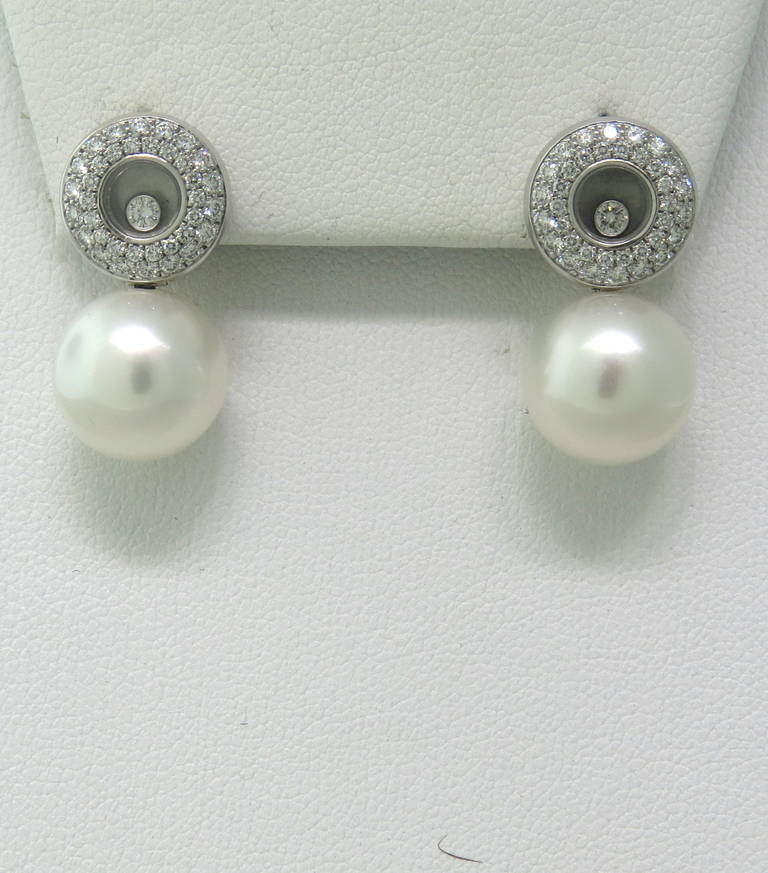
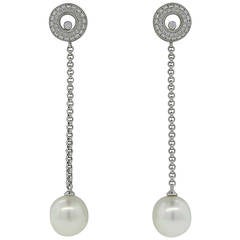
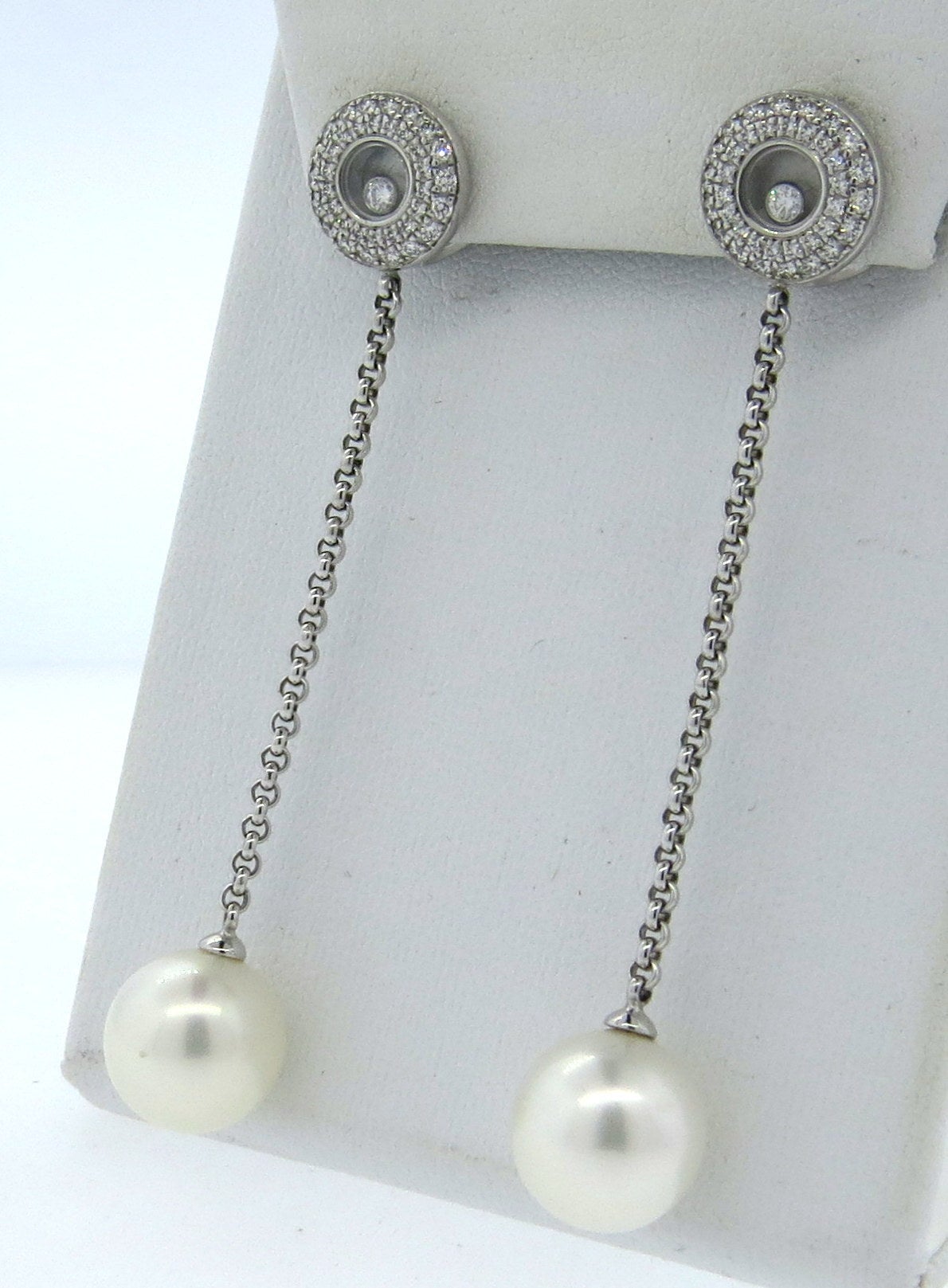
In 1963, Chopard was acquired by German goldsmith and watchmaker Karl Scheufele III and his wife, Karin. Under their ownership, Chopard added jewelry to its offerings. The popular Happy Diamonds wristwatch debuted in 1976 — it launched a collection, which now features bracelets, rings and other items. The distinctive watch sees dozens of glittering diamonds, loosed from their settings, moving freely around the dial.
The story goes that the in-house designer Ronald Kurowski was inspired by the kinetic glimmers of sunlight on a waterfall in the Black Forest. He would then develop the innovative system for the Happy Diamonds timepiece that he hoped would essentially mimic his experience in the woods.
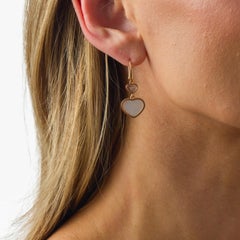
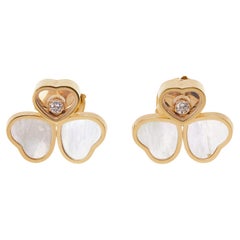
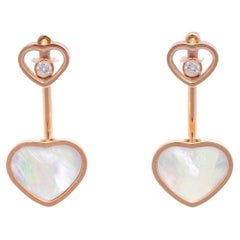
A young Caroline Scheufele — Karl and Karin’s daughter, who would later become copresident and artistic director — led the introduction of a Happy Diamonds jewelry line in 1985, with her design for a playful clown pendant with a belly full of jittering precious stones. Subsequent lines and accessories such as the Happy Dreams bracelet, Happy Hearts collection and the Happy Sport watches further enhanced Chopard’s range of dynamic adornment.
The Scheufele family-run company continues to be synonymous with excellence in timepieces, such as its role as the official timekeeper for the Grand Prix de Monaco Historique, creating all of its movements in-house. And Chopard is constantly developing its wares, from sunglasses and fragrances to recent introductions of high-end handbags.
Find a wide range of vintage Chopard wristwatches, necklaces, rings and other jewelry on 1stDibs.
In the United States, ear piercing didn’t really become popular until the 1950s and ‘60s, but our desire for a dazzling pair of vintage earrings has deeper roots than that. In fact, wearing earrings actually goes back thousands of years, and you can find many tangible connections between now and then in how we continue to talk about these treasured accessories.
Women wore ornamental earrings — studs and hoops at the very least — in Ancient Egypt, which is home to mines that are among the earliest sources of emeralds in the world. Emerald earrings are highly prized today, and their quality lies in their rich, saturated color. The highest-quality emeralds are green or bluish-green. Earrings worn by the affluent in early Roman civilizations were set with precious stones such as diamonds and pearls, and a clean-looking pop of pearl on the front of the lobe is as timeless as ever. Hoop earrings are imbued with symbolism and cultural significance for many, and on view in the Metropolitan Museum of Art’s Ancient Near Eastern Art Gallery is a pair of simple gold hoops from Mesopotamia dating to between 2600 and 2500 B.C.
Today, ear piercing is very popular all over the world, and, as a result, it is difficult to overstate how much everyone pines for a good pair of earrings — modernist drop earrings, glamorous Victorian hoops, geometrically complex chandelier earrings, you name it. Sure, jewelry trends and the fashion darlings of social media come and go, but earrings have a staying power that seems impenetrable: The still-strong love affair between British royals and Cartier earrings is more than a century old, glossy 1970s hoops from legacy houses such as Bulgari and Van Cleef & Arpels remain the statement makers they’ve always been and although people have been stacking earrings for many moons, the allure of an expertly mismatched stack of charms and studs still feels fresh and new.
While there is no shortage of modern earring designs to choose from, the classics, like coral earrings, Art Deco–style earrings and diamond drop earrings are still heavy hitters. On 1stDibs, find a wide range of antique, new and vintage earrings today.