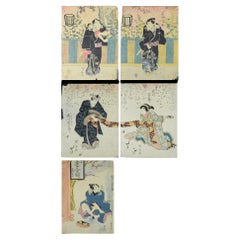
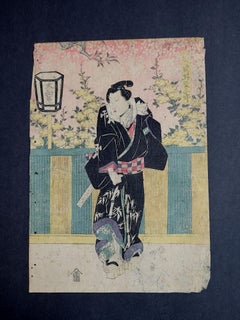
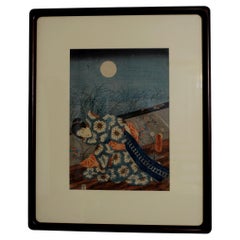
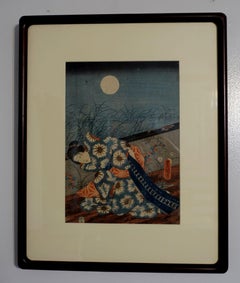
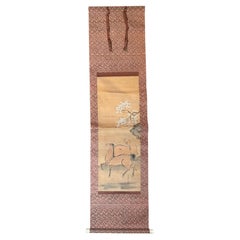
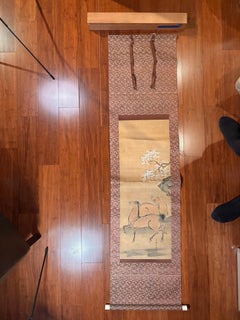
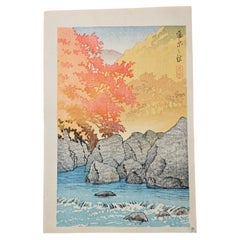
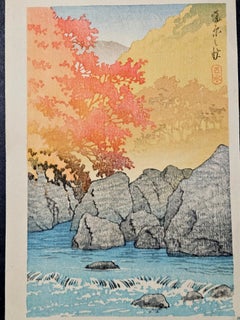
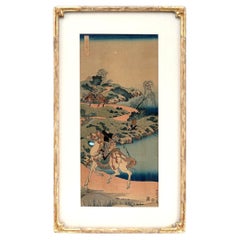
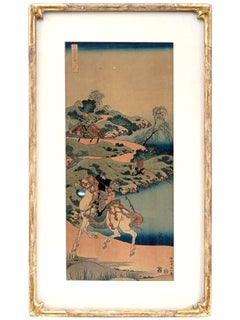
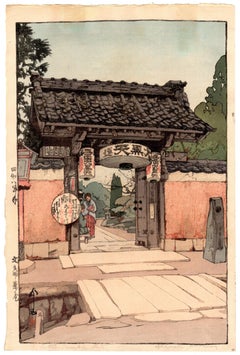
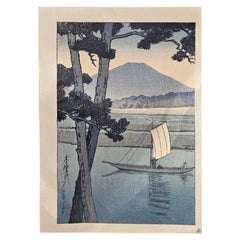
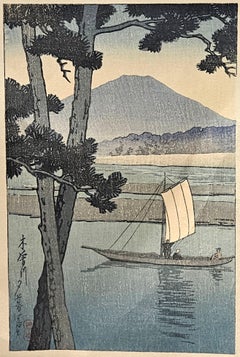
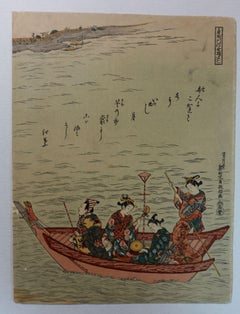
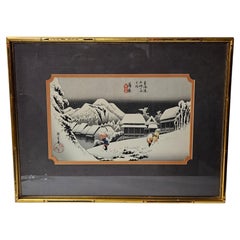
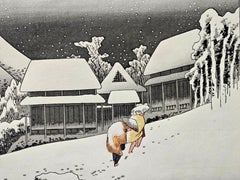
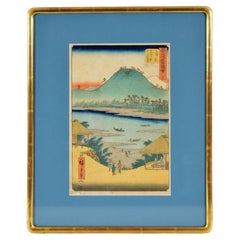
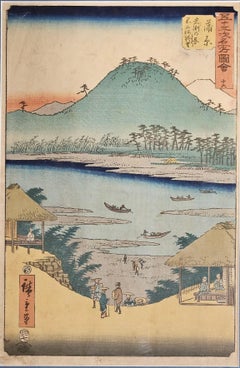
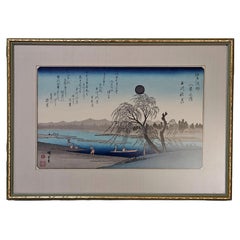
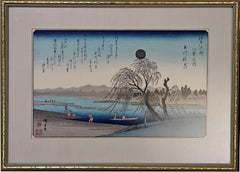
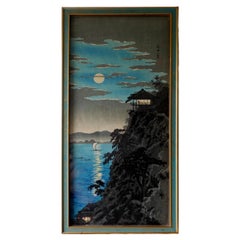
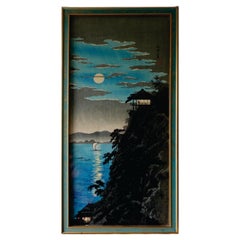
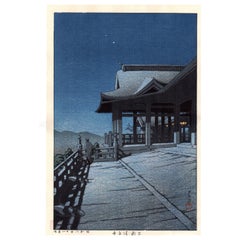
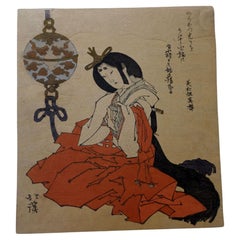
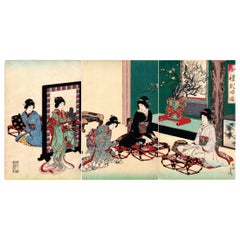
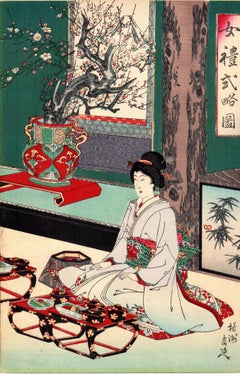
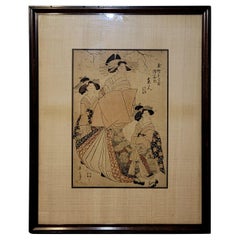
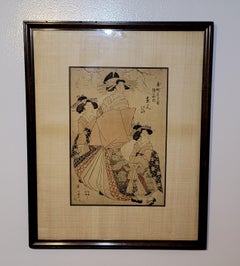
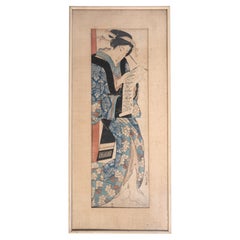
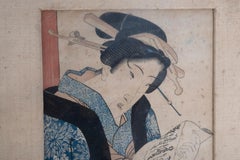
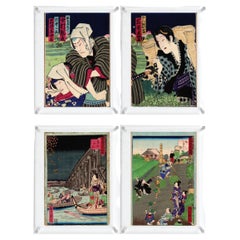
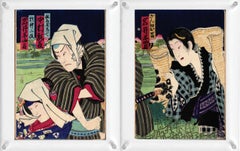
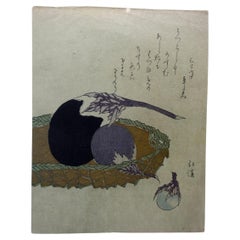
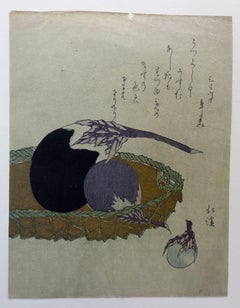
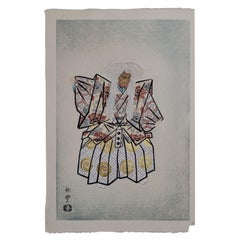
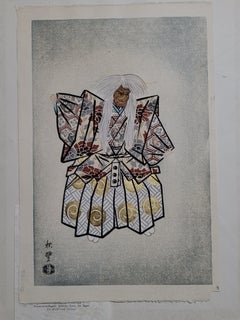
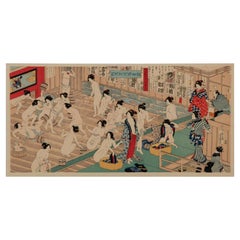
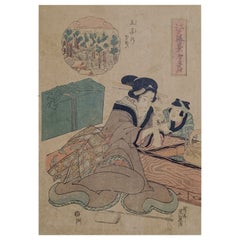
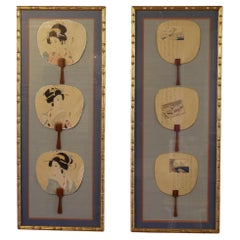
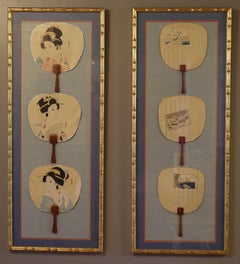
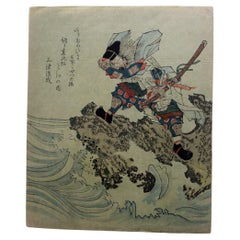
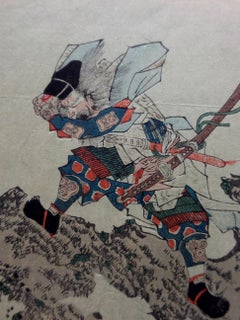
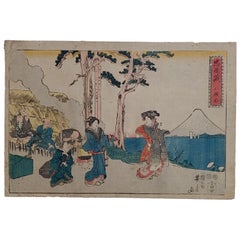
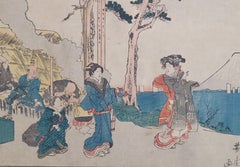
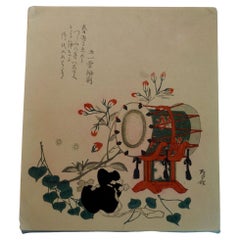
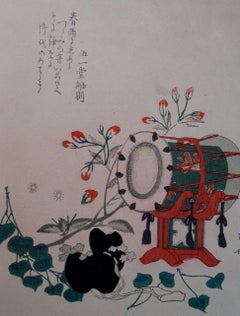
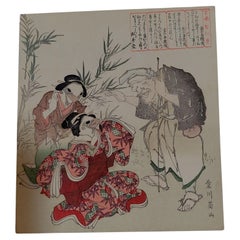
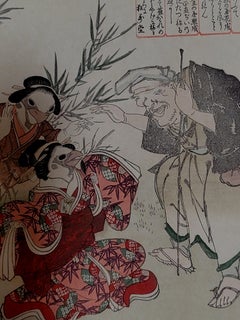
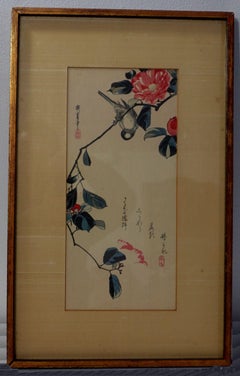
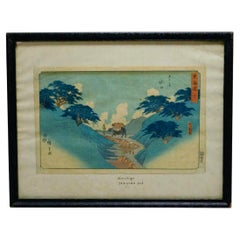
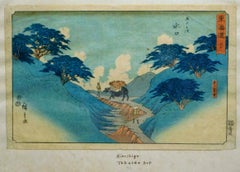
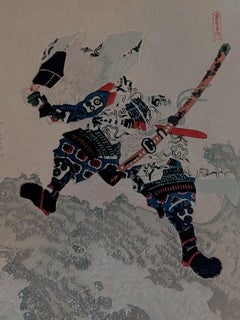
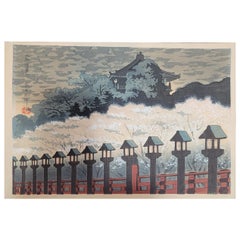
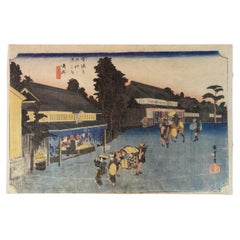
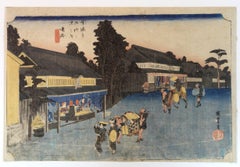
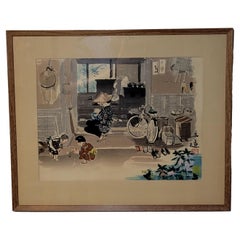
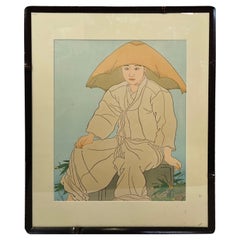
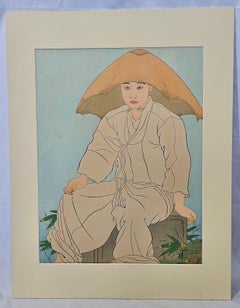
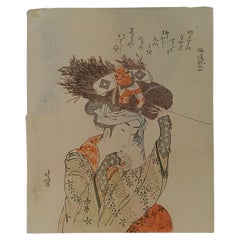
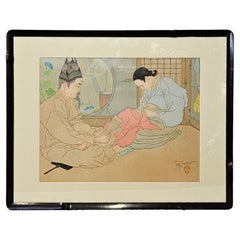
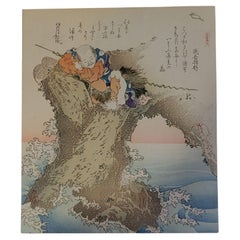
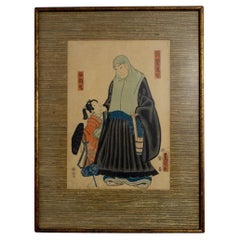
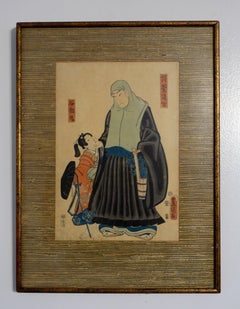
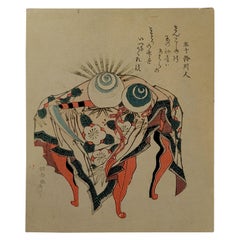
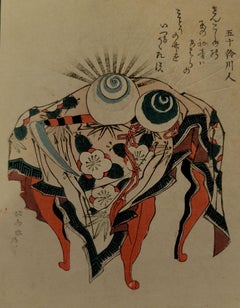
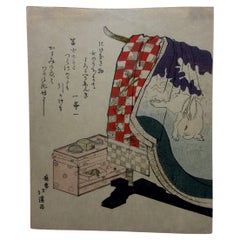
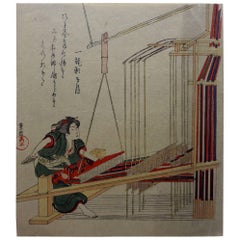
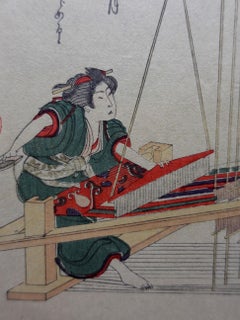
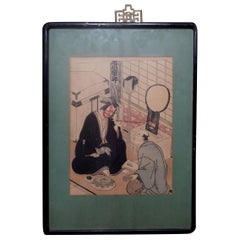
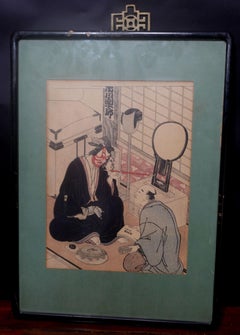
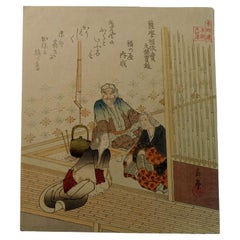
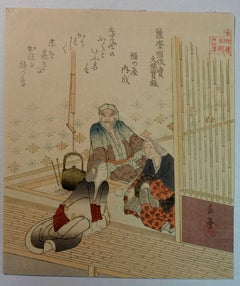
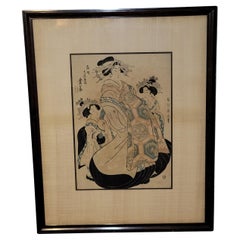
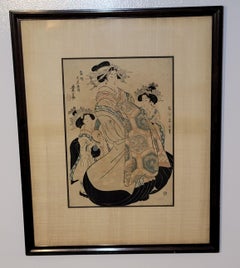
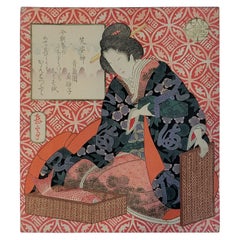
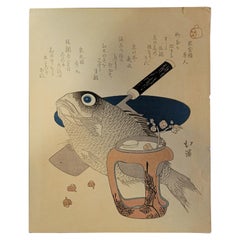
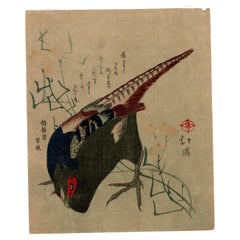
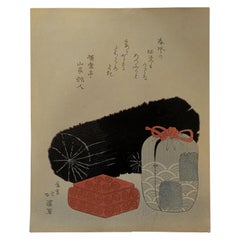
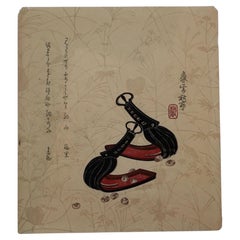
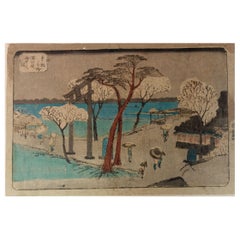
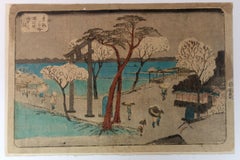
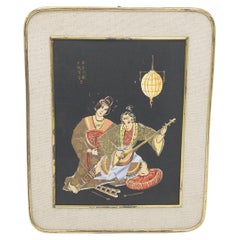
Utagawa Hiroshige 歌川廣重 Woodblock from"The 53 Stations of the Tokaido" 1832
Artist:
Hiroshige Utagawa was born in Edo as Tokutaro Ando and grew up in a minor samurai family. His father belonged to the firefighting force assigned to Edo Castle. It is here that Hiroshige was given his first exposure to art: legend has it that a fellow fireman tutored him in the Kano School of Painting, though Hiroshige’s first official teacher was Rinsai. Though Hiroshige tried to join Toyokuni Utagawa's studio, he was turned away. In 1811, young Hiroshige entered an apprenticeship with the celebrated Toyohiro Utagawa. After only a year, he was bestowed with the artist name Hiroshige. He soon gave up his role in the fire department to focus entirely on painting and print design. During this time he studied painting, intrigued by the Shijo school. Hiroshige’s artistic genius went largely unnoticed until 1832.
In Hiroshige's groundbreaking series of woodblock prints, The 53 Stations of the Tokaido (1832-1833), he captured the journey along the Tokaido road, the highway connecting Edo to Kyoto, the imperial capital. With the Tokugawa Shogunate relaxing centuries of age-old restrictions on travel, urban populations embraced travel art and Hiroshige Utagawa became one of the most prominent and successful ukiyo-e artists. He also produced kacho-e (bird-and-flower pictures) to enormous success. In 1858, at the age of 61, he passed away as a result of the Edo cholera epidemic.
Utagawa Hiroshige’s woodblock prints...
Category
Early 19th Century Japanese Antique Painted Prints