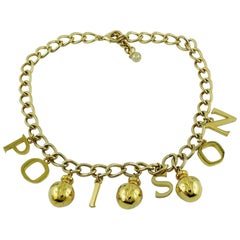
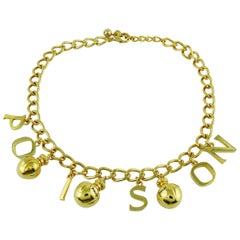
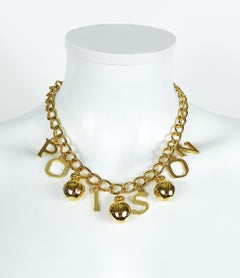
When Christian Dior launched his couture house, in 1946, he wanted nothing less than to make “an elegant woman more beautiful and a beautiful woman more elegant.” He succeeded, and in doing so the visionary designer altered the landscape of 20th century fashion. Vintage Dior bags, shoes, evening dresses, shirts and other garments and accessories are known today for their feminine and sophisticated sensibility.
Dior was born in Granville, on the Normandy coast, in 1905. His prosperous haute bourgeois parents wanted him to become a diplomat despite his interest in art and architecture. However, they agreed to bankroll an art gallery, which Dior opened in 1928 in Paris with a friend.
This was the start of Dior’s rise in the city’s creative milieu, where he befriended Pablo Picasso and Jean Cocteau. After seven years as an art dealer, Dior retrained as a fashion illustrator, eventually landing a job as a fashion designer for Robert Piguet, and in 1941, following a year of military service, he joined the house of Lucien Lelong. Just five years later, with the backing of industrialist Marcel Boussac, the ascendant Dior established his own fashion house, at 30 avenue Montaigne in Paris.
Just two years after the end of World War II, the fashion crowd and the moribund haute couture industry were yearning, comme tout Paris, for security and prosperity, desperate to discard the drab, sexless, utilitarian garb imposed by wartime deprivation. They needed to dream anew.
And Dior delivered: He designed a collection for a bright, optimistic future. “It’s quite a revolution, dear Christian!” exclaimed Carmel Snow, the prescient American editor-in-chief of Harper’s Bazaar, famously proclaiming, “Your dresses have such a new look.” The press ran with the description, christening Dior’s debut Spring/Summer haute couture collection the New Look. “God help those who bought before they saw Dior,” said Snow. “This changes everything.”
Dior’s collection definitively declared that opulence, luxury and femininity were in. His skirts could have 40-meter-circumference hems, and outfits could weigh up to 60 pounds. They were cut and shaped like architecture, on strong foundations that molded women and “freed them from nature,” Dior said. Rather than rationing, his ladies wanted reams of fabric and 19-inch waists enforced by wire corsets, and the fashion world concurred. The debut got a standing ovation.
In the subsequent decade, Paris ruled as the undisputed fashion capital of the world, and Christian Dior reigned as its king. With the luxuriously full skirts of his New Look, suits and his drop-dead gorgeous couture dresses and ball gowns worthy of any princess, Dior gave women the gift of glamour they’d lost in the miserable years of war.
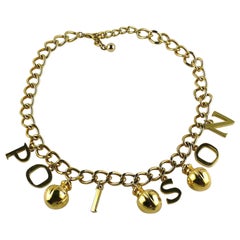
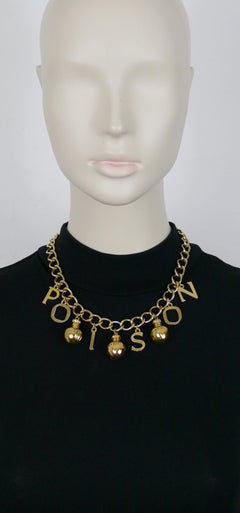
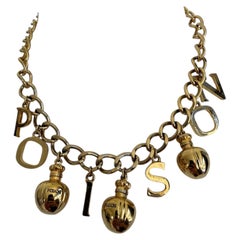
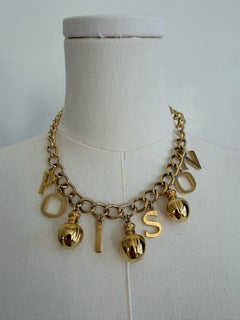
On 1stDibs, find an exquisite range of vintage Christian Dior clothing, jewelry, handbags and other items.
Vintage chain necklaces can make a statement on their own. What’s better than eye-catching chains of yellow gold or subtle silver to accessorize with everything from a designer evening dress to a comfortable sweatshirt?
Personal ornament in general has been around for eons. Ancient Egyptians designed jewelry and wore necklaces, rings and other accessories, and the excavation of King Tut’s burial chamber in 1922 had the greatest impact on Art Deco jewelry. When chain necklaces first took on some visibility in ancient civilizations, these items weren’t exactly democratic.
Chain necklaces were accessories that were relegated strictly to royal families and the upper class. In ancient times, pendant necklaces conferred prestige, for example. Wealthy Greeks and Romans opted for gold and silver necklaces that featured ornate pendants and semiprecious stones. By the Renaissance period, the pendant had replaced the brooch as the most worn type of jewelry. Pendant necklaces were commonplace, or pendants were simply strung on long gold chains.
Thankfully, jewelry became more accessible over time. And trends have come and gone, but the popularity of chain necklaces today owes in part to hip-hop culture. Big, chunky gold chains and diamond necklaces were the order of the day in publicity shoots and on album covers for rappers in the early 1980s onward, and a gold chain is still a mainstay in the ever-evolving and broadening hip-hop culture as we know it.
In our modern era, a number of chain-link necklaces are trending, worn alone or layered. The stylish links that have passed the test of time include oval links, paper-clip chains and more. The best way to discover your perfect fit is to zero in on a particular name and type of link.
While it was once key to accessorizing for a formal event, a vintage chain necklace now adds a fresh dynamic to any outfit at any time of day. Find yours on 1stDibs.