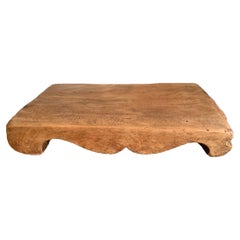
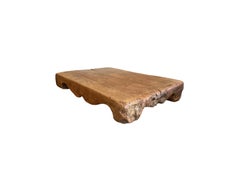
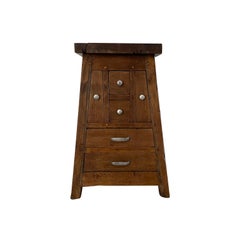
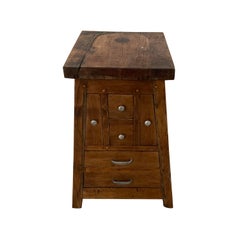
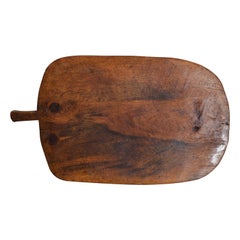
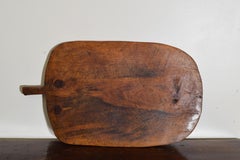
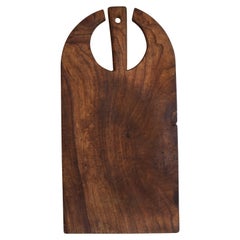
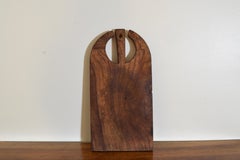
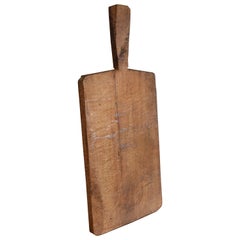
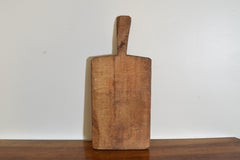
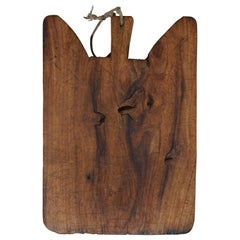
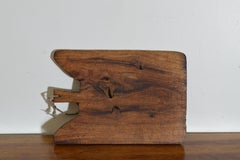
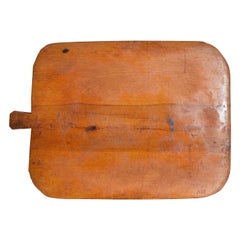
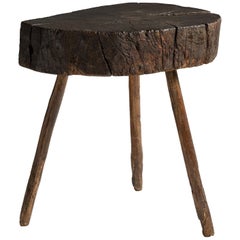
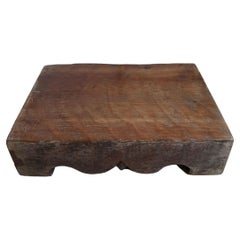
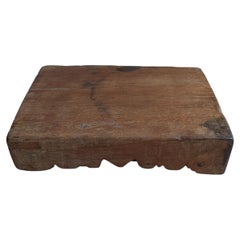
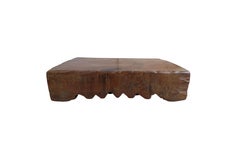
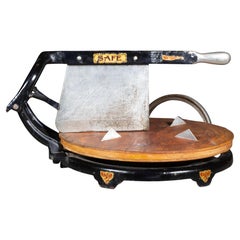
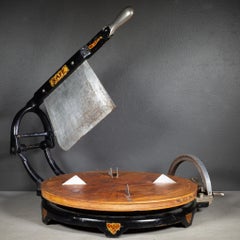
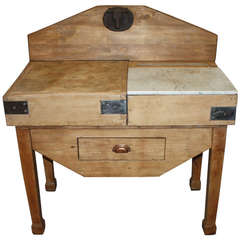
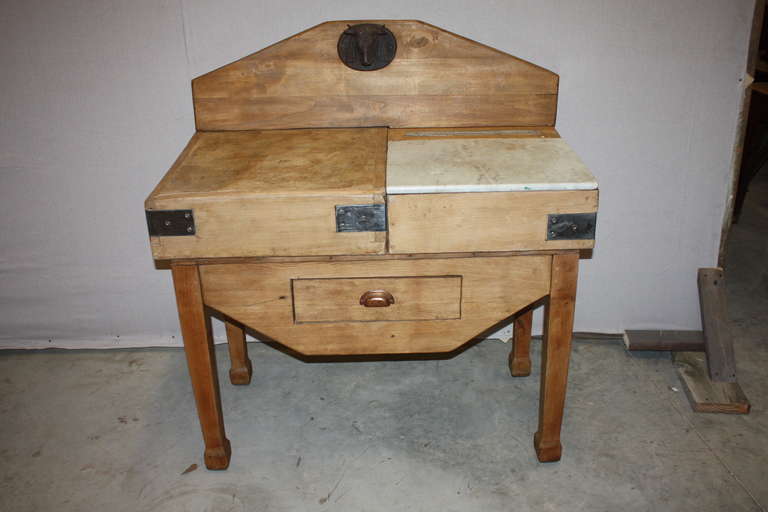
With a vast inventory of beautiful furniture at 1stDibs, we’ve got just the early 1900 butcher block you’re looking for. Frequently made of
wood,
hardwood and
metal, every early 1900 butcher block was constructed with great care. There are 14 variations of the antique or vintage early 1900 butcher block you’re looking for, while we also have 1 modern editions of this piece to choose from as well. You’ve searched high and low for the perfect early 1900 butcher block — we have versions that date back to the 20th Century alongside those produced as recently as the 21st Century are available. An early 1900 butcher block is a generally popular piece of furniture, but those created in
industrial styles are sought with frequency.
Prices for an early 1900 butcher block can differ depending upon size, time period and other attributes — at 1stDibs, they begin at $189 and can go as high as $16,500, while the average can fetch as much as $400.
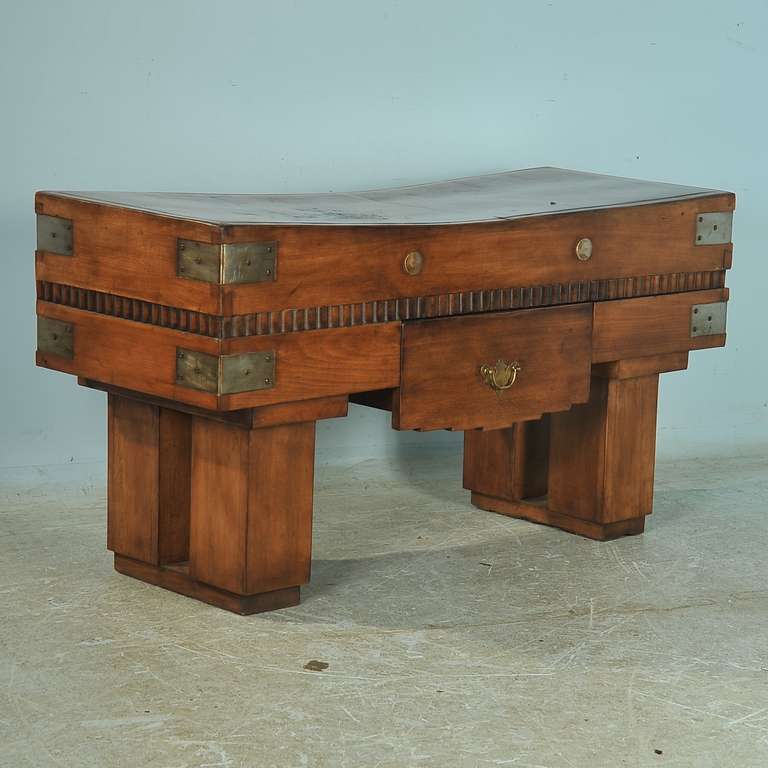
For the culinary star in your home, an antique or vintage butcher block is an indispensable accessory. Whether it’s a stand-alone table or island, a feature atop your rolling kitchen cart or a countertop application, this is a specific type of assembled wood surface for important food prep needs.
A butcher block is a designated work surface in a kitchen. Specifically, a butcher block affords you a strong and sturdy surface on which you can butcher meat as well as slice and dice vegetables. Having a designated area for this kind of work will help keep the kitchen sanitary and prevent potential damage to countertops.
Because wood is difficult to clean, stains easily and is an ideal surface for bacteria to flourish, counters were traditionally capped with metal. Butcher block — which, as a descriptor, refers to a specific material that is biodegradable and eco-friendly — was initially used in a commercial capacity but began to materialize in the early 20th century as countertops.
Butcher block is made from straight slats of wood that are glued together into thick slabs. The varieties include cherry, walnut, maple and oak. (The latter should be varnished or lacquered.) Construction types vary for butcher block countertops: There is edge grain (parallel boards that show their “edges”), end grain (small square pieces aligned vertically so that the “ends” are visible) and blended (with no specific pattern).
And there is a difference between a butcher block and a cutting board: A board in your kitchen that is used every day for slicing fruits and vegetables is generally called a cutting board. A more robust board — specifically, those that are constructed in the manner mentioned here — is a butcher block, which will be more appropriate for chopping meat as well as deboning.
The extensive collection of butcher blocks on 1stDibs includes French Provincial butcher blocks, rustic butcher blocks and more.