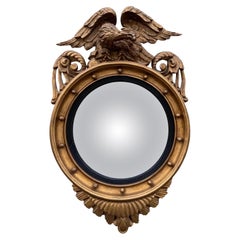
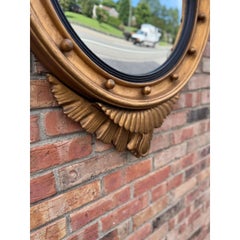
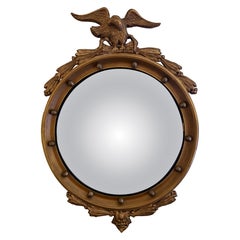
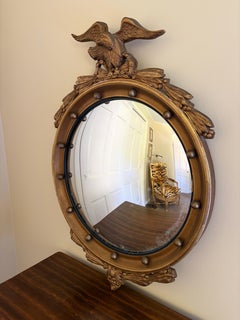
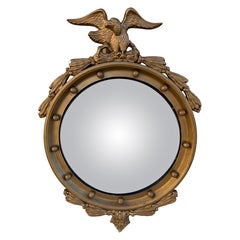
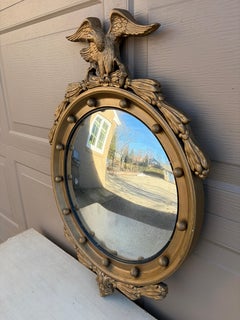
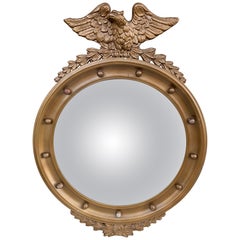
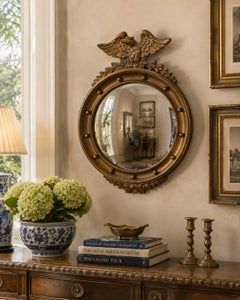
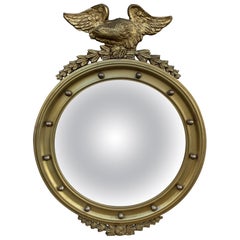
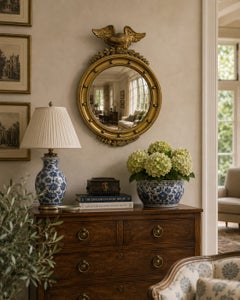
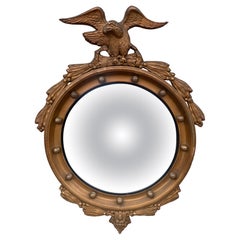
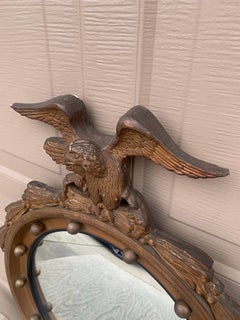
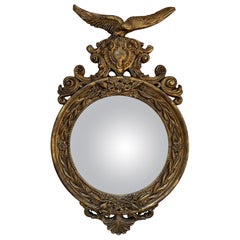
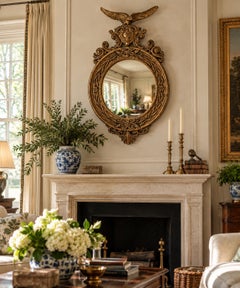
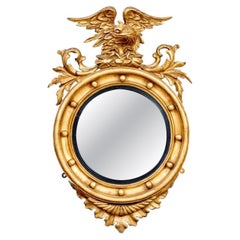
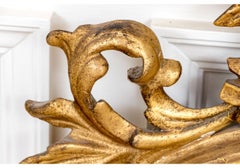
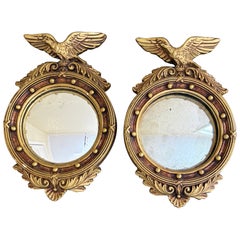
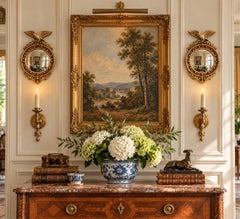
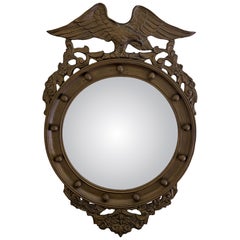
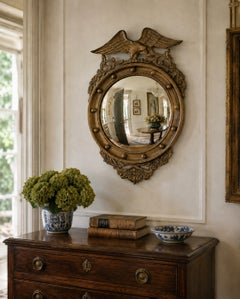
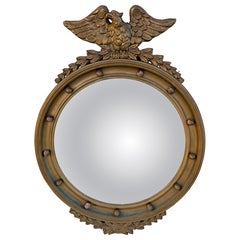
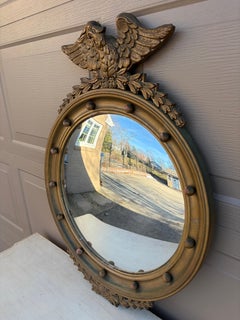
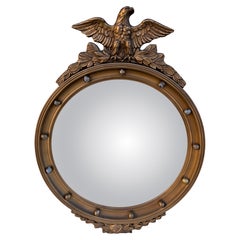
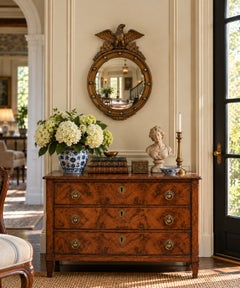
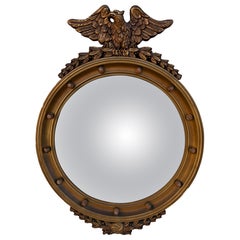
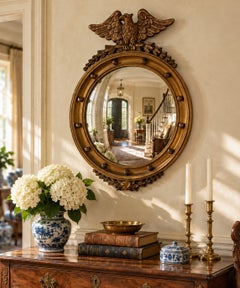
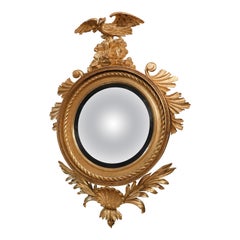
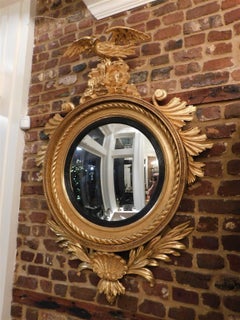
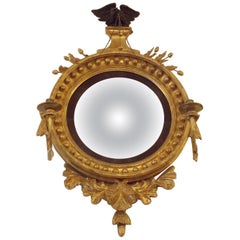
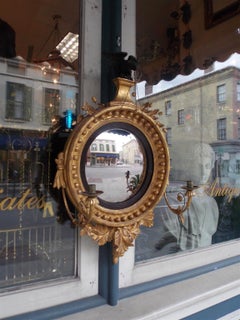
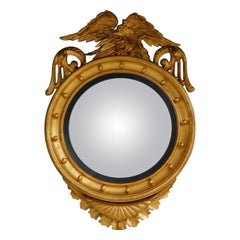
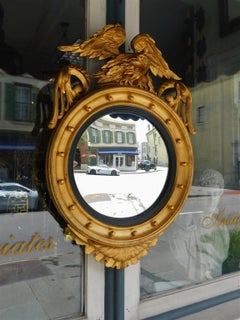
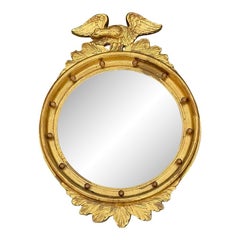
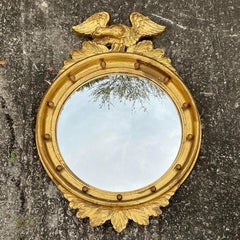
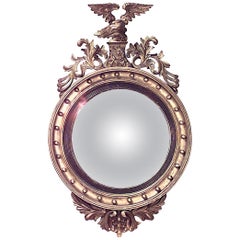
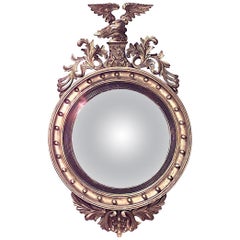
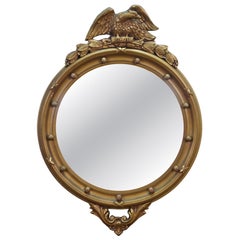
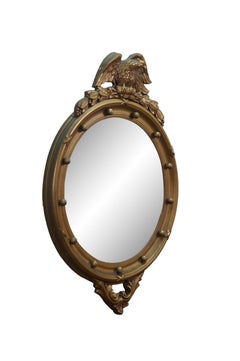
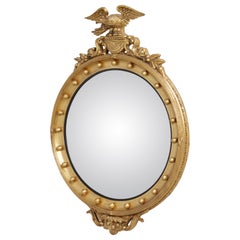
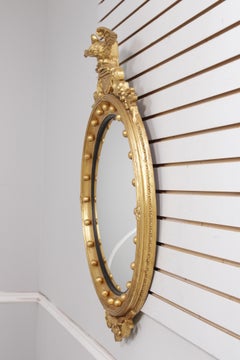
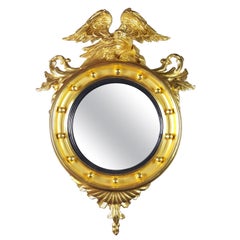
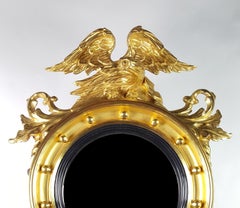
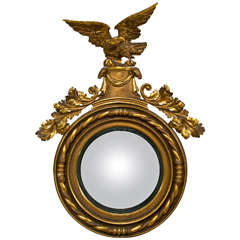
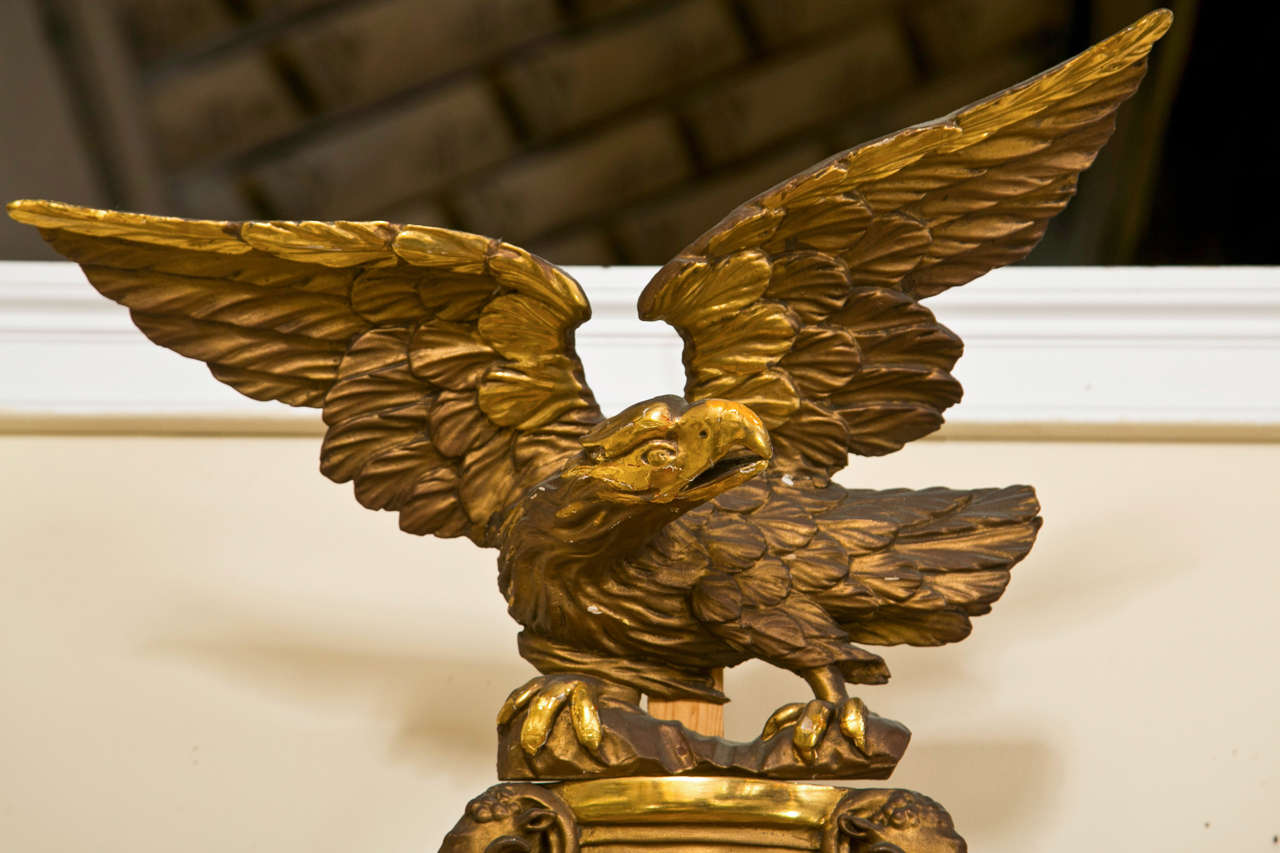
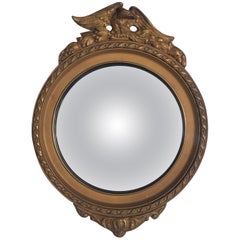
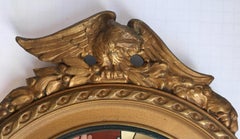
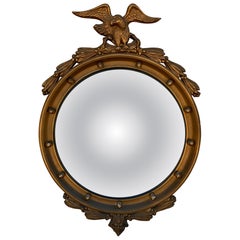
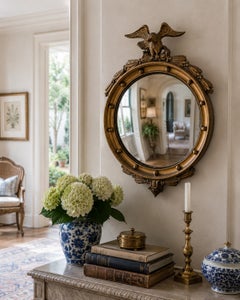
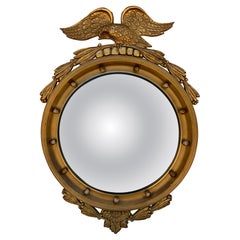
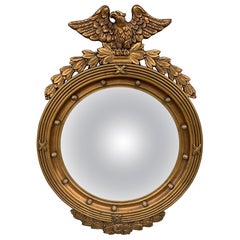
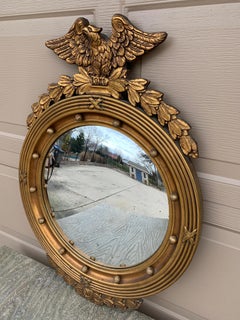
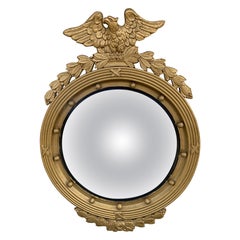
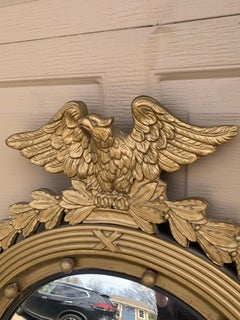
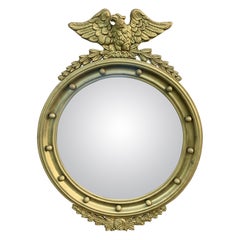
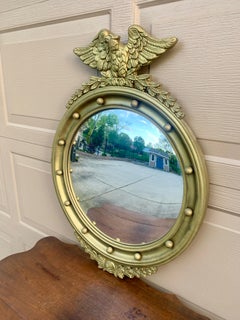
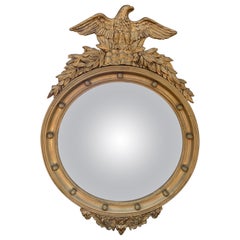
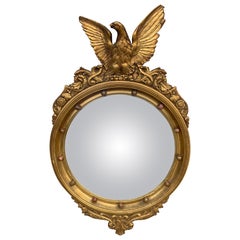
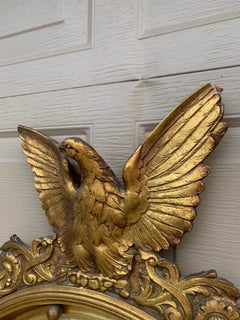
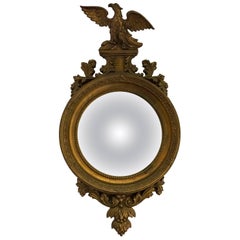
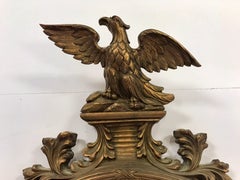
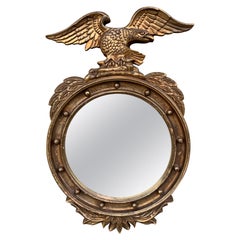
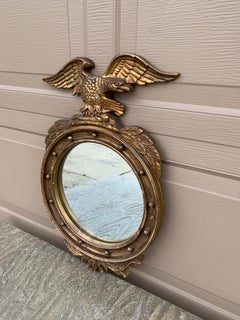
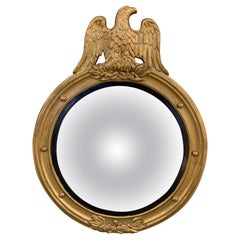
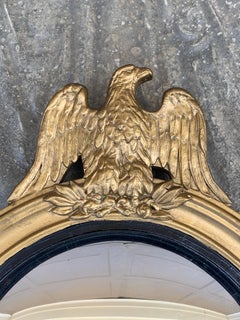
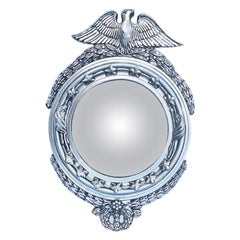
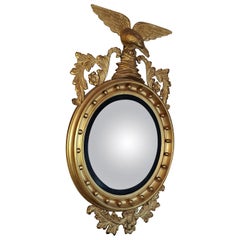
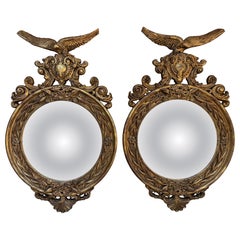
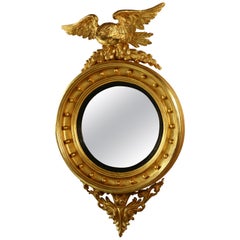
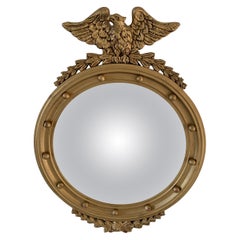
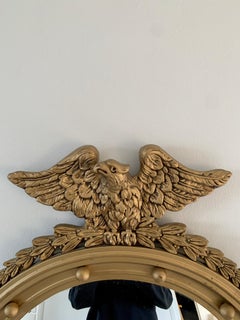
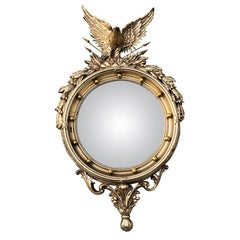
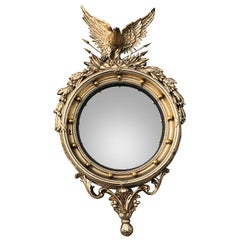
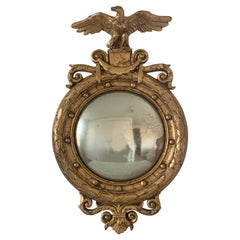
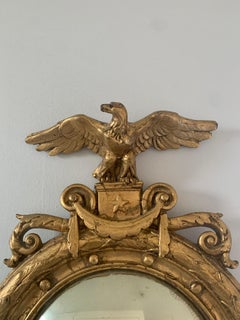
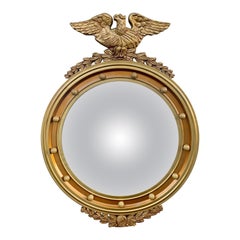
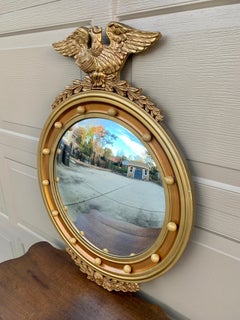
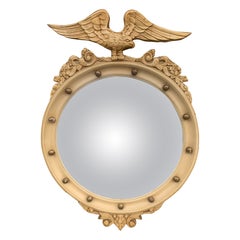
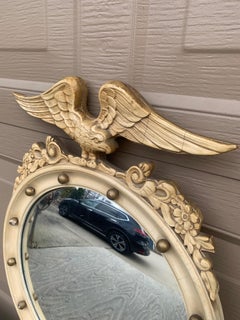
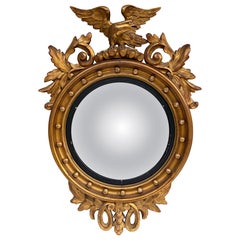
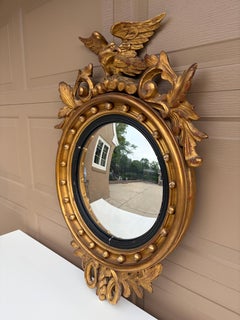
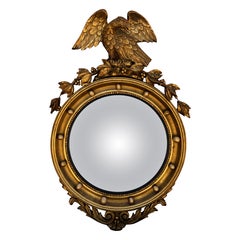
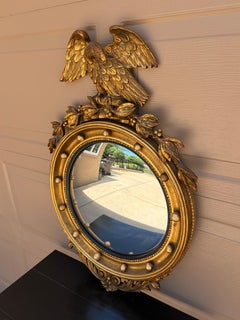
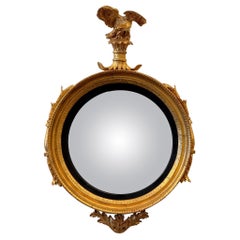
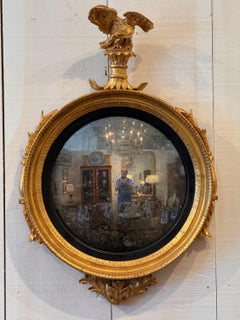
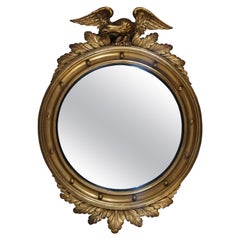
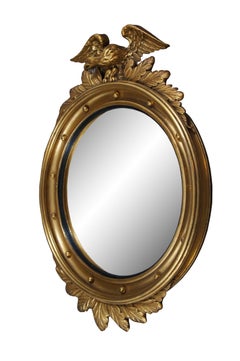
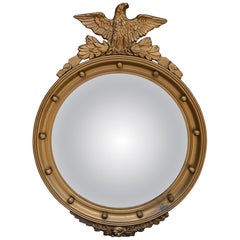
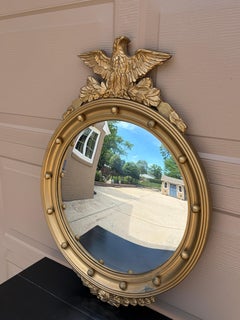
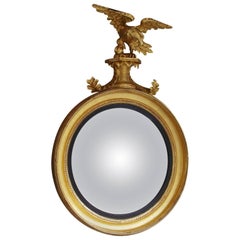
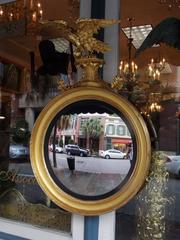
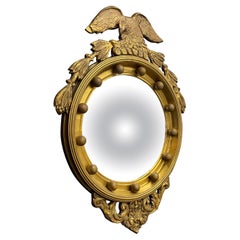
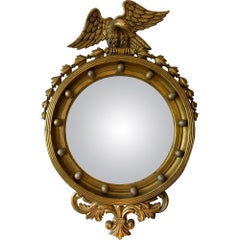
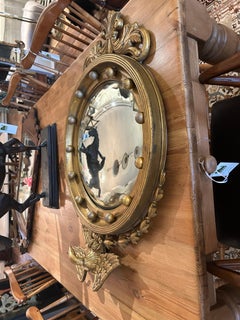
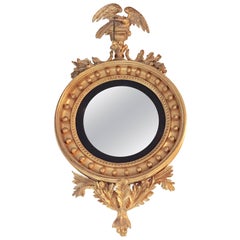
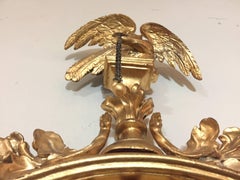
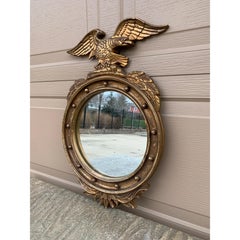
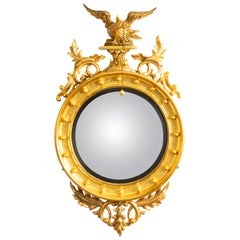
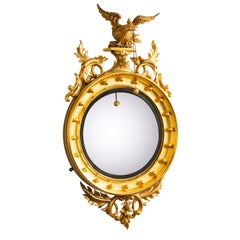
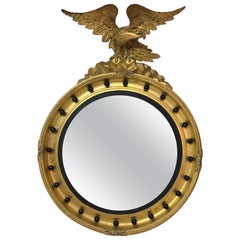
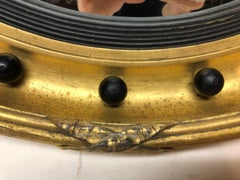
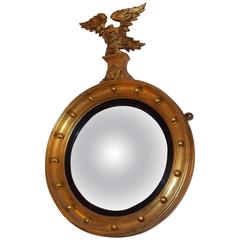
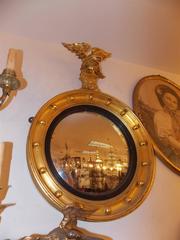
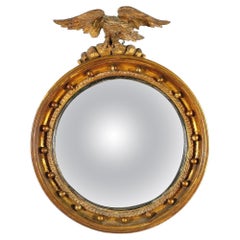
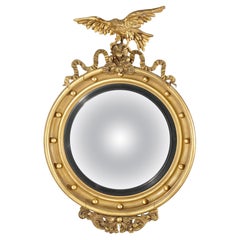
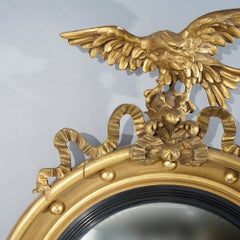
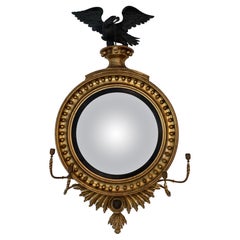
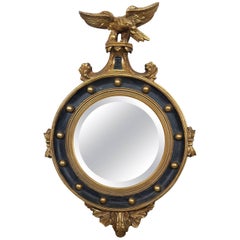
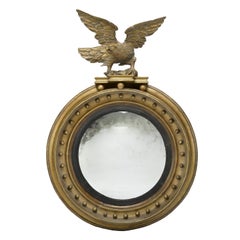
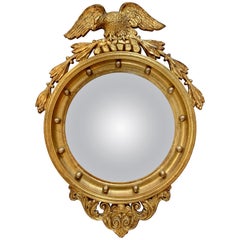
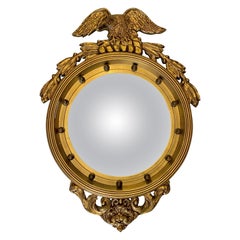
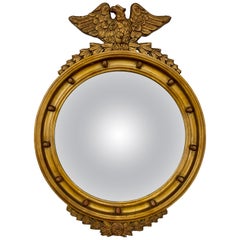
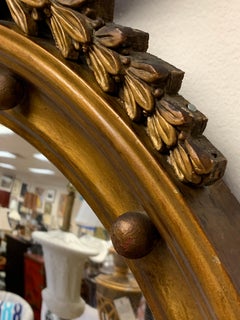
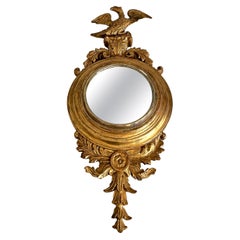
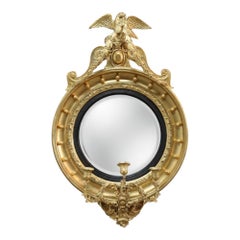
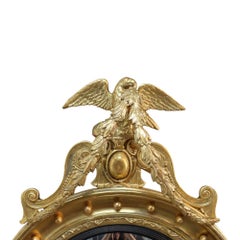
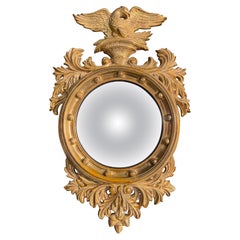
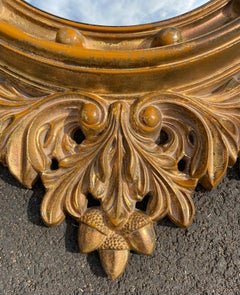
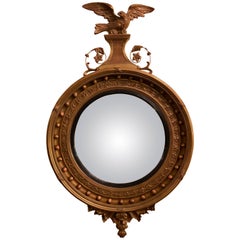
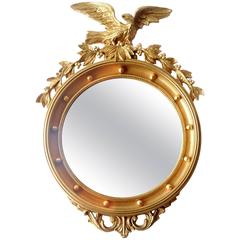
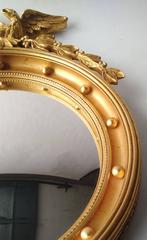
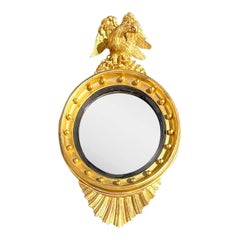
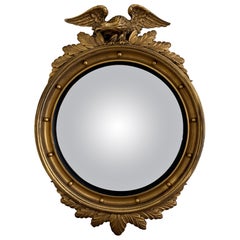
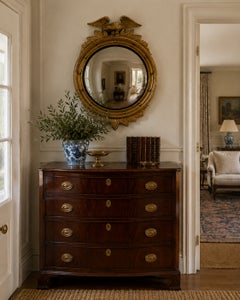
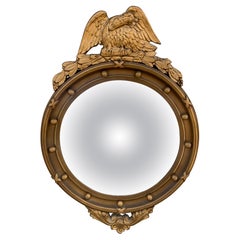
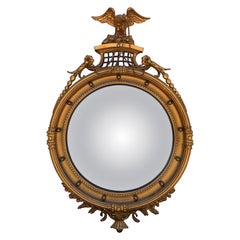
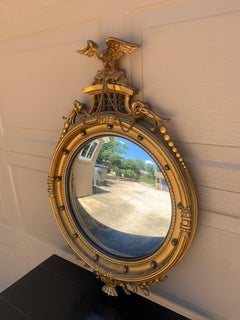
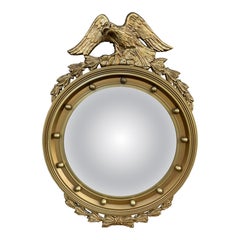
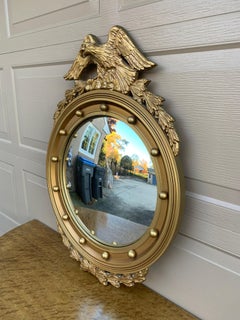
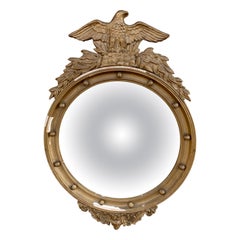
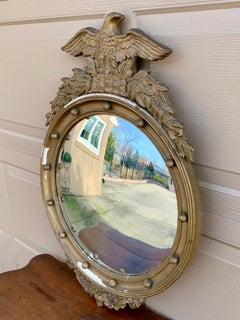
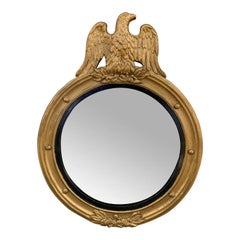
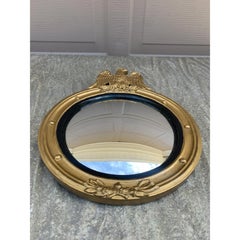
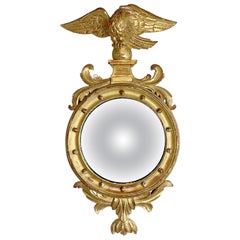
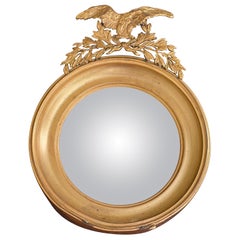
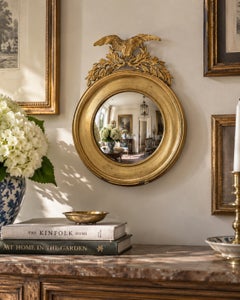
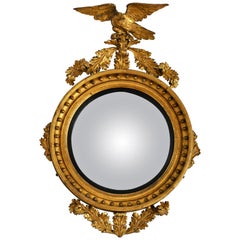
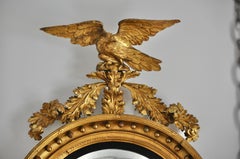
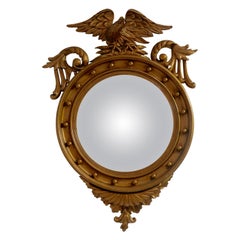
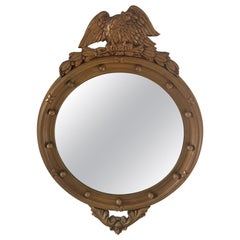
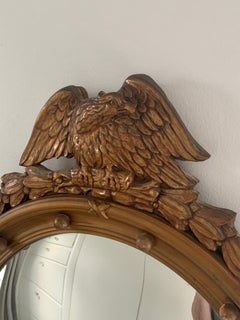
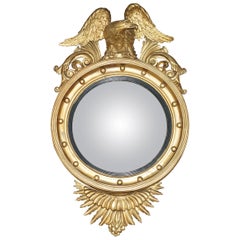
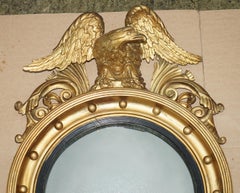
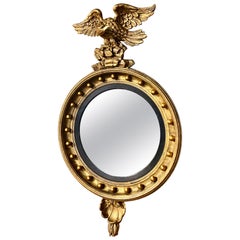
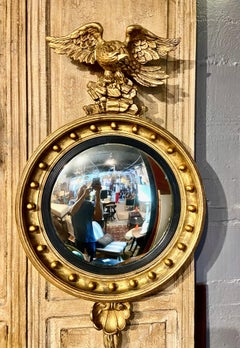
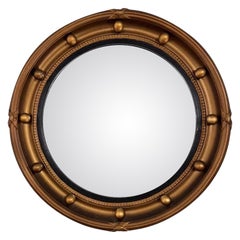
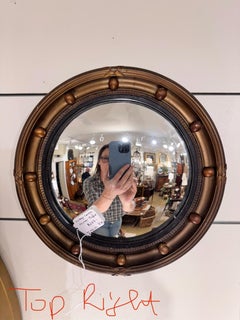
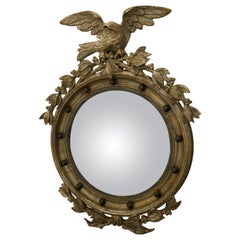
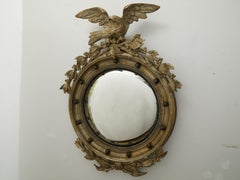
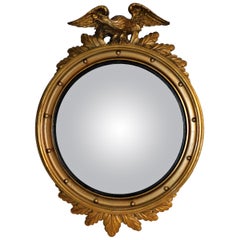
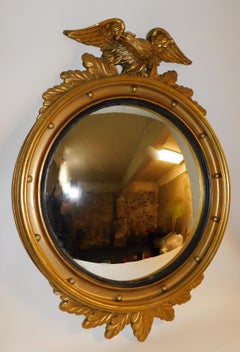
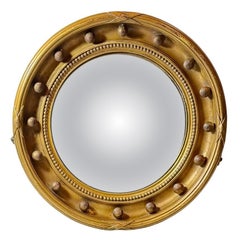
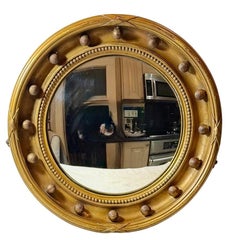
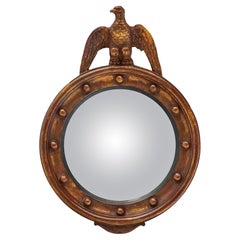
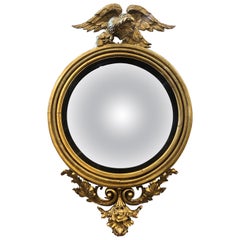
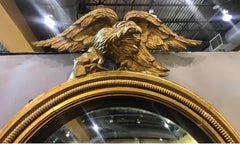
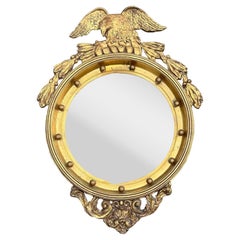
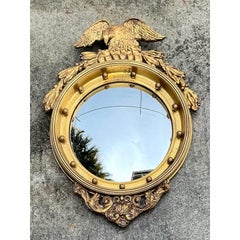
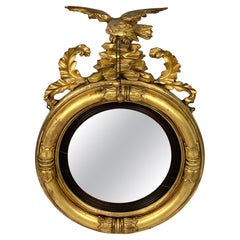
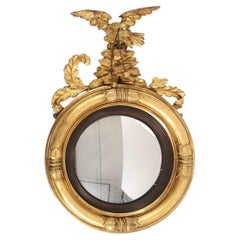
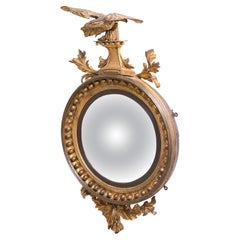
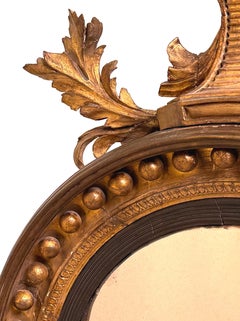
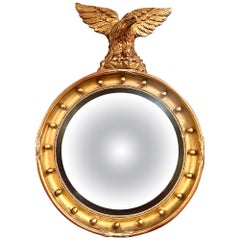
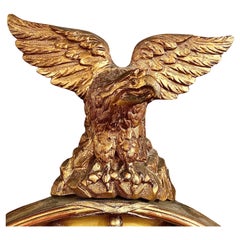
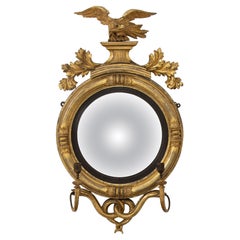
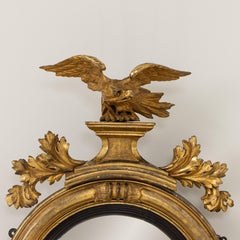
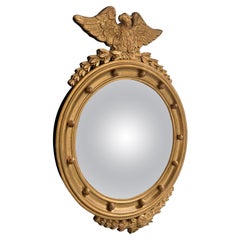
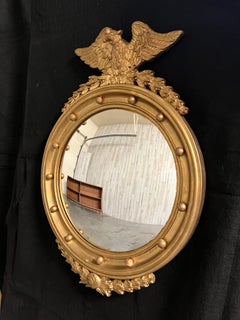
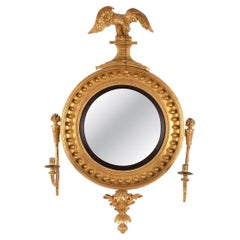
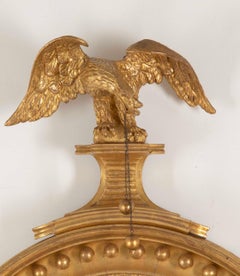
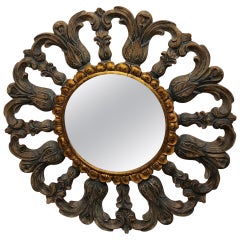
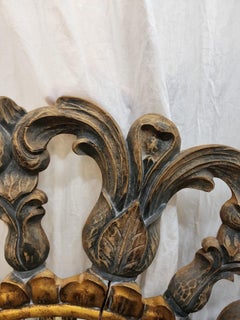
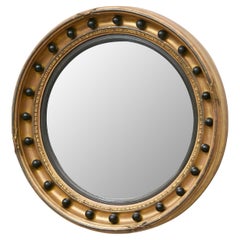
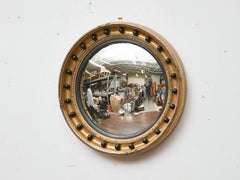
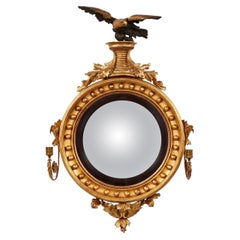
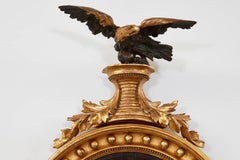
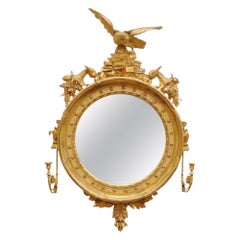
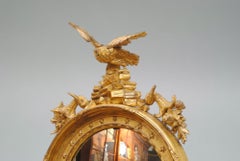
At 1stDibs, there are many versions of the ideal federal eagle convex mirror for your home. Each federal eagle convex mirror for sale was constructed with extraordinary care, often using
glass,
wood and
giltwood. Your living room may not be complete without a federal eagle convex mirror — find older editions for sale from the 18th Century and newer versions made as recently as the 20th Century.
Following the Revolutionary War, the American republic referenced the Roman Republic in its designs to celebrate its independence and declare itself a powerful new country. Imbued with neoclassical elements like those being promoted by architect Robert Adam in Great Britain, antique Federal-style furniture was the first distinctly American style in its melding of ancient influences, European aesthetics and national pride.
Dating roughly from 1790 to 1830, the style featured angular furniture with saber legs and smooth surfaces that contrasted with the curvy Rococo style that was previously in fashion. Eagles were common ornamental motifs on Federal-period furniture, as were cornucopia, lyres, garlands and scrolls, adding subtle flair to pieces characterized by clean lines, geometric symmetry, balanced shapes and a sense of grandeur.
Instead of sculptural carvings, authentic Federal-style furniture was adorned with inlays and patterned veneers that showcased the rich character of different grains and types of wood. As social life tended to be informal in the young country, furniture was often lightweight, so it could be easily rearranged in a drawing room or bedroom. Pieces like dining tables with drop leaves and sideboards became popular, replacing larger chests of drawers.
The Federal style varied by region: Artisans in Charleston, South Carolina, decorated chairs with carved backs, for instance, while those in Baltimore, Maryland, preferred painted details. Its major proponents included father-and-son cabinetmakers John and Thomas Seymour in Boston, Duncan Phyfe and Charles-Honoré Lannuier in New York and Samuel McIntire in Salem, Massachusetts.
Find antique Federal tables, mirrors, storage cabinets and other Federal furniture for sale on 1stDibs.
As a decorative piece, an antique or vintage convex mirror draws the eye, thanks to its rounded surface.
Like other kinds of mirrors, a convex mirror can act as a focal point for a room, spicing up a traditional accent wall, for example, or as an art piece hung above a sofa in your living room. The appearance of convex mirrors has changed significantly throughout time, ranging from those in the neoclassical style with a decorative border to futurist convex mirrors with ultrasmooth or rounded shapes.
Convex mirrors were developed in 14th-century Venice and gained popularity across Europe in the following centuries. They were regularly included in portrait paintings from the time, such as Jan van Eyck’s famed Giovanni (?) Arnolfini and his Wife (1434), cementing their status as luxury objects.
The establishment of glassblowing workshops in Europe led to the availability of the dome form for convex mirrors, with the inside often coated with molten lead or tin to create a reflective surface. Even though mirrors have become easier to produce over time, the convex mirror — like any attractive Art Deco mirror, Hollywood Regency–style mirror or dramatic wall mirror — remains a sought-after item.
Find the perfect antique and vintage convex mirror for your home on 1stDibs.