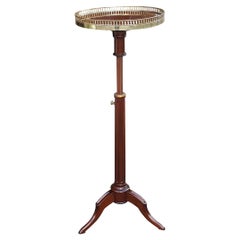
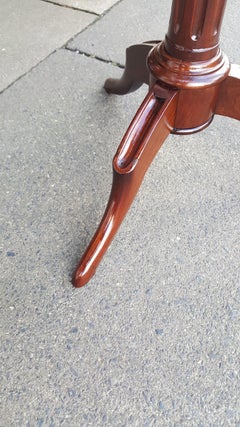
Late 19th Century French Mahogany Adjustable Side Lamp Table
Located in Altrincham, Cheshire
Late 19th century French mahogany adjustable circular occasional wine table with brass gallery top
Category
Antique 1880s French Side Tables
Materials
Brass
Late 19th Century French Mahogany Adjustable Side Lamp Table
Located in Altrincham, Cheshire
Late 19th century French mahogany adjustable circular occasional wine table with brass gallery top
Brass
Sold
H 27.25 in Dm 41 in
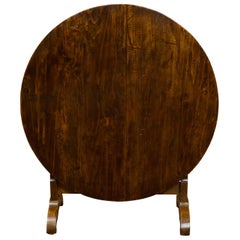
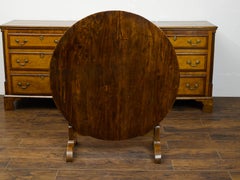
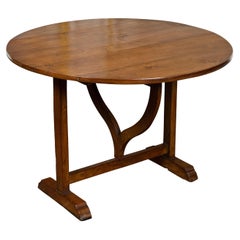
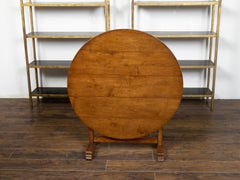
French 1880s Pine Wine Tasting Tilt-Top Table with Circular Top and Dark Patina
Located in Atlanta, GA
A French pine wine tasting table from the late 19th century, with circular top, trestle base and
Pine
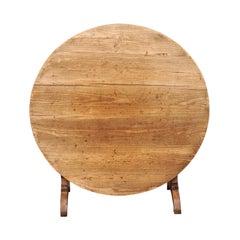
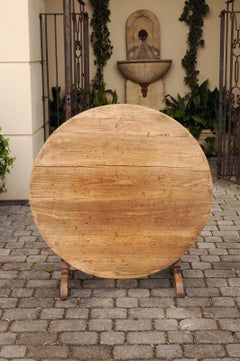
French 19th Century Walnut Wine Tasting Tilt-Top Table with Circular Top
Located in Atlanta, GA
A French walnut wine tasting table from the 19th century, with circular top, trestle base and
Walnut
Sold
H 26.5 in Dm 41.75 in
French Circular Wine Tasting Tilt-Top Table with Lyre Shaped Wedge, circa 1880
Located in Atlanta, GA
A French circular wine tasting tilt-top table from the late 19th century, with lyre-shaped wedge
Pine
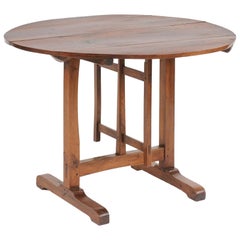

Southern French 1910s Solid Walnut Wine Tasting Table with Circular Tilt-Top
Located in Atlanta, GA
A rustic French solid walnut wine tasting table from the early 20th century, with round tilt-top
Walnut
For some, the phrase “rustic style” suggests a house like “La Pitchoune,” the late chef Julia Child’s cottage in Provence, with its exposed wooden beams and well-worn antique furniture. For others, rustic furnishings and decor prompt images of a place like the Lake Placid Lodge in Upstate New York, with its stone fireplaces and knotty pine paneling. Indeed, rustic furniture design takes many forms: twig furniture, a plank trestle table, a hand-stitched quilt, a chandelier made of deer antlers.
The rustic style originated in the late 1800s in England, where it was heavily influenced by Romanticism. By the 20th century, it had spread to the United States, adopted by wealthy New Yorkers and the National Park Service alike. Although there are many categories of rustic furniture, one of the most popular and familiar manifestations of the style is Adirondack furniture and the low-slung 1903 Thomas Lee Adirondack chair.
Rustic design is perhaps mostly about texture and humble materials: hand-hewn reclaimed wood, woven rush seating, wrought iron, coarse stone and weathered metal. As a decor, it exudes warmth and honesty, while a single piece of countrified design adds an intriguing visual counterpoint in a sleek, modern environment.
Easily identifiable by its rough textures, earthy colors and natural materials, rustic wares help bring the beauty of the outdoors inside.
As you can see on 1stDibs, vintage rustic chairs, dining tables and other pieces of rustic furniture offer endless inspiration.
In preparing for your next holiday party or dinner party, an antique or vintage dessert table might just be the perfect finishing touch.
Dessert tables are elegant pieces essential for hosting both formal and casual gatherings. Also known as tilt-top tables or loo tables (named for the card game), these eye-catching furnishings make it easy to host large parties so that guests are not confined to a single space for the night. The top of a tilt-top table is typically hinged to a pedestal in the structure’s center so that its surface can be turned from a horizontal to a vertical position and parked in the corner of a living room or dining room. This gives it an advantage over a traditional side table and allows it to take up less space when it’s not in use.
Dessert tables are deliberately built small or narrow so that they are easy to maneuver. These compact tables were especially prominent in the 18th century in the United States and England where they regularly accompanied social interactions like tea drinking. During the early 1920s, the sterling-silver full tea service and tray designed by Tiffany & Co. set atop your dessert table might include a hot-water kettle on a stand, a coffeepot, a teapot, a creamer with a small lip spout, a waste bowl and a bowl for sugar, which the British were stirring into tea by the 1720s and ’30s.
Older dessert tables often feature intricate carvings and motifs, making them enduringly popular through the decades. Many tilt-top tables likewise have elaborate veneers for a decoration that can be viewed when they are tilted down and stored against a wall.
Find antique and vintage tilt-top tables and dessert tables in various styles and finishes on 1stDibs.