Vermeil Sterling Silver

to
27
1
16
10
4
4
1
1
1
1
1
5
2
1
1
1
1
1
1
94
8,398
8,346
6,704
386
17
6
20
13
5
5
2
27
27
27
4
2
2
1
1
Material: Vermeil
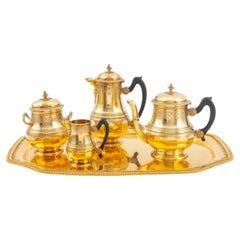
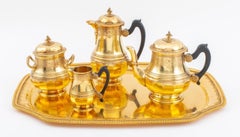
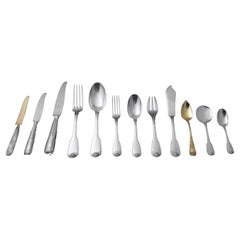
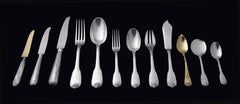
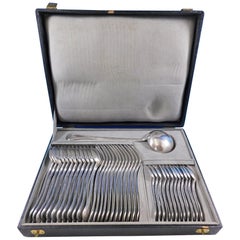
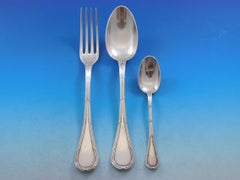
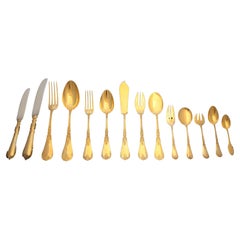
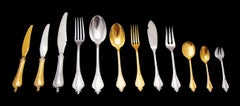
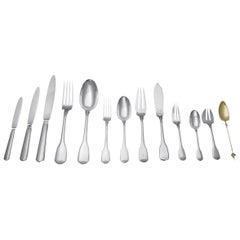
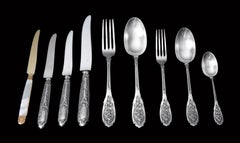
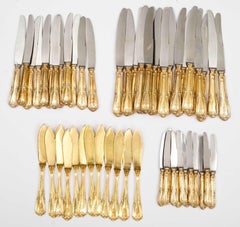
Puiforcat (Hermes) & Cardeilhac (Christofle): 182-piece Sterling Flatware Set

Puiforcat (Hermes) & Cardeilhac (Christofle): 182-piece Sterling Flatware Set

By Puiforcat, Christofle Cardeilhac 1

Located in Wilmington, DE

Direct from Paris: A stunning 182-piece antique sterling silver flatware set by two of France’s premier silversmiths “Puiforcat”, currently owned b...

Category

Late 19th Century French Louis XVI Antique Vermeil Sterling Silver

Materials

Vermeil, Sterling Silver
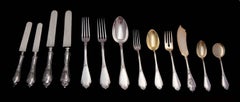
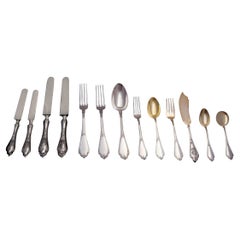
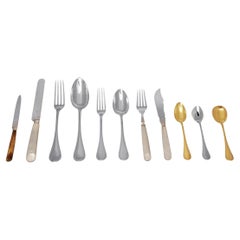
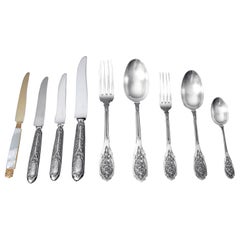
A 200 Plus Set of 19 Century Imperial Russian Silver Flatware by Andrei Bragin

A 200 Plus Set of 19 Century Imperial Russian Silver Flatware by Andrei Bragin

By Andrei Bragin

Located in Vancouver, British Columbia

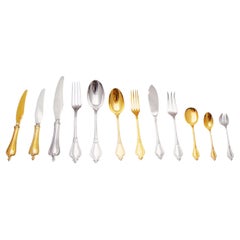
An exceptional and extremely rare set of a combination of silver and vermeil (gilded silver) flatware designed and crafted in St Petersburg Russia by Andrei Stepanovich Bragin d...

Category

Mid-19th Century Russian Other Antique Vermeil Sterling Silver

Materials

Silver, Vermeil

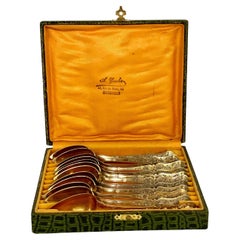
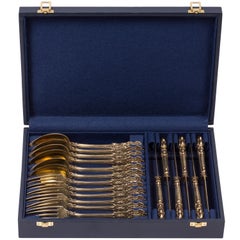
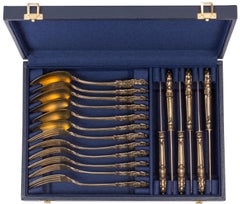
Set of twelve 19th Century Vermeil Spoons in its Original Leather Case

Set of twelve 19th Century Vermeil Spoons in its Original Leather Case

Located in LA CIOTAT, FR

An elegantly presented case of twelve silver-gilt, or vermeil, tea or coffee spoons, distinctively shaped with pointed bowl tips and elaborately shaped handle ends engraved with scro...

Category

19th Century French Antique Vermeil Sterling Silver

Materials

Vermeil

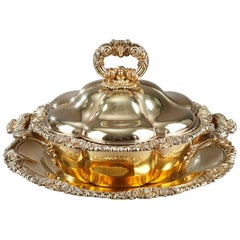
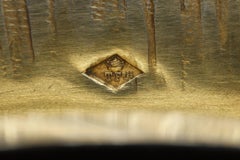
Charles Nicolas Odiot, Vermeil Oille Tureen, Mid-19th Century

Charles Nicolas Odiot, Vermeil Oille Tureen, Mid-19th Century

By Charles Nicolas Odiot

Located in Paris, FR

Exceptional vermeil tureen with its lobed tray. The circular terrine is decorated with a border of chiselled foliage.The grip lid is decorated with foliage patterns. The soup tureen ...

Category

1820s French Restauration Antique Vermeil Sterling Silver

Materials

Vermeil

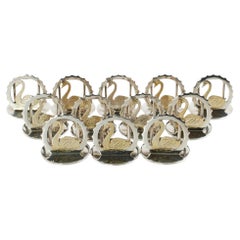
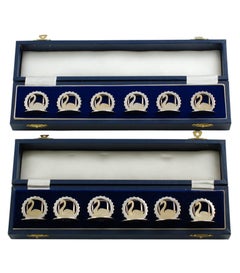
Asprey & Co Sterling Silver Cased Swan Motif Menu Place Card Holders Set of 12

Asprey & Co Sterling Silver Cased Swan Motif Menu Place Card Holders Set of 12

By Asprey International Limited

Located in Cincinnati, OH

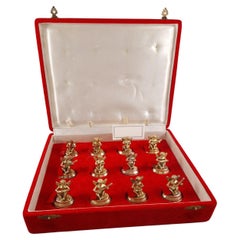
This elegant set of 12 sterling silver menu place card holders was made by Asprey of London. The pieces have circular bases surmounted with arched menu place card supports and featur...

Category

1980s English Other Vintage Vermeil Sterling Silver

Materials

Vermeil, Sterling Silver
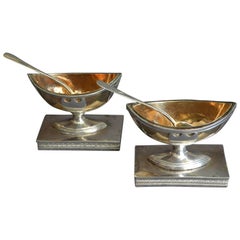
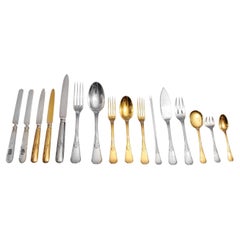
296pc. Antique French 950 Sterling Silver and Vermeil Flatware Set for 24

296pc. Antique French 950 Sterling Silver and Vermeil Flatware Set for 24

By FRENCH CLICHE

Located in Wilmington, DE

Direct from a private mansion in Paris, a magnificent a 296 piece, 19th century, sterling silver and gold plated sterling silver flatware set, in the much sought after "Rocaille" pat...

Category

Mid-19th Century Rococo Antique Vermeil Sterling Silver

Materials

Vermeil, Sterling Silver
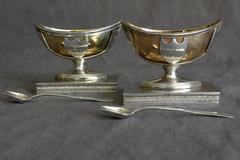
Pair Nautical Shaped Italian Silver-Gilt Salts

Pair Nautical Shaped Italian Silver-Gilt Salts

Located in New York, NY

Pair nautical shaped italian silver-gilt salts. Pair silver & vermeil navette shaped salt cellars with "SL" engraved escutcheons on laurel incised rectangular socle bases with origin...

Category

Early 19th Century Italian Antique Vermeil Sterling Silver

Materials

Sterling Silver, Vermeil

Silver-Gilt Dressing-Table Service by Lionel Alfred Crichton, London, 1917

Silver-Gilt Dressing-Table Service by Lionel Alfred Crichton, London, 1917

By Crichton Brothers

Located in Paris, FR

George V dressing-table service crafted of silver-gilt, comprising an oblong tray, a large jewel box with detachable velvet lining, two hair brushes, two clothes brushes, a comb and a hand mirror, all contained in a fitted red leather covered case. The border of each piece is chased with strapwork on a matted ground, engraved with an early 18th century style cartouche surrounding a vacant shield. The rich and delicate decoration is composed of naturalistic plants and animal motifs. The jewel box and tray are beautifully embellished with grotesque in Renaissance style, depicting mascaron, animals and foliated scrolls, in a fantastic architectural setting. Hallmarked "CRICHTON BROS LONDON & NEW YORK", along with several English silver marks as follow: - Maker's mark "LAC" (for silversmith Lionel Alfred Crichton...

Category

1920s English Vintage Vermeil Sterling Silver

Materials

Vermeil, Silver

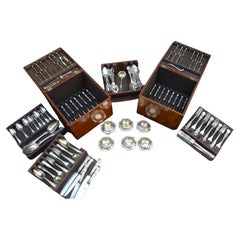
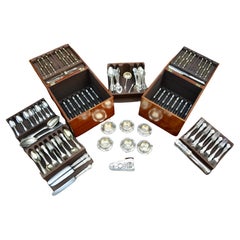
Societe Parisienne d'Orfevrerie (Odiot) - 184pc. French Vermeil Flatware Set

Societe Parisienne d'Orfevrerie (Odiot) - 184pc. French Vermeil Flatware Set

By Societe Parisienne d'Orfevrerie

Located in Wilmington, DE

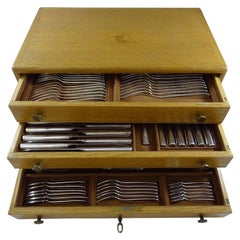
Direct from France: Direct from a private chateau near Paris, a stunning 184pc. gold plated sterling silver (vermeil) flatware set by internationally known French silversmiths "Societe Parisienne d'Orfevrerie" complete with original 6-drawer storage cabinet and 16 magnificent serving pieces, superb condition - circa 1911 and no monograms. The annals of 19th century French silverware bear witness to numerous illustrious workshops, yet few achieved the remarkable synthesis of technical mastery, artistic innovation, and aristocratic prestige as the Société Parisienne d'Orfèvrerie. Founded by Odiot during the flourishing years of the Second Empire, this distinguished Parisian firm carved its legacy through exceptional creations in gold-plated 950 sterling silver, known as vermeil, particularly in the realm of flatware. While maintaining its distinct identity, the firm's close association with the legendary Odiot dynasty - through shared master craftsmen, parallel design philosophies, and overlapping aristocratic patronage - positioned it among the foremost creators of luxury tableware in nineteenth-century Europe. The Early Years: The emergence of Société Parisienne d'Orfèvrerie coincided with a period of remarkable innovation in French decorative arts during the mid-nineteenth century. Though lacking the multi-generational heritage of the Odiot dynasty, which traced its origins to 1690, SPO rapidly ascended to prominence by adopting and adapting the exacting standards that had made Odiot synonymous with excellence in European silverware. This connection manifested most significantly through the migration of skilled artisans between workshops, as numerous master silversmiths who had trained in Odiot's ateliers brought their expertise to SPO's benches. These craftsmen carried with them not only technical knowledge but also the aesthetic sensibilities that defined French high silverwork during this golden age. What set Société Parisienne d'Orfèvrerie apart was its particular specialization in vermeil, the art of gold-plating sterling silver. While Odiot certainly produced vermeil pieces among its vast output, SPO made this technique a defining characteristic of its production, particularly in flatware. The process demanded extraordinary precision, involving the plating of 950 sterling silver - an alloy of exceptional purity containing 95% fine silver - with a substantial layer of 24-karat gold. This marriage of precious metals created tableware that combined the structural integrity and luminous quality of silver with the sumptuous warmth of gold, resulting in pieces that glowed with rich, deep radiance. The technical challenges of this process were considerable, requiring perfect preparation of the silver surface and meticulous control of the gilding bath to ensure even, durable coverage that would withstand generations of use. Master Craftsman in Vermeil: The foundation of SPO's flatware excellence lay in its uncompromising approach to materials and technique. In an era when many manufacturers had begun adopting the 925-sterling standard for economic reasons, SPO remained steadfast in its use of 950 silver, a purer alloy that offered superior workability and a distinctive luminous quality. This higher silver content not only enhanced the metal's natural brilliance but also provided greater resistance to the stresses of daily use, ensuring that pieces maintained their structural integrity over decades of service. The gold plating process itself represented a triumph of French electrochemical innovation, with SPO's craftsmen perfecting a technique that deposited a substantially thicker and more durable layer of gold than conventional gilding methods. Each component in an SPO flatware service represented countless hours of skilled labor, beginning with the careful forging of blanks that would be transformed through a series of specialized processes. Master chasers employed repoussé techniques to create intricate decorative motifs on handles, working from the reverse side to produce low-relief designs of floral arrangements, mythological scenes, or geometric patterns. Engravers then refined these elements, adding delicate details that brought the designs to life with astonishing realism. The functional elements of each piece received equal attention, with blades and bowls carefully balanced for optimal weight distribution and ergonomic comfort. A single place setting might require weeks of work from multiple specialists, each contributing their expertise to create a harmonious whole. The most elaborate commissions incorporated personalized elements that transformed functional tableware into bespoke works of art. Aristocratic clients frequently requested custom monograms or family crests, often executed in exquisite detail with additional embellishments of enamel or precious stones. These personalized touches not only demonstrated the owner's status but also served as a testament to SPO's ability to accommodate the most discerning tastes. The firm's workshops maintained extensive pattern books containing hundreds of design variations, allowing for nearly infinite customization while maintaining the cohesive aesthetic that defined SPO's output. A Favorite of European Royalty: Like its esteemed counterpart Odiot, Société Parisienne d'Orfèvrerie enjoyed considerable favor among European royalty and aristocracy, particularly during the reign of Napoleon III. The Second Empire court's appetite for lavish tableware created ideal conditions for SPO's ascent, with the firm's vermeil flatware becoming a particular favorite for state banquets and diplomatic gifts. The inherent qualities of vermeil - its resistance to tarnishing in humid conditions and its opulent visual appeal - made it especially desirable among the international elite who frequented Paris during this period of unprecedented luxury. Among SPO's most illustrious commissions was a comprehensive twelve-place vermeil service created for Empress Eugénie, wife of Napoleon III. This magnificent ensemble exemplified the rococo revival style favored by the imperial court, with each piece featuring elaborate rocaille scrollwork intertwined with naturalistic vine motifs. The service's attention to detail extended to its specialized pieces, including fish servers with delicately pierced blades and sauce ladles with perfectly balanced handles. Another significant patron, Tsar Alexander II of Russia, commissioned a vermeil flatware service featuring Cyrillic monograms and subtle references to traditional Russian decorative arts, demonstrating SPO's ability to adapt its designs to diverse cultural preferences. The firm's clientele extended beyond imperial courts to include the rising financial and industrial elites of the period. American magnates touring Europe, British aristocrats refreshing their country estates, and the newly wealthy bourgeoisie of Paris all sought SPO's creations as tangible symbols of their refined taste and social standing. This broad appeal stemmed from SPO's unique position at the intersection of traditional craftsmanship and innovative production techniques, allowing it to meet the exacting standards of old-world aristocracy while satisfying the practical demands of modern entertaining. Awards and Accolades: The excellence of Société Parisienne d'Orfèvrerie's creations received formal recognition at the great international exhibitions that served as showcases for industrial and artistic achievement throughout the nineteenth century. The 1855 Paris Exposition Universelle marked a watershed moment for the firm, where its exhibition of vermeil flatware earned a gold medal and lavish praise from the international jury. Contemporary accounts particularly noted the flawless execution of the gilding and the ergonomic perfection of each piece, with one critic remarking that the flatware seemed to "anticipate the hand's movements before being lifted." Subsequent appearances at the 1862 London International Exhibition and the 1867 Paris World's Fair further cemented SPO's reputation as a leader in luxury flatware...

Category

Early 20th Century Empire Vermeil Sterling Silver

Materials

Vermeil, Sterling Silver
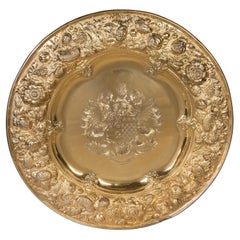
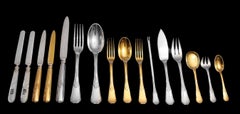
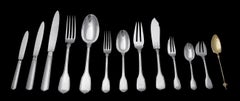
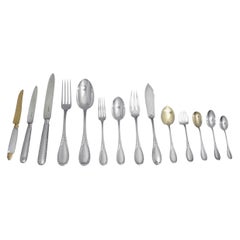
Savary & Fils: 182pc. French 950 Sterling Silver Flatware Set, 26 Svg. Pcs. 1880

Savary & Fils: 182pc. French 950 Sterling Silver Flatware Set, 26 Svg. Pcs. 1880

By Savary Paris 1

Located in Wilmington, DE

Direct from Paris: A magnificent 182pc. Louis XVI, 950 sterling silver flatware set by French silversmith Savary & Fils "Silversmith to the Kings and Queens of Europe". Includes an ...

Category

Late 19th Century Louis XVI Antique Vermeil Sterling Silver

Materials

Vermeil, Sterling Silver
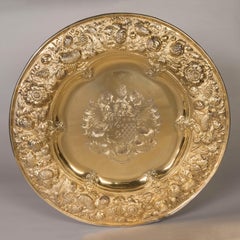
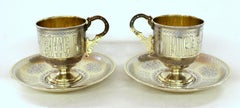
Pair of Antique Russian Silver Vermeil Hand Engraved Toasting Cups and Saucers

Pair of Antique Russian Silver Vermeil Hand Engraved Toasting Cups and Saucers

By Aleksandr Fuld

Located in CHARLESTON, SC

Pair of extraordinary quality antique Russian .875 fine silver vermeil hand engraved rare toasting cups and saucers. Gilt "Florentine" or matte finish with bright gilding on cup i...

Category

Late 19th Century Russian Antique Vermeil Sterling Silver

Materials

Vermeil, Silver

Lapparra - 204pcs. Antique Louis XV French 950 Sterling Silver Flatware Set

Lapparra - 204pcs. Antique Louis XV French 950 Sterling Silver Flatware Set

By Lapparra Orfèvre Argentier

Located in Wilmington, DE

Direct from St Tropez: Direct from a private villa in St. Tropez, a magnificent 204pc. Louis XVI French 950 sterling silver flatware set by Henri Lapparra, includes a magnificent 5-...

Category

Late 19th Century Louis XVI Antique Vermeil Sterling Silver

Materials

Vermeil, Sterling Silver
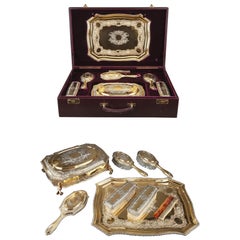
Puiforcat (Hermes) - 170pc. Antique French Art Nouveau 950 Sterling Flatware Set

Puiforcat (Hermes) - 170pc. Antique French Art Nouveau 950 Sterling Flatware Set

By Puiforcat

Located in Wilmington, DE

Direct from Paris: A magnificent 170pc. 950 sterling silver original French art nouveau flatware set with 8 serving pieces by the world's premier French silversmith "Puiforcat" currently owned by Hermes, stunning luxury at an amazingly low price - circa early 1900s. The art of French silversmithing represents a centuries-old tradition of luxury, precision, and timeless elegance. Among the most distinguished names in this venerable craft stands Puiforcat, a Maison renowned for its exceptional craftsmanship, innovative design, and royal patronage. Established in the early nineteenth century, Puiforcat has maintained an unwavering commitment to excellence, producing sterling silver flatware, tableware, and decorative objects that embody both artistic mastery and functional beauty. The History and Legacy of Puiforcat: The origins of Puiforcat trace back to 1820, when master silversmith Jean-Baptiste Fuchs established his workshop in Paris. Fuchs was a consummate artisan who adhered to the exacting standards of French silversmithing, a tradition that demanded not only technical precision but also refined artistic sensibility. The Maison’s identity became firmly established when Fuchs' son-in-law, Émile Puiforcat, inherited the business and elevated its reputation to unprecedented heights. Émile Puiforcat emerged as more than just a silversmith; he was a true visionary who intuitively understood the evolving aesthetic sensibilities of the late nineteenth and early twentieth centuries. Under his inspired leadership, the Maison successfully transitioned from producing traditional silverware to embracing avant-garde movements, particularly Art Nouveau and later Art Deco. This remarkable ability to innovate while maintaining the highest standards of craftsmanship distinguished Puiforcat from its contemporaries and established its enduring reputation. During the glorious Belle Époque period spanning the late nineteenth to early twentieth century, Puiforcat flourished as French decorative arts entered a golden age. The Maison’s work during this period was characterized by several defining features that set it apart. Each piece bore the mark of meticulous hand-hammered finishes, a technique that gave Puiforcat silverware its distinctive texture and depth compared to mass-produced alternatives. The Maison’s artisans employed exquisite chasing and engraving techniques, including the sophisticated repoussé method where designs were carefully hammered into relief from the reverse side, followed by precise chasing to refine the front details. These labor-intensive processes resulted in breathtakingly intricate, lifelike motifs that became Puiforcat's signature. While Puiforcat's early work remained firmly rooted in rococo and neoclassical traditions, the Maison demonstrated remarkable adaptability by later embracing the clean lines and bold symmetry of Art Deco, particularly under Émile Puiforcat's visionary guidance. Royal Patronage and Aristocratic Clientele: Puiforcat's reputation for excellence quickly attracted the attention of Europe's most discerning elite. The Maison’s clientele included some of the most prominent figures of the nineteenth century, beginning with King Louis-Philippe of France, whose refined taste and appreciation for fine craftsmanship led him to commission ceremonial silverware from Puiforcat. This royal endorsement significantly enhanced the Maison’s prestige and visibility. Napoleon III followed suit, making Puiforcat silver services a staple at imperial banquets and state functions. Beyond French royalty, Puiforcat's creations became essential status symbols among the broader European aristocracy, finding homes in the collections of Russian nobles and British high society alike. The Maison’s ability to cater to royal tastes extended beyond mere prestige; it reflected a profound understanding of both ceremonial grandeur and functional design. Puiforcat's pieces were never merely decorative objects - each item was carefully engineered to enhance the dining experience. The ergonomic handles and perfectly balanced weights of their flatware demonstrated how Puiforcat harmonized aesthetic beauty with practical utility, creating pieces that were as delightful to use as they were to behold. Émile Puiforcat played a particularly transformative role in elevating the Maison’s standing during the early twentieth century. His visionary approach included collaborations with leading artists and architects of the period, most notably Jean-Michel Frank, the influential Art Deco designer. These creative partnerships ensured that Puiforcat's designs remained at the cutting edge of contemporary aesthetics. While many traditional silversmiths clung to conventional styles, Émile boldly embraced geometric abstraction, creating pieces that functioned simultaneously as tableware and sculptural art. His leadership earned Puiforcat international acclaim through awards at world expositions, cementing the Maison’s reputation as an innovator in luxury silverware. Émile's legacy proved so enduring that even after his death in 1945, Puiforcat continued to be synonymous with innovation and exclusivity in the world of fine silver. Awards and Accolades: Throughout its distinguished history, Puiforcat's commitment to excellence has been recognized through numerous prestigious awards, each reinforcing its status as a master of French silversmithing. The Maison’s participation in world expositions yielded particularly significant honors, beginning with gold medals at the Paris Exposition Universelle in both 1889 and 1900. These monumental exhibitions represented the pinnacle of industrial and artistic achievement in the nineteenth century, making Puiforcat's gold medals a powerful testament to its technical mastery and artistic vision. The Maison’s international reputation continued to grow through subsequent exhibitions in major European cultural capitals. At international exhibitions in Brussels, Barcelona, and Milan, Puiforcat demonstrated its remarkable ability to adapt to regional aesthetic preferences while maintaining its distinctive French elegance. This versatility, combined with uncompromising quality, earned the Maison consistent acclaim across diverse markets and cultures. In the modern era, Puiforcat's contributions to artisanal traditions have received official recognition through France's Living Heritage Company (Entreprise du Patrimoine Vivant, or EPV) designation. This prestigious distinction, awarded by the French government, honors enterprises that preserve and advance traditional artisanal skills. Puiforcat's inclusion in this select group underscores its ongoing dedication to handcrafted excellence in an increasingly industrialized world. The artistic significance of Puiforcat's work has been further validated through exhibitions at some of the world's most respected cultural institutions. The Musée des Arts Décoratifs in Paris and New York's Metropolitan Museum of Art have both showcased Puiforcat pieces, placing them in dialogue with other masterworks of decorative arts. These exhibitions not only celebrate Puiforcat's historical contributions but also affirm its continuing relevance in the narrative of fine craftsmanship. Association with Hermès - A Synergy of Luxury: The 1993 acquisition of Puiforcat by the Hermès luxury group marked a significant chapter in the Maison’s history, ensuring both the preservation and thoughtful evolution of its legacy. This strategic partnership brought together two French institutions united by their commitment to artisanal excellence and timeless design. Hermès demonstrated profound respect for Puiforcat's heritage, carefully maintaining the traditional techniques that had defined the silversmith's work for generations. Under Hermès' stewardship, Puiforcat continued to employ the same handmade techniques that had earned its reputation, including the exacting lost-wax casting process and meticulous hand engraving. The Maison maintained its uncompromising standards regarding materials, continuing to use 950-silver despite industry trends toward lower purity alloys. This commitment to quality ensured that every piece bearing the Puiforcat name remained worthy of its illustrious history. Hermès' global retail network provided Puiforcat with unprecedented access to international markets, introducing the silversmith's creations to new generations of collectors and connoisseurs worldwide. While honoring tradition, Hermès also encouraged thoughtful innovation, supporting new designs that respected Puiforcat's heritage while ensuring its relevance in contemporary luxury. This balanced approach has allowed Puiforcat to maintain its position at the forefront of fine silverware while staying true to its artisanal roots. Puiforcat's 950 Sterling Silver Art Nouveau Flatware Sets: Among Puiforcat's most celebrated achievements are its extraordinary 950 sterling silver Art Nouveau flatware sets, which perfectly encapsulate the Maison’s artistic and technical brilliance. The decision to use 950-silver, containing 95% pure silver rather than the standard 92.5%, resulted in pieces with a richer luster and greater durability than conventional sterling silver. This higher purity not only enhanced the visual appeal of each piece but also ensured that Puiforcat flatware...

Category

Early 20th Century Art Nouveau Vermeil Sterling Silver

Materials

Vermeil, Sterling Silver
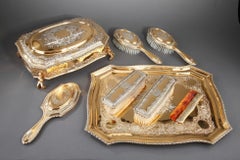
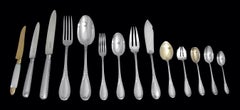
Lapparra - 220pcs. French 950 Sterling Silver Flatware Set, 19 Serving Pieces +

Lapparra - 220pcs. French 950 Sterling Silver Flatware Set, 19 Serving Pieces +

By Lapparra Orfèvre Argentier

Located in Wilmington, DE

Direct from France: Direct from a Private Villa in St. Tropez, A Magnificent 220pc. Louis XVI French 950 Sterling Silver Flatware Set by Henri Lapparra, "Silversmith to the French E...

Category

Late 19th Century French Louis XVI Antique Vermeil Sterling Silver

Materials

Vermeil, Sterling Silver
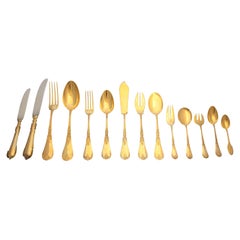
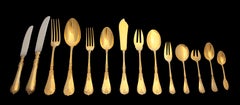
Rare 206-Piece Vermeil Flatware Set for 12 – Hallmarked by J. Roca, Barcelona

Rare 206-Piece Vermeil Flatware Set for 12 – Hallmarked by J. Roca, Barcelona

By F. Roca

Located in BARCELONA, ES

Exceptional vermeil cutlery set dating to the mid-20th century (circa 1945), crafted by J. Roca prestigious Barcelona jeweler regarded as one of the finest of its era, and still active today. Only three sets of this kind are known to exist in Spain, one of which belongs to the Archdiocese of Barcelona. This remarkable set includes 206 pc across 36 different types, with a total weight of 23.4 kg. For a detailed breakdown, including weights and quantities, please see the details in the picture or here: Forks 1 Regular fork vermeil – Qty: 18 – Unit weight: 87 g – Total weight: 1.566 kg – Dimensions: 21 x 2.7 cm 2 Appetizer fork vermeil – Qty: 12 – Unit weight: 60 g – Total weight: 720 g – Dimensions: 18 x 2.5 cm 3 Dessert fork vermeil – Qty: 12 – Unit weight: 33 g – Total weight: 396 g – Dimensions: 13.8 x 1.5 cm 4 Oyster fork vermeil – Qty: 12 – Unit weight: 38 g – Total weight: 456 g – Dimensions: 13.5 x 2.5 cm 5 Fish fork (3 prongs) vermeil – Qty: 12 – Unit weight: 64 g – Total weight: 768 g – Dimensions: 17.5 x 2.5 cm Knives 6 Regular knife vermeil...

Category

1940s Spanish Vintage Vermeil Sterling Silver
Materials

Vermeil, Sterling Silver
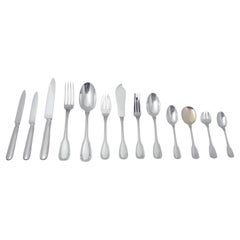
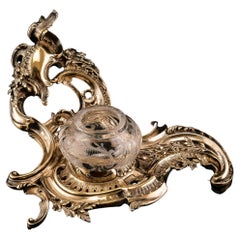
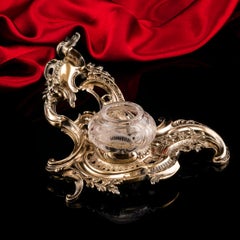
Antique French Solid Silver Gilt Rococo Style Inkwell / Stand, Emile Puiforcat

Antique French Solid Silver Gilt Rococo Style Inkwell / Stand, Emile Puiforcat

By Emile Puiforcat

Located in London, GB

We are delighted to offer this magnificent French silver gilt inkstand made circa late 19th/early 20th century by one of the most important Parisian silversmiths: Puiforcat. Puifo...

Category

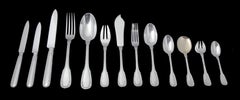
Late 19th Century French Rococo Antique Vermeil Sterling Silver
Materials

Vermeil, Sterling Silver
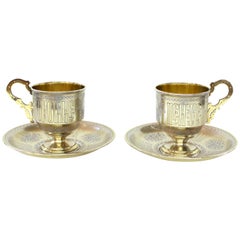
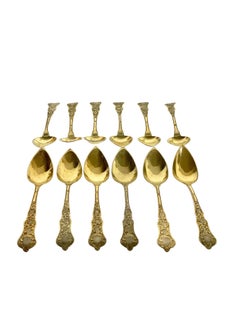
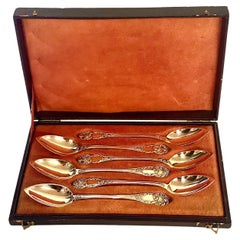
Set of Six French Vermeil Teaspoons by Jules Vieillard, c.1870

Set of Six French Vermeil Teaspoons by Jules Vieillard, c.1870

Located in LA CIOTAT, FR

A refined set of six French vermeil teaspoons, elegantly housed in their original fitted presentation case, bearing the stamp of Jules Vieillard, the renowned Bordeaux silversmith ac...

Category

19th Century French Antique Vermeil Sterling Silver
Materials

Vermeil

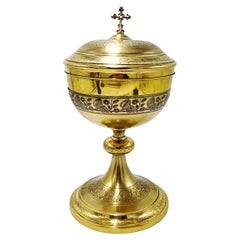
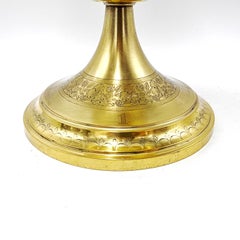
Large French Gilded 950 Sterling Silver Ciborium - Paris early 20th century.
Large French Gilded 950 Sterling Silver Ciborium - Paris early 20th century.
Located in Victoria, BC

An impressive and finely executed French ecclesiastical ciborium, crafted in 950-grade sterling silver and richly fire-gilded (vermeil) throughout the interior. This substantial vess...

Category

Early 20th Century French Vermeil Sterling Silver
Materials

Vermeil, Sterling Silver
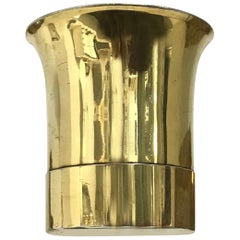
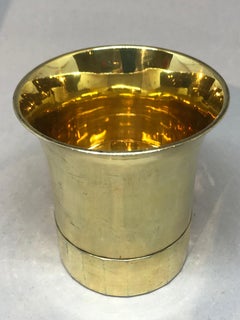
Louis XVI Silver Vermeil Beaker
Louis XVI Silver Vermeil Beaker
Located in New York, NY

Louis XVI silver vermeil beaker. France, late 18th century. Dimensions: 3.5" diameter x 3.63" height.
Category

Late 18th Century French Louis XVI Antique Vermeil Sterling Silver
Materials

Vermeil, Sterling Silver
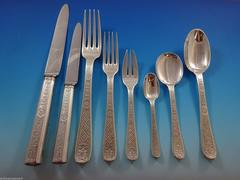
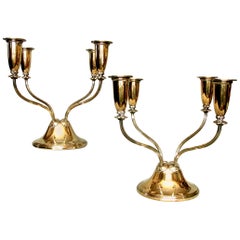
An Exceptional Pair of Mid-Century Modern Silver Gilt Candelabra, Dated 1960

An Exceptional Pair of Mid-Century Modern Silver Gilt Candelabra, Dated 1960

By Barker Brothers Silver Ltd.

Located in Ottawa, Ontario

An exceptionally fine pair of gilded sterling silver candelabra, showing upswept branches with tulip shaped nozzles radiating from domed weighted bases. Both exhibiting a lustrous go...

Category

Mid-20th Century English Mid-Century Modern Vermeil Sterling Silver

Materials

Vermeil, Sterling Silver
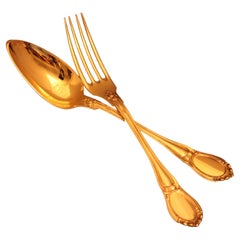
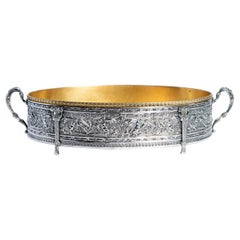
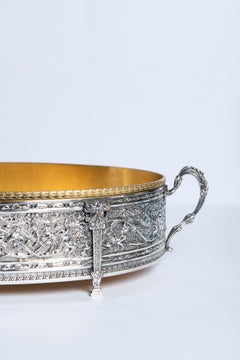
Silver, Gold Vermeil and Gilt Bronze Jardinière, France, Late 19th Century

Silver, Gold Vermeil and Gilt Bronze Jardinière, France, Late 19th Century

Located in Buenos Aires, Buenos Aires

Silver, gold vermeil and gilt bronze jardinière, France, late 19th century. With silver marks. Interior in gilt bronze.  

Category

Late 19th Century French Neoclassical Antique Vermeil Sterling Silver

Materials

Vermeil, Silver, Bronze

Related Items
19th Century Flatware Set - Carrington & Co - Solid Sterling Silver - Complete

19th Century Flatware Set - Carrington & Co - Solid Sterling Silver - Complete

By Carrington of Regent Street

Located in Casteren, Noord-Brabant

An exceptional 19th-century English flatware service by Carrington & Co, 130 Regent Street, London — one of the most prestigious silversmiths and jewellers of the Victorian and Edwar...

Category

1880s English Victorian Antique Vermeil Sterling Silver

Materials

Sterling Silver

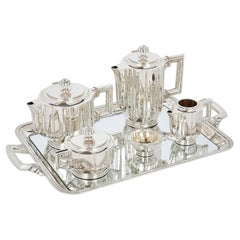
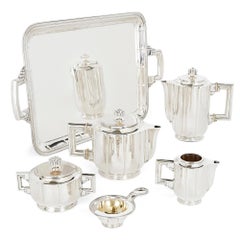
Art Deco Spanish Silver Coffee and Tea Set

Art Deco Spanish Silver Coffee and Tea Set

$20,508 / set

H 1.19 in W 22.05 in D 13.78 in

Art Deco Spanish Silver Coffee and Tea Set

Located in London, GB

Art Deco Spanish silver coffee and tea set Spanish, c. 1930 Tray: height 3cm, width 56cm, depth 35cm Milk jug: height 10cm, width 13cm, depth 8cm ...

Category

Early 20th Century Spanish Art Deco Vermeil Sterling Silver

Materials

Silver

19th Century French Silver Vermeil Flatware Dessert Set for Six, 18 Pieces

19th Century French Silver Vermeil Flatware Dessert Set for Six, 18 Pieces

Located in Madrid, ES

This charming 19th century French 18-piece cased dessert silverware / flatware set, with its unique, slightly grotesque satyr mask motif and warm ve...

Category

19th Century French Antique Vermeil Sterling Silver

Materials

Vermeil, Silver

Bougainville by Puiforcat Sterling Silver Flatware Set Service 37 Pcs in Box

Bougainville by Puiforcat Sterling Silver Flatware Set Service 37 Pcs in Box

By Puiforcat

Located in Big Bend, WI

Exquisite Bougainville by Puiforcat France sterling silver flatware set, 37 pieces. This set includes: 12 dinner size forks, 8 3/8" 12 teaspoons, 5 1/2" 12 large dinner spoons, ...

Category

Late 19th Century Antique Vermeil Sterling Silver

Materials

Sterling Silver

Asprey sterling silver cigarette / card case, slide opens Pat 21914

Asprey sterling silver cigarette / card case, slide opens Pat 21914

By Asprey & Garrard Limited

Located in Los Angeles, CA

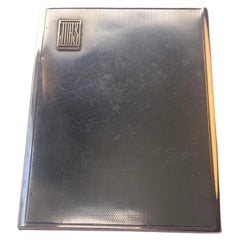
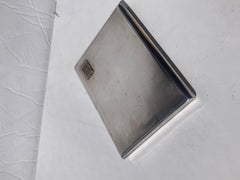
Beautiful silver work in this early Asprey Co , before Garrard cigarette case, /card, marked and patent number as shown .Has also a personalized. inscription inside . The Asprey ca...

Category

Early 20th Century English Art Deco Vermeil Sterling Silver

Materials

Sterling Silver

Antique Asprey Sterling Silver Playing Card Box Casket, 20th Century

Antique Asprey Sterling Silver Playing Card Box Casket, 20th Century

By Asprey International Limited

Located in London, GB

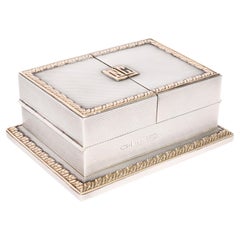
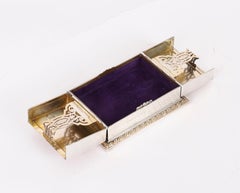
This is a fabulous early George V sterling silver playing card box with wonderful engine turned decoration and gold foliate borders, by the renowned London retailer and manufacturer Asprey. It can be used as a playing card box or jewellery casket and has a hinged doule cover with applied gold initials. It opens to reveal a silver gilt and velvet lined interior with ornate pierced silver gilt retaining clips. It has hallmarks for London 1912 and the makers mark for Asprey & Co Ltd. Condition: In excellent condition with no dings, dents or signs of repair. Please see photos for confirmation. Dimensions in cm: Height 5 x width 11 x depth 9 Dimensions in inches: Height 2.0 x width 4.3 x depth 3.5 Asprey was established in England in 1781 and founded as a silk printing business by William Asprey, it soon became a luxury emporium. In 1841, William Asprey's elder son Charles went into partnership with a stationer located on London's Bond Street. In 1847 the family broke with this partner and moved into 167 New Bond Street, the premises Asprey occupies today. From its central London location Asprey advertised 'articles of exclusive design and high quality, whether for personal adornment or personal accompaniment and to endow with richness and beauty the table and homes of people of refinement and discernment.' An early speciality was dressing cases. Asprey crafted traditional cases and designs, mostly in leather, suitable for the new style of travel ushered in by railways. The main competitors at the time were H.J. Cave & Sons. Asprey was recognised for its expertise when it won a gold medal for its dressing cases at the International Exhibition of 1862 but lost out to its rivals, H.J. Cave & Sons in 1867. The company consolidated its position through acquisitions. In 1859 Asprey absorbed Edwards, an award winning maker of dressing cases and holder of a Royal Warrant. The company also purchased the Alfred Club at 22 Albemarle Street, which backed on to the New Bond Street store and meant that Asprey now had entrances on two of London's most fashionable streets. In 1862, Asprey was granted a Royal Warrant by Queen Victoria. The Prince of Wales, later to be crowned Edward VII, granted another Royal Warrant. In 1953, for the coronation of Elizabeth II, Asprey paid homage with the Asprey Coronation Year Gold Collection, which featured a dessert, coffee and liqueur service in 18-carat gold and weighed almost 27 pounds. In April 1953, it went on show in the New Bond Street store and subsequently toured the United States. As the business grew, the company acquired manufacturing facilities and hired silversmiths, goldsmiths, jewellers and watchmakers including Ernest Betjeman, the father of the distinguished poet John Betjeman, one of the most highly regarded craftsman and designers of his day. In the twenties, commissions poured in from around the world, from American millionaire J. Pierpont Morgan to potentates such as the Maharaja of Patiala, who commissioned a huge teak travelling trunk for each of his wives in which each trunk was fitted with solid silver washing and bathing utensils with waterspouts of ornate tiger head and lined with blue velvet. Asprey cigarette cases became collectable amongst young sophisticates who delighted in its other modern products, including travel clocks, safety razors and automatic pencil sharpeners. Asprey Jewellery...

Category

Early 20th Century English Vermeil Sterling Silver

Materials

Sterling Silver, Gold

12 Sterling Silver gilt Place Card Holders cherubs

12 Sterling Silver gilt Place Card Holders cherubs

$3,814 / set

H 1.19 in W 1.15 in D 0.87 in

12 Sterling Silver gilt Place Card Holders cherubs

Located in Saint-Ouen, FR

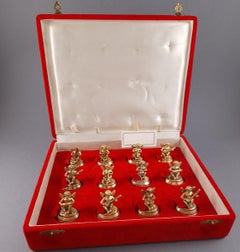
12 Sterling Silver Gilt Place Card Holders Mid-20th Century Sterling silver and Silversmith hallmark Italian work Dimensions: Height 1.22 inches Weight: 235 grams In great condition...

Category

1970s Italian Vintage Vermeil Sterling Silver

Materials

Sterling Silver

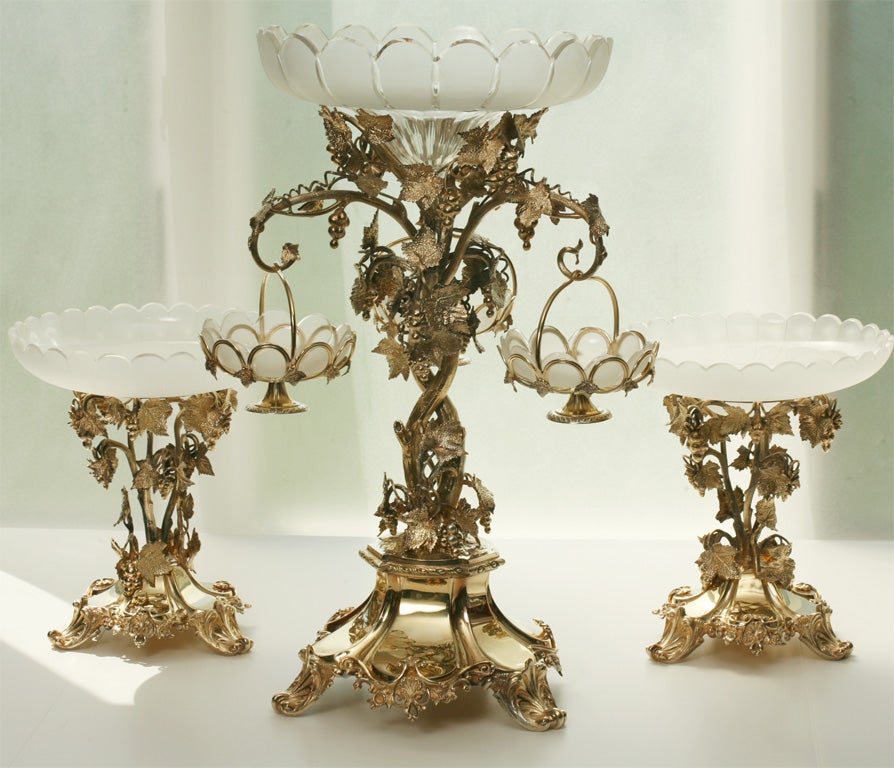
19th Century French Silver Plate Vermeil Three-Piece Centerpiece Set

19th Century French Silver Plate Vermeil Three-Piece Centerpiece Set

Located in Great Barrington, MA

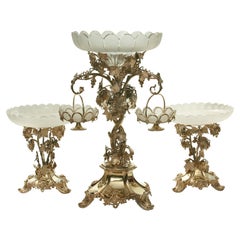
Magnificent three-piece French silver plate vermeil centerpiece/garniture with grapevine and leaf motif. Centerpiece features three detachable hanging baskets for flowers...

Category

Early 1900s French Antique Vermeil Sterling Silver

Lauzun by Puiforcat Sterling Silver Flatware Set French 77 Pcs with Fitted Box

Lauzun by Puiforcat Sterling Silver Flatware Set French 77 Pcs with Fitted Box

By Jean Puiforcat

Located in Big Bend, WI

Jean Elysée Puiforcat was a French silversmith, sculptor and designer. Puiforcat is is considered the "most important French Art Deco silversmith." These handcrafted utensils show...

Category

20th Century French Art Deco Vermeil Sterling Silver

Materials

Sterling Silver

Previously Available Items
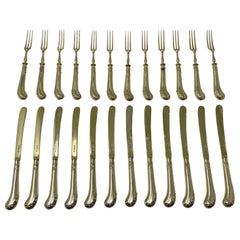
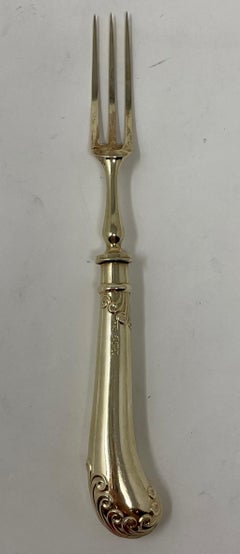
Hippolyte Thomas - 36pc French Vermeil 19th Century Dessert Flatware Set !

Hippolyte Thomas - 36pc French Vermeil 19th Century Dessert Flatware Set !

By French House & Garden

Located in Wilmington, DE

Direct from Paris, a magnificent 36pc antique French 19th century gold plated sterling silver (vermeil) dessert flatware set by internationally renowned French silversmith “Hippolyte...

Category

Mid-19th Century French Louis XVI Antique Vermeil Sterling Silver

Materials

Vermeil, Sterling Silver
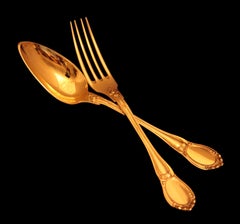
Tetard - 165pc. Antique French 950 Sterling Silver Louis XVI Flatware Set !

Tetard - 165pc. Antique French 950 Sterling Silver Louis XVI Flatware Set !

By Tetard Freres

Located in Wilmington, DE

Direct from Paris, an amazing 165pc., privately commissioned, sterling silver flatware set by one of France’s premier silversmiths “Tetard Freres”. Include a magnificent Louis XVI, 5-drawer lockable storage cabinet and 17 serving pieces and Mother-of-Pearl handles dessert knives. The history of French silversmithing is replete with illustrious names, each contributing to the nation's reputation for exceptional silver craftsmanship. Among them, the firm “Tetard Frères” stands as one of the most prominent and revered. Founded in the late 19th century, Tetard Frères has built a legacy on the strength of its unparalleled craftsmanship, exquisite design, and sterling silver products of the highest caliber. From royal patronage to numerous international awards and accolades, the firm has become synonymous with luxury, elegance, and durability. Their flatware sets, made of 950 sterling silver, like this amazing 165pc. set, are masterpieces that continue to captivate connoisseurs and collectors alike. The Tetard Frères firm was founded in Paris in 1880 by Edmond Tetard, a master silversmith whose eye for detail and passion for innovation laid the groundwork for the company’s subsequent rise to prominence. Edmond Tetard's background as a skilled craftsman informed every aspect of his work, and his commitment to quality soon attracted clients from the upper echelons of society. Tetard Frères were known for pushing the boundaries of traditional silversmithing. Their craftsmanship blended meticulous hand-engraving, chasing, and repoussé techniques with a modern aesthetic sensibility. The brothers perfected the art of creating seamless transitions between functionality and beauty, particularly in their silver flatware, tableware, and decorative pieces. Few silversmiths can boast the level of royal and aristocratic patronage that Tetard Frères enjoyed. Their reputation for exceptional craftsmanship earned them commissions from European royal courts, including the French aristocracy, making their works a staple at grand banquets, diplomatic functions, and royal households. The royal court of France was particularly fond of Tetard Frères' creations. Their silverware and table settings were often used in royal residences, including the Palais de l'Élysée, which served as the residence of the President of the French Republic. Additionally, Tetard Frères received commissions from international royalty, including the kings and queens of Belgium, Spain, and the Netherlands. Such patronage not only bolstered the firm's reputation but also further solidified its status as the premier silversmith of choice for the elite. Tetard Frères' pieces were often customized to meet the specific requirements of their royal clients. These bespoke commissions included personalized monograms, coats of arms, and other emblems of nobility. By working closely with their aristocratic patrons, Tetard Frères ensured that each piece reflected the tastes and desires of their distinguished clientele. This bespoke approach to silversmithing added another layer of exclusivity to their work, making each item not just a work of art but also a symbol of personal identity and status. Perhaps one of the most iconic commissions was the creation of a silver flatware sets for the French government to gift to foreign dignitaries. These sets, often bearing intricate engravings or repoussé work, were designed to showcase the best of French artistry while simultaneously serving a practical purpose. The silverware produced for these occasions represented more than just luxury—it was a diplomatic tool, symbolizing France’s grandeur and cultural heritage. Tetard Frères' exceptional work did not go unnoticed on the international stage. Throughout the late 19th and early 20th centuries, they participated in several international exhibitions, where their craftsmanship was celebrated and rewarded. The firm's pieces were often displayed in prominent venues such as the Exposition Universelle (World’s Fair) in Paris, where they received numerous accolades for innovation, artistry, and technical skill. At the 1900 Paris Exposition Universelle, Tetard Frères earned a gold medal for their outstanding work in silver. This recognition further solidified their place among the most prestigious silversmiths of the era. The firm's pieces on display included elaborate flatware sets, decorative vases, and intricate centerpieces, all of which showcased their ability to combine traditional French design with modern influences. Perhaps the most iconic and enduring product of Tetard Frères' silversmithing is their 950 sterling silver flatware sets. These sets, like this stunning 165pc. set, represent the pinnacle of luxury, combining the finest materials with expert craftsmanship to create objects of both beauty and functionality. Tetard Frères’ flatware...

Category

Late 19th Century French Louis XVI Antique Vermeil Sterling Silver

Materials

Vermeil, Sterling Silver
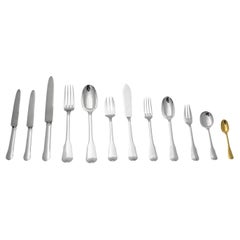
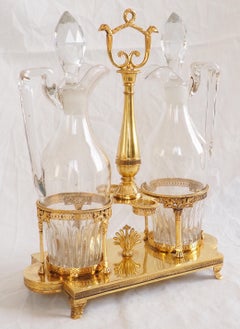
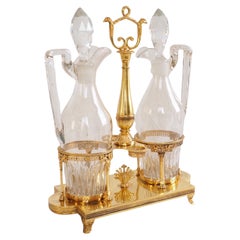
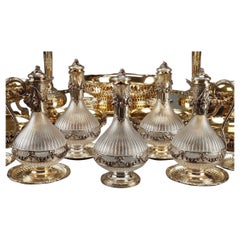
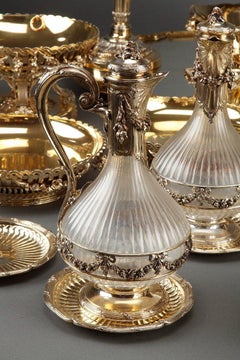
Vermeil (gilt sterling silver) oil and vinegar set - early 19th century - 1808

Vermeil (gilt sterling silver) oil and vinegar set - early 19th century - 1808

By Ambroise Mignerot

Located in GRENOBLE, FR

A fine vermeil (sterling silver covered with fine gold) oil and vinegar set, early 19th century Empire production in the style of famous silversmith Ambroise Mignerot work. Very refined model : rare griffin-heads-shaped handle ; the crystal bottle holders stand into a finely chiseled, pierced base held by Corinthian columns, a couple of griffins on top. The matte laurel frieze on the terrace makes a sophisticated finish. Proportions are perfect. The two bottles (Le Creusot cut crystal, circa 1810 - 1820) match the vermeil frame very well. French hallmark cockerel / rooster 1st standard from Paris : a .950 solid silver production (highest purity silver), dated between 1798 and 1809. Louis Germain...

Category

Early 1800s French Empire Antique Vermeil Sterling Silver

Materials

Vermeil, Sterling Silver

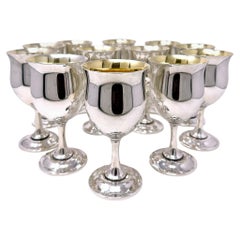
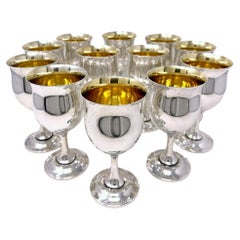
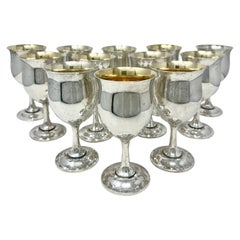
Set of 12 Estate American Reed & Barton Sterling Silver Wine Goblets, Circa 1930

Set of 12 Estate American Reed & Barton Sterling Silver Wine Goblets, Circa 1930

Located in New Orleans, LA

Set of 12 Estate American Sterling Silver Wine or Water Goblets With Vermeil Bowls Hallmarked "Reed & Barton," Circa 1930-1940.

Category

Early 20th Century American Vermeil Sterling Silver

Materials

Vermeil, Sterling Silver
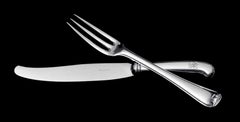
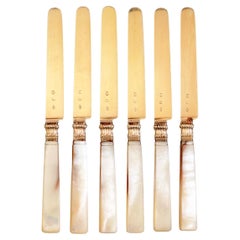
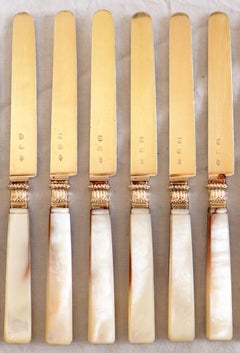
Set of 6 mother of pearl and vermeil fruit knives - France, early 19th century

Set of 6 mother of pearl and vermeil fruit knives - France, early 19th century

Located in GRENOBLE, FR

Beautiful set of 6 fruit knives / dessert knives, mother-of-pearl handle, vermeil blade and collar (sterling silver covered with fine gold). Early 19th century fine work, Restauratio...

Category

Early 19th Century French Restauration Antique Vermeil Sterling Silver
Materials

Vermeil

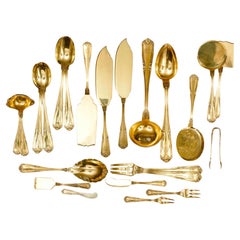
Goldsmith Boin Taburet - Set Of 19 Parts Decoration Of Table In Vermeil

Goldsmith Boin Taburet - Set Of 19 Parts Decoration Of Table In Vermeil

By Boin-Taburet

Located in SAINT-OUEN-SUR-SEINE, FR

This set consists of: • 1 large, mostly oval mirror-bottomed on an oak parquet floor surrounded by an ingot mold decorated with strong nets and staples, and placed on ball feet. Dimensions: 63cm x 85cm • 1 pair of display units mounted on a round base with four winding feet which support a round openwork cup decorated with garlands of flowers with its interior dish signed “BOIN TABURET à PARIS...

Category

Late 19th Century European Louis XVI Antique Vermeil Sterling Silver
Materials

Vermeil

Societe Parisienne d'Orfevrerie (Odiot) - 184pc. French Vermeil Flatware Set

Societe Parisienne d'Orfevrerie (Odiot) - 184pc. French Vermeil Flatware Set

By Societe Parisienne d'Orfevrerie

Located in Wilmington, DE

Direct from a Private Chateau, a Stunning 184pc. Gold Plated Sterling Silver (Vermeil) Flatware Set by Internationally Known French Silversmiths "Societe Parisienne d'Orfevrerie" Complete with Original 6-Drawer Storage Cabinet and 16 Magnificent Serving Pieces, Superb Condition - circa 1911.- NO MONOGRAMS. The Société Parisienne d'Orfèvrerie, a prominent French silversmith firm, has left an indelible mark on the world of decorative arts. Established in the heart of Paris during the 19th century, the firm quickly rose to prominence, becoming synonymous with exquisite craftsmanship, innovative design, and unparalleled quality in silverware. Founded in 1837 by master silversmith Jean-Baptiste-Claude Odiot, a visionary artisan with a passion for creating exceptional silver pieces; the firm's commitment to quality quickly attracted the attention of aristocrats, royalty, and the burgeoning bourgeoisie. Under the leadership of subsequent generations of the Odiot family, the firm continued to thrive, adapting to changing tastes and styles while maintaining its dedication to superior craftsmanship. Société Parisienne d'Orfèvrerie's list of accomplishments is as extensive as it is impressive. The firm's silverware adorned the tables of European royalty, including Napoleon III and Empress Eugénie, establishing its reputation as the preferred purveyor of luxury items. The intricate silver pieces produced by the firm were not merely functional objects but symbols of status, wealth, and refined taste. One of the firm's standout achievements was its participation in the Exposition Universelle of 1855 in Paris. The international exhibition provided a platform for Société Parisienne d'Orfèvrerie to showcase its finest creations to a global audience, earning accolades and further solidifying its status as a premier silversmith firm. The recognition of Société Parisienne d'Orfèvrerie's excellence extended beyond the acclaim of its clientele. The firm received numerous awards and honors for its contributions to the field of decorative arts. At the Exposition Universelle of 1867, Société Parisienne d'Orfèvrerie was awarded the prestigious Legion of Honor, a testament to its exceptional craftsmanship and artistic innovation. Subsequent international exhibitions, including the Exposition Universelle of 1878 and 1889, brought further accolades to the firm. The awards bestowed upon Société Parisienne d'Orfèvrerie underscored its global impact and the recognition of its silverware as exemplars of artistic and technical achievement. Each piece (except for the coffee spoons) in this amazing set bears the hallmark of Master French Silversmith "Societe Parisienne d'Orfevrerie" in addition to the French Government's "Head of the Minerva-1" hallmark. The coffee spoons bears the manufacturer's hallmark "SL" and are in gold plated 800 silver. The set is of exceptional quality and craftsmanship and includes the original custom made storage chest that measures 51 cm. in length, 43 cm. high and 37 cm. deep. All weights and measures below are approximate: 12 Dinner Knives - Stainless Blades 25.50 cm. 100 grams 12 Dinner Forks 21.30 cm. 82 grams 12 Tablespoons 21.50 cm. 86 grams 12 Luncheon Knives - Stainless Blades 21.50 cm. 65 grams 12 luncheon / Dessert Forks 18.50 cm. 52 grams 12 Luncheon / Dessert Spoons 18.30 cm. 52 grams 12 Fish Forks 18.30 cm. 56 grams 12 Fish Knives 22.00 cm. 64 grams 12 Dessert / Custard Spoons 18.50 cm. 57 grams 12 Oyster Forks 12.30 cm. 21 grams 12 Teaspoons 13.50 cm. 27 grams 12 Ice Cream Spoons 13.50 cm. 28 grams 12 Coffee Spoons (different pattern) 10.50 cm. 18 grams 12 Cake Forks 14.20 cm. 26 grams 1 Large Salad Serving Spoon 26.00 cm. 117 grams 1 Large Salad Serving Fork 26.00 cm. 115 grams 1 Serving Knife with Stainless Blade 20.50 cm. 76 grams 1 Cheese Serving Knife - Stainless Blade 25.00 cm. 99 grams 1 Gigot Holder 20.00 cm. 149 grams 1 Butter Serving Knife...
Category

Early 20th Century French Louis XV Vermeil Sterling Silver
Materials

Gold Plate, Sterling Silver, Vermeil

Puiforcat (Hermes) - 246pc 950 Sterling Silver & Vermeil Flatware Set + Chest !
Puiforcat (Hermes) - 246pc 950 Sterling Silver & Vermeil Flatware Set + Chest !
By Emile Puiforcat

Located in Wilmington, DE

The worlds of luxury and craftsmanship often intersect in fascinating ways, exemplifying the pursuit of perfection through design and skill. Two iconic brands that embody this union of artistry and elegance are Puiforcat, the French silversmith, and Hermès, the esteemed fashion house. Despite their distinct histories and expertise, both brands share a common thread of dedication to craftsmanship, quality, and timeless design. The House of Puiforcat (now owned by Hermes) was founded in 1820 by Emile Puiforcat, a visionary silversmith who sought to redefine traditional craftsmanship with a modern perspective. The brand quickly gained recognition for its commitment to exceptional quality and its avant-garde designs that pushed the boundaries of silversmithing. In its early years, Puiforcat became a favored choice for French aristocracy and European nobility, solidifying its reputation as a leading silverware manufacturer. Hermès, a name synonymous with luxury, began its journey in 1837 as a harness workshop in Paris. Founded by Thierry Hermès, the brand initially focused on crafting high-quality leather goods, primarily for horse riders. Over the years, Hermès expanded its offerings and ventured into the world of luxury fashion, establishing itself as one of the most prestigious names in the industry. What sets Hermès apart is its unwavering commitment to craftsmanship and its dedication to the creation of enduring, exquisite pieces. The relationship between Puiforcat (Hermès) and its artisans is a testament to the brand's commitment to excellence. While Puiforcat and Hermès operate in distinct domains—silversmithing and fashion—both brands share a deep-rooted commitment to traditional craftsmanship and quality. This commitment extends not only to the materials used but also to the expertise of the artisans who transform these materials into exceptional creations. The stories of Puiforcat and Hermès, though distinct in their origins and crafts, converge in their shared commitment to craftsmanship, tradition, and timeless design. The legacies of these two iconic brands are not just tales of luxury but narratives of artistry, dedication, and a pursuit of perfection. Puiforcat's innovative silversmithing and Hermès's enduring leather craftsmanship stand as beacons of excellence in their respective fields. Together, they remind us that true luxury is not just about wealth or opulence but is a manifestation of the enduring connection between art and craftsmanship. Puiforcat and Hermès have...

Category

Late 19th Century French Louis XVI Antique Vermeil Sterling Silver
Materials

Vermeil, Sterling Silver