IKEA is the world's largest furniture retailer, but its origins were far humbler than its global footprint suggests. Founded in 1943 by 17-year-old Ingvar Kamprad in the Swedish village of Älmhult, the company began as a mail-order business selling pens, wallets and picture frames. It wasn't until 1948 that the IKEA catalog started featuring furniture, altering the course of modern domestic design.
IKEA is rooted in democratic design, or the belief that well-made, beautiful objects should be accessible to everyone. This philosophy took shape in the 1950s when IKEA began working with independent designers to develop its own furniture lines. The pivotal innovation came in 1956, when IKEA introduced flat-pack furniture, a practical solution born out of necessity when designer Gillis Lundgren removed a table's legs to fit it into a car. This single insight reshaped how the world thinks about manufacturing, shipping and the relationship between consumer and object.
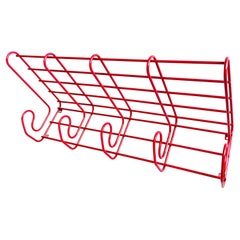
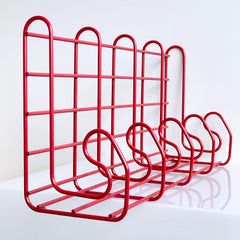
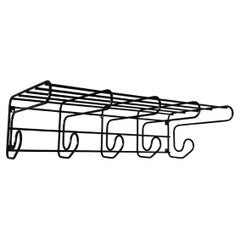
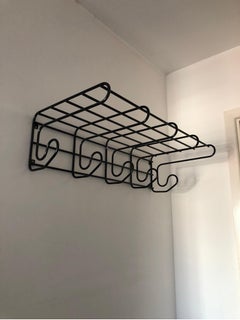
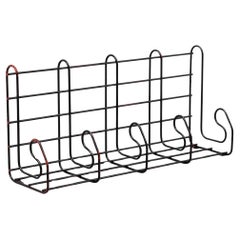
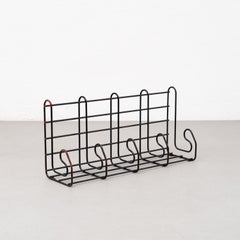
The 1970s and 1980s are now widely considered the golden age of IKEA design, a period when the company regularly collaborated with outside designers before transitioning to entirely in-house production. These decades produced some of the brand's most collectible pieces, and vintage examples are today actively sought after by collectors worldwide. Karen Mobring's safari-influenced seating — including the Diana, Natura and Amiral chairs — captures the organic, relaxed spirit of the era, while Noboru Nakamura's Bore chair and Lundgren's Pixi lounge chair round out the most coveted 1970s offerings. The 1980s brought a sharper, more industrial sensibility through Niels Gammelgaard's work in wire and tubular steel, among them the Enetri shelf, the wire Jarpen chairs and the foldable Ted chair, as well as Tord Björklund's Skye chaise and Klinte armchair.
Beyond these core collaborators, IKEA has worked with some of the most significant names in 20th-century design. Kai Kristiansen, Ettore Sottsass, Verner Panton and Mats Theselius all produced pieces for the brand, and rare examples of their IKEA work are among the most prized finds for collectors today. More recently, collaborations with designers such as Ilse Crawford, Tom Dixon and Hella Jongerius through its IKEA PS (“post scriptum”) collections have continued to push the brand into more expressive territory.
IKEA has also shaped retail culture itself. Its sprawling, maze-like store format — introduced in Älmhult in 1958 — transformed shopping into an experience, complete with room vignettes, a Swedish café and a one-way path designed to inspire. The brand has since expanded to more than 60 countries, while its annual catalog, once one of the most widely distributed publications in the world, became a cultural artifact in its own right.
IKEA continues to balance its founding tension: mass production in the service of good design. As Kamprad once put it, "to design a desk which may cost $1,000 is easy for a furniture designer, but to design a functional and good desk which shall cost $50 can only be done by the very best."
Find a range of vintage and collectible IKEA chairs, shelving and furniture on 1stDibs.
Your guests might have to endure all kinds of harsh climes to get to your housewarming party, so let’s make sure their trusty overcoats and umbrellas have a home. Shop the antique and vintage coat racks and stands on 1stDibs today.
Coat racks, umbrella stands, wall-mounted hooks for outerwear — they’ve long served a practical purpose. In the days of travel by horse or foot, a guest might arrive on your doorstep bedraggled, windblown and often dripping with rain. While transportation has thankfully improved since then, a coat rack in the entryway or foyer of your home is still the beacon it was back then: It says, “Come in, where it’s dry and warm. Hang up your coat and stay a while.”
Coat stands are among history’s fairly rudimentary ideas, so it’s difficult to point to the original inventor of this eternally functional fixture, but Thomas Jefferson was said to have fashioned one of his own at Monticello. Jefferson, who would’ve made a great interior designer, placed a long wooden pole in his closet that was adorned with spokes from which his coats and other garments could be hung. The simplicity of Jefferson’s coat-tree is echoed in designs from the 18th and 19th centuries.
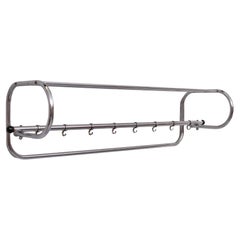
The timeless convenience of a wooden coat rack has endured. While there are striking Art Deco coat stands made of oak and walnut that would meet your mudroom needs well, some of the product designers behind what we now call mid-century modern coat stands turned to materials other than wood, working frequently with plastic and chrome to create unconventional alternatives. Simpler and pared-down coat stands of the mid-20th century were occasionally so interesting in form that they could pass as minimalist sculptures when not in use. Some designers, such as Jacques Adnet, helped to redefine what these classic furnishings could look like, integrating saddle leather and brass and sometimes even horseshoes for his wall hooks and racks.
Although a coat rack is undoubtedly a practical investment, we know that fun comes along with functionality. There is plenty to explore in the collection of antique, vintage and contemporary coat racks and stands on 1stDibs, so go ahead — hang up your coat and stay a while.