Kishi Renzan

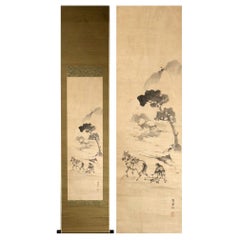
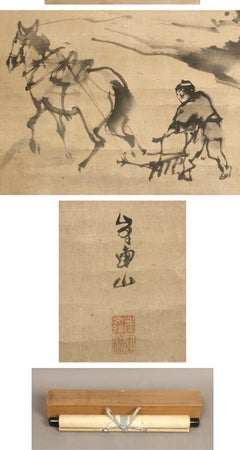
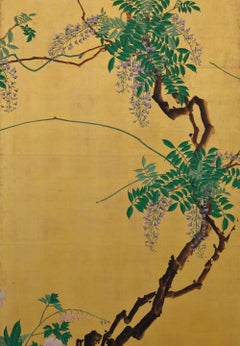
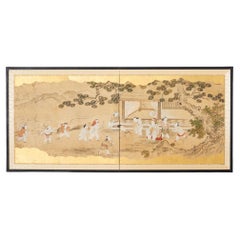
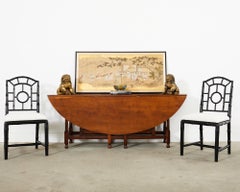
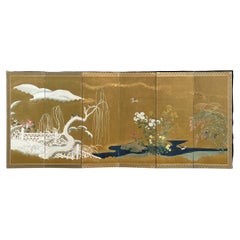
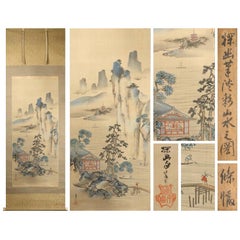
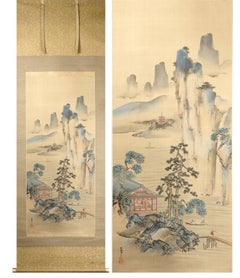
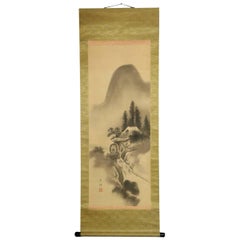
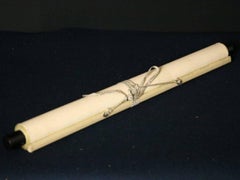
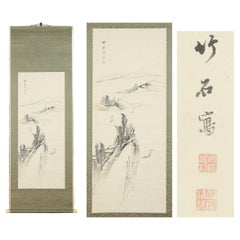
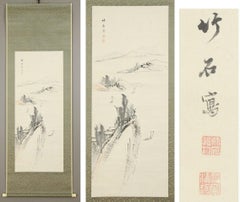
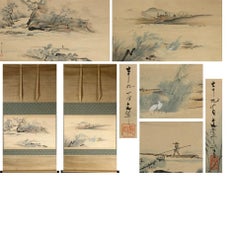
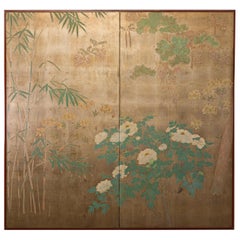
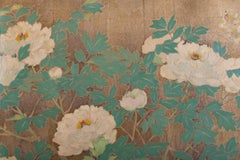
Farming Rice Fields Scene Meiji Period Scroll Japan 19c Artist Marked

Farming Rice Fields Scene Meiji Period Scroll Japan 19c Artist Marked

Located in Amsterdam, Noord Holland

The simple country side life is the ideal of the Oriental scholar. As you can see, the Kishi Renzan agricultural rice field working painting / box is included.

Category

Antique Mid-19th Century Japanese Meiji Paintings and Screens

Materials

Silk

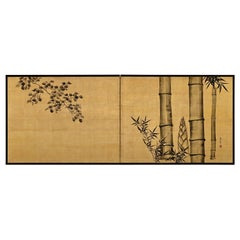
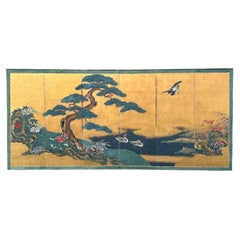
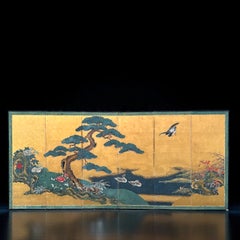
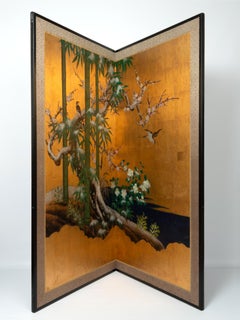
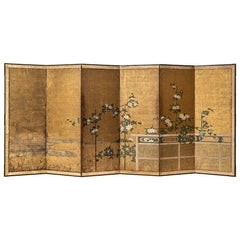
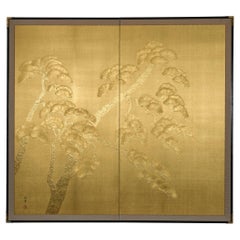
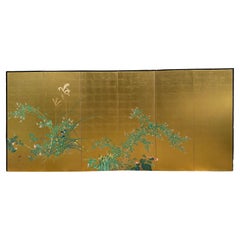
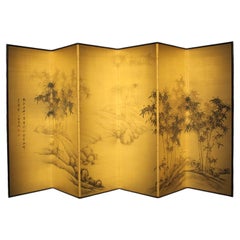
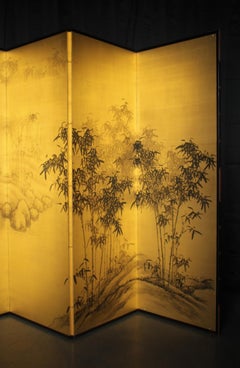
19th Century Japanese Screen for Tea-Ceremony, Ink Bamboo and Plum on Gold Leaf

19th Century Japanese Screen for Tea-Ceremony, Ink Bamboo and Plum on Gold Leaf

Located in Kyoto, JP

He was the highest ranking Maruyama school painter at the end of the Edo period and was known as one of the ‘Four Heian Families’ along with Kishi Renzan of the Kishi school and Shio...

Category

Antique Mid-19th Century Japanese Edo Paintings and Screens

Materials

Gold Leaf

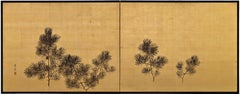
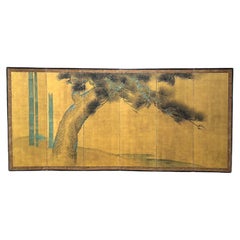
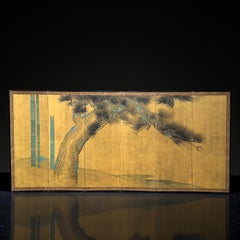
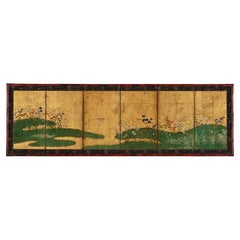
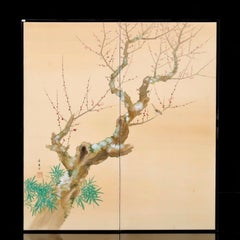
Japanese Screen. 19th Century. Reflections of the Moon.

Japanese Screen. 19th Century. Reflections of the Moon.

Located in Kyoto, JP

Together with Nakajima Raishō, Kishi Renzan, and Shiokawa Bunrin, he was celebrated as one of the "Four Great Heian Painters" of the period.

Category

Antique Mid-19th Century Japanese Edo Paintings and Screens

Materials

Wood, Paper

Recent Sales

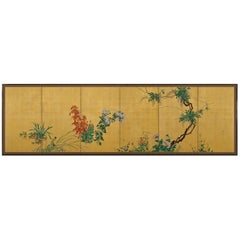
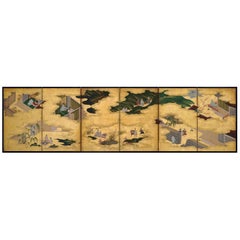
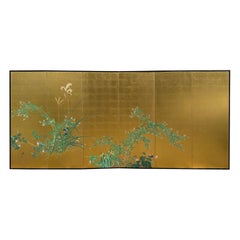
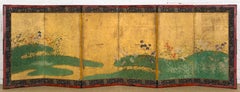
Kishi Ganryo “Flowers of the Four Seasons” Japanese Folding Screen

Kishi Ganryo “Flowers of the Four Seasons” Japanese Folding Screen

By Kishi Ganryo

Located in Kyoto, JP

Another well-known artist of the school, Kishi Renzan, married Sada’s daughter from an earlier marriage.

Category

Antique 1840s Japanese Edo Paintings and Screens

Materials

Gold Leaf

People Also Browsed

Asian Folding Hand Woven Screen of Cranes

Asian Folding Hand Woven Screen of Cranes

$2,250

H 60 in W 51 in D 0.75 in

Asian Folding Hand Woven Screen of Cranes

Located in Denton, TX

Asian Folding Hand Woven 2 Panel Screen of Cranes.
Category

Mid-20th Century Japanese Anglo-Japanese Tapestries

Materials

Thread

Vintage Japanese Byobu Four Panel Red Floral Gold Screen

Vintage Japanese Byobu Four Panel Red Floral Gold Screen

Located in Locust Valley, NY

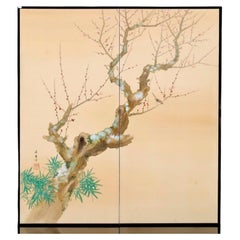
A vintage Japanese folding four panel screen showcases a serene hand-painted landscape set against a warm, gilded ground. Spanning multiple panels, the composition features gracefull...
Category

20th Century Japanese Japonisme Paintings and Screens

Materials

Silk, Paint, Paper

Japanese Silver Screen Pair, Meiji Period, Herons & Plovers, Shijo School

Japanese Silver Screen Pair, Meiji Period, Herons & Plovers, Shijo School

Located in Kyoto, JP

Heron & Plovers Ink and silver leaf on paper Maekawa Bunrei (1837-1917) A pair of low six-panel Japanese screens by Maekawa Bunrei, a later master of the Kyoto based Shijo school ...

Category

Antique Early 1900s Japanese Meiji Paintings and Screens

Materials

Silver Leaf

Japanese Single Panel Painting Moon and Plum Design 'Winter Scene'

Japanese Single Panel Painting Moon and Plum Design 'Winter Scene'

Located in Hudson, NY

Meiji period (1868-1912) ink painting of plum branches in bloom against a full moon with calligraphy. The calligraphy is a poem about winter. Signature reads: Matsuura Ryosai, Dated:...

Category

Antique Late 19th Century Japanese Meiji Paintings and Screens

Materials

Paper

Japanese Painting. Bird and Flower. 19th century copy of Lu Ji by Ogata Tomin.

Japanese Painting. Bird and Flower. 19th century copy of Lu Ji by Ogata Tomin.

Located in Kyoto, JP

Ogata Tomin (1839 -1895) Birds in a spring landscape Ink and colour on silk. Inscription reads: “Copy of Lu Ji, painted with heartfelt appreciation” “Painted by Tomin Ogat...

Category

Antique Late 19th Century Japanese Ming Paintings and Screens

Materials

Silk

Japanese Two Panel Screen: Ikebana 'Flower Arrangement'

Japanese Two Panel Screen: Ikebana 'Flower Arrangement'

Located in Hudson, NY

Mineral pigment on gold silk. Signature reads: Nana Keicho Ho, Shinsho, Gachu ; Seal reads: Soju ; Seal on reverse reads: Koto Fusai.

Category

Antique Late 19th Century Japanese Paintings and Screens

Materials

Silk

Japanese Two-Panel Screen Peony, Wisteria, Cherry and Bamboo on Soft Silver

Japanese Two-Panel Screen Peony, Wisteria, Cherry and Bamboo on Soft Silver

Located in Hudson, NY

Japanese two-panel screen: Peony, Wisteria, cherry and bamboo on soft silver, Meiji period (1868-1912) painting of a garden in spring. Painted in mineral pigments on oxidized silver ...

Category

Antique Early 1900s Japanese Meiji Paintings and Screens

Materials

Silver Leaf

Japanese Framed Silk Painting, Turtledoves and Peaches, Taisho Era, circa 1920

Japanese Framed Silk Painting, Turtledoves and Peaches, Taisho Era, circa 1920

Located in Kyoto, JP

Nakamura Daizaburo Turtledoves in a Peach Tree Taisho period, circa 1920 Framed painting. Mineral pigments, ink and gofun on silk Signed: Daizaburo Dimensions (framed)...

Category

Vintage 1910s Japanese Taisho Paintings and Screens

Materials

Wood, Silk

Late 19th Century Canopy Bed from Shanxi, China

Late 19th Century Canopy Bed from Shanxi, China

$25,000

H 94.49 in W 96.46 in D 75.2 in

Late 19th Century Canopy Bed from Shanxi, China

Located in Singapore, SG

An antique canopy bed from Shanxi province made of Elm wood. This bed has all the attention focused on the front carvings while keeping a very simple and clean overall look. There is...

Category

Antique Late 19th Century Chinese Qing Furniture

Materials

Rattan, Elm

Japanese Two-Panel Screen, Mother and Kitten with Chrysanthemums

Japanese Two-Panel Screen, Mother and Kitten with Chrysanthemums

Located in Hudson, NY

Delicate painting of garden chrysanthemums with a fine gold mist. A cat grooms herself while a kitten plays with a chrysanthemum. Mineral pigments, go fun, and gold dust on mulberry ...

Category

Antique Mid-19th Century Japanese Paintings and Screens

Materials

Gold

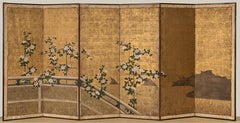
Paravent japonais- A pair of six-fold Japanese screens with clematis- Edo period

Paravent japonais- A pair of six-fold Japanese screens with clematis- Edo period

Located in Brussels, BE

A pair of six-fold Japanese screens depicting white and bluish-purple clematis on trellises behind woven fences and beside a stream, against an abundance of golden clouds. Ink, colo...

Category

Antique 17th Century Japanese Edo Paintings and Screens

Materials

Gold Leaf

Japanese Six Panel Screen, Young Pine and Bell Flowers

Japanese Six Panel Screen, Young Pine and Bell Flowers

Located in Hudson, NY

Signature reads: Kanshin. Mineral pigments painted on gold dusted mulberry paper with a silk brocade border.  

Category

Antique Late 19th Century Japanese Paintings and Screens

Materials

Gold

Pair of Japanese Taisho Period Screens Paragons of Filial Piety

Pair of Japanese Taisho Period Screens Paragons of Filial Piety

Located in Rio Vista, CA

Impressive pair of Japanese screens from the Taisho period meiji. Each six-panel screen depicts an image from the 24 paragons of filial piety Confucian stories written by Guo Jujing ...

Category

20th Century Japanese Taisho Paintings and Screens

Materials

Brass, Gold Leaf

Large Antique Japanese Scroll Depicting a Nesting Crane, Taisho Period

Large Antique Japanese Scroll Depicting a Nesting Crane, Taisho Period

Located in Prahran, Victoria

Large and exceptional Japanese hanging scroll with a realistically painted depiction of a nesting crane by Yoshifuji Yoshio, Taisho/Showa period, early 20th century. Materials: In...

Category

Early 20th Century Japanese Taisho Paintings and Screens

Materials

Paper, Silk

Japanese Two Panel Screen, Ink Landscape on Paper with Gold Dust

Japanese Two Panel Screen, Ink Landscape on Paper with Gold Dust

Located in Hudson, NY

Sesshu-style painting in ink on mulberry paper with gold dust accents and a silk brocade border.

Category

Antique 19th Century Japanese Paintings and Screens

Materials

Gold

Japanese Two Panel Screen: Bamboo Grove on Mulberry Paper with Gold Dust

Japanese Two Panel Screen: Bamboo Grove on Mulberry Paper with Gold Dust

Located in Hudson, NY

Kano School painting of a bamboo grove with blooming flowers and gold dust mists. Painted in mineral pigments on mulberry paper with gold dust and a silk brocade border.

Category

Antique Early 19th Century Japanese Paintings and Screens

Materials

Gold

Get Updated with New Arrivals
Save "Kishi Renzan", and we’ll notify you when there are new listings in this category.

Finding the Right Paintings-screens for You

Traditional Asian paintings were often created on scrolls and folding screens. Artisans made screens that could be folded up or spread out by connecting several panels using hinges. Today, antique Asian folding screens and paintings are sophisticated decorative accents that can serve as makeshift partitions to ensure privacy.

The original folding screens were created by Chinese artists. The earliest record of screens comes from the 2nd century B.C., and surviving examples date back to the Ming dynasty. Chinese painting utilizes many of the same tools as calligraphy — these screens were crafted from wood with painted panels featuring striking art or calligraphy that told cultural stories or represented nature and life in the area.

The practice was introduced to Japan, where paintings for screens were made on paper and silk, in the 8th century. These paintings frequently feature subjects such as landscapes, animals, flowers and Buddhist religious themes. Along with screens for tea ceremonies and dance backgrounds, there were screens for use in Shinto and Buddhist temples.

In the 17th century, screens began to be imported to Europe where their popularity grew. Coco Chanel famously collected Coromandel folding screens.

Traditional Asian paintings can make a tasteful addition to any wall, and screens can be used as decoration or, in the case of larger iterations, as an aesthetic way to divide a large room. Browse the selection of antique Asian paintings and screens from a variety of styles and eras on 1stDibs.