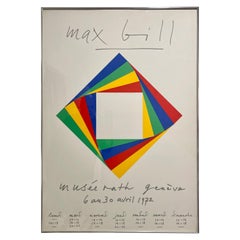
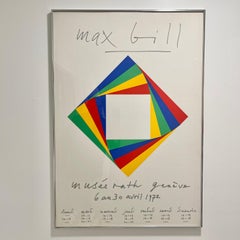
Max Bill Geneve Musee Serigraph, 1972
By Max Bill
Located in Hanover, MA
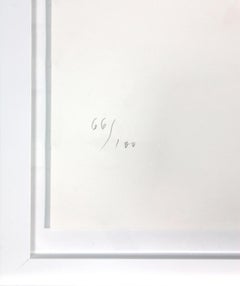
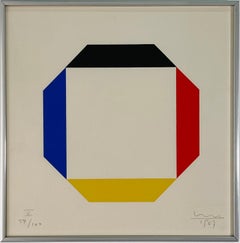
Max Bill (1908-1994) Geneva Museum exhibition serigraph, created to accompany the exhibition of
Category
Vintage 1970s French Mid-Century Modern Posters
Materials
Aluminum
Max Bill Geneve Musee Serigraph, 1972
By Max Bill
Located in Hanover, MA
Max Bill (1908-1994) Geneva Museum exhibition serigraph, created to accompany the exhibition of
Aluminum

$3,000
H 33.25 in W 26.25 in D 2.25 in
"Untitled" serigraph and collage by Max Bill from the "Kinderstern" portfolio
By Max Bill
Located in Boca Raton, FL
"Untitled" geometric abstract multi-color serigraph and collage by artist Max Bill from the
Screen
Unavailable
H 16 in W 15.98 in D 1 in
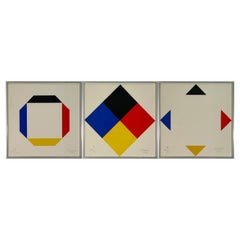
Set 3 Silkscreens, from "7 Scurious"Portfolio, Signed Max Bill, number
Located in Hollywood, FL
Set of 3 Serigraphs by Max Bill. Bill is widely considered the single most decisive influence on
Paper
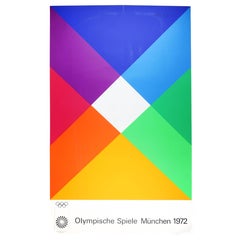
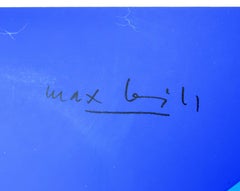
Max Bill Olympics Munich 1972 Serigraph
By Max Bill
Located in Brooklyn, NY
Serigraph by Swiss architect, artist, and graphic designer Max Bill to commemorate the 1972
Sold
H 35.5 in W 26 in
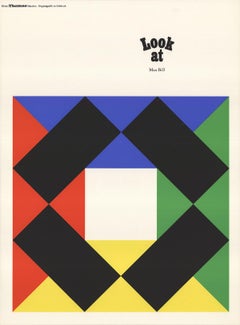
Max Bill-Edition Thomas Munchen-35.5" x 26"-Serigraph-1968-Minimalism-Multicolor
By Max Bill
Located in Brooklyn, NY
Max Bill-Edition Thomas Munchen-35.5" x 26"-Serigraph-1968-Minimalism-Multicolor
Screen
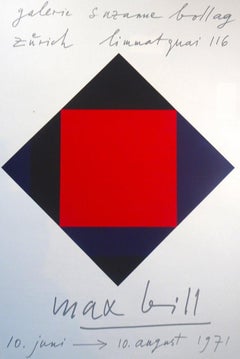

Two pieces of Max Bill - Serigraph - Contemporary
By Max Bill
Located in Roma, IT
Konvolut is an original serigraph poster by Max Bill. Not signed and not numbered. Neue Werke
Screen

Sold
H 26.11 in W 20.08 in D 0.04 in
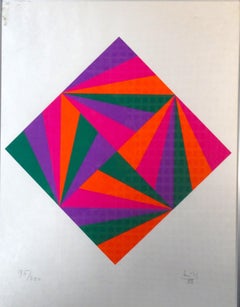
Untitled - Color Diamond - Max Bill - Serigraph - Contemporary
By Max Bill
Located in Roma, IT
Untitled - Color Diamond is a wonderful serigraph on Japon paper, made by Max Bill. It includes an
Screen
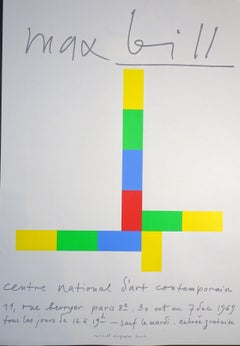

Max Bill Exhibition - 1960s - Serigraph - Contemporary
By Max Bill
Located in Roma, IT
Vintage serigraphed poster by Max Bill of the exhibition that took place at the Center d'art
Screen
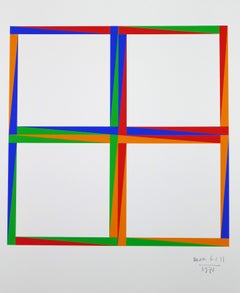

o.T. - Original Screen Print by Max Bill - 1971
By Max Bill
Located in Roma, IT
o.T is an original geometric composition realized by Max Bill in 1971. Color serigraph. Signature
Screen
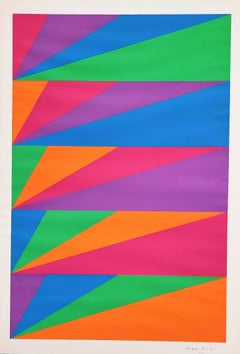

Untitled (Geometric Abstraction, Minimalism)
By Max Bill
Located in Kansas City, MO
Max Bill Untitled Color Serigraph Year: 1977 Size: 21 x 14 in Edition: 1,500 Signed in the plate
Screen
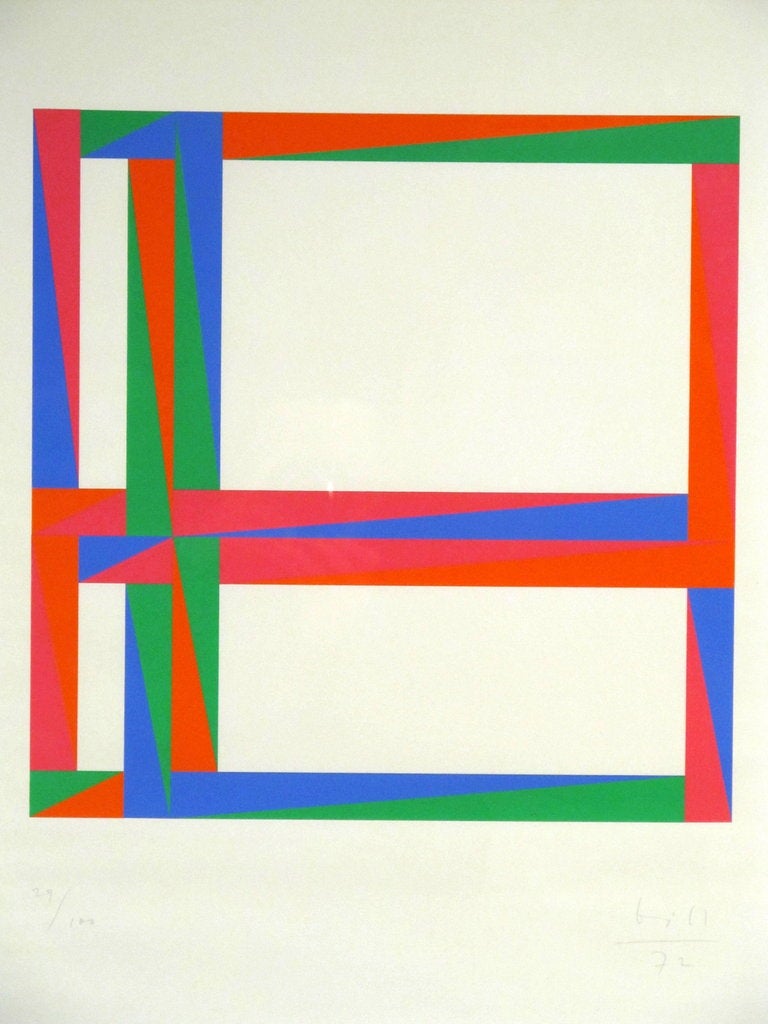
Max Bill Pencil Signed and Numbered Serigraph 1972
By Max Bill
Located in Papaikou, HI
Signed and numbered 29/100 screenprint by Swiss architect, designer and artist Max Bill (1908
Metal
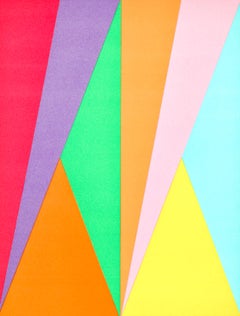
$956Sale Price|20% Off
H 14 in W 10.5 in
Max Bill, Prism, from San Lazzaro et ses Amis, 1975
By Max Bill
Located in Southampton, NY
This exquisite lithograph by Max Bill (1908–1994), titled Prisma (Prism), from the album San Lazzaro et ses Amis, Hommage au fondateur de la revue XXe siecle (San Lazzaro and His Fri...
Lithograph
Max Bill was born in Winterthur, Switzerland. After an apprenticeship as a silversmith during 1924–27, he took up studies at the Bauhaus in Dessau under many teachers including Wassily Kandinsky, Paul Klee and Oskar Schlemmer from 1927 to 1929, after which he moved to Zurich.
After working on graphic designs for the few modern buildings being constructed, Bill built his first work, his own house and studio (1932–3) in Zurich-Höngg. From 1937 onward he was a prime mover behind the Allianz group of Swiss artists.
Bill is widely considered the single most decisive influence on Swiss graphic design beginning in the 1950s with his theoretical writing and progressive work. His connection to the days of modernism gave him special authority. As an industrial designer, his work is characterized by a clarity of design and precise proportions. Examples are the elegant clocks and watches designed for Junghans, a long-term client. Among Bill's most notable product designs is the Ulmer Hocker of 1954, a stool that can also be used as a shelf element, a speaker's desk, a tablet or a side table. Although the stool was a creation of both Bill's and Ulm School designer Hans Gugelot's, it is often called "Bill Hocker" because the first sketch of it on a cocktail napkin was Bill's work.
As a designer and artist, Bill sought to create forms which visually represent the New Physics of the early 20th century. He sought to create objects so that the new science of form could be understood by the senses: that is as a concrete art. Thus Bill is not a rationalist – as is typically thought – but rather a phenomenologist. He made spare geometric paintings, prints and spherical sculptures, some based on the Möbius strip, in stone, wood, metal and plaster. His architectural work included an office building in Germany, a radio studio in Zurich, and a bridge in eastern Switzerland.
Bill continued to produce architectural designs, such as those for a museum of contemporary art (1981) in Florence and for the Bauhaus Archive (1987) in Berlin. In 1982 he also entered a competition for an addition to the Neue Nationalgalerie in Berlin, built to a design by Ludwig Mies van der Rohe. Pavillon-Skulptur, a large granite sculpture, was installed adjacent to the Bahnhofstrasse, Zürich in 1983. As is often the case with modern art in public places, the installation generated some controversy. Endlose Treppe, a sculpture made of North American granite, was designed for the philosopher Ernst Bloch.
In 1982 he was awarded the Sir Misha Black award and was added to the College of Medallists.
Bill executed many public sculptures in Europe and exhibited extensively in galleries and museums, including a retrospective at the Kunsthaus Zürich in 1968–69. He was the subject of retrospectives at the Albright-Knox Art Gallery in Buffalo and the Los Angeles County Museum of Art in 1974, and the Solomon R. Guggenheim Museum in New York City in 1988.
Find vintage Max Bill stools, lighting, and other furniture on 1stDibs.