J Polk For Sale on 1stDibs
Find the exact j polk you’re shopping for in the variety available on 1stDibs. There are many
Abstract,
Post-War and
Modern versions of these works for sale. Making the right choice when shopping for a j polk may mean carefully reviewing examples of this item dating from different eras — you can find an early iteration of this piece from the 19th Century and a newer version made as recently as the 21st Century. On 1stDibs, the right j polk is waiting for you and the choices span a range of colors that includes
black,
gray,
blue and
green. There have been many interesting j polk examples over the years, but those made by
Leon Polk Smith and
Eloise Polk McGill are often thought to be among the most thought-provoking. These artworks were handmade with extraordinary care, with artists most often working in
screen print,
lithograph and
paper.
How Much is a J Polk?
The price for an artwork of this kind can differ depending upon size, time period and other attributes — a j polk in our inventory may begin at $207 and can go as high as $12,000, while the average can fetch as much as $7,167.
Leon Polk Smith for sale on 1stDibs
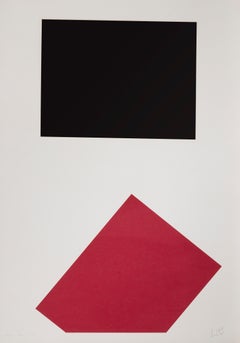
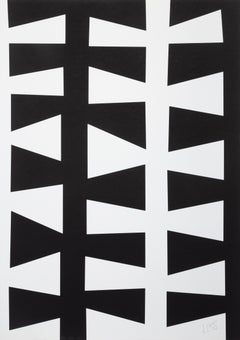
Leon Polk Smith (1906 -1996) holds a unique place in a long tradition of American geometric abstract painting, which includes such artists as Bourgoyne Diller, Fritz Glarner, Al Held, and Ellsworth Kelly. Born near Chikasha, a Native American territory later annexed by the U.S. as the state of Oklahoma, Smith’s parents, who were of Cherokee ancestry, raised him with both a strong sense of his heritage and an abiding respect for the land. Art would eventually draw Smith to New York where he would quickly embrace elements of geometric abstraction in his work. His visual vocabulary was influenced by such historical figures as Hilla Rebay, both an abstract painter and the first director of the Solomon R. Guggenheim Museum, and the Dutch De Stijl painter Piet Mondrian. However, many of Smith’s hard-edge compositions could be viewed as distillations of imagery drawn from the Oklahoma landscape and Native American art forms of his youth. Polk Smith’s exploration of non-objective imagery in the late 1950s put him at the forefront of movements including Color Field, Minimalist, and Hard Edge painting. Robert Buck, former director of the Brooklyn Museum, described Polk Smith as “an influential pioneer in the development of American Modernism”, adding, “He created a new vocabulary in painting that has had a far-reaching influence on subsequent generations of artists.”
One of Smith’s earliest and most successful forays into printmaking came in 1968 when he received a grant to work at June Wayne’s Tamarind Lithography Workshop in Los Angeles. Smith would create sixteen untitled prints at Tamarind. These bold and vibrant prints incorporate a variety of his painting motifs, many of which relate to his Correspondence Series of 1960-1967, with their interplay of organic forms on solid color backgrounds. Prints would continue to be an important aspect of Smith’s creative output. The artist would go on to make over 50 print editions in this country and Europe.
Finding the Right Abstract-prints-works-on-paper for You
Explore a vast range of abstract prints on 1stDibs to find a piece to enhance your existing collection or transform a space.
Unlike figurative paintings and other figurative art, which focuses on realism and representational perspectives, abstract art concentrates on visual interpretation. An artist may use a single color or simple geometric forms to create a world of depth. Printmaking has a rich history of abstraction. Through materials like stone, metal, wood and wax, an image can be transferred from one surface to another.
During the 19th century, iconic artists, including Edvard Munch, Paul Cézanne, Georgiana Houghton and others, began exploring works based on shapes and colors. This was a departure from the academic conventions of European painting and would influence the rise of 20th-century abstraction and its pioneers, like Pablo Picasso and Piet Mondrian.
Some leaders of European abstraction, including Franz Kline, were influenced by the gestural shapes of East Asian calligraphy. Calligraphy interprets poetry, songs, symbols or other means of storytelling into art, from works on paper in Japan to elements of Islamic architecture.
Bold, daring and expressive, abstract art is constantly evolving and dazzling viewers. And entire genres have blossomed from it, such as Color Field painting and Minimalism.
The collection of abstract art prints on 1stDibs includes etchings, lithographs, screen-prints and other works, and you can find prints by artists such as Joan Miró, Alexander Calder and more.