By Brice Marden
Located in New York, NY
Brice Marden
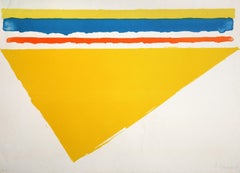
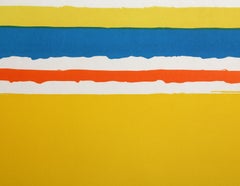
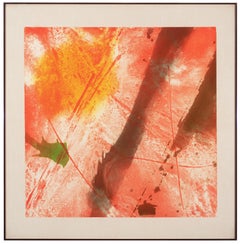
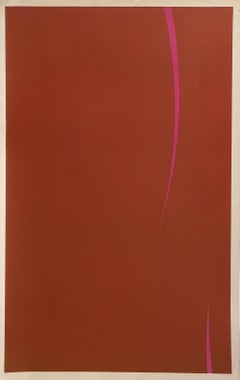
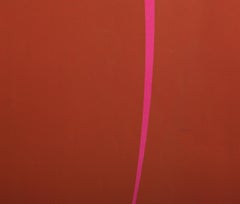
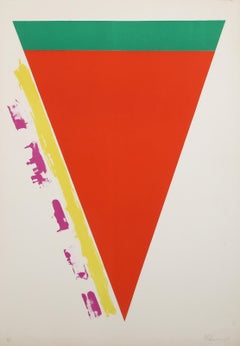
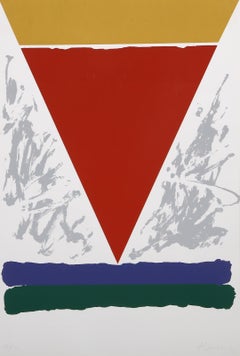
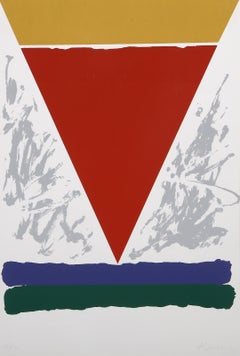
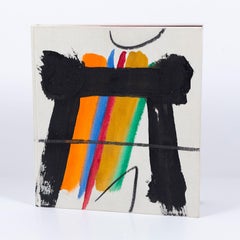
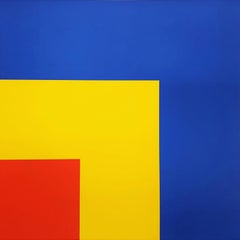
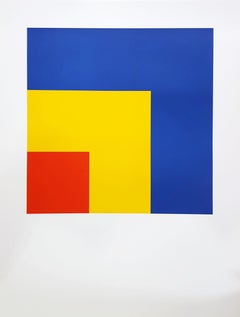
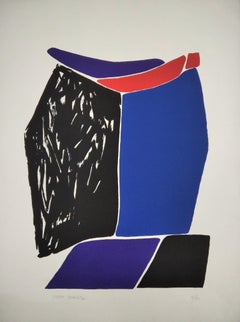
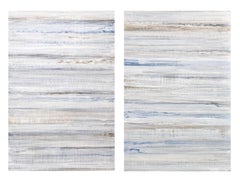
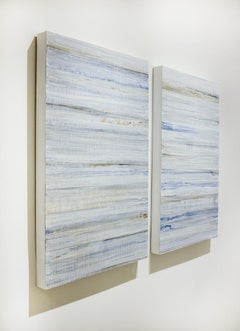
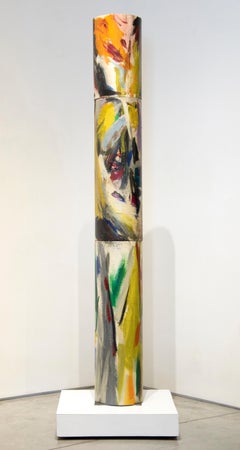
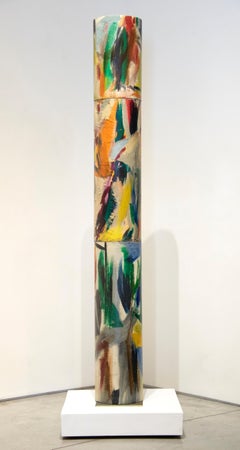
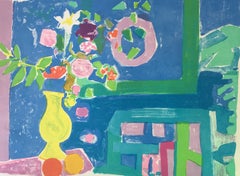
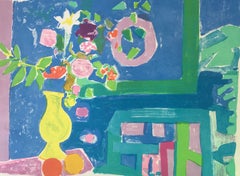
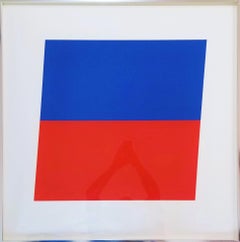
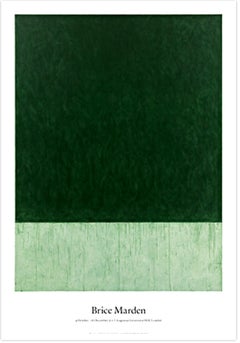
Elevation print (Hand Signed by Brice Marden), 2019
Offset lithograph. Hand Signed by Brice Marden
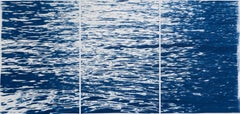
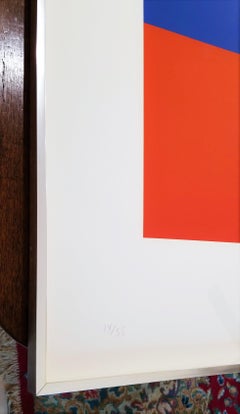
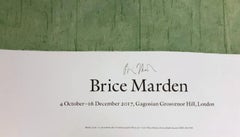
Boldly signed in black marker by Brice Marden on the front
24 × 34 3/4 inches
Provenance:
Acquired from Gagosian gallery
Publisher:
Gagosian Gallery, NY
Unframed
Produced in 2019 on the occasion of the exhibition "Brice Marden: It reminds me of something, and I don’t know what it is." at Gagosian. This signed example was acquired directly from Gagosian gallery before they sold out.
About Brice Marden:
Ultimately I’m using the painting as a sounding board for the spirit. . . . You can be painting and go into a place where thought stops—where you can just be and it just comes out. . . . I present it as an open situation rather than a closed situation.
—Brice Marden
Brice Marden (1938–2023) continuously refined and extended the traditions of lyrical abstraction. Experimenting with self-imposed rules, limits, and processes, and drawing inspiration from his extensive travels, Marden brought together the diagrammatic formulations of Minimalism, the immediacy of Abstract Expressionism, and the intuitive gesture of calligraphy in his exploration of gesture, line, and color.
Born in Bronxville, New York, Marden received an MFA from Yale University’s School of Art and Architecture, where his teachers included the painters Alex Katz and Jon Schueler. After graduation he worked as a guard at the Jewish Museum in New York. There, during a 1964 Jasper Johns retrospective, Marden studied Johns’s early works extensively and considered them in relation to the Baroque masters he has long admired, such as Francisco de Zurbarán, Francisco Goya, and Diego Velázquez. Marden’s paintings from the 1960s include subtle, shimmering monochromes in gray tones, sometimes assembled into multipanel works, in a manner similar to the black paintings and White Paintings of Robert Rauschenberg, who hired Marden as a studio assistant in 1966.
A trip to Greece in the early 1970s led Marden to create the Hydra paintings (1972), which capture the turquoise hues of the Mediterranean, and Thira (1979–80), a painting composed of eighteen interconnected panels inspired by the shadows and geometry of ancient temples. To heighten the effect of each color, plane, and brushstroke, Marden developed the unique process of adding beeswax and turpentine to oil paint and applying the mixture in many thin layers. Marden employed this technique for the Grove Group paintings (1972–76)—exhibited at Gagosian’s Madison Avenue gallery in New York in 1991, along with related works—and the Red Yellow Blue paintings...
Category
2010s Minimalist Alexander Liberman Art
MaterialsLithograph, Offset