Francis Picabia Art
to
12
11
1
1
2
Overall Width
to
Overall Height
to
15
1
10
1
2
13
1
14
1
11
11
9
7
5
2
1
10
9
5
2
2
15
8,228
2,805
1,654
1,315
1
1
9
6
Artist: Francis Picabia
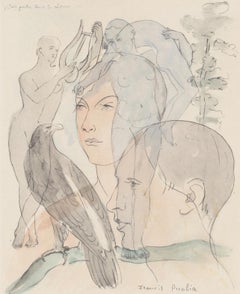
Composition, Le Peseur d'âmes (The Weigher of Souls), Francis Picabia
By Francis Picabia
Located in Auburn Hills, MI
Lithograph and stencil on vélin d'Arches paper. Unsigned and unnumbered, as issued. Good Condition. Notes: From the volume, Le Peseur d'âmes, précédé d'un frontispice et suivi de hui...
Category
1930s Modern Francis Picabia Art
Materials
Lithograph, Stencil

$1,436 Sale Price
20% Off
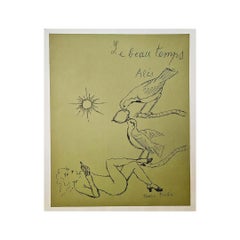
1950 original poster by Francis Picabia - Le Beau Temps in Alès
By Francis Picabia
Located in PARIS, FR
Poster printed in lithography after a drawing by Francis Picabia, designed for the opening in May 1950 of the bookstore (owned by Pierre-André Benoît) ...
Category
1950s Dada Francis Picabia Art
Materials
Lithograph, Paper
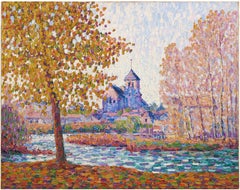
L'Eglise de Montigny, Effet D'Automne
By Francis Picabia
Located in Ottikon, CH
TitelL'Eglise de Montigny, Effet D'Automne
TechnikOil on canvas
Jahr1908
Grösse65.1cm × 81cm (25.6" × 31.9")
stamped with the artist's signature
Literature
W. A. Camfield, B. Calté...
Category
Early 1900s Pointillist Francis Picabia Art
Materials
Canvas, Oil
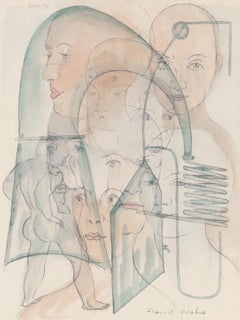
Composition, Le Peseur d'âmes (The Weigher of Souls), Francis Picabia
By Francis Picabia
Located in Auburn Hills, MI
Lithograph and stencil on vélin d'Arches paper. Unsigned and unnumbered, as issued. Good Condition. Notes: From the volume, Le Peseur d'âmes, précédé d'un frontispice et suivi de hui...
Category
1930s Modern Francis Picabia Art
Materials
Lithograph, Stencil
$1,436 Sale Price
20% Off
Composition, Le Peseur d'âmes (The Weigher of Souls), Francis Picabia
By Francis Picabia
Located in Auburn Hills, MI
Lithograph and stencil on vélin d'Arches paper. Unsigned and unnumbered, as issued. Good Condition. Notes: From the volume, Le Peseur d'âmes, précédé d'un frontispice et suivi de hui...
Category
1930s Modern Francis Picabia Art
Materials
Lithograph, Stencil
$1,436 Sale Price
20% Off
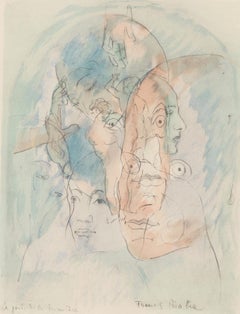
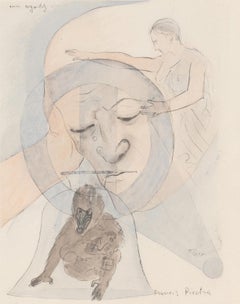
Composition, Le Peseur d'âmes (The Weigher of Souls), Francis Picabia
By Francis Picabia
Located in Auburn Hills, MI
Lithograph and stencil on vélin d'Arches paper. Unsigned and unnumbered, as issued. Good Condition. Notes: From the volume, Le Peseur d'âmes, précédé d'un frontispice et suivi de hui...
Category
1930s Modern Francis Picabia Art
Materials
Lithograph, Stencil
$1,436 Sale Price
20% Off
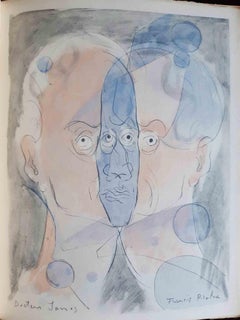
Le Peseur d’Ames - Rare Book Illustrated by Francis Picabia- 1931
By Francis Picabia
Located in Roma, IT
Le Peseur d’Ames is an original rare book illustrated by Francis Picabia (1879 - 1953) and written by André Maurois (1885 – 1967) in 1931.
Original Fi...
Category
Early 20th Century Modern Francis Picabia Art
Materials
Paper
$1,172 Sale Price
25% Off
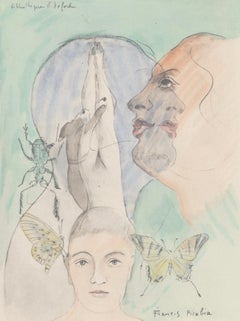
Composition, Le Peseur d'âmes (The Weigher of Souls), Francis Picabia
By Francis Picabia
Located in Auburn Hills, MI
Lithograph and stencil on vélin d'Arches paper. Unsigned and unnumbered, as issued. Good Condition. Notes: From the volume, Le Peseur d'âmes, précédé d'un frontispice et suivi de hui...
Category
1930s Modern Francis Picabia Art
Materials
Lithograph, Stencil
$1,436 Sale Price
20% Off
Au Cimetière Monsieur- Pencil and Watercolor on Paper by F. Picabia - 1931
By Francis Picabia
Located in Roma, IT
Au Cimetière Monsieur... is a black pencil and watercolor drawing realized by Francis Picabia in 1931.
Hand signed lower left, with title lower right.
A certificate of inclusion in the Catalog Raisonné being prepared by the Picabia Committee, dated 30 October 2019, will be delivered in original along with the work.
Drawing originally realized by Picabia to illustrate the important volume "Le Peseur d'Ames" by André Maurois, published by Editions Antoine Roche in 1931.
Though specifically realized for the volume, the drawing was not selected for publication and remained in the artist's personal collection.
Cm. 27,4x22.
Good conditions.
Francis Picabia (1879-1953) was born in Paris to a french mother and a Spanish father who was chancellor at the Cuban embassy in Paris. He had a comfortable childhood, even though he was emotionally troubled. He studied at the École nationale supérieure des beaux-arts. At the beginning of his career, from 1908 to 1913, he was strongly influenced first by the Barbizon School and by Alfred Sisley and Camille Pissarro, then by impressionism, cubism and finally abstractionism. Around 1911 he joined the Puteaux Group which he met in the studio of Jacques Villon in the village of Puteaux. He then became friends with the artist Marcel Duchamp. Some members of the group were Apollinaire, Albert Gleizes, Roger de La Fresnaye, Fernand Léger and Jean Metzinger.
From 1913 to 1915 Picabia was often in New York. These years can be identified as the proto-Dada period, which consists mostly of the so-called mechanical portraits (portraits méchaniques): these works ironically proposed mechanistic themes of random tangles of metal parts, paintings and drawings of machines. All these mechanisms on the one hand mocked the cult of the machine, on the other they alluded to sexual intercourse...
Category
1930s Modern Francis Picabia Art
Materials
Watercolor, Paper, Pencil

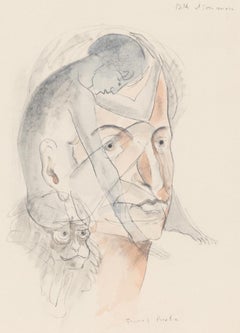
Composition, Le Peseur d'âmes (The Weigher of Souls), Francis Picabia
By Francis Picabia
Located in Auburn Hills, MI
Lithograph and stencil on vélin d'Arches paper. Unsigned and unnumbered, as issued. Good Condition. Notes: From the volume, Le Peseur d'âmes, précédé d'un frontispice et suivi de hui...
Category
1930s Modern Francis Picabia Art
Materials
Lithograph, Stencil
$1,436 Sale Price
20% Off
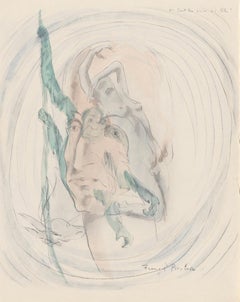
Composition, Le Peseur d'âmes (The Weigher of Souls), Francis Picabia
By Francis Picabia
Located in Auburn Hills, MI
Lithograph and stencil on vélin d'Arches paper. Unsigned and unnumbered, as issued. Good Condition. Notes: From the volume, Le Peseur d'âmes, précédé d'un frontispice et suivi de hui...
Category
1930s Modern Francis Picabia Art
Materials
Lithograph, Stencil
$1,436 Sale Price
20% Off
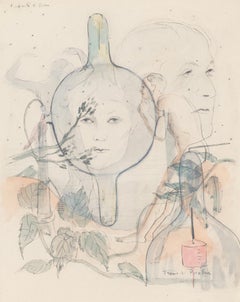
Composition, Le Peseur d'âmes (The Weigher of Souls), Francis Picabia
By Francis Picabia
Located in Auburn Hills, MI
Lithograph and stencil on vélin d'Arches paper. Unsigned and unnumbered, as issued. Good Condition. Notes: From the volume, Le Peseur d'âmes, précédé d'un frontispice et suivi de hui...
Category
1930s Modern Francis Picabia Art
Materials
Lithograph, Stencil
$1,436 Sale Price
20% Off
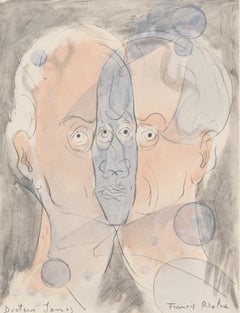
Composition, Le Peseur d'âmes (The Weigher of Souls), Francis Picabia
By Francis Picabia
Located in Auburn Hills, MI
Lithograph and stencil on vélin d'Arches paper. Unsigned and unnumbered, as issued. Good Condition. Notes: From the volume, Le Peseur d'âmes, précédé d'un frontispice et suivi de hui...
Category
1930s Modern Francis Picabia Art
Materials
Lithograph, Stencil
$1,436 Sale Price
20% Off
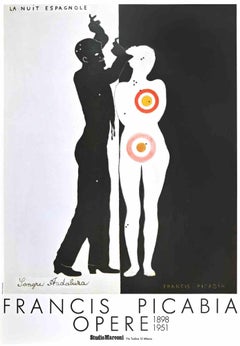
Picabia La Nuit Espagnole - Poster Exhibition by Francis Picabia- 1986
By Francis Picabia
Located in Roma, IT
Picabia La Nuit espagnole - Poster Exhibition is a mixed colored offset print realized in 1986.
This print was realized on the occasion of the exhibition dedicated to the artist and...
Category
1980s Modern Francis Picabia Art
Materials
Paper, Offset
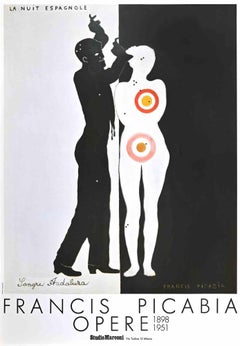
Picabia La Nuit Espagnole - Poster Exhibition by Francis Picabia- 1986
By Francis Picabia
Located in Roma, IT
Picabia La Nuit espagnole - Poster Exhibition is a mixed colored offset print realized in 1986.
This print was realized on the occasion of the exhibition dedicated to the artist and...
Category
1980s Modern Francis Picabia Art
Materials
Paper, Offset
Related Items
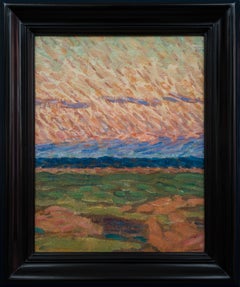
Pointillist Landscape View from Öland, Sweden
Located in Stockholm, SE
We are pleased to offer for sale an exquisite landscape by the Swedish artist, Nils Kreuger (1858–1930), titled "Landscape View from Öland, Sweden" executed around 1905. This work is...
Category
Early 1900s Pointillist Francis Picabia Art
Materials
Canvas, Oil
$6,541 Sale Price
20% Off
H 17.33 in W 14.57 in
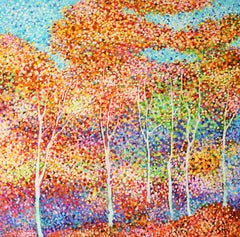
Autumn melody
Located in Zofingen, AG
In this vibrantly textured oil painting, I explore the jubilant essence of autumn's splendor. Each brushstroke represents a joyful dance of leaves, swirling in the brisk air, encapsu...
Category
2010s Pointillist Francis Picabia Art
Materials
Canvas, Oil
Winter Solstice: pointillist impressionist Winterscape snow landscape painting
By André Bourrie
Located in Norwich, GB
Like every true master painter, André Bourrie had a unique, distinctive style - an inimitable blend of neo-impressionism and pointillism which, while dra...
Category
20th Century Pointillist Francis Picabia Art
Materials
Canvas, Oil
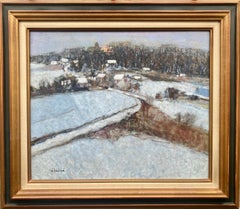
André BourrieWinter Solstice: pointillist impressionist Winterscape snow landscape painting, ca 1970
$2,400
H 25.2 in W 28.75 in D 1.19 in
Antique American School Pointillist Fall Landscape Lake View Oil Painting
Located in Buffalo, NY
Antique American school pointillist landscape painting. Oil on board, circa 1920. Unsigned. Displayed in a period impressionist frame. Image size, 14"L x 16"H.
Category
1910s Pointillist Francis Picabia Art
Materials
Canvas, Oil
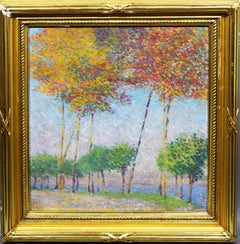
$1,516 Sale Price
20% Off
H 20 in W 18 in D 2 in
Mexican Travelers, Modern Lithograph by Millard Sheets
By Millard Sheets
Located in Long Island City, NY
Mexican Travelers by Millard Owen Sheets, American (1907–1989)
Date: Circa 1977
Lithograph on Arches paper, signed and numbered in pencil
Edition o...
Category
1970s American Modern Francis Picabia Art
Materials
Lithograph
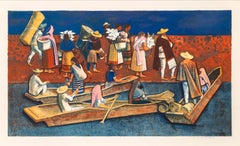
$1,200
H 24 in W 35 in
Original The French Riviera (Cote d'Azur) French Railways vintage travel poster
By Jules Cavailles
Located in Spokane, WA
Original vintage travel advertising poster for the FRENCH RIVIERA FRENCH NATIONAL RAILROADS SNCF (French National Railways) - the French Riviera. (Cote D'Azur, known as the French Riviera) The image features people looking out towards a marina full of sailing boats. Colorful artwork by the French painter Jules Cavailles (1901-1977). Printed by Perceval, Paris in 1953. Mid-Century Modern. Grade A-
This is the English version of the poster compared to the design created for Cote d'Azur. The English version is much rarer (both are rare today). The poster gives the impression of a naive painting at this Mediterranean beach and seaport.
Step into a world of timeless elegance and sunlit dreams with this exquisite French Riviera Vintage...
Category
1950s American Modern Francis Picabia Art
Materials
Lithograph
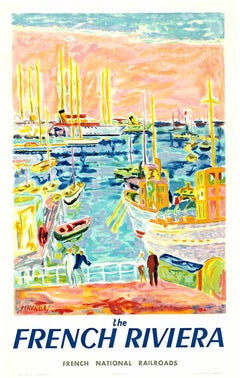
Jules CavaillesOriginal The French Riviera (Cote d'Azur) French Railways vintage travel poster, 1953
$1,498
H 39 in W 24.5 in D 0.3 in
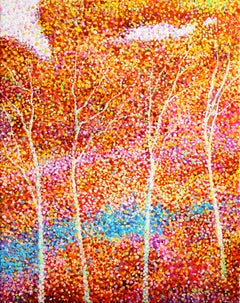
Autumn colors. Landscape series.
Located in Zofingen, AG
In this vibrantly textured oil painting, I explore the jubilant essence of autumn's splendor. Each brushstroke represents a joyful dance of leaves, swirling in the brisk air, encapsu...
Category
2010s Pointillist Francis Picabia Art
Materials
Canvas, Oil
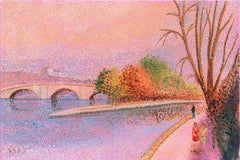
'Autumn in Paris', the Seine and the Pont Neuf, Île de la Cité, Pointillist Oil
Located in Santa Cruz, CA
Signed lower left, 'Th. Butler' and painted circa 1985.
A substantial Pointillist oil showing a view of the Seine with the Pont Neuf and the Île de la Cité. In the foreground, two y...
Category
1980s Pointillist Francis Picabia Art
Materials
Canvas, Oil
$1,850
H 18 in W 25.5 in D 0.75 in
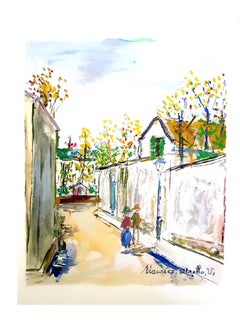
Maurice Utrillo (after) - Inspired Village of Montmartre - Pochoir
By Maurice Utrillo
Located in Collonge Bellerive, Geneve, CH
(after) Maurice Utrillo
Inspired Village of Montmartre
Pochoir with printed signature
Edition of 490
Dimensions: 39 x 30 cm
Information : This print was created for the portfolio "L...
Category
1950s Modern Francis Picabia Art
Materials
Stencil
$2,525
H 15.36 in W 11.82 in D 0.04 in
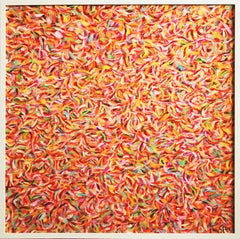
The Autumn Orchestra
Located in Zofingen, AG
In this vibrantly textured oil painting, I explore the jubilant essence of autumn's splendor. Each brushstroke represents a joyful dance of leaves, swirling in the brisk air, encapsu...
Category
2010s Pointillist Francis Picabia Art
Materials
Canvas, Oil
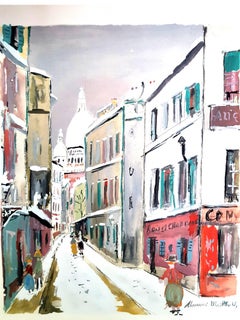
Sacré Coeur - Village of Montmartre - Pochoir
By (after) Maurice Utrillo
Located in Collonge Bellerive, Geneve, CH
(after) Maurice Utrillo
Inspired Village of Montmartre
Pochoir with printed signature
Edition of 490
Dimensions: 39 x 30 cm
Information : This print was created for the portfolio "Le Village inspiré, Chronique de la bohème de Montmartre (1920-1950) " published by Vertex in 1950
Condition : Excellent
Maurice Utrillo (1883 - 1955)
The French painter Maurice Utrillo was born as the illegitimate son of the painter Suzanne Valladon in Paris on December 26, 1883. He was adopted by the Catalan art critic Miguel Utrillo...
Category
1950s Modern Francis Picabia Art
Materials
Stencil
$2,525
H 15.36 in W 11.82 in D 0.04 in
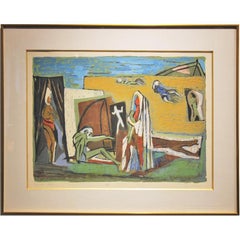
"La Mer Noire" Figurative Dada Artist Proof
By Marcel Janco
Located in Houston, TX
Post-impressionist style artist proof lithograph of figures. The work is similarly to the style of Paul Gauguin's Tahiti paintings. The work is signed and titled by the artist. It is framed in a gold frame with a white matte.
Dimensions without Frame: H 18.5in x W 24in.
Artist Biography: Marcel Janco was a Romanian and Israeli visual artist, architect and art theorist. He was the co-inventor of Dadaism and a leading exponent of Constructivism in Eastern Europe. In the 1910s, he co-edited, with Ion Vinea and Tristan Tzara, the Romanian art magazine Simbolul. Janco was a practitioner of Art Nouveau, Futurism and Expressionism before contributing his painting and stage design to Tzara's literary Dadaism. He parted with Dada in 1919, when he and painter Hans Arp founded a Constructivist circle, Das Neue Leben.
Reunited with Vinea, he founded Contimporanul, the influential tribune of the Romanian avant-garde, advocating a mix of Constructivism, Futurism and Cubism. At Contimporanul, Janco expounded a "revolutionary" vision of urban planning. He designed some of the most innovative landmarks of downtown Bucharest. He worked in many art forms, including illustration, sculpture and oil painting.
Janco was one of the leading Romanian Jewish...
Category
20th Century Dada Francis Picabia Art
Materials
Lithograph
Previously Available Items
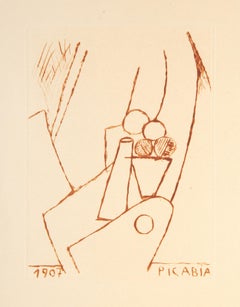
Machine Cubiste, Abstract Drypoint by Francis Picabia
By Francis Picabia
Located in Long Island City, NY
Francis Picabia, French (1879 - 1953) - Machine Cubiste, Year: 1907, Medium: Drypoint on Japon, signed and dated in the plate, Image Size: 7 x 5 inches, Size: 10 x 7.5 in. (25.4 x ...
Category
Early 1900s Abstract Francis Picabia Art
Materials
Drypoint
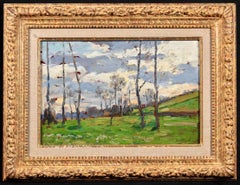
Paysage Nature - Post Impressionist Landscape Oil Paintng by Francis Picabia
By Francis Picabia
Located in Marlow, Buckinghamshire
Signed and dated post impressionist oil on panel landscape by French painter Francis Picabia. The work depicts open green grassland with bare trees dotted around and clouds rolling through the blue sky overhead.
Signature:
Signed & dated 1902 lower right
Dimensions:
Framed: 14.5"x18.5"
Unframed: 9"x13"
Provenance:
The collection of Marie de la Hire (friend of the artist), until 1925
This work is included in the Picabia Catalogue Raisonne - W.A. Camfield, B. Calté, C. Clements, A. Pierre, P. Calté, Francis Picabia, Catalogue Raisonné, Volume I, 1898-1914, Mercatorfonds, Brussels, 2014, n°44 p.175, reproduced in colour p.177
The painting was the property of Marie de La Hire, writer and painter, close to Francis Picabia's studio, for whom she wrote the first monograph and introduction to the exhibition catalogue ("Francis Picabia", Galerie La Cible edition (Galerie Povolozky), 1920). Picabia had invited her to join the other Dadaist artists who participated in 1921 in the collective exhibition "The Cacodylate Eye" by inscribing on the canvas a sentence of their choice.
Francis Picabia was born into a cultivated and extremely wealthy family, to a French mother and a Hispano-Cuban father. He enjoyed his considerable family legacy until about 1940, spending profligately. His family encouraged his artistic vocation, and after a painting was accepted by the Salon des Artistes Français in 1894, he studied successively at the École des Beaux-Arts in 1897 in Fernand Cormon’s studio, at the École des Arts Décoratifs in 1901, the Académie du Louvre, and the Académie Humbert, where he met Braque and Marie Laurencin. In 1909, he married Gabrielle Buffet. In 1911, he met Marcel Duchamp, who brought him into theGroupe de Puteaux, centred on Jacques Villon’s studio and of which Guillaume Apollinaire, Albert Gleizes, and Jean Metzinger were also members; he also took part in the activities of the Section d’Or. He is said to have financed the printing of Cubist Painters ( Peintres Cubistes) in exchange for an appearance in the book. Picabia went to New York in 1913 and was invited to exhibit in the Armory Show, the first presentation of modern art in America; there he met the photographer Alfred Stieglitz, who in 1906 had opened a gallery at 291 Fifth Avenue. He was called up in 1914 and acted as a general’s chauffeur, and was then sent on an official mission to Cuba. He met Duchamp again in 1915 in New York and stayed there for a while, temporarily living a life of wild excess. He joined Duchamp in his challenge to art and established values. Stieglitz was at this time running a review 291, named after his gallery, and in it he reproduced several of Picabia’s mechanist drawings.
In 1916, Picabia left New York for Barcelona, where in January 1917 he founded the review 391, a European extension of Stieglitz’s 291, with Gleizes, Marie Laurencin, and Arthur Craven. He published the first four issues in Barcelona and the following three with Duchamp during his last visit to New York in 1917. After his first collection of poetry, 52 Mirrors...
Category
Early 1900s Post-Impressionist Francis Picabia Art
Materials
Oil, Panel
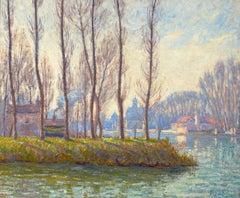
Moret-sur-Long, en hiver by Francis Picabia
By Francis Picabia
Located in New Orleans, LA
Francis Picabia
1878-1953 French
Moret-sur-Long, en hiver
(Moret-sur-Long in Winter)
Signed "Picabia" (lower right)
Oil on canvas
An artist remembe...
Category
19th Century Impressionist Francis Picabia Art
Materials
Canvas, Oil
H 32.75 in W 37.13 in D 3.88 in
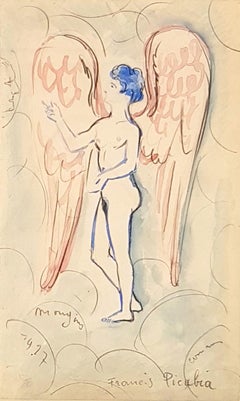
Untitled - Original China Ink and Watercolor on Paper by F. Picabia - 1927
By Francis Picabia
Located in Roma, IT
China Ink and watercolour on paper.
Hand signed, dated and located (Mougins).
Artwork refering to “Nemesis - Great Luck” Tribute to A. Durer.
Certificate of authenticity of Comi...
Category
1920s Modern Francis Picabia Art
Materials
Watercolor
H 17.52 in W 13.78 in D 0.12 in
Francis Picabia art for sale on 1stDibs.
Find a wide variety of authentic Francis Picabia art available for sale on 1stDibs. You can also browse by medium to find art by Francis Picabia in paper, lithograph, offset print and more. Much of the original work by this artist or collective was created during the 20th century and is mostly associated with the modern style. Not every interior allows for large Francis Picabia art, so small editions measuring 8 inches across are available. Customers who are interested in this artist might also find the work of Stuart Davis, Jean Gabriel Daragnès , and Hermine David. Francis Picabia art prices can differ depending upon medium, time period and other attributes. On 1stDibs, the price for these items starts at $154 and tops out at $65,000, while the average work can sell for $2,225.