Armand Breton Art

to
1
1
Overall Width
to
Overall Height
to
2
1
1
2
2
2
2
2
2
10,732
2,836
2,494
1,410
2
Artist: Armand Breton
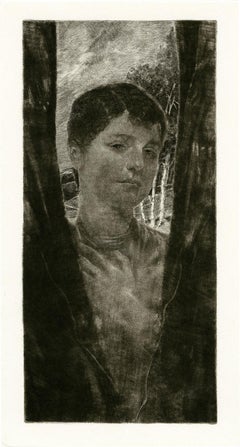
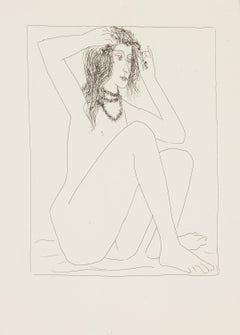
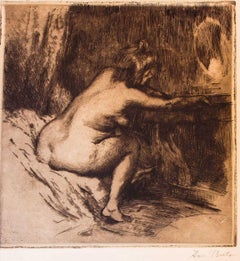
Woman at the Mirror - Etching by Armand Breton - 1920

Woman at the Mirror - Etching by Armand Breton - 1920

By Armand Breton

Located in Roma, IT

Hand signed. Etching and aquatint. Includes passepartout (49 x 34 cm ). This etching by Armand Breton is an example of the Post-Impressionism atmosphere at the beginning of the XX...

Category

1920s Post-Impressionist Armand Breton Art

Materials

Etching
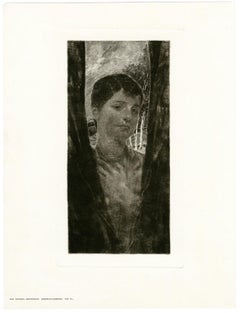
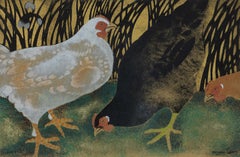
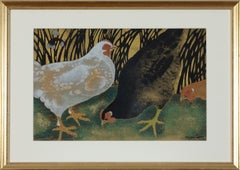
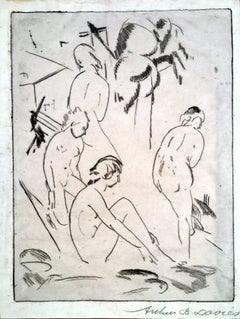
La Toilette
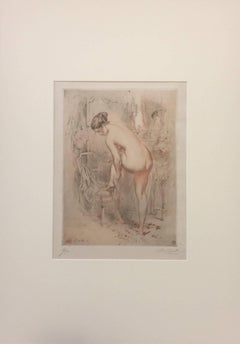
La Toilette

La Toilette

By Armand Breton

Located in Roma, IT

Hand signed. Edition of 50 prints.Original Prints. Image Dimensions : 31 x 23 cm Passepartout included : 69 x 49 cm This artwork is shipped from Italy. Under existing legislation, a...

Category

Early 1900s Post-Impressionist Armand Breton Art

Materials

Etching
Related Items
Salvador Dali - Sator - Original Etching

Salvador Dali - Sator - Original Etching

By Salvador Dalí­

Located in Collonge Bellerive, Geneve, CH

Salvador Dali - Sator - Original Etching Stamp Signed Dimensions: 38,5 x 28,5 cm 1969 References : Field 69-1 / Michler & Lopsinger 305

Category

1960s Surrealist Armand Breton Art

Materials

Etching
Salvador Dali - Women - Original Etching

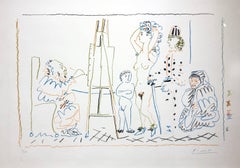
Salvador Dali - Women - Original Etching

By Salvador Dalí­

Located in Collonge Bellerive, Geneve, CH

Salvador Dali - Women - Original Etching Embossed signature From the edition of 731 Dimensions: 38,5 x 28,5 cm 1969 References : Field 69-1 / Michler & Lopsinger 305

Category

1960s Surrealist Armand Breton Art

Materials

Etching
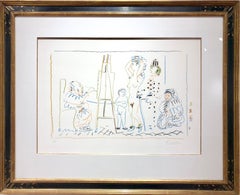
Salvador Dali - Magician - Original Etching

Salvador Dali - Magician - Original Etching

By Salvador Dalí­

Located in Collonge Bellerive, Geneve, CH

Salvador Dali - Magician - Original Etching Stamp Signed Dimensions: 38,5 x 28,5 cm 1969 References : Field 69-1 K / Michler & Lopsinger 305 Salvador Dali Salvador Dali was born as the son of a prestigious notary in the small town of Figueras in Northern Spain. His talent as an artist showed at an early age and Salvador Felipe Jacinto Dali received his first drawing lessons when he was ten years old. His art teachers were a then well known Spanish impressionist painter, Ramon Pichot and later an art professor at the Municipal Drawing School. In 1923 his father bought his son his first printing press. Dali began to study art at the Royal Academy of Art in Madrid. He was expelled twice and never took the final examinations. His opinion was that he was more qualified than those who should have examined him. In 1928 Dali went to Paris where he met the Spanish painters Pablo Picasso and Joan Miro. He established himself as the principal figure of a group of surrealist artists grouped around Andre Breton, who was something like the theoretical "schoolmaster" of surrealism. Years later Breton turned away from Dali accusing him of support of fascism, excessive self-presentation and financial greediness. By 1929 Dali had found his personal style that should make him famous the world of the unconscious that is recalled during our dreams. The surrealist theory is based on the theories of the psychologist Dr. Sigmund Freud. Recurring images of burning giraffes and melting watches became the artist's surrealist trademarks. His great craftsmanship allowed him to execute his paintings in a nearly photo-realistic style. No wonder that the artist was a great admirer of the Italian Renaissance painter Raphael. Salvador Dali and Gala. Meeting Gala was the most important event in the artist's life and decisive for his future career. She was a Russian immigrant and ten years older than Dali. When he met her, she was married to Paul Eluard. Gala decided to stay with Dali. She became his companion, his muse, his sexual partner, his model in numerous art works and his business manager. For him she was everything. Most of all Gala was a stabilizing factor in his life. And she managed his success in the 1930s with exhibitions in Europe and the United States. Gala was legally divorced from her husband in 1932. In 1934 Dali and Gala were married in a civil ceremony...

Category

1960s Surrealist Armand Breton Art

Materials

Etching
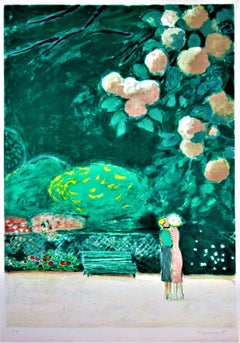
Salvador Dali - Head of Veal - Original Etching

Salvador Dali - Head of Veal - Original Etching

By Salvador Dalí­

Located in Collonge Bellerive, Geneve, CH

Salvador Dali - Head of Veal - Original Etching Embossed signature From the edition of 731 Dimensions: 38,5 x 28,5 cm 1969 References : Field 69-1 / Michler & Lopsinger 305

Category

1960s Surrealist Armand Breton Art

Materials

Etching
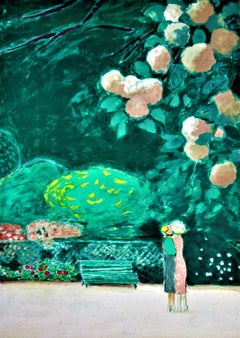
Salvador Dali - Sator from "Faust"

Salvador Dali - Sator from "Faust"

By Salvador Dalí­

Located in Collonge Bellerive, Geneve, CH

Salvador Dali - Sator, from "Faust" Original Etching Embossed signature From the edition of 731 Dimensions: 38,5 x 28,5 cm 1969 References : Field 69-1 K / Michler & Lopsinger 305 Salvador Dali Salvador Dali was born as the son of a prestigious notary in the small town of Figueras in Northern Spain. His talent as an artist showed at an early age and Salvador Felipe Jacinto Dali received his first drawing lessons when he was ten years old. His art teachers were a then well known Spanish impressionist painter, Ramon Pichot and later an art professor at the Municipal Drawing School. In 1923 his father bought his son his first printing press. Dali began to study art at the Royal Academy of Art in Madrid. He was expelled twice and never took the final examinations. His opinion was that he was more qualified than those who should have examined him. In 1928 Dali went to Paris where he met the Spanish painters Pablo Picasso and Joan Miro. He established himself as the principal figure of a group of surrealist artists grouped around Andre Breton, who was something like the theoretical "schoolmaster" of surrealism. Years later Breton turned away from Dali accusing him of support of fascism, excessive self-presentation and financial greediness. By 1929 Dali had found his personal style that should make him famous the world of the unconscious that is recalled during our dreams. The surrealist theory is based on the theories of the psychologist Dr. Sigmund Freud. Recurring images of burning giraffes and melting watches became the artist's surrealist trademarks. His great craftsmanship allowed him to execute his paintings in a nearly photo-realistic style. No wonder that the artist was a great admirer of the Italian Renaissance painter Raphael. Salvador Dali and Gala. Meeting Gala was the most important event in the artist's life and decisive for his future career. She was a Russian immigrant and ten years older than Dali. When he met her, she was married to Paul Eluard. Gala decided to stay with Dali. She became his companion, his muse, his sexual partner, his model in numerous art works and his business manager. For him she was everything. Most of all Gala was a stabilizing factor in his life. And she managed his success in the 1930s with exhibitions in Europe and the United States. Gala was legally divorced from her husband in 1932. In 1934 Dali and Gala were married in a civil ceremony...

Category

1960s Surrealist Armand Breton Art

Materials

Etching
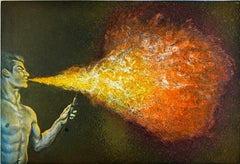
Salvador Dali - The Kidnapping - Original Etching on Silk

Salvador Dali - The Kidnapping - Original Etching on Silk

By Salvador Dalí­

Located in Collonge Bellerive, Geneve, CH

Salvador Dali - The Kidnapping - from "Les Amours de Cassandre" Original Etching From the suite on Silk made for editions 9 to 34 Dimensions: 38,5 x 28,5 cm ...

Category

1960s Surrealist Armand Breton Art

Materials

Etching
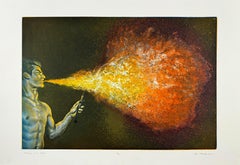
Salvador Dali - Moshe Dayan - Original Handsigned Etching

Salvador Dali - Moshe Dayan - Original Handsigned Etching

By Salvador Dalí­

Located in Collonge Bellerive, Geneve, CH

Salvador Dali - Moshe Dayan - Original Handsigned Etching Dimensions: 38 x 28 cm 1968 Signed in pencil EA in Sanguine Jean Schneider, Basel References : Fi...

Category

1960s Surrealist Armand Breton Art

Materials

Etching
La Chevelure - Color Lithograph - 2007 - Henri Matisse

La Chevelure - Color Lithograph - 2007 - Henri Matisse

By (after) Henri Matisse

Located in Sint-Truiden, BE

Color lithograph after the work by Henri Matisse, plate-signed by Matisse from the edition of 200. This lithograph was printed and published in 2007 in Paris using 100% cotton 300 g...

Category

Early 2000s Fauvist Armand Breton Art

Materials

Handmade Paper, Lithograph

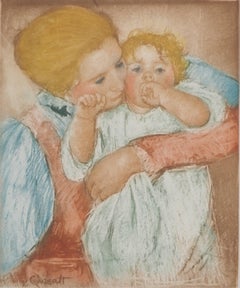
Maternity : Mother and Child - Etching

Maternity : Mother and Child - Etching

By Mary Cassatt

Located in Paris, IDF

Mary Cassatt (1844-1926) Maternal Love Engraving after a pastel Signed in the plate On vellum, 50 x 38 cm (c. 20 x 15 in) INFORMATION: Copperplate engraving published by the Galer...

Category

Early 20th Century Post-Impressionist Armand Breton Art

Materials

Etching, Aquatint

La Danse Lithograph Print, Fauvist Style, Early 20th Century, Unframed

La Danse Lithograph Print, Fauvist Style, Early 20th Century, Unframed

By Henri Matisse

Located in Chesterfield, MI

"La Danse" is a popular, colorful, Fauvist work by Henri Matisse in which he depicts the movement of dancers in an abstract way. The colors Matisse chooses are vibrant and the shapes...

Category

Early 20th Century Fauvist Armand Breton Art

Materials

Lithograph

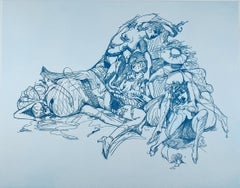
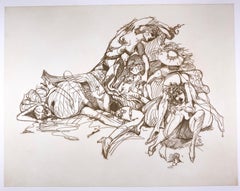
Study for a Monument in the Heroic/Erotic/Academic/Comic Style Claes Oldenburg

Study for a Monument in the Heroic/Erotic/Academic/Comic Style Claes Oldenburg

By Claes Oldenburg

Located in New York, NY

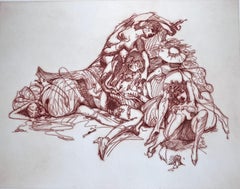
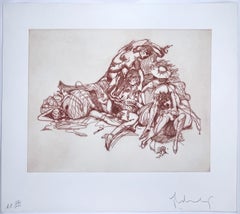
This sensuous and playful scene is characteristic of Oldenburg’s printmaking ouevre: a veritable heap of women displaying various expressions of ecstasy and repose. The loose sketches were drawn directly onto the plate by the artist, a master draftsman whose erotic etchings are largely unknown. The composition is based on the drawing: Clinical Study, Towards a Heroic-Erotic Monument in the Academic/Comic Style, 1965, ball-point pen on paper, 20 x 40 in. / 60 x 101.6 cm. *This print was etched in six gorgeous inks, each in an edition of ten: take your pick of color!* Oldenburg had an interest in imaginary monuments: he famously conceptualized works such as “Ball”, an unbuilt monument conceived of in 1967 which imagined two ballcocks – the round mechanism in a toilet tank...

Category

1970s Modern Armand Breton Art

Materials

Etching
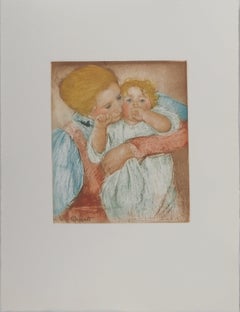
Henri Matisse, Three Heads. To Friendship, from Apollinaire, 1952

Henri Matisse, Three Heads. To Friendship, from Apollinaire, 1952

By Henri Matisse

Located in Southampton, NY

This exquisite aquatint by Henri Matisse (1869–1954), titled Trois têtes. A l'amitié (Three Heads. To Friendship), from the album Apollinaire, Henri Matisse (Apollinaire, Henri Matisse), originates from the 1952 edition published by Editions Raisons d'etre, Paris, and printed by Mourlot Freres, Paris, April 24, 1952. The work captures Matisses lyrical line and expressive minimalism, paying tribute to the French poet Guillaume Apollinaire through a synthesis of portraiture and calligraphic grace. Executed as an aquatint on velin a la forme des papeteries d'Arches paper, this work measures 12.99 x 9.84 inches (33 x 25 cm). Unsigned and unnumbered, as issued. The edition exemplifies the superior craftsmanship of Mourlot Freres, Paris. Artwork Details: Artist: Henri Matisse (1869–1954) Title: Trois têtes. A l'amitié (Three Heads. To Friendship), from the album Apollinaire, Henri Matisse (Apollinaire, Henri Matisse) Medium: Aquatint on velin a la forme des papeteries d'Arches paper Dimensions: 12.99 x 9.84 inches (33 x 25 cm) Inscription: Unsigned and unnumbered, as issued Date: 1952 Publisher: Editions Raisons d'etre, Paris Printer: Mourlot Freres, Paris Catalogue Raisonne Reference: Duthuit, Claude. Henri Matisse: Catalogue raisonne des ouvrages illustres. Editions Claude Duthuit, Paris, 1988, illustration 31. Condition: Well preserved, consistent with age and medium Provenance: From the album Apollinaire, Henri Matisse (Apollinaire, Henri Matisse), published by Editions Raisons d'etre, Paris; printed by Mourlot Freres, Paris, 1952 Notes: Excerpted from the album (translated from French), Printing of this album was finished on April, Twenty-Four, M.CM.LII for the Editions Raisons d'etre, 2 rue des Beaux-Arts in Paris, was produced by Fernand Mourlot, based on the models of Henri Matisse. The eight original lithographs were shot on the presses of Mourlot Freres who also printed the cover and case composed by the artist. The stones were erased after drawing. The text and letrins engraved by Henri Matisse were drawn by Coulouma S.A., printer in Paris. Justification of the draw— XXX examples on large velin d'Arches a la forme, signed by the author and the artist, accompanied by a series of original lithographs numbered from I to XXX; CCC examples on velin d'Arches a la forme numbered from XXXI to CCCXXX; XX examples of non-commerce collaborators numbered from I to XX and in addition a few nominative examples on Grand Velin. About the Publication: Apollinaire, Henri Matisse (Apollinaire, Henri Matisse), published by Editions Raisons d'etre, Paris, in 1952, stands among Matisses most intimate artist’s albums, conceived as a visual homage to the poet Guillaume Apollinaire, whose friendship and creative influence had profoundly shaped the avant-garde in the early 20th century. The album unites Matisses mastery of line with his reverence for literature, pairing portraits, decorative initials, and typographic designs engraved in his own hand. Printed by the esteemed atelier Mourlot Freres, the volume exemplifies the peak of French postwar printmaking, merging literary refinement with visual purity. Each print reveals Matisses poetic sensibility—his ability to render emotion through the economy of contour and rhythm. About the Artist: Henri Matisse (1869–1954) was a French painter, sculptor, draughtsman, and printmaker whose revolutionary vision redefined modern art through his daring use of color, line, and form. Celebrated as one of the greatest artists of the 20th century, Matisse led the Fauvist movement and devoted his life to the pursuit of balance, beauty, and emotional expression in visual art. His early works burst with vibrant hues and liberated brushwork, while his later “cut-out” compositions achieved a poetic simplicity that transformed the relationship between color and space. Deeply influenced by the work of Paul Cezanne, Vincent van Gogh, and Georges Seurat, as well as by the rhythmic patterns of Islamic art, Byzantine mosaics, and Japanese prints, Matisse forged a new visual language that celebrated joy, movement, and serenity. He was part of an extraordinary generation of artists who shaped the evolution of modernism, maintaining lifelong dialogue and friendly rivalry with contemporaries such as Pablo Picasso, Georges Braque, Marc Chagall, Andre Derain, Albert Marquet, and Raoul Dufy—peers who, like him, sought to expand the expressive potential of color and composition. Matisses influence extended across generations, inspiring modern and contemporary masters including Alexander Calder, Alberto Giacometti, Salvador Dali, Joan Miro, Wassily Kandinsky, Marcel Duchamp, and Man Ray, each of whom drew upon his fearless experimentation and refined visual harmony. His paintings, sculptures, and works on paper are held in the most prestigious museums in the world, including the Museum of Modern Art, the Centre Pompidou, the Tate, and the Hermitage Museum, where his art continues to symbolize the essence of creativity and human emotion. The highest price ever paid for a Henri Matisse artwork is approximately 80.8 million USD, achieved in 2018 at Christies New York for Odalisque couchee aux magnolias (1923). Henri Matisse Trois têtes. A l'amitié (Three Heads. To Friendship) Apollinaire, Henri Matisse (Apollinaire, Henri Matisse) 1952, Matisse Editions Raisons d'etre, Matisse Mourlot Freres, Matisse aquatint...

Category

1950s Fauvist Armand Breton Art

Materials

Aquatint

Armand Breton art for sale on 1stDibs.

Find a wide variety of authentic Armand Breton art available for sale on 1stDibs. You can also browse by medium to find art by Armand Breton in etching and more. Much of the original work by this artist or collective was created during the 20th century and is mostly associated with the Post-Impressionist style. Not every interior allows for large Armand Breton art, so small editions measuring 9 inches across are available. Customers who are interested in this artist might also find the work of Tony Minartz, Angèle Delasalle, and Luc-Albert Moreau. Armand Breton art prices can differ depending upon medium, time period and other attributes. On 1stDibs, the price for these items starts at $460 and tops out at $460, while the average work can sell for $460.

Artists Similar to Armand Breton