Ben-Zion Weinman Art
to
14
7
Overall Width
to
Overall Height
to
21
2
3
15
3
1
16
5
4
4
2
1
1
1
1
1
1
1
15
8
7
5
5
21
9,989
2,754
1,379
1,375
7
21
Artist: Ben-Zion Weinman
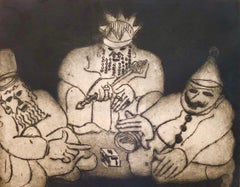
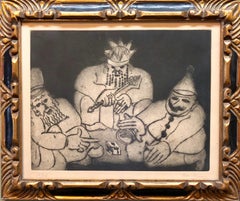
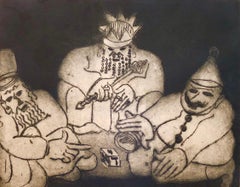
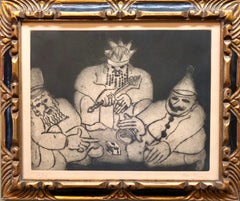
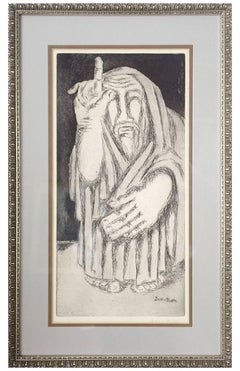
Purim Holiday Scene Judaica Aquatint Etching American Modernist WPA Artist
By Ben-Zion Weinman
Located in Surfside, FL
Born in 1897, Ben-Zion Weinman celebrated his European Jewish heritage in his visual works as a sculptor, painter, and printmaker. Influenced by Spinoza, Knut Hamsun, and Wladyslaw Reymont, as well as Hebrew literature, Ben-Zion wrote poetry and essays that, like his visual work, attempt to reveal the deep “connection between man and the divine, and between man and earth.”
An emigrant from the Ukraine, he came to the US in 1920. He wrote fairy tales and poems in Hebrew under the name Benzion Weinman, but when he began painting he dropped his last name and hyphenated his first, saying an artist needed only one name.
Ben-Zion was a founding member of “The Ten: An Independent Group” The Ten” a 1930’s avant-garde group, Painted on anything handy. Ben-Zion often used cabinet...
Category
Mid-20th Century Expressionist Ben-Zion Weinman Art
Materials
Etching
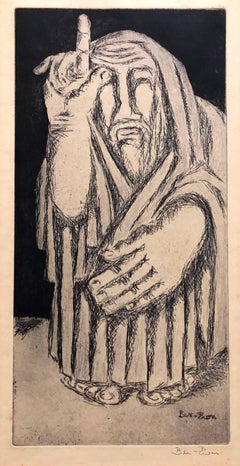
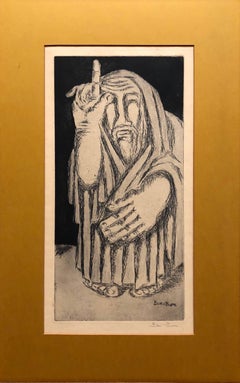
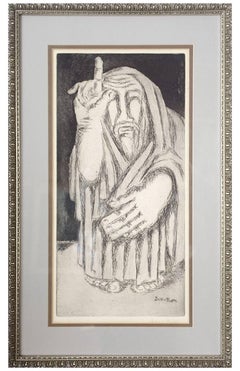
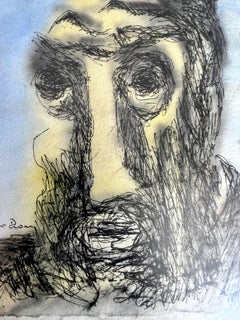
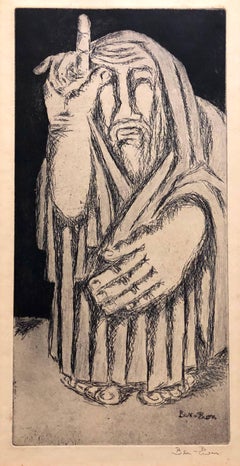
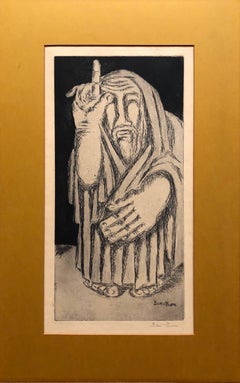
Biblical Prophet Etching American Modernist WPA Artist
By Ben-Zion Weinman
Located in Surfside, FL
Born in 1897, Ben-Zion Weinman celebrated his European Jewish heritage in his visual works as a sculptor, painter, and printmaker. Influenced by Spinoza, Knut Hamsun, and Wladyslaw Reymont, as well as Hebrew literature, Ben-Zion wrote poetry and essays that, like his visual work, attempt to reveal the deep “connection between man and the divine, and between man and earth.”
An emigrant from the Ukraine, he came to the US in 1920. He wrote fairy tales and poems in Hebrew under the name Benzion Weinman, but when he began painting he dropped his last name and hyphenated his first, saying an artist needed only one name.
Ben-Zion was a founding member of “The Ten: An Independent Group” The Ten” a 1930’s avant-garde group, Painted on anything handy. Ben-Zion often used cabinet...
Category
Mid-20th Century Expressionist Ben-Zion Weinman Art
Materials
Etching
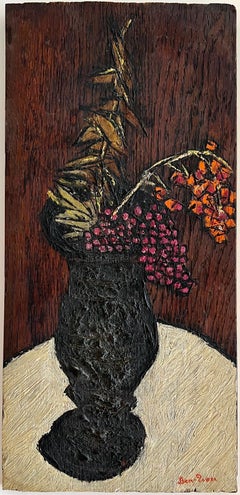
American Modernist Oil Painting Expressionist Vase, Flowers WPA Artist Ben ZIon
By Ben-Zion Weinman
Located in Surfside, FL
Ben-Zion (1897-1987)
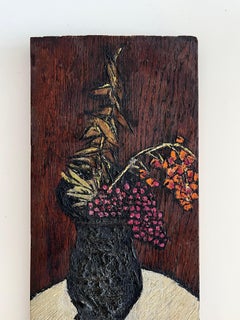
Flower Piece with Black Vase
Oil on board, Hand signed 'Ben-Zion ' lower right, with the artist 's label and label from Duveen-Graham gallery, NY.
16 x 7 3/4 in., unframed as intended,
Born in 1897, Ben-Zion Weinman celebrated his European Jewish heritage in his visual works as a sculptor, painter, and printmaker. Influenced by Spinoza, Knut Hamsun, and Wladyslaw Reymont, as well as Hebrew literature, Ben-Zion wrote poetry and essays that, like his visual work, attempt to reveal the deep “connection between man and the divine, and between man and earth.”
An emigrant from the Ukraine, he came to the US in 1920. He wrote fairy tales and poems in Hebrew under the name Benzion Weinman, but when he began painting he dropped his last name and hyphenated his first, saying an artist needed only one name.
Ben-Zion was a founding member of “The Ten: An Independent Group” The Ten” a 1930’s avant-garde group, Painted on anything handy. Ben-Zion often used cabinet doors (panels) in his work. Other members of group included Ilya Bolotowsky, Lee Gatch, Adolf Gottlieb, Louis Harris, Yankel Kufeld, Marcus Rothkowitz (later known as Mark Rothko), Louis Schanker, and Joseph Solman. Over the course of the group's existence, seventeen artists exhibited as members of The Ten at nine different shows. The group's nine shows were held at galleries and locations around New York City, including one international exhibition in Paris. David Burliuk, Lee Gatch, John Graham, Earl Kerkam, Karl Knaths, Edgar Levy, Jean Liberté...
Category
Mid-20th Century Expressionist Ben-Zion Weinman Art
Materials
Oil, Wood Panel
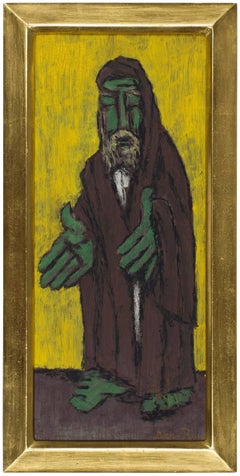
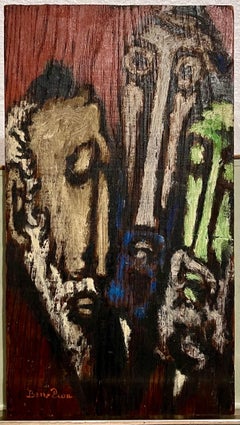
Modernist Rabbi Judaica Bold Color "School of 10"
By Ben-Zion Weinman
Located in Surfside, FL
Dimensions w/Frame: 16" x 8" x 1 1/2"
Born in 1897, Ben-Zion Weinman celebrated his European Jewish heritage in his visual works as a sculptor, painter, and printmaker. Influenced by Spinoza, Knut Hamsun, and Wladyslaw Reymont, as well as Hebrew literature, Ben-Zion wrote poetry and essays that, like his visual work, attempt to reveal the deep “connection between man and the divine, and between man and earth.”
An emigrant from the Ukraine, he came to the US in 1920. He wrote fairy tales and poems in Hebrew under the name Benzion Weinman, but when he began painting he dropped his last name and hyphenated his first, saying an artist needed only one name.
Ben-Zion was a founding member of “The Ten: An Independent Group” The Ten” a 1930’s avant-garde group, Painted on anything handy. Ben-Zion often used cabinet doors (panels) in his work. Other members of group included Ilya Bolotowsky, Lee Gatch, Adolf Gottlieb...
Category
20th Century Fauvist Ben-Zion Weinman Art
Materials
Coating, Oil, Board
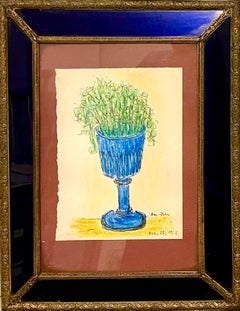
Expressionist Color Drawing Cobalt Glass Vintage Frame Modernist Ben Zion WPA
By Ben-Zion Weinman
Located in Surfside, FL
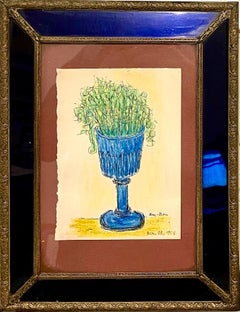
Expressionist ink and pastel crayon drawing of flowers in vase.
Framed in a vintage cobalt blue glass original frame
Hand signed and dated
Framed it measures 13.5 X 10.5
The actual ...
Category
1950s Expressionist Ben-Zion Weinman Art
Materials
Paper, Oil Crayon, Pastel, Ink
Biblical Prophet
By Ben-Zion Weinman
Located in Surfside, FL
Born in 1897, Ben-Zion Weinman celebrated his European Jewish heritage in his visual works as a sculptor, painter, and printmaker. Influenced by Spinoza, Knut Hamsun, and Wladyslaw R...
Category
Mid-20th Century Expressionist Ben-Zion Weinman Art
Materials
Etching
Expressionist Ink, Pastel, Crayon Drawing Jewish American Modernist Ben Zion WPA
By Ben-Zion Weinman
Located in Surfside, FL
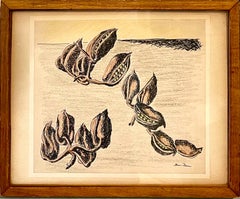
Expressionist ink and pastel crayon drawing of beans (carobs, flowers?) in pods
Hand signed.
Born in 1897, Ben-Zion Weinman celebrated his European Jewish heritage in his visual wo...
Category
Mid-20th Century Expressionist Ben-Zion Weinman Art
Materials
Paper, Oil Crayon, Pastel, Ink
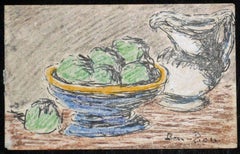
STILL LIFE WITH BOWL OF FRUIT AND PITCHER
By Ben-Zion Weinman
Located in Portland, ME
Ben-Zion. STILL LIFE WITH BOWL OF FRUIT AND PITCHER.
Watercolor on paper.
Signed within the image, right.
2 3/8 x 3 3/4 inches.
In excellent c...
Category
Mid-20th Century Ben-Zion Weinman Art
Materials
Watercolor
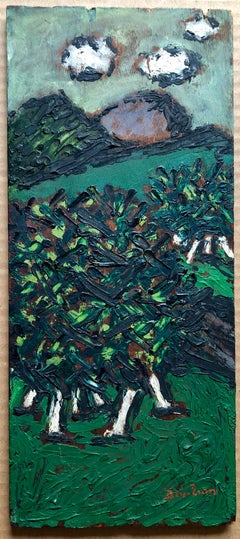
American Modernist Oil Painting Gestural Landscape WPA Artist Group of 10
By Ben-Zion Weinman
Located in Surfside, FL
Born in 1897, Ben-Zion Weinman celebrated his European Jewish heritage in his visual works as a sculptor, painter, and printmaker. Influenced by Spinoza, Knut Hamsun, and Wladyslaw Reymont, as well as Hebrew literature, Ben-Zion wrote poetry and essays that, like his visual work, attempt to reveal the deep “connection between man and the divine, and between man and earth.”
An emigrant from the Ukraine, he came to the US in 1920. He wrote fairy tales and poems in Hebrew under the name Benzion Weinman, but when he began painting he dropped his last name and hyphenated his first, saying an artist needed only one name.
Ben-Zion was a founding member of “The Ten: An Independent Group” The Ten” a 1930’s avant-garde group, Painted on anything handy. Ben-Zion often used cabinet doors...
Category
Mid-20th Century Expressionist Ben-Zion Weinman Art
Materials
Oil, Wood Panel
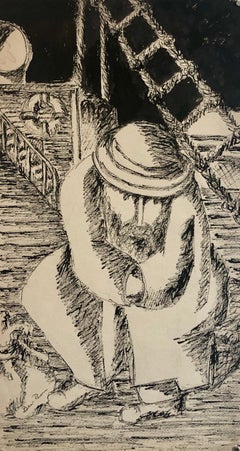
Modernist Judaica Jewish Ink Drawing Painting "New Immigrant" Off the Boat WPA
By Ben-Zion Weinman
Located in Surfside, FL
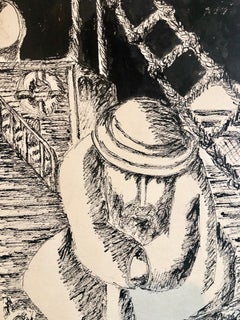
An ink drawing Judaic painting by modern artist Ben-Zion Weinman. It depicts a portrait of an old Jewish man. Coming over from Europe on a ship crossing. The work is signed "Ben-Zion".
Born in 1897, Ben-Zion Weinman celebrated his European Jewish heritage in his visual works as a sculptor, painter, and printmaker. Influenced by Spinoza, Knut Hamsun, and Wladyslaw Reymont, as well as Hebrew literature, Ben-Zion wrote poetry and essays that, like his visual work, attempt to reveal the deep “connection between man and the divine, and between man and earth.”
An emigrant from the Ukraine, he came to the US in 1920. He wrote fairy tales and poems in Hebrew under the name Benzion Weinman, but when he began painting he dropped his last name and hyphenated his first, saying an artist needed only one name. In 1920 he settled in America, where he found little interest in his writing. He began teaching Hebrew to support himself and then in the early 1930s returned to painting. He used his art to comment on the rise of fascism in Europe, events he felt could not be adequately explored with words. Largely self-taught, Ben-Zion visited the museums of New York City to learn his new trade. His first painting on a large scale, Friday Evening (1933, Jewish Museum, New York), depicts a Sabbath dinner table as recalled from his family home. Ben-Zion supported himself by working odd jobs until the establishment of the Works Progress Administration's Federal Art Project. Under the auspices of the wpa, Ben-Zion thrived and galleries began to show his work. In 1936, after his first one-man show at the Artists' Gallery in New York
Ben-Zion was a founding member of “The Ten: An Independent Group” The Ten” a 1930’s...
Category
1940s American Modern Ben-Zion Weinman Art
Materials
Watercolor, Gouache
Expressionist Judaica Havdalah Oil Painting Jewish American Modernist Ben Zion
By Ben-Zion Weinman
Located in Surfside, FL
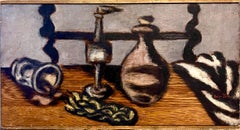
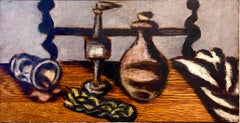
Oil Painting of still life Havdalah scene with braided candle, spice tower box and kiddush cup.
Born in 1897, Ben-Zion Weinman celebrated his European Jewish heritage in his visual ...
Category
Mid-20th Century Expressionist Ben-Zion Weinman Art
Materials
Oil, Wood Panel
Ben ZIon Expressionist Judaica Rabbi Watercolor Painting Jewish Modernist WPA
By Ben-Zion Weinman
Located in Surfside, FL
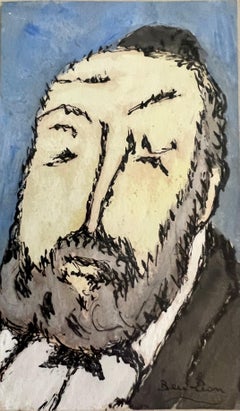
Frame measures 13.5 X 11.5
Paper measures 6.5 X 4 inches
Hand signed lower right
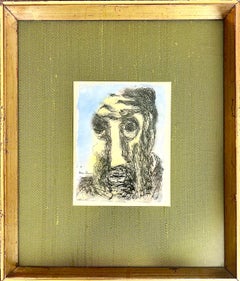
Watercolor painting of prophet or Rabbi, Judaica artwork
Born in 1897, Ben-Zion Weinman celebrated h...
Category
Mid-20th Century Expressionist Ben-Zion Weinman Art
Materials
Paper, Watercolor
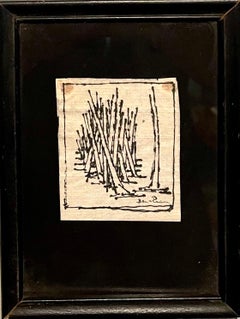
Expressionist Miniature Drawing Wheat Stalks American Modernist Ben Zion WPA
By Ben-Zion Weinman
Located in Surfside, FL
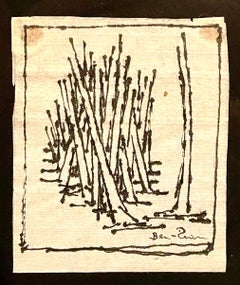
Expressionist ink drawing of wheat stalks
There is an inscription "Happy New Year" on verso
Hand signed
Framed it measures 7.75 X 5.75
The actual paper is 3 X 3.5
Born in 1897, Ben-...
Category
1950s Expressionist Ben-Zion Weinman Art
Materials
Ink
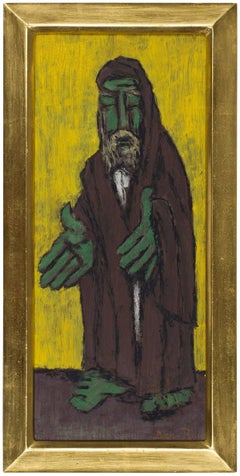
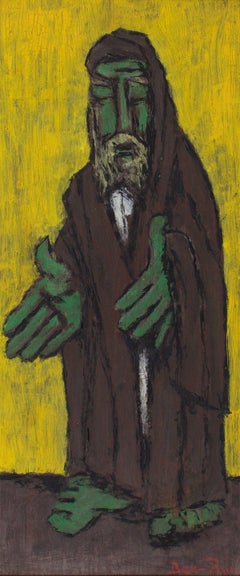
Abstract Expressionist Rabbi Watercolor Painting Jewish American Modernist WPA
By Ben-Zion Weinman
Located in Surfside, FL
Watercolor painting of standing prophet or Rabbi, Judaica artwork
Born in 1897, Ben-Zion Weinman celebrated his European Jewish heritage in his visual works as a sculptor, painter, ...
Category
Mid-20th Century Expressionist Ben-Zion Weinman Art
Materials
Paper, Watercolor
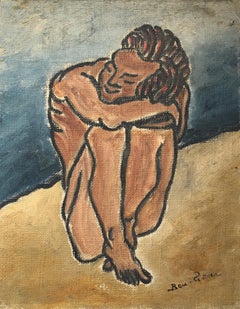
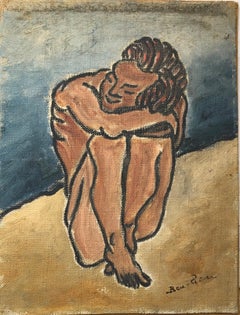
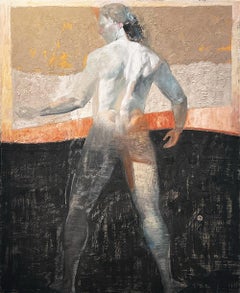
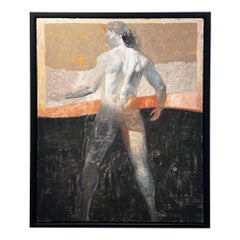
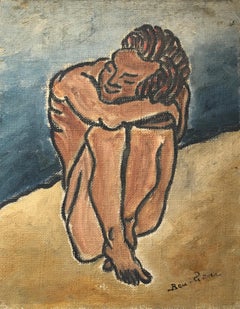
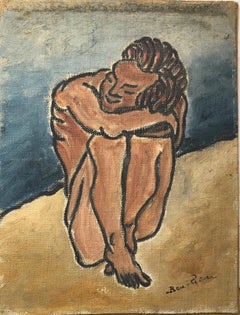
American Modernist Oil Painting Nude Male on Beach WPA Artist Group of 10
By Ben-Zion Weinman
Located in Surfside, FL
Born in 1897, Ben-Zion Weinman celebrated his European Jewish heritage in his visual works as a sculptor, painter, and printmaker. Influenced by Spinoza, Knut Hamsun, and Wladyslaw Reymont, as well as Hebrew literature, Ben-Zion wrote poetry and essays that, like his visual work, attempt to reveal the deep “connection between man and the divine, and between man and earth.”
An emigrant from the Ukraine, he came to the US in 1920. He wrote fairy tales and poems in Hebrew under the name Benzion Weinman, but when he began painting he dropped his last name and hyphenated his first, saying an artist needed only one name.
Ben-Zion was a founding member of “The Ten: An Independent Group” The Ten” a 1930’s avant-garde group, Painted on anything handy. Ben-Zion often used cabinet...
Category
Mid-20th Century Expressionist Ben-Zion Weinman Art
Materials
Oil, Board
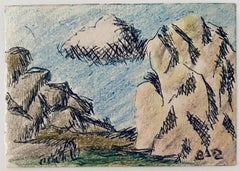
Pastel, Ink Drawing Rocks And Cloud Landscape Jewish American Modernist WPA
By Ben-Zion Weinman
Located in Surfside, FL
Miniature Landscape
Provenance: Virginia Field, Arts administrator; New York, N.Y. Assistant director for Asia House gallery. (she was friends with John von Wicht and Andy Warhol)
Born in 1897, Ben-Zion Weinman...
Category
Mid-20th Century Expressionist Ben-Zion Weinman Art
Materials
Pastel, Ink, Watercolor
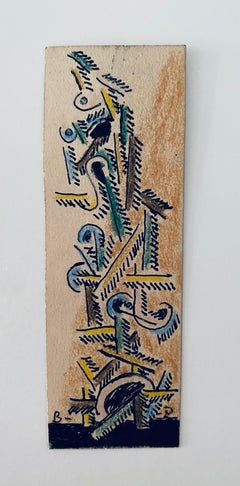
Abstract Drawing Watercolor Painting Totem Column Jewish American Modernist WPA
By Ben-Zion Weinman
Located in Surfside, FL
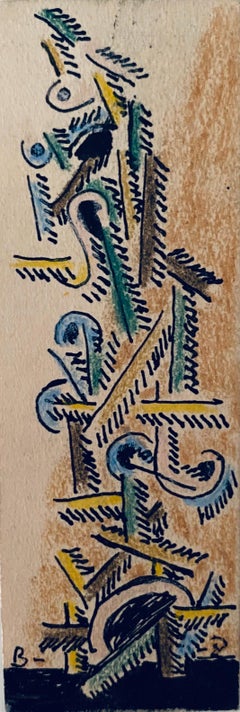
Miniature Abstract Totem. Signed with initials.
Provenance: Virginia Field, Arts administrator; New York, N.Y. Assistant director for Asia House gallery. (she was friends with John v...
Category
Mid-20th Century Expressionist Ben-Zion Weinman Art
Materials
Ink, Watercolor
Ben ZIon Expressionist Judaica Rabbi Watercolor Painting Jewish Modernist WPA
By Ben-Zion Weinman
Located in Surfside, FL
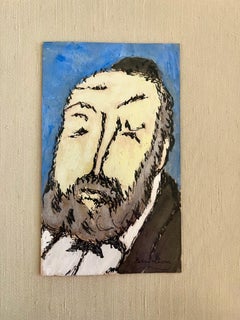
Frame measures 13.5 X 11.5
Paper measures 6.5 X 5 inches
Hand signed lower right
Watercolor painting of prophet or Rabbi, Judaica artwork
Born in 1897, Ben-Zion Weinman celebrated h...
Category
Mid-20th Century Expressionist Ben-Zion Weinman Art
Materials
Paper, Watercolor
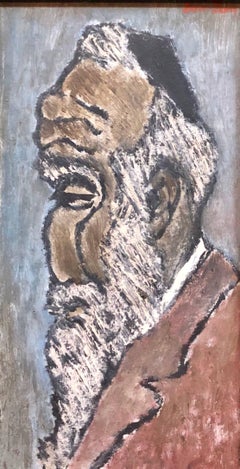
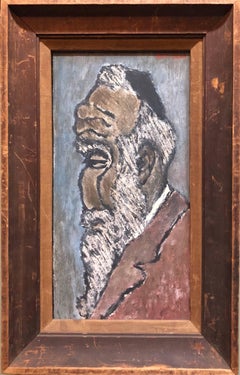
Modernist Judaica Oil Painting "Old Jew" Jewish Rabbi at Prayer
By Ben-Zion Weinman
Located in Surfside, FL
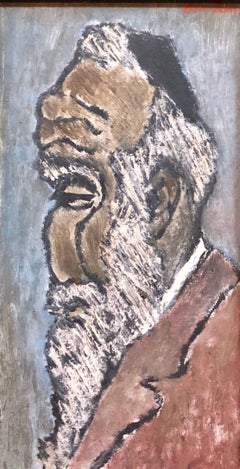
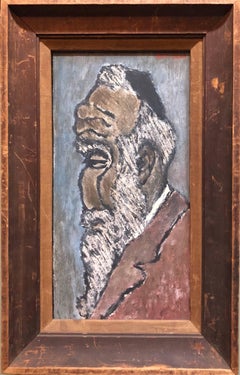
An oil on board Judaic painting by modern artist Ben-Zion Weinman. It depicts a portrait in profile of an old Jew. The work is signed "Ben-Zion".
Born in 1897, Ben-Zion Weinman celebrated his European Jewish heritage in his visual works as a sculptor, painter, and printmaker. Influenced by Spinoza, Knut Hamsun, and Wladyslaw Reymont, as well as Hebrew literature, Ben-Zion wrote poetry and essays that, like his visual work, attempt to reveal the deep “connection between man and the divine, and between man and earth.”
An emigrant from the Ukraine, he came to the US in 1920. He wrote fairy tales and poems in Hebrew under the name Benzion Weinman, but when he began painting he dropped his last name and hyphenated his first, saying an artist needed only one name.
Ben-Zion was a founding member of “The Ten: An Independent Group” The Ten” a 1930’s avant...
Category
1940s American Modern Ben-Zion Weinman Art
Materials
Oil, Board
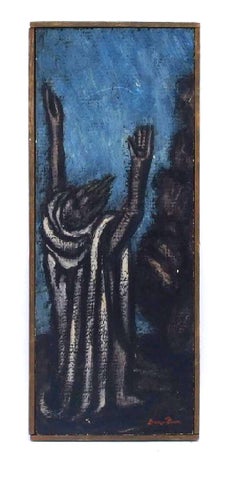
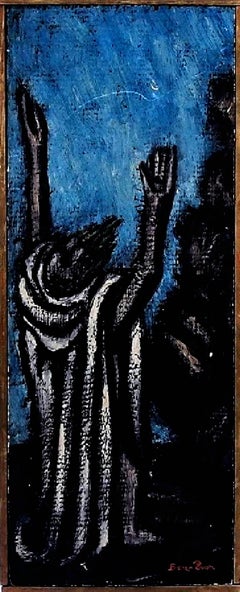
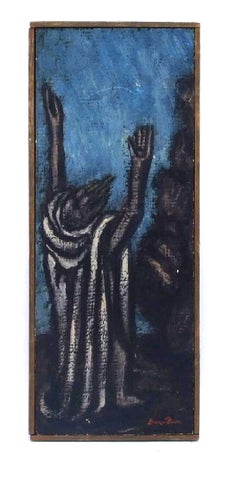
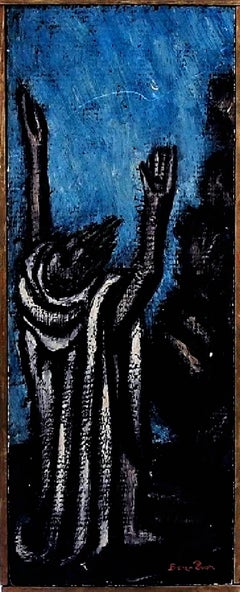
The Prophet, Modernist Judaica Oil Painting Biblical Jewish Rabbi at Prayer
By Ben-Zion Weinman
Located in Surfside, FL
An oil on board Judaic painting by modern artist Ben-Zion Weinman. The work depicts a standing prophet with white robes raising his arms towards heaven. The work is signed "Ben-Zion" in the bottom right corner. The work is signed and dated "4/14/59" on verso.
Provenance: Ex. Sotheby's Parke Bernet
Born in 1897, Ben-Zion Weinman celebrated his European Jewish heritage in his visual works as a sculptor, painter, and printmaker. Influenced by Spinoza, Knut Hamsun, and Wladyslaw Reymont, as well as Hebrew literature, Ben-Zion wrote poetry and essays that, like his visual work, attempt to reveal the deep “connection between man and the divine, and between man and earth.”
An emigrant from the Ukraine, he came to the US in 1920. He wrote fairy tales and poems in Hebrew under the name Benzion Weinman, but when he began painting he dropped his last name and hyphenated his first, saying an artist needed only one name.
Ben-Zion was a founding member of “The Ten: An Independent Group” The Ten” a 1930’s avant-garde group, Painted on anything handy. Ben-Zion often used cabinet...
Category
1950s American Modern Ben-Zion Weinman Art
Materials
Oil
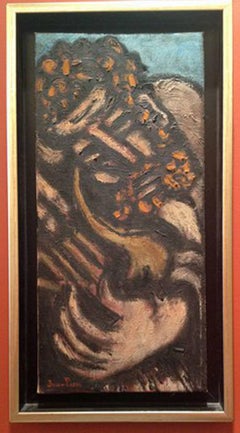
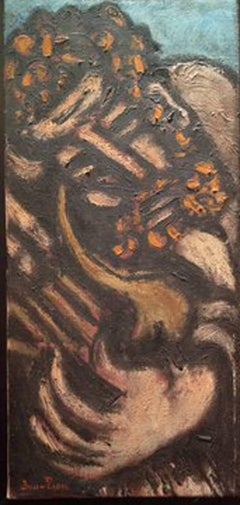
MAN PLAYING LYRE
By Ben-Zion Weinman
Located in Portland, ME
Ben-Zion. MAN PLAYING LYRE.
Oil on canvas, not dated.
Signed.
17 x 8 inches. In very good condition.
A powerful, expressionistic image.
Born Ben-Zion Weinman in Ukraine, 1897, ...
Category
Mid-20th Century Ben-Zion Weinman Art
Materials
Oil
Related Items
Modernist Mid century Swedish tram and figure scene in Fauvist colors
Located in Woodbury, CT
Acquiring a mid-20th-century Fauvist painting by Wilhelm Henning is an opportunity to own a piece of art that captures the vibrant spirit and expressive color palette of the Fauvist ...
Category
1950s Fauvist Ben-Zion Weinman Art
Materials
Oil, Board
"Fools", Harlequin Jester Twins, Carved Paper Relief Painting in Primary Colors
By Martin Ingley
Located in Soquel, CA
Whimsical textured relief painting of two stylized twin jesters in primary colors, their long mask-like faces created with the technique of hand carving layers of laminated paper board and painting with acrylic, by contemporary English artist Martin Ingley...
Category
Late 20th Century Fauvist Ben-Zion Weinman Art
Materials
Acrylic Polymer, Acrylic, Illustration Board
$365
H 11.13 in W 6.25 in D 0.75 in
SCHWANGERE FRAU.
By Käthe Kollwitz
Located in Portland, ME
Kollwitz, Kathe. SCHWANGERE FRAU. Etching and soft ground, 1910. Klipstein 108(V) 14 7/8 x 9 3/8 inches (377 x 236 mm.). Signed in pencil, and with the names of the publisher Richter...
Category
1910s Expressionist Ben-Zion Weinman Art
Materials
Etching
"Juges" from the suite "Les Fleurs du Mal""
By Georges Rouault
Located in San Francisco, CA
This artwork titled "Juges" from the suite "Les Fleurs du Mal" created in 1937/38, is an original color aquatint on Montval paper by renown French artist Georges Rouault, 1871-1958....
Category
Mid-20th Century Expressionist Ben-Zion Weinman Art
Materials
Aquatint
Woman in rocking chair oil on canvas painting fauvism nude
By Jordi Curos
Located in Sitges, Barcelona
Jordi Curós Ventura (1930-2007) - Woman in rocking chair - Oil on canvas.
Work measurements 61x46 cm.
Frameless.
Jordi Curós Ventura (Olot, Girona, March 4, 1930) is a Spanish paint...
Category
1970s Fauvist Ben-Zion Weinman Art
Materials
Canvas, Oil
$550 Sale Price
42% Off
H 24.02 in W 18.12 in
Femme Nue Vero la Gauche from The Reincarnations du Pere Ubu, by Georges Rouault
By Georges Rouault
Located in Long Island City, NY
Femme Nue Vero la Gauche from The Reincarnations du Pere Ubu
Georges Rouault, French (1871–1958)
Date: 1928
Etching with Aquatint, signed in the plate
Image Size: 12 x 8 inches
Size:...
Category
1920s Expressionist Ben-Zion Weinman Art
Materials
Etching, Aquatint
HAMBURGER KNIEPPE
By Käthe Kollwitz
Located in Santa Monica, CA
KATHE KOLLWITZ (1867-1945)
HAMBURGER KNIEPPE, 1901) (K.58 IIIb)
Soft Ground Etching, Plate 9 ¾ x 8 ¼ sheet 10 ½ x 13 ¾. With the von de Becke blind stamp in the lower right. Prin...
Category
Early 1900s Expressionist Ben-Zion Weinman Art
Materials
Etching
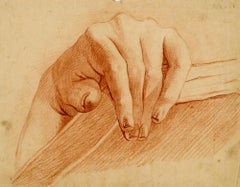
Studio di mano (study of hand) – Florentine School 18th century
Located in Middletown, NY
Red chalk on cream laid paper, 7 1/4 x 9 3/8 inches (182 x 236 mm), the full sheet. In very good condition with minor toning and two small nicks in the top sheet edge. Some modern no...
Category
Early 18th Century Italian School Ben-Zion Weinman Art
Materials
Crayon, Laid Paper
Fauvist Portrait of Woman
By Sarena Rosenfeld
Located in Soquel, CA
Vibrant fauvist portrait of a woman by Sarena Rosenfeld (American, b. 1940), 1995. Signed and dated lower right hand corner and on verso. Titled "Smoke and Mirrors." Gallery wrapped ...
Category
1990s Fauvist Ben-Zion Weinman Art
Materials
Canvas, Oil
'Young Man in Repose' by Podlach - Large Male Intimate Figurative Nude Painting
By Betsy Podlach
Located in Carmel, CA
Betsy Podlach (American, born 1964)
"Young Man in Repose" 2009
Oil Paint, Canvas, Stretcher Bars
The artist signed the back of the painting.
"Young Man in Repose" is a captivating p...
Category
2010s Fauvist Ben-Zion Weinman Art
Materials
Canvas, Oil, Stretcher Bars
$14,750
H 58 in W 58 in D 1.5 in
Studio di piede (study of foot) – Florentine School 18th century
Located in Middletown, NY
Red chalk on cream laid paper, 6 3/8 x 7 inches (160 x 176 mm), the full sheet. In very good condition with minor toning and some modern notations in pencil on the verso, as well as ...
Category
Early 18th Century Italian School Ben-Zion Weinman Art
Materials
Crayon, Laid Paper
"Green apples on the table" Oil on wood cm. 63 x 25 1970
By Enzo FARAONI
Located in Torino, IT
Still life, Apples, Green,
Enzo FARAONI (S. Stefano Magra, La Spezia, 1920/2017)
Enzo Faraoni is a great painter and engraver from Florence; he expresses the poetic everyday life o...
Category
1970s Expressionist Ben-Zion Weinman Art
Materials
Oil, Wood Panel
$5,983
H 19.69 in W 35.44 in
Previously Available Items
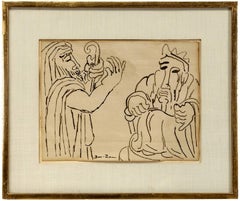
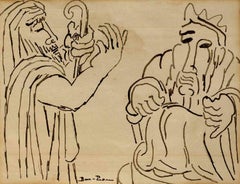
Biblical Scene, (2 Jewish Men) 1930s Modernist Ink Drawing
By Ben-Zion Weinman
Located in Surfside, FL
Born in 1897, Ben-Zion Weinman celebrated his European Jewish heritage in his visual works as a sculptor, painter, and printmaker. Influenced by Spinoza, Knut Hamsun, and Wladyslaw Reymont, as well as Hebrew literature, Ben-Zion wrote poetry and essays that, like his visual work, attempt to reveal the deep “connection between man and the divine, and between man and earth.”
An emigrant from the Ukraine, he came to the US in 1920. He wrote fairy tales and poems in Hebrew under the name Benzion Weinman, but when he began painting he dropped his last name and hyphenated his first, saying an artist needed only one name.
Ben-Zion was a founding member of “The Ten: An Independent Group” The Ten” a 1930’s avant-garde group, Painted on anything handy. Ben-Zion often used cabinet doors (panels) in his work. Other members of group included Ilya Bolotowsky, Lee Gatch, Adolf Gottlieb...
Category
Early 20th Century Ben-Zion Weinman Art
Materials
Paper, Ink
Biblical Prophet
By Ben-Zion Weinman
Located in Surfside, FL
Born in 1897, Ben-Zion Weinman celebrated his European Jewish heritage in his visual works as a sculptor, painter, and printmaker. Influenced by Spinoza, Knut Hamsun, and Wladyslaw Reymont, as well as Hebrew literature, Ben-Zion wrote poetry and essays that, like his visual work, attempt to reveal the deep “connection between man and the divine, and between man and earth.”
An emigrant from the Ukraine, he came to the US in 1920. He wrote fairy tales and poems in Hebrew under the name Benzion Weinman, but when he began painting he dropped his last name and hyphenated his first, saying an artist needed only one name.
Ben-Zion was a founding member of “The Ten: An Independent Group” The Ten” a 1930’s avant-garde group, Painted on anything handy. Ben-Zion often used cabinet doors (panels) in his work. Other members of group included Ilya Bolotowsky, Lee Gatch, Adolf Gottlieb...
Category
Mid-20th Century Expressionist Ben-Zion Weinman Art
Materials
Etching
Expressionist Judaica Rabbis Oil Painting Jewish American WPA Modernist Ben Zion
By Ben-Zion Weinman
Located in Surfside, FL
Rabbinical Discussion
Hand signed lower left.
Provenance: bears label verso for Summit Gallery
Dimensions: H 14.25" x W 8"
Born in 1897, Ben-Zion Weinman celebrated his European Jewish heritage in his visual works as a sculptor, painter, and printmaker. Influenced by Spinoza, Knut Hamsun, and Wladyslaw Reymont, as well as Hebrew literature, Ben-Zion wrote poetry and essays that, like his visual work, attempt to reveal the deep “connection between man and the divine, and between man and earth.” An emigrant from the Ukraine, he came to the US in 1920. He wrote fairy tales and poems in Hebrew under the name Benzion Weinman, but when he began painting he dropped his last name and hyphenated his first, saying an artist needed only one name.
Ben-Zion was a founding member of “The Ten: An Independent Group” The Ten” a 1930’s avant-garde group, Painted on anything handy. Ben-Zion often used cabinet doors (panels) in his work. Other members of group included Ilya Bolotowsky, Lee Gatch, Adolph Gottlieb, Louis Harris, Yankel Kufeld, Marcus Rothkowitz (later known as Mark Rothko), Louis Schanker, and Joseph Solman. The Art of “The Ten” was generally described as expressionist, as this style offered the best link between modernism and social art. Their exhibition at the Mercury Gallery in New York held at the same time as the Whitney Annual Exhibition of Contemporary American Painting, included a manifesto concentrating on aesthetic questions and criticisms of the conservative definition of modern art imposed by the Whitney. Ben-Zion’s work was quickly noticed. The New York Sun said he painted “furiously” and called him “the farthest along of the lot.” And the triptych, “The Glory of War,” was described by Art News as “resounding.”
By 1939, The Ten disbanded because most of the members found individual galleries to represent their work. Ben-Zion had his first one-man show at the Artist’s Gallery in Greenwich Village and J.B. Neumann, the highly esteemed European art dealer who introduced Paul Klee, (among others) to America, purchased several of Ben-Zion’s drawings. Curt Valentin, another well-known dealer, exhibited groups of his drawings and undertook the printing of four portfolios of etchings, each composed of Ben-Zion’s biblical themes. He worked as a WPA artist.
Ben-Zion’s work is represented in many museums throughout the country including the Metropolitan, the Whitney, and the Museum of Modern Art in New York, the Art Institute of Chicago, the Philadelphia Museum of Art and the Phillips Collection, Washington. The Jewish Museum in New York opened in 1948 with a Ben-Zion exhibition.
Ben-Zion consistently threaded certain subject matter—nature, still life, the human figure, the Rabbi, the Hebrew Bible, and the Jewish people—into his work throughout his life. "In all his work a profound human feeling remains. Sea and sky, even sheaves of wheat acquire a monolithic beauty and simplicity which delineates the transient as a reflection of the eternal. This sensitive inter- mingling of the physical and metaphysical is one of the most enduring features of Ben-Zion's works." (Excerpt from Stephen Kayser, “Biblical Paintings,” The Jewish Museum Catalogue, 1952). Mystical Imprints: Marc Chagall, Ben-Zion, and Ben Shahn presents the print work of three prominent 20th century Jewish artists born in the Russian Empire. Among these seventy pieces are etchings and lithographs from Chagall’s Bible series...
Category
Mid-20th Century Expressionist Ben-Zion Weinman Art
Materials
Oil, Wood Panel
Expressionist Miniature Drawing Wheat Stalks American Modernist Ben Zion WPA
By Ben-Zion Weinman
Located in Surfside, FL
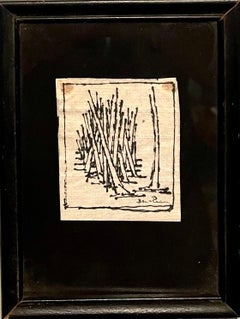
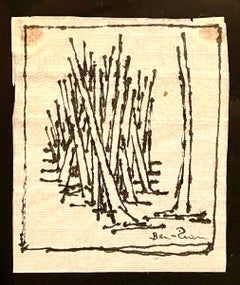
Expressionist ink drawing of wheat stalks
There is an inscription "Happy New Year" on verso
Hand signed
Framed it measures 7.75 X 5.75
The actual paper is 3 X 3.5
Born in 1897, Ben-Zion Weinman celebrated his European Jewish heritage in his visual works as a sculptor, painter, and printmaker. Influenced by Spinoza, Knut Hamsun, and Wladyslaw Reymont, as well as Hebrew literature, Ben-Zion wrote poetry and essays that, like his visual work, attempt to reveal the deep “connection between man and the divine, and between man and earth.” An emigrant from the Ukraine, he came to the US in 1920. He wrote fairy tales and poems in Hebrew under the name Benzion Weinman, but when he began painting he dropped his last name and hyphenated his first, saying an artist needed only one name.
Ben-Zion was a founding member of “The Ten: An Independent Group” The Ten” a 1930’s avant-garde group, Painted on anything handy. Ben-Zion often used cabinet doors (panels) in his work. Other members of group included Ilya Bolotowsky, Lee Gatch, Adolph Gottlieb, Louis Harris, Yankel Kufeld, Marcus Rothkowitz (later known as Mark Rothko), Louis Schanker, and Joseph Solman. The Art of “The Ten” was generally described as expressionist, as this style offered the best link between modernism and social art. Their exhibition at the Mercury Gallery in New York held at the same time as the Whitney Annual Exhibition of Contemporary American Painting, included a manifesto concentrating on aesthetic questions and criticisms of the conservative definition of modern art imposed by the Whitney. Ben-Zion’s work was quickly noticed. The New York Sun said he painted “furiously” and called him “the farthest along of the lot.” And the triptych, “The Glory of War,” was described by Art News as “resounding.”
By 1939, The Ten disbanded because most of the members found individual galleries to represent their work. Ben-Zion had his first one-man show at the Artist’s Gallery in Greenwich Village and J.B. Neumann, the highly esteemed European art dealer who introduced Paul Klee, (among others) to America, purchased several of Ben-Zion’s drawings. Curt Valentin, another well-known dealer, exhibited groups of his drawings and undertook the printing of four portfolios of etchings, each composed of Ben-Zion’s biblical themes. He worked as a WPA artist.
Ben-Zion’s work is represented in many museums throughout the country including the Metropolitan, the Whitney, and the Museum of Modern Art in New York, the Art Institute of Chicago, the Philadelphia Museum of Art and the Phillips Collection, Washington. The Jewish Museum in New York opened in 1948 with a Ben-Zion exhibition.
Ben-Zion consistently threaded certain subject matter—nature, still life, the human figure, the Hebrew Bible, and the Jewish people—into his work throughout his life. "In all his work a profound human feeling remains. Sea and sky, even sheaves of wheat acquire a monolithic beauty and simplicity which delineates the transient as a reflection of the eternal. This sensitive inter- mingling of the physical and metaphysical is one of the most enduring features of Ben-Zion's works." (Excerpt from Stephen Kayser, “Biblical Paintings,” The Jewish Museum Catalogue, 1952). Mystical Imprints: Marc Chagall, Ben-Zion, and Ben Shahn presents the print work of three prominent 20th century Jewish artists born in the Russian Empire. Among these seventy pieces are etchings and lithographs from Chagall’s Bible series...
Category
1950s Expressionist Ben-Zion Weinman Art
Materials
Ink
Expressionist Color Drawing Cobalt Glass Vintage Frame Modernist Ben Zion WPA
By Ben-Zion Weinman
Located in Surfside, FL
Expressionist ink and pastel crayon drawing of flowers in vase.
Framed in a vintage cobalt blue glass original frame
Hand signed and dated
Framed it measures 13.5 X 10.5
The actual paper is 7.5 X 5.5
Born in 1897, Ben-Zion Weinman celebrated his European Jewish heritage in his visual works as a sculptor, painter, and printmaker. Influenced by Spinoza, Knut Hamsun, and Wladyslaw Reymont, as well as Hebrew literature, Ben-Zion wrote poetry and essays that, like his visual work, attempt to reveal the deep “connection between man and the divine, and between man and earth.” An emigrant from the Ukraine, he came to the US in 1920. He wrote fairy tales and poems in Hebrew under the name Benzion Weinman, but when he began painting he dropped his last name and hyphenated his first, saying an artist needed only one name.
Ben-Zion was a founding member of “The Ten: An Independent Group” The Ten” a 1930’s avant-garde group, Painted on anything handy. Ben-Zion often used cabinet doors (panels) in his work. Other members of group included Ilya Bolotowsky, Lee Gatch, Adolph Gottlieb, Louis Harris, Yankel Kufeld, Marcus Rothkowitz (later known as Mark Rothko), Louis Schanker, and Joseph Solman. The Art of “The Ten” was generally described as expressionist, as this style offered the best link between modernism and social art. Their exhibition at the Mercury Gallery in New York held at the same time as the Whitney Annual Exhibition of Contemporary American Painting, included a manifesto concentrating on aesthetic questions and criticisms of the conservative definition of modern art imposed by the Whitney. Ben-Zion’s work was quickly noticed. The New York Sun said he painted “furiously” and called him “the farthest along of the lot.” And the triptych, “The Glory of War,” was described by Art News as “resounding.”
By 1939, The Ten disbanded because most of the members found individual galleries to represent their work. Ben-Zion had his first one-man show at the Artist’s Gallery in Greenwich Village and J.B. Neumann, the highly esteemed European art dealer who introduced Paul Klee, (among others) to America, purchased several of Ben-Zion’s drawings. Curt Valentin, another well-known dealer, exhibited groups of his drawings and undertook the printing of four portfolios of etchings, each composed of Ben-Zion’s biblical themes. He worked as a WPA artist.
Ben-Zion’s work is represented in many museums throughout the country including the Metropolitan, the Whitney, and the Museum of Modern Art in New York, the Art Institute of Chicago, the Philadelphia Museum of Art and the Phillips Collection, Washington. The Jewish Museum in New York opened in 1948 with a Ben-Zion exhibition.
Ben-Zion consistently threaded certain subject matter—nature, still life, the human figure, the Hebrew Bible, and the Jewish people—into his work throughout his life. "In all his work a profound human feeling remains. Sea and sky, even sheaves of wheat acquire a monolithic beauty and simplicity which delineates the transient as a reflection of the eternal. This sensitive inter- mingling of the physical and metaphysical is one of the most enduring features of Ben-Zion's works." (Excerpt from Stephen Kayser, “Biblical Paintings,” The Jewish Museum Catalogue, 1952). Mystical Imprints: Marc Chagall, Ben-Zion, and Ben Shahn presents the print work of three prominent 20th century Jewish artists born in the Russian Empire. Among these seventy pieces are etchings and lithographs from Chagall’s Bible series...
Category
1950s Expressionist Ben-Zion Weinman Art
Materials
Paper, Oil Crayon, Pastel, Ink
Expressionist Ink, Pastel, Crayon Drawing Jewish American Modernist Ben Zion WPA
By Ben-Zion Weinman
Located in Surfside, FL
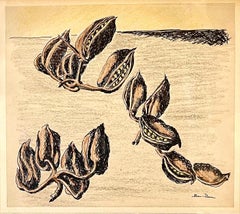
Expressionist ink and pastel crayon drawing of beans (carobs, flowers?) in pods
Hand signed.
Born in 1897, Ben-Zion Weinman celebrated his European Jewish heritage in his visual works as a sculptor, painter, and printmaker. Influenced by Spinoza, Knut Hamsun, and Wladyslaw Reymont, as well as Hebrew literature, Ben-Zion wrote poetry and essays that, like his visual work, attempt to reveal the deep “connection between man and the divine, and between man and earth.” An emigrant from the Ukraine, he came to the US in 1920. He wrote fairy tales and poems in Hebrew under the name Benzion Weinman, but when he began painting he dropped his last name and hyphenated his first, saying an artist needed only one name.
Ben-Zion was a founding member of “The Ten: An Independent Group” The Ten” a 1930’s avant-garde group, Painted on anything handy. Ben-Zion often used cabinet doors (panels) in his work. Other members of group included Ilya Bolotowsky, Lee Gatch, Adolph Gottlieb, Louis Harris, Yankel Kufeld, Marcus Rothkowitz (later known as Mark Rothko), Louis Schanker, and Joseph Solman. The Art of “The Ten” was generally described as expressionist, as this style offered the best link between modernism and social art. Their exhibition at the Mercury Gallery in New York held at the same time as the Whitney Annual Exhibition of Contemporary American Painting, included a manifesto concentrating on aesthetic questions and criticisms of the conservative definition of modern art imposed by the Whitney. Ben-Zion’s work was quickly noticed. The New York Sun said he painted “furiously” and called him “the farthest along of the lot.” And the triptych, “The Glory of War,” was described by Art News as “resounding.”
By 1939, The Ten disbanded because most of the members found individual galleries to represent their work. Ben-Zion had his first one-man show at the Artist’s Gallery in Greenwich Village and J.B. Neumann, the highly esteemed European art dealer who introduced Paul Klee, (among others) to America, purchased several of Ben-Zion’s drawings. Curt Valentin, another well-known dealer, exhibited groups of his drawings and undertook the printing of four portfolios of etchings, each composed of Ben-Zion’s biblical themes. He worked as a WPA artist.
Ben-Zion’s work is represented in many museums throughout the country including the Metropolitan, the Whitney, and the Museum of Modern Art in New York, the Art Institute of Chicago, the Philadelphia Museum of Art and the Phillips Collection, Washington. The Jewish Museum in New York opened in 1948 with a Ben-Zion exhibition.
Ben-Zion consistently threaded certain subject matter—nature, still life, the human figure, the Hebrew Bible, and the Jewish people—into his work throughout his life. "In all his work a profound human feeling remains. Sea and sky, even sheaves of wheat acquire a monolithic beauty and simplicity which delineates the transient as a reflection of the eternal. This sensitive inter- mingling of the physical and metaphysical is one of the most enduring features of Ben-Zion's works." (Excerpt from Stephen Kayser, “Biblical Paintings,” The Jewish Museum Catalogue, 1952). Mystical Imprints: Marc Chagall, Ben-Zion, and Ben Shahn presents the print work of three prominent 20th century Jewish artists born in the Russian Empire. Among these seventy pieces are etchings and lithographs from Chagall’s Bible series...
Category
Mid-20th Century Expressionist Ben-Zion Weinman Art
Materials
Paper, Oil Crayon, Pastel, Ink
Expressionist Judaica Havdalah Oil Painting Jewish American Modernist Ben Zion
By Ben-Zion Weinman
Located in Surfside, FL
Oil Painting of still life Havdalah scene with braided candle, spice tower box and kiddush cup.
Born in 1897, Ben-Zion Weinman celebrated his European Jewish heritage in his visual works as a sculptor, painter, and printmaker. Influenced by Spinoza, Knut Hamsun, and Wladyslaw Reymont, as well as Hebrew literature, Ben-Zion wrote poetry and essays that, like his visual work, attempt to reveal the deep “connection between man and the divine, and between man and earth.” An emigrant from the Ukraine, he came to the US in 1920. He wrote fairy tales and poems in Hebrew under the name Benzion Weinman, but when he began painting he dropped his last name and hyphenated his first, saying an artist needed only one name.
Ben-Zion was a founding member of “The Ten: An Independent Group” The Ten” a 1930’s avant-garde group, Painted on anything handy. Ben-Zion often used cabinet doors (panels) in his work. Other members of group included Ilya Bolotowsky, Lee Gatch, Adolph Gottlieb, Louis Harris, Yankel Kufeld, Marcus Rothkowitz (later known as Mark Rothko), Louis Schanker, and Joseph Solman. The Art of “The Ten” was generally described as expressionist, as this style offered the best link between modernism and social art. Their exhibition at the Mercury Gallery in New York held at the same time as the Whitney Annual Exhibition of Contemporary American Painting, included a manifesto concentrating on aesthetic questions and criticisms of the conservative definition of modern art imposed by the Whitney. Ben-Zion’s work was quickly noticed. The New York Sun said he painted “furiously” and called him “the farthest along of the lot.” And the triptych, “The Glory of War,” was described by Art News as “resounding.”
By 1939, The Ten disbanded because most of the members found individual galleries to represent their work. Ben-Zion had his first one-man show at the Artist’s Gallery in Greenwich Village and J.B. Neumann, the highly esteemed European art dealer who introduced Paul Klee, (among others) to America, purchased several of Ben-Zion’s drawings. Curt Valentin, another well-known dealer, exhibited groups of his drawings and undertook the printing of four portfolios of etchings, each composed of Ben-Zion’s biblical themes. He worked as a WPA artist.
Ben-Zion’s work is represented in many museums throughout the country including the Metropolitan, the Whitney, and the Museum of Modern Art in New York, the Art Institute of Chicago, the Philadelphia Museum of Art and the Phillips Collection, Washington. The Jewish Museum in New York opened in 1948 with a Ben-Zion exhibition.
Ben-Zion consistently threaded certain subject matter—nature, still life, the human figure, the Hebrew Bible, and the Jewish people—into his work throughout his life. "In all his work a profound human feeling remains. Sea and sky, even sheaves of wheat acquire a monolithic beauty and simplicity which delineates the transient as a reflection of the eternal. This sensitive inter- mingling of the physical and metaphysical is one of the most enduring features of Ben-Zion's works." (Excerpt from Stephen Kayser, “Biblical Paintings,” The Jewish Museum Catalogue, 1952). Mystical Imprints: Marc Chagall, Ben-Zion, and Ben Shahn presents the print work of three prominent 20th century Jewish artists born in the Russian Empire. Among these seventy pieces are etchings and lithographs from Chagall’s Bible series...
Category
Mid-20th Century Expressionist Ben-Zion Weinman Art
Materials
Oil, Wood Panel
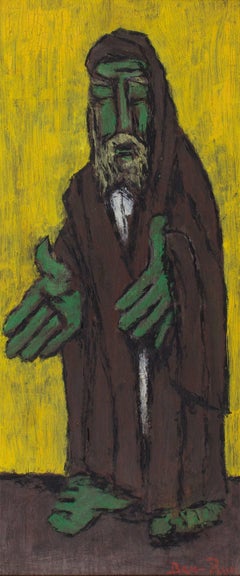
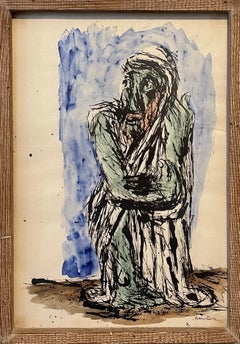
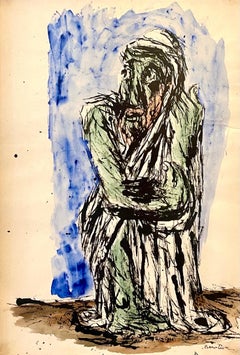
Abstract Expressionist Rabbi Watercolor Painting Jewish American Modernist WPA
By Ben-Zion Weinman
Located in Surfside, FL
Watercolor painting of standing prophet or Rabbi, Judaica artwork
Born in 1897, Ben-Zion Weinman celebrated his European Jewish heritage in his visual works as a sculptor, painter, and printmaker. Influenced by Spinoza, Knut Hamsun, and Wladyslaw Reymont, as well as Hebrew literature, Ben-Zion wrote poetry and essays that, like his visual work, attempt to reveal the deep “connection between man and the divine, and between man and earth.” An emigrant from the Ukraine, he came to the US in 1920. He wrote fairy tales and poems in Hebrew under the name Benzion Weinman, but when he began painting he dropped his last name and hyphenated his first, saying an artist needed only one name.
Ben-Zion was a founding member of “The Ten: An Independent Group” The Ten” a 1930’s avant-garde group, Painted on anything handy. Ben-Zion often used cabinet doors (panels) in his work. Other members of group included Ilya Bolotowsky, Lee Gatch, Adolf Gottlieb...
Category
Mid-20th Century Expressionist Ben-Zion Weinman Art
Materials
Paper, Watercolor
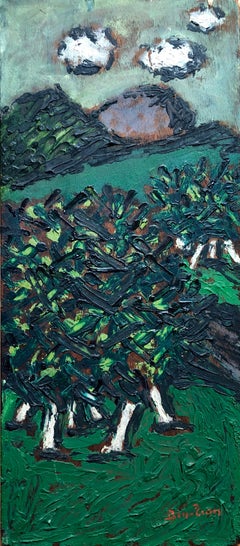
Abstract Expressionist Drawing Jewish American Modernist WPA, Group of Ten
By Ben-Zion Weinman
Located in Surfside, FL
Miniature Abstract Drawing in New Years Card
Provenance: Virginia Field, Arts administrator; New York, N.Y. Assistant director for Asia House gallery. (she was friends with John von...
Category
Mid-20th Century Expressionist Ben-Zion Weinman Art
Materials
Etching
Abstract Drawing Watercolor Painting Totem Column Jewish American Modernist WPA
By Ben-Zion Weinman
Located in Surfside, FL
Miniature Abstract Totem. Signed with initials.
Provenance: Virginia Field, Arts administrator; New York, N.Y. Assistant director for Asia House gallery. (she was friends with John von Wicht and Andy Warhol)
Born in 1897, Ben-Zion Weinman celebrated his European Jewish heritage in his visual works as a sculptor, painter, and printmaker. Influenced by Spinoza, Knut Hamsun, and Wladyslaw Reymont, as well as Hebrew literature, Ben-Zion wrote poetry and essays that, like his visual work, attempt to reveal the deep “connection between man and the divine, and between man and earth.”
An emigrant from the Ukraine, he came to the US in 1920. He wrote fairy tales and poems in Hebrew under the name Benzion Weinman, but when he began painting he dropped his last name and hyphenated his first, saying an artist needed only one name.
Ben-Zion was a founding member of “The Ten: An Independent Group” The Ten” a 1930’s avant-garde group, Painted on anything handy. Ben-Zion often used cabinet doors (panels) in his work. Other members of group included Ilya Bolotowsky, Lee Gatch, Adolf Gottlieb, Louis Harris, Yankel...
Category
Mid-20th Century Expressionist Ben-Zion Weinman Art
Materials
Ink, Watercolor
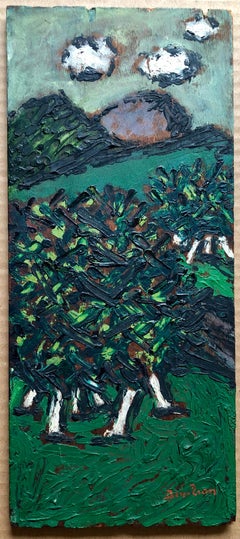
Pastel, Ink Drawing Rocks And Cloud Landscape Jewish American Modernist WPA
By Ben-Zion Weinman
Located in Surfside, FL
Miniature Landscape
Provenance: Virginia Field, Arts administrator; New York, N.Y. Assistant director for Asia House gallery. (she was friends with John von Wicht and Andy Warhol)
Born in 1897, Ben-Zion Weinman celebrated his European Jewish heritage in his visual works as a sculptor, painter, and printmaker. Influenced by Spinoza, Knut Hamsun, and Wladyslaw Reymont, as well as Hebrew literature, Ben-Zion wrote poetry and essays that, like his visual work, attempt to reveal the deep “connection between man and the divine, and between man and earth.”
An emigrant from the Ukraine, he came to the US in 1920. He wrote fairy tales and poems in Hebrew under the name Benzion Weinman, but when he began painting he dropped his last name and hyphenated his first, saying an artist needed only one name.
Ben-Zion was a founding member of “The Ten: An Independent Group” The Ten” a 1930’s avant-garde group, Painted on anything handy. Ben-Zion often used cabinet doors (panels) in his work. Other members of group included Ilya Bolotowsky, Lee Gatch, Adolf Gottlieb, Louis Harris, Yankel Kufeld, Marcus Rothkowitz (later known as Mark Rothko), Louis Schanker, and Joseph Solman. The Art of “The Ten” was generally described as expressionist, as this style offered the best link between modernism and social art. Their exhibition at the Mercury Gallery in New York held at the same time as the Whitney Annual Exhibition of Contemporary American Painting, included a manifesto concentrating on aesthetic questions and criticisms of the conservative definition of modern art imposed by the Whitney. Ben-Zion’s work was quickly noticed. The New York Sun said he painted “furiously” and called him “the farthest along of the lot.” And the triptych, “The Glory of War,” was described by Art News as “resounding.”
By 1939, The Ten disbanded because most of the members found individual galleries to represent their work. Ben-Zion had his first one-man show at the Artist’s Gallery in Greenwich Village and J.B. Neumann, the highly esteemed European art dealer who introduced Paul Klee, (among others) to America, purchased several of Ben-Zion’s drawings. Curt Valentin, another well-known dealer, exhibited groups of his drawings and undertook the printing of four portfolios of etchings, each composed of Ben-Zion’s biblical themes.
Ben-Zion’s work is represented in many museums throughout the country including the Metropolitan, the Whitney, and the Museum of Modern Art in New York, the Art Institute of Chicago, the Philadelphia Museum of Art and the Phillips Collection, Washington. The Jewish Museum in New York opened in 1948 with a Ben-Zion exhibition.
“Ben-Zion has his hands on the pulse of the common man and his natural world”
As he emerged as an artist Ben-Zion never lost his gift for presenting the ordinary in ways that are vital, fresh and filled with emotions that are somber and exhilarating, joyous and thoughtful, and ultimately, filled with extraordinary poetic simplicity.
Ben-Zion consistently threaded certain subject matter—nature, still life, the human figure, the Hebrew Bible, and the Jewish people—into his work throughout his life. "In all his work a profound human feeling remains. Sea and sky, even sheaves of wheat acquire a monolithic beauty and simplicity which delineates the transient as a reflection of the eternal. This sensitive inter- mingling of the physical and metaphysical is one of the most enduring features of Ben-Zion's works." (Excerpt from Stephen Kayser, “Biblical Paintings,” The Jewish Museum Catalogue, 1952).
Along with ben Shahn, William Gropper, Chaim Gross and Abraham Rattner he was an influential mid century Jewish American...
Category
Mid-20th Century Expressionist Ben-Zion Weinman Art
Materials
Pastel, Ink, Watercolor
Crayon Pastel Drawing Rooster Jewish American Modernist WPA Artist School of Ten
By Ben-Zion Weinman
Located in Surfside, FL
Miniature
Actual drawing is 2.2" X 2" with paper backing 4" X 3.2"
Colorful Bantam cock, chicken.
Provenance: Virginia Field, Arts administrator; New York, N.Y. Assistant director ...
Category
Mid-20th Century Expressionist Ben-Zion Weinman Art
Materials
Etching
Ben-zion Weinman art for sale on 1stDibs.
Find a wide variety of authentic Ben-Zion Weinman art available for sale on 1stDibs. If you’re browsing the collection of art to introduce a pop of color in a neutral corner of your living room or bedroom, you can find work that includes elements of blue, orange and other colors. You can also browse by medium to find art by Ben-Zion Weinman in paint, oil paint, ink and more. Much of the original work by this artist or collective was created during the 20th century and is mostly associated with the Expressionist style. Not every interior allows for large Ben-Zion Weinman art, so small editions measuring 2 inches across are available. Customers who are interested in this artist might also find the work of Lucien Génin, Gail Foster, and Eve Nethercott. Ben-Zion Weinman art prices can differ depending upon medium, time period and other attributes. On 1stDibs, the price for these items starts at $450 and tops out at $6,500, while the average work can sell for $1,200.