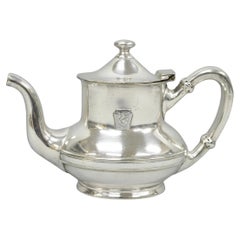
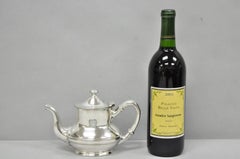
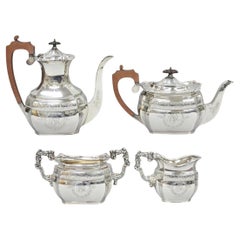
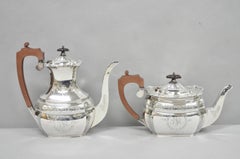
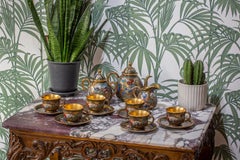
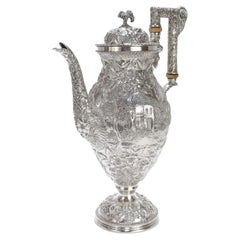
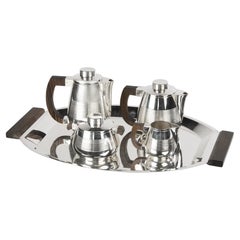
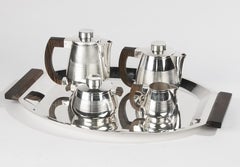
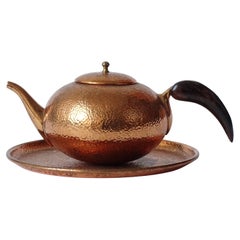
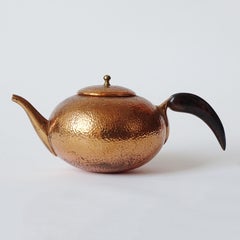
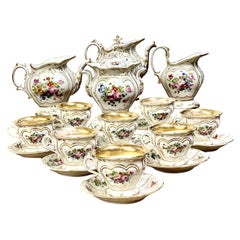
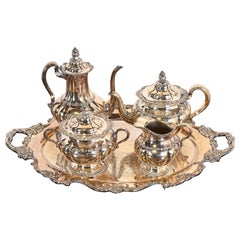
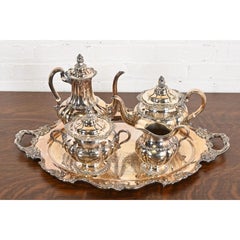
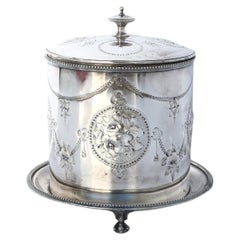
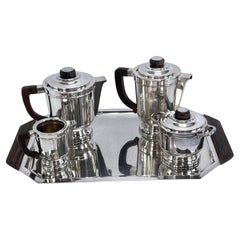
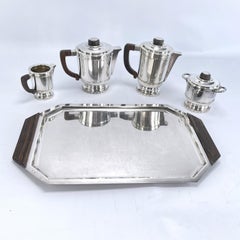
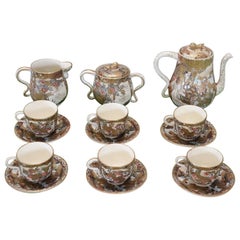
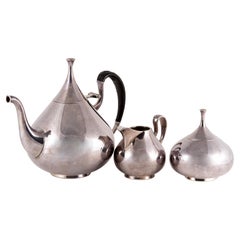
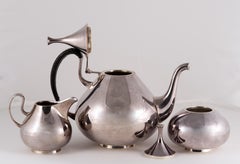
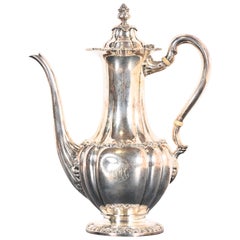
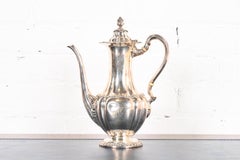
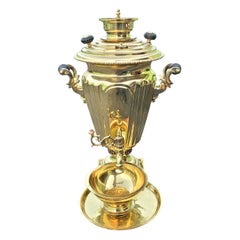
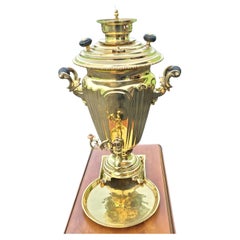
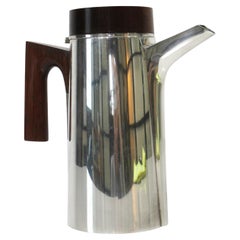
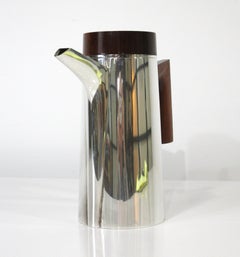
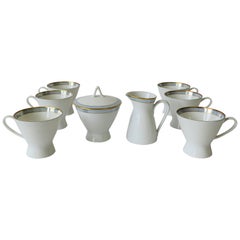
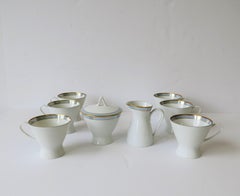
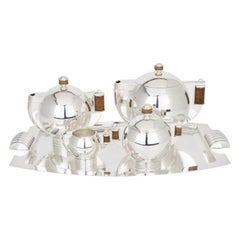
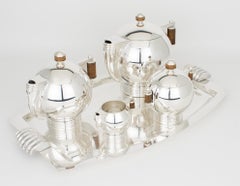
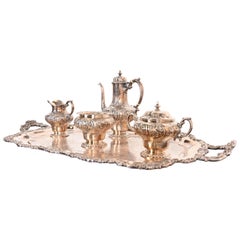
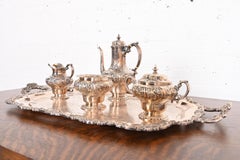
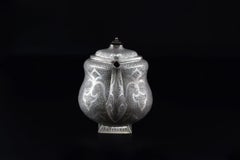
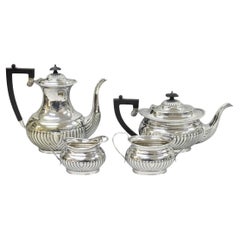
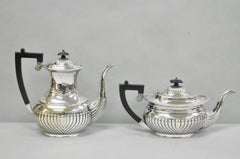
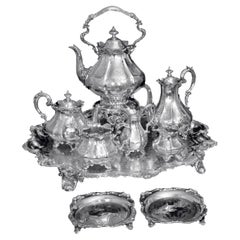
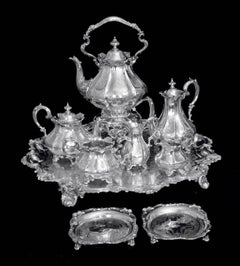
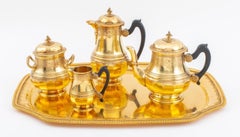
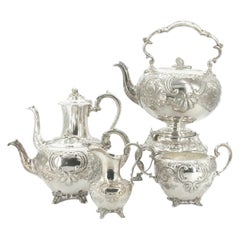
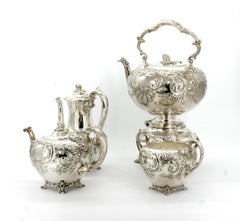
SAVORY and Sons - 9pc. 19th Century Victorian (British) Sterling Silver Tea Set
By Maison Odiot Paris, A. B. Savory
Located in Wilmington, DE
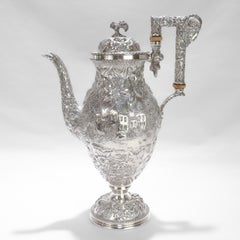
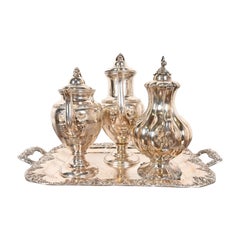
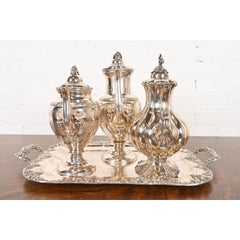
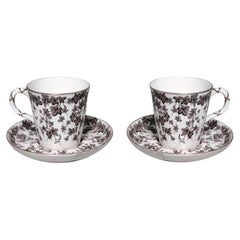
Direct from a private mansion in Paris, a stunning 9-piece antique Victorian sterling silver tea set by one of Britain’s premier silversmiths “Savory and Sons” professionally refinished to near new condition and including 8 anti-tarnish storage wraps for easy storage – circa early 1800s. The annals of British silversmithing are replete with illustrious names, each contributing to an enduring legacy of artistry and opulence. Among these distinguished firms, Savory and Sons occupies a position of particular reverence. From its early 19th-century origins in the heart of the City of London to its eventual evolution into a larger commercial entity, the name Savory became synonymous with the pinnacle of quality, elegance, and refined taste. More than mere retailers or manufacturers, they were arbiters of style, purveyors of luxury to a clientele that included royalty, and creators of some of the most exquisite silver objects of the Victorian era.
Savory - A Foundation of Quality and Craftsmanship: The story of Savory and Sons is one of entrepreneurial spirit, family partnership, and an unwavering commitment to excellence. The firm's origins can be traced to 1812, when Adey Bellamy Savory, a man of Huguenot descent—a heritage often associated with exceptional skill in the precious metal trades—established his business at 14 Cornhill in the City of London. Initially listed in directories under various specializations, from goldsmith to dealer in foreign coins, A.B. Savory was building a foundation as a purveyor of fine and curious goods. This early period was crucial for establishing the reputation for reliability and discernment that would become the firm's hallmark. A pivotal transformation occurred in 1833 when Adey Bellamy's sons, Joseph and Albert, were taken into partnership, and the firm's name was officially changed to A.B. Savory & Sons. This marked the beginning of its most celebrated era. The business model was sophisticated, operating on two fronts. They maintained a retail presence at various addresses on Cornhill, strategically positioned opposite the Bank of England, a locale that placed them at the very center of British commerce and affluence. Simultaneously, they operated a significant manufacturing enterprise, or "silver manufactory," at 5 Finsbury Place, South, and later at 15 Gee Street and 18 Red Lion Street in Clerkenwell, the historic heart of London's watchmaking and silversmithing trades. This vertical integration allowed Savory & Sons to exert unparalleled control over the quality of their wares, from the initial design concept to the final polish. The exceptional quality and craftsmanship associated with the Savory name was not solely the product of the founding family, but also of the master artisans they employed. A prime example is the silversmith William Smily and his sons. William
Smily, who had been apprenticed to a spoon and fork maker, began working in Savory's Gee Street factory and eventually rose to become the works manager for A.B. Savory & Sons. It was Smily who registered his own maker's mark, which was used on silverware manufactured for the firm, often accompanied by the stamp "A.B. Savory & Sons". This practice of collaborating with and retaining craftsmen ensured that the silver bearing the Savory name was not merely retailed but was conceived and executed to the highest international standards. The "SS" mark, used by both William and later his son Samuel (who succeeded him as works manager), became an internal stamp of quality, signifying that a piece had been crafted under the watchful eye of a master. The detail lavished on even the most functional items is a testament to this culture of excellence.
Royal Patronage and Public Accolades: For a firm like Savory and Sons, the ultimate validation of its status came in the form of royal patronage. Their location opposite the Bank of England and their reputation for supplying "the World's Elite," placed them in the direct orbit of the aristocracy and the royal household. To be a silversmith of choice for the upper echelons of society was, in effect, to operate under a de facto royal warrant, as taste and fashion flowed...
Category
Early 19th Century British Early Victorian Antique Tea Sets
MaterialsVermeil, Sterling Silver