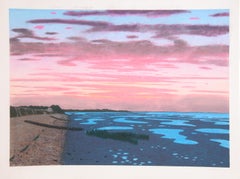
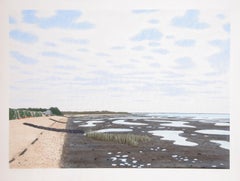
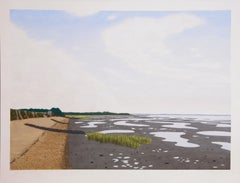
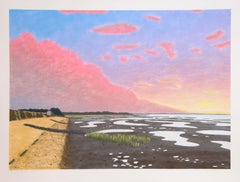
Bill Sullivan Art

American, b. 1942

Bill Sullivan is an American artist whose beautiful prints show that he is making them with a sense of style and purpose. Sullivan is one of a modern breed of artists whose work talks to us as well. He was born in New Haven, Connecticut, and died in Albany, New York. He attended Silvermine College and earned an MFA from the University of Pennsylvania, where he studied with Fairfield Porter, Neil Welliver, Jane Freilicher, John Button and Rudy Burckhardt. He also studied privately with Josef and Annie Albers.

to
17
17
17
15
1
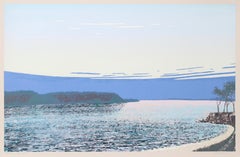
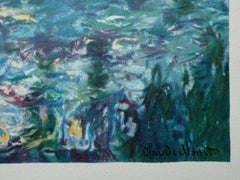
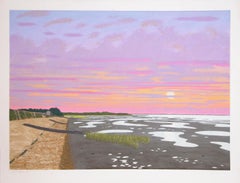
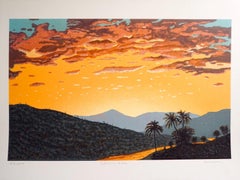
Stony Creek Sunset, Impressionist Lithograph by Bill Sullivan

Stony Creek Sunset, Impressionist Lithograph by Bill Sullivan

By Bill Sullivan

Located in Long Island City, NY

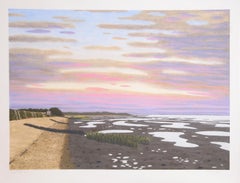
Bill Sullivan, American (1942 - ) - Stony Creek Sunset, Medium: Lithograph, Signed in Pencil, Edition: 50, Size: 30 in. x 44 in. (76.2 cm x 111.76 cm), Description: Overlooking t...

Category

1990s Impressionist Bill Sullivan Art

Materials

Lithograph

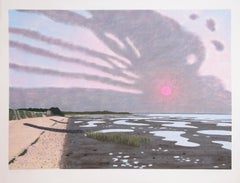
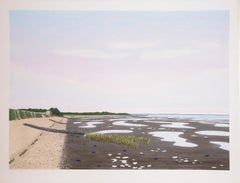
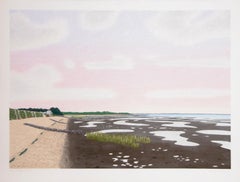
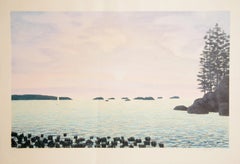
Low Tide 18, Impressionist Hand-Colored Lithograph by Bill Sullivan

Low Tide 18, Impressionist Hand-Colored Lithograph by Bill Sullivan

By Bill Sullivan

Located in Long Island City, NY

Bill Sullivan, American (1942 - ) - Low Tide 18, Year: circa 1985, Medium: Hand Colored Lithograph, signed in pencil, Edition: 25, Size: 35 x 50 in. (88.9 x 127 cm), Descriptio...

Category

1980s Impressionist Bill Sullivan Art

Materials

Lithograph

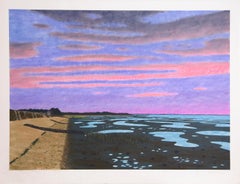
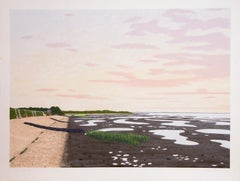
Low Tide 15, Impressionist Hand-Colored Lithograph by Bill Sullivan

Low Tide 15, Impressionist Hand-Colored Lithograph by Bill Sullivan

By Bill Sullivan

Located in Long Island City, NY

Bill Sullivan, American (1942 - ) - Low Tide 15, Year: circa 1985, Medium: Hand Colored Lithograph, signed in pencil, Edition: 25, Size: 35 x 50 in. (88.9 x 127 cm), Descriptio...

Category

1980s Impressionist Bill Sullivan Art

Materials

Lithograph

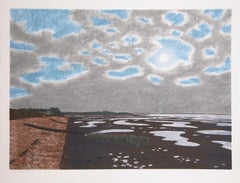
Low Tide 21, Impressionist Hand-Colored Lithograph by Bill Sullivan

Low Tide 21, Impressionist Hand-Colored Lithograph by Bill Sullivan

By Bill Sullivan

Located in Long Island City, NY

Bill Sullivan, American (1942 - ) - Low Tide 21, Year: circa 1985, Medium: Hand Colored Lithograph, signed in pencil, Edition: 25, Size: 35 x 50 in. (88.9 x 127 cm), Descriptio...

Category

1980s Impressionist Bill Sullivan Art

Materials

Lithograph

Low Tide 7, Impressionist Hand-Colored Lithograph by Bill Sullivan

Low Tide 7, Impressionist Hand-Colored Lithograph by Bill Sullivan

By Bill Sullivan

Located in Long Island City, NY

Bill Sullivan, American (1942 - ) - Low Tide 7, Year: circa 1985, Medium: Hand Colored Lithograph, signed in pencil, Edition: 25, Size: 35 x 50 in. (88.9 x 127 cm), Description...

Category

1980s Impressionist Bill Sullivan Art

Materials

Lithograph

Low Tide 8, Impressionist Hand-Colored Lithograph by Bill Sullivan

Low Tide 8, Impressionist Hand-Colored Lithograph by Bill Sullivan

By Bill Sullivan

Located in Long Island City, NY

Bill Sullivan, American (1942 - ) - Low Tide 8, Year: circa 1985, Medium: Hand Colored Lithograph, signed in pencil, Edition: 25, Size: 35 x 50 in. (88.9 x 127 cm), Description...

Category

1980s Impressionist Bill Sullivan Art

Materials

Lithograph

Low Tide 24, Impressionist Hand-Colored Lithograph by Bill Sullivan

Low Tide 24, Impressionist Hand-Colored Lithograph by Bill Sullivan

By Bill Sullivan

Located in Long Island City, NY

Bill Sullivan, American (1942 - ) - Low Tide 24, Year: circa 1985, Medium: Hand Colored Lithograph, signed in pencil, Edition: 25, Size: 35 x 50 in. (88.9 x 127 cm), Descriptio...

Category

1980s Impressionist Bill Sullivan Art

Materials

Lithograph

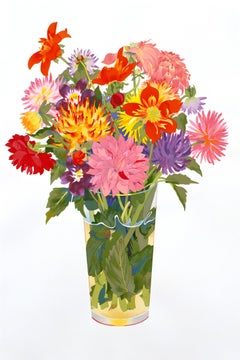
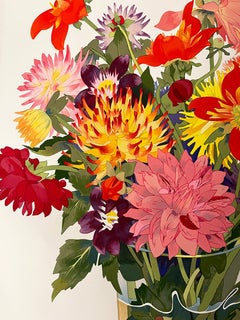
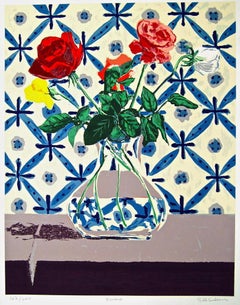
Flowers
Flowers

Flowers

By Bill Sullivan

Located in Hollywood, FL

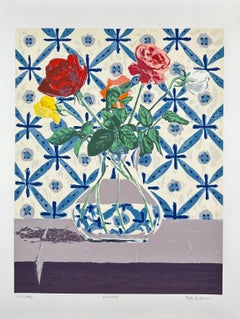
Artist: Bill Sullivan Title: Flowers Medium: Serigraph Signed: Hand Signed Edition: Edition of 200 Measurements: 22" x 30" Condition: Excellent. This piece has been stored in a ...

Category

Late 20th Century Contemporary Bill Sullivan Art

Materials

Screen

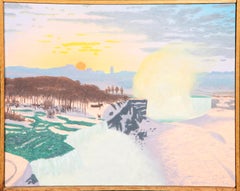
Pink Niagara, Abstract Expressionist Oil Painting on Canvas by Bill Sullivan

Pink Niagara, Abstract Expressionist Oil Painting on Canvas by Bill Sullivan

By Bill Sullivan

Located in Long Island City, NY

Bill Sullivan, American (1942 - ) - Pink Niagara, Year: 1986, Medium: Oil on Canvas, dated and titled on verso, Size: 16 x 20 in. (40.64 x 50.8 cm), Frame Size: 17 x 20.75 inches...

Category

1980s Abstract Expressionist Bill Sullivan Art

Materials

Oil

Low Tide 20, Impressionist Hand-Colored Lithograph by Bill Sullivan

Low Tide 20, Impressionist Hand-Colored Lithograph by Bill Sullivan

By Bill Sullivan

Located in Long Island City, NY

Bill Sullivan, American (1942 - ) - Low Tide 20, Year: circa 1985, Medium: Hand Colored Lithograph, signed in pencil, Edition: 25, Size: 35 x 50 in. (88.9 x 127 cm), Descriptio...

Category

1980s Impressionist Bill Sullivan Art

Materials

Lithograph

Low Tide 13, Impressionist Hand-Colored Lithograph by Bill Sullivan

Low Tide 13, Impressionist Hand-Colored Lithograph by Bill Sullivan

By Bill Sullivan

Located in Long Island City, NY

Bill Sullivan, American (1942 - ) - Low Tide 13, Year: circa 1985, Medium: Hand Colored Lithograph, signed in pencil, Edition: 25, Size: 35 x 50 in. (88.9 x 127 cm), Descriptio...

Category

1980s Impressionist Bill Sullivan Art

Materials

Lithograph

Low Tide 2, Impressionist Hand-Colored Lithograph by Bill Sullivan

Low Tide 2, Impressionist Hand-Colored Lithograph by Bill Sullivan

By Bill Sullivan

Located in Long Island City, NY

Bill Sullivan, American (1942 - ) - Low Tide 2, Year: circa 1985, Medium: Hand Colored Lithograph, signed in pencil, Edition: 25, Size: 35 x 50 in. (88.9 x 127 cm), Description...

Category

1980s Impressionist Bill Sullivan Art

Materials

Lithograph

Low Tide 22, Impressionist Hand-Colored Lithograph by Bill Sullivan

Low Tide 22, Impressionist Hand-Colored Lithograph by Bill Sullivan

By Bill Sullivan

Located in Long Island City, NY

Bill Sullivan, American (1942 - ) - Low Tide 22, Year: circa 1985, Medium: Hand Colored Lithograph, signed in pencil, Edition: 25, Size: 35 x 50 in. (88.9 x 127 cm), Descriptio...

Category

1980s Impressionist Bill Sullivan Art

Materials

Lithograph

Low Tide 16, Impressionist Hand-Colored Lithograph by Bill Sullivan

Low Tide 16, Impressionist Hand-Colored Lithograph by Bill Sullivan

By Bill Sullivan

Located in Long Island City, NY

Bill Sullivan, American (1942 - ) - Low Tide 16, Year: circa 1985, Medium: Hand Colored Lithograph, signed in pencil, Edition: 25, Size: 35 x 50 in. (88.9 x 127 cm), Descriptio...

Category

1980s Impressionist Bill Sullivan Art

Materials

Lithograph

Low Tide 17, Impressionist Hand-Colored Lithograph by Bill Sullivan

Low Tide 17, Impressionist Hand-Colored Lithograph by Bill Sullivan

By Bill Sullivan

Located in Long Island City, NY

Bill Sullivan, American (1942 - ) - Low Tide 17, Year: circa 1985, Medium: Hand Colored Lithograph, signed in pencil, Edition: 25, Size: 35 x 50 in. (88.9 x 127 cm), Descriptio...

Category

1980s Impressionist Bill Sullivan Art

Materials

Lithograph

Low Tide 11, Impressionist Hand-Colored Lithograph by Bill Sullivan

Low Tide 11, Impressionist Hand-Colored Lithograph by Bill Sullivan

By Bill Sullivan

Located in Long Island City, NY

Bill Sullivan, American (1942 - ) - Low Tide 11, Year: circa 1985, Medium: Hand Colored Lithograph, signed in pencil, Edition: 25, Size: 35 x 50 in. (88.9 x 127 cm), Descriptio...

Category

1980s Impressionist Bill Sullivan Art

Materials

Lithograph

Related Items
Edgar Degas, Dancer at the Barre, 1945 (after)

Edgar Degas, Dancer at the Barre, 1945 (after)

By Edgar Degas

Located in Southampton, NY

This exquisite lithograph after Edgar Degas (1834–1917), titled Danseur au bar (Dancer at the Barre), originates from the 1945 folio Degas, Ten Ballet Sketches. Published by The Stud...

Category

1940s Impressionist Bill Sullivan Art

Materials

Lithograph

Edgar Degas, Dancer Standing in Profile, 1945 (after)

Edgar Degas, Dancer Standing in Profile, 1945 (after)

By Edgar Degas

Located in Southampton, NY

This exquisite lithograph after Edgar Degas (1834–1917), titled Danseur debout de profil (Dancer Standing in Profile), originates from the 1945 folio Degas, Ten Ballet Sketches. Published by The Studio Publications, Inc., New York, rendered and printed by Albert Carman, City Island, 1945, this work reflects Degas’s sensitive mastery of line, movement, and intimate observation, capturing the grace, poise, and psychological immediacy that define his iconic ballet imagery. In Danseur debout de profil (Dancer Standing in Profile), Degas reveals gesture and inner emotion through economical contour and lyrical nuance. Executed as a lithograph and pochoir on velin paper, this work measures 17 x 13 inches (43.18 x 33.02 cm). Signed in the plate and unnumbered as issued. Rendered and printed by Albert Carman, City Island, one of the notable American ateliers specializing in fine art lithography during the mid-20th century. Artwork Details: Artist: After Edgar Degas (1834–1917) Title: Danseur debout de profil (Dancer Standing in Profile), from Degas, Ten Ballet Sketches, 1945 Medium: Lithograph and pochoir on velin paper Dimensions: 17 x 13 inches (43.18 x 33.02 cm) Inscription: Signed in the plate and unnumbered as issued Date: 1945 Publisher: The Studio Publications, Inc., New York Printer: Albert Carman, City Island, 1945 Condition: Well preserved, consistent with age and medium Provenance: From the 1945 folio Degas, Ten Ballet Sketches, published by The Studio Publications, Inc., New York Notes: Excerpted from the album, Born in Paris in 1834, Edgar Degas lived, and surely loved the life of that city during most of his years. These continued somewhat sadly beyond those of most of his friends— into the debacle of the first World War, during which he died in 1917. Judging by the frequency with which he used them as models, he must have had an especial admiration for the ballet girls who followed a profession that at the time brought none of the glory and prosperity which attend it today. New aspects of the human body, revealed in movement, fascinated him. But his occupation with the simply anatomical side of his subjects never resulted in a cold interpretation. On the contrary there is a warmth and sympathy that pervades all of his work. The drawings here represent the painter in one important phase of his multi-sensitive view of life; and permit an insight which a more ambitious work might not do-into the operation of the creative process, the artist's transformation of reality as it passes through the mesh of his sensibilities. The Edition of this Portfolio is limited to MMMD examples. Rendered by Albert Carman. About the Publication: Degas, Ten Ballet Sketches, published in 1945 by The Studio Publications, Inc., New York, stands as one of the most elegant and scholarly mid-century American fine art folios devoted to the ballet imagery of Edgar Degas. Conceived as a high-quality interpretive portfolio, the album presents a series of lithograph-and-pochoir renderings based on Degas’s original drawings, executed with exceptional attention to tonal subtlety, contour fidelity, and the emotional interiority that defines the artist’s draftsmanship. Rendered and printed by Albert Carman on City Island, the publication embodies an American postwar effort to restore and celebrate European masterworks through meticulous handcraft and artisanal color application, honoring Degas’s distinctive line and the atmospheric delicacy of his studio-based studies. Produced in a substantial edition of MMMD examples, the portfolio offered audiences rare access to Degas’s private working drawings—images rarely seen outside institutional collections—while exemplifying the technical refinement and interpretive care characteristic of Carman’s workshop. Today, Degas, Ten Ballet Sketches remains a sought-after historical publication, valued for its craft, fidelity to Degas’s aesthetic, and its role in preserving and disseminating the artist’s intimate ballet imagery in a beautifully executed mid-century fine art format. About the Artist: Edgar Degas (1834–1917) was a French painter, draughtsman, printmaker, and sculptor whose groundbreaking fusion of classical draftsmanship, modern experimentation, and psychological depth helped define the trajectory of Western art, positioning him as one of the most influential figures of the nineteenth and early twentieth centuries; renowned for his depictions of ballet dancers, racehorses, theater scenes, cafe life, domestic interiors, milliners, laundresses, and women at their toilette, Degas reimagined observational realism through radical compositional innovation—employing extreme cropping, asymmetrical framing, oblique viewpoints, and dramatic lighting that anticipated photographic and cinematic language long before these technologies shaped visual culture, and although associated with Impressionism, he rejected plein-air spontaneity in favor of studio-based discipline rooted in the linear precision of Jean-Auguste-Dominique Ingres, the expressive chromaticism of Eugene Delacroix, and the modernity of Edouard Manet while also drawing inspiration from Japanese ukiyo-e prints, classical sculpture, and early photography; his independent artistic philosophy resonated with and helped shape the innovations of Pablo Picasso, Alexander Calder, Alberto Giacometti, Salvador Dali, Joan Miro, Wassily Kandinsky, Marcel Duchamp, and Man Ray, whose explorations of movement, form, dream logic, abstraction, and conceptualism all find antecedents in Degas’s investigations into seriality, temporality, and the fragmented figure, and his pioneering use of pastel, monotype, and wax sculpture fundamentally transformed each medium, influencing artists from Henri Matisse, Francis Bacon, Lucian Freud, and Giacomo Manzu to Paula Rego, contemporary realists, experimental photographers, and choreographers; his works are held in nearly every major museum collection worldwide—including the Musee dOrsay, the Louvre, the Metropolitan Museum of Art, the National Gallery of Art, the Art Institute of Chicago, the Courtauld Institute, and the National Gallery, London—affirming his central place in the history of art, and the highest auction record for Degas was achieved at Sothebys London on February 3, 2015, when Danseuses en Bleu sold for 37,033,000 GBP, cementing his status as one of the most sought-after and enduringly significant artists of the Western canon. Edgar Degas lithograph...

Category

1940s Impressionist Bill Sullivan Art

Materials

Lithograph

"The Lake of Terni"  by Jean Baptiste Camille Corot; lithograph

"The Lake of Terni" by Jean Baptiste Camille Corot; lithograph

By Jean-Baptiste-Camille Corot

Located in Chesterfield, MI

Jean Baptiste Camille Corot was a French landscape and portrait painter as well as a printmaker in etching. His prolific works simultaneously referenced the Neo-Classical tradition a...

Category

1860s Impressionist Bill Sullivan Art

Materials

Lithograph

Edgar Degas, Three Dancers, 1945 (after)

Edgar Degas, Three Dancers, 1945 (after)

By Edgar Degas

Located in Southampton, NY

This exquisite lithograph after Edgar Degas (1834–1917), titled Trois danseurs (Three Dancers), originates from the 1945 folio Degas, Ten Ballet Sketches. Published by The Studio Publications, Inc., New York, rendered and printed by Albert Carman, City Island, 1945, this work reflects Degas’s sensitive mastery of line, movement, and the intimate psychological nuances of the ballet studio. Executed as a lithograph and pochoir on velin paper, this work measures 13 x 17 inches (33.02 x 43.18 cm). Signed in the plate and unnumbered as issued. Rendered and printed by Albert Carman, City Island. Artwork Details: Artist: After Edgar Degas (1834–1917) Title: Trois danseurs (Three Dancers), from Degas, Ten Ballet Sketches, 1945 Medium: Lithograph and pochoir on velin paper Dimensions: 13 x 17 inches (33.02 x 43.18 cm) Inscription: Signed in the plate and unnumbered as issued Date: 1945 Publisher: The Studio Publications, Inc., New York Printer: Albert Carman, City Island Condition: Well preserved, consistent with age and medium Provenance: From the 1945 folio Degas, Ten Ballet Sketches, published by The Studio Publications, Inc., New York Notes: Excerpted from the album, Born in Paris in 1834, Edgar Degas lived, and surely loved the life of that city during most of his years. These continued somewhat sadly beyond those of most of his friends— into the debacle of the first World War, during which he died in 1917. Judging by the frequency with which he used them as models, he must have had an especial admiration for the ballet girls who followed a profession that at the time brought none of the glory and prosperity which attend it today. New aspects of the human body, revealed in movement, fascinated him. But his occupation with the simply anatomical side of his subjects never resulted in a cold interpretation. On the contrary there is a warmth and sympathy that pervades all of his work. The drawings here represent the painter in one important phase of his multi-sensitive view of life; and permit an insight which a more ambitious work might not do-into the operation of the creative process, the artist's transformation of reality as it passes through the mesh of his sensibilities. The Edition of this Portfolio is limited to MMMD examples. Rendered by Albert Carman. About the Publication: Degas, Ten Ballet Sketches (1945) is one of the earliest and most significant American postwar fine art portfolios devoted to Edgar Degas’s intimate works on paper. Published by The Studio Publications, Inc., New York, and rendered and printed by Albert Carman at City Island, the album sought to faithfully reproduce a group of Degas’s ballet-related drawings through a combination of lithography and hand-applied pochoir coloring. This hybrid technique allowed the edition to preserve the immediacy, tonal subtlety, and gestural delicacy central to Degas’s draftsmanship. Conceived as a fine art publication rather than a commercial book, the portfolio provided American audiences unprecedented access to Degas’s private, spontaneous studies—images that reveal the artist’s fascination with movement, anatomy, and the psychological atmosphere of the rehearsal studio. The album exemplifies the mid-20th-century revival of pochoir as a means of recreating the texture and coloristic nuance of original works on paper, and it remains an important document of how Degas’s legacy was translated into high-quality printed form for collectors, museums, and connoisseurs. About the Artist: Edgar Degas (1834–1917) was a French painter, draughtsman, printmaker, and sculptor whose groundbreaking fusion of classical draftsmanship, modern experimentation, and psychological depth helped define the trajectory of Western art, positioning him as one of the most influential figures of the nineteenth and early twentieth centuries; renowned for his depictions of ballet dancers, racehorses, theater scenes, cafe life, domestic interiors, milliners, laundresses, and women at their toilette, Degas reimagined observational realism through radical compositional innovation—employing extreme cropping, asymmetrical framing, oblique viewpoints, and dramatic lighting that anticipated photographic and cinematic language long before these technologies shaped visual culture, and although associated with Impressionism, he rejected plein-air spontaneity in favor of studio-based discipline rooted in the linear precision of Jean-Auguste-Dominique Ingres, the expressive chromaticism of Eugene Delacroix, and the modernity of Edouard Manet while also drawing inspiration from Japanese ukiyo-e prints, classical sculpture, and early photography; his independent artistic philosophy resonated with and helped shape the innovations of Pablo Picasso, Alexander Calder, Alberto Giacometti, Salvador Dali, Joan Miro, Wassily Kandinsky, Marcel Duchamp, and Man Ray, whose explorations of movement, form, dream logic, abstraction, and conceptualism all find antecedents in Degas’s investigations into seriality, temporality, and the fragmented figure, and his pioneering use of pastel, monotype, and wax sculpture fundamentally transformed each medium, influencing artists from Henri Matisse, Francis Bacon, Lucian Freud, and Giacomo Manzu to Paula Rego, contemporary realists, experimental photographers, and choreographers; his works are held in nearly every major museum collection worldwide—including the Musee dOrsay, the Louvre, the Metropolitan Museum of Art, the National Gallery of Art, the Art Institute of Chicago, the Courtauld Institute, and the National Gallery, London—affirming his central place in the history of art, and the highest auction record for Degas was achieved at Sothebys London on February 3, 2015, when Danseuses en Bleu sold for 37,033,000 GBP, cementing his status as one of the most sought-after and enduringly significant artists of the Western canon. Degas pochoir, Degas lithograph...

Category

1940s Impressionist Bill Sullivan Art

Materials

Lithograph

Edgar Degas, Dancer Arranging Her Dress, 1945 (after)

Edgar Degas, Dancer Arranging Her Dress, 1945 (after)

By Edgar Degas

Located in Southampton, NY

This exquisite lithograph after Edgar Degas (1834–1917), titled Danseuse arrangeant sa robe (Dancer Arranging Her Dress), originates from the 1945 folio Degas, Ten Ballet Sketches. Published by The Studio Publications, Inc., New York, rendered and printed by Albert Carman, City Island, 1945, this work reflects Degas’s sensitive mastery of line, movement, and intimate observation, capturing the grace, poise, and psychological immediacy that define his iconic ballet imagery. In Danseuse arrangeant sa robe (Dancer Arranging Her Dress), Degas reveals gesture and inner emotion through economical contour and lyrical nuance. Executed as a lithograph and pochoir on velin paper, this work measures 17 x 13 inches (43.18 x 33.02 cm). Signed in the plate and unnumbered as issued. Rendered and printed by Albert Carman, City Island, one of the notable American ateliers specializing in fine art lithography during the mid-20th century. Artwork Details: Artist: After Edgar Degas (1834–1917) Title: Danseuse arrangeant sa robe (Dancer Arranging Her Dress), from Degas, Ten Ballet Sketches, 1945 Medium: Lithograph and pochoir on velin paper Dimensions: 17 x 13 inches (43.18 x 33.02 cm) Inscription: Signed in the plate and unnumbered as issued Date: 1945 Publisher: The Studio Publications, Inc., New York Printer: Albert Carman, City Island, 1945 Condition: Well preserved, consistent with age and medium Provenance: From the 1945 folio Degas, Ten Ballet Sketches, published by The Studio Publications, Inc., New York Notes: Excerpted from the album, Born in Paris in 1834, Edgar Degas lived, and surely loved the life of that city during most of his years. These continued somewhat sadly beyond those of most of his friends— into the debacle of the first World War, during which he died in 1917. Judging by the frequency with which he used them as models, he must have had an especial admiration for the ballet girls who followed a profession that at the time brought none of the glory and prosperity which attend it today. New aspects of the human body, revealed in movement, fascinated him. But his occupation with the simply anatomical side of his subjects never resulted in a cold interpretation. On the contrary there is a warmth and sympathy that pervades all of his work. The drawings here represent the painter in one important phase of his multi-sensitive view of life; and permit an insight which a more ambitious work might not do-into the operation of the creative process, the artist's transformation of reality as it passes through the mesh of his sensibilities. The Edition of this Portfolio is limited to MMMD examples. Rendered by Albert Carman. About the Publication: Degas, Ten Ballet Sketches, published in 1945 by The Studio Publications, Inc., New York, stands as one of the most elegant and scholarly mid-century American fine art folios devoted to the ballet imagery of Edgar Degas. Conceived as a high-quality interpretive portfolio, the album presents a series of lithograph-and-pochoir renderings based on Degas’s original drawings, executed with exceptional attention to tonal subtlety, contour fidelity, and the emotional interiority that defines the artist’s draftsmanship. Rendered and printed by Albert Carman on City Island, the publication embodies an American postwar effort to restore and celebrate European masterworks through meticulous handcraft and artisanal color application, honoring Degas’s distinctive line and the atmospheric delicacy of his studio-based studies. Produced in a substantial edition of MMMD examples, the portfolio offered audiences rare access to Degas’s private working drawings—images rarely seen outside institutional collections—while exemplifying the technical refinement and interpretive care characteristic of Carman’s workshop. Today, Degas, Ten Ballet Sketches remains a sought-after historical publication, valued for its craft, fidelity to Degas’s aesthetic, and its role in preserving and disseminating the artist’s intimate ballet imagery in a beautifully executed mid-century fine art format. About the Artist: Edgar Degas (1834–1917) was a French painter, draughtsman, printmaker, and sculptor whose groundbreaking fusion of classical draftsmanship, modern experimentation, and psychological depth helped define the trajectory of Western art, positioning him as one of the most influential figures of the nineteenth and early twentieth centuries; renowned for his depictions of ballet dancers, racehorses, theater scenes, cafe life, domestic interiors, milliners, laundresses, and women at their toilette, Degas reimagined observational realism through radical compositional innovation—employing extreme cropping, asymmetrical framing, oblique viewpoints, and dramatic lighting that anticipated photographic and cinematic language long before these technologies shaped visual culture, and although associated with Impressionism, he rejected plein-air spontaneity in favor of studio-based discipline rooted in the linear precision of Jean-Auguste-Dominique Ingres, the expressive chromaticism of Eugene Delacroix, and the modernity of Edouard Manet while also drawing inspiration from Japanese ukiyo-e prints, classical sculpture, and early photography; his independent artistic philosophy resonated with and helped shape the innovations of Pablo Picasso, Alexander Calder, Alberto Giacometti, Salvador Dali, Joan Miro, Wassily Kandinsky, Marcel Duchamp, and Man Ray, whose explorations of movement, form, dream logic, abstraction, and conceptualism all find antecedents in Degas’s investigations into seriality, temporality, and the fragmented figure, and his pioneering use of pastel, monotype, and wax sculpture fundamentally transformed each medium, influencing artists from Henri Matisse, Francis Bacon, Lucian Freud, and Giacomo Manzu to Paula Rego, contemporary realists, experimental photographers, and choreographers; his works are held in nearly every major museum collection worldwide—including the Musee dOrsay, the Louvre, the Metropolitan Museum of Art, the National Gallery of Art, the Art Institute of Chicago, the Courtauld Institute, and the National Gallery, London—affirming his central place in the history of art, and the highest auction record for Degas was achieved at Sothebys London on February 3, 2015, when Danseuses en Bleu sold for 37,033,000 GBP, cementing his status as one of the most sought-after and enduringly significant artists of the Western canon. Edgar Degas lithograph...

Category

1940s Impressionist Bill Sullivan Art

Materials

Lithograph

Fête du Jubilé de la Reine à Bedford Park, Londres

Fête du Jubilé de la Reine à Bedford Park, Londres

By Camille Pissarro

Located in New York, NY

A superb, dark and evenly-printed impression of this very scarce lithograph by Camille Pissarro and George W. Thornley. Printed in light brown on Chine appliqué. The deluxe edition o...

Category

1890s Impressionist Bill Sullivan Art

Materials

Lithograph

“Windsor Castle, 1990” HM King Charles III Signed Lithograph, Edition of 295

“Windsor Castle, 1990” HM King Charles III Signed Lithograph, Edition of 295

Located in Yardley, PA

An excellent original signed lithograph depicting the legendary Windsor Castle by HM King Charles III (b. 1948). “The third lithograph to be produced was the very dramatic Windsor C...

Category

1990s Impressionist Bill Sullivan Art

Materials

Lithograph, Paper

Edgar Degas, Dancer at the Barre, 1945 (after)

Edgar Degas, Dancer at the Barre, 1945 (after)

By Edgar Degas

Located in Southampton, NY

This exquisite lithograph after Edgar Degas (1834–1917), titled Danseur au bar (Dancer at the Barre), originates from the 1945 folio Degas, Ten Ballet Sketches. Published by The Stud...

Category

1940s Impressionist Bill Sullivan Art

Materials

Lithograph

Edgar Degas, Melina Darde, 1945 (after)

Edgar Degas, Melina Darde, 1945 (after)

By Edgar Degas

Located in Southampton, NY

This exquisite lithograph after Edgar Degas (1834–1917), titled Melina Darde, originates from the 1945 folio Degas, Ten Ballet Sketches. Published by The Studio Publications, Inc., New York, rendered and printed by Albert Carman, City Island, 1945, this work reflects Degas’s sensitive mastery of line, movement, and the intimate psychological nuances of the ballet studio. Executed as a lithograph and pochoir on velin paper, this work measures 17 x 13 inches (43.18 x 33.02 cm). Signed in the plate and unnumbered as issued. Rendered and printed by Albert Carman, City Island. Artwork Details: Artist: Edgar Degas (1834–1917) Title: Melina Darde, from Degas, Ten Ballet Sketches, 1945 Medium: Lithograph and pochoir on velin paper Dimensions: 17 x 13 inches (43.18 x 33.02 cm) Inscription: Signed in the plate and unnumbered as issued Date: 1945 Publisher: The Studio Publications, Inc., New York Printer: Albert Carman, City Island Condition: Well preserved, consistent with age and medium Provenance: From the 1945 folio Degas, Ten Ballet Sketches, published by The Studio Publications, Inc., New York Notes: Excerpted from the album, Born in Paris in 1834, Edgar Degas lived, and surely loved the life of that city during most of his years. These continued somewhat sadly beyond those of most of his friends— into the debacle of the first World War, during which he died in 1917. Judging by the frequency with which he used them as models, he must have had an especial admiration for the ballet girls who followed a profession that at the time brought none of the glory and prosperity which attend it today. New aspects of the human body, revealed in movement, fascinated him. But his occupation with the simply anatomical side of his subjects never resulted in a cold interpretation. On the contrary there is a warmth and sympathy that pervades all of his work. The drawings here represent the painter in one important phase of his multi-sensitive view of life; and permit an insight which a more ambitious work might not do-into the operation of the creative process, the artist's transformation of reality as it passes through the mesh of his sensibilities. The Edition of this Portfolio is limited to MMMD examples. Rendered by Albert Carman. About the Publication: Degas, Ten Ballet Sketches (1945) is one of the earliest and most significant American postwar fine art portfolios devoted to Edgar Degas’s intimate works on paper. Published by The Studio Publications, Inc., New York, and rendered and printed by Albert Carman at City Island, the album sought to faithfully reproduce a group of Degas’s ballet-related drawings through a combination of lithography and hand-applied pochoir coloring. This hybrid technique allowed the edition to preserve the immediacy, tonal subtlety, and gestural delicacy central to Degas’s draftsmanship. Conceived as a fine art publication rather than a commercial book, the portfolio provided American audiences unprecedented access to Degas’s private, spontaneous studies—images that reveal the artist’s fascination with movement, anatomy, and the psychological atmosphere of the rehearsal studio. The album exemplifies the mid-20th-century revival of pochoir as a means of recreating the texture and coloristic nuance of original works on paper, and it remains an important document of how Degas’s legacy was translated into high-quality printed form for collectors, museums, and connoisseurs. About the Artist: Edgar Degas (1834–1917) was a French painter, draughtsman, printmaker, and sculptor whose groundbreaking fusion of classical draftsmanship, modern experimentation, and psychological depth helped define the trajectory of Western art, positioning him as one of the most influential figures of the nineteenth and early twentieth centuries; renowned for his depictions of ballet dancers, racehorses, theater scenes, cafe life, domestic interiors, milliners, laundresses, and women at their toilette, Degas reimagined observational realism through radical compositional innovation—employing extreme cropping, asymmetrical framing, oblique viewpoints, and dramatic lighting that anticipated photographic and cinematic language long before these technologies shaped visual culture, and although associated with Impressionism, he rejected plein-air spontaneity in favor of studio-based discipline rooted in the linear precision of Jean-Auguste-Dominique Ingres, the expressive chromaticism of Eugene Delacroix, and the modernity of Edouard Manet while also drawing inspiration from Japanese ukiyo-e prints, classical sculpture, and early photography; his independent artistic philosophy resonated with and helped shape the innovations of Pablo Picasso, Alexander Calder, Alberto Giacometti, Salvador Dali, Joan Miro, Wassily Kandinsky, Marcel Duchamp, and Man Ray, whose explorations of movement, form, dream logic, abstraction, and conceptualism all find antecedents in Degas’s investigations into seriality, temporality, and the fragmented figure, and his pioneering use of pastel, monotype, and wax sculpture fundamentally transformed each medium, influencing artists from Henri Matisse, Francis Bacon, Lucian Freud, and Giacomo Manzu to Paula Rego, contemporary realists, experimental photographers, and choreographers; his works are held in nearly every major museum collection worldwide—including the Musee dOrsay, the Louvre, the Metropolitan Museum of Art, the National Gallery of Art, the Art Institute of Chicago, the Courtauld Institute, and the National Gallery, London—affirming his central place in the history of art, and the highest auction record for Degas was achieved at Sothebys London on February 3, 2015, when Danseuses en Bleu sold for 37,033,000 GBP, cementing his status as one of the most sought-after and enduringly significant artists of the Western canon. Degas pochoir, Degas lithograph...

Category

1940s Impressionist Bill Sullivan Art

Materials

Lithograph

Pierre-Auguste Renoir, Seated Nude Woman, 1951 (after)

Pierre-Auguste Renoir, Seated Nude Woman, 1951 (after)

By Pierre-Auguste Renoir

Located in Southampton, NY

This exquisite lithograph after Pierre-Auguste Renoir (1841–1919), titled Femme nue assise (Seated Nude Woman), from the album Les Lithographies de Renoir (The Lithographs of Renoir)...

Category

1950s Impressionist Bill Sullivan Art

Materials

Lithograph

Edgar Degas, Sketch of Dancers, 1945 (after)

Edgar Degas, Sketch of Dancers, 1945 (after)

By Edgar Degas

Located in Southampton, NY

This exquisite lithograph after Edgar Degas (1834–1917), titled Croquis de danseurs (Sketch of Dancers), originates from the 1945 folio Degas, Ten Ballet Sketches. Published by The Studio Publications, Inc., New York, rendered and printed by Albert Carman, City Island, 1945, this work reflects Degas’s sensitive mastery of line, movement, and the intimate psychological nuances of the ballet studio. Executed as a lithograph and pochoir on velin paper, this work measures 13 x 17 inches (33.02 x 43.18 cm). Signed in the plate and unnumbered as issued. Rendered and printed by Albert Carman, City Island. Artwork Details: Artist: After Edgar Degas (1834–1917) Title: Croquis de danseurs (Sketch of Dancers), from Degas, Ten Ballet Sketches, 1945 Medium: Lithograph and pochoir on velin paper Dimensions: 13 x 17 inches (33.02 x 43.18 cm) Inscription: Signed in the plate and unnumbered as issued Date: 1945 Publisher: The Studio Publications, Inc., New York Printer: Albert Carman, City Island Condition: Well preserved, consistent with age and medium Provenance: From the 1945 folio Degas, Ten Ballet Sketches, published by The Studio Publications, Inc., New York Notes: Excerpted from the album, Born in Paris in 1834, Edgar Degas lived, and surely loved the life of that city during most of his years. These continued somewhat sadly beyond those of most of his friends— into the debacle of the first World War, during which he died in 1917. Judging by the frequency with which he used them as models, he must have had an especial admiration for the ballet girls who followed a profession that at the time brought none of the glory and prosperity which attend it today. New aspects of the human body, revealed in movement, fascinated him. But his occupation with the simply anatomical side of his subjects never resulted in a cold interpretation. On the contrary there is a warmth and sympathy that pervades all of his work. The drawings here represent the painter in one important phase of his multi-sensitive view of life; and permit an insight which a more ambitious work might not do-into the operation of the creative process, the artist's transformation of reality as it passes through the mesh of his sensibilities. The Edition of this Portfolio is limited to MMMD examples. Rendered by Albert Carman. About the Publication: Degas, Ten Ballet Sketches (1945) is one of the earliest and most significant American postwar fine art portfolios devoted to Edgar Degas’s intimate works on paper. Published by The Studio Publications, Inc., New York, and rendered and printed by Albert Carman at City Island, the album sought to faithfully reproduce a group of Degas’s ballet-related drawings through a combination of lithography and hand-applied pochoir coloring. This hybrid technique allowed the edition to preserve the immediacy, tonal subtlety, and gestural delicacy central to Degas’s draftsmanship. Conceived as a fine art publication rather than a commercial book, the portfolio provided American audiences unprecedented access to Degas’s private, spontaneous studies—images that reveal the artist’s fascination with movement, anatomy, and the psychological atmosphere of the rehearsal studio. The album exemplifies the mid-20th-century revival of pochoir as a means of recreating the texture and coloristic nuance of original works on paper, and it remains an important document of how Degas’s legacy was translated into high-quality printed form for collectors, museums, and connoisseurs. About the Artist: Edgar Degas (1834–1917) was a French painter, draughtsman, printmaker, and sculptor whose groundbreaking fusion of classical draftsmanship, modern experimentation, and psychological depth helped define the trajectory of Western art, positioning him as one of the most influential figures of the nineteenth and early twentieth centuries; renowned for his depictions of ballet dancers, racehorses, theater scenes, cafe life, domestic interiors, milliners, laundresses, and women at their toilette, Degas reimagined observational realism through radical compositional innovation—employing extreme cropping, asymmetrical framing, oblique viewpoints, and dramatic lighting that anticipated photographic and cinematic language long before these technologies shaped visual culture, and although associated with Impressionism, he rejected plein-air spontaneity in favor of studio-based discipline rooted in the linear precision of Jean-Auguste-Dominique Ingres, the expressive chromaticism of Eugene Delacroix, and the modernity of Edouard Manet while also drawing inspiration from Japanese ukiyo-e prints, classical sculpture, and early photography; his independent artistic philosophy resonated with and helped shape the innovations of Pablo Picasso, Alexander Calder, Alberto Giacometti, Salvador Dali, Joan Miro, Wassily Kandinsky, Marcel Duchamp, and Man Ray, whose explorations of movement, form, dream logic, abstraction, and conceptualism all find antecedents in Degas’s investigations into seriality, temporality, and the fragmented figure, and his pioneering use of pastel, monotype, and wax sculpture fundamentally transformed each medium, influencing artists from Henri Matisse, Francis Bacon, Lucian Freud, and Giacomo Manzu to Paula Rego, contemporary realists, experimental photographers, and choreographers; his works are held in nearly every major museum collection worldwide—including the Musee dOrsay, the Louvre, the Metropolitan Museum of Art, the National Gallery of Art, the Art Institute of Chicago, the Courtauld Institute, and the National Gallery, London—affirming his central place in the history of art, and the highest auction record for Degas was achieved at Sothebys London on February 3, 2015, when Danseuses en Bleu sold for 37,033,000 GBP, cementing his status as one of the most sought-after and enduringly significant artists of the Western canon. Degas pochoir, Degas lithograph...

Category

1940s Impressionist Bill Sullivan Art

Materials

Lithograph

Les Boulevards
Les Boulevards

Pierre BonnardLes Boulevards, 1900

$4,500

H 10.38 in W 13 in

Les Boulevards

By Pierre Bonnard

Located in Fairlawn, OH

Les Boulevards Color llthograph on china paper, 1900 Signed In graphite, below image, right: P. Bonnard A proof outside of the edition of 100 for Das Ma...

Category

Early 1900s Impressionist Bill Sullivan Art

Materials

Lithograph

Previously Available Items
Low Tide 10, Impressionist Hand-Colored Lithograph by Bill Sullivan

Low Tide 10, Impressionist Hand-Colored Lithograph by Bill Sullivan

By Bill Sullivan

Located in Long Island City, NY

Bill Sullivan, American (1942 - ) - Low Tide 10, Year: circa 1985, Medium: Hand Colored Lithograph, signed in pencil, Edition: 25, Size: 35 x 50 in. (88.9 x 127 cm), Descriptio...

Category

1980s Impressionist Bill Sullivan Art

Materials

Lithograph

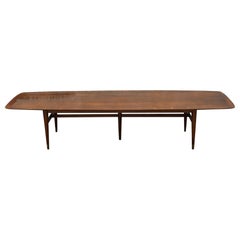
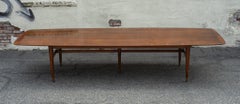
12' Conference or Dining Table by Standard Furniture Company in Walnut & Brass

12' Conference or Dining Table by Standard Furniture Company in Walnut & Brass

By Bill Sullivan, The Standard Furniture Company

Located in Philadelphia, PA

This vintage and classic Standard Furniture Company table is very large (12' long) and very cool! Designed by William H. Sullivan in the 1950s, the design has held up extremely well....

Category

1960s American Mid-Century Modern Vintage Bill Sullivan Art

Materials

Metal

Colombian Gold
Colombian Gold

Bill SullivanColombian Gold

Sold

H 22.5 in W 30 in

Colombian Gold

By Bill Sullivan

Located in Hollywood, FL

Artist: Bill Sullivan Title: Colombian Gold Medium: Lithograph Signed: Hand Signed Edition: Edition of 200 Measurements: 30" x 22.5" Condition: Exc...

Category

Late 20th Century Contemporary Bill Sullivan Art

Materials

Lithograph

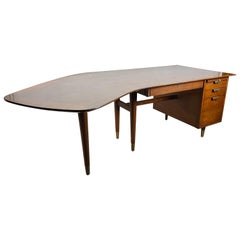
Walnut Executive Boomerang Desk by William H. Sullivan for Standard Furniture

Walnut Executive Boomerang Desk by William H. Sullivan for Standard Furniture

By The Standard Furniture Company, Bill Sullivan

Located in Buffalo, NY

Classic modernist design !This walnut executive desk features a unique boomerang-shaped left return. The table surface is walnut and is edged with a band of contrasting grain wood. f...

Category

1960s American Mid-Century Modern Vintage Bill Sullivan Art

Materials

Brass

Flowers

Bill SullivanFlowers, 1982

Sold

H 30 in W 22.5 in

Flowers

By Bill Sullivan

Located in Fairfield, CT

Artist: Bill Sullivan (1942-2010) Title: Flowers Year: 1982 Medium: Silkscreen on wove paper Size: 30 x 22.5 inches Edition: 200, plus proofs Condition: Excellent Inscription: Signed...

Category

1980s American Realist Bill Sullivan Art

Materials

Screen

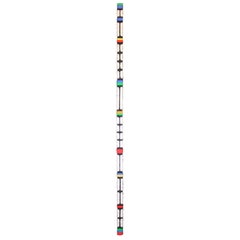
Thunderstick with Primary Color Accents

Thunderstick with Primary Color Accents

By Bill Sullivan

Located in Houston, TX

Wooden wall sculpture that is has primary toned accents to the black and white design. The wall sculpture is signed by the artist and dated. There is a wall hook to hang it where eve...

Category

Early 2000s Contemporary Bill Sullivan Art

Materials

Wood

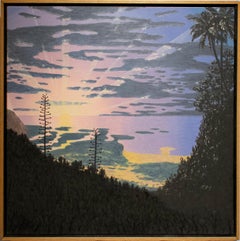
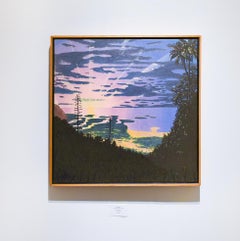
Maracaibo Twilight (Colorful Venezuelan Landscape Painting on Canvas, Framed)

Maracaibo Twilight (Colorful Venezuelan Landscape Painting on Canvas, Framed)

By Bill Sullivan

Located in Hudson, NY

Modern, Hudson River School inspired landscape painting of a purple and yellow sunset in Venezuela Made in 1996 by Bill Sullivan oil on canvas, framed in thin natural wood frame 24 x 24 inches Signed, lower left This contemporary landscape painting was made by Hudson Valley based artist, Bill Sullivan, in 1996. Interested in the style of the Hudson River School painters such as Frederic Church and Thomas Cole, Sullivan sought to adapt traditional landscapes with a modern lens. During the 1980's and 90's, the Sullivan traveled in the footsteps of Frederic Church, capturing the same scenes the late artist made famous 100 years prior. Here the artist paints a luminous sunset over Maracaibo, a city in the northern region of Venezuela. Rays of yellow light radiate from the setting sun as it descends behind the purple ocean. Reflections from the sunset create almost technicolor hues in the sky. A warm yellow transitions into deep purple before fading into a subtle violet. A tropical forest, painted in stark black, decorates the foreground. The painting is complimented with a thin, natural wood frame and has wire on the back for installation. The artist's signature is located in the lower left corner in oil paint. About the artist's work by John Ashbery: With only a tinge of irony, Bill Sullivan makes new the vast spaces and swooning optimism of nineteeth-century Luminist painting. Reaffirming the contemplation of nature as its own reward, he also sets new tasks for painting and undertakes them with compelling eagerness. While there has been a tendency among some contemporary artists to present a revisionist view of the "great outdoors" of nineteenth-century landscape painters, Sullivan has no satirical agenda. After spending several years in South America amid the landscapes that attracted Frederic Edwin Church and Martin Heade, among others, he refined and strengthened this awesome imagery after returning to New York. A certain surreality floats though these vaporous visions of Columbia, though this may just be the result of Sullivan's careful documentation of scenes that looked unreal to begin with. About the Artist: Sullivan attended Silvermine College and earned an M.F.A. from The University of Pennsylvania, where he studied with Fairfield Porter, Neil Welliver, Jane Freilicher, John Button and Rudy Burckhardt. He also studied privately with Josef and Annie Albers. In the late 1960s, Sullivan joined Bowery Gallery, an artist-run gallery that was dedicatedto figurative art. Later, when the Alliance of Figurative Artists was starting, Sullivan organized weekly panels and discussions at The Educational Alliance. Sullivan's first solo show at Bowery Gallery in 1970 included paintings depicting people, New York cityscapes and still lifes. After this show, Sullivan developed an interest in landscape painting. New York City, the Hudson River and Manhattan's West Side highway became his main subjects. He had several shows of these paintings at Bowery Gallery and continued to paint the Hudson River until the end of his life. At one of these shows he met art collector G. W. Einstein, who became his friend and represented him for many years. Sullivan had his first solo show at G. W. Einstein Company in 1978. In 1977, Sullivan met Colombian writer Jaime Manrique; they traveled to Colombia, where Bill painted the places that Frederick Edwin Church and Martin Johnson Heade had painted in the 1850s. In Colombia he had a solo show in the Bogotá Museum of Modern Art in 1978. The years following his return from South America was the period when Sullivan's work was most in display in New York City. Sullivan remained in New York City until 2001 where he had several solo shows. In 2002, he settled in Hudson, New York, where his two nineteenth-century heroes, Frederick Church and Sanford Robinson Gifford, had lived. He painted many of the sites Church and Gifford rendered on canvas. Resume: 2009 Carrie Haddad Gallery, Hudson, NY 2008 BCB Gallery, Hudson, NY 2007 BCB Gallery, Hudson, NY 2006 The Autobiography of Bill Sullivan: A Landscape Retrospective, The Albany Institute of History and Art, Albany, NY 2005 Roxbury Art Group, Roxbury, NY Hudson River Views, Bonnie Andretta Fine Arts, Hudson, NY 2004 Indelible, Gallery 2/20, New York, NY Workshop Exhibition, Dannette Koke Fine Art, New York, NY 2003 The Gallery at The St. Charles, Hudson, NY Paintings of South America, Hudson, NY Painted City, Carrie Haddad Gallery, Hudson, NY Juried Art Show, Columbian Council on the Arts, Hudson, NY Made In Hudson, Artwalk, Hudson, NY 2002 Musselman Gallery, Hudson, NY 2001 HHA Gallery, Riverdale, NY The Landscape That Changed America, The Albany Institute of History and Art, Albany, NY 1999 Silas-Kenyon Gallery, Provincetown, MA Greenwoods and Crystal Waters: The American Landscape Tradition, Philbrook Museum of Art, Tulsa, OK 1998 Suitcase Will Travel, Conductor’s Gallery, London, UK 1997 House/Scene, Kunsthaus, Hamburg, Germany Selected Prints, Atrium Gallery, Long Island City, NY Contemporary Selections, Albany Institute of History and Art, Albany, NY 1996 Uptown Gallery, New York, NY Eight Realists: Realism Then and Now, K & E Gallery, New York, NY Recent Acquisitions, Albany Institute of History and Art, Albany, NY Pencilvanians Drawn to New York, Pennsylvania Alumni Exhibition, Roger Smith Gallery, New York, NY New Acquisitions, Museum of the City of New York, New York, NY 1995 Five Aspects of American Landscape Painting, Creiger Dane Gallery, Boston, MA New York City Views, Owen Gallery, New York, NY Increased Visibility, Leslie-Lohman Gallery, New York, NY American Realism, Gallery Bijutsu Sekai, Tokyo, Japan Group Show, G.W. Einstein Co., New York, NY 1994 25th Anniversary Exhibition, Bowery Gallery, New York, NY Pride in Our Diversity, 24 Hours for Life Gallery, New York, NY Paint Props and Process, Castle Gallery, College of New Rochelle, New Rochelle, NY 1993 Celebration, G.W. Einstein Co, Inc., New York, NY Far Away Places Artists Who Travel, SSC&B Lintas Worldwide, New York, NY Group Show, John Szoke Gallery, New York, NY Art & Fantasy, Amos Eno Gallery and The Puck Building, New York, NY Organization of Independent Artists Benefit, Brook Alexander Gallery, New York, NY 19th & 20th Century Works of Art, Friends of OLANA Benefit, Hudson, NY 1992 New York Icons, Michael Ingbar Gallery, New York, NY Group Show, John Szoke Gallery, New York, NY Shanti Foundation Benefit Exhibition, Tatistcheff Gallery, Santa Monica, CA Contemporary American Landscape, World Art Collection in conjunction with Quatre Pieces Gallery, Yokohoma, Japan The Scarf, Bergdorf Goodman, New York, NY 1991 Urban Icons, Klarfeld Perry Gallery, New York, NY City Edge of Night, The Muckenthaler Cultural Center, Fullerton, CA Spirit of Place Dada Gallery, Fukuoka, Japan Group Show, Tatistchieff, Santa Monica, CA Group Show, John Szoke Gallery, New York, NY American Images, Crane Art Gallery, Tokyo, Japan; World Art Collection, Yokohama, Japan; Daimon Art Gallery, Sapparo, Japan; Beersheba Gallery, Osaka, Japan 1990 Susan Schreiber Gallery, New York, NY Tatistcheff Gallery, Santa Monica, CA Invitational Exhibition, American Academy of Arts and Letters, New York, NY Plein Air Painting: Capturing the Moment, Tatistcheff Gallery, Santa Monica, CA Land/Sea/Air, Steven Scott Gallery, Baltimore, MD Penn Prints: 30 Years of Printmaking at the University of Pennsylvania, Arthur Ross Gallery, University of Pennsylvania, Philadelphia, PA A Little Night Music...

Category

1990s Modern Bill Sullivan Art
Materials

Canvas, Oil

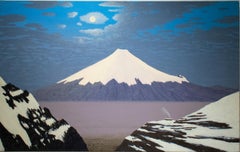
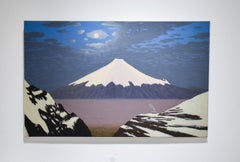
View of Cotopaxi (Contemporary Oil Landscape Painting of Blue Sky & Volcano)

View of Cotopaxi (Contemporary Oil Landscape Painting of Blue Sky & Volcano)

By Bill Sullivan

Located in Hudson, NY

Modern, Frederic Edwin Church inspired landscape painting of a moonlit volcano with blue sky in the Andes Mountains Made in 1982 by Bill Sullivan oil on canvas, unframed 24 x 38 inches This contemporary landscape painting was made by Hudson Valley based artist, Bill Sullivan, in 1985. Interested in the style of the Hudson River School painters such as Frederic Church and Thomas Cole, Sullivan sought to adapt traditional landscapes with a modern lens. During the 1980's, the artist traveled in the footsteps of Frederic Church throughout South America, capturing the same scenes the late artist made famous 100 years prior. In this modern rendition of 'View of Cotopaxi', the artist captures a luminous moonlit sky over a large volcano in the Andes Mountains. The full moon's light radiates through the blue cloudy sky onto the white snow capped volcano. In the foreground, a group of hikers and a train are dwarfed by the volcano's massive scale in the background. The painting is currently unframed and has provenance labels on the back. About the artist's work by John Ashbery: With only a tinge of irony, Bill Sullivan makes new the vast spaces and swooning optimism of nineteeth-century Luminist painting. Reaffirming the contemplation of nature as its own reward, he also sets new tasks for painting and undertakes them with compelling eagerness. While there has been a tendency among some contemporary artists to present a revisionist view of the "great outdoors" of nineteenth-century landscape painters, Sullivan has no satirical agenda. After spending several years in South America amid the landscapes that attracted Frederic Edwin Church and Martin Heade, among others, he refined and strengthened this awesome imagery after returning to New York. A certain surreality floats though these vaporous visions of Columbia, though this may just be the result of Sullivan's careful documentation of scenes that looked unreal to begin with. About the Artist: Sullivan attended Silvermine College and earned an M.F.A. from The University of Pennsylvania, where he studied with Fairfield Porter, Neil Welliver, Jane Freilicher, John Button and Rudy Burckhardt. He also studied privately with Josef and Annie Albers. In the late 1960s, Sullivan joined Bowery Gallery, an artist-run gallery that was dedicatedto figurative art. Later, when the Alliance of Figurative Artists was starting, Sullivan organized weekly panels and discussions at The Educational Alliance. Sullivan's first solo show at Bowery Gallery in 1970 included paintings depicting people, New York cityscapes and still lifes. After this show, Sullivan developed an interest in landscape painting. New York City, the Hudson River and Manhattan's West Side highway became his main subjects. He had several shows of these paintings at Bowery Gallery and continued to paint the Hudson River until the end of his life. At one of these shows he met art collector G. W. Einstein, who became his friend and represented him for many years. Sullivan had his first solo show at G. W. Einstein Company in 1978. In 1977, Sullivan met Colombian writer Jaime Manrique; they traveled to Colombia, where Bill painted the places that Frederick Edwin Church and Martin Johnson Heade had painted in the 1850s. In Colombia he had a solo show in the Bogotá Museum of Modern Art in 1978. The years following his return from South America was the period when Sullivan's work was most in display in New York City. Sullivan remained in New York City until 2001 where he had several solo shows. In 2002, he settled in Hudson, New York, where his two nineteenth-century heroes, Frederick Church and Sanford Robinson Gifford, had lived. He painted many of the sites Church and Gifford rendered on canvas. Resume: 2009 Carrie Haddad Gallery, Hudson, NY 2008 BCB Gallery, Hudson, NY 2007 BCB Gallery, Hudson, NY 2006 The Autobiography of Bill Sullivan: A Landscape Retrospective, The Albany Institute of History and Art, Albany, NY 2005 Roxbury Art Group, Roxbury, NY Hudson River Views, Bonnie Andretta Fine Arts, Hudson, NY 2004 Indelible, Gallery 2/20, New York, NY Workshop Exhibition, Dannette Koke Fine Art, New York, NY 2003 The Gallery at The St. Charles, Hudson, NY Paintings of South America, Hudson, NY Painted City, Carrie Haddad Gallery, Hudson, NY Juried Art Show, Columbian Council on the Arts, Hudson, NY Made In Hudson, Artwalk, Hudson, NY 2002 Musselman Gallery, Hudson, NY 2001 HHA Gallery, Riverdale, NY The Landscape That Changed America, The Albany Institute of History and Art, Albany, NY 1999 Silas-Kenyon Gallery, Provincetown, MA Greenwoods and Crystal Waters: The American Landscape Tradition, Philbrook Museum of Art, Tulsa, OK 1998 Suitcase Will Travel, Conductor’s Gallery, London, UK 1997 House/Scene, Kunsthaus, Hamburg, Germany Selected Prints, Atrium Gallery, Long Island City, NY Contemporary Selections, Albany Institute of History and Art, Albany, NY 1996 Uptown Gallery, New York, NY Eight Realists: Realism Then and Now, K & E Gallery, New York, NY Recent Acquisitions, Albany Institute of History and Art, Albany, NY Pencilvanians Drawn to New York, Pennsylvania Alumni Exhibition, Roger Smith Gallery, New York, NY New Acquisitions, Museum of the City of New York, New York, NY 1995 Five Aspects of American Landscape Painting, Creiger Dane Gallery, Boston, MA New York City Views, Owen Gallery, New York, NY Increased Visibility, Leslie-Lohman Gallery, New York, NY American Realism, Gallery Bijutsu Sekai, Tokyo, Japan Group Show, G.W. Einstein Co., New York, NY 1994 25th Anniversary Exhibition, Bowery Gallery, New York, NY Pride in Our Diversity, 24 Hours for Life Gallery, New York, NY Paint Props and Process, Castle Gallery, College of New Rochelle, New Rochelle, NY 1993 Celebration, G.W. Einstein Co, Inc., New York, NY Far Away Places Artists Who Travel, SSC&B Lintas Worldwide, New York, NY Group Show, John Szoke Gallery, New York, NY Art & Fantasy, Amos Eno Gallery and The Puck Building, New York, NY Organization of Independent Artists Benefit, Brook Alexander Gallery, New York, NY 19th & 20th Century Works of Art, Friends of OLANA Benefit, Hudson, NY 1992 New York Icons, Michael Ingbar Gallery, New York, NY Group Show, John Szoke Gallery, New York, NY Shanti Foundation Benefit Exhibition, Tatistcheff Gallery, Santa Monica, CA Contemporary American Landscape, World Art Collection in conjunction with Quatre Pieces Gallery, Yokohoma, Japan The Scarf, Bergdorf Goodman, New York, NY 1991 Urban Icons, Klarfeld Perry Gallery, New York, NY City Edge of Night, The Muckenthaler Cultural Center, Fullerton, CA Spirit of Place Dada Gallery, Fukuoka, Japan Group Show, Tatistchieff, Santa Monica, CA Group Show, John Szoke Gallery, New York, NY American Images, Crane Art Gallery, Tokyo, Japan; World Art Collection, Yokohama, Japan; Daimon Art Gallery, Sapparo, Japan; Beersheba Gallery, Osaka, Japan 1990 Susan Schreiber Gallery, New York, NY Tatistcheff Gallery, Santa Monica, CA Invitational Exhibition, American Academy of Arts and Letters, New York, NY Plein Air Painting: Capturing the Moment, Tatistcheff Gallery, Santa Monica, CA Land/Sea/Air, Steven Scott Gallery, Baltimore, MD Penn Prints: 30 Years of Printmaking at the University of Pennsylvania, Arthur Ross Gallery, University of Pennsylvania, Philadelphia, PA A Little Night Music...

Category

1980s Contemporary Bill Sullivan Art
Materials

Canvas, Oil

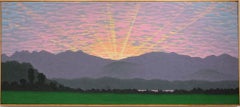
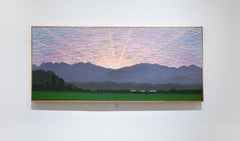
Catskill Sunset (Contemporary Hudson River School Style Landscape Painting)

Catskill Sunset (Contemporary Hudson River School Style Landscape Painting)

By Bill Sullivan

Located in Hudson, NY

Modern, Hudson River School inspired landscape painting of a sunset over the Catskill Mountains in the Hudson Valley Made in 2005 by Bill Sullivan oil on canvas, framed in thin natural wood frame 18 x 42 inches Signed, lower right This contemporary landscape painting was made by Hudson Valley based artist, Bill Sullivan, in 2005. Interested in the style of the Hudson River School painters such as Frederic Church and Thomas Cole, Sullivan sought to adapt traditional landscapes with a modern lens. Here the artist captures a luminous sunset over the Catskill Mountains, a scene celebrated by the region's traditional landscape painters. Rays of yellow light radiate from the setting sun as it descends behind the purple toned mountains. Reflections from the sunset create almost technicolor hues in the sky. A warm orange transitions into hot pink before fading into a subtle sky blue. The painting is complimented with a thin, natural wood frame and has wire on the back for installation. The artist's signature is located in the lower right corner in oil paint. About the artist's work by John Ashbery: With only a tinge of irony, Bill Sullivan makes new the vast spaces and swooning optimism of nineteeth-century Luminist painting. Reaffirming the contemplation of nature as its own reward, he also sets new tasks for painting and undertakes them with compelling eagerness. While there has been a tendency among some contemporary artists to present a revisionist view of the "great outdoors" of nineteenth-century landscape painters, Sullivan has no satirical agenda. After spending several years in South America amid the landscapes that attracted Frederic Edwin Church and Martin Heade, among others, he refined and strengthened this awesome imagery after returning to New York. A certain surreality floats though these vaporous visions of Columbia, though this may just be the result of Sullivan's careful documentation of scenes that looked unreal to begin with. About the Artist: Sullivan attended Silvermine College and earned an M.F.A. from The University of Pennsylvania, where he studied with Fairfield Porter, Neil Welliver, Jane Freilicher, John Button and Rudy Burckhardt. He also studied privately with Josef and Annie Albers. In the late 1960s, Sullivan joined Bowery Gallery, an artist-run gallery that was dedicatedto figurative art. Later, when the Alliance of Figurative Artists was starting, Sullivan organized weekly panels and discussions at The Educational Alliance. Sullivan's first solo show at Bowery Gallery in 1970 included paintings depicting people, New York cityscapes and still lifes. After this show, Sullivan developed an interest in landscape painting. New York City, the Hudson River and Manhattan's West Side highway became his main subjects. He had several shows of these paintings at Bowery Gallery and continued to paint the Hudson River until the end of his life. At one of these shows he met art collector G. W. Einstein, who became his friend and represented him for many years. Sullivan had his first solo show at G. W. Einstein Company in 1978. In 1977, Sullivan met Colombian writer Jaime Manrique; they traveled to Colombia, where Bill painted the places that Frederick Edwin Church and Martin Johnson Heade had painted in the 1850s. In Colombia he had a solo show in the Bogotá Museum of Modern Art in 1978. The years following his return from South America was the period when Sullivan's work was most in display in New York City. Sullivan remained in New York City until 2001 where he had several solo shows. In 2002, he settled in Hudson, New York, where his two nineteenth-century heroes, Frederick Church and Sanford Robinson Gifford, had lived. He painted many of the sites Church and Gifford rendered on canvas. Resume: 2009 Carrie Haddad Gallery, Hudson, NY 2008 BCB Gallery, Hudson, NY 2007 BCB Gallery, Hudson, NY 2006 The Autobiography of Bill Sullivan: A Landscape Retrospective, The Albany Institute of History and Art, Albany, NY 2005 Roxbury Art Group, Roxbury, NY Hudson River Views, Bonnie Andretta Fine Arts, Hudson, NY 2004 Indelible, Gallery 2/20, New York, NY Workshop Exhibition, Dannette Koke Fine Art, New York, NY 2003 The Gallery at The St. Charles, Hudson, NY Paintings of South America, Hudson, NY Painted City, Carrie Haddad Gallery, Hudson, NY Juried Art Show, Columbian Council on the Arts, Hudson, NY Made In Hudson, Artwalk, Hudson, NY 2002 Musselman Gallery, Hudson, NY 2001 HHA Gallery, Riverdale, NY The Landscape That Changed America, The Albany Institute of History and Art, Albany, NY 1999 Silas-Kenyon Gallery, Provincetown, MA Greenwoods and Crystal Waters: The American Landscape Tradition, Philbrook Museum of Art, Tulsa, OK 1998 Suitcase Will Travel, Conductor’s Gallery, London, UK 1997 House/Scene, Kunsthaus, Hamburg, Germany Selected Prints, Atrium Gallery, Long Island City, NY Contemporary Selections, Albany Institute of History and Art, Albany, NY 1996 Uptown Gallery, New York, NY Eight Realists: Realism Then and Now, K & E Gallery, New York, NY Recent Acquisitions, Albany Institute of History and Art, Albany, NY Pencilvanians Drawn to New York, Pennsylvania Alumni Exhibition, Roger Smith Gallery, New York, NY New Acquisitions, Museum of the City of New York, New York, NY 1995 Five Aspects of American Landscape Painting, Creiger Dane Gallery, Boston, MA New York City Views, Owen Gallery, New York, NY Increased Visibility, Leslie-Lohman Gallery, New York, NY American Realism, Gallery Bijutsu Sekai, Tokyo, Japan Group Show, G.W. Einstein Co., New York, NY 1994 25th Anniversary Exhibition, Bowery Gallery, New York, NY Pride in Our Diversity, 24 Hours for Life Gallery, New York, NY Paint Props and Process, Castle Gallery, College of New Rochelle, New Rochelle, NY 1993 Celebration, G.W. Einstein Co, Inc., New York, NY Far Away Places Artists Who Travel, SSC&B Lintas Worldwide, New York, NY Group Show, John Szoke Gallery, New York, NY Art & Fantasy, Amos Eno Gallery and The Puck Building, New York, NY Organization of Independent Artists Benefit, Brook Alexander Gallery, New York, NY 19th & 20th Century Works of Art, Friends of OLANA Benefit, Hudson, NY 1992 New York Icons, Michael Ingbar Gallery, New York, NY Group Show, John Szoke Gallery, New York, NY Shanti Foundation Benefit Exhibition, Tatistcheff Gallery, Santa Monica, CA Contemporary American Landscape, World Art Collection in conjunction with Quatre Pieces Gallery, Yokohoma, Japan The Scarf, Bergdorf Goodman, New York, NY 1991 Urban Icons, Klarfeld Perry Gallery, New York, NY City Edge of Night, The Muckenthaler Cultural Center, Fullerton, CA Spirit of Place Dada Gallery, Fukuoka, Japan Group Show, Tatistchieff, Santa Monica, CA Group Show, John Szoke Gallery, New York, NY American Images, Crane Art Gallery, Tokyo, Japan; World Art Collection, Yokohama, Japan; Daimon Art Gallery, Sapparo, Japan; Beersheba Gallery, Osaka, Japan 1990 Susan Schreiber Gallery, New York, NY Tatistcheff Gallery, Santa Monica, CA Invitational Exhibition, American Academy of Arts and Letters, New York, NY Plein Air Painting: Capturing the Moment, Tatistcheff Gallery, Santa Monica, CA Land/Sea/Air, Steven Scott Gallery, Baltimore, MD Penn Prints: 30 Years of Printmaking at the University of Pennsylvania, Arthur Ross Gallery, University of Pennsylvania, Philadelphia, PA A Little Night Music...

Category

Early 2000s Contemporary Bill Sullivan Art

Materials

Canvas, Oil

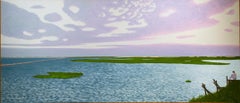
Beach Scene With Dog (Panoramic Oil Landscape Painting of Blue Ocean and Dog)

Beach Scene With Dog (Panoramic Oil Landscape Painting of Blue Ocean and Dog)

By Bill Sullivan

Located in Hudson, NY

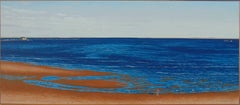
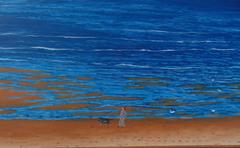
37 x 84 inches oil on canvas, unframed (thin wood stripping only) Contemporary landscape oil painting of the beach in Cape Cod, Massachusetts. Deep blue tidal pools form in the for...

Category

1990s American Realist Bill Sullivan Art
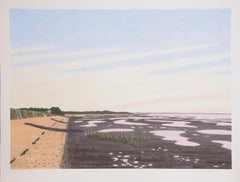
Holly Sight from the Distance (Landscape Oil Painting of Hollywood Hills)

Holly Sight from the Distance (Landscape Oil Painting of Hollywood Hills)

By Bill Sullivan

Located in Hudson, NY

58 x 67 inches oil on canvas, unframed (thin wood stripping only) Magnificent realist large scale oil painted landscape of the Hollywood Hills. The foreground shows a tree line...

Category

1980s American Realist Bill Sullivan Art

Bill Sullivan art for sale on 1stDibs.
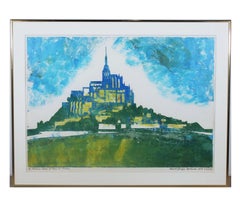
Find a wide variety of authentic Bill Sullivan art available for sale on 1stDibs. If you’re browsing the collection of art to introduce a pop of color in a neutral corner of your living room or bedroom, you can find work that includes elements of blue, purple and other colors. You can also browse by medium to find art by Bill Sullivan in canvas, fabric, oil paint and more. Much of the original work by this artist or collective was created during the 20th century and is mostly associated with the contemporary style. Not every interior allows for large Bill Sullivan art, so small editions measuring 20 inches across are available. Customers who are interested in this artist might also find the work of Cuca Romley, Pierre Marie Brisson, and Zygmund Jankowski. Bill Sullivan art prices can differ depending upon medium, time period and other attributes. On 1stDibs, the price for these items starts at $235 and tops out at $10,000, while the average work can sell for $5,000.
Artists Similar to Bill Sullivan