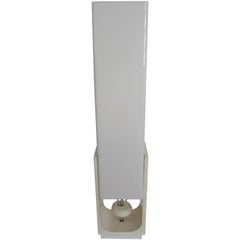
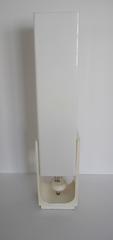
Capodimonte Floor Lamps

Italian

If success is measured by lasting name recognition, Capodimonte porcelain would seem to be in the same league as such makers as Meissen, Sèvres and Wedgwood. Early examples of Capodimonte lamps — as well as the Italian manufacturer’s celebrated porcelain vases, figurines and sculptures — can be hard to come by, but the best later pieces possess the same over-the-top charm.

The Real Fabbrica (“royal factory”) di Capodimonte hasn’t actually produced porcelain since the early 19th century, when Charles’s son Ferdinand sold it. Although secondary manufacturers have built upon the aesthetic and kept the name alive, some connoisseurs of the royal product feel these pieces should be labeled “in the style of” Capodimonte.

The timeline of royal Capodimonte porcelain is decidedly brief. From beginning to end, its manufacture lasted approximately 75 years. King Charles VII of Naples, who founded the manufactory in 1743, began experimenting with porcelain around 1738, the year he married Maria Amalia of Saxony. No coincidence there. His new bride was the granddaughter of Augustus the Strong, Elector of Saxony and founder of Meissen, the first European hard-paste porcelain manufactory. Her dowry included 17 Meissen table services.

Struck by porcelain fever, Charles built a dedicated facility on top of a hill (capo di monte) overlooking Naples. He financed expeditions to search for the right clay. He hired chemists and artisans to experiment. His earliest successes were small white snuffboxes and vases, although efforts soon progressed to full sets of tableware, decorative objects and stylized figurines of peasants and theatrical personalities.

In 1759, Charles succeeded to the throne of Spain. He moved the manufactory with him — including 40 workers and 4 tons of clay — and continued operations in Madrid. Twelve years later, his son Ferdinand IV, who inherited the throne of Naples, built a new factory there that became known for distinctly rococo designs.

The Napoleonic wars interrupted production, and around 1807, oversight of the royal factories was transferred to a franchisee named Giovanni Poulard-Prad.

Beginning in the mid-18th century, porcelain made by Charles’s factory was stamped with a fleur-de-lis, usually in underglaze blue. Pieces from Ferdinand’s were stamped with a Neapolitan N topped by a crown. When secondary manufacturers began production, they retained this mark, in multiple variations. The value of these later 19th- and 20th-century pieces is determined by the quality, not the Capodimonte porcelain marks.

Find antique and vintage Capodimonte porcelain for sale on 1stDibs.
to
1
Height
to
1
1
1
1
1
1
1
1
1
1
1
1
37
180
176
140
119
Creator: Capodimonte
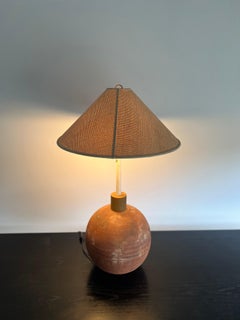
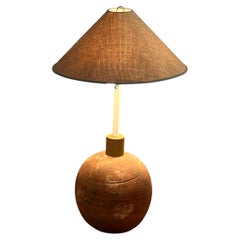
Ceramica Impruneta Terracotta Floor or Table Lamp 1960s

Ceramica Impruneta Terracotta Floor or Table Lamp 1960s

By Capodimonte

Located in Byron Bay, NSW

The lamp features a spherical terracotta lampshade in a warm, earthy tone that is complemented by a sleek chrome base. The lampshade is designed with small perforations that create a...

Category

1970s Italian Mid-Century Modern Vintage Capodimonte Floor Lamps

Materials

Terracotta

Related Items
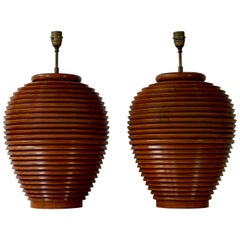
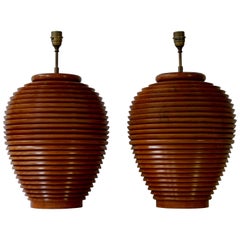
One Large Wooden Table or Floor Lamp, Birma

One Large Wooden Table or Floor Lamp, Birma

$1,712Sale Price|48% Off

H 18.12 in Dm 14.18 in

One Large Wooden Table or Floor Lamp, Birma

Located in Antwerp, BE

One beautiful old antique wooden stock pot from Burma converted in the 1970s into lamps. The lamp with the damage is still available for sale. Measures: Diameter wooden base 36 cm....

Category

Mid-20th Century Burmese Hollywood Regency Capodimonte Floor Lamps

Materials

Wood

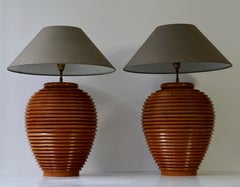
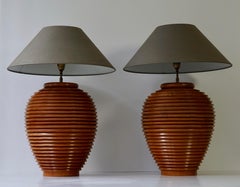
One Large Wooden Table or Floor Lamp, Birma

One Large Wooden Table or Floor Lamp, Birma

$1,784 / item

H 18.12 in Dm 14.18 in

One Large Wooden Table or Floor Lamp, Birma

Located in Antwerp, BE

Two beautiful old antique wooden stock pots from Burma converted in the 1970s into lamps. Measures: Diameter wooden base 36 cm. Height base without socket 46 cm. Shades are not in...

Category

Mid-20th Century Burmese Mid-Century Modern Capodimonte Floor Lamps

Materials

Brass

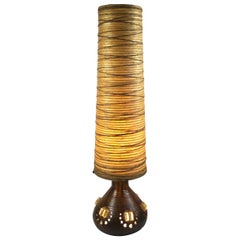
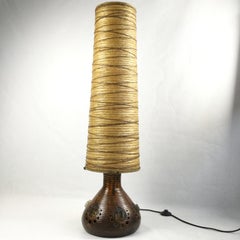
Ceramic and Resin Floor Lamp by Accolay France 1960s

Ceramic and Resin Floor Lamp by Accolay France 1960s

By Accolay Pottery

Located in London, GB

A standing large floor lamp from the studio pottery Accolay with a large rope and resin lampshade attributed to George Pelletier. Double lighting up to...

Category

1960s French Bohemian Vintage Capodimonte Floor Lamps

Materials

Pottery

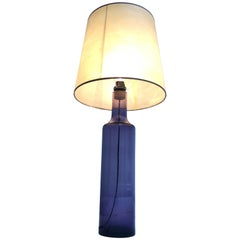
Large 1960s Italian Purple Murano Glass Table or Floor Lamp

Large 1960s Italian Purple Murano Glass Table or Floor Lamp

By Murano 5

Located in bergen op zoom, NL

An impressive purple Murano bubble glass vase has been transformed to a lamp base This Italian 60's lamp can be used as large table lamp or...

Category

1960s Italian Mid-Century Modern Vintage Capodimonte Floor Lamps

Materials

Blown Glass, Cork

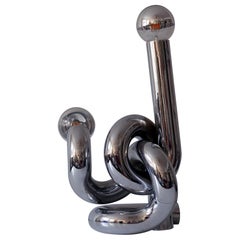
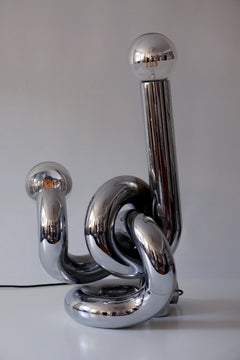
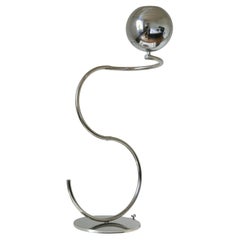
Sculptural Chrome Articulated Floor Lamp, Italy, 1960s

Sculptural Chrome Articulated Floor Lamp, Italy, 1960s

$2,676

H 49.22 in W 11.82 in D 16.54 in

Sculptural Chrome Articulated Floor Lamp, Italy, 1960s

Located in London, GB

A sculptural and fully adjustable chrome floor lamp, Italy, 1960s. This rare Mid-Century Modern design features a highly flexible articulated structure with three rotating joints, al...

Category

1960s Italian Mid-Century Modern Vintage Capodimonte Floor Lamps

Materials

Chrome

Rare Midcentury Design Set of Floor and Table Lamp, 1960s / Czechoslovakia

Rare Midcentury Design Set of Floor and Table Lamp, 1960s / Czechoslovakia

$1,236Sale Price / set|20% Off

H 47.25 in W 17.72 in D 8.67 in

Rare Midcentury Design Set of Floor and Table Lamp, 1960s / Czechoslovakia

By Kovona

Located in Praha, CZ

- Czechoslovakia, 1960s - Maker: Kovona - Good original condition - The higher one's height up to 150cm - New electricity.

Category

1960s Czech Mid-Century Modern Vintage Capodimonte Floor Lamps

Materials

Aluminum, Chrome

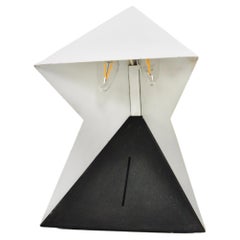
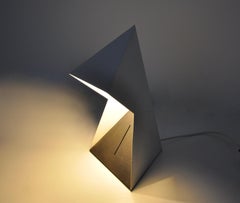
Italian Table Lamp, 1960s

Italian Table Lamp, 1960s

$452

H 14.97 in W 10.24 in D 7.49 in

Italian Table Lamp, 1960s

Located in bruxelles, BE

White Italian metal lamp. Wear due to time and age of the lamp For shipping, request us for receive the best price.

Category

1960s Italian Mid-Century Modern Vintage Capodimonte Floor Lamps

Materials

Metal

Midcentury Table Floor Lamp, Denmark, 1960

Midcentury Table Floor Lamp, Denmark, 1960

$656

H 24.41 in W 11.03 in D 11.03 in

Midcentury Table Floor Lamp, Denmark, 1960

Located in Saarbruecken, DE

Midcentury table floor lamp, Denmark, 1960 Teak pickelt pine wood. perspex shade.

Category

1960s Danish Mid-Century Modern Vintage Capodimonte Floor Lamps

Materials

Pine

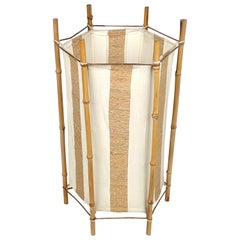
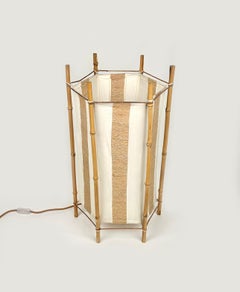
Bamboo, Rattan and Cotton Table or Floor Lamp Louis Sognot Style, Italy 1960s

Bamboo, Rattan and Cotton Table or Floor Lamp Louis Sognot Style, Italy 1960s

By Louis Sognot

Located in Rome, IT

Amazing floor lamp or table lamp in white and brown cotton featuring structure in bamboo composed of six stems in the style of to the French designer Louis Sognot. Made in Italy i...

Category

1960s Italian Mid-Century Modern Vintage Capodimonte Floor Lamps

Materials

Metal

Large Kalmar 'Tulipan' Table or Floor Lamp, Glass Nickel, 1960s

Large Kalmar 'Tulipan' Table or Floor Lamp, Glass Nickel, 1960s

By Kalmar Lighting, J.T. Kalmar

Located in Hausmannstätten, AT

A rare and large 'Tulipan' table or floor lamp by Kalmar, Austria, manufactured in Mid-Century, circa 1970 (late 1960s or early 1970s). A nickel-plated base with a large handblown bubble glass. The red lamp shade...

Category

1960s Austrian Mid-Century Modern Vintage Capodimonte Floor Lamps

Materials

Aluminum, Nickel

Huge Ceramic Floor & Table Lamp by Tommaso Barbi, Italy, 1960s

Huge Ceramic Floor & Table Lamp by Tommaso Barbi, Italy, 1960s

By Tommaso Barbi

Located in Niederdorfelden, Hessen

Elegant rare, huge Tommaso Barbi ginger jar ceramic lamp made in Italy in the 1960s. Crème ivory colored ceramic base, original fabric shade wi...

Category

1960s Italian Mid-Century Modern Vintage Capodimonte Floor Lamps

Materials

Ceramic

Capodimonte floor lamps for sale on 1stDibs.
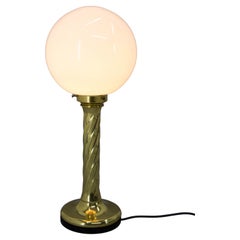
Capodimonte floor lamps are available for sale on 1stDibs. These distinctive items are frequently made of terracotta and are designed with extraordinary care. There are many options to choose from in our collection of Capodimonte floor lamps, although brown editions of this piece are particularly popular. Many of the original floor lamps by Capodimonte were created in the mid-century modern style in italy during the 1970s. If you’re looking for additional options, many customers also consider floor lamps by Giuliana Gramigna, Gianfranco Frattini, and Afra & Tobia Scarpa. Prices for Capodimonte floor lamps can differ depending upon size, time period and other attributes — on 1stDibs, these items begin at $2,500 and can go as high as $2,500, while a piece like these, on average, fetch $2,500.
Questions About Capodimonte Floor Lamps
  • 1stDibs ExpertAugust 29, 2024
    To know if your Capodimonte is real, look for its maker's mark. Beginning in the mid-18th century, porcelain made by the manufacturer founded by King Charles VII of Naples was stamped with a fleur-de-lis, usually in underglaze blue. Pieces produced under Ferdinand IV were stamped with a Neapolitan N topped by a crown. When secondary manufacturers began production, they retained this mark in multiple variations. By comparing the markings on your piece to images of those found on similar pieces shared on trusted online resources, you can begin to determine whether your piece is authentic. However, many convincing replicas exist, so you may wish to have a certified appraiser or knowledgeable antique dealer examine your piece and provide you with a professional opinion. Explore a diverse assortment of Capodimonte porcelain on 1stDibs.
  • 1stDibs ExpertFebruary 27, 2024
    Capodimonte's style is regal and opulent, though it has varied over the years. Early pieces from the celebrated Italian porcelain manufacturer often reflect Rococo design sensibilities, with organic motifs rendered in soft colors. As trends changed, so did the look of Capodimonte porcelain, which skewed Victorian, Edwardian and Art Deco over the years that followed. Capodiomonte has also looked beyond its native Italy for inspiration, producing porcelain ware that reflects Japanese and ancient Roman decorative techniques. Shop a wide range of Capdodimonte porcelain on 1stDibs.
  • 1stDibs ExpertFebruary 1, 2024
    Yes, Capodimonte pieces may be worth money. Early examples of the Italian manufacturer's celebrated porcelain vases, figurines and sculptures can be hard to come by, but the best later pieces possess the same over-the-top charm and are sought by collectors. The value of a particular item depends on its style, age and condition, as well as supply and demand in the marketplace. To get a better estimate of the value of your piece, consult a certified appraiser or knowledgeable dealer. Explore a wide range of Capodimonte decorative objects on 1stDibs.
  • 1stDibs ExpertOctober 24, 2024
    Yes, some Capodimonte ornaments are worth something. Capodimonte has produced luxury porcelain wares since the 18th century, and many of its antique pieces have significant value. Vintage and even some contemporary ornaments may also be valuable, depending on their style, age, type and condition. A certified appraiser or knowledgeable antique dealer can give you an estimated value for any ornaments that you own. Shop a collection of Capodimonte pieces on 1stDibs.
  • 1stDibs ExpertMarch 13, 2024
    To identify rare Capodimonte marks, use trusted online resources as a guide. Generally, the oldest pieces produced by the Italian maker during the mid-18th century are the rarest. During this period, Capodimonte typically used only its original blue fleur-de-lis logo as a mark. On reputable websites, you can find images of this mark and others used by the porcelain manufacturer over the years. If you need assistance identifying a particular piece, enlist the help of a certified appraiser or knowledgeable antiques dealer. Explore a range of Capodimonte porcelain ware on 1stDibs.
  • 1stDibs ExpertOctober 30, 2024
    Yes, Capodimonte porcelain may be worth something. Early examples of Capodimonte lamps, as well as the Italian manufacturer’s celebrated porcelain vases, figurines and sculptures, can be hard to come by, so they are highly sought after and can be worth a significant amount. For example, a gilded teapot produced by the Italian maker during the mid-18th century sold for more than $160,000 at auction in 2011. In addition to age and availability, the type, style and condition of Capodimonte pieces will determine their potential selling prices. A certified appraiser or experienced antique dealer can perform the valuation process and estimate how much any porcelain wares you own may be worth. On 1stDibs, find a variety of Capodimonte porcelain wares.
  • 1stDibs ExpertNovember 20, 2024
    Yes, some vintage Capodimonte may be worth something. Although often higher for antique items at least a century old, selling prices for pieces produced by the Italian maker within the last 20 to 99 years can sometimes be in the hundreds or thousands of dollars. Generally, the type, style, age, condition and availability determine the value of a particular Capodimonte piece. A certified appraiser or experienced antique dealer can be of assistance if you wish to have any items in your collection evaluated. On 1stDibs, explore a range of vintage Capodimonte porcelain wares.
  • 1stDibs ExpertApril 22, 2024
    What the Capodimonte mark looks like has changed over the years. From 1743 through 1771, variations of the fleur-de-lis were the most common markings. From 1830 to 1967, the Italian maker generally used a letter N or G positioned beneath a crown. From 1967 onward, pieces generally displayed an impressed IPA stamp and a back stamp with a crowned letter N, the IPA lettering and the brand name. You can consult trusted online resources to see images of Capodimonte stamps from various eras. Additionally, you may wish to work with an antiques dealer to verify the age and authenticity of your porcelain. Find a collection of Capodimonte pieces on 1stDibs.