Carlos Merida Prints and Multiples

to
5
Overall Width
to
Overall Height
to
5
1,320
1,025
922
889
5
5
5
5
5
Artist: Carlos Merida
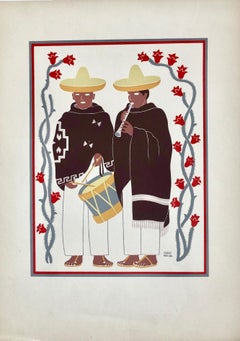
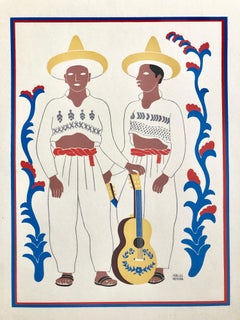
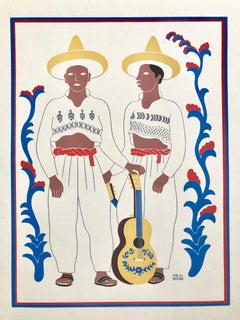
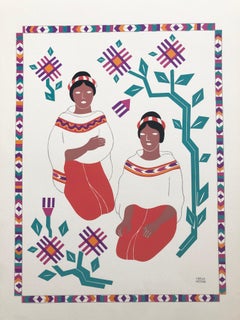
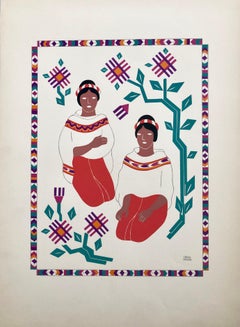
1945 Mexican Modernist Silkscreen Serigraph Print Regional Folk Art Dress Mexico

1945 Mexican Modernist Silkscreen Serigraph Print Regional Folk Art Dress Mexico

By Carlos Merida 1

Located in Surfside, FL

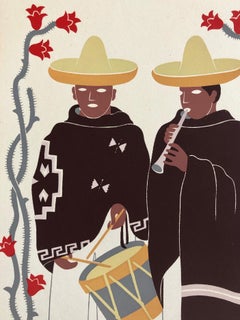
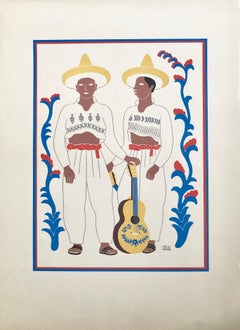
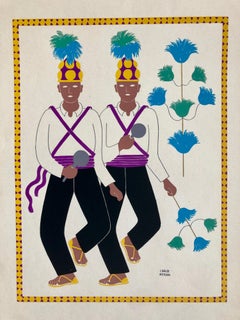
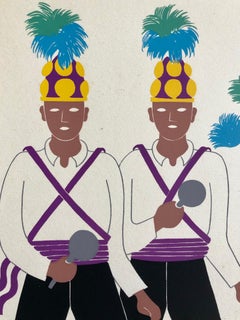
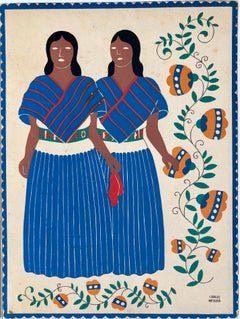
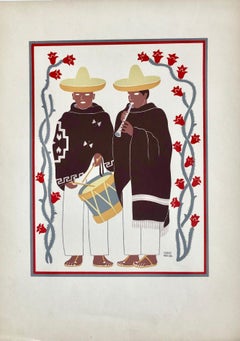
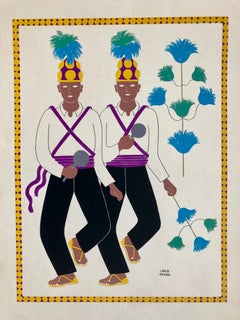
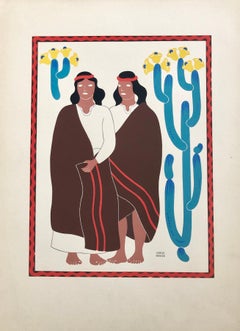
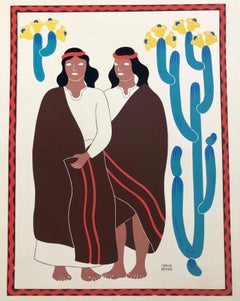
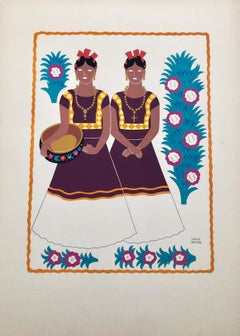
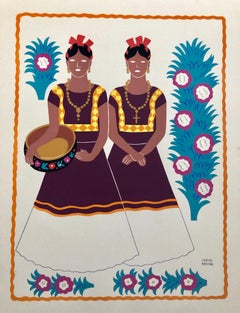
This listing is for the one Silkscreen serigraph piece listed here. Mexico City, 1945. First edition. plate signed, limited edition of 1000, these serigraph plates depict various types of traditional and folk art indigenous clothing...

Category

1940s Folk Art Carlos Merida Prints and Multiples

Materials

Screen

1945 Mexican Modernist Silkscreen Serigraph Print Regional Folk Art Dress Mexico

1945 Mexican Modernist Silkscreen Serigraph Print Regional Folk Art Dress Mexico

By Carlos Merida 1

Located in Surfside, FL

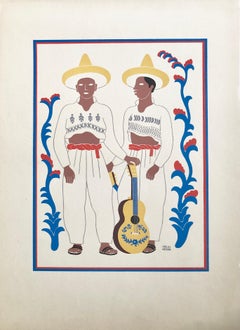
This listing is for the one Silkscreen serigraph piece listed here. Mexico City, 1945. First edition. plate signed, limited edition of 1000, these serigraph plates depict various types of traditional and folk art indigenous clothing...

Category

1940s Folk Art Carlos Merida Prints and Multiples

Materials

Screen

1945 Mexican Modernist Silkscreen Serigraph  Print Regional Dress Carlos Merida

1945 Mexican Modernist Silkscreen Serigraph Print Regional Dress Carlos Merida

By Carlos Merida 1

Located in Surfside, FL

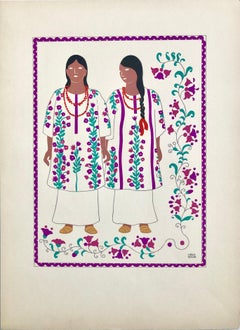
This listing is for the one Silkscreen serigraph piece listed here. Mexico City, 1945. First edition. plate signed, limited edition of 1000, these serigraph plates depict various types of traditional and folk art indigenous clothing...

Category

1940s Folk Art Carlos Merida Prints and Multiples

Materials

Screen

1945 Mexican Modernist Silkscreen Serigraph Print Regional Folk Art Dress Mexico

1945 Mexican Modernist Silkscreen Serigraph Print Regional Folk Art Dress Mexico

By Carlos Merida 1

Located in Surfside, FL

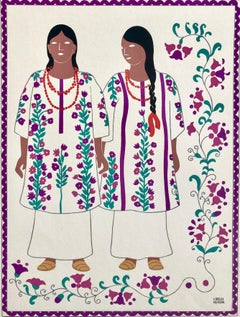
This listing is for the one Silkscreen serigraph piece listed here. Mexico City, 1945. First edition. plate signed, limited edition of 1000, these serigraph plates depict various types of traditional and folk art indigenous clothing...

Category

1940s Folk Art Carlos Merida Prints and Multiples

Materials

Screen

1945 Mexican Modernist Silkscreen Serigraph Print Regional Folk Art Dress Mexico

1945 Mexican Modernist Silkscreen Serigraph Print Regional Folk Art Dress Mexico

By Carlos Merida 1

Located in Surfside, FL

This listing is for the one Silkscreen serigraph piece listed here. Mexico City, 1945. First edition. plate signed, limited edition of 1000, these serigraph plates depict various types of traditional and folk art indigenous clothing...

Category

1940s Folk Art Carlos Merida Prints and Multiples

Materials

Screen

Related Items
Mathias en Cuernavaca Serigraph, Surrealist, Framed, 1974

Pedro FriedebergMathias en Cuernavaca Serigraph, Surrealist, Framed, 1974, 1974

$1,080Sale Price|40% Off

H 21.66 in W 21.66 in D 1.58 in

Mathias en Cuernavaca Serigraph, Surrealist, Framed, 1974

By Pedro Friedeberg

Located in Cuauhtemoc, Ciudad de México

-Pedro Friedeberg signed print featuring a fantastical surrealistic scene. Includes whimsical figures, optical art elements, and surreal details. framed in a hand-painted black and g...

Category

2010s Surrealist Carlos Merida Prints and Multiples

Materials

Paper, Screen

Vivien in White Coat, 2021

Vivien in White Coat, 2021

By Alex Katz

Located in Palo Alto, CA

Alex Katz Vivien in White Coat, 2021 is a work of subtle admiration that the artist holds for her daughter-in-law, Vivien Bittencourt. The gentle hues...

Category

2010s Contemporary Carlos Merida Prints and Multiples

Materials

Screen

Paul Mann - Frankenstein - Contemporary Cinema Movie Posters

Paul Mann - Frankenstein - Contemporary Cinema Movie Posters

By Paul Mann

Located in Asheville, NC

Frankenstein Frankenstein is a 1931 American science fiction horror film directed by James Whale, produced by Carl Laemmle Jr., and adapted from a 1927 play by Peggy Webling, which in turn was based on Mary Shelley's 1818 novel Frankenstein; or, The Modern Prometheus. Frankenstein stars Colin Clive as Henry Frankenstein, an obsessed scientist who digs up corpses with his assistant in order to assemble a living being from body parts. The resulting creature, often known as Frankenstein's monster, is portrayed by Boris Karloff. The make-up for the monster was provided by Jack Pierce. Alongside Clive and Karloff, the film's cast also includes Mae Clarke, John Boles, Dwight Frye, and Edward Van Sloan. Artist: Mann, Paul Edition Details Year: 2020 Class: Cinema Status: Official Released: 07/14/20 Run: 165 Technique: Offset Lithograph Paper: 300gsm archival paper Size: 24 X 36 Markings: Numbered About Artist: For more than 40 years, Paul Mann...

Category

2010s Contemporary Carlos Merida Prints and Multiples

Materials

Archival Paper, Color, Digital, Laser, Giclée, Pigment, Archival Pigment...

"Birth Tear/Tear" Judy Chicago, Abstracted Surreal Figure, Feminist Art

"Birth Tear/Tear" Judy Chicago, Abstracted Surreal Figure, Feminist Art

By Judy Chicago

Located in New York, NY

Judy Chicago Birth Tear/Tear, 1985 Signed, dated, and numbered in margin Serigraph on Stonehenge Natural White Image 25 x 35 inches Sheet 30 x 40 inches Judy Chicago’s “Birth Tear/T...

Category

1980s Feminist Carlos Merida Prints and Multiples

Materials

Paper, Screen

Tell Him I Was Too Fucking Busy--Or Vice Versa

Tell Him I Was Too Fucking Busy--Or Vice Versa

By The Connor Brothers

Located in New York, NY

A very good impression of this color giclée print with screen-printed varnish on white wove paper. Signed, dated in pencil lower right. Numbered 23/50 in pencil, lower left.

Category

2010s Contemporary Carlos Merida Prints and Multiples

Materials

Varnish, Color, Giclée, Screen

Richard Anuszkiewicz Celebrate New York, hand signed inscribed silkscreen poster

Richard Anuszkiewicz Celebrate New York, hand signed inscribed silkscreen poster

By Richard Anuszkiewicz

Located in New York, NY

Richard Anuszkiewicz Celebrate New York (hand signed limited edition poster), 1974 Silkscreen on wove paper Hand-signed by artist, signed, dated and inscribed "to Lowell" on the fron...

Category

1970s Abstract Geometric Carlos Merida Prints and Multiples

Materials

Screen

The Boundaries Of Our Realities Are Set By The Limits Of Our Imagination

The Boundaries Of Our Realities Are Set By The Limits Of Our Imagination

By The Connor Brothers

Located in New York, NY

A pristine color screenprint, acrylic and oil paint and varnish over giclée on paper. Signed and dated in white ink by the Connor Brothers. Dimensions with the frame are 32 x 22 inches.

Category

2010s Modern Carlos Merida Prints and Multiples

Materials

Paper, Varnish, Oil, Acrylic, Color, Giclée, Screen

Olivia 1
Olivia 1

Alex KatzOlivia 1, 2025

$17,000

H 59 in W 40 in

Olivia 1

By Alex Katz

Located in Boca Raton, FL

This work is edition number 33/50. Signed/numbered in pencil, lower lect. By reducing his subjects to their most essential visual components, Alex Katz engages in a reductive proc...

Category

21st Century and Contemporary Pop Art Carlos Merida Prints and Multiples

Materials

Screen

POGANY rare 17 color 1960s British Pop silkscreen signed numbered edition of 70

POGANY rare 17 color 1960s British Pop silkscreen signed numbered edition of 70

By Ronald Brooks Kitaj

Located in New York, NY

R.B. Kitaj POGANY, 1966 17 colour Screenprint and Photo-screenprint 24 × 36 inches Pencil signed and numbered from the Limited Edition of 70 Hand-signed by artist, Signed & numbered ...

Category

1960s Pop Art Carlos Merida Prints and Multiples

Materials

Screen, Pencil

Kanovitz Surrealist cityscape street scene with pedestrians and geometric forms

Kanovitz Surrealist cityscape street scene with pedestrians and geometric forms

By Howard Kanovitz

Located in New York, NY

A surreal juxtaposition of geometric forms and uncannily realistic pedestrians forms the composition of this moody screen print. Framed by a flat of charcoal grey, a man in shadow i...

Category

Late 20th Century Realist Carlos Merida Prints and Multiples

Materials

Screen

Guggenheim Museum Bilbao, silkscreen on aluminum, signed/N, Framed

Guggenheim Museum Bilbao, silkscreen on aluminum, signed/N, Framed

By Richard Haas

Located in New York, NY

Incised signature in aluminum, annotated "Artists Proof" and titled; ink on top smudged If you've ever visited the Guggenheim Bilbao, you should get this stunning mixed media on alum...

Category

Early 2000s Realist Carlos Merida Prints and Multiples

Materials

Metal

Previously Available Items
1945 Mexican Modernist Silkscreen Serigraph Print Regional Folk Art Dress Mexico

1945 Mexican Modernist Silkscreen Serigraph Print Regional Folk Art Dress Mexico

By Carlos Merida 1

Located in Surfside, FL

This listing is for the one Silkscreen serigraph piece listed here. Mexico City, 1945. First edition. plate signed, limited edition of 1000, these serigraph plates depict various types of traditional and folk art indigenous clothing...

Category

1940s Folk Art Carlos Merida Prints and Multiples

Materials

Screen

1945 Mexican Modernist Silkscreen Serigraph Print Regional Folk Art Dress Mexico

1945 Mexican Modernist Silkscreen Serigraph Print Regional Folk Art Dress Mexico

By Carlos Merida 1

Located in Surfside, FL

This listing is for the one Silkscreen serigraph piece listed here. Mexico City, 1945. First edition. plate signed, limited edition of 1000, these serigraph plates depict various types of traditional and folk art indigenous clothing...

Category

1940s Folk Art Carlos Merida Prints and Multiples

Materials

Screen

1945 Mexican Modernist Silkscreen Serigraph Print Regional Folk Art Dress Mexico

1945 Mexican Modernist Silkscreen Serigraph Print Regional Folk Art Dress Mexico

By Carlos Merida 1

Located in Surfside, FL

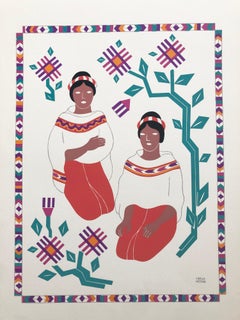
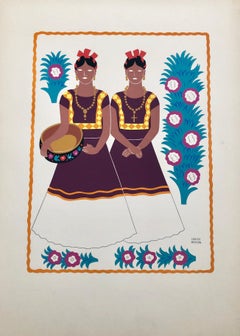
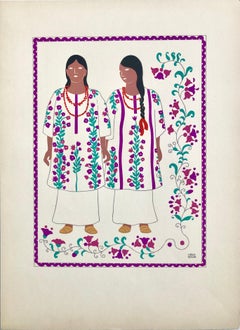
This listing is for the one Silkscreen serigraph piece listed here. Mexico City, 1945. First edition. plate signed, limited edition of 1000, these serigraph plates depict various types of traditional and folk art indigenous clothing and costume styles from around Mexico. The illustrations depict the cultures of many different states in Mexico, including Oaxaca, Chiapas, Jalisco and Veracruz. Carlos Mérida (December 2, 1891 – December 21, 1985) was a Guatemalan artist who was one of the first to fuse European modern painting to Latin American themes, especially those related to Guatemala and Mexico. He was part of the Mexican muralism movement in subject matter but less so in style, favoring a non-figurative and later geometric style rather than a figurative, narrative style. Mérida is best known for canvas and mural work, the latter including elements such as glass and ceramic mosaic on major constructions in the 1950s and 1960s. One of his major works, on the Benito Juarez housing complex, was completely destroyed with the 1985 Mexico City earthquake, but a monument to it exists at another complex in the south of the city. Carlos Mérida was born Carlos Santiago Ortega in Guatemala City to Serapio Santiago Mérida and Guadalupe Ortega Barnoya. He later changed his name what is known by as he thought it was more sonorous. His brothers and children also took the Mérida name later on. He was of mixed Spanish/Maya-Quiché heritage which he promoted during his life. As a young child, Mérida had both music and art lessons, and his first passion was music, which led to piano lessons. He studied at a trade school called the Instituto de Artes y Oficios, then the Instituto de Ciencias y Letras. Here he began to have a reputation for the avant garde. Merída’s first trip to the United States was in 1917, where he met writer Juan José Tablada. Mérida made several trips to Europe over his lifetime to both study art and work as an artist and diplomat. His early trips in the 1920s and 1930s put him in touch with both avant garde movements in Europe as well as noted Latin American artists, especially those from Mexico. His last trip was in 1950s. In 1963, he donated canvases, graphic pieces and mural sketches to the Universidad Nacional Autónoma de Mexico. Merida was one of a number of artists such as Diego Rivera and Gerardo Murillo who became committed to promoting the handcrafts and folk art of Mexico and Central America, with a particular interest in those of Guatemala, often featuring Mayan textiles or elements in their decoration in his artwork. He died in Mexico City at the age of 94 on December 21, 1985. As there was little opportunity for artists in Guatemala, in 1910, Mérida traveled to Paris with a friend named Carlos Valenti on a German cargo ship. From then until 1914, he lived and worked in Paris and traveled much of Europe. This put him in touch with European avant garde artists such as Van Dagen, Amedeo Modigliani, Pablo Picasso and Piet Mondrian as well as Latin American artists studying in Europe such as Diego Rivera, Jorge Enciso, Ángel Zárraga and Dr. Atl. He exhibited his work in venues such as the Independent Salon and the Giroux Gallery in Paris. Mérida has forty five exhibitions in the United States and eighteen in Mexico from 1928 to 1948. These included an exhibition with Rufino Tamayo at the Art Center of New York (1930), the John Becker and Valentine galleries in New York (1930), the Club de Escritores de México and the Galería Posada in Mexico City (1931), the Stendhal Gallery and the Stanley Rose...

Category

1940s Folk Art Carlos Merida Prints and Multiples
Materials

Screen

1945 Mexican Modernist Silkscreen Serigraph Print Regional Folk Art Dress Mexico

1945 Mexican Modernist Silkscreen Serigraph Print Regional Folk Art Dress Mexico

By Carlos Merida 1

Located in Surfside, FL

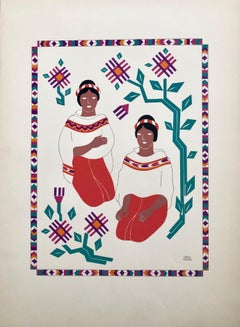
This listing is for the one Silkscreen serigraph piece listed here. Mexico City, 1945. First edition. plate signed, limited edition of 1000, these serigraph plates depict various types of traditional and folk art indigenous clothing and costume styles from around Mexico. The illustrations depict the cultures of many different states in Mexico, including Oaxaca, Chiapas, Jalisco and Veracruz. Carlos Mérida (December 2, 1891 – December 21, 1985) was a Guatemalan artist who was one of the first to fuse European modern painting to Latin American themes, especially those related to Guatemala and Mexico. He was part of the Mexican muralism movement in subject matter but less so in style, favoring a non-figurative and later geometric style rather than a figurative, narrative style. Mérida is best known for canvas and mural work, the latter including elements such as glass and ceramic mosaic on major constructions in the 1950s and 1960s. One of his major works, on the Benito Juarez housing complex, was completely destroyed with the 1985 Mexico City earthquake, but a monument to it exists at another complex in the south of the city. Carlos Mérida was born Carlos Santiago Ortega in Guatemala City to Serapio Santiago Mérida and Guadalupe Ortega Barnoya. He later changed his name what is known by as he thought it was more sonorous. His brothers and children also took the Mérida name later on. He was of mixed Spanish/Maya-Quiché heritage which he promoted during his life. As a young child, Mérida had both music and art lessons, and his first passion was music, which led to piano lessons. He studied at a trade school called the Instituto de Artes y Oficios, then the Instituto de Ciencias y Letras. Here he began to have a reputation for the avant garde. Merída’s first trip to the United States was in 1917, where he met writer Juan José Tablada. Mérida made several trips to Europe over his lifetime to both study art and work as an artist and diplomat. His early trips in the 1920s and 1930s put him in touch with both avant garde movements in Europe as well as noted Latin American artists, especially those from Mexico. His last trip was in 1950s. In 1963, he donated canvases, graphic pieces and mural sketches to the Universidad Nacional Autónoma de Mexico. Merida was one of a number of artists such as Diego Rivera and Gerardo Murillo who became committed to promoting the handcrafts and folk art of Mexico and Central America, with a particular interest in those of Guatemala, often featuring Mayan textiles or elements in their decoration in his artwork. He died in Mexico City at the age of 94 on December 21, 1985. As there was little opportunity for artists in Guatemala, in 1910, Mérida traveled to Paris with a friend named Carlos Valenti on a German cargo ship. From then until 1914, he lived and worked in Paris and traveled much of Europe. This put him in touch with European avant garde artists such as Van Dagen, Amedeo Modigliani, Pablo Picasso and Piet Mondrian as well as Latin American artists studying in Europe such as Diego Rivera, Jorge Enciso, Ángel Zárraga and Dr. Atl. He exhibited his work in venues such as the Independent Salon and the Giroux Gallery in Paris. Mérida has forty five exhibitions in the United States and eighteen in Mexico from 1928 to 1948. These included an exhibition with Rufino Tamayo at the Art Center of New York (1930), the John Becker and Valentine galleries in New York (1930), the Club de Escritores de México and the Galería Posada in Mexico City (1931), the Stendhal Gallery and the Stanley Rose...

Category

1940s Folk Art Carlos Merida Prints and Multiples
Materials

Screen

1945 Mexican Modernist Silkscreen Serigraph Print Regional Folk Art Dress Mexico

1945 Mexican Modernist Silkscreen Serigraph Print Regional Folk Art Dress Mexico

By Carlos Merida 1

Located in Surfside, FL

This listing is for the one Silkscreen serigraph piece listed here. Mexico City, 1945. First edition. plate signed, limited edition of 1000, these serigraph plates depict various types of traditional and folk art indigenous clothing and costume styles from around Mexico. The illustrations depict the cultures of many different states in Mexico, including Oaxaca, Chiapas, Jalisco and Veracruz. Carlos Mérida (December 2, 1891 – December 21, 1985) was a Guatemalan artist who was one of the first to fuse European modern painting to Latin American themes, especially those related to Guatemala and Mexico. He was part of the Mexican muralism movement in subject matter but less so in style, favoring a non-figurative and later geometric style rather than a figurative, narrative style. Mérida is best known for canvas and mural work, the latter including elements such as glass and ceramic mosaic on major constructions in the 1950s and 1960s. One of his major works, on the Benito Juarez housing complex, was completely destroyed with the 1985 Mexico City earthquake, but a monument to it exists at another complex in the south of the city. Carlos Mérida was born Carlos Santiago Ortega in Guatemala City to Serapio Santiago Mérida and Guadalupe Ortega Barnoya. He later changed his name what is known by as he thought it was more sonorous. His brothers and children also took the Mérida name later on. He was of mixed Spanish/Maya-Quiché heritage which he promoted during his life. As a young child, Mérida had both music and art lessons, and his first passion was music, which led to piano lessons. He studied at a trade school called the Instituto de Artes y Oficios, then the Instituto de Ciencias y Letras. Here he began to have a reputation for the avant garde. Merída’s first trip to the United States was in 1917, where he met writer Juan José Tablada. Mérida made several trips to Europe over his lifetime to both study art and work as an artist and diplomat. His early trips in the 1920s and 1930s put him in touch with both avant garde movements in Europe as well as noted Latin American artists, especially those from Mexico. His last trip was in 1950s. In 1963, he donated canvases, graphic pieces and mural sketches to the Universidad Nacional Autónoma de Mexico. Merida was one of a number of artists such as Diego Rivera and Gerardo Murillo who became committed to promoting the handcrafts and folk art of Mexico and Central America, with a particular interest in those of Guatemala, often featuring Mayan textiles or elements in their decoration in his artwork. He died in Mexico City at the age of 94 on December 21, 1985. As there was little opportunity for artists in Guatemala, in 1910, Mérida traveled to Paris with a friend named Carlos Valenti on a German cargo ship. From then until 1914, he lived and worked in Paris and traveled much of Europe. This put him in touch with European avant garde artists such as Van Dagen, Amedeo Modigliani, Pablo Picasso and Piet Mondrian as well as Latin American artists studying in Europe such as Diego Rivera, Jorge Enciso, Ángel Zárraga and Dr. Atl. He exhibited his work in venues such as the Independent Salon and the Giroux Gallery in Paris. Mérida has forty five exhibitions in the United States and eighteen in Mexico from 1928 to 1948. These included an exhibition with Rufino Tamayo at the Art Center of New York (1930), the John Becker and Valentine galleries in New York (1930), the Club de Escritores de México and the Galería Posada in Mexico City (1931), the Stendhal Gallery and the Stanley Rose...

Category

1940s Folk Art Carlos Merida Prints and Multiples
Materials

Screen

1945 Mexican Modernist Silkscreen Serigraph Print Regional Folk Art Dress Mexico

1945 Mexican Modernist Silkscreen Serigraph Print Regional Folk Art Dress Mexico

By Carlos Merida 1

Located in Surfside, FL

This listing is for the one Silkscreen serigraph piece listed here. Mexico City, 1945. First edition. plate signed, limited edition of 1000, these serigraph plates depict various types of traditional and folk art indigenous clothing and costume styles from around Mexico. The illustrations depict the cultures of many different states in Mexico, including Oaxaca, Chiapas, Jalisco and Veracruz. Carlos Mérida (December 2, 1891 – December 21, 1985) was a Guatemalan artist who was one of the first to fuse European modern painting to Latin American themes, especially those related to Guatemala and Mexico. He was part of the Mexican muralism movement in subject matter but less so in style, favoring a non-figurative and later geometric style rather than a figurative, narrative style. Mérida is best known for canvas and mural work, the latter including elements such as glass and ceramic mosaic on major constructions in the 1950s and 1960s. One of his major works, on the Benito Juarez housing complex, was completely destroyed with the 1985 Mexico City earthquake, but a monument to it exists at another complex in the south of the city. Carlos Mérida was born Carlos Santiago Ortega in Guatemala City to Serapio Santiago Mérida and Guadalupe Ortega Barnoya. He later changed his name what is known by as he thought it was more sonorous. His brothers and children also took the Mérida name later on. He was of mixed Spanish/Maya-Quiché heritage which he promoted during his life. As a young child, Mérida had both music and art lessons, and his first passion was music, which led to piano lessons. He studied at a trade school called the Instituto de Artes y Oficios, then the Instituto de Ciencias y Letras. Here he began to have a reputation for the avant garde. Merída’s first trip to the United States was in 1917, where he met writer Juan José Tablada. Mérida made several trips to Europe over his lifetime to both study art and work as an artist and diplomat. His early trips in the 1920s and 1930s put him in touch with both avant garde movements in Europe as well as noted Latin American artists, especially those from Mexico. His last trip was in 1950s. In 1963, he donated canvases, graphic pieces and mural sketches to the Universidad Nacional Autónoma de Mexico. Merida was one of a number of artists such as Diego Rivera and Gerardo Murillo who became committed to promoting the handcrafts and folk art of Mexico and Central America, with a particular interest in those of Guatemala, often featuring Mayan textiles or elements in their decoration in his artwork. He died in Mexico City at the age of 94 on December 21, 1985. As there was little opportunity for artists in Guatemala, in 1910, Mérida traveled to Paris with a friend named Carlos Valenti on a German cargo ship. From then until 1914, he lived and worked in Paris and traveled much of Europe. This put him in touch with European avant garde artists such as Van Dagen, Amedeo Modigliani, Pablo Picasso and Piet Mondrian as well as Latin American artists studying in Europe such as Diego Rivera, Jorge Enciso, Ángel Zárraga and Dr. Atl. He exhibited his work in venues such as the Independent Salon and the Giroux Gallery in Paris. Mérida has forty five exhibitions in the United States and eighteen in Mexico from 1928 to 1948. These included an exhibition with Rufino Tamayo at the Art Center of New York (1930), the John Becker and Valentine galleries in New York (1930), the Club de Escritores de México and the Galería Posada in Mexico City (1931), the Stendhal Gallery and the Stanley Rose...

Category

1940s Folk Art Carlos Merida Prints and Multiples
Materials

Screen

1945 Mexican Modernist Silkscreen Serigraph Print Regional Folk Art Dress Mexico

1945 Mexican Modernist Silkscreen Serigraph Print Regional Folk Art Dress Mexico

By Carlos Merida 1

Located in Surfside, FL

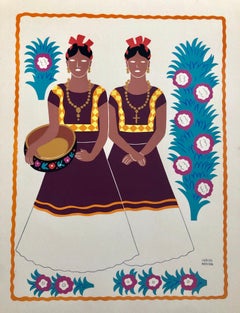
This listing is for the one Silkscreen serigraph piece listed here. Mexico City, 1945. First edition. plate signed, limited edition of 1000, these serigraph plates depict various types of traditional and folk art indigenous clothing and costume styles from around Mexico. The illustrations depict the cultures of many different states in Mexico, including Oaxaca, Chiapas, Jalisco and Veracruz. Carlos Mérida (December 2, 1891 – December 21, 1985) was a Guatemalan artist who was one of the first to fuse European modern painting to Latin American themes, especially those related to Guatemala and Mexico. He was part of the Mexican muralism movement in subject matter but less so in style, favoring a non-figurative and later geometric style rather than a figurative, narrative style. Mérida is best known for canvas and mural work, the latter including elements such as glass and ceramic mosaic on major constructions in the 1950s and 1960s. One of his major works, on the Benito Juarez housing complex, was completely destroyed with the 1985 Mexico City earthquake, but a monument to it exists at another complex in the south of the city. Carlos Mérida was born Carlos Santiago Ortega in Guatemala City to Serapio Santiago Mérida and Guadalupe Ortega Barnoya. He later changed his name what is known by as he thought it was more sonorous. His brothers and children also took the Mérida name later on. He was of mixed Spanish/Maya-Quiché heritage which he promoted during his life. As a young child, Mérida had both music and art lessons, and his first passion was music, which led to piano lessons. He studied at a trade school called the Instituto de Artes y Oficios, then the Instituto de Ciencias y Letras. Here he began to have a reputation for the avant garde. Merída’s first trip to the United States was in 1917, where he met writer Juan José Tablada. Mérida made several trips to Europe over his lifetime to both study art and work as an artist and diplomat. His early trips in the 1920s and 1930s put him in touch with both avant garde movements in Europe as well as noted Latin American artists, especially those from Mexico. His last trip was in 1950s. In 1963, he donated canvases, graphic pieces and mural sketches to the Universidad Nacional Autónoma de Mexico. Merida was one of a number of artists such as Diego Rivera and Gerardo Murillo who became committed to promoting the handcrafts and folk art of Mexico and Central America, with a particular interest in those of Guatemala, often featuring Mayan textiles or elements in their decoration in his artwork. He died in Mexico City at the age of 94 on December 21, 1985. As there was little opportunity for artists in Guatemala, in 1910, Mérida traveled to Paris with a friend named Carlos Valenti on a German cargo ship. From then until 1914, he lived and worked in Paris and traveled much of Europe. This put him in touch with European avant garde artists such as Van Dagen, Amedeo Modigliani, Pablo Picasso and Piet Mondrian as well as Latin American artists studying in Europe such as Diego Rivera, Jorge Enciso, Ángel Zárraga and Dr. Atl. He exhibited his work in venues such as the Independent Salon and the Giroux Gallery in Paris. Mérida has forty five exhibitions in the United States and eighteen in Mexico from 1928 to 1948. These included an exhibition with Rufino Tamayo at the Art Center of New York (1930), the John Becker and Valentine galleries in New York (1930), the Club de Escritores de México and the Galería Posada in Mexico City (1931), the Stendhal Gallery and the Stanley Rose...

Category

1940s Folk Art Carlos Merida Prints and Multiples
Materials

Screen

1945 Mexican Modernist Silkscreen Serigraph Print Regional Folk Art Dress Mexico

1945 Mexican Modernist Silkscreen Serigraph Print Regional Folk Art Dress Mexico

By Carlos Merida 1

Located in Surfside, FL

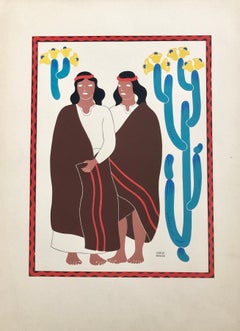
This listing is for the one Silkscreen serigraph piece listed here. Mexico City, 1945. First edition. plate signed, limited edition of 1000, these serigraph plates depict various types of traditional and folk art indigenous clothing and costume styles from around Mexico. The illustrations depict the cultures of many different states in Mexico, including Oaxaca, Chiapas, Jalisco and Veracruz. Carlos Mérida (December 2, 1891 – December 21, 1985) was a Guatemalan artist who was one of the first to fuse European modern painting to Latin American themes, especially those related to Guatemala and Mexico. He was part of the Mexican muralism movement in subject matter but less so in style, favoring a non-figurative and later geometric style rather than a figurative, narrative style. Mérida is best known for canvas and mural work, the latter including elements such as glass and ceramic mosaic on major constructions in the 1950s and 1960s. One of his major works, on the Benito Juarez housing complex, was completely destroyed with the 1985 Mexico City earthquake, but a monument to it exists at another complex in the south of the city. Carlos Mérida was born Carlos Santiago Ortega in Guatemala City to Serapio Santiago Mérida and Guadalupe Ortega Barnoya. He later changed his name what is known by as he thought it was more sonorous. His brothers and children also took the Mérida name later on. He was of mixed Spanish/Maya-Quiché heritage which he promoted during his life. As a young child, Mérida had both music and art lessons, and his first passion was music, which led to piano lessons. He studied at a trade school called the Instituto de Artes y Oficios, then the Instituto de Ciencias y Letras. Here he began to have a reputation for the avant garde. Merída’s first trip to the United States was in 1917, where he met writer Juan José Tablada. Mérida made several trips to Europe over his lifetime to both study art and work as an artist and diplomat. His early trips in the 1920s and 1930s put him in touch with both avant garde movements in Europe as well as noted Latin American artists, especially those from Mexico. His last trip was in 1950s. In 1963, he donated canvases, graphic pieces and mural sketches to the Universidad Nacional Autónoma de Mexico. Merida was one of a number of artists such as Diego Rivera and Gerardo Murillo who became committed to promoting the handcrafts and folk art of Mexico and Central America, with a particular interest in those of Guatemala, often featuring Mayan textiles or elements in their decoration in his artwork. He died in Mexico City at the age of 94 on December 21, 1985. As there was little opportunity for artists in Guatemala, in 1910, Mérida traveled to Paris with a friend named Carlos Valenti on a German cargo ship. From then until 1914, he lived and worked in Paris and traveled much of Europe. This put him in touch with European avant garde artists such as Van Dagen, Amedeo Modigliani, Pablo Picasso and Piet Mondrian as well as Latin American artists studying in Europe such as Diego Rivera, Jorge Enciso, Ángel Zárraga and Dr. Atl. He exhibited his work in venues such as the Independent Salon and the Giroux Gallery in Paris. Mérida has forty five exhibitions in the United States and eighteen in Mexico from 1928 to 1948. These included an exhibition with Rufino Tamayo at the Art Center of New York (1930), the John Becker and Valentine galleries in New York (1930), the Club de Escritores de México and the Galería Posada in Mexico City (1931), the Stendhal Gallery and the Stanley Rose...

Category

1940s Folk Art Carlos Merida Prints and Multiples
Materials

Screen

1945 Mexican Modernist Silkscreen Serigraph Print Regional Folk Art Dress Mexico

1945 Mexican Modernist Silkscreen Serigraph Print Regional Folk Art Dress Mexico

By Carlos Merida 1

Located in Surfside, FL

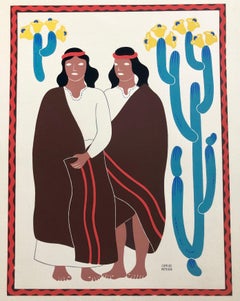
This listing is for the one Silkscreen serigraph piece listed here. Mexico City, 1945. First edition. plate signed, limited edition of 1000, these serigraph plates depict various types of traditional and folk art indigenous clothing and costume styles from around Mexico. The illustrations depict the cultures of many different states in Mexico, including Oaxaca, Chiapas, Jalisco and Veracruz. Carlos Mérida (December 2, 1891 – December 21, 1985) was a Guatemalan artist who was one of the first to fuse European modern painting to Latin American themes, especially those related to Guatemala and Mexico. He was part of the Mexican muralism movement in subject matter but less so in style, favoring a non-figurative and later geometric style rather than a figurative, narrative style. Mérida is best known for canvas and mural work, the latter including elements such as glass and ceramic mosaic on major constructions in the 1950s and 1960s. One of his major works, on the Benito Juarez housing complex, was completely destroyed with the 1985 Mexico City earthquake, but a monument to it exists at another complex in the south of the city. Carlos Mérida was born Carlos Santiago Ortega in Guatemala City to Serapio Santiago Mérida and Guadalupe Ortega Barnoya. He later changed his name what is known by as he thought it was more sonorous. His brothers and children also took the Mérida name later on. He was of mixed Spanish/Maya-Quiché heritage which he promoted during his life. As a young child, Mérida had both music and art lessons, and his first passion was music, which led to piano lessons. He studied at a trade school called the Instituto de Artes y Oficios, then the Instituto de Ciencias y Letras. Here he began to have a reputation for the avant garde. Merída’s first trip to the United States was in 1917, where he met writer Juan José Tablada. Mérida made several trips to Europe over his lifetime to both study art and work as an artist and diplomat. His early trips in the 1920s and 1930s put him in touch with both avant garde movements in Europe as well as noted Latin American artists, especially those from Mexico. His last trip was in 1950s. In 1963, he donated canvases, graphic pieces and mural sketches to the Universidad Nacional Autónoma de Mexico. Merida was one of a number of artists such as Diego Rivera and Gerardo Murillo who became committed to promoting the handcrafts and folk art of Mexico and Central America, with a particular interest in those of Guatemala, often featuring Mayan textiles or elements in their decoration in his artwork. He died in Mexico City at the age of 94 on December 21, 1985. As there was little opportunity for artists in Guatemala, in 1910, Mérida traveled to Paris with a friend named Carlos Valenti on a German cargo ship. From then until 1914, he lived and worked in Paris and traveled much of Europe. This put him in touch with European avant garde artists such as Van Dagen, Amedeo Modigliani, Pablo Picasso and Piet Mondrian as well as Latin American artists studying in Europe such as Diego Rivera, Jorge Enciso, Ángel Zárraga and Dr. Atl. He exhibited his work in venues such as the Independent Salon and the Giroux Gallery in Paris. Mérida has forty five exhibitions in the United States and eighteen in Mexico from 1928 to 1948. These included an exhibition with Rufino Tamayo at the Art Center of New York (1930), the John Becker and Valentine galleries in New York (1930), the Club de Escritores de México and the Galería Posada in Mexico City (1931), the Stendhal Gallery and the Stanley Rose...

Category

1940s Folk Art Carlos Merida Prints and Multiples
Materials

Screen

1945 Mexican Modernist Silkscreen Serigraph  Print Regional Dress Carlos Merida

1945 Mexican Modernist Silkscreen Serigraph Print Regional Dress Carlos Merida

By Carlos Merida 1

Located in Surfside, FL

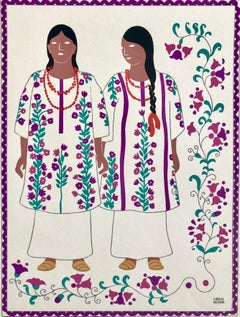
This listing is for the one Silkscreen serigraph piece listed here. Mexico City, 1945. First edition. plate signed, limited edition of 1000, these serigraph plates depict various types of traditional and folk art indigenous clothing and costume styles from around Mexico. The illustrations depict the cultures of many different states in Mexico, including Oaxaca, Chiapas, Jalisco and Veracruz. Carlos Mérida (December 2, 1891 – December 21, 1985) was a Guatemalan artist who was one of the first to fuse European modern painting to Latin American themes, especially those related to Guatemala and Mexico. He was part of the Mexican muralism movement in subject matter but less so in style, favoring a non-figurative and later geometric style rather than a figurative, narrative style. Mérida is best known for canvas and mural work, the latter including elements such as glass and ceramic mosaic on major constructions in the 1950s and 1960s. One of his major works, on the Benito Juarez housing complex, was completely destroyed with the 1985 Mexico City earthquake, but a monument to it exists at another complex in the south of the city. Carlos Mérida was born Carlos Santiago Ortega in Guatemala City to Serapio Santiago Mérida and Guadalupe Ortega Barnoya. He later changed his name what is known by as he thought it was more sonorous. His brothers and children also took the Mérida name later on. He was of mixed Spanish/Maya-Quiché heritage which he promoted during his life. As a young child, Mérida had both music and art lessons, and his first passion was music, which led to piano lessons. He studied at a trade school called the Instituto de Artes y Oficios, then the Instituto de Ciencias y Letras. Here he began to have a reputation for the avant garde. Merída’s first trip to the United States was in 1917, where he met writer Juan José Tablada. Mérida made several trips to Europe over his lifetime to both study art and work as an artist and diplomat. His early trips in the 1920s and 1930s put him in touch with both avant garde movements in Europe as well as noted Latin American artists, especially those from Mexico. His last trip was in 1950s. In 1963, he donated canvases, graphic pieces and mural sketches to the Universidad Nacional Autónoma de Mexico. Merida was one of a number of artists such as Diego Rivera and Gerardo Murillo who became committed to promoting the handcrafts and folk art of Mexico and Central America, with a particular interest in those of Guatemala, often featuring Mayan textiles or elements in their decoration in his artwork. He died in Mexico City at the age of 94 on December 21, 1985. As there was little opportunity for artists in Guatemala, in 1910, Mérida traveled to Paris with a friend named Carlos Valenti on a German cargo ship. From then until 1914, he lived and worked in Paris and traveled much of Europe. This put him in touch with European avant garde artists such as Van Dagen, Amedeo Modigliani, Pablo Picasso and Piet Mondrian as well as Latin American artists studying in Europe such as Diego Rivera, Jorge Enciso, Ángel Zárraga and Dr. Atl. He exhibited his work in venues such as the Independent Salon and the Giroux Gallery in Paris. Mérida has forty five exhibitions in the United States and eighteen in Mexico from 1928 to 1948. These included an exhibition with Rufino Tamayo at the Art Center of New York (1930), the John Becker and Valentine galleries in New York (1930), the Club de Escritores de México and the Galería Posada in Mexico City (1931), the Stendhal Gallery and the Stanley Rose...

Category

1940s Folk Art Carlos Merida Prints and Multiples
Materials

Screen

Carlos Merida prints and multiples for sale on 1stDibs.
Find a wide variety of authentic Carlos Merida prints and multiples available for sale on 1stDibs. You can also browse by medium to find art by Carlos Merida in screen print and more. Not every interior allows for large Carlos Merida prints and multiples, so small editions measuring 13 inches across are available. Customers who are interested in this artist might also find the work of David Sharir, Igor Galanin, and Günther Kieser. Carlos Merida prints and multiples prices can differ depending upon medium, time period and other attributes. On 1stDibs, the price for these items starts at $950 and tops out at $950, while the average work can sell for $950.