Diamond Figurative Paintings

to
1
7
Overall Width
to
Overall Height
to
8
8
5
3
6
4
3
3
3
2
2
2
1
1
1
1
1
1
1
1
1
1
8
8
6
8
510
284
281
230
8
Artist: Diamond
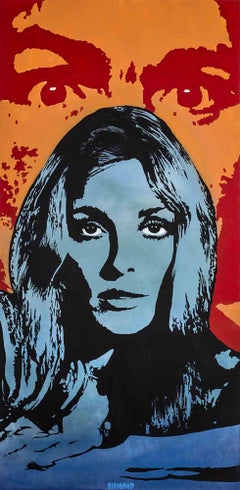
Tate Manson - Mixed Media on Canvas by Diamond - 2017

Tate Manson - Mixed Media on Canvas by Diamond - 2017

By Diamond 7

Located in Roma, IT

This painting, one of ten, belonging to a series of works exhibited in 2017 for the " DECADES " exhibition, that tell the atmosphere of 70's Dimension: 200 x 100 cm. Mixed Media on ...

Category

2010s Pop Art Diamond Figurative Paintings
Materials

Canvas, Mixed Media

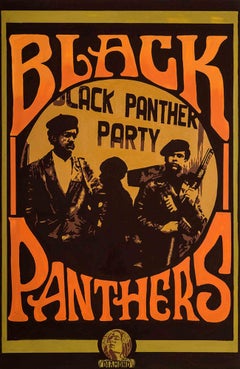
Black Panthers Party - Mixed Media on Canvas by Diamond - 2017

Black Panthers Party - Mixed Media on Canvas by Diamond - 2017

By Diamond 7

Located in Roma, IT

This painting, one of ten, belonging to a series of works exhibited in 2017 for the " DECADES " exhibition, that tell the atmosphere of 70s Dimension: 100 cm x 150 cm. Mixed Media o...

Category

2010s Pop Art Diamond Figurative Paintings
Materials

Canvas

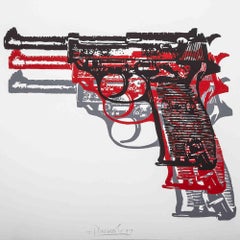
Anni Di Piombo - Mixed Media on Canvas by Diamond - 2017

Anni Di Piombo - Mixed Media on Canvas by Diamond - 2017

By Diamond 7

Located in Roma, IT

This painting, one of ten, belonging to a series of works exhibited in 2017 for the " DECADES " exhibition, that tell the atmosphere of 70's Dimension: 150 cm x 150 cm. Acrylic on C...

Category

2010s Pop Art Diamond Figurative Paintings
Materials

Canvas, Mixed Media

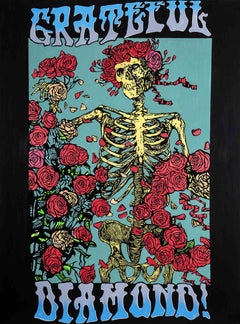
Grateful Diamond - Mixed Media on Canvas by Diamond - 2017

Grateful Diamond - Mixed Media on Canvas by Diamond - 2017

By Diamond 7

Located in Roma, IT

This painting, one of ten, belonging to a series of works exhibited in 2017 for the " DECADES " exhibition, that tell the atmosphere of 70's Dimension: 150 cm x 200 cm. Mixed media ...

Category

2010s Pop Art Diamond Figurative Paintings
Materials

Canvas, Mixed Media

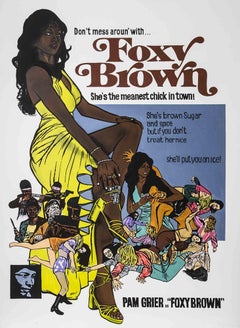
Foxy Brown - Mixed Media on Canvas by Diamond - 2017

Foxy Brown - Mixed Media on Canvas by Diamond - 2017

By Diamond 7

Located in Roma, IT

This painting, one of ten, belonging to a series of works exhibited in 2017 for the " DECADES " exhibition, that tell the atmosphere of 70's Dimension: 150 cm x 200 cm. Mixed media...

Category

2010s Pop Art Diamond Figurative Paintings
Materials

Canvas, Mixed Media

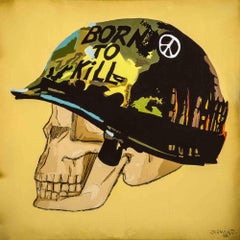
The Choice - Original Mixed Media on Canvas by Diamond - 2017

The Choice - Original Mixed Media on Canvas by Diamond - 2017

By Diamond 7

Located in Roma, IT

This painting, one of ten, belonging to a series of works exhibited in 2017 for the " DECADES " exhibition, that tell the atmosphere of 70'sDiamond - La scelta - 150 cm x 150 cm. Mi...

Category

2010s Pop Art Diamond Figurative Paintings
Materials

Canvas, Mixed Media

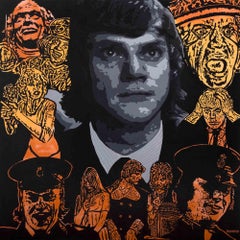
Vietnam - Mixed Media on Canvas by Diamond - 2017

Vietnam - Mixed Media on Canvas by Diamond - 2017

By Diamond 7

Located in Roma, IT

This painting, one of ten, belonging to a series of works exhibited in 2017 for the " DECADES " exhibition, that tell the atmosphere of 70's Dimension: 100 cm x 100 cm. Mixed Media ...

Category

2010s Pop Art Diamond Figurative Paintings
Materials

Canvas

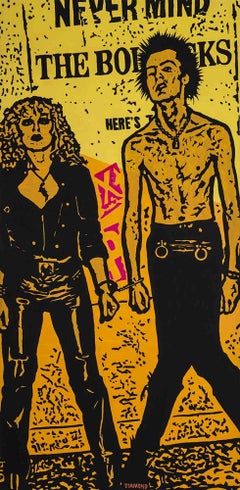
Sid & Nancy - Mixed Media on Canvas by Diamond - 2017

Sid & Nancy - Mixed Media on Canvas by Diamond - 2017

By Diamond 7

Located in Roma, IT

This painting, one of ten, belonging to a series of works exhibited in 2017 for the " DECADES " exhibition, that tell the atmosphere of 70's Dimension: 200 x 100 cm Mixed media on C...

Category

2010s Pop Art Diamond Figurative Paintings
Materials

Canvas, Mixed Media

Related Items
"Elvis", Denied Andy Warhol Silver & Black Pop Art Painting by Charles Lutz

"Elvis", Denied Andy Warhol Silver & Black Pop Art Painting by Charles Lutz

By Charles Lutz

Located in Brooklyn, NY

Elvis, Metallic Silver and Black Full Length Silkscreen Painting by Charles Lutz Silkscreen and silver enamel painted on vintage 1960's era linen with Artist's Denied stamp of the Andy Warhol Art Authentication Board. 82" x 40" inches 2010 Lutz's 2007 ''Warhol Denied'' series gained international attention by calling into question the importance of originality or lack thereof in the work of Andy Warhol. The authentication/denial process of the [[Andy Warhol Art Authentication Board]] was used to create value by submitting recreations of Warhol works for judgment with the full intention for the works to be formally marked "DENIED". The final product of the conceptual project being "officially denied" "Warhol" paintings authored by Lutz. Based on the full-length Elvis Presley paintings by Pop Artist Andy Warhol in 1964, this is likely one of his most iconic images, next to Campbell's Soup Cans and portraits of Jackie Kennedy, Marilyn Monroe, Liz Taylor, and Marlon Brando. This is the rarest of the Elvis works from the series, as Lutz sourced a vintage roll of 1960's primed artist linen which was used for this one Elvis. The silkscreen, like Warhol's embraced imperfections, like the slight double image printing of the Elvis image. Lutz received his BFA in Painting and Art History from Pratt Institute and studied Human Dissection and Anatomy at Columbia University, New York. Lutz's work deals with perceptions and value structures, specifically the idea of the transference of values. Lutz's most recently presented an installation of new sculptures dealing with consumerism at Frank Lloyd Wright's Fallingwater House in 2022. Lutz's 2007 Warhol Denied series received international attention calling into question the importance of originality in a work of art. The valuation process (authentication or denial) of the Andy Warhol Art Authentication Board was used by the artist to create value by submitting recreations of Warhol works for judgment, with the full intention for the works to be formally marked "DENIED" of their authenticity. The final product of this conceptual project is "Officially DENIED" "Warhol" paintings authored by Lutz. Later in 2013, Lutz went on to do one of his largest public installations to date. At the 100th Anniversary of Marcel Duchamp's groundbreaking and controversial Armory Show, Lutz was asked by the curator of Armory Focus: USA and former Director of The Andy Warhol Museum, Eric Shiner to create a site-specific installation representing the US. The installation "Babel" (based on Pieter Bruegel's famous painting) consisted of 1500 cardboard replicas of Warhol's Brillo Box (Stockholm Type) stacked 20 ft tall. All 1500 boxes were then given to the public freely, debasing the Brillo Box as an art commodity by removing its value, in addition to debasing its willing consumers. Elvis was "the greatest cultural force in the Twentieth Century. He introduced the beat to everything, and he changed everything - music, language, clothes, it's a whole new social revolution." Leonard Bernstein in: Exh. Cat., Boston, The Institute of Contemporary Art and traveling, Elvis + Marilyn 2 x Immortal, 1994-97, p. 9. Andy Warhol "quite simply changed how we all see the world around us." Kynaston McShine in: Exh. Cat., New York, Museum of Modern Art (and traveling), Andy Warhol: Retrospective, 1996, p. 13. In the summer of 1963 Elvis Presley was just twenty-eight years old but already a legend of his time. During the preceding seven years - since Heartbreak Hotel became the biggest-selling record of 1956 - he had recorded seventeen number-one singles and seven number-one albums; starred in eleven films, countless national TV appearances, tours, and live performances; earned tens of millions of dollars; and was instantly recognized across the globe. The undisputed King of Rock and Roll, Elvis was the biggest star alive: a cultural phenomenon of mythic proportions apparently no longer confined to the man alone. As the eminent composer Leonard Bernstein put it, Elvis was "the greatest cultural force in the Twentieth Century. He introduced the beat to everything, and he changed everything - music, language, clothes, it's a whole new social revolution." (Exh. Cat., Boston, The Institute of Contemporary Art (and traveling), Elvis + Marilyn 2 x Immortal, 1994, p. 9). In the summer of 1963 Andy Warhol was thirty-four years old and transforming the parameters of visual culture in America. The focus of his signature silkscreen was leveled at subjects he brilliantly perceived as the most important concerns of day to day contemporary life. By appropriating the visual vernacular of consumer culture and multiplying readymade images gleaned from newspapers, magazines and advertising, he turned a mirror onto the contradictions behind quotidian existence. Above all else he was obsessed with themes of celebrity and death, executing intensely multifaceted and complex works in series that continue to resound with universal relevance. His unprecedented practice re-presented how society viewed itself, simultaneously reinforcing and radically undermining the collective psychology of popular culture. He epitomized the tide of change that swept through the 1960s and, as Kynaston McShine has concisely stated, "He quite simply changed how we all see the world around us." (Exh. Cat., New York, Museum of Modern Art (and traveling), Andy Warhol: Retrospective, 1996, p. 13). Thus in the summer of 1963 there could not have been a more perfect alignment of artist and subject than Warhol and Elvis. Perhaps the most famous depiction of the biggest superstar by the original superstar artist, Double Elvis is a historic paradigm of Pop Art from a breath-taking moment in Art History. With devastating immediacy and efficiency, Warhol's canvas seduces our view with a stunning aesthetic and confronts our experience with a sophisticated array of thematic content. Not only is there all of Elvis, man and legend, but we are also presented with the specter of death, staring at us down the barrel of a gun; and the lone cowboy, confronting the great frontier and the American dream. The spray painted silver screen denotes the glamour and glory of cinema, the artificiality of fantasy, and the idea of a mirror that reveals our own reality back to us. At the same time, Warhol's replication of Elvis' image as a double stands as metaphor for the means and effects of mass-media and its inherent potential to manipulate and condition. These thematic strata function in simultaneous concert to deliver a work of phenomenal conceptual brilliance. The portrait of a man, the portrait of a country, and the portrait of a time, Double Elvis is an indisputable icon for our age. The source image was a publicity still for the movie Flaming Star, starring Presley as the character Pacer Burton and directed by Don Siegel in 1960. The film was originally intended as a vehicle for Marlon Brando and produced by David Weisbart, who had made James Dean's Rebel Without a Cause in 1955. It was the first of two Twentieth Century Fox productions Presley was contracted to by his manager Colonel Tom Parker, determined to make the singer a movie star. For the compulsive movie-fan Warhol, the sheer power of Elvis wielding a revolver as the reluctant gunslinger presented the zenith of subject matter: ultimate celebrity invested with the ultimate power to issue death. Warhol's Elvis is physically larger than life and wears the expression that catapulted him into a million hearts: inexplicably and all at once fearful and resolute; vulnerable and predatory; innocent and explicit. It is the look of David Halberstam's observation that "Elvis Presley was an American original, the rebel as mother's boy, alternately sweet and sullen, ready on demand to be either respectable or rebellious." (Exh. Cat., Boston, Op. Cit.). Indeed, amidst Warhol's art there is only one other subject whose character so ethereally defies categorization and who so acutely conflated total fame with the inevitability of mortality. In Warhol's work, only Elvis and Marilyn harness a pictorial magnetism of mythic proportions. With Marilyn Monroe, whom Warhol depicted immediately after her premature death in August 1962, he discovered a memento mori to unite the obsessions driving his career: glamour, beauty, fame, and death. As a star of the silver screen and the definitive international sex symbol, Marilyn epitomized the unattainable essence of superstardom that Warhol craved. Just as there was no question in 1963, there remains still none today that the male equivalent to Marilyn is Elvis. However, despite his famous 1968 adage, "If you want to know all about Andy Warhol, just look at the surface of my paintings" Warhol's fascination held purpose far beyond mere idolization. As Rainer Crone explained in 1970, Warhol was interested in movie stars above all else because they were "people who could justifiably be seen as the nearest thing to representatives of mass culture." (Rainer Crone, Andy Warhol, New York, 1970, p. 22). Warhol was singularly drawn to the idols of Elvis and Marilyn, as he was to Marlon Brando and Liz Taylor, because he implicitly understood the concurrence between the projection of their image and the projection of their brand. Some years after the present work he wrote, "In the early days of film, fans used to idolize a whole star - they would take one star and love everything about that star...So you should always have a product that's not just 'you.' An actress should count up her plays and movies and a model should count up her photographs and a writer should count up his words and an artist should count up his pictures so you always know exactly what you're worth, and you don't get stuck thinking your product is you and your fame, and your aura." (Andy Warhol, The Philosophy of Andy Warhol (From A to B and Back Again), San Diego, New York and London, 1977, p. 86). The film stars of the late 1950s and early 1960s that most obsessed Warhol embodied tectonic shifts in wider cultural and societal values. In 1971 John Coplans argued that Warhol was transfixed by the subject of Elvis, and to a lesser degree by Marlon Brando and James Dean, because they were "authentically creative, and not merely products of Hollywood's fantasy or commercialism. All three had originative lives, and therefore are strong personalities; all three raised - at one level or another - important questions as to the quality of life in America and the nature of its freedoms. Implicit in their attitude is a condemnation of society and its ways; they project an image of the necessity for the individual to search for his own future, not passively, but aggressively, with commitment and passion." (John Coplans, "Andy Warhol and Elvis Presley," Studio International, vol. 181, no. 930, February 1971, pp. 51-52). However, while Warhol unquestionably adored these idols as transformative heralds, the suggestion that his paintings of Elvis are uncritical of a generated public image issued for mass consumption fails to appreciate the acuity of his specific re-presentation of the King. As with Marilyn, Liz and Marlon, Warhol instinctively understood the Elvis brand as an industrialized construct, designed for mass consumption like a Coca-Cola bottle or Campbell's Soup Can, and radically revealed it as a precisely composed non-reality. Of course Elvis offered Warhol the biggest brand of all, and he accentuates this by choosing a manifestly contrived version of Elvis-the-film-star, rather than the raw genius of Elvis as performing Rock n' Roll pioneer. A few months prior to the present work he had silkscreened Elvis' brooding visage in a small cycle of works based on a simple headshot, including Red Elvis, but the absence of context in these works minimizes the critical potency that is so present in Double Elvis. With Double Elvis we are confronted by a figure so familiar to us, yet playing a role relating to violence and death that is entirely at odds with the associations entrenched with the singer's renowned love songs. Although we may think this version of Elvis makes sense, it is the overwhelming power of the totemic cipher of the Elvis legend that means we might not even question why he is pointing a gun rather than a guitar. Thus Warhol interrogates the limits of the popular visual vernacular, posing vital questions of collective perception and cognition in contemporary society. The notion that this self-determinedly iconic painting shows an artificial paradigm is compounded by Warhol's enlistment of a reflective metallic surface, a treatment he reserved for his most important portraits of Elvis, Marilyn, Marlon and Liz. Here the synthetic chemical silver paint becomes allegory for the manufacture of the Elvis product, and directly anticipates the artist's 1968 statement: "Everything is sort of artificial. I don't know where the artificial stops and the real starts. The artificial fascinates me, the bright and shiny..." (Artist quoted in Exh. Cat., Stockholm, Moderna Museet and traveling, Andy Warhol, 1968, n.p.). At the same time, the shiny silver paint of Double Elvis unquestionably denotes the glamour of the silver screen and the attractive fantasies of cinema. At exactly this time in the summer of 1963 Warhol bought his first movie camera and produced his first films such as Sleep, Kiss and Tarzan and Jane Regained. Although the absence of plot or narrative convention in these movies was a purposely anti-Hollywood gesture, the unattainability of classic movie stardom still held profound allure and resonance for Warhol. He remained a celebrity and film fanatic, and it was exactly this addiction that so qualifies his sensational critique of the industry machinations behind the stars he adored. Double Elvis was executed less than eighteen months after he had created 32 Campbell's Soup Cans for his immortal show at the Ferus Gallery, Los Angeles in July and August 1962, and which is famously housed in the Museum of Modern Art, New York. In the intervening period he had produced the series Dollar Bills, Coca-Cola Bottles, Suicides, Disasters, and Silver Electric Chairs, all in addition to the portrait cycles of Marilyn and Liz. This explosive outpouring of astonishing artistic invention stands as definitive testament to Warhol's aptitude to seize the most potent images of his time. He recognized that not only the product itself, but also the means of consumption - in this case society's abandoned deification of Elvis - was symptomatic of a new mode of existence. As Heiner Bastian has precisely summated: "the aura of utterly affirmative idolization already stands as a stereotype of a 'consumer-goods style' expression of an American way of life and of the mass-media culture of a nation." (Exh. Cat., Berlin, Neue Nationalgalerie (and traveling), Andy Warhol: Retrospective, 2001, p. 28). For Warhol, the act of image replication and multiplication anaesthetized the effect of the subject, and while he had undermined the potency of wealth in 200 One Dollar Bills, and cheated the terror of death by electric chair in Silver Disaster # 6, the proliferation of Elvis here emasculates a prefabricated version of character authenticity. Here the cinematic quality of variety within unity is apparent in the degrees to which Presley's arm and gun become less visible to the left of the canvas. The sense of movement is further enhanced by a sense of receding depth as the viewer is presented with the ghost like repetition of the figure in the left of the canvas, a 'jump effect' in the screening process that would be replicated in the multiple Elvis paintings. The seriality of the image heightens the sense of a moving image, displayed for us like the unwinding of a reel of film. Elvis was central to Warhol's legendary solo exhibition organized by Irving Blum at the Ferus Gallery in the Fall of 1963 - the show having been conceived around the Elvis paintings since at least May of that year. A well-known installation photograph shows the present work prominently presented among the constant reel of canvases, designed to fill the space as a filmic diorama. While the Elvis canvases...

Category

21st Century and Contemporary Pop Art Diamond Figurative Paintings
Materials

Enamel

To Be Understood

Brett Hammond - Pop ArtTo Be Understood

$3,520

H 24 in W 24 in D 1.5 in

To Be Understood

By Brett Hammond - Pop Art

Located in Napa, CA

Brett Hammond’s spray-painted canvas panels pay homage to pop art traditions as he explores his own interests in satire, drama, and romantic tension. Above all, his work is smart, fu...

Category

21st Century and Contemporary Pop Art Diamond Figurative Paintings
Materials

Canvas, Spray Paint, Acrylic

Jonathan Winters Screenprint Canvas Painting Airplane Hollywood Hang Ups Pop Art

Jonathan Winters Screenprint Canvas Painting Airplane Hollywood Hang Ups Pop Art

By Jonathan Winters

Located in Surfside, FL

Overall 21 X 27 image is 17.25 X 23.5 This is a mixed media print on canvas by beloved comedian and artist Jonathan Winters. This one depicts old biplane airplanes and parachutes ...

Category

1980s Pop Art Diamond Figurative Paintings
Materials

Canvas, Screen

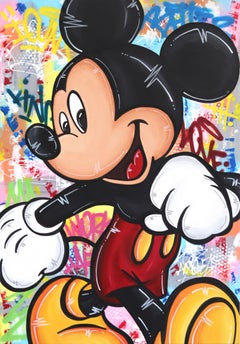
Mickey's Dreamland - Original Pop Art Painting with Cartoon Character

Mickey's Dreamland - Original Pop Art Painting with Cartoon Character

By Naguy Claude

Located in Los Angeles, CA

Naguy Claude mixes popular culture icons and street art with comic and cartoon characters, as well as famous superheroes, in his original layered mixed media paintings. His artworks ...

Category

21st Century and Contemporary Pop Art Diamond Figurative Paintings
Materials

Canvas, Mixed Media, Spray Paint, Acrylic

Campbell's Soup Favorites: Minestrone, Pop Art Oil on Canvas

Campbell's Soup Favorites: Minestrone, Pop Art Oil on Canvas

By Leslie Lew

Located in White Plains, NY

'Campbell's Soup Favorites - Tomato' by Leslie Lew is a sculpted oil on canvas painting with saturated colors of yellow, blue, red, purple, orange, white and black. Leslie Lew reinte...

Category

2010s Pop Art Diamond Figurative Paintings
Materials

Canvas, Oil

Mikael Takacs Acid Squirtle Pokemon Acrylic Marbling Painting Canvas Pop Art

Mikael Takacs Acid Squirtle Pokemon Acrylic Marbling Painting Canvas Pop Art

By Mikael Takacs

Located in New York, NY

It is said that Marbling (his painting technique) originated in Japan in the 12th Century. Mikael has been able to reinvent the technique existing for more than hundreds of years li...

Category

2010s Pop Art Diamond Figurative Paintings

Materials

Canvas, Acrylic

Market Whirls Up Again - Original Framed Figurative Monopoly Pop Art Painting

Market Whirls Up Again - Original Framed Figurative Monopoly Pop Art Painting

By Nelson De La Nuez

Located in Los Angeles, CA

Nelson De La Nuez is one of the most sought-after contemporary Pop artists practicing today. His striking, vivid mixed media artwork borrows motifs and messages from the language of ...

Category

21st Century and Contemporary Pop Art Diamond Figurative Paintings

Materials

Canvas, Oil Pastel, Mixed Media, Acrylic

"Let the Good Times Rolls" Pop Art Mixed Media Collage on Canvas Painting

"Let the Good Times Rolls" Pop Art Mixed Media Collage on Canvas Painting

By Jojo Anavim

Located in New York, NY

This piece depicts iconic Logos with vintage news paper clippings from the mid century. We find Jacqueline Kennedy Onassis lower left, with other Americana imagery through out. Celeb...

Category

2010s Pop Art Diamond Figurative Paintings

Materials

Mixed Media, Acrylic, Newsprint, Canvas

Leta and the Hill Myna

Leta and the Hill Myna

By Mel Ramos

Located in Palm Desert, CA

"Leta and the Hill Myna" is a painting by American Pop artist Mel Ramos. The work is signed verso "Mel Ramos". Mel Ramos is a California based Pop artist best known for his paintings of superheroes and female nudes, including Marilyn Monroe and Scarlet Johansson, with pop culture imagery. Many of his subjects emerge from Chiquita bananas...

Category

Mid-20th Century Pop Art Diamond Figurative Paintings

Materials

Canvas, Oil

Purple Rain Prince - Original Painting - 3D Textural Pop Art Portrait Artwork

Purple Rain Prince - Original Painting - 3D Textural Pop Art Portrait Artwork

By Virginie Schroeder

Located in Los Angeles, CA

Playing with the interaction between positive and negative space, strong colors on neutral backgrounds, Canadian artist Virginie Schroeder creates pop art portraits and iconic pop cu...

Category

21st Century and Contemporary Pop Art Diamond Figurative Paintings

Materials

Canvas, Mixed Media, Acrylic

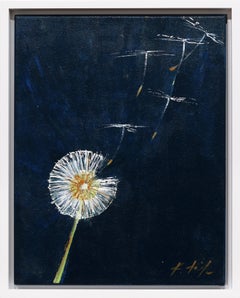
"Hello Dean" (James Dean) Pop Art Painting 67 x 54 inch by John Paul Fauves

"Hello Dean" (James Dean) Pop Art Painting 67 x 54 inch by John Paul Fauves

By John Paul Fauves

Located in Culver City, CA

"Hello Dean" (James Dean) Pop Art Painting 67 x 54 inch by John Paul Fauves From "Alts iz farloyrn" ("All is lost") series 2019 Mixed media, acrylic and oil on canvas 63" × 53" inch "Alts iz farloyrn" ("All is lost") "Alts iz Farloyrn” – the latest series by John Paul Fauves featuring large-scale mixed media paintings, sculptures, and his famous art masks. Inspired by American idols James Dean and Steve McQueen, "Alts iz Farloyrn,” which translates to "All is Lost," was Steve McQueen’s first ever line on stage and represents Fauves own struggle with losing it all yet discovering his true self. “Alts iz Farloyrn” dives deep into the darkness that surrounded James Dean and Steve McQueen and explores their need to live fast. Through this new series, viewers are reminded that although both men overcame challenges to become the Hollywood elite, they struggled to mentally escape their troubled childhood and demons. Recognized internationally for his Neo-Pop Expressionism, Fauves paintings deal with identity through art, mainstream culture and social media. About this series, Fauves says “I have personally lost it all and what I’ve learned is when you lose it all you can win it all again and create a new beginning!” ABOUT John Paul FAUVES: John Paul Fauves (born in 1980) is a contemporary Artist from Costa Rica . His artistic journey started at a very young age after he became a student of Joaquin Rodriguez del Paso , one of the most important Costa Rican modern art tutors. John Paul spent 15 years studying and mastering his technique, and only a few years ago he finally started showcasing his work. In his paintings he engages questions of identity as they relate to art history as well as our everyday interactions with mainstream culture and social media. Greatly inspired by modernist masters as wellas pop-artists, Fauves mixes fragments of different iconic images in vivid and colourful compositions. Of his experimental and high eclectic style, he says, “art is an expression from the soul, and the soul is somethinglimitless. This is why I am always searching for different elements to bring into the work.” 2019: ​ Alts Iz farloyrn, Los Angeles, CA Portraits of Someone, London ​ ​ 2018: ​ [ Mi / Me ] solo exhibition at DOPENESS ART LAB, Taipei, Taiwan Arte de La Peer Papi Chulo group exhibition, Krause gallery, NYC Down the Rabbit Hole group exhibition, Imitate London, London, UK ARCO Madrid Art Palm Beach, Miami ​ 2017: ​ Art Basel Miami PIXELS Pre-Basel group exhibition by JM Art Management at Laurent & Martin gallery LA Style Fashion week FACES, group exhibition by JM Art Management at HOMME gallery A Loss of Innocence, solo exhibition Guy Hepner...

Category

21st Century and Contemporary Pop Art Diamond Figurative Paintings
Materials

Canvas, Mixed Media, Oil, Acrylic

Diamond figurative paintings for sale on 1stDibs.

Find a wide variety of authentic Diamond figurative paintings available for sale on 1stDibs. If you’re browsing the collection of figurative paintings to introduce a pop of color in a neutral corner of your living room or bedroom, you can find work that includes elements of orange and other colors. You can also browse by medium to find art by Diamond in canvas, fabric, mixed media and more. Much of the original work by this artist or collective was created during the 21st century and contemporary and is mostly associated with the Pop Art style. Not every interior allows for large Diamond figurative paintings, so small editions measuring 40 inches across are available. Diamond figurative paintings prices can differ depending upon medium, time period and other attributes. On 1stDibs, the price for these items starts at $3,534 and tops out at $7,069, while the average work can sell for $5,891.
Questions About Diamond Figurative Paintings
  • 1stDibs ExpertNovember 2, 2021
    A VVS1 diamond has imperfections that are so small that they can't be detected with 10x magnification (a jeweler's loupe). VVS1 diamonds are eye-clean, with no blemishes or inclusions visible to the naked eye. Shop a collection of vintage and modern VVS1 diamond rings from some of the world’s top jewelers on 1stDibs.
  • 1stDibs ExpertFebruary 22, 2021
    Depending on the quality, age, and designer, a 1-carat diamond can cost between $1,300 and $16,500.
  • 1stDibs ExpertSeptember 28, 2021
    The VVS1 diamond price ranges from $1,000 for a 0.50 Carat diamond to $18,000 for a 1.9-carat diamond. The price of any diamond, including that of a VVS diamond, depends on the cut, color, shape, and carat weight. The “VVS1” marking depends on the grade of clarity of the diamond. Shop an exquisite range of antique and vintage VVS1 diamond jewelry on 1stDibs.
  • 1stDibs ExpertSeptember 28, 2021
    A 1-carat pink diamond’s worth depends on the color intensity and carat. High-quality pinks are the most expensive natural diamond color today. The price can vary from $10,000 to $70,000 per carat for an intense pink. On 1stDibs, you will find a variety of pink diamond jewelry from different periods.
  • 1stDibs ExpertApril 5, 2022
    The term 1-carat diamond earrings means a pair of earrings set with diamond gemstones that have a total weight of 200 milligrams. Depending on the design, each earring may hold one diamond or several smaller gems. You'll find a variety of diamond gemstone earrings on 1stDibs.
  • 1stDibs ExpertNovember 8, 2023
    The term 1 CTTW diamond earrings means a pair of diamond earrings with a total carat weight of 1 carat. Carats are the unit of measurement for gemstones and equals around 200 milligrams. Each earring in a set has an individual carat weight, and the two weights added together give you the total carat weight. So, a pair with a total carat weight of 1 would usually consist of two 0.5 carat earrings. Explore a large selection of diamond earrings on 1stDibs.
  • 1stDibs ExpertOctober 5, 2021
    What a 1-carat black diamond is worth varies according to the cut, type (natural/treated) and the demand and supply. Both natural and treated black diamonds increase in value as demand increases. It ranges from $100 to $3,000 per carat. On 1stDibs, you can find a variety of unique and designer black diamond jewelry & watches from different periods to choose from.
  • 1stDibs ExpertFebruary 22, 2021
    The average cost of a pair of 1-carat diamond earrings is around $2,500. However, that price can change depending on the quality of the diamonds and the brand.
  • 1stDibs ExpertSeptember 16, 2024
    How much a 1-carat blue diamond is worth depends on its cut, clarity and color. Human-made synthetic blue diamonds of that size are often worth less than $10,000, while natural examples sourced through mining are generally valued at much higher prices. If a gemstone is set in a piece of jewelry, it may have additional value due to the precious metals, the maker of the piece, its age and other factors. Because so many variables can impact the potential value of a blue diamond, experts generally recommend having a certified appraiser or experienced jeweler assist with the valuation process. On 1stDibs, explore a diverse assortment of blue diamond jewelry.
  • 1stDibs ExpertSeptember 28, 2021
    Like with most diamond products, the price of a 1-carat princess cut diamond can range dramatically. On 1stDibs, find 1-carat princess cut diamond rings, earrings, necklaces and bracelets starting at $999 to $16,500.
  • 1stDibs ExpertApril 5, 2022
    The difference between Type I and Type II diamonds is their composition. Type I diamonds contain nitrogen-based impurities, while Type II diamonds do not feature these types of impurities. You'll find a large collection of diamond gemstone jewelry on 1stDibs.
  • 1stDibs ExpertOctober 19, 2021
    The average cost of a pair of diamond stud earrings with a total carat weight of 1-carat is $2,495. Depending on the clarity, cut and color of the diamond, the price and other details may vary. On 1sDibs, shop for antique and vintage diamond earrings.