Georg Andreas Böckler Art

German, 1617-1687
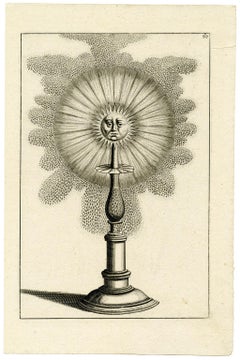
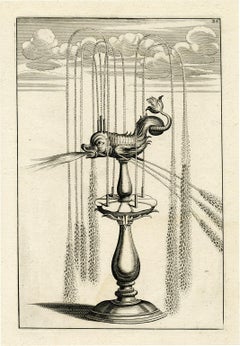
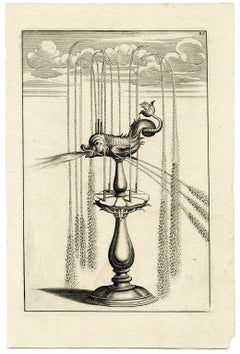
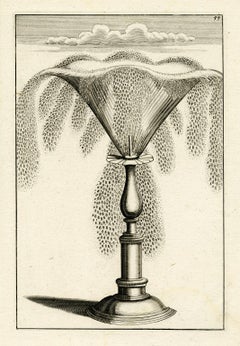
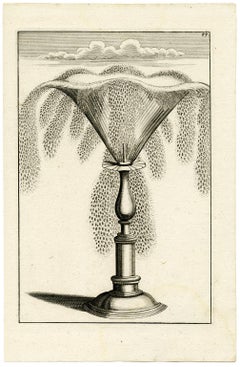
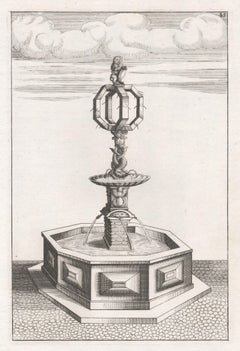
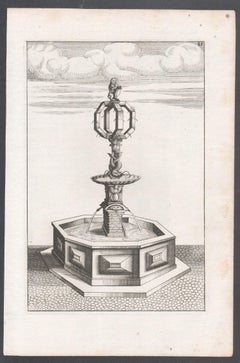
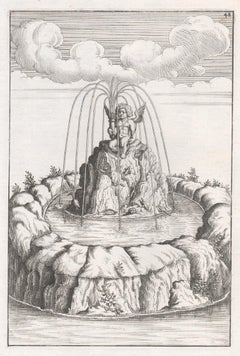
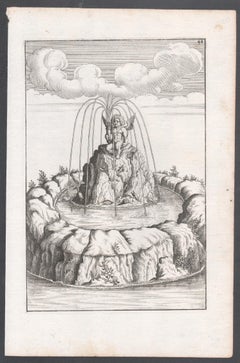
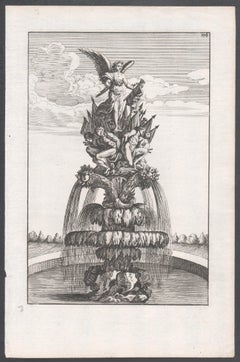
Georg Andreas Böckler was a German architect, engineer, and author. He was the architect of the city of Nuremberg and specialized in hydraulic architecture. Architectura Curiosa Nova was his main opus, a four-part work in one volume, published in 1664. In 1661, Böckler wrote Theatrum Machinarum Novum, an important work on windmills, pumps and other hydraulic machines. Böckler died in Ansbach.
to
3
6
6
6
3
Related Items
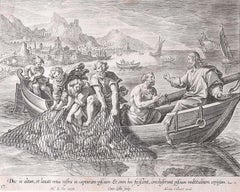
Adrian Collaert Martin de Vos 17th Century Engraving Miraculous Draught of Fish

Adrian Collaert Martin de Vos 17th Century Engraving Miraculous Draught of Fish

By Adriaen Collaert

Located in London, GB

We have the full series of 52 prints (including title page) from Vita Passio et Resurrectio Iesu Christi listed. To find the others scroll down to "More from this Seller" and below i...

Category

17th Century Realist Georg Andreas Böckler Art

Materials

Engraving

Daniel Marot's The Siege of the Dutch Fortified City of Ypres by Louis XIV

Daniel Marot's The Siege of the Dutch Fortified City of Ypres by Louis XIV

By Daniel Marot

Located in Alamo, CA

"Ypres, Grand Ville Riche & Marchande" is an engraving and etching by Daniel Marot (le Vieux) (1661–1752). It depicts a view of the siege of the city of Ypres and its citadel on the left in the Spanish Netherlands by Louis XIV's troops. This battle took place between March 18 and March 25, 1678, as part of the Franco-Dutch War. Marot illustrated in great detail (best appreciated with magnification) the French attack on the strong pentagonal citadel on the extreme left, which had been built recently in anticipation of a French attack. The trenches built by the French approaching the town are seen on the right. King Louis XIV can be seen in the foreground surveying the battle mounted on his white horse, surrounded by his officers and troops. The print is presented in an attractive ornate black wood frame with a cream-colored double mat with a black inner trim. It is glazed with plexiglas. The frame measures 25.38" x 22.63" x .88". The engraving, frame, mat and glazing are in excellent condition. Artist: Daniel Marot (1661–1752) was also called "Le Vieux". He was the son of the famous architect, Jean Marot. Marot had diverse interests and talents. In addition to his art, he designed garden projects, architectural ornaments, furniture, and even upholstery. Marot as a Huguenot protestant was forced to leave France in 1685 following the revocation of the Edict of Nantes. He emigrated to Holland, where he worked for William of Orange (an arch enemy of his former employer Louis XIV). Marot was largely responsible for the interiors of Williams palace at the Loo. In 1694 he went Britain as William had married Queen Mary and he had become King William III of England. He later returned to Holland in about 1698 and died in the Hague in 1752. He left a lasting legacy on the decorative arts in the Netherlands, where his grand version of the Louis XIV style remained popular into the 1730s. Historical Background: In October 1677, Mary Stuart, niece and possible successor of Charles II of England, married Louis XIV's arch enemy William III of Orange...

Category

Late 17th Century Old Masters Georg Andreas Böckler Art

Materials

Engraving, Etching

"King of the Friendly Islands" (Tonga); Engraving from Captain Cook's 3rd Voyage

"King of the Friendly Islands" (Tonga); Engraving from Captain Cook's 3rd Voyage

By John Webber

Located in Alamo, CA

"Poulaho, King of the Friendly Islands, Drinking Kava" is an engraving created by William Sharp (1749-1824), from a drawing by John Webber (1752-1793), who was the artist on Captain James Cook's 3rd and final voyage of discovery. It was published in the atlas of "A Voyage to the Pacific Ocean Undertaken by the Command of His Majesty, for Making Discoveries in the Northern Hemisphere", the official British Admirality sanctioned journal published upon completion of the voyage in London in 1784 by Strahan & Cadell. Captain Cook visited Tonga on his 3rd voyage, which he named The Friendly Islands because of the warm welcome he and his crew received, unlike some of the other more hostile Pacific islands. The engraving depicts Cook and his men observed a kava ceremony at the village of Mu’a on Tongatapu. King Paulaho sits in the centre foreground, his back to the spectator with a man kneeling before him. The ceremonial mat depicted behind Paulaho indicates that nobody was allowed to sit behind him. The figure in the centre holds a single cup, referring to the Tongan custom of offering the cup to the king first. Kava is native to the islands of the South Pacific and was first described for English readers in 1768 by Captain James Cook. The kava root has been used for centuries as a central feature of ceremonies and celebrations because it was able to bring about a calming and pleasant social atmosphere. The root was crushed and processed into coconut milk to become the focal ceremonial beverage, simply referred to as kava. This engraving is presented in a Koa wood frame and a white mat. Koa wood is legendary in Hawaii. There are occasional faint spots, but the print is otherwise in very good condition. This amazing Koa wood is native to Hawaii and it is known for the deep rich colors and varied grain pattern. Koa has an honored heritage in Hawaii and is highly revered and sacred. The word “koa” means “warrior” in Hawaiian. The warriors of King Kamehameha the Great, created canoes and weapons from a wood plentiful on the Big Island of Hawaii. This wood became synonymous with the warriors themselves, and it became known as koa. There are three other engravings listed from the official journal of Captain Cook's 3rd voyage available that are presented in identical Koa wood frames and mats (LU117324682422, LU117324684052, LU117324684032). They would make a wonderful grouping for a display of 2, 3 or 4 prints. A discount is available for a grouping depending on the number of items included. Captain Cook is remembered as one of the greatest explorers and navigators in history. His explorations included Australia, New Zealand and islands of the South Pacific and the northwest coast of North America. Hawaii was discovered by Captain Cook during this voyage. Hawaii was originally called The Sandwich Islands in honor of The Earl of Sandwich...

Category

1780s Realist Georg Andreas Böckler Art

Materials

Engraving

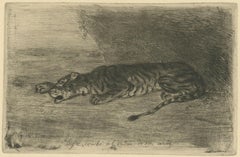
Tigre couché à l'entrée de son antre  (Tiger Lying at the Entrance to its Lair)

Tigre couché à l'entrée de son antre (Tiger Lying at the Entrance to its Lair)

By Eugène Delacroix

Located in Middletown, NY

Etching, drypoint, and roulette on watermarked Hallines cream laid paper, 3 3/4 x 5 7/8 inches (95 x 148 mm), full margins. A very good impression of this charming image, with all of...

Category

Early 19th Century Realist Georg Andreas Böckler Art

Materials

Laid Paper, Drypoint, Etching

Royal Hospital att Greenwich to the River /// "Vitruvius Britannicus" Engraving

Royal Hospital att Greenwich to the River /// "Vitruvius Britannicus" Engraving

By Colen Campbell

Located in Saint Augustine, FL

Artist: Colen Campbell (Scottish, 1676-1729) Title: "Royal Hospital att Greenwich to the River" (Vol. 1, Plates 86, 87) Portfolio: Vitruvius Britannicus; or The British Architect, Co...

Category

1710s Old Masters Georg Andreas Böckler Art

Materials

Laid Paper, Engraving, Intaglio, Etching

Four Framed Hogarth Engravings "Four Times of the Day"

Four Framed Hogarth Engravings "Four Times of the Day"

By William Hogarth

Located in Alamo, CA

The four plates in this "Four Times of the Day" set were created utilizing both engraving and etching techniques by William Hogarth in 1738. Hogarth's original copper plates were refurbished where needed by James Heath and these engravings were republished in London in 1822 by Braddock, Cradock & Joy. This was the last time Hogarth's original copper plates were used for printing. Most were melted down during World War I for the construction of bombs. Printed upon early nineteenth century wove paper and with large, full margins as published by William Heath in 1822. The inscription below each print reads "Invented Painted & Engraved by Wm. Hogarth & Publish'd March 25. 1738 according to Act of Parliament". These large folio sized "Four Times of the Day" engravings/etchings are presented in complex gold-colored wood frames with black bands and scalloped gold inner trim. A majority of each thick impressive frame is covered with glass applied near the outer edge. Each frame measures 25.75" high, 22.25" wide and 1.88" deep. There are a few small dents in the edge of these frames, which are otherwise in very good condition. "Morning" has two focal areas of discoloration in the upper margin and some discoloration in the right margin, a short tear in the left margin and a short tear or crease in the right margin. "Noon" has a spot in the upper margin that extends into the upper image, but it is otherwise in very good condition. "Evening" has a faint spot in the upper margin, but it is otherwise in very good condition. "Night" is in excellent condition. The "Four Times of the Day" series is in the collection of many major museums, including: The British Museum, The Metropolitan Museum of Art, The Tate Museum, The Chicago Art Institute and The Victoria and Albert Museum. Through this series Hogarth is portraying early 18th century London street life at "Four Times of the Day". His characters are exhibiting their personalities, quircks, strange activities, but he also wants to draw attention the disparities between the wealthy aristocracy and the common working class. Plate 1, "Morning" depicts morning in Covent Garden in the winter in front of Tom King...

Category

Mid-18th Century Old Masters Georg Andreas Böckler Art

Materials

Engraving, Etching

Character vs. Charicature

William HogarthCharacter vs. Charicature, 1743

$350

H 20.25 in W 16.25 in D 1 in

Character vs. Charicature

By William Hogarth

Located in Wilton Manors, FL

William Hogarth (1697-1764). Character vs. Charicature, 1743. Engraving on laid paper, plate measuring 8.25 x 9.25 inches. Framed measurement: 16.25 x 20.25 inches. Characters and...

Category

Mid-18th Century Realist Georg Andreas Böckler Art

Materials

Engraving

St Peters Church at Rome /// "Vitruvius Britannicus" Architecture Engraving Art

St Peters Church at Rome /// "Vitruvius Britannicus" Architecture Engraving Art

By Colen Campbell

Located in Saint Augustine, FL

Artist: Colen Campbell (Scottish, 1676-1729) Title: "St Peters Church at Rome" (Vol. 1, Plate 6) Portfolio: Vitruvius Britannicus; or The British Architect, Containing the Plans, Ele...

Category

1710s Old Masters Georg Andreas Böckler Art

Materials

Laid Paper, Engraving, Etching, Intaglio
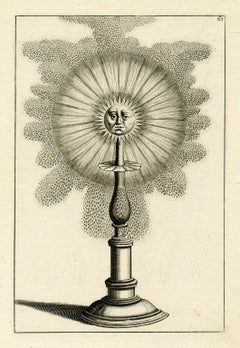
17th century engraving black and white landscape ancient building scene

17th century engraving black and white landscape ancient building scene

By Israel Silvestre

Located in Milwaukee, WI

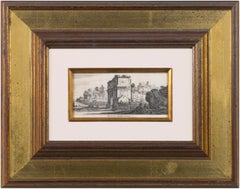
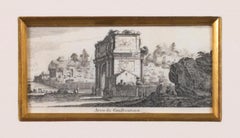
In the mid-seventeenth century, views of historic landscapes and classical structures were increasingly popular among print collectors, and artists like the Frenchman Israel Sylvestre were eager to fill that demand. In this example, Sylvestre captures a view of the Arch of Constantine...

Category

Mid-17th Century Baroque Georg Andreas Böckler Art

Materials

Engraving

Ancient Roman Architecture: Original Framed 18th C. Etching by G. Piranesi

Ancient Roman Architecture: Original Framed 18th C. Etching by G. Piranesi

By Giovanni Battista Piranesi

Located in Alamo, CA

"Veduta del Sepolcro della Famiglia Plauzia per la Strada Che Conduce da Roma a Tivoli vicino a Ponte Lugano" from "Le Antichità Romane" (Roman Antiquities), one of the most famous works by Piranesi. "Antichita" illustrates the tombs along the Appian Way...

Category

Early 18th Century Old Masters Georg Andreas Böckler Art

Materials

Etching, Engraving, Drypoint

Alexandria, Egypt & Lighthouse: A Hand-colored Aquatint & Engraving by L. Mayer

Alexandria, Egypt & Lighthouse: A Hand-colored Aquatint & Engraving by L. Mayer

By Luigi Mayer

Located in Alamo, CA

This is a hand-colored aquatint and engraving entitled "Part of the New City of Alexandria, with the Light House", published in London by R. Bowyer from 1802-1805. The print was crea...

Category

Early 19th Century Romantic Georg Andreas Böckler Art

Materials

Engraving, Aquatint

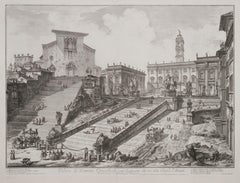
Veduta del Romano Camipidpglio con scalinata che va alla chisea d’Araceli (The C

Veduta del Romano Camipidpglio con scalinata che va alla chisea d’Araceli (The C

By Giovanni Battista Piranesi

Located in Fairlawn, OH

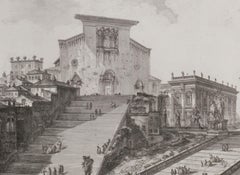
Veduta del Romano Camipidpglio con scalinata che va alla chisea d’Araceli (The Capitol and the Steps of S. Maria in Aracoeli) Etching, 1775 Watermark: Double Circle Fleur de Lys A lifetime impression with the price etching in the plate Printed in Rome, before the plates are moved to Paris and the numerous posthumous editions Reference: Hind 38 ii/IV Robison 38 ii/V with the price Wilton Ely 190 Condition: A fine Roman...

Category

1770s Baroque Georg Andreas Böckler Art

Materials

Etching

Georg Andreas Böckler art for sale on 1stDibs.

Find a wide variety of authentic Georg Andreas Böckler art available for sale on 1stDibs. You can also browse by medium to find art by Georg Andreas Böckler in engraving, etching and more. Not every interior allows for large Georg Andreas Böckler art, so small editions measuring 7 inches across are available. Customers who are interested in this artist might also find the work of Peter Handel, Carl Arlen, and Israel Silvestre. Georg Andreas Böckler art prices can differ depending upon medium, time period and other attributes. On 1stDibs, the price for these items starts at $165 and tops out at $325, while the average work can sell for $245.

Artists Similar to Georg Andreas Böckler