Located in San Francisco, CA
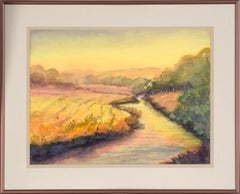
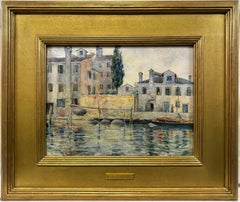
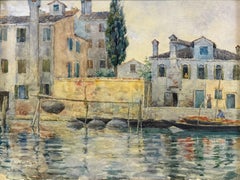
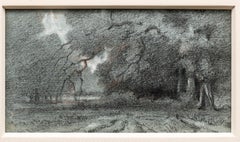
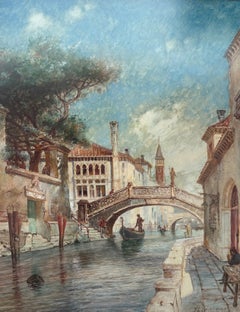
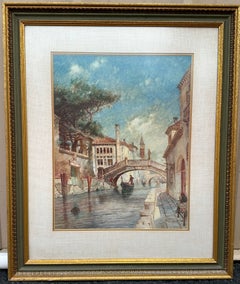
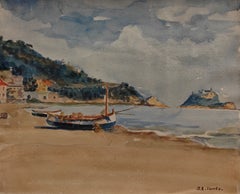
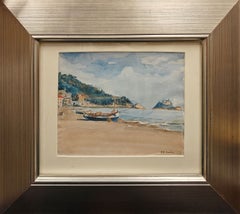
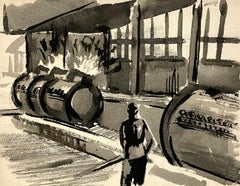
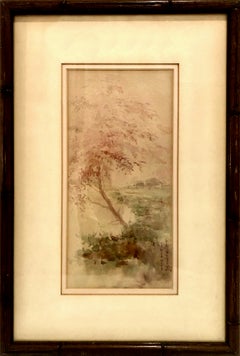
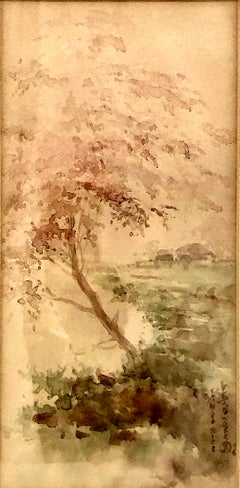
This original watercolor landscape tells a fascinating story of cross-cultural artistic exchange between Japan and America at the turn of the 20th century. The painting is by Yamada Baske, who was born Fukawa Jin Basuke (1869–1934).
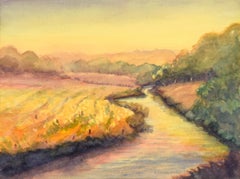
COMPOSITION: The composition captures a serene rural Japanese landscape blanketed in a heavy spring mist. In the foreground, an elegant, leaning cherry blossom tree dominates the left frame. In the mid-ground, a quiet riverbank path leads the viewer's eye toward thatched-roof farmhouses nestled under a soft horizon. The cherry blossom tree symbolizes ephemerality, renewal and the beautiful, fleeting nature of life. Baske’s hallmark use of a bleached, light-blanched color palette heightens this sense of a dreamy, vanishing memory or a fleeting moment in time.
ARTIST: Born in Tokyo, Baske immigrated to the United States in 1885. He studied at prestigious institutions like the Art Students' League in New York and the Pennsylvania Academy of the Fine Arts, training under the renowned American Impressionist William Merritt Chase.
Baske subsequently split his life between America and Japan, notably teaching watercolor classes in Minneapolis and at the Tokyo Fine Art School. In 1906, when this work was completed, he was a fully established, highly regarded artist working primarily in the Northeast—specifically around Philadelphia and New York.
He became famous for his gauzy, light-infused watercolor landscapes that introduced Western impressionist...
Category
Early 20th Century American Impressionist Henry Hank Volle Art
MaterialsPaper, Watercolor