Hippolyte Bellangé Art

French, 1800-1866
Hippolyte BELLANGÉ was an artist born in France in 1800 and died in 1866. His works went up for sale at public auction 388 times, mostly in the Drawing-Watercolor category. The oldest auction recorded on Artprice.com is "The battle of Alheim" sold in 1986 at Christie's (Drawing-Watercolor) and the most recent is "Military" sold in 2023.
to
1
8
1
Overall Width
to
Overall Height
to
9
7
6
3
8
5
3
2
1
1
4
3
1
1
1
9
11,651
2,883
2,492
1,596
1
7
8
1
Artist: Hippolyte Bellangé
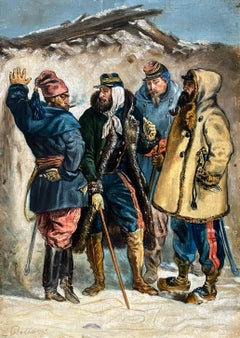
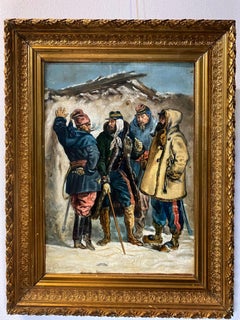
The four militaries By Hippolyte Bellangé - Antique oil on canvas

The four militaries By Hippolyte Bellangé - Antique oil on canvas

By Hippolyte Bellangé

Located in Geneva, CH

The work is old, dated from the middle of the 19th century. The artist has been sold more than 300 times in auction houses, mainly in France (origin of the painter), which explains t...

Category

Mid-19th Century Realist Hippolyte Bellangé Art

Materials

Oil

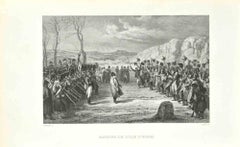
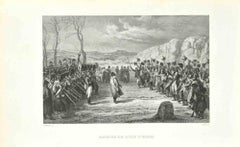
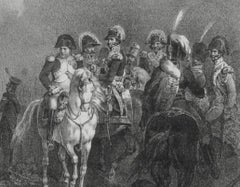
Retour de L'Ile d'Elbe - Etching by Hippolyte Bellangé - 1837

Retour de L'Ile d'Elbe - Etching by Hippolyte Bellangé - 1837

By Hippolyte Bellangé

Located in Roma, IT

Retour de l'ile d'Elbe is an etching that belongs to the suite AtlasBatt realized for Jacques Norvins Histoire de Napoleon, published in 1837. Author Jacques Norvins published one o...

Category

1830s Modern Hippolyte Bellangé Art

Materials

Etching

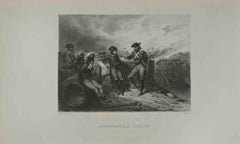
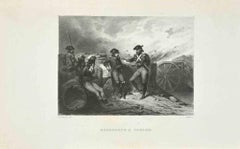
Bonaparte in Toulon - Etching by Hippolyte Bellange - 1837

Bonaparte in Toulon - Etching by Hippolyte Bellange - 1837

By Hippolyte Bellangé

Located in Roma, IT

Bonaparte in Toulon is an Etching realized by H.Bellange in 1837. Good conditions. The artwork is realized in a well-balanced composition. the artwork and belongs to the suite suit...

Category

1830s Modern Hippolyte Bellangé Art

Materials

Etching

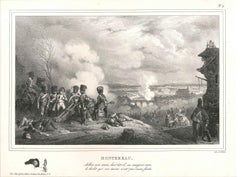
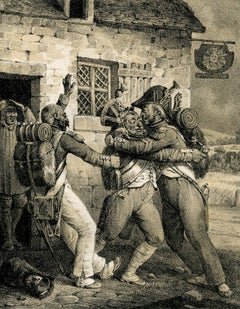
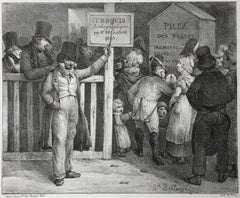
Vive le Vin
Vive le Vin

Vive le Vin

By Hippolyte Bellangé

Located in Fairlawn, OH

Medium: Lithograph with tint stone Dimensions: Sheet: 13 3/4 x 10 1/2" (34.80 x 26.70 cm); Mat: 20 x 16" Publisher: G. Engelmann References And Exhibitions: Published by G. Engelmann Reference: Beraldi p. 17Medium: Lithograph with tint stone Dimensions: Sheet: 13 3/4 x 10 1/2" (34.80 x 26.70 cm); Mat: 20 x 16" Publisher: G. Engelmann References And Exhibitions: Published by G. Engelmann Reference: Beraldi p. 17 Medium: Lithograph with tint stone Dimensions: Sheet: 13 3/4 x 10 1/2" (34.80 x 26.70 cm); Mat: 20 x 16" Publisher: G. Engelmann References And Exhibitions: Published by G. Engelmann Reference: Beraldi p. 17 Joseph Louis Hippolyte Bellangé (17 January 1800 – 10 April 1866) was a French battle painter and printmaker. His art was influenced by the wars of the first Napoleon, and while a youth, he produced several military drawings...

Category

1820s Romantic Hippolyte Bellangé Art

Materials

Lithograph

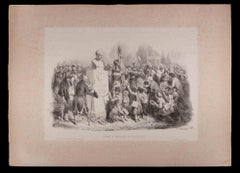
Return from Elba - Etching by Hippolyte Bellange - 1837

Return from Elba - Etching by Hippolyte Bellange - 1837

By Hippolyte Bellangé

Located in Roma, IT

Return from Elba is an Etching realized by P.Bellange in 1837. Good conditions. The artwork is realized in a well-balanced composition. the artwork and belongs to the suite suite "...

Category

1830s Modern Hippolyte Bellangé Art

Materials

Etching

Related Items
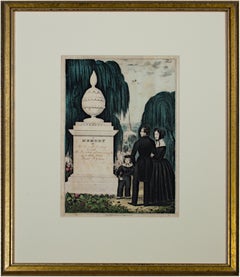
19th century color lithograph figures cemetery willow tree memorial headstone

19th century color lithograph figures cemetery willow tree memorial headstone

By Nathaniel Currier

Located in Milwaukee, WI

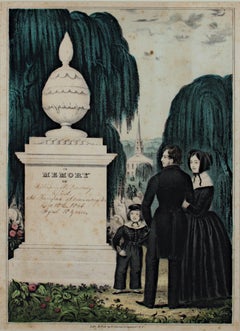
The present hand-colored lithograph was produced as part of the funeral and mourning culture in the United States during the 19th century. Images like this were popular as ways of remembering loved ones, an alternative to portraiture of the deceased. This lithograph shows a man, woman and child in morning clothes next to an urn-topped stone monument. Behind are additional putto-topped headstones beneath weeping willows, with a steepled church beyond. The monument contains a space where a family could inscribe the name and death dates of a deceased loved one. In this case, it has been inscribed to a young Civil War soldier: William W. Peabody Died at Fairfax Seminary, VA December 18th, 1864 Aged 18 years The young Mr. Peabody probably died in service for the Union during the American Civil War. Farifax Seminary was a Union hospital and military headquarters in Alexandria, Virginia. The hospital served nearly two thousand soldiers during the war time. Five hundred were also buried on the Seminary's grounds. 13.75 x 9.5 inches, artwork 23 x 19 inches, frame Published before 1864 Inscribed bottom center "Lith. & Pub. by N. Currier. 2 Spruce St. N.Y." Framed to conservation standards using 100 percent rag matting and TruVue Conservation Clear glass, housed in a gold gilded moulding. Nathaniel Currier was a tall introspective man with a melancholy nature. He could captivate people with his piercing stare or charm them with his sparkling blue eyes. Nathaniel was born in Roxbury, Massachusetts on March 27th, 1813, the second of four children. His parents, Nathaniel and Hannah Currier, were distant cousins who lived a humble yet spartan life. When Nathaniel was eight years old, tragedy struck. Nathaniel’s father unexpectedly passed away leaving Nathaniel and his eleven-year-old brother Lorenzo to provide for the family. In addition to their mother, Nathaniel and Lorenzo had to care for six-year-old sister Elizabeth and two-year-old brother Charles. Nathaniel worked a series of odd jobs to support the family, and at fifteen, he started what would become a life-long career when he apprenticed in the Boston lithography shop of William and John Pendleton. A Bavarian gentleman named Alois Senefelder invented lithography just 30 years prior to young Nat Currier’s apprenticeship. While under the employ of the brothers Pendleton, Nat was taught the art of lithography by the firm’s chief printer, a French national named Dubois, who brought the lithography trade to America. Lithography involves grinding a piece of limestone flat and smooth then drawing in mirror image on the stone with a special grease pencil. After the image is completed, the stone is etched with a solution of aqua fortis leaving the greased areas in slight relief. Water is then used to wet the stone and greased-ink is rolled onto the raised areas. Since grease and water do not mix, the greased-ink is repelled by the moisture on the stone and clings to the original grease pencil lines. The stone is then placed in a press and used as a printing block to impart black on white images to paper. In 1833, now twenty-years old and an accomplished lithographer, Nat Currier left Boston and moved to Philadelphia to do contract work for M.E.D. Brown, a noted engraver and printer. With the promise of good money, Currier hired on to help Brown prepare lithographic stones of scientific images for the American Journal of Sciences and Arts. When Nat completed the contract work in 1834, he traveled to New York City to work once again for his mentor John Pendleton, who was now operating his own shop located at 137 Broadway. Soon after the reunion, Pendleton expressed an interest in returning to Boston and offered to sell his print shop to Currier. Young Nat did not have the financial resources to buy the shop, but being the resourceful type he found another local printer by the name of Stodart. Together they bought Pendleton’s business. The firm ‘Currier & Stodart’ specialized in "job" printing. They produced many different types of printed items, most notably music manuscripts for local publishers. By 1835, Stodart was frustrated that the business was not making enough money and he ended the partnership, taking his investment with him. With little more than some lithographic stones, and a talent for his trade, twenty-two year old Nat Currier set up shop in a temporary office at 1 Wall Street in New York City. He named his new enterprise ‘N. Currier, Lithographer’ Nathaniel continued as a job printer and duplicated everything from music sheets to architectural plans. He experimented with portraits, disaster scenes and memorial prints, and any thing that he could sell to the public from tables in front of his shop. During 1835 he produced a disaster print Ruins of the Planter's Hotel, New Orleans, which fell at two O’clock on the Morning of the 15th of May 1835, burying 50 persons, 40 of whom Escaped with their Lives. The public had a thirst for newsworthy events, and newspapers of the day did not include pictures. By producing this print, Nat gave the public a new way to “see” the news. The print sold reasonably well, an important fact that was not lost on Currier. Nat met and married Eliza Farnsworth in 1840. He also produced a print that same year titled Awful Conflagration of the Steamboat Lexington in Long Island Sound on Monday Evening, January 18, 1840, by which melancholy occurrence over One Hundred Persons Perished. This print sold out very quickly, and Currier was approached by an enterprising publication who contracted him to print a single sheet addition of their paper, the New York Sun. This single page paper is presumed to be the first illustrated newspaper ever published. The success of the Lexington print launched his career nationally and put him in a position to finally lift his family up. In 1841, Nat and Eliza had their first child, a son they named Edward West Currier. That same year Nat hired his twenty-one year old brother Charles and taught him the lithography trade, he also hired his artistically inclined brother Lorenzo to travel out west and make sketches of the new frontier as material for future prints. Charles worked for the firm on and off over the years, and invented a new type of lithographic crayon which he patented and named the Crayola. Lorenzo continued selling sketches to Nat for the next few years. In 1843, Nat and Eliza had a daughter, Eliza West Currier, but tragedy struck in early 1847 when their young daughter died from a prolonged illness. Nat and Eliza were grief stricken, and Eliza, driven by despair, gave up on life and passed away just four months after her daughter’s death. The subject of Nat Currier’s artwork changed following the death of his wife and daughter, and he produced many memorial prints and sentimental prints during the late 1840s. The memorial prints generally depicted grief stricken families posed by gravestones (the stones were left blank so the purchasers could fill in the names of the dearly departed). The sentimental prints usually depicted idealized portraits of women and children, titled with popular Christian names of the day. Late in 1847, Nat Currier married Lura Ormsbee, a friend of the family. Lura was a self-sufficient woman, and she immediately set out to help Nat raise six-year-old Edward and get their house in order. In 1849, Lura delivered a son, Walter Black Currier, but fate dealt them a blow when young Walter died one year later. While Nat and Lura were grieving the loss of their new son, word came from San Francisco that Nat’s brother Lorenzo had also passed away from a brief illness. Nat sank deeper into his natural quiet melancholy. Friends stopped by to console the couple, and Lura began to set an extra place at their table for these unexpected guests. She continued this tradition throughout their lives. In 1852, Charles introduced a friend, James Merritt Ives, to Nat and suggested he hire him as a bookkeeper. Jim Ives was a native New Yorker born in 1824 and raised on the grounds of Bellevue Hospital where his father was employed as superintendent. Jim was a self-trained artist and professional bookkeeper. He was also a plump and jovial man, presenting the exact opposite image of his new boss. Jim Ives met Charles Currier through Caroline Clark, the object of Jim’s affection. Caroline’s sister Elizabeth was married to Charles, and Caroline was a close friend of the Currier family. Jim eventually proposed marriage to Caroline and solicited an introduction to Nat Currier, through Charles, in hopes of securing a more stable income to support his future wife. Ives quickly set out to improve and modernize his new employer’s bookkeeping methods. He reorganized the firm’s sizable inventory, and used his artistic skills to streamline the firm’s production methods. By 1857, Nathaniel had become so dependent on Jims’ skills and initiative that he offered him a full partnership in the firm and appointed him general manager. The two men chose the name ‘Currier & Ives’ for the new partnership, and became close friends. Currier & Ives produced their prints in a building at 33 Spruce Street where they occupied the third, fourth and fifth floors. The third floor was devoted to the hand operated printing presses that were built by Nat's cousin, Cyrus Currier, at his shop Cyrus Currier & Sons in Newark, NJ. The fourth floor found the artists, lithographers and the stone grinders at work. The fifth floor housed the coloring department, and was one of the earliest production lines in the country. The colorists were generally immigrant girls, mostly German, who came to America with some formal artistic training. Each colorist was responsible for adding a single color to a print. As a colorist finished applying their color, the print was passed down the line to the next colorist to add their color. The colorists worked from a master print displayed above their table, which showed where the proper colors were to be placed. At the end of the table was a touch up artist who checked the prints for quality, touching-in areas that may have been missed as it passed down the line. During the Civil War, demand for prints became so great that coloring stencils were developed to speed up production. Although most Currier & Ives prints were colored in house, some were sent out to contract artists. The rate Currier & Ives paid these artists for coloring work was one dollar per one hundred small folios (a penny a print) and one dollar per one dozen large folios. Currier & Ives also offered uncolored prints to dealers, with instructions (included on the price list) on how to 'prepare the prints for coloring.' In addition, schools could order uncolored prints from the firm’s catalogue to use in their painting classes. Nathaniel Currier and James Merritt Ives attracted a wide circle of friends during their years in business. Some of their more famous acquaintances included Horace Greeley, Phineas T. Barnum, and the outspoken abolitionists Rev. Henry Ward, and John Greenleaf Whittier (the latter being a cousin of Mr. Currier). Nat Currier and Jim Ives described their business as "Publishers of Cheap and Popular Pictures" and produced many categories of prints. These included Disaster Scenes, Sentimental Images, Sports, Humor, Hunting Scenes, Politics, Religion, City and Rural Scenes, Trains, Ships, Fire Fighters, Famous Race Horses, Historical Portraits, and just about any other topic that satisfied the general public's taste. In all, the firm produced in excess of 7500 different titles, totaling over one million prints produced from 1835 to 1907. Nat Currier retired in 1880, and signed over his share of the firm to his son Edward. Nat died eight years later at his summer home 'Lion’s Gate' in Amesbury, Massachusetts. Jim Ives remained active in the firm until his death in 1895, when his share of the firm passed to his eldest son, Chauncey. In 1902, faced will failing health from the ravages of Tuberculosis, Edward Currier sold his share of the firm to Chauncey Ives...

Category

Mid-19th Century Romantic Hippolyte Bellangé Art

Materials

Watercolor, Lithograph
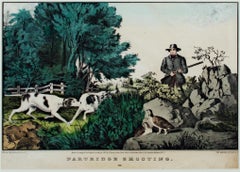
19th century color lithograph watercolor landscape figurative animal print

19th century color lithograph watercolor landscape figurative animal print

By Nathaniel Currier

Located in Milwaukee, WI

The present hand-colored lithograph presents the viewer with a hunting scene in a picturesque landscape. In the foreground, a man approaches two partridges as his two pointers prepare to flush them out. Beyond, a white fence draws our eyes to the homestead in the distance. Images like this one show how people in the United States were trying to identify themselves as a new nation in the North American landscape - as separate from their European counterparts but with similar similar and specific wildlife and magesties of nature. It also identifies hunting in this landscape as an American pastime. 9.25 x 12.5 inches, artwork 18.38 x 22 inches, frame Entitled bottom center "Partridge Shooting...

Category

Mid-19th Century Romantic Hippolyte Bellangé Art

Materials

Watercolor, Lithograph
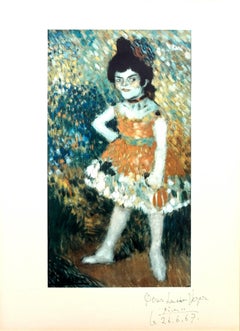
After Pablo Picasso - The Dwarf Dancer - Handsigned and Dedicated Lithograph
After Pablo Picasso - The Dwarf Dancer - Handsigned and Dedicated Lithograph
By (after) Pablo Picasso

Located in Collonge Bellerive, Geneve, CH

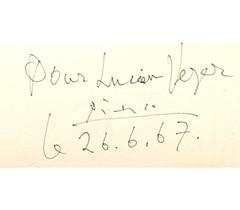
After Pablo Picasso 1881 - 1973 The Dwarf Dancer (Barcelona Series) - 1966 Framed Offset Color lithograph signed, dated and dedicated at the bottom "For L...
Category

1960s Modern Hippolyte Bellangé Art

Materials

Lithograph
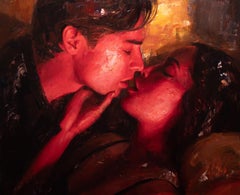
"You and I", Oil Painting

"You and I", Oil Painting

By Matt Talbert

Located in Denver, CO

Matt Talbert ( US based) "You and I" is an original, handmade oil painting that depicts a couple leaning in to kiss each other as they are cast in the glow of a red light. Artist b...

Category

2010s Realist Hippolyte Bellangé Art

Materials

Oil, Panel

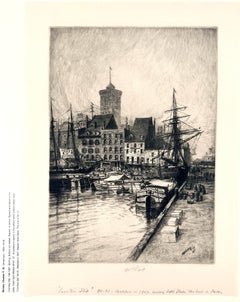
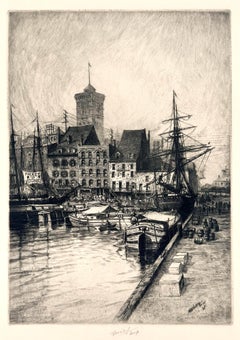
Coenties Slip
Coenties Slip

Coenties Slip

By Charles Frederick William Mielatz

Located in Middletown, NY

Lower Manhattan and the Seaport as the artist imagined it would have appeared before 1835. New York: 1907. Etching with drypoint on Japon paper, 13 7/8 x 9 3/4 inches (353 x 248 mm...

Category

Late 19th Century American Modern Hippolyte Bellangé Art

Materials

Handmade Paper, Drypoint, Etching

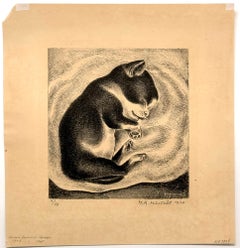
Slapende jonge kat (Sleeping kitten)

Slapende jonge kat (Sleeping kitten)

Located in Middletown, NY

Lithograph on cream wove paper with a large, modern geometric watermark, 10 x 9 5/8 inches (255 x 245 mm), the full sheet. Signed, dated and numbered 4/25 in pencil in the lower right.
Category

Early 20th Century Modern Hippolyte Bellangé Art

Materials

Etching, Laid Paper

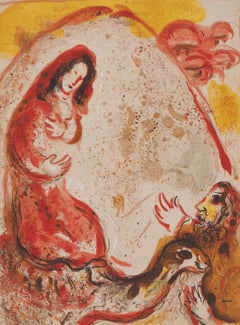
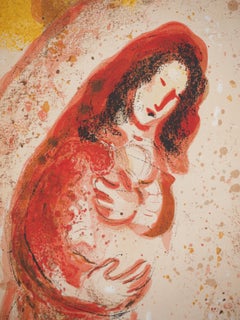
The Bible : Rachel Treasure - Original Lithograph (Mourlot #242)
The Bible : Rachel Treasure - Original Lithograph (Mourlot #242)
By Marc Chagall

Located in Paris, IDF

Marc Chagall (1887-1985) The Bible, Rachel's Treasure Original lithography (Daeger Workshop) On paper 36 x 26.5 cm (c. 14.2 x 10.2 in) Second illustration on the back, see photo ...

Category

Mid-20th Century Modern Hippolyte Bellangé Art

Materials

Lithograph
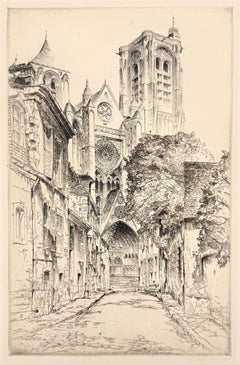
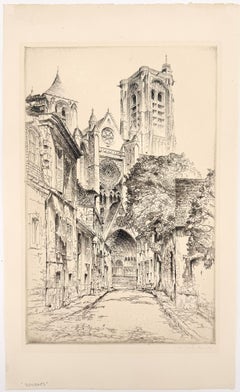
Bourges – The Cathedral of St. Étienne

Bourges – The Cathedral of St. Étienne

By John Taylor Arms

Located in Middletown, NY

Etching on watermarked handmade F J Head & Co cream laid paper with a deckle edge, 14 1/8 x 9 1/8 inches (358 x 232 mm); sheet 18 1/8 x 11 inches (461 x 280 mm), full margins. Signed...

Category

Early 20th Century American Modern Hippolyte Bellangé Art

Materials

Handmade Paper, Etching

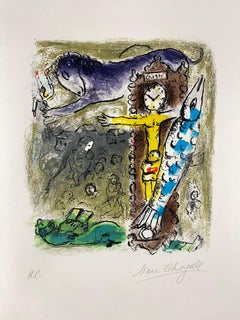
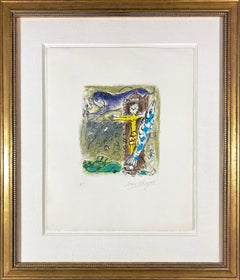
Le Christ a l'Horloge, Paris (Christ in the Clock)

Le Christ a l'Horloge, Paris (Christ in the Clock)

By Marc Chagall

Located in Missouri, MO

Marc Chagall "Le Christ a l'Horloge, Paris" (Christ in the Clock) 1957 (M. 196) Color Lithograph on Arches Wove Paper Signed in Pencil "Marc Chagall" Lower Right Initialed "H.C." (Hors Commerce) Lower Left, aside from numbered edition of 90 *Floated in Gold Frame with Linen Matting, UV Plexiglass Sheet Size: 18 3/4 x 14 3/4 inches (47.5 cm x 38 cm) Image Size: 9 3/4 x 8 1/2 inches Framed Size: 28.5 x 24.25 inches Marc Chagall was a man of keen intelligence, a shrewd observer of the contemporary scene, with a great sympathy for human suffering. He was born on July 7, 1887 in Vitebsk, Russia; his original name was Moishe Shagal (Segal), but when he became a foremost member of the Ecole de Paris, he adopted French citizenship and the French spelling of his name. Vitebsk was a good-sized Russian town of over 60,000, not a shtetl. His father supported a wife and eight children as a worker in a herring-pickling plant. Sheltered by the Jewish commandment against graven images, the young Chagall never saw so much as a drawing until, one day, he watched a schoolmate copying a magazine illustration. He was ridiculed for his astonishment, but he began copying and improvising from magazines. Both Chagall's parents reluctantly agreed to let him study with Yehuda Pen, a Jewish artist in Vitebsk. Later, in 1906, they allowed their son to study in St. Petersburg, where he was exposed to Russian Iconography and folk art. At that time, Jews could leave the Pale only for business and employment and were required to carry a permit. Chagall, who was in St. Petersburg without a permit, was imprisoned briefly. His first wife, Bella Rosenfeld, was a product of a rich cultivated and intellectual group of Jews in Vitebsk. Chagall was made commissar for the arts for the area, charged with directing its cultural life and establishing an art school. Russian folklore, peasant life and landscapes persisted in his work all his life. In 1910 a rich patron, a lawyer named Vinaver, staked him to a crucial trip to Paris, where young artists were revolutionizing art. He also sent him a handsome allowance of 125 francs (in those days about $24) each month. Chagall rejected cubism, fauvism and futurism, but remained in Paris. He found a studio near Montparnasse in a famous twelve-sided wooden structure divided into wedge-shaped rooms. Chaim Soutine, a fellow Russian Jew, and Modigliani lived on the same floor. To Chagall's astonishment, he found himself heralded as one of the fathers of surrealism. In 1923, a delegation of Max Ernst, Paul Eluard and Gala (later Salvador Dali's wife) actually knelt before Chagall, begging him to join their ranks. He refused. To understand Chagall's work, it is necessary to know that he was born a Hasidic Jew, heir to mysticism and a world of the spirit, steeped in Jewish lore and reared in the Yiddish language. The Hasidim had a special feeling for animals, which they tried not to overburden. In the mysterious world of Kabbala and fantastic ancient legends of Chagall's youth, the imaginary was as important as the real. His extraordinary use of color also grew out of his dream world; he did not use color realistically, but for emotional effect and to serve the needs of his design. Most of his favorite themes, though superficially light and trivial, mask dark and somber thoughts. The circus he views as a mirror of life; the crucifixion as a tragic theme, used as a parallel to the historic Jewish condition, but he is perhaps best known for the rapturous lovers he painted all his life. His love of music is a theme that runs through his paintings. After a brief period in Berlin, Chagall, Bella and their young daughter, Ida, moved to Paris and in 1937 they assumed French citizenship. When France fell, Chagall accepted an invitation from the Museum of Modern Art to immigrate to the United States. He was arrested and imprisoned in Marseilles for a short time, but was still able to immigrate with his family. The Nazi onslaught caught Chagall in Vichy, France, preoccupied with his work. He was loath to leave; his friend Varian Fry rescued him from a police roundup of Jews in Marseille, and packed him, his family and 3500 lbs. of his art works on board a transatlantic ship. The day before he arrived in New York City, June 23, 1941, the Nazis attacked Russia. The United States provided a wartime haven and a climate of liberty for Chagall. In America he spent the war years designing large backdrops for the Ballet. Bella died suddenly in the United States of a viral infection in September 1944 while summering in upstate New York. He rushed her to a hospital in the Adirondacks, where, hampered by his fragmentary English, they were turned away with the excuse that the hour was too late. The next day she died. He waited for three years after the war before returning to France. With him went a slender married English girl, Virginia Haggard MacNeil; Chagall fell in love with her and they had a son, David. After seven years she ran off with an indigent photographer. It was an immense blow to Chagall's ego, but soon after, he met Valentine Brodsky, a Russian divorcee designing millinery in London (he called her Fava). She cared for him during the days of his immense fame and glory. They returned to France, to a home and studio in rustic Vence. Chagall loved the country and every day walked through the orchards, terraces, etc. before he went to work. Chagall died on March 28, 1985 in the south of France. His heirs negotiated an arrangement with the French state allowing them to pay most of their inheritance taxes in works of art. The heirs owed about $30 million to the French government; roughly $23 million of that amount was deemed payable in artworks. Chagall's daughter, Ida and his widow approved the arrangement. Written and submitted by Jean Ershler Schatz, artist and researcher from Laguna Woods, California. Sources: Hannah Grad Goodman in Homage to Chagall in Hadassah Magazine, June 1985 Jack Kroll in Newsweek, April 8, 1985 Andrea Jolles in National Jewish Monthly Magazine, May 1985 Michael Gibson...

Category

1950s Modern Hippolyte Bellangé Art

Materials

Lithograph

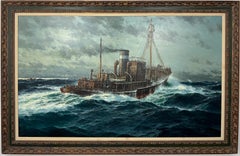
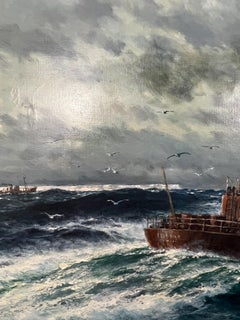
Catcher Boat Painting, Marine Art, Signed, 30x50 Inches, Coastal Whaling Scene

Catcher Boat Painting, Marine Art, Signed, 30x50 Inches, Coastal Whaling Scene

By Jack L. Gray

Located in Marco Island, FL

Fangst Bat by Jack Gray The rough waters of the Scotia Sea are captured in this painting by famed marine painter, Jack Gray. The boat is a fangst bat or catcher boat used for whali...

Category

Mid-20th Century Realist Hippolyte Bellangé Art

Materials

Canvas, Oil

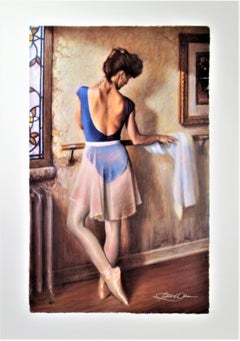
Ballet Dancer
Ballet Dancer

Robert olsonBallet Dancer, 1989

$550

H 30.85 in W 21.35 in D 0.01 in

Ballet Dancer

Located in San Francisco, CA

This artwork "Ballet Dancer" 1989 is a color offset lithograph by American artist Robert Olson. It is hand signed and numbered 140/1275 in gold felt pen. ...

Category

Late 20th Century Romantic Hippolyte Bellangé Art

Materials

Lithograph

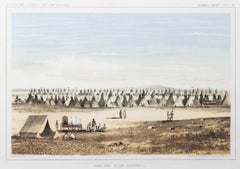
'Camp Red River Hunters' original lithograph by John Mix Stanley

'Camp Red River Hunters' original lithograph by John Mix Stanley

By John Mix Stanley

Located in Milwaukee, WI

In the mid-nineteenth century, the United States government set out to survey and document its newly acquired lands and territories west of the Mississippi. The goals of these surveys were manifold: to produce topographical maps, to document flora and fauna, and to document natural resources to build the emerging US economy. These surveys, and the images from them, also functioned to build the new sense of American identity with the landscape, condensing vistas into the 'picturesque' tradition of European image making. Thus, the entire span of US territory could be seen as a single, cohesive whole. This lithograph comes from one of six surveys commissioned by the Army's Topographic Bureau in 1853, which sought to find the best route to construct a transcontinental railroad. The result was a thirteen-volume report including maps, lithographs, and technical data entitled 'Explorations and Surveys to ascertain the most practicable and economical route for a Railroad from the Mississippi river to the Pacific Ocean.' In particular, the print comes from the northern survey, commanded by Isaac Stevens, which explored the regions between the 47th and 49th parallels. In this image, Stanley shows an encampment of the people known as the Red River of the North hunters. They were generations of European and mixed-race trappers who lived on the frontier and had Indian wives and mixed-race children. They had come to the area for bison hunting, as the herds were still vast on the prairies. In the image, the figures and their encampment are dwarfed by the vast landscape around them, indicating the sublimity of these new American territories. 5.75 x 8.75 inches, image 6.5 x 9.25 inches, stone 17 x 20 inches, frame Artist 'Stanley Del.' lower left Entitled 'Camp Red River Hunters' lower center margin Publisher 'Sarony, Major & Knapp. Lith.s 449 Broadway N.Y.' lower right Inscribed 'U.S.P.R.R. EXP. & SURVEYS — 47th & 49th PARALLELS' upper left Inscribed 'GENERAL REPORT — PLATE XII' upper right Framed to conservation standards using 100 percent rag matting with French accents; glazed with UV5 Plexiglas to inhibit fading; housed in a gold reverse ogee moulding. Print in overall good condition; some localized foxing and discoloration; minor surface abrasions to frame. John Mix Stanley...

Category

1850s Romantic Hippolyte Bellangé Art

Materials

Lithograph

Previously Available Items
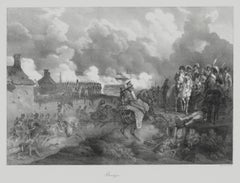
Napoleon a Bautzen
Napoleon a Bautzen

Napoleon a Bautzen

By Hippolyte Bellangé

Located in Fairlawn, OH

Napoleon a Bautzen Lithograph, 1822 Signed in the stone (see photo) From: Arnault, A. V. Vie Politique et Militaire de Napoleon (120 plates) Published, Paris, Librairie Historiquem 1...

Category

1820s Romantic Hippolyte Bellangé Art

Materials

Lithograph

FRONTISPIECE with SELF PORTRAIT

FRONTISPIECE with SELF PORTRAIT

By Hippolyte Bellangé

Located in Santa Monica, CA

HIPPOLYTE BELLANGE (1800-1866) CROQUIS LITHOGRAPHIQUES PAR H. BELLANGE 1823 Lithograph, signed in the stone. Frontispiece for a portfolio of 14 li...

Category

1820s Barbizon School Hippolyte Bellangé Art

Materials

Lithograph

Hippolyte Bellangé art for sale on 1stDibs.

Find a wide variety of authentic Hippolyte Bellangé art available for sale on 1stDibs. You can also browse by medium to find art by Hippolyte Bellangé in lithograph, etching, ink and more. Much of the original work by this artist or collective was created during the 19th century and is mostly associated with the modern style. Not every interior allows for large Hippolyte Bellangé art, so small editions measuring 3 inches across are available. Customers who are interested in this artist might also find the work of Eugene Delacroix, William Blake, and Pati Bannister. Hippolyte Bellangé art prices can differ depending upon medium, time period and other attributes. On 1stDibs, the price for these items starts at $88 and tops out at $2,000, while the average work can sell for $249.

Artists Similar to Hippolyte Bellangé