Ivan Theimer Art

Czech, b. 1944

Ivan Theimer was born on 18 September, 1944 in Olomouc, Czechia. He is a Czech sculptor, painter and engraver. Theimer emigrated to France in 1968 and lived in Paris, where he completed his studies at the École des Beaux-Arts. In 1969, he took part in the Salon de la jeune sculpture, and the following year he obtained the IAT prize.

to
5
1
6
6
5
1
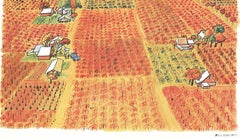
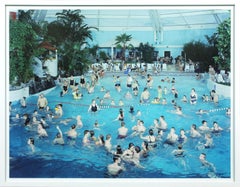
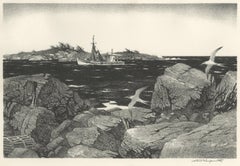
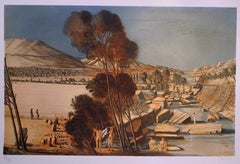
Le Leze I, American Realist Lithograph by Ivan Theimer

Le Leze I, American Realist Lithograph by Ivan Theimer

By Ivan Theimer

Located in Long Island City, NY

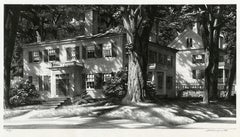
Ivan Theimer, Czech (1944 - ) - Le Leze I, Year: 1982, Medium: Lithograph, signed and numbered in pencil, Edition: 200, Size: 21 in. x 30 in. (53.34 cm x 76.2 cm)

Category

1980s American Realist Ivan Theimer Art

Materials

Lithograph
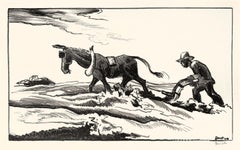
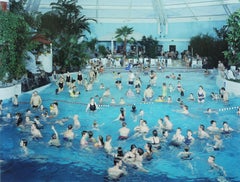
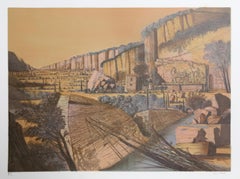
Le Leze III, American Realist Lithograph by Ivan Theimer

Le Leze III, American Realist Lithograph by Ivan Theimer

By Ivan Theimer

Located in Long Island City, NY

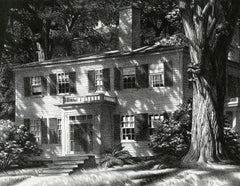
Ivan Theimer, Czech (1944 - ) - Le Leze III, Year: 1982, Medium: Lithograph, signed and numbered in pencil, Edition: 200, Size: 21 x 30 in. (53.34 x 76.2 cm)

Category

1980s American Realist Ivan Theimer Art

Materials

Lithograph

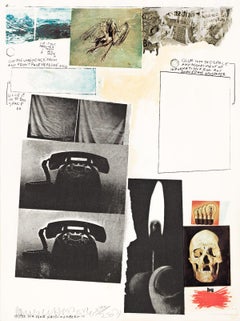
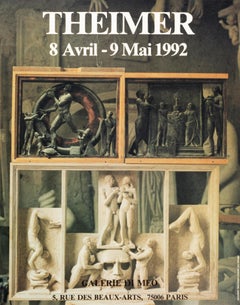
Theimer - Galerie Di Meo - Vintage Poster 1992

Theimer - Galerie Di Meo - Vintage Poster 1992

By Ivan Theimer

Located in Roma, IT

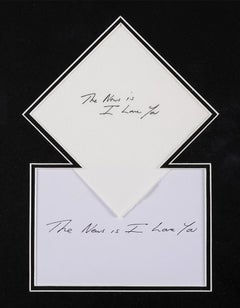
Theimer - Galerie Di Meo is a vintage poster. This artwork was realized in occasion of the exhibition by Ivan Theimer held at Galerie Di Meo in Paris in 1992. Ivan Theimer (Olomou...

Category

1990s Ivan Theimer Art

Materials

Offset

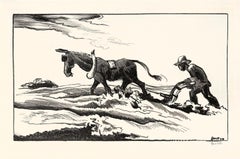
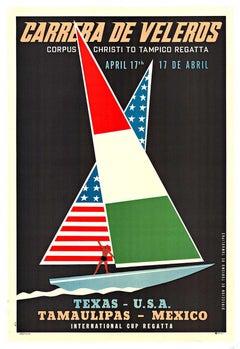
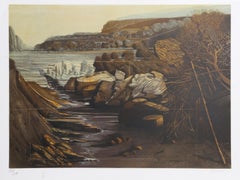
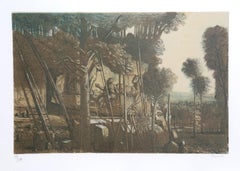
Le Leze II, American Realist Lithograph by Ivan Theimer

Le Leze II, American Realist Lithograph by Ivan Theimer

By Ivan Theimer

Located in Long Island City, NY

Ivan Theimer, Czech (1944 - ) - Le Leze II, Year: 1982, Medium: Lithograph, signed and numbered in pencil, Edition: 200, Size: 21 x 30 in. (53.34 x 76.2 cm)

Category

1980s American Realist Ivan Theimer Art

Materials

Lithograph

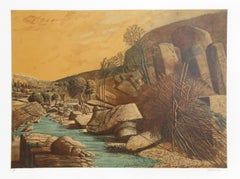
Le Leze, American Realist Lithograph by Ivan Theimer

Le Leze, American Realist Lithograph by Ivan Theimer

By Ivan Theimer

Located in Long Island City, NY

Ivan Theimer, Czech (1944 - ) - Le Leze, Year: 1982, Medium: Lithograph, signed and numbered in pencil, Edition: 200, Size: 21 x 30 in. (53.34 x 76.2 cm)

Category

1980s American Realist Ivan Theimer Art

Materials

Lithograph

Le Leze IV, American Realist Lithograph by Ivan Theimer

Le Leze IV, American Realist Lithograph by Ivan Theimer

By Ivan Theimer

Located in Long Island City, NY

Ivan Theimer, Czech (1944 - ) - Le Leze IV, Year: 1982, Medium: Lithograph, signed and numbered in pencil, Edition: 200, Size: 21 in. x 30 in. (53.34 cm x 76.2 cm)

Category

1980s American Realist Ivan Theimer Art

Materials

Lithograph
Related Items
The Golden Gate
The Golden Gate

The Golden Gate

By Adolf Arthur Dehn

Located in Fairlawn, OH

The Golden Gate Lithograph on wove paper watermarked GC, 1940 Signed in pencil by the artist (see photo) Publisher: Associated American Artists Edition: 189, unnumbered The image depicts The Golden Gate Bridge which connects San Francisco and Marin County, California References And Exhibitions: Illustrated: Adams, The Sensuous Life of Adolf Dehn, Fig. 13.17, page 324 Reference: L & O 325 AAA Index 391 Adolf Dehn, American Watercolorist and Printmaker, 1895-1968 Adolf Dehn was an artist who achieved extraordinary artistic heights, but in a very particular artistic sphere—not so much in oil painting as in watercolor and lithography. Long recognized as a master by serious print collectors, he is gradually gaining recognition as a notable and influential figure in the overall history of American art. In the 19th century, with the invention of the rotary press, which made possible enormous print runs, and the development of the popular, mass-market magazines, newspaper and magazine illustration developed into an artistic realm of its own, often surprisingly divorced from the world of museums and art exhibitions, and today remains surprisingly overlooked by most art historians. Dehn in many regards was an outgrowth of this world, although in an unusual way, since as a young man he produced most of his illustrative work not for popular magazines, such as The Saturday Evening Post, but rather for radical journals, such as The Masses or The Liberator, or artistic “little magazines” such as The Dial. This background established the foundation of his outlook, and led later to his unique and distinctive contribution to American graphic art. If there’s a distinctive quality to his work, it was his skill in introducing unusual tonal and textural effects into his work, particularly in printmaking but also in watercolor. Jackson Pollock seems to have been one of many notable artists who were influenced by his techniques. Early Years, 1895-1922 For an artist largely remembered for scenes of Vienna and Paris, Adolf Dehn’s background was a surprising one. Born in Waterville, Minnesota, on November 22, 1895, Dehn was the descendent of farmers who had emigrated from Germany and homesteaded in the region, initially in a one-room log cabin with a dirt floor. Adolf’s father, Arthur Clark Dehn, was a hunter and trapper who took pride that he had no boss but himself, and who had little use for art. Indeed, during Adolf’s boyhood the walls of his bedroom and the space under his bed were filled with the pelts of mink, muskrats and skunks that his father had killed, skinned and stretched on drying boards. It was Adolf’s mother, Emilie Haas Dehn, a faithful member of the German Lutheran Evangelical Church, who encouraged his interest in art, which became apparent early in childhood. Both parents were ardent socialists, and supporters of Eugene Debs. In many ways Dehn’s later artistic achievement was clearly a reaction against the grinding rural poverty of his childhood. After graduating from high school in 1914 at the age of 19—an age not unusual in farming communities at the time, where school attendance was often irregular—Dehn attended the Minneapolis School of Art from 1914 to 1917, whose character followed strongly reflected that of its director, Munich-trained Robert Kohler, an artistic conservative but a social radical. There Dehn joined a group of students who went on to nationally significant careers, including Wanda Gag (later author of best-selling children’s books); John Flanagan (a sculptor notable for his use of direct carving) Harry Gottlieb (a notable social realist and member of the Woodstock Art Colony), Elizabeth Olds (a printmaker and administrator for the WPA), Arnold Blanch (landscape, still-life and figure painter, and member of the Woodstock group), Lucille Lunquist, later Lucille Blanch (also a gifted painter and founder of the Woodstock art colony), and Johan Egilrud (who stayed in Minneapolis and became a journalist and poet). Adolf became particularly close to Wanda Gag (1893-1946), with whom he established an intense but platonic relationship. Two years older than he, Gag was the daughter of a Bohemian artist and decorator, Anton Gag, who had died in 1908. After her husband died, Wanda’s mother, Lizzi Gag, became a helpless invalid, so Wanda was entrusted with the task of raising and financially supporting her six younger siblings. This endowed her with toughness and an independent streak, but nonetheless, when she met Dehn, Wanda was Victorian and conventional in her artistic taste and social values. Dehn was more socially radical, and introduced her to radical ideas about politics and free love, as well as to socialist publications such as The Masses and The Appeal to Reason. Never very interested in oil painting, in Minneapolis Dehn focused on caricature and illustration--often of a humorous or politically radical character. In 1917 both Dehn and Wanda won scholarships to attend the Art Students League, and consequently, in the fall of that year both moved to New York. Dehn’s art education, however, ended in the summer of 1918, shortly after the United States entered World War I, when he was drafted to serve in the U. S. Army. Unwilling to fight, he applied for status as a conscientious objector, but was first imprisoned, then segregated in semi-imprisonment with other Pacifists, until the war ended. The abuse he suffered at this time may well explain his later withdrawal from taking political stands or making art of an overtly political nature. After his release from the army, Dehn returned to New York where he fell under the spell of the radical cartoonist Boardman Robinson and produced his first lithographs. He also finally consummated his sexual relationship with Wanda Gag. The Years in Europe: 1922-1929 In September of 1921, however, he abruptly departed for Europe, arriving in Paris and then moving on to Vienna. There in the winter of 1922 he fell in love with a Russian dancer, Mura Zipperovitch, ending his seven-year relationship with Wanda Gag. He and Mura were married in 1926. It was also in Vienna that he produced his first notable artistic work. Influenced by European artists such as Jules Pascin and Georg Grosz, Dehn began producing drawings of people in cafes, streets, and parks, which while mostly executed in his studio, were based on spontaneous life studies and have an expressive, sometimes almost childishly wandering quality of line. The mixture of sophistication and naiveté in these drawings was new to American audiences, as was the raciness of their subject matter, which often featured pleasure-seekers, prostitutes or scenes of sexual dalliance, presented with a strong element of caricature. Some of these drawings contain an element of social criticism, reminiscent of that found in the work of George Grosz, although Dehn’s work tended to focus on humorous commentary rather than savagely attacking his subjects or making a partisan political statement. Many Americans, including some who had originally been supporters of Dehn such as Boardman Robinson, were shocked by these European drawings, although George Grocz (who became a friend of the artist in this period) admired them, and recognized that Dehn could also bring a new vision to America subject matter. As he told Dehn: “You will do things in America which haven’t been done, which need to be done, which only you can do—as far at least as I know America.” A key factor in Dehn’s artistic evolution at this time was his association with Scofield Thayer...

Category

1940s American Realist Ivan Theimer Art

Materials

Lithograph
Vintage Jim Dine tool poster Kunsthalle Bern (Saw) neon blue 1970s retro font

Vintage Jim Dine tool poster Kunsthalle Bern (Saw) neon blue 1970s retro font

By Jim Dine

Located in New York, NY

Original exhibition poster printed on the occasion of Jim Dine's 1971 exhibition at Kunsthalle Bern, featuring Saw, 1971. Against a sea of electric blue, Dine has written “saw” in lo...

Category

1970s Pop Art Ivan Theimer Art

Materials

Paper, Offset

Bouquet of Love

Takashi MurakamiBouquet of Love, 2012

$4,460

H 26.78 in W 26.78 in

Bouquet of Love

By Takashi Murakami

Located in London, GB

Takashi Murakami Bouquet of Love, 2012 signed and numbered by the artist Offset lithograph with cold stamp 68 x 68 cm Edition of 300 Produced by Kaikai Kiki Co., Ltd

Category

2010s Pop Art Ivan Theimer Art

Materials

Offset

America! America!
America! America!

James FetherolfAmerica! America!, 1973

$400

H 22 in W 29.8 in D 0.01 in

America! America!

Located in San Francisco, CA

This artwork titled "America! America" is a color lithograph after noted American artist James Fetherolf, 1925-1994. It is hand signed at the lower rig...

Category

Late 20th Century American Realist Ivan Theimer Art

Materials

Lithograph
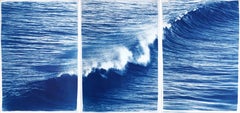
Los Angeles Crashing Waves, Handmade Cyanotype on Paper, Nautical Seascape, Blue

Los Angeles Crashing Waves, Handmade Cyanotype on Paper, Nautical Seascape, Blue

By Kind of Cyan

Located in Barcelona, ES

This series of cyanotype triptychs showcases the beauty of nature scenes, including stunning beaches and oceans, as well as the intricate textures of water, forests, and skies. These...

Category

2010s American Realist Ivan Theimer Art

Materials

Lithograph, Paper

As I Opened Fire, Roy Lichtenstein (Stedelijk Museum)

As I Opened Fire, Roy Lichtenstein (Stedelijk Museum)

By Roy Lichtenstein

Located in New York, NY

This offset lithograph in colors in three panels was created in 2002 and is from the unsigned edition of unknown size measuring
 
25 x 20 ½  in. (63.5 x 52 cm.) each and 25 x 62 in. ...

Category

21st Century and Contemporary Pop Art Ivan Theimer Art

Materials

Lithograph, Offset

Original Vintage Poster Jean Dubuffet Gallery Exhibition Galerie Beyeler Basel

Original Vintage Poster Jean Dubuffet Gallery Exhibition Galerie Beyeler Basel

By Jean Dubuffet

Located in Surfside, FL

Galerie Beyeler Exhibition Poster Signed in plate Jean Philippe Arthur Dubuffet (French, 1901 – 1985) was a French painter and sculptor of the École de Paris (School of Paris). His idealistic approach to aesthetics embraced so-called "low art" and eschewed traditional standards of beauty in favor of what he believed to be a more authentic and humanistic approach to image-making. He is perhaps best known for founding the art brut movement, and for the collection of works—Collection de l'art brut—that this movement spawned. Dubuffet enjoyed a prolific art career, both in France and in America, and was featured in many exhibitions throughout his lifetime. His childhood friends included the writers Raymond Queneau and Georges Limbour. He moved to Paris in 1918 to study painting at the Académie Julian, becoming close friends with the artists Juan Gris, André Masson, and Fernand Léger. Six months later, upon finding academic training to be distasteful, he left the Académie to study independently. During this time, Dubuffet developed many other interests, including free noise music, poetry, and the study of ancient and modern languages. Dubuffet also traveled to Italy and Brazil, and upon returning to Le Havre in 1925, he married for the first time and went on to start a small wine business in Paris. He took up painting again in 1934 when he made a large series of portraits in which he emphasized the vogues in art history. In 1942, Dubuffet decided to devote himself again to art. He often chose subjects for his works from everyday life, such as people sitting in the Paris Métro or walking in the country. Dubuffet painted with strong, unbroken colors, recalling the palette of Fauvism, as well as the Brucke painters, with their juxtaposing and discordant patches of color. In 1943, the writer George Limbour, a friend of Dubuffet from childhood, took Jean Paulhan to the artist's studio. Dubuffet's work at that time was unknown. Paulhan was impressed and the meeting proved to be a turning point for Dubuffet. His first solo show came in October 1944, at the Galerie Rene Drouin in Paris. This marked Dubuffet's third attempt to become an established artist In 1945, Dubuffet attended and was strongly impressed by a show in Paris of Jean Fautrier paintings in which he recognized meaningful art which expressed directly and purely the depth of a person. Emulating Fautrier, Dubuffet started to use thick oil paint mixed with materials such as mud, sand, coal dust, pebbles, pieces of glass, string, straw, plaster, gravel, cement, and tar. This allowed him to abandon the traditional method of applying oil paint to canvas with a brush; instead, Dubuffet created a paste into which he could create physical marks, such as scratches and slash marks. The impasto technique of mixing and applying paint was best manifested in Dubuffet's series 'Hautes Pâtes' or Thick Impastoes, which he exhibited at his second major exhibition, entitled Microbolus Macadam & Cie/Hautes Pates in 1946 at the Galérie René Drouin. His use of crude materials and the irony that he infused into many of his works incited a significant amount of backlash from critics, who accused Dubuffet of 'anarchy' and 'scraping the dustbin'. He did receive some positive feedback as well—Clement Greenberg took notice of Dubuffet's work and wrote that '[f]rom a distance, Dubuffet seems the most original painter to have come out of the School of Paris since Joan Miro...' Greenberg went on to say that 'Dubuffet is perhaps the one new painter of real importance to have appeared on the scene in Paris in the last decade.' Indeed, Dubuffet was very prolific in the United States in the year following his first exhibition in New York (1951). After 1946, Dubuffet started a series of portraits, with his own friends Henri Michaux, Francis Ponge, George Limbour, Jean Paulhan and Pierre Matisse serving as 'models'. He painted these portraits in the same thick materials, and in a manner deliberately anti-psychological and anti-personal, as Dubuffet expressed himself. A few years later he approached the surrealist group in 1948, then the College of Pataphysique in 1954. He was friendly with the French playwright, actor and theater director Antonin Artaud, he admired and supported the writer Louis-Ferdinand Céline and was strongly connected with the artistic circle around the surrealist André Masson. In 1944 he started an important relationship with the resistance-fighter and French writer and publisher Jean Paulhan who was also strongly fighting against "intellectual terrorism", as he called it. Reception in America Corps de dame jaspé [Marbleized Body of a Lady] (1950) at the National Gallery of Art in 2022 Dubuffet achieved very rapid success in the American art market, largely due to his inclusion in the Pierre Matisse exhibition in 1946. His association with Matisse proved to be very beneficial. Matisse was a very influential dealer of contemporary European Art in America, and was known for strongly supporting the School of Paris artists. Dubuffet's work was placed among the likes of Pablo Picasso, Georges Braque, and Henri Rouault at the gallery exhibit, and he was one of only two young artists to be honored in this manner. A Newsweek article dubbed Dubuffet the 'darling of Parisian avant-garde circles,' and Greenberg wrote positively about Dubuffet's three canvases in a review of the exhibit. In 1947 Dubuffet had his first solo exhibition in America, in the same gallery as the Matisse exhibition. Reviews were largely favorable, and this resulted in Dubuffet having at least an annual, if not a biannual exhibition at that gallery. His reception in America was very closely linked to and dependent upon the New York art world's desire to create its own avant-garde environment. Specific examples of American artists interested in Dubuffet’s art were Alfonso Ossorio and Joseph Glasco. At the end of 1949, while Pierre Matisse was preparing Dubuffet’s January 1950 show, Alfonso Ossorio had traveled to Paris to meet Dubuffet and buy some of his paintings. Then in 1950, at Ossorio’s urging, his young friend Joseph Glasco left New York for Paris to meet Dubuffet. Glasco credited this encounter as having had an influence on his own art, and Dubuffet frequently asked about “Jackson Pollock and Glasco” in his letters to Ossorio. Between 1947 and 1949, Dubuffet took three separate trips to Algeria—a French colony at the time—in order to find further artistic inspiration. In this sense, Dubuffet is very similar to other artists such as Delacroix, Matisse, and Fromentin. However, the art that Dubuffet produced while he was there was very specific insofar as it recalled Post-War French ethnography in light of decolonization. Dubuffet was fascinated by the nomadic nature of the tribes in Algeria—he admired the ephemeral quality of their existence, in that they did not stay in any one particular area for long, and were constantly shifting. The impermanence of this kind of movement attracted Dubuffet and became a facet of art brut. In June 1948, Dubuffet, along with Jean Paulhan, Andre Breton, Charles Ratton, Michel Tapie, and Henri-Pierre Roche, officially established La Compagnie de l'art brut in Paris. This association was dedicated to the discovery, documentation and exhibition of art brut. Dubuffet later amassed his own collection of such art, including artists Aloïse Corbaz and Adolf Wölfli...

Category

1960s Abstract Ivan Theimer Art

Materials

Offset

Frank Stella - Art Center College of Design Poster, CA ex-IBM Collection, Framed

Frank Stella - Art Center College of Design Poster, CA ex-IBM Collection, Framed

By Frank Stella

Located in New York, NY

Scarce 1970s Offset lithograph poster Limited Edition of 300 (unnumbered; unsigned) This poster depicts Frank Stella's 1970 print "York Factory", and it was published on the occasion...

Category

1970s Abstract Ivan Theimer Art

Materials

Lithograph, Offset

Yelding the Right of Way

Yelding the Right of Way

By Arnold Friberg 1

Located in San Francisco, CA

This artwork titled "Yelding the Right of Way" c.1975 is a color offset lithograph by renown western artist Arnold Friberg, 1913-2010. It is hand signed...

Category

Late 20th Century American Realist Ivan Theimer Art

Materials

Lithograph
Ann Nooney, (Demolition with Windows, NYC)

Ann Nooney, (Demolition with Windows, NYC)

By Ann Nooney

Located in New York, NY

The dimensions are for the image; there are large margins. This lithograph is signed in pencil. A native New Yorker, Ann Nooney (1900-1970) recorded the urban scene while on the Wo...

Category

1930s American Realist Ivan Theimer Art

Materials

Lithograph
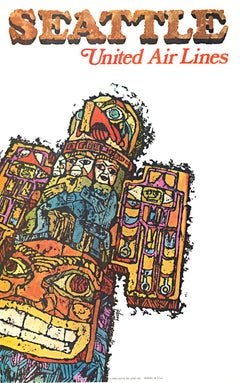
Ivan Theimer art for sale on 1stDibs.

Find a wide variety of authentic Ivan Theimer art available for sale on 1stDibs. You can also browse by medium to find art by Ivan Theimer in offset print and more. Not every interior allows for large Ivan Theimer art, so small editions measuring 14 inches across are available. Customers who are interested in this artist might also find the work of Jiri Kolar, Emil Orlik, and Toyen Marie Cerminova. Ivan Theimer art prices can differ depending upon medium, time period and other attributes. On 1stDibs, the price for these items starts at $156 and tops out at $156, while the average work can sell for $156.

Artists Similar to Ivan Theimer