Luigi Lucioni Art

American, 1900-1988

Luigi Lucioni was an Italian-born American painter. Lucioni lived and worked mainly in New York City, but also spent time working in Vermont. His still lifes, landscapes and portraits were known for their realism, precisely drawn forms and smooth paint surface. Like many of his fellow Regionalists, Lucioni’s work was marketed through Associated American Artists in New York. In 1915, Lucioni won a competition which allowed him to attend The Cooper Union. Lucioni had his first one-man show in New York in 1927 at the Ferargil Galleries. Lucioni was still in his mid-20s and within a short time won recognition, primarily through his still-life painting, as one of this country's most adept and successful artists. During the Depression, when other artists, especially the young and unestablished, found it extremely difficult to earn a living from their art, Lucioni could not produce his exquisitely composed, meticulously finished canvases quickly enough to satisfy the demand. Private collectors and public institutions across the country, including the Fogg Art Museum and the San Diego Museum of Art, acquired examples of his work, often while they were still hanging on the walls of his gallery in New York. Featured in group shows from Dallas to Milwaukee and Memphis, Lucioni cultivated and maintained a truly national reputation. In 1932, Lucioni had his first one-man show in Boston and scored a tremendous coup when The Metropolitan Museum of Art purchased his luminous Dahlias and Apples. Suddenly, Lucioni's name was in the headlines of the art pages. This is believed to be the first time an artist of Lucioni's years has been represented at the Metropolitan. It was reported in the New York Herald Tribune. "Painted with real skill and a modern feeling for composition, it is viewed as a characteristic and excellent work of the young painter."

to
1
5
3
1
1
1
1
1
5

Use search to find more

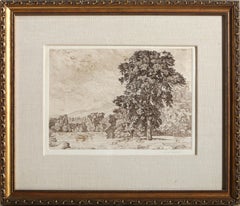
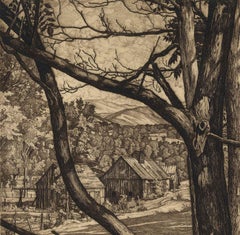
Stony Pasture, Romantic Etching by Luigi Lucioni

Stony Pasture, Romantic Etching by Luigi Lucioni

By Luigi Lucioni

Located in Long Island City, NY

Luigi Lucioni, American (1900 - 1988) - Stony Pasture, Year: 1943, Medium: Etching, signed in pencil, Image Size: 7.75 x 11 inches, Frame Size: 15.75 x 18.5 inches

Category

1940s Romantic Luigi Lucioni Art

Materials

Etching

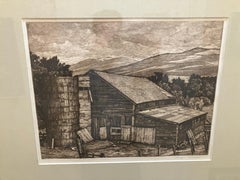
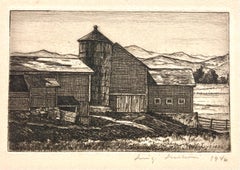
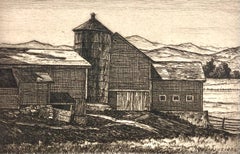
Luigi Lucioni Vermont Barn

Luigi Lucioni Vermont Barn

By Luigi Lucioni

Located in San Francisco, CA

Luigi Lucioni: 1900-1988. Very well listed American Painter and etcher. He has Auction results as high as $4600 for an etching. This adding is most likely a barn in Vermont.. It meas...

Category

1950s American Realist Luigi Lucioni Art

Materials

Etching

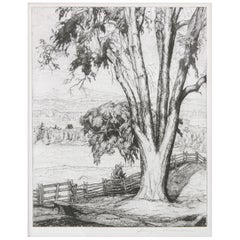
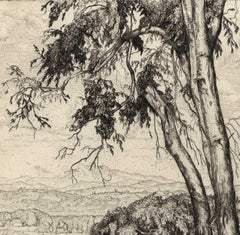
"The Old Elm, " 1934 Etching by Luigi Lucioni

"The Old Elm, " 1934 Etching by Luigi Lucioni

By Luigi Lucioni

Located in Philadelphia, PA

Beautifully capturing a lovely scene of rollings hills, planted fields, rail fences and an old elm tree in the foreground, this is one of Luigi Lucioni's finest prints. Lucioni is best known as a realist, producing still lifes, landscapes and portraits with beautiful, fine detail, as is evident here. Lucioni was also friends with a circle of gay artists...

Category

1930s American Art Deco Vintage Luigi Lucioni Art

Materials

Paper

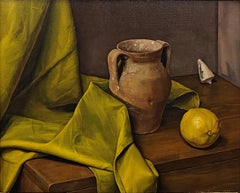
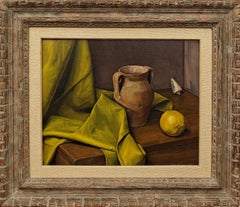
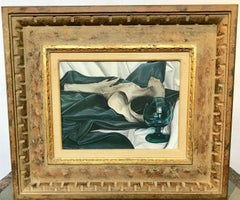
“Still Life”
“Still Life”

“Still Life”

By Luigi Lucioni

Located in Warren, NJ

signed to lower left, appears in overall good condition, sight: 15 3/8 by 11 1/2 inches.

Category

20th Century Luigi Lucioni Art

Materials

Oil

Accent on Blue
Accent on Blue

Accent on Blue

By Luigi Lucioni

Located in New York, NY

Following the Metropolitan Museum of Art’s purchase of Pears with Pewter, 1930, making him the first and youngest contemporary American painter to have a painting purchased by the mu...

Category

1970s Luigi Lucioni Art

Materials

Canvas, Oil

Related Items
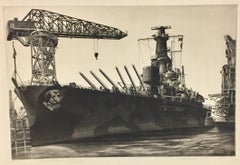
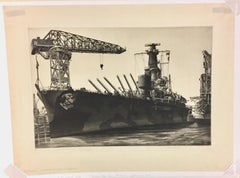
John Taylor Arms, Battle Wagon, 1943, World War II nautical American Navy ship

John Taylor Arms, Battle Wagon, 1943, World War II nautical American Navy ship

By John Taylor Arms

Located in New York, NY

John Taylor Arms was known for making such finely drawn etchings that commercial tools were not good enough: He regularly used sewing needles with corks for handles. Made during Worl...

Category

Mid-20th Century American Realist Luigi Lucioni Art

Materials

Etching

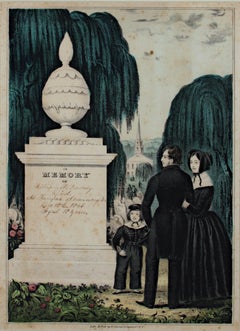
19th century color lithograph figures cemetery willow tree memorial headstone

19th century color lithograph figures cemetery willow tree memorial headstone

By Nathaniel Currier

Located in Milwaukee, WI

The present hand-colored lithograph was produced as part of the funeral and mourning culture in the United States during the 19th century. Images like this were popular as ways of remembering loved ones, an alternative to portraiture of the deceased. This lithograph shows a man, woman and child in morning clothes next to an urn-topped stone monument. Behind are additional putto-topped headstones beneath weeping willows, with a steepled church beyond. The monument contains a space where a family could inscribe the name and death dates of a deceased loved one. In this case, it has been inscribed to a young Civil War soldier: William W. Peabody Died at Fairfax Seminary, VA December 18th, 1864 Aged 18 years The young Mr. Peabody probably died in service for the Union during the American Civil War. Farifax Seminary was a Union hospital and military headquarters in Alexandria, Virginia. The hospital served nearly two thousand soldiers during the war time. Five hundred were also buried on the Seminary's grounds. 13.75 x 9.5 inches, artwork 23 x 19 inches, frame Published before 1864 Inscribed bottom center "Lith. & Pub. by N. Currier. 2 Spruce St. N.Y." Framed to conservation standards using 100 percent rag matting and TruVue Conservation Clear glass, housed in a gold gilded moulding. Nathaniel Currier was a tall introspective man with a melancholy nature. He could captivate people with his piercing stare or charm them with his sparkling blue eyes. Nathaniel was born in Roxbury, Massachusetts on March 27th, 1813, the second of four children. His parents, Nathaniel and Hannah Currier, were distant cousins who lived a humble yet spartan life. When Nathaniel was eight years old, tragedy struck. Nathaniel’s father unexpectedly passed away leaving Nathaniel and his eleven-year-old brother Lorenzo to provide for the family. In addition to their mother, Nathaniel and Lorenzo had to care for six-year-old sister Elizabeth and two-year-old brother Charles. Nathaniel worked a series of odd jobs to support the family, and at fifteen, he started what would become a life-long career when he apprenticed in the Boston lithography shop of William and John Pendleton. A Bavarian gentleman named Alois Senefelder invented lithography just 30 years prior to young Nat Currier’s apprenticeship. While under the employ of the brothers Pendleton, Nat was taught the art of lithography by the firm’s chief printer, a French national named Dubois, who brought the lithography trade to America. Lithography involves grinding a piece of limestone flat and smooth then drawing in mirror image on the stone with a special grease pencil. After the image is completed, the stone is etched with a solution of aqua fortis leaving the greased areas in slight relief. Water is then used to wet the stone and greased-ink is rolled onto the raised areas. Since grease and water do not mix, the greased-ink is repelled by the moisture on the stone and clings to the original grease pencil lines. The stone is then placed in a press and used as a printing block to impart black on white images to paper. In 1833, now twenty-years old and an accomplished lithographer, Nat Currier left Boston and moved to Philadelphia to do contract work for M.E.D. Brown, a noted engraver and printer. With the promise of good money, Currier hired on to help Brown prepare lithographic stones of scientific images for the American Journal of Sciences and Arts. When Nat completed the contract work in 1834, he traveled to New York City to work once again for his mentor John Pendleton, who was now operating his own shop located at 137 Broadway. Soon after the reunion, Pendleton expressed an interest in returning to Boston and offered to sell his print shop to Currier. Young Nat did not have the financial resources to buy the shop, but being the resourceful type he found another local printer by the name of Stodart. Together they bought Pendleton’s business. The firm ‘Currier & Stodart’ specialized in "job" printing. They produced many different types of printed items, most notably music manuscripts for local publishers. By 1835, Stodart was frustrated that the business was not making enough money and he ended the partnership, taking his investment with him. With little more than some lithographic stones, and a talent for his trade, twenty-two year old Nat Currier set up shop in a temporary office at 1 Wall Street in New York City. He named his new enterprise ‘N. Currier, Lithographer’ Nathaniel continued as a job printer and duplicated everything from music sheets to architectural plans. He experimented with portraits, disaster scenes and memorial prints, and any thing that he could sell to the public from tables in front of his shop. During 1835 he produced a disaster print Ruins of the Planter's Hotel, New Orleans, which fell at two O’clock on the Morning of the 15th of May 1835, burying 50 persons, 40 of whom Escaped with their Lives. The public had a thirst for newsworthy events, and newspapers of the day did not include pictures. By producing this print, Nat gave the public a new way to “see” the news. The print sold reasonably well, an important fact that was not lost on Currier. Nat met and married Eliza Farnsworth in 1840. He also produced a print that same year titled Awful Conflagration of the Steamboat Lexington in Long Island Sound on Monday Evening, January 18, 1840, by which melancholy occurrence over One Hundred Persons Perished. This print sold out very quickly, and Currier was approached by an enterprising publication who contracted him to print a single sheet addition of their paper, the New York Sun. This single page paper is presumed to be the first illustrated newspaper ever published. The success of the Lexington print launched his career nationally and put him in a position to finally lift his family up. In 1841, Nat and Eliza had their first child, a son they named Edward West Currier. That same year Nat hired his twenty-one year old brother Charles and taught him the lithography trade, he also hired his artistically inclined brother Lorenzo to travel out west and make sketches of the new frontier as material for future prints. Charles worked for the firm on and off over the years, and invented a new type of lithographic crayon which he patented and named the Crayola. Lorenzo continued selling sketches to Nat for the next few years. In 1843, Nat and Eliza had a daughter, Eliza West Currier, but tragedy struck in early 1847 when their young daughter died from a prolonged illness. Nat and Eliza were grief stricken, and Eliza, driven by despair, gave up on life and passed away just four months after her daughter’s death. The subject of Nat Currier’s artwork changed following the death of his wife and daughter, and he produced many memorial prints and sentimental prints during the late 1840s. The memorial prints generally depicted grief stricken families posed by gravestones (the stones were left blank so the purchasers could fill in the names of the dearly departed). The sentimental prints usually depicted idealized portraits of women and children, titled with popular Christian names of the day. Late in 1847, Nat Currier married Lura Ormsbee, a friend of the family. Lura was a self-sufficient woman, and she immediately set out to help Nat raise six-year-old Edward and get their house in order. In 1849, Lura delivered a son, Walter Black Currier, but fate dealt them a blow when young Walter died one year later. While Nat and Lura were grieving the loss of their new son, word came from San Francisco that Nat’s brother Lorenzo had also passed away from a brief illness. Nat sank deeper into his natural quiet melancholy. Friends stopped by to console the couple, and Lura began to set an extra place at their table for these unexpected guests. She continued this tradition throughout their lives. In 1852, Charles introduced a friend, James Merritt Ives, to Nat and suggested he hire him as a bookkeeper. Jim Ives was a native New Yorker born in 1824 and raised on the grounds of Bellevue Hospital where his father was employed as superintendent. Jim was a self-trained artist and professional bookkeeper. He was also a plump and jovial man, presenting the exact opposite image of his new boss. Jim Ives met Charles Currier through Caroline Clark, the object of Jim’s affection. Caroline’s sister Elizabeth was married to Charles, and Caroline was a close friend of the Currier family. Jim eventually proposed marriage to Caroline and solicited an introduction to Nat Currier, through Charles, in hopes of securing a more stable income to support his future wife. Ives quickly set out to improve and modernize his new employer’s bookkeeping methods. He reorganized the firm’s sizable inventory, and used his artistic skills to streamline the firm’s production methods. By 1857, Nathaniel had become so dependent on Jims’ skills and initiative that he offered him a full partnership in the firm and appointed him general manager. The two men chose the name ‘Currier & Ives’ for the new partnership, and became close friends. Currier & Ives produced their prints in a building at 33 Spruce Street where they occupied the third, fourth and fifth floors. The third floor was devoted to the hand operated printing presses that were built by Nat's cousin, Cyrus Currier, at his shop Cyrus Currier & Sons in Newark, NJ. The fourth floor found the artists, lithographers and the stone grinders at work. The fifth floor housed the coloring department, and was one of the earliest production lines in the country. The colorists were generally immigrant girls, mostly German, who came to America with some formal artistic training. Each colorist was responsible for adding a single color to a print. As a colorist finished applying their color, the print was passed down the line to the next colorist to add their color. The colorists worked from a master print displayed above their table, which showed where the proper colors were to be placed. At the end of the table was a touch up artist who checked the prints for quality, touching-in areas that may have been missed as it passed down the line. During the Civil War, demand for prints became so great that coloring stencils were developed to speed up production. Although most Currier & Ives prints were colored in house, some were sent out to contract artists. The rate Currier & Ives paid these artists for coloring work was one dollar per one hundred small folios (a penny a print) and one dollar per one dozen large folios. Currier & Ives also offered uncolored prints to dealers, with instructions (included on the price list) on how to 'prepare the prints for coloring.' In addition, schools could order uncolored prints from the firm’s catalogue to use in their painting classes. Nathaniel Currier and James Merritt Ives attracted a wide circle of friends during their years in business. Some of their more famous acquaintances included Horace Greeley, Phineas T. Barnum, and the outspoken abolitionists Rev. Henry Ward, and John Greenleaf Whittier (the latter being a cousin of Mr. Currier). Nat Currier and Jim Ives described their business as "Publishers of Cheap and Popular Pictures" and produced many categories of prints. These included Disaster Scenes, Sentimental Images, Sports, Humor, Hunting Scenes, Politics, Religion, City and Rural Scenes, Trains, Ships, Fire Fighters, Famous Race Horses, Historical Portraits, and just about any other topic that satisfied the general public's taste. In all, the firm produced in excess of 7500 different titles, totaling over one million prints produced from 1835 to 1907. Nat Currier retired in 1880, and signed over his share of the firm to his son Edward. Nat died eight years later at his summer home 'Lion’s Gate' in Amesbury, Massachusetts. Jim Ives remained active in the firm until his death in 1895, when his share of the firm passed to his eldest son, Chauncey. In 1902, faced will failing health from the ravages of Tuberculosis, Edward Currier sold his share of the firm to Chauncey Ives...

Category

Mid-19th Century Romantic Luigi Lucioni Art

Materials

Watercolor, Lithograph
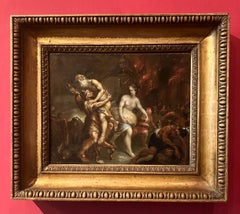
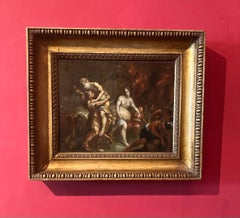
Aeneas Fleeing the Burning of Troy, 17th Century Flemish Oil on Canvas Painting

Aeneas Fleeing the Burning of Troy, 17th Century Flemish Oil on Canvas Painting

Located in Firenze, IT

This oil painting on canvas, created by an artist from the 17th Century Flemish School, depicts one of the most significant scenes from Greco-Roman mythology: Aeneas saving his famil...

Category

17th Century Dutch School Luigi Lucioni Art

Materials

Canvas, Oil

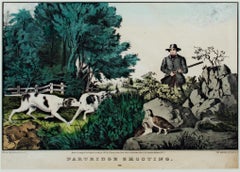
19th century color lithograph watercolor landscape figurative animal print

19th century color lithograph watercolor landscape figurative animal print

By Nathaniel Currier

Located in Milwaukee, WI

The present hand-colored lithograph presents the viewer with a hunting scene in a picturesque landscape. In the foreground, a man approaches two partridges as his two pointers prepare to flush them out. Beyond, a white fence draws our eyes to the homestead in the distance. Images like this one show how people in the United States were trying to identify themselves as a new nation in the North American landscape - as separate from their European counterparts but with similar similar and specific wildlife and magesties of nature. It also identifies hunting in this landscape as an American pastime. 9.25 x 12.5 inches, artwork 18.38 x 22 inches, frame Entitled bottom center "Partridge Shooting...

Category

Mid-19th Century Romantic Luigi Lucioni Art

Materials

Watercolor, Lithograph
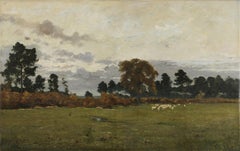
Landscape near Bordeaux

Landscape near Bordeaux

By Louis Alexandre Cabié

Located in BELEYMAS, FR

Louis-Alexandre CABIÉ (Dol-de-Bretagne 1853 - Bordeaux 1939) Landes at Pessac, near Bordeaux - Gironde Oil on canvas H. 126 cm; W. 201 cm Signed lower left Louis Cabié, a renowned a...

Category

1850s French School Luigi Lucioni Art

Materials

Canvas, Oil

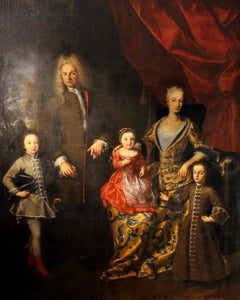
Oil on Canvas Painting Portrait of the Italian Noble Family of Zanardi Count

Oil on Canvas Painting Portrait of the Italian Noble Family of Zanardi Count

By Lucia Casalini Torelli

Located in Firenze, IT

This museum quality old master oil on canvas formal portrait painting depicting the family of the Count Zanardi is signed by the artist- the female painter Lucia Casalini Torelli- and published in a book dedicated to Casalini Torelli’s workshop and academy. This palatial masterpiece artwork comes directly from the ancient Villa Maraini Guerrieri - Palidano di Gonzaga (Mantua), an historic Italian heritage building owned by the descendants of the family portrayed for more than two centuries, until 1998. The big scale of this oil on canvas masterpiece painting states the relevance of Lucia Casalini Torelli as a painter. The present artwork is a formal family portrait painting that aim to introduce the characters depicted according to their social role in the society. The noble family is all gathered under a loggia overlooking a park, the landscape in the background is partially covered by a beautiful red cloth on the right side. The father stands up and holds the hand of his eldest son, proudly introducing his future heir. The son wears a light-blue dress and red boots, he is depicted in a serious pose holding a black tricorn hat under his arm and a rapier sword on his belt. The mother wears an elegant gold and dark green brocade dress, she is sitting with her youngest daughter on her knees while her second son is by her side. The little daughter wears a lovely long red and dress with white lace and holds an apple on her hand. The son stands next to his mother and is dressed in a brown priestly clothes. This palatial old masters piece was probably painted in 1740 due to the similarities with Cardinal Doria’ s portrait, now on display at the Doria Palace Museum, the official residence of the Prince of Genoa. The painting features original canvas (“prima tela”) and antique original patina, it is in excellent overall condition considering the age, use and its large scale. A formal detailed condition report and the results of the inspection with the UV lamp accompanied by photos is available on request. As well as for its exceptional quality and quite perfect state of conservation, this painting is particularly important and even more valuable both for the artist who painted it and for its absolutely exclusive provenance. Lucia painted the most prominent and powerful noble families of her time, the location of these paintings is unknown to the art market as it is extremely likely that the portraits are still kept in private collections. Furthermore, Lucia was one of the most appreciated artists of her time, so important that she was admitted as a member of the academy at a time when women were forbidden to attend these studies. In 1706, Felice Torelli...

Category

18th Century Old Masters Luigi Lucioni Art

Materials

Canvas, Oil

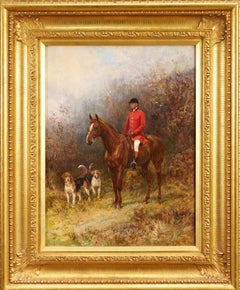
Heywood Hardy, Huntsman and Hounds, oil on canvas

Heywood Hardy, Huntsman and Hounds, oil on canvas

By Heywood Hardy

Located in York, GB

A fantastic oil painting on canvas by the renowned artist Heywood Hardy. The image shows a traditional English scene with a huntsman dressed in his riding jacket seated on his horse...

Category

19th Century Luigi Lucioni Art

Materials

Oil

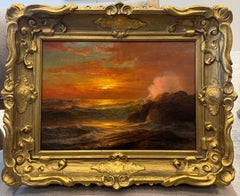
Red Sky
Red Sky

Warren W. SheppardRed Sky, 1910

$9,775

H 11 in W 14 in

Red Sky

By Warren W. Sheppard

Located in Greenville, DE

Spectacular example of Warren Sheppard's work, from what most consider his best period. Sunset (possibly, sunrise) executed with strong orange/red palette, and rock formations, maki...

Category

1910s American Realist Luigi Lucioni Art

Materials

Canvas, Oil

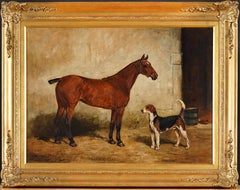
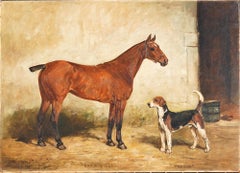
Bander Bee and Trojan, a favourite Hunter and a Fox hound in a Stable Yard

Bander Bee and Trojan, a favourite Hunter and a Fox hound in a Stable Yard

By John Emms

Located in Taunton, GB

Bander Bee and Trojan, a favourite Hunter and a Fox hound in a Stable Yard Signed and inscribed Oil on canvas THE SOUTHWELL COLLECTION Everett Fine Art is excited to present this...

Category

Late 19th Century Luigi Lucioni Art

Materials

Oil

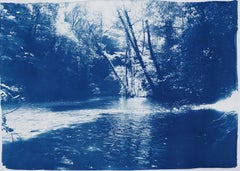
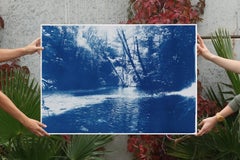
Romantic Landscape of Scandinavian Enchanted Forest, Large Lake Print Cyanotype

Romantic Landscape of Scandinavian Enchanted Forest, Large Lake Print Cyanotype

By Kind of Cyan

Located in Barcelona, ES

This is an exclusive handprinted limited edition cyanotype. Lovely scene of a hidden pond in a Scandinavian forest. Details: + Title: Scandinavian Enchanted Forest + Year: 2026 + ...

Category

2010s Romantic Luigi Lucioni Art

Materials

Photographic Film, Emulsion, Watercolor, Monotype, Photogram

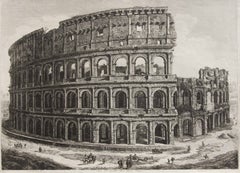
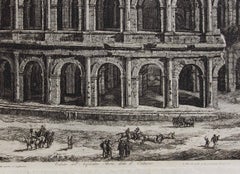
Antique Architectural Etching of the Roman Colosseum by Luigi Rossini Dated 1821

Antique Architectural Etching of the Roman Colosseum by Luigi Rossini Dated 1821

Located in Rochester, NY

The Roman Colosseum by Luigi Rossini. Signed and dated in the plate 1821. Unframed. Etching from Luigi Rossini's (Italy, 1790-1857) "Le antichita romane; ossia, Raccolta delle piu in...

Category

19th Century Italian Antique Luigi Lucioni Art

Materials

Paper

Antique Architectural Etching of the The Arch of Titus by Luigi Rossi Dated 1819

Antique Architectural Etching of the The Arch of Titus by Luigi Rossi Dated 1819

Located in Rochester, NY

Campidoglio by Luigi Rossini. Signed and dated in the plate 1819. Unframed. Etching from Luigi Rossini's (Italy, 1790-1857) "Le antichita romane; ossia, Raccolta delle piu interessan...

Category

19th Century Italian Antique Luigi Lucioni Art

Materials

Paper

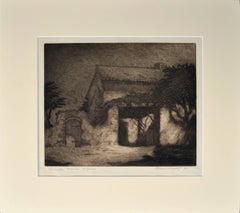
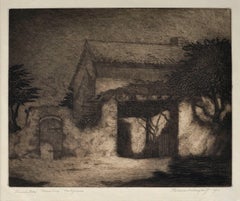
Sherman Rose House, Monterey California - Signed 1920's Landscape Etching

Sherman Rose House, Monterey California - Signed 1920's Landscape Etching

By Ferdinand Burgdorff

Located in Soquel, CA

Beautiful early 20th Century etching on vellum of the Monterey Bonifacio Adobe known as The Old Sherman Rose House, with climbing roses, by Ferdinand Burgdorff (American, (1881 - 1975), 1923. As in many of the artist's works, this piece conveys a mysterious and dark mood. Artwork has been professionally conserved. Titled, signed and dated lower edge. Archival mat and backing. Image size: 9.75"H x 11.75"W. Born in Cleveland, Ohio, Ferdinand Burgdorff studied at the Cleveland School of Art and in Paris with Rene Menard and Florence Este...

Category

1920s American Realist Luigi Lucioni Art

Materials

Paper, Etching

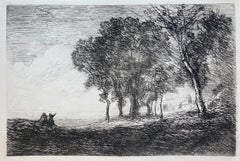
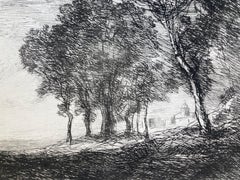
PAYSAGE D’ ITALIE
PAYSAGE D’ ITALIE

PAYSAGE D’ ITALIE

By Jean-Baptiste-Camille Corot

Located in Santa Monica, CA

JEAN-BAPTISTE CAMILLE COROT (1876 - 1875) PAYSAGE D’ ITALIE 1866 (Melot 7 iii/iii) Etching, plate 6 ¼ x 9 inches, Third state after the removal of the text but before the random scr...

Category

1860s Romantic Luigi Lucioni Art

Materials

Etching

Joseph Highmore Portrait of a lady, 18th century
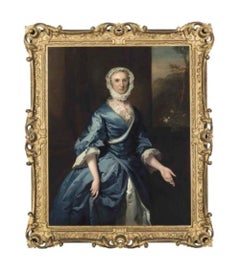

Joseph Highmore Portrait of a lady, 18th century

By Joseph Highmore

Located in York, GB

Portrait of a lady, traditionally identified as Grace Loftus,of Beverley hall yorkshire.Three-quarter-length, before a window. Dressed in blue and wearing a white bonnet. The paintin...

Category

1740s Old Masters Luigi Lucioni Art

Materials

Oil

Previously Available Items
"Pinks and Yellows" Luigi Lucioni, Green and Yellow, Still Life, Ancient Vase

"Pinks and Yellows" Luigi Lucioni, Green and Yellow, Still Life, Ancient Vase

By Luigi Lucioni

Located in New York, NY

Luigi Lucioni Pinks and Yellows, 1959 Signed and dated lower right Oil on canvas 13 x 16 inches Provenance Milch Galleries, New York Private Collection, Woodland Hills, California ...

Category

1950s Academic Luigi Lucioni Art

Materials

Canvas, Oil

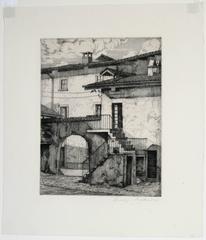
Luigi Lucioni, Shadows, 1978

Luigi Lucioni, Shadows, 1978

By Luigi Lucioni

Located in New York, NY

Painter and printmaker, Luigi Lucioni was known for his portraits, still life paintings, and his landscapes of Vermont and Italy. This village scene of Lombardy is classic Lucioni. I...

Category

1970s American Modern Luigi Lucioni Art

Materials

Etching

Midcentury Luigi Lucioni Hilltop Elms Tree Landscape Etching, 1955

Midcentury Luigi Lucioni Hilltop Elms Tree Landscape Etching, 1955

By Luigi Lucioni

Located in Dayton, OH

1955 original sepia and white etching by Luigi Lucioni titled “Hilltop Elms,” pencil signed and dated. “Born in Malnate, Italy, in 1900, Luigi Lucioni became one of America's well-known landscape painters, whose work has been noted for its heightened realism and photographic attention to detail. Lucioni immigrated to the United States with his family in 1911. In 1915 he won a competition which allowed him to attend Cooper Union, and he began studying there with William Starkweather. In 1920, he studied with William Auerbach Levy...

Category

1950s Vintage Luigi Lucioni Art

Materials

Paper

Luigi Lucioni, (New England Barn)

Luigi Lucioni, (New England Barn)

By Luigi Lucioni

Located in New York, NY

Painter and printmaker, Luigi Lucioni was known for his portraits, still life paintings, and landscapes of Vermont and Italy. This 'New England Barn' ...

Category

Mid-20th Century American Modern Luigi Lucioni Art

Materials

Etching

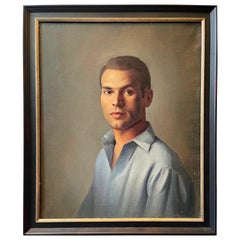
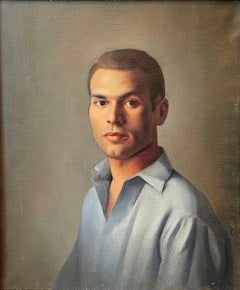
"Man in Blue, " Handsome Portrait of Young Man by Lucioni, Cadmus Contemporary

"Man in Blue, " Handsome Portrait of Young Man by Lucioni, Cadmus Contemporary

By Luigi Lucioni

Located in Philadelphia, PA

Painted by Luigi Lucioni, who was connected to the Paul Cadmus-Jared French-George Tooker circle in the 1920s and 30s before they became famous for their murals, photographs and easel paintings, this handsome portrait...

Category

1940s American Mid-Century Modern Vintage Luigi Lucioni Art

Materials

Paint

Luigi Lucioni, Shadows in Lombardy

Luigi Lucioni, Shadows in Lombardy

By Luigi Lucioni

Located in New York, NY

Painter and printmaker, Luigi Lucioni was known for his portraits, still life paintings, and his landscapes of Vermont and Italy. This village scene of Lombardy is classic Lucioni. It was published in an edition of 100 by Associated American Artists, NYC, and printed by Stephen Sholinsky...

Category

1970s American Modern Luigi Lucioni Art

Materials

Etching

Tree Rhythm
Tree Rhythm

Luigi LucioniTree Rhythm, 1953

Sold

H 11.75 in W 9.75 in

Tree Rhythm

By Luigi Lucioni

Located in New Orleans, LA

Luigi Lucioni (November 4, 1900 – July 22, 1988) was an Italian-born American painter. He lived and worked mainly in New York City, but also spent time working in Vermont. His still ...

Category

1950s American Realist Luigi Lucioni Art

Materials

Etching

Big Elm
Big Elm

Luigi LucioniBig Elm, 1936

Sold

H 9.88 in W 7.82 in

Big Elm

By Luigi Lucioni

Located in New Orleans, LA

Luigi Lucioni (November 4, 1900 – July 22, 1988) was an Italian-born American painter. He lived and worked mainly in New York City, but also spent time working in Vermont. His still ...

Category

1930s American Realist Luigi Lucioni Art

Materials

Etching

Luigi Lucioni Oil on Canvas Still Life

Luigi Lucioni Oil on Canvas Still Life

Sold

H 18.13 in W 2 in D 21.13 in

Luigi Lucioni Oil on Canvas Still Life

By Luigi Lucioni

Located in Stamford, CT

Luigi Lucioni ( American 1900-1988) Oil On Canvas Still Life signed on the Front and on Reverse. From a West End Avenue apartment on Consignment. i...

Category

Mid-20th Century American Mid-Century Modern Luigi Lucioni Art

Materials

Canvas

Birch Group, Etching by Luigi Lucioni

Birch Group, Etching by Luigi Lucioni

By Luigi Lucioni

Located in Long Island City, NY

Artist: Luigi Lucioni, American (1900 - 1988) Title: Birch Group Year: 1944 Medium: Etching, signed in pencil Image Size: 7 x 12 inches Paper Size: 11 x 5 inches

Category

1940s American Impressionist Luigi Lucioni Art

Materials

Etching

My Birthplace.
My Birthplace.

My Birthplace.

By Luigi Lucioni

Located in Plano, TX

My Birthplace. 1939. Etching. Embury 63. 8 7/8 x 6 7/8 (sheet 13 x 11 1/4). Edition 178 for Associated American Artists. A fine impression in pristine condition, printed with plate t...

Category

1930s American Modern Luigi Lucioni Art

Materials

Etching

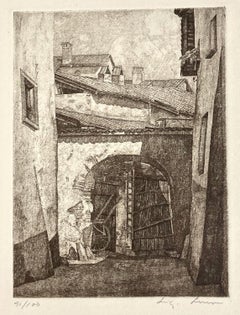
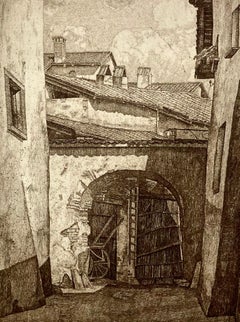
The Street.
The Street.

Luigi LucioniThe Street., 1939

Sold

H 16 in W 20 in D 0.5 in

The Street.

By Luigi Lucioni

Located in Plano, TX

The Street. 1939. Etching. Embury 64. 9 7/8 x 7 3/4 (sheet size 16 x 12 13/16 inches). Edition 75. A rich, tonal impression printed in black/brown ink on c...

Category

1930s American Modern Luigi Lucioni Art

Materials

Etching

Tree Portraits.
Tree Portraits.

Tree Portraits.

By Luigi Lucioni

Located in Plano, TX

Tree Portraits. 1969. Etching. Embury 150. 10 1/2 x 7 3/4 (sheet 16 3/4 x 13). Proof aside from the edition of 250 for Associated American Artists. A ric...

Category

1960s American Modern Luigi Lucioni Art

Materials

Etching

The Big Haystack.
The Big Haystack.

Luigi LucioniThe Big Haystack., 1947

Sold

H 16 in W 20 in D 0.5 in

The Big Haystack.

By Luigi Lucioni

Located in Plano, TX

The Big Haystack. 1947. Etching. Embury 102. 8 1/8 x 11 15/16 (sheet 10 x 13 3/4). Edition 250 for Associated American Artists. Awarded first prize National Print Club. A rich impres...

Category

1940s American Modern Luigi Lucioni Art

Materials

Etching

Luigi Lucioni art for sale on 1stDibs.

Find a wide variety of authentic Luigi Lucioni art available for sale on 1stDibs. You can also browse by medium to find art by Luigi Lucioni in oil paint, paint, etching and more. Much of the original work by this artist or collective was created during the 20th century and is mostly associated with the modern style. Not every interior allows for large Luigi Lucioni art, so small editions measuring 6 inches across are available. Customers who are interested in this artist might also find the work of Dale Nichols, Frank Weston Benson, and Bror Julius Olsson Nordfeldt. Luigi Lucioni art prices can differ depending upon medium, time period and other attributes. On 1stDibs, the price for these items starts at $300 and tops out at $95,000, while the average work can sell for $9,600.

Artists Similar to Luigi Lucioni