Johannes Sadeler I Art

to
3
Overall Width
to
Overall Height
to
3
1
3
3
2
2
1
1
1
3
3
10,817
2,842
2,494
1,421
1
1
3
Artist: Johannes Sadeler I
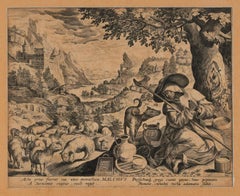
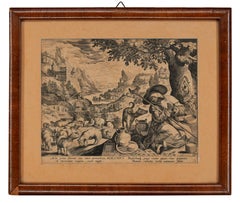
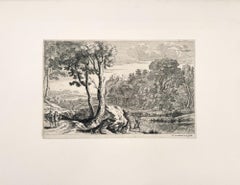
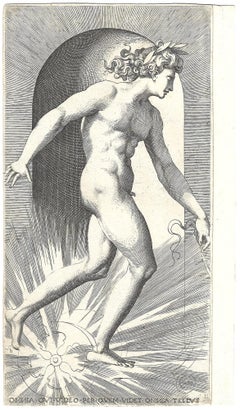
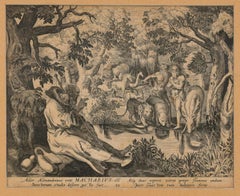
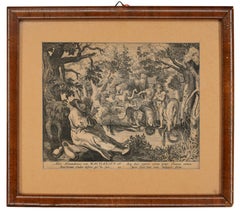
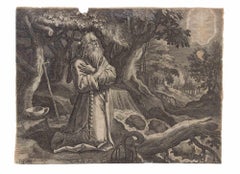
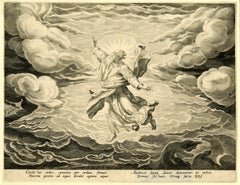
Caluppanus -  Etching by Johannes Sadeler

Caluppanus - Etching by Johannes Sadeler

By Johannes Sadeler I

Located in Roma, IT

Caluppanus is a beautiful black and white burin on copper) on ivory-colored paper, realized at the end of XVI century by the Flemish artist Joan or Johannes Sadeler (Brussels, 1550 -...

Category

16th Century Johannes Sadeler I Art

Materials

Etching

Related Items
Vespera; Der Abend (Evening; The Evening) /// Johann Daniel Preissler Old Master

Vespera; Der Abend (Evening; The Evening) /// Johann Daniel Preissler Old Master

By Johann Daniel Preissler

Located in Saint Augustine, FL

Artist: (after) Johann Daniel Preissler (German, 1666-1737) Title: "Vespera; Der Abend (Evening; The Evening)" Portfolio: Die Vier Tageszeiten (The Four Times of Day) Year: 1723 Medium: Original Etching and Engraving on laid paper Limited edition: Unknown Printer: likely Johann Balthasar Probst, Augsburg, Germany Publisher: Jeremias Wolff (Erben), Augsburg, Germany Sheet size: 22.5" x 16.63" Image size: 17.38" x 13.63" Reference: Le Blanc No. 255, 38; Nagler No. 23 Condition: Soft handling creases and folds to sheet. Some scattered foxmarks in left margin. Two small tears skillfully repaired from verso in margins. Has been professionally stored away for decades. It is otherwise a strong impression in good condition with full margins Extremely rare Notes: Provenance: private collection - Aspen, CO. Engraved by German artist Johann Balthasar Probst (1673-1750) after a drawing by German artist Johann Daniel Preissler (1666-1737). Comes from Preissler's 1723 "Die Vier Tageszeiten (The Four Times of Day)" portfolio of four etchings and engravings. Printed from one copper plate in one color: black. Descriptions of the portrayed image are printed in Latin and German. Biography: Johann Daniel Preissler, or Preisler (1666–1737) was a German painter and director of Nuremberg's Academy of Fine Arts. He was a notable member of a German artistic family, originating in Bohemia. His children included Johann Justin Preissler (1698–1771), Georg Martin Preisler (1700–1754), Barbara Helena Preisler (1707–1758; married to Oeding), Johan Martin Preisler (1715–1794), and Valentin Daniel Preisler (1717–1765), all in their time renowned artists. Most notable for his portraits, nudes and history paintings, Johann Daniel Preissler also produced drawings and frescoes. He was particularly known beyond his native Nuremberg for his "Die durch Theorie erfundene Practic", a sequence of works on art theory – the individual works were translated into several other languages and served as textbooks for students such as the Swiss Salomon Gessner...

Category

1720s Old Masters Johannes Sadeler I Art

Materials

Laid Paper, Engraving, Etching

Meridies; Der Mittag (Noon; The Midday) /// Johann Daniel Preissler Old Master

Meridies; Der Mittag (Noon; The Midday) /// Johann Daniel Preissler Old Master

By Johann Daniel Preissler

Located in Saint Augustine, FL

Artist: (after) Johann Daniel Preissler (German, 1666-1737) Title: "Meridies; Der Mittag (Noon; The Midday)" Portfolio: Die Vier Tageszeiten (The Four Times of Day) Year: 1723 Medium: Original Etching and Engraving on laid paper Limited edition: Unknown Printer: likely Johann Balthasar Probst, Augsburg, Germany Publisher: Jeremias Wolff (Erben), Augsburg, Germany Sheet size: 22.5" x 16.32" Image size: 18.13" x 14.32" Reference: Le Blanc No. 255, 38; Nagler No. 23 Condition: Soft handling creases and folds to sheet. A few light areas of staining and scattered small areas of discoloration in margins. Two small tears skillfully repaired from verso in margins. Has been professionally stored away for decades. It is otherwise a strong impression in good condition with full margins Extremely rare Notes: Provenance: private collection - Aspen, CO. Engraved by German artist Johann Balthasar Probst (1673-1750) after a drawing by German artist Johann Daniel Preissler (1666-1737). Comes from Preissler's 1723 "Die Vier Tageszeiten (The Four Times of Day)" portfolio of four etchings and engravings. Printed from one copper plate in one color: black. Descriptions of the portrayed image are printed in Latin and German. Biography: Johann Daniel Preissler, or Preisler (1666–1737) was a German painter and director of Nuremberg's Academy of Fine Arts. He was a notable member of a German artistic family, originating in Bohemia. His children included Johann Justin Preissler (1698–1771), Georg Martin Preisler (1700–1754), Barbara Helena Preisler (1707–1758; married to Oeding), Johan Martin Preisler (1715–1794), and Valentin Daniel Preisler (1717–1765), all in their time renowned artists. Most notable for his portraits, nudes and history paintings, Johann Daniel Preissler also produced drawings and frescoes. He was particularly known beyond his native Nuremberg for his "Die durch Theorie erfundene Practic", a sequence of works on art theory – the individual works were translated into several other languages and served as textbooks for students such as the Swiss Salomon Gessner...

Category

1720s Old Masters Johannes Sadeler I Art

Materials

Laid Paper, Engraving, Etching

Aurora sive Tempus Matutinum; Der Wohl und Übel angewandte Morgen /// Old Master

Aurora sive Tempus Matutinum; Der Wohl und Übel angewandte Morgen /// Old Master

By Johann Daniel Preissler

Located in Saint Augustine, FL

Artist: (after) Johann Daniel Preissler (German, 1666-1737) Title: "Aurora sive Tempus Matutinum; Der Wohl und Übel angewandte Morgen (Dawn or Morning Time; The Morning Used for Better or For Worse)" Portfolio: Die Vier Tageszeiten (The Four Times of Day) Year: 1723 Medium: Original Etching and Engraving on laid paper Limited edition: Unknown Printer: likely Johann Balthasar Probst, Augsburg, Germany Publisher: Jeremias Wolff (Erben), Augsburg, Germany Sheet size: 22.57" x 16.38" Image size: 17.75" x 14" Reference: Le Blanc No. 255, 38; Nagler No. 23 Condition: Soft handling creases, folds, and scattered faint areas of discoloration to sheet. Three tears skillfully repaired from verso. Has been professionally stored away for decades. It is otherwise a strong impression in good condition with full margins Extremely rare Notes: Provenance: private collection - Aspen, CO. Engraved by German artist Johann Balthasar Probst (1673-1750) after a drawing by German artist Johann Daniel Preissler (1666-1737). Comes from Preissler's 1723 "Die Vier Tageszeiten (The Four Times of Day)" portfolio of four etchings and engravings. Printed from one copper plate in one color: black. Descriptions of the portrayed image are printed in Latin and German. Biography: Johann Daniel Preissler, or Preisler (1666–1737) was a German painter and director of Nuremberg's Academy of Fine Arts. He was a notable member of a German artistic family, originating in Bohemia. His children included Johann Justin Preissler (1698–1771), Georg Martin Preisler (1700–1754), Barbara Helena Preisler (1707–1758; married to Oeding), Johan Martin Preisler (1715–1794), and Valentin Daniel Preisler (1717–1765), all in their time renowned artists. Most notable for his portraits, nudes and history paintings, Johann Daniel Preissler also produced drawings and frescoes. He was particularly known beyond his native Nuremberg for his "Die durch Theorie erfundene Practic", a sequence of works on art theory – the individual works were translated into several other languages and served as textbooks for students such as the Swiss Salomon Gessner...

Category

1720s Old Masters Johannes Sadeler I Art

Materials

Laid Paper, Engraving, Etching

Temptation of St. Anthony

Temptation of St. Anthony

By Hendrik Goltzius

Located in North Clarendon, VT

Temptation of Saint Anthony an etching in the manner of Hendrik Goltzius. Goltzius was born near Viersen in Bracht or Millebrecht, a village then in the Duchy of Julich, now in the ...

Category

16th Century Baroque Johannes Sadeler I Art

Materials

Etching

Henri Matisse, Three Heads. To Friendship, from Apollinaire, 1952

Henri Matisse, Three Heads. To Friendship, from Apollinaire, 1952

By Henri Matisse

Located in Southampton, NY

This exquisite aquatint by Henri Matisse (1869–1954), titled Trois têtes. A l'amitié (Three Heads. To Friendship), from the album Apollinaire, Henri Matisse (Apollinaire, Henri Matisse), originates from the 1952 edition published by Editions Raisons d'etre, Paris, and printed by Mourlot Freres, Paris, April 24, 1952. The work captures Matisses lyrical line and expressive minimalism, paying tribute to the French poet Guillaume Apollinaire through a synthesis of portraiture and calligraphic grace. Executed as an aquatint on velin a la forme des papeteries d'Arches paper, this work measures 12.99 x 9.84 inches (33 x 25 cm). Unsigned and unnumbered, as issued. The edition exemplifies the superior craftsmanship of Mourlot Freres, Paris. Artwork Details: Artist: Henri Matisse (1869–1954) Title: Trois têtes. A l'amitié (Three Heads. To Friendship), from the album Apollinaire, Henri Matisse (Apollinaire, Henri Matisse) Medium: Aquatint on velin a la forme des papeteries d'Arches paper Dimensions: 12.99 x 9.84 inches (33 x 25 cm) Inscription: Unsigned and unnumbered, as issued Date: 1952 Publisher: Editions Raisons d'etre, Paris Printer: Mourlot Freres, Paris Catalogue Raisonne Reference: Duthuit, Claude. Henri Matisse: Catalogue raisonne des ouvrages illustres. Editions Claude Duthuit, Paris, 1988, illustration 31. Condition: Well preserved, consistent with age and medium Provenance: From the album Apollinaire, Henri Matisse (Apollinaire, Henri Matisse), published by Editions Raisons d'etre, Paris; printed by Mourlot Freres, Paris, 1952 Notes: Excerpted from the album (translated from French), Printing of this album was finished on April, Twenty-Four, M.CM.LII for the Editions Raisons d'etre, 2 rue des Beaux-Arts in Paris, was produced by Fernand Mourlot, based on the models of Henri Matisse. The eight original lithographs were shot on the presses of Mourlot Freres who also printed the cover and case composed by the artist. The stones were erased after drawing. The text and letrins engraved by Henri Matisse were drawn by Coulouma S.A., printer in Paris. Justification of the draw— XXX examples on large velin d'Arches a la forme, signed by the author and the artist, accompanied by a series of original lithographs numbered from I to XXX; CCC examples on velin d'Arches a la forme numbered from XXXI to CCCXXX; XX examples of non-commerce collaborators numbered from I to XX and in addition a few nominative examples on Grand Velin. About the Publication: Apollinaire, Henri Matisse (Apollinaire, Henri Matisse), published by Editions Raisons d'etre, Paris, in 1952, stands among Matisses most intimate artist’s albums, conceived as a visual homage to the poet Guillaume Apollinaire, whose friendship and creative influence had profoundly shaped the avant-garde in the early 20th century. The album unites Matisses mastery of line with his reverence for literature, pairing portraits, decorative initials, and typographic designs engraved in his own hand. Printed by the esteemed atelier Mourlot Freres, the volume exemplifies the peak of French postwar printmaking, merging literary refinement with visual purity. Each print reveals Matisses poetic sensibility—his ability to render emotion through the economy of contour and rhythm. About the Artist: Henri Matisse (1869–1954) was a French painter, sculptor, draughtsman, and printmaker whose revolutionary vision redefined modern art through his daring use of color, line, and form. Celebrated as one of the greatest artists of the 20th century, Matisse led the Fauvist movement and devoted his life to the pursuit of balance, beauty, and emotional expression in visual art. His early works burst with vibrant hues and liberated brushwork, while his later “cut-out” compositions achieved a poetic simplicity that transformed the relationship between color and space. Deeply influenced by the work of Paul Cezanne, Vincent van Gogh, and Georges Seurat, as well as by the rhythmic patterns of Islamic art, Byzantine mosaics, and Japanese prints, Matisse forged a new visual language that celebrated joy, movement, and serenity. He was part of an extraordinary generation of artists who shaped the evolution of modernism, maintaining lifelong dialogue and friendly rivalry with contemporaries such as Pablo Picasso, Georges Braque, Marc Chagall, Andre Derain, Albert Marquet, and Raoul Dufy—peers who, like him, sought to expand the expressive potential of color and composition. Matisses influence extended across generations, inspiring modern and contemporary masters including Alexander Calder, Alberto Giacometti, Salvador Dali, Joan Miro, Wassily Kandinsky, Marcel Duchamp, and Man Ray, each of whom drew upon his fearless experimentation and refined visual harmony. His paintings, sculptures, and works on paper are held in the most prestigious museums in the world, including the Museum of Modern Art, the Centre Pompidou, the Tate, and the Hermitage Museum, where his art continues to symbolize the essence of creativity and human emotion. The highest price ever paid for a Henri Matisse artwork is approximately 80.8 million USD, achieved in 2018 at Christies New York for Odalisque couchee aux magnolias (1923). Henri Matisse Trois têtes. A l'amitié (Three Heads. To Friendship) Apollinaire, Henri Matisse (Apollinaire, Henri Matisse) 1952, Matisse Editions Raisons d'etre, Matisse Mourlot Freres, Matisse aquatint...

Category

1950s Fauvist Johannes Sadeler I Art

Materials

Aquatint

Billingsgate
Billingsgate

Billingsgate

By James Abbott McNeill Whistler

Located in Middletown, NY

Etching printed in dark brownish black ink on cream laid paper, 6 x 8 7/8 inches (152 x 226 mm); full margins. Extremely minor and unobtrusive band of toning along the top sheet edg...

Category

Mid-19th Century Impressionist Johannes Sadeler I Art

Materials

Laid Paper, Drypoint, Etching

"A Harlot's Progress" Plate 3 Etching

"A Harlot's Progress" Plate 3 Etching

By William Hogarth

Located in Houston, TX

Etching from the series titled "A Harlots Progress" by William Hogarth. The series consists of six paintings and engravings. The story is about a woman named M. Hackabout who arrived in London and started working as a prostitute. The third plate is of her getting arrest for her choice in profession. The series is a satirical story that emphasizes the dangers of being a prostitute and the health risks that come from it. In 18th century engraving, the detail of the black mole on women and men's face is a symbol of the deadly venereal disease, syphilis. In this plate, Hackabout has already contracted the disease and that is why the black dot is visible on her forehead as well as her madam's. In 1828, William Innell Clement published Harlot's Progress in columns on a single page of his newspaper Bell's Life in London #330. The detail with the cross seen in earlier reproductions of the engraving. Dimensions without Frame: H 14.5 in x W 16.5 in. Artist Biography: William Hogarth ( 10 November 1697 – 26 October 1764) was an English painter, printmaker, pictorial satirist, social critic, and editorial cartoonist. His work ranged from realistic portraiture to comic strip-like series of pictures called "modern moral subjects", perhaps best known to be his moral series A Harlot's Progress, A Rake's Progress and Marriage A...

Category

1730s Old Masters Johannes Sadeler I Art

Materials

Etching

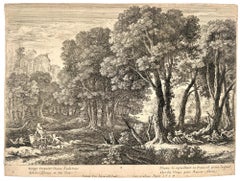
17th century etching black and white landscape forest trees satyr goats

17th century etching black and white landscape forest trees satyr goats

By Giovanni Benedetto Castiglione

Located in Milwaukee, WI

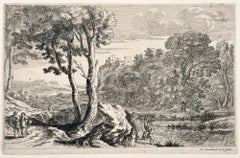
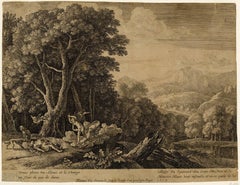
"Mythological Scene--Satyr & Goat Herder" is an etching by Italian artist Giovanni Benedetto Castiglione. It depicts a satyr lounging on the left and an approaching goat herder on th...

Category

Mid-17th Century Old Masters Johannes Sadeler I Art

Materials

Etching

Temple of Vesta
Temple of Vesta

Matthew DubourgTemple of Vesta, 1820

$350

H 11.42 in W 14.73 in

Temple of Vesta

By Matthew Dubourg

Located in Middletown, NY

London: J. Taylor, 1820. Etching with aquatint and engraving with hand coloring in watercolor on watermarked J Whatman Turkey Mill 1843 paper with a gilded edge, 11 1/2 x 14 3/4 inc...

Category

Mid-19th Century English School Johannes Sadeler I Art

Materials

Watercolor, Handmade Paper, Engraving, Etching, Aquatint

Untitled /// French Ornaments Designs Architecture Jean Bérain Old Master Print

Untitled /// French Ornaments Designs Architecture Jean Bérain Old Master Print

By Jean Bérain

Located in Saint Augustine, FL

Artist: Jean Berain (the Elder) (French, 1640-1711) Title: "Untitled" (Plate 35) Portfolio: Ornemens Inventez par J. Berain (Ornament Designs Invented by J. Berain) Circa: 1711 (Firs...

Category

1710s Old Masters Johannes Sadeler I Art

Materials

Laid Paper, Engraving, Intaglio, Etching

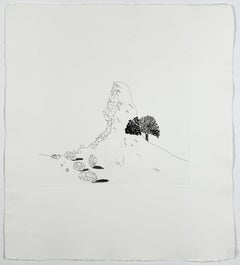
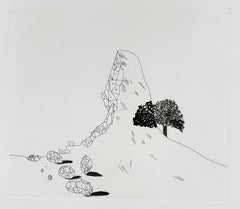
Rapunzel, Rapunzel, let down your hair David Hockney Brothers Grimm Fairy Tales

Rapunzel, Rapunzel, let down your hair David Hockney Brothers Grimm Fairy Tales

By David Hockney

Located in New York, NY

From David Hockney’s celebrated Six Fairy Tales from the Brothers Grimm portfolio, an image from the story of Rapunzel, which he chose for its popularity. When illustrating the princ...

Category

1960s Modern Johannes Sadeler I Art

Materials

Etching, Aquatint

The Enchantress with the Baby Rapunzel by David Hockney Brothers Grimm Tales

The Enchantress with the Baby Rapunzel by David Hockney Brothers Grimm Tales

By David Hockney

Located in New York, NY

From David Hockney’s celebrated Six Fairy Tales from the Brothers Grimm portfolio, an image from the story of Rapunzel. The Enchantress with the baby Rapunzel references a Heironymus...

Category

1960s Modern Johannes Sadeler I Art

Materials

Etching, Aquatint

Previously Available Items
Hermit Macharius of Alexandria - Original Etching by Johannes Sadeler

Hermit Macharius of Alexandria - Original Etching by Johannes Sadeler

By Johannes Sadeler I

Located in Roma, IT

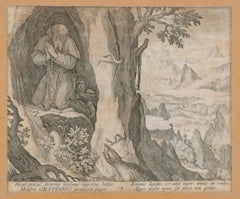
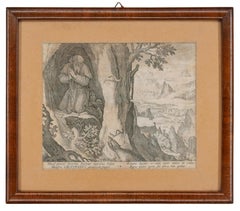
Macharius of Alexandra hermit is a beautiful black and white etching and burin (on copper) on ivory-colored and hand laid (verge) paper, realized at the end of XVI century by the Fle...

Category

16th Century Johannes Sadeler I Art

Materials

Etching

Apocalypse (Revelation) 21: A New Heaven and a New Earth

Apocalypse (Revelation) 21: A New Heaven and a New Earth

By Johannes Sadeler I

Located in Fairlawn, OH

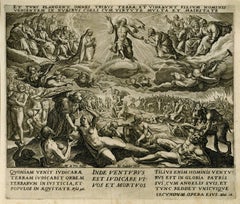
From: Series of the Creed, after Martin de Vos (1532-1603) Reference: The Illustrated Bartsch 70, Part 2 (Supplement), pp. 83-101 Note: Text reads "I saw the Holy City, the new Jerusalem...

Category

16th Century Johannes Sadeler I Art

Materials

Engraving

Angelus exilo miseros castigat acerbo

Angelus exilo miseros castigat acerbo

By Johannes Sadeler I

Located in Saint Augustine, FL

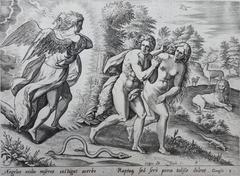
An original copperplate engraving by Flemish artist Johannes Sadeler I (1550-1600) titled "Angelus exilo miseros castigat acerbo, raptaq sed sero poa tulipe dolent", 1583, depicting a scene of Adam and Eve with God from the Book of Genesis. "Thesaurus Sacrum Historian Veteris Testamenti / The Sacred History of the Old Testament" (Antwerp, 1583) Laid paper lightly tipped to backing paper. Signed in the plate lower right. Catalog #OM-116, W-1388. Excellent condition. Size: 7.75" x 10.5. Jan (Johannes) Sadeler, Flemish draughtsman, engraver and publisher. Sadeler belonged to a productive and commercially astute family of printmakers that was involved internationally in printmaking and publishing for several generations during the 16th and 17th centuries. He began work as a steel-chiseller or damascener but moved to Antwerp, where he was admitted to the Guild of St Luke in 1572 as a copperplate engraver. It was probably through Christoph Plantin's publishing house that Jan came into contact with members of the Dutch Reformed Church with which he had close links. Jan engraved illustrations for Plantin. It was probably in Antwerp also that he met Maarten de Vos, with whom he and his brothers collaborated for many years. However, during his Antwerp years Jan engraved principally after the works of Crispin van den Broeck (1523-c. 1590) and Michiel Coxcie. Jan Sadeler travelled to Cologne and Antwerp (1582-85), to Frankfurt (1585). He worked in Munich at the court of the Bavarian court (1589-95) then went to Italy (1597) where he worked until his death in Venice.

Category

15th Century and Earlier Old Masters Johannes Sadeler I Art
Materials

Engraving

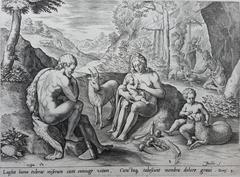
Lapsus homo tolerant miseram cum coniuge vitam

Lapsus homo tolerant miseram cum coniuge vitam

By Johannes Sadeler I

Located in Saint Augustine, FL

An original copperplate engraving by Flemish artist Johannes Sadeler I (1550-1600) titled "Lapsus homo tolerant miseram cum coniuge vitam, cunctaq tabescunt membra dolore graui" (plate 8), 1583, depicting a scene of Adam and Eve with God from the Book of Genesis. "Thesaurus Sacrum Historian Veteris Testamenti / The Sacred History of the Old Testament" (Antwerp, 1583) Laid paper lightly tipped to backing paper. Signed in the plate lower right. Catalog #OM-117, W-1387. Excellent condition. Size: 7.75" x 10.5. Jan (Johannes) Sadeler, Flemish draughtsman, engraver and publisher. Sadeler belonged to a productive and commercially astute family of printmakers that was involved internationally in printmaking and publishing for several generations during the 16th and 17th centuries. He began work as a steel-chiseller or damascener but moved to Antwerp, where he was admitted to the Guild of St Luke in 1572 as a copperplate engraver. It was probably through Christoph Plantin's publishing house that Jan came into contact with members of the Dutch Reformed Church with which he had close links. Jan engraved illustrations for Plantin. It was probably in Antwerp also that he met Maarten de Vos, with whom he and his brothers collaborated for many years. However, during his Antwerp years Jan engraved principally after the works of Crispin van den Broeck (1523-c. 1590) and Michiel Coxcie. Jan Sadeler travelled to Cologne and Antwerp (1582-85), to Frankfurt (1585). He worked in Munich at the court of the Bavarian court (1589-95) then went to Italy (1597) where he worked until his death in Venice.

Category

15th Century and Earlier Old Masters Johannes Sadeler I Art
Materials

Engraving

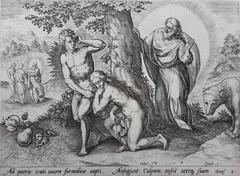
Ad patris irati uocem formidine capti

Ad patris irati uocem formidine capti

By Johannes Sadeler I

Located in Saint Augustine, FL

An original copperplate engraving by Flemish artist Johannes Sadeler I (1550-1600) titled "Ad patris irati uocem formidine capti, aufugiunt culpam, nolscit uterq suam" (plate 3), 1583, depicting a scene of Adam and Eve with God from the Book of Genesis. "Thesaurus Sacrum Historian Veteris Testamenti / The Sacred History of the Old Testament" (Antwerp, 1583) Laid paper lightly tipped to backing paper. Signed in the plate lower right. Catalog #OM-115, W-1389. Excellent condition. Size: 7.75" x 10.5. Jan (Johannes) Sadeler, Flemish draughtsman, engraver and publisher. Sadeler belonged to a productive and commercially astute family of printmakers that was involved internationally in printmaking and publishing for several generations during the 16th and 17th centuries. He began work as a steel-chiseller or damascener but moved to Antwerp, where he was admitted to the Guild of St Luke in 1572 as a copperplate engraver. It was probably through Christoph Plantin's publishing house that Jan came into contact with members of the Dutch Reformed Church with which he had close links. Jan engraved illustrations for Plantin. It was probably in Antwerp also that he met Maarten de Vos, with whom he and his brothers collaborated for many years. However, during his Antwerp years Jan engraved principally after the works of Crispin van den Broeck (1523-c. 1590) and Michiel Coxcie. Jan Sadeler travelled to Cologne and Antwerp (1582-85), to Frankfurt (1585). He worked in Munich at the court of the Bavarian court (1589-95) then went to Italy (1597) where he worked until his death in Venice.

Category

15th Century and Earlier Old Masters Johannes Sadeler I Art
Materials

Engraving

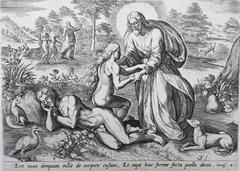
Ecce nouo demptan tollit de corpore costam

Ecce nouo demptan tollit de corpore costam

By Johannes Sadeler I

Located in Saint Augustine, FL

An original copperplate engraving by Flemish artist Johannes Sadeler I (1550-1600) titled "Ecce nouo demptan tollit de corpore costam, et capit hinc formiac facta puella decuc" (plat...

Category

15th Century and Earlier Old Masters Johannes Sadeler I Art
Materials

Engraving

Johannes Sadeler I art for sale on 1stDibs.
Find a wide variety of authentic Johannes Sadeler I art available for sale on 1stDibs. You can also browse by medium to find art by Johannes Sadeler I in etching and more. Not every interior allows for large Johannes Sadeler I art, so small editions measuring 12 inches across are available. Customers who are interested in this artist might also find the work of Frans Hogenberg, Adriaen Collaert, and Anthonie Waterloo. Johannes Sadeler I art prices can differ depending upon medium, time period and other attributes. On 1stDibs, the price for these items starts at $401 and tops out at $401, while the average work can sell for $401.