John Opper Art

American, 1908-1994
John Opper described the 1930s as a "great gestation period" for his art. "I thought the Thirties was a very vital time for American art. . . . With the WPA, you got together whether it was the [Artists'] Union or the [American Artists'] Congress or whether it was a bar. . . and you talked about art, and you heard about important artists, and you began to live art." But Opper also remembered the thirties as a period of breakdown in the vitality of American art; "we became aware that a great deal was missing." Academically trained like many of his contemporaries, Opper came to New York in 1934, two years after his graduation from Case Western Reserve University in Cleveland, Ohio. As a youth, he had taken Saturday art classes at the Cleveland Museum of Art and later studied at the Cleveland School of Art and the School of the Art Institute of Chicago. When he arrived in New York he was a well-trained painter, adept at rendering still lifes and particularly landscapes depicting the American scene. A reviewer of his 1937 exhibition at the Artists' Gallery in New York, for example, wrote about Opper's "colloquial flavor … spontaneity and an imaginative use of color which conveys just the feeling" that the subjects—East River tugboats, old garages, and scenes around Manhattan— suggested. By 1937 Opper had become familiar with modernism, though he was not yet converted to the cause. Indeed, his 1937 show was made up of the still popular regionalist paintings. Earlier, in 1935 and 1936, he studied with Hans Hofmann and began to think in terms of forces and tensions within the picture plane. He met Wilfrid Zogbaum, Giorgio Cavallon, Byron Browne, Rosalind Bengelsdorf, and George McNeil, with whom he shared a studio. He paid frequent visits to Gallatin's Gallery of Living Art. He joined the WPA easel project in 1936 and began to paint in "a kind of transformed cubist style." When war came, Opper worked for three years with a marine architectural firm making drawings for the pipe systems of PT boats. After the war, he taught at the University of Wyoming and the University of Alabama, and between 1952 and 1957, he was on the faculty at the University of North Carolina. In 1957, he began teaching at New York University, where he remained until his retirement in 1974.
to
3
3
3
2
1
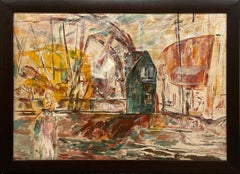
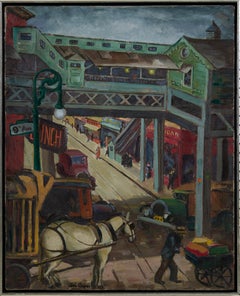
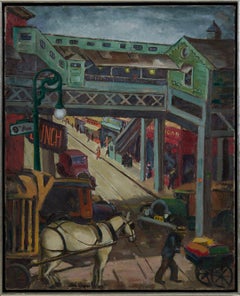
Ninth Avenue El (New York City), Mid 20th Century Cityscape Oil painting

Ninth Avenue El (New York City), Mid 20th Century Cityscape Oil painting

By John Opper

Located in Beachwood, OH

John Opper (American, 1908-1994) Ninth Avenue El (New York City), c. 1935 Oil on canvas Signed lower left and verso 30.125 x 24 inches The Ninth Avenue El was the first elevated rai...

Category

1930s American Modern John Opper Art

Materials

Oil

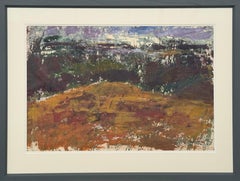
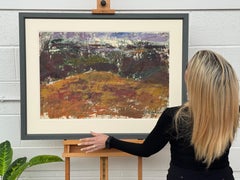
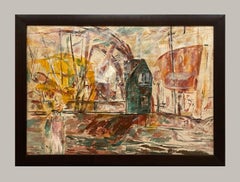
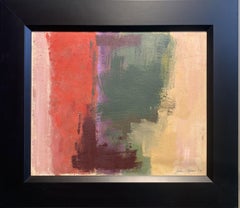
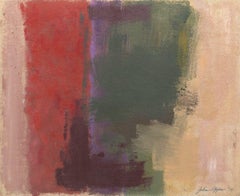
Untitled Mid Century Abstract Oil Painting New York Artist

Untitled Mid Century Abstract Oil Painting New York Artist

By John Opper

Located in Beachwood, OH

John Opper (American, 1908 - 1994) Untitled, 1959 Oil on board Signed and dated lower right 14.75 in. h x 18 in. w. 20 in. h. x 24.5 in. w., as framed John Opper described the 1930s...

Category

1950s Abstract John Opper Art

Materials

Oil

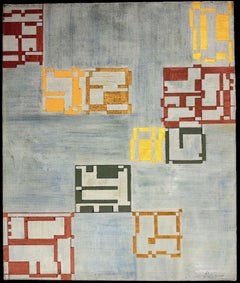
Untitled
Untitled

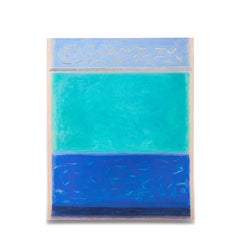
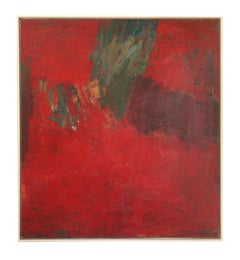
Untitled

By John Opper

Located in Austin, TX

Waterline Fine Art, Austin, TX is pleased to present the following work: Oil on canvas. Signed lower right, signed and dated verso. 62.25 x 56.25 in. 64 x 58 in. (framed) Custom framed in a natural cherry wood floater. Provenance Washburn Gallery, New York Behnke Doherty Gallery, Washington Depot, CT Born in 1908 in Chicago, John Opper moved with his family to Cleveland, Ohio, in 1916. In high school, he began studying art and attending classes at the Cleveland Museum of Art. After graduation, he enrolled in the Cleveland School of Art (now Cleveland Institute of Art), only to withdraw after a year and move to Chicago, where he took classes at the Art Institute of Chicago. He eventually returned to Cleveland, enrolling at Western Reserve University (now Case Western Reserve), receiving his bachelor’s degree in 1931. The Depression has taken hold during this period, so Opper found work by teaching metalworking and sketching classes at the Karamu Settlement House, the oldest African American theater in the United States. In 1933, Opper traveled to Gloucester, Massachusetts, eventually connecting with the artist Hans Hofmann, who was teaching at the school run by Ernest Thurn. Hofmann encouraged Opper to work “in a more modern vein and start finding what it’s all about.” Heeding this advice, Opper relocated to New York, co-founding a mail-order club of American and British prints for dissemination to schools and museums. By the mid-1930s, he joined the Works Progress Administration (WPA) Easel Division, and also began attending the 57th Street school that Hans Hofmann had established after leaving the Art Students League. Looking back at his time at the school, Opper felt that beyond Hofmann’s teaching, most advantageous was his contact with fellow artists, including Byron Browne, Rosalind Bengelsdorf, and George McNeil. At the time, he also met Giorgio Cavallon and the sculptor Wilfrid Zogbaum. In 1936, Opper became a founding member of the American Abstract Artists, along with Balcomb and Gertrude Greene. The organization was formed to provide an opportunity for artists to show abstract works at a time when such opportunities were scarce. This led to his first solo show in 1937 at the Artists’ Gallery in New York. During his summer in Gloucester in 1933, Opper came to know Milton Avery. Painting in Avery’s informal studio in New York City the following winter, he became acquainted with Adolph Gottlieb and Mark Rothko. Opper participated in a couple of shows during the 1930s of the American Artists Congress Against War and Fascism, whose president was Stuart Davis. About the same period, Opper joined the Artists’ Union and served as the business manager of its publication, Art Front. During World War II, Opper worked for a ship design company creating drawings for piping systems used in PT boats...

Category

1950s Abstract Expressionist John Opper Art
Materials

Canvas, Oil

Related Items
Peony and Buttercup
Peony and Buttercup

Peony and Buttercup

By Margaret Kennedy

Located in New York, NY

Signed and dated by artist on verso

Category

2010s Abstract Expressionist John Opper Art
Materials

Foil

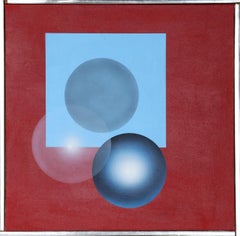
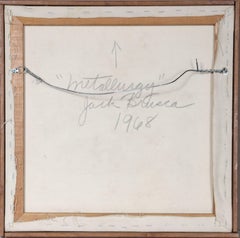
Metallurgy, Pop Art Oil Painting on Canvas by Jack Brusca

Metallurgy, Pop Art Oil Painting on Canvas by Jack Brusca

By Jack Brusca

Located in Long Island City, NY

Artist: Jack Brusca, American (1939 - 1993) Title: Metallurgy Year: 1968 Medium: Oil on Canvas, signed, dated and titled verso Size: 20 x 20 in. (50.8 x 50.8 cm)

Category

1960s Abstract Geometric John Opper Art

Materials

Canvas, Oil

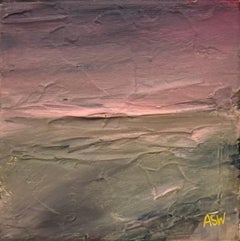
Miniature Mantelpiece Art - Original Abstract Landscape with Pink & Sage Green

Miniature Mantelpiece Art - Original Abstract Landscape with Pink & Sage Green

By Angela Wakefield

Located in Preston, GB

Miniature Mantelpiece Art - Original Abstract Landscape with Pink & Sage Green by leading British Urban Artist Angela Wakefield. Part of the "mantelpiece series" of miniatures. ...

Category

2010s Abstract Expressionist John Opper Art
Materials

Gesso, Canvas, Cotton, Paint, Varnish, Cotton Canvas, Mixed Media, Oil, ...

Pool for David Hockney

Pool for David Hockney

By Margaret Kennedy

Located in New York, NY

Oil and Aluminum Leaf on Canvas

Category

21st Century and Contemporary Abstract Expressionist John Opper Art
Materials

Canvas, Oil

Earthy Brown & Green Abstract Expressionist Art - a Unique Original Painting

Earthy Brown & Green Abstract Expressionist Art - a Unique Original Painting

By Angela Wakefield

Located in Preston, GB

Earthy Brown & Green Abstract Expressionist Art - a Unique Original Painting - an extremely rare early work from leading British Contemporary Artist, Angela Wakefield. This colou...

Category

1990s Abstract Expressionist John Opper Art
Materials

Gesso, Canvas, Cotton, Paint, Varnish, Cotton Canvas, Mixed Media, Oil, ...

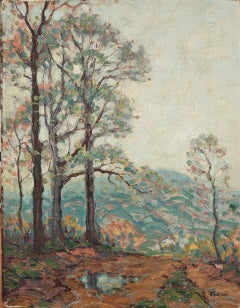
"Woodstock Landscape" Albert Heckman, American Modernist, Atmospheric Valley

"Woodstock Landscape" Albert Heckman, American Modernist, Atmospheric Valley

By Albert Heckman

Located in New York, NY

Albert Heckman Woodstock Landscape Oil on board 10 x 8 inches Albert Heckman was born in Meadville, Western Pennsylvania, 1893. He went to New York City to try his hand at the art ...

Category

1940s American Modern John Opper Art

Materials

Oil, Board

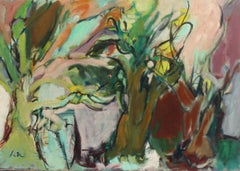
Trees Park Slope

Trees Park Slope

By Harriet Holden Nash

Located in Buffalo, NY

Harriet was born and raised in Brooklyn, New York, and lived with her husband in Park Slope for over 35 years. She attended the Brooklyn Museum School at...

Category

1950s Abstract Expressionist John Opper Art
Materials

Canvas, Oil

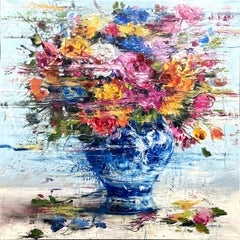
"Porcelain and Flowers" French Vase with Colorful Flowers Oil Painting on Linen

"Porcelain and Flowers" French Vase with Colorful Flowers Oil Painting on Linen

By Eric Alfaro

Located in New York, NY

An impressionistic depiction of a Saint-Cloud factory porcelain vase ca. 1695–1710 with a burst of flowers exploding with color and bold marks. Alfaro bridges the Baroque cultural mo...

Category

2010s Abstract Impressionist John Opper Art

Materials

Linen, Oil

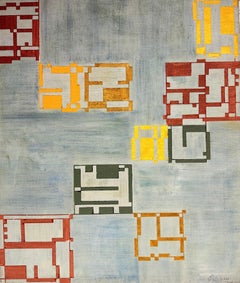
Geometric Abstract Composition with Collaged Forms in Gold, Red and Grey

Geometric Abstract Composition with Collaged Forms in Gold, Red and Grey

By Gilbert Pelissier

Located in Cirencester, Gloucestershire

Geometric Abstract Composition with Collaged Forms in Gold, Red and Grey Gilbert Pelissier (French, born 1924) signed Oil on canvas with paper cut-outs, unframed Canvas: 22 x 18 inch...

Category

Late 20th Century Abstract Expressionist John Opper Art
Materials

Canvas, Oil

A Large, WPA Era Modern Chicago Industrial Scene, Ogden Viaduct, ca. 1929

A Large, WPA Era Modern Chicago Industrial Scene, Ogden Viaduct, ca. 1929

By Francis Chapin

Located in Chicago, IL

A Large, Dynamic WPA Era Modern Industrial Scene by Famed Chicago Artist, Francis Chapin (Am. 1899-1965). Depicting a gritty view of a steel railroad bridge, boat house and soaring ...

Category

1930s American Modern John Opper Art

Materials

Oil, Masonite

#100-15

Lisa Kowalski#100-15, 2015

$3,400

H 24 in W 70 in

#100-15

By Lisa Kowalski

Located in Los Angeles, CA

According to the artist, "everything in life inspires me, not quite with direct interpretation, but as I see and experience faces, words, gestures, colors and shapes – all of it – I ...

Category

2010s Abstract John Opper Art
Materials

Oil, Wood Panel

Previously Available Items
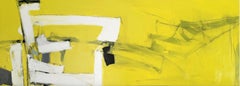
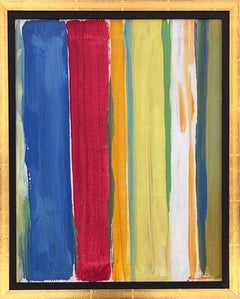
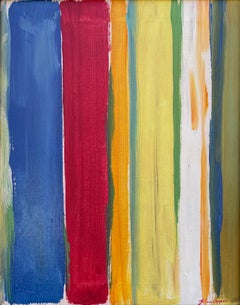
Untitled abstract blue, red & yellow oil painting, New York artist

Untitled abstract blue, red & yellow oil painting, New York artist

By John Opper

Located in Beachwood, OH

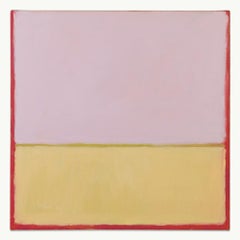
John Opper (American, 1908-1994) Untitled Oil on canvas Signed lower right 20 x 16 inches 22.25 x 18.25 inches, framed John Opper described the 1930s as a "great gestation period" for his art. "I thought the Thirties was a very vital time for American art. . . . With the WPA, you got together whether it was the [Artists'] Union or the [American Artists'] Congress or whether it was a bar. . . and you talked about art, and you heard about important artists, and you began to live art." But Opper also remembered the thirties as a period of breakdown in the vitality of American art; "we became aware that a great deal was missing." Academically trained like many of his contemporaries, Opper came to New York in 1934, two years after his graduation from Case Western Reserve University in Cleveland, Ohio. As a youth, he had taken Saturday art classes at the Cleveland Museum of Art and later studied at the Cleveland School of Art and the School of the Art Institute of Chicago. When he arrived in New York he was a well-trained painter, adept at rendering still lifes and particularly landscapes depicting the American scene. A reviewer of his 1937 exhibition at the Artists' Gallery in New York, for example, wrote about Opper's "colloquial flavor … spontaneity and an imaginative use of color which conveys just the feeling" that the subjects—East River tugboats, old garages, and scenes around Manhattan— suggested. By 1937 Opper had become familiar with modernism, though he was not yet converted to the cause. Indeed, his 1937 show was made up of the still popular regionalist paintings. Earlier, in 1935 and 1936, he studied with Hans Hofmann and began to think in terms of forces and tensions within the picture plane. He met Wilfrid Zogbaum, Giorgio Cavallon, Byron Browne, Rosalind Bengelsdorf, and George McNeil, with whom he shared a studio. He paid frequent visits to Gallatin's Gallery of Living Art. He joined the WPA easel project in 1936 and began to paint in "a kind of transformed cubist style." When war came, Opper worked for three years with a marine architectural firm making drawings for the pipe systems of PT boats...

Category

Mid-20th Century Color-Field John Opper Art
Materials

Oil

John Opper art for sale on 1stDibs.

Find a wide variety of authentic John Opper art available for sale on 1stDibs. You can also browse by medium to find art by John Opper in paint, canvas, fabric and more. Much of the original work by this artist or collective was created during the 20th century and is mostly associated with the abstract style. Not every interior allows for large John Opper art, so small editions measuring 46 inches across are available. Customers who are interested in this artist might also find the work of Michael Goldberg, Syd Solomon, and Agnes Hart. John Opper art prices can differ depending upon medium, time period and other attributes. On 1stDibs, the price for these items starts at $25,000 and tops out at $55,000, while the average work can sell for $40,000.

Artists Similar to John Opper