Max Ernst

American, German, French, 1891-1976

Born in Germany in 1891, later naturalized as an American, then a French citizen, Max Ernst was a pioneer in the Dada and Surrealist movements, the boundaries of which he pushed with his unconventional methods of printmaking, drawing and collage.

Ernst had no formal art training — and that may have been his greatest asset. He produced his first work following four years serving in World War I. At the time, he was in Cologne, Germany, working closely with fellow Dada pioneers Jean Arp and Johannes Baargeld. His output during this period consisted largely of collages, which allowed him to represent the shards, rubble and explosions from his traumatic wartime experience.

In 1922, Ernst moved to France, where he soon became affiliated with Surrealism, the avant-garde art movement taking shape in Paris. Alongside Man Ray, Joan Miró and a couple of others, Ernst was among the first visual artists to experiment with imagery and techniques associated with Surrealism.

Ernst’s greatest contribution to the Surrealist movement was his invention of frottage (French for “rubbing”), wherein an artist rubs a pencil or crayon over a paper atop a textured surface, and later grattage (French for “scraping”), where a similar technique is applied with paint. Both methods showcase Ernst’s fascination with the unconscious and serendipitous elements of artistic creation, a theme that connected the Dadaists and the Surrealists. Ernst had deep knowledge of psychoanalysis and Sigmund Freud’s dream theories, which were big influences on Surrealists. He was among the first Surrealists to use Freud’s work to examine his own creative impulses. He also published a series of books of his collages, all of which were deeply symbolic and often philosophical.

When Germany occupied France during World War II, Ernst escaped to America with the help of patron and collector Peggy Guggenheim, whom he married in 1941. While living in New York, Ernst’s work and techniques proved instrumental in inspiring the early development of Abstract Expressionism — influencing Robert Motherwell and Jackson Pollock in particular. He later moved to Sedona, Arizona, where he lived with his fourth wife, Dorothea Tanning, a fellow Surrealist and prolific visual artist and poet.

While Ernst and Tanning are largely responsible for Sedona’s reputation as an artist colony, they relocated to France in the 1950s and remained until Ernst’s death in Paris in 1976.

Find original Max Ernst art on 1stDibs.

Average Sold Price
$529
Styles
Materials
Related Artists
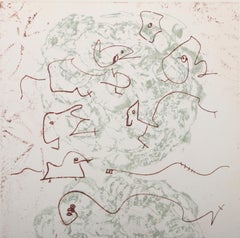
Les Chiens Ont Soif VII, Surrealist Lithograph by Max Ernst

Les Chiens Ont Soif VII, Surrealist Lithograph by Max Ernst

By Max Ernst

Located in Long Island City, NY

Max Ernst, German (1891 - 1976) - Les Chiens Ont Soif VII, Portfolio: Les Chiens Ont Soif, Year: 1964, Medium: Lithograph, Edition: 165/320, Size: 17 x 24.5 in. (43.18 x 62.23 c...

Category

1960s Surrealist Max Ernst

Materials

Lithograph

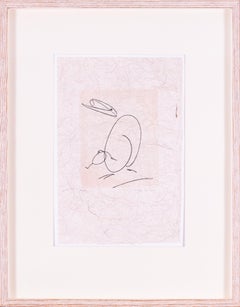
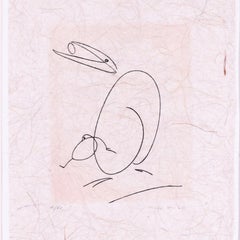
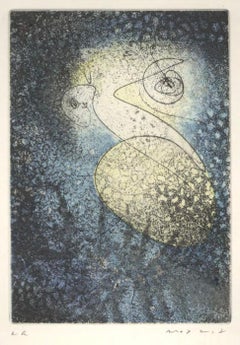
Max Ernst etching 'L’Oiseau Mere', numbered and signed, German

Max Ernst etching 'L’Oiseau Mere', numbered and signed, German

By Max Ernst

Located in Petworth, West Sussex

Max Ernst (German, 1891 – 1976) L’Oiseau Mere (The Mother Bird) An etching and aquatint on Japan paper Numbered and signed ‘4/60 Max Ernst’ (under the plate) The plate measurements: ...

Category

20th Century Modern Max Ernst

Materials

Etching, Aquatint

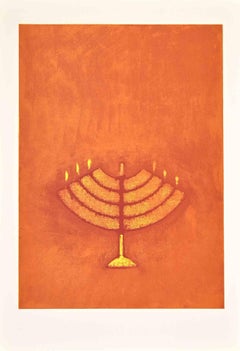
Menorah - Lithograph by Max Ernst - 1972

Menorah - Lithograph by Max Ernst - 1972

By Max Ernst

Located in Roma, IT

Menorah is a lithograph on Arches paper realized by Max Ernst in 1972. Belongs to the suite "Judith". Limited edition of 500. Unsigned and unnumbered, as issued. Godd conditions. ...

Category

1970s Surrealist Max Ernst

Materials

Lithograph

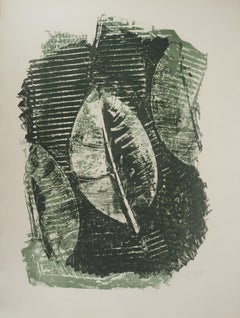
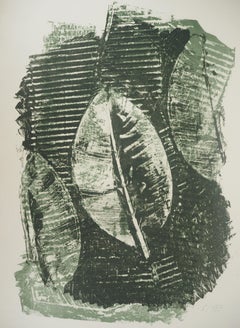
Ficus Elastica - Original lithograph - Limited / 25 copies

Ficus Elastica - Original lithograph - Limited / 25 copies

By Max Ernst

Located in Paris, IDF

Max ERNST (1891-1976) Ficus Elastica, c. 1965 Original lithograph Unsigned Numbered / XXV copies On Japanese paper 57 x 42 cm INFORMATION: Edition produced by Lucien Treillard, pub...

Category

1960s Surrealist Max Ernst

Materials

Lithograph

original lithograph

Max Ernstoriginal lithograph, 1971

$150

H 12.21 in W 9.38 in

original lithograph

By Max Ernst

Located in Henderson, NV

Medium: original lithograph. Catalogue reference Spies/Leppien 202. Published in 1971 by XXe Siecle. Sheet size: 12 1/4 x 9 3/8 inches (310 x 238 mm). Not signed.

Category

1970s Surrealist Max Ernst

Materials

Lithograph

Oiseaux Souterrains, Signed Modern Bird Lithograph by Max Ernst

Oiseaux Souterrains, Signed Modern Bird Lithograph by Max Ernst

By Max Ernst

Located in Long Island City, NY

Artist: Max Ernst, German (1891 - 1976) Title: Oiseaux Souterrains Year: 1975 Medium: Lithograph on Japon paper, signed and numbered in pencil Edition: 99 Image Size: 13.5 x 24.5 inc...

Category

1970s Surrealist Max Ernst

Materials

Lithograph

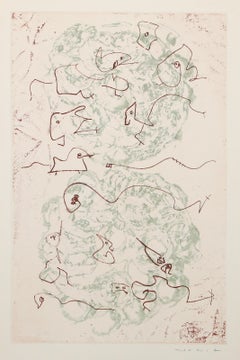
Les Chiens Ont Soif, Surrealist Color Etching by Max Ernst

Les Chiens Ont Soif, Surrealist Color Etching by Max Ernst

By Max Ernst

Located in Long Island City, NY

Max Ernst, German (1891 - 1976) - Les Chiens Ont Soif, Portfolio: Les Chiens Ont Soif, Year: 1964, Medium: Color Etching, signed in pencil lower right, Edition: 165/320, Image Si...

Category

1960s Surrealist Max Ernst

Materials

Etching

Browse all Art from Max Ernst
Shop Now

Max Ernst Sale Prices

Sold DateSold PriceCategoryMediumCreation Year
2026$315Figurative PrintsLithograph1972
2026$850Prints and MultiplesLithograph1939
2026$510BooksPaper1942
2026$575Figurative Prints, Landscape PrintsLithograph1972
2025$395Animal PrintsLithograph1970
$529
Average sold price of items in the past 12 months
$315-$850
Sold price range of items in the past 12 months

Artists Similar to Max Ernst

Max Ernst art for sale on 1stDibs.

Find a wide variety of authentic Max Ernst art available for sale on 1stDibs. If you’re browsing the collection of art to introduce a pop of color in a neutral corner of your living room or bedroom, you can find work that includes elements of blue, orange, pink and other colors. You can also browse by medium to find art by Max Ernst in lithograph, etching, paper and more. Much of the original work by this artist or collective was created during the 20th century and is mostly associated with the Surrealist style. Not every interior allows for large Max Ernst art, so small editions measuring 5 inches across are available. Customers who are interested in this artist might also find the work of Théo Tobiasse, Man Ray, and Valton Tyler. Max Ernst art prices can differ depending upon medium, time period and other attributes. On 1stDibs, the price for these items starts at $100 and tops out at $140,371, while the average work can sell for $1,297.

Questions About Max Ernst

  • 1stDibs ExpertApril 26, 2024
    Max Ernst lived in several places during his life. He was born in Brühl, Germany, in 1881 and later moved to Bonn to attend the university located there. Then he settled in Cologne, not far from his birthplace. In 1922, Ernst moved to France, where he soon became affiliated with Surrealism, the avant-garde art movement taking shape in Paris. Alongside Man Ray, Joan Miró and others, Ernst was among the first visual artists to experiment with imagery and techniques associated with Surrealism. When Germany occupied France during World War II, Ernst escaped to America with the help of patron and collector Peggy Guggenheim, whom he married in 1941. While living in New York, Ernst's work and techniques proved instrumental in inspiring the early development of Abstract Expressionism. He later moved to Sedona, Arizona, where he lived with his fourth wife, Dorothea Tanning, a fellow Surrealist and prolific visual artist and poet. While Ernst and Tanning are largely responsible for Sedona's reputation as an artist colony, they relocated to France in the 1950s and remained there until Ernst's death in Paris in 1976. On 1stDibs, shop a collection of Max Ernst art.
  • 1stDibs ExpertMarch 13, 2024
    You can see Max Ernst paintings in many places around the world. The Max Ernst Museum Brühl des LVR in Brühl, Germany, is home to one of the largest exhibitions of his work. Other museums that have Max Ernst paintings in their permanent collections include the Museum of Modern Art in New York, New York; the San Francisco Museum of Modern Art in San Francisco, California; the Art Institute of Chicago in Chicago, Illinois and the Detroit Institute of Arts in Detroit, Michigan. Explore a range of Max Ernst art on 1stDibs.
  • 1stDibs ExpertOctober 15, 2024
    Max Ernst used Surrealism to process the traumas he experienced during World War I. His early works consisted largely of collages, which allowed him to represent the shards, rubble and explosions from his wartime experience. In 1922, Ernst moved to France, where he soon became affiliated with Surrealism, the avant-garde art movement taking shape in Paris. Alongside Man Ray, Joan Miró and others, Ernst was among the first visual artists to experiment with the imagery and techniques that became associated with Surrealist art. Ernst’s greatest contribution to the Surrealist movement is often considered his invention of frottage, wherein an artist rubs a pencil or crayon over a paper atop a textured surface, and later grattage, where a similar technique is applied with paint. Both methods showcase Ernst’s fascination with the unconscious and serendipitous elements of artistic creation, a theme that connected the Dadaists and the Surrealists. Explore a range of Max Ernst art on 1stDibs.
  • 1stDibs ExpertNovember 20, 2024
    Max Ernst contributed to Surrealism by pushing the boundaries of the movement with his unconventional methods of printmaking, drawing and collage. He invented frottage (French for “rubbing”), wherein an artist rubs a pencil or crayon over a paper atop a textured surface, and later grattage (French for “scraping”), where a similar technique is applied with paint. Both methods showcase Ernst’s fascination with the unconscious and serendipitous elements of artistic creation, a theme that resonated with the Dadaists and the Surrealists. Ernst had deep knowledge of psychoanalysis and Sigmund Freud’s dream theories, which were big influences on Surrealists. He was among the first Surrealists to use Freud’s work to examine his own creative impulses. He also published a series of books of his collages, all of which were deeply symbolic and often philosophical. Explore a selection of Max Ernst art on 1stDibs.
  • 1stDibs ExpertOctober 30, 2024
    How much Max Ernst paintings are worth depends on their size, history, condition and other factors. In 2023, his oil-on-panel piece Taya's Sun sold for more than $304,000 at auction. Ernst was a pioneer in the Dada and Surrealist movements, pushing their boundaries with his unconventional methods of printmaking, drawing and collage. If you own an Ernst, consider having a certified appraiser or experienced art dealer evaluate it. Explore a selection of Max Ernst art on 1stDibs.