Michael David Art

American, b. 1954

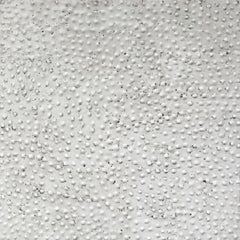
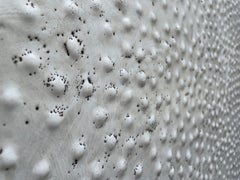
Abstract painter Michael David is best known for his use of encaustic, a technique that incorporates heated beeswax and pigment. Considered an inheritor of Abstract Expressionism, David’s abstract work primarily centers on the use of a densely layered surface to facilitate a direct and immediate spiritual experience. 

David often incorporates religious iconography and symbolism, art historical themes such as the nude, and contemporary politics into his paintings resulting in a critical dialogue between the layered abstraction of the surface and the integrated representational imagery. Alongside his work on canvas, David has developed a body of studio photography that recreates paintings by Caravaggio, Manet, and Mantegna, among others, in works that confront racism, homophobia, and sexism. 

David also works in mixed media and environmental sculpture, still within the horizon of his abiding concerns for sociopolitical questioning through art-making. His work is included in the public collections of the Los Angeles County Museum of Art, Denver Art Museum, Jewish Museum, Museum of Contemporary Art, Edward Albee Foundation and others.

Find original Michael David art on 1stDibs.

(Biography provided by Renata Fine Arts)

to
1
1
3
8
Overall Width
to
Overall Height
to
6
6
1
5
9
1
7
4
1
1
9
9
8
6
5
13
10,579
2,791
2,503
1,386
2
3
12
Artist: Michael David
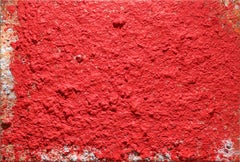
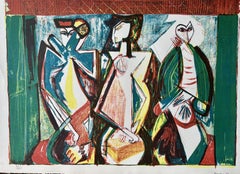
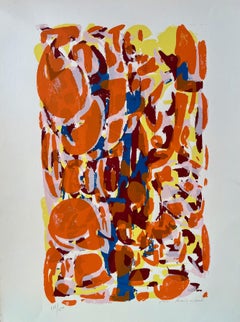
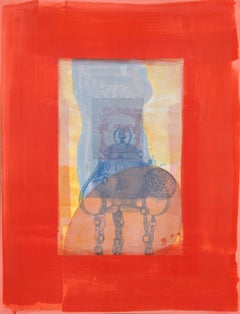
Red from the Being Series, 1991 Contemporary Screenprint by Michael David
By Michael David
Located in Long Island City, NY
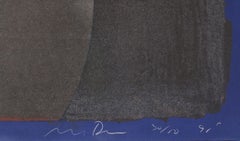
Artist: Michael David, American (1954 - ) Title: Red from the Being Series Year: 1991 Medium: Lithograph, signed and numbered in pencil Edition: 50 Size: 46 x 35 in. (116.84 x 88.9 cm)
Category

1990s Abstract Michael David Art

Materials

Lithograph

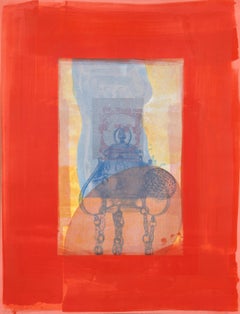
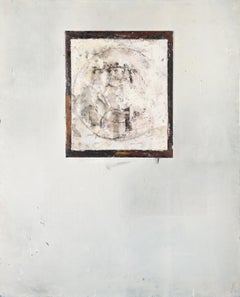
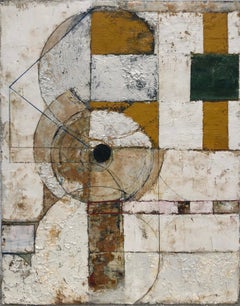
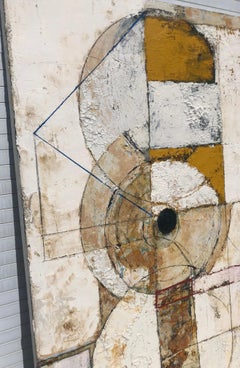
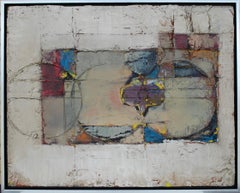
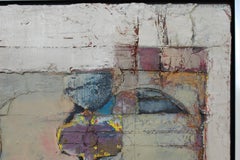
Untitled No. 63 Abstract Composition Mixed Media
By Michael David
Located in Lake Worth Beach, FL
Untitled No 63,​ abstract composition 1987 Mixed media on wood panel, wax, oil, paper. signed with initials, gallery label. Abstract painter Michael David is best known for his use of encaustic, a technique that incorporates heated beeswax and pigment. Considered an inheritor of Abstract Expressionism, David’s abstract work primarily centers on the use of a densely layered surface to facilitate a direct and immediate spiritual experience. He often incorporates religious iconography and symbolism, art historical themes such as the nude, and contemporary politics into his paintings resulting in a critical dialogue between the layered abstraction of the surface and the integrated representational imagery. Alongside his work on canvas, David has developed a body of studio photography that recreates paintings by Caravaggio, Manet, and Mantegna, among others, in works that confront racism, homophobia, and sexism. David also works in mixed media and environmental sculpture...
Category

1980s Abstract Michael David Art

Materials

Oil, Paper, Wax, Wood Panel

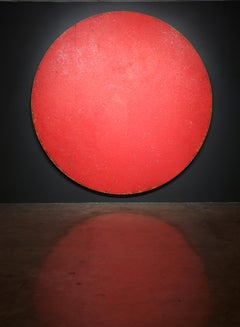
All Good Cowboys Have Chinese Eyes - Giant Tondo
By Michael David
Located in Phoenix, AZ
encaustic on panel b. 1954, Reno Nevada Michael David is best known for his use of encaustic on large abstract paintings. A practitioner of Abstract Expressionism, David layers bees...
Category

2010s Abstract Michael David Art

Materials

Wax, Encaustic, Oil, Wood Panel

The Navigator (Large)
By Michael David
Located in Phoenix, AZ
encaustic on Dibond b. 1954, Reno Nevada Abstract painter Michael David is best known for his use of encaustic, which incorporates pigment with heated beeswax. He discovered encau...
Category

2010s Abstract Michael David Art

Materials

Wax, Encaustic

For SRV (Large)
By Michael David
Located in Phoenix, AZ
encaustic on panel b. 1954, Reno Nevada Michael David is best known for his use of encaustic on large abstract paintings. A practitioner of Abstract Expressionism, David layers bees...
Category

2010s Abstract Expressionist Michael David Art

Materials

Encaustic, Wood Panel, Wax, Oil

Venus in Furs
By Michael David
Located in Phoenix, AZ
b. 1954, Reno Nevada Michael David's artwork is included in the public collections of the Metropolitan Museum of Art, New York; the Guggenheim Museum in New York; the Jewish Museum ...
Category

1990s Abstract Michael David Art

Materials

Mixed Media, Wax, Acrylic

Black from the Being Series, 1991 by Michael David
By Michael David
Located in Long Island City, NY
Artist: Michael David, American (1954 - ) Title: Black from the Being Series Year: 1991 Medium: Lithograph, signed and numbered in pencil Edition: 50 Size: 46 x 35 in. (116.84 x 88.9...
Category

1990s Abstract Michael David Art

Materials

Lithograph

Sand & Sea
By Michael David
Located in Phoenix, AZ
encaustic on panel b. 1954, Reno Nevada Michael David is best known for his use of encaustic on large abstract paintings. A practitioner of Abstract Expressionism, David layers bees...
Category

2010s Color-Field Michael David Art

Materials

Wood, Wax, Encaustic, Oil

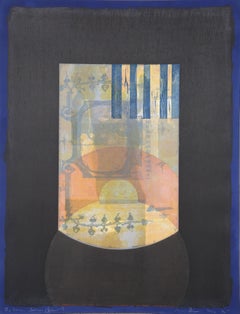
Blue from the Being Series, 1991 by Michael David
By Michael David
Located in Long Island City, NY
Artist: Michael David, American (1954 - ) Title: Blue from the Being Series Year: 1991 Medium: Lithograph, signed and numbered in pencil Edition: 50 Size: 46 x 35 in. (116.84 x 88.9 ...
Category

1990s Abstract Michael David Art

Materials

Lithograph

All Good Cowboys Have Chinese Eyes
By Michael David
Located in Phoenix, AZ
encaustic on panel b. 1954, Reno Nevada Michael David is best known for his use of encaustic on large abstract paintings. A practitioner of Abstract Expressionism, David layers bees...
Category

2010s Color-Field Michael David Art

Materials

Wax, Encaustic, Wood Panel, Oil

The Navigator (Small)
By Michael David
Located in Phoenix, AZ
encaustic on panel b. 1954, Reno Nevada Michael David is best known for his use of encaustic on large abstract paintings. A practitioner of Abstract Expressionism, David layers bees...
Category

2010s Abstract Expressionist Michael David Art

Materials

Wood, Panel, Wax, Oil

For Joe Wilfer
By Michael David
Located in New York, NY
Michael David For Joe Wilfer, 1995 Wax over etching, monoprint 6 x 7 inches (sheet) 13 5/8 x 15 inches (frame) Signed and dated verso on frame
Category

1990s Contemporary Michael David Art

Materials

Wax, Etching, Monoprint

Related Items
Andrea Bonfils - Beehives, Painting 2017
By Andrea Bonfils
Located in Stamford, CT
Series: Beehives Beehives, Encaustic Beeswax, Fabric, Beehives Size: 18" x 46"/ 46" x 18" Using unconventional hardware - a blow torch, iron and other heated tools - along with pa...
Category

2010s Contemporary Michael David Art

Materials

Wax, Encaustic, Oil

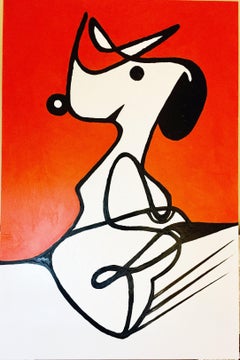
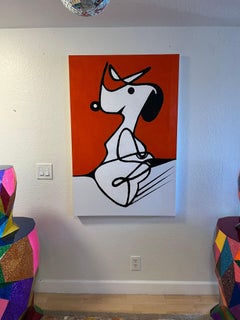
Speedy Snoopy (Original Artwork On Wood Panel)
By Mauro Oliveira
Located in LOS ANGELES, CA
**STORE CLOSURE - UP TO 80% OFF - TAKE ADVANTAGE OF IT** ***EVERYTHING MUST GO BY DECEMBER 31ST!*** >>The artist is moving to a new full time venture in 2026<< _________...
Category

21st Century and Contemporary Abstract Michael David Art

Materials

Acrylic, Wood Panel

Dredging Up Memories, Original Contemporary Aquamarine and Red Abstract Painting
By Denise Presnell
Located in Boston, MA
Dredging Up Memories, Original Contemporary Aquamarine and Red Abstract Painting 24" x 24" x 1.5" (HxWxD) Oil and Cold Wax on Panel This square-format work by artist Denise Presnell...
Category

21st Century and Contemporary Abstract Expressionist Michael David Art

Materials

Wax, Oil, Panel

abstract 29/29, Original Signed Contemporary Neutral Abstract Encaustic Painting
By Michele Renée Ledoux
Located in Boston, MA
abstract 29/29, Original Signed Contemporary Neutral Abstract Encaustic Painting 29" x 29" x 3" Beeswax, Resin, Pigment, and Oil on Wood Panel Hand-signed by the artist in verso. A contemporary minimalist encaustic work by artist Michele Renée Ledoux...
Category

21st Century and Contemporary Abstract Michael David Art

Materials

Resin, Wax, Oil, Pigment, Encaustic

Tapies Vertical original lithography lithograph
By Antoni Tàpies
Located in CORAL GABLES - MIAMI, FL
Tapies Litografia original Work reproduced in the catalogue raisonné, image 286. Edited in 1971 TAPIES was the maximum representative of Spanish abstract art of the 20th century. ...
Category

Late 20th Century Abstract Michael David Art

Materials

Paper, Lithograph

Alexander Calder - Transworld Art International Art Fair, Tel Aviv, 1977 poster
By Alexander Calder
Located in New York, NY
Offset lithograph poster published by the Transworld Art Fair in Tel Aviv The work depicted in the image is Calder's "Boomerang", 1973 Plate (printed) signature Unframed ALEXANDER CA...
Category

1970s Abstract Michael David Art

Materials

Lithograph, Offset

Carmen (Quadryptich Wood Panel Framed Contemporary Abstract Painting)
Located in New Orleans, LA
Artist's Statement: "Around 30 years ago, not long after I had started painting seriously, I was at a one-man exhibition of the great Brice Marden at the Fort Worth Museum of Modern...
Category

2010s Abstract Michael David Art

Materials

Wax, Oil, Wood Panel

Large Budd Hopkins Modernist Hard Edged Abstract Expressionist Oil Painting 1965
Located in Surfside, FL
Budd Hopkins, American (1931-2011) 'City Sun II', 1969 Oil painting on canvas. Hand signed and dated lower left. Verso: Artist, title, and year in pencil on stretcher. Dimensions: 36" H x 52" w. Frame: 37.25" h x 53.25" w. Budd Hopkins was one of the leading proponents of the "hard-edge" abstract minimalist school of painting in the 1950s and 1960s, Budd Hopkins (born 1931) created works that show the strong influence of Jackson Pollock and other leading painters of the Abstract Expressionism movement. Hopkins' paintings are now in numerous major collections, including the San Francisco Museum of Art, the Guggenheim Museum in New York, and the Hirshhorn Collection in Washington, DC. Recently, he has also been recognized for his research into the matter of UFOs and one of his books, "The Intruders", printed by Random House, was on the New York Times best-seller list and was the basis for a television show on CBS. Born in 1931, he is a graduate of Linsly Military Institute (now Linsly School) in 1949 and Oberlin College in 1953. He first displayed artistic abilities when, as a child recovering from a long-term illness, he began to create sculptures of ships made out of modeling clay. But it wasn't until he arrive at Oberlin that he made a serious study of art. Later, Hopkins included abstracted figures in his sculptural pieces. While moving away from Abstract Expressionism, Hopkins retained in his work the use of intense colors and hard-edged forms. His works of the 1980s, including Temples and Guardians, featured these "sentinels" who were, according to Hopkins, "participating in a frozen ritual, fixed – absolutely – within a privileged space..." Though Hopkins denied any connection, some critics viewed these ritualistic pieces as an extension of Hopkins' fascination with alien beings. Hopkins viewed his sculpted guardians not as human per se, but as magical, fierce, noble robots of the unconscious. He settled in New York after obtaining his degree and has had a residence there ever since. He and his wife, April Kingsley, and their daughter, Grace, divide their time between their home at Cape Cod, Mass., and that in New York City. In his work, he travels widely. He has exhibited in England, Finland, Italy and Switzerland. In 1963, Hopkins was selected by the Columbia Broadcasting System as one of the 15 painters featured in the network's first television special on American art. In 1958, Art News picked him as one of 12 Americans for exhibition in Spoleto, Italy, in the "Festival of Two Worlds." His brilliance has won him a number of fellowships and awards. In 1972, the West Virginia Arts and Humanities Council awarded him its Commission Prize. In 1976, he received the John Simon Guggenheim Fellowship for Painting and in '79 he received a fellowship from the National Endowment of the Arts. He also won a special project grant from the New York State Council on the Arts in 1982. He was friends with Robert Ryman and many of the other 10th street avant garde artists. He was an original member of March Gallery which showed Alice Baber, Elaine de Kooning, Mark di Suvero, Lester Johnson, Matsumi Kanemitsu. His work was handled by Poindexter Gallery. (a major gallery founded in 1955 in New York City by Elinor Poindexter. The gallery specialized in sculpture, abstract, and figurative art and featured the works of such artists as Richard Diebenkorn, Jules Olitski, Nell Blaine, Al Held, Willem de Kooning, Franz Kline, Earl Kerkam, Milton Resnick and Robert De Niro, among others. His art has been featured in the Metropolitan Museum of Art, Museum of Modern Art, Bronx Museum of Art, Brooklyn Museum, Whitney Museum, Corcoran Gallery, Guggenheim Museum, Queens Museum in New York, and the Public Library of New York. He was included in Young America 1960: Thirty American Painters Under Thirty-Six buy Lloyd Goodrich at the Whitney Museum of American Art in NYC. Artists included: Sonia Gechtoff, Edward Giobbi, Ron Gorchov, James Harvey, Budd Hopkins, Wolf Kahn, Alex Katz, Robert Natkin, Rudy Pozzatti, Dean Richardson, Frank Roth, William Wiley, and Noriko Yamamoto...
Category

1960s Abstract Expressionist Michael David Art

Materials

Canvas, Oil

Untitled (Remembered)
By Jeremy Nichols
Located in Philadelphia, PA
This is an original painting on panel by artist Jeremy Nichols. The piece ships ready to hang in the pictured floater frame and measures 24in height x 18in width. The artist had recently focused on mainly graphite works in this style in recent years and this piece marks an exciting transition back to including paint and color in his process. Jeremy Nichols was born in Tokyo, Japan in 1982. He spent most of his youth in the suburbs of Columbus, Ohio and traveling back and forth from Tokyo, Japan. After high school, he went to the Ohio State University to study Printmaking under Charles Massey...
Category

21st Century and Contemporary Abstract Michael David Art

Materials

Acrylic, Wood Panel

The Calming Content of the Endurance
By Brian Jerome
Located in Philadelphia, PA
Life is a long journey of harshness, honesty, brutality and mistakes. But it is validated in the experience and in the recognition of the the finite.
Category

2010s Abstract Michael David Art

Materials

Oil, Acrylic

Joan Kahn Indigo Denim Blue Color Abstract Expressionist Modernist Oil Painting
Located in Surfside, FL
Oil paint on heavy paper. (this might possibly be acrylic paint) This does not appear to be signed. Joan Kahn (USA 1953-) grew up in New York City; Princeton, New Jersey; and Vermont; in an environment that patronized the arts. At home her father, a professor, and mother, a state economist and homemaker, collected nineteenth and twentieth century drawings and prints, Middle eastern rugs, and ceramics, pewter, and old tools. Her grandfather, Max Westfield, was an academically trained portrait painter and her great uncle was a well-known gallery owner and art dealer in pre-World War II Germany. One of the influential experiences of Joan’s youth was visiting her grandfather in his studio in Tennessee where the family had first immigrated. Growing up near New York, and spending a year in Paris during high school, provided formative visits to museums and galleries. Joan was academically talented in grade and high school, but after her father’s death during her first years at university she found herself concentrating on studio and history of art. It was a subject above others absorbed and concentrated her focus. Influential in Joan’s development and later work are the historic movements of the Bauhaus and Modernist design and architecture, geometric art and design of diverse cultures, Color Field Painting. Many artists have had a impact on her work, such as Paul Klee, Piet Mondrian, Sonia Delaunay, Mark Rothko, Ad Reinhardt, Antoni Tapies, David Smith, John McLaughlin, Tony Smith, Louise Nevelson, Robert Mangold, Ellsworth Kelly, Agnes Martin, Valerie Jaudon, Jasper Johns, James Turrell, Robert Irwin, Vija Celmins, Caio Fonseca, Peter Halley, Ed Moses, Juan Usle, and Nancy Haynes...
Category

1980s Abstract Expressionist Michael David Art

Materials

Oil

The Lizard with Golden Feathers
By Joan Miró
Located in Paris, FR
Lithograph, 1971 Edition : 50 ex. Publisher : Broder (Paris) Printer : Mourlot (Paris) Catalog : [Maeght 815] 35.50 cm. x 50.00 cm. 13.98 in. x 19.69 in. (paper) 33.00 cm. x 48.00 c...
Category

1970s Abstract Michael David Art

Materials

Lithograph

Previously Available Items
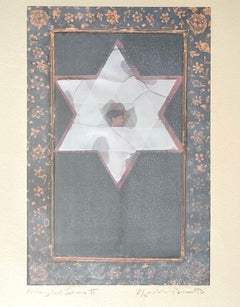
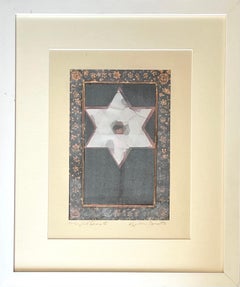
Michael David Jewish Star of David Color Etching Abstract Expressionist Judaica
By Michael David
Located in Surfside, FL
Michael David (b. 1954) Hand signed, Prestige Art blind stamp; edition of 45; 1993 Color Etching on Arches Buff "The Mugual Series" Printed by the artist with master printers Sylvia Roth and Mary Seibert at Hudson River Editions and published by Prestige Art Ltd., Mamaroneck, New York. 22 X 18 framed Michael David Singer; born 1954, is an American painter. Born in Reno, Nevada, David's family relocated to Brooklyn, New York, where he was raised. He attended SUNY Fredonia for one year and in 1976 received a B.F.A. from Parson's School of Design. Michael David is classified as an abstract painter, best known for his use of the encaustic technique, which incorporates pigment with heated beeswax. He is also known for his works in mixed-media figure painting, photography and environmental sculpture. His work is included in the permanent public collections of the Metropolitan Museum of Art, the Guggenheim Museum, the Jewish Museum in New York, the Museum of Contemporary Art in Los Angeles, and the Los Angeles County Museum of Art, among others. In 1976 David, erotic photographer Roy Stuart and Fredonia friend Richie Stotts formed a band called The Numbers, with David on bass. The group was a fixture in New York's early punk rock music scene, playing in clubs alongside punk pioneers Television, Blondie and the Ramones. David also played bass with punk innovators Jerry Nolan of The New York Dolls, Cheetah Chrome of The Dead Boys, Marky Ramone, Peter Gordon, David Van Tieghem and the free-improvisation noise music group Borbetomagus. In 1977, The Numbers were approached by impresario Rod Swenson, who was seeking musicians to form a backing band for singer Wendy O. Williams, whose radical persona he sought to exploit as punk music and performance art. The Numbers became The Plasmatics but the attention David began to gain as an important voice in the art world caused him to leave the band to pursue his burgeoning painting career. David's first one-man show was in 1981 at the historic Sidney Janis Gallery. That year he was awarded a Guggenheim Fellowship, at the time the youngest artist ever to do so, and in 1982 was awarded an American Academy of Arts and Letters prize. He went on to exhibit at galleries worldwide and was represented by Knoedler & Co. for the next 25 years. David is best known for using the encaustic technique of painting, which uses pigment combined with heated beeswax. David built his early career on abstraction and religious iconography, which formed the bulk of his output until 1999. Since then he has also experimented with representational painting and traditional photography. In 2000, he developed the "Chortens" and "Populations" series, about which prominent art historian and critic Donald Kuspit writes: "They are enigmatic works, all the more so because of the way their innumerable details form singularly monumental, intimidating wholes. Dense yet delicate, awesome yet intimate, they convey the fragility as well as grandeur of sheer being. Layer upon layer of paint piles up like layer upon layer of coral, but the textural result is more epic, not to say startling, than any coral island, and virtually any other existing abstract expressionist painting (upon which they are stylistically founded)." In 2001, David developed bi-lateral neuropathy due to being poisoned by gases released by overheated beeswax used in the encaustic process. The disease left him with partial paralysis of his legs, slowing the production of his painting for a number of years. That year, David began painting one of his best-known series, the "fallen Toreadors", inspired by 19th century French Realist painter Édouard Manet's "The Dead Toreador" of 1864. In 1993, David experimented at the "20x24" Polaroid studio in Manhattan, which resulted in a series of portraits of playwright Edward Albee and of friend Jackie Gross, which would become the ongoing "Jackie" series of mixed-media works. When neuropathy rendered him unable to paint during 2003, he returned to the 20x24 camera and shot large-format Polaroids inspired by Caravaggio; nude men and women dressed as Toreadors, and religious imagery. In 2002, David began to develop The Greenhouse Project, an evolving "architectural construct" based on historical American Antebellum greenhouses built using the actual glass negatives sold to starving farmers in the post-American Civil War South. David has indicated that each greenhouse will, through the display of photography and use of social networking, create a forum and exhibit for ideas and artifacts related to civil and human rights; the specifications of each greenhouse particular to the community in which each is built. David's work was reviewed in Artforum and Art in America, and is considered one of the last links to the New York School of painting. David may be the most innovative master of immediate surface since the abstract expressionists. He has acknowledged his debt to Abstract Expressionism, but he has transformed it. Where the abstract expressionist paintings of the forties and fifties seem like modern cave paintings, as their crude, unfocused, often meandering, turbulent painterliness suggests, and as such to reinstate prehistory, David seems to turn the cave into a temple, as his more considered, concentrated, indeed, dense, contemplative painterliness indicates, so that his paintings have the aura of post history. SELECT GROUP EXHIBITIONS 2010-2011 “Post Mammalian Tension, Michael David & Scott Browning”, Bill Lowe Gallery, Atlanta, GA 2006 “Unspoken Connections,” The Lowe Gallery, Santa Monica, CA 2004 The Lowe Gallery, Atlanta, GA 1999 “Waxing Poetic: Encaustic Art in America,” Montclair Art Museum, Montclair, NJ “Forty Years of American Drawings,” Raab Galerie, Berlin, Germany 1997 “Michael David and James Hyde,” Margulies Taplin Gallery, Coral Gables, FL 1996 “Different Sides: Drawings/Photographs/Prints/Paintings/Sculpture,” Knoedler and Company, New York, NY 1994 “Michael David: Paintings / Nicholas Pearson: Sculpture,” Margulies Taplin Gallery, Boca Raton, FL 1991 “Working with Wax: Ten Contemporary Artists,” Tibor de Nagy Gallery, New York, NY 1989 “Projects and Portfolios: the 25th Print National,” The Brooklyn Museum, Brooklyn, NY “Important Works on Paper,” Meredith Long and Company, Houston, TX “New Editions,” Pace Prints, New York, NY 1988 “Golem! Danger, Deliverance, and Art,” The Jewish Museum, New York, NY 1987 “Monotypes,” Pace Editions, New York, NY “Working in Brooklyn / Painting,” The Brooklyn Museum, Brooklyn, NY “Art Against AIDS,” benefit exhibition Knoedler and Company, New York, NY “Jewish Themes: Contemporary American Artists,” Spertus, Chicago, IL 1986 “First Impressions: Recent Monotypes by 15 Artists,” Allan Frumkin Gallery, (Charles Arnoldi, Pat Steir etc) “Saints and Sinners: Contemporary Responses to Religion,” De Cordova Museum, Lincoln, MA “Jewish Themes: Contemporary American Artists,” The Jewish Museum, New York, NY “Public and Private American Prints Today,” Brooklyn Museum, Brooklyn, NY 1985 “A Decade of Visual Arts at Princeton: 1975-1985,” The Art Museum, Princeton University, Princeton, NJ 1984 “Cunningham Dance Benefit,” Leo Castelli Gallery, New York, NY (Robert Rauschenberg, Arman etc) Twelve Abstract Painters, Siegel Contemporary (Elizabeth Murray, Melissa Meyer, Leon Polk Smith etc.) “Small Paintings,” Jeffrey Hoffeld Gallery, New York, NY 1982 “Elaine de Kooning’s Inadvertent Collection,” Elaine Benson Gallery, Bridgehampton, NY 1981 “New Visions,” The Aldrich Museum of Contemporary Art (James Biederman, Louisa Chase,Mel Kendrick etc.) 1980 “Seven Young Americans,” Sidney Janis Gallery, New York, NY (Sean Scully, Thornton Willis...
Category

Michael David Art

Michael David, Mugual Indian Star Abstract Expressionist Color Etching Print
By Michael David
Located in Surfside, FL
Michael David (b. 1954) Hand signed, Prestige Art blind stamp; edition of 45; 1993 Color Etching on Arches Buff "The Mugual Series" Printed by the artist with master printers Sylvia Roth and Mary Seibert at Hudson River Editions and published by Prestige Art Ltd., Mamaroneck, New York. 22 X 18 framed Michael David Singer; born 1954, is an American painter. Born in Reno, Nevada, David's family relocated to Brooklyn, New York, where he was raised. He attended SUNY Fredonia for one year and in 1976 received a B.F.A. from Parson's School of Design. Michael David is classified as an abstract painter, best known for his use of the encaustic technique, which incorporates pigment with heated beeswax. He is also known for his works in mixed-media figure painting, photography and environmental sculpture. His work is included in the permanent public collections of the Metropolitan Museum of Art, the Guggenheim Museum, the Jewish Museum in New York, the Museum of Contemporary Art in Los Angeles, and the Los Angeles County Museum of Art, among others. In 1976 David, erotic photographer Roy Stuart and Fredonia friend Richie Stotts formed a band called The Numbers, with David on bass. The group was a fixture in New York's early punk rock music scene, playing in clubs alongside punk pioneers Television, Blondie and the Ramones. David also played bass with punk innovators Jerry Nolan of The New York Dolls, Cheetah Chrome of The Dead Boys, Marky Ramone, Peter Gordon, David Van Tieghem and the free-improvisation noise music group Borbetomagus. In 1977, The Numbers were approached by impresario Rod Swenson, who was seeking musicians to form a backing band for singer Wendy O. Williams, whose radical persona he sought to exploit as punk music and performance art. The Numbers became The Plasmatics but the attention David began to gain as an important voice in the art world caused him to leave the band to pursue his burgeoning painting career. David's first one-man show was in 1981 at the historic Sidney Janis Gallery. That year he was awarded a Guggenheim Fellowship, at the time the youngest artist ever to do so, and in 1982 was awarded an American Academy of Arts and Letters prize. He went on to exhibit at galleries worldwide and was represented by Knoedler & Co. for the next 25 years. David is best known for using the encaustic technique of painting, which uses pigment combined with heated beeswax. David built his early career on abstraction and religious iconography, which formed the bulk of his output until 1999. Since then he has also experimented with representational painting and traditional photography. In 2000, he developed the "Chortens" and "Populations" series, about which prominent art historian and critic Donald Kuspit writes: "They are enigmatic works, all the more so because of the way their innumerable details form singularly monumental, intimidating wholes. Dense yet delicate, awesome yet intimate, they convey the fragility as well as grandeur of sheer being. Layer upon layer of paint piles up like layer upon layer of coral, but the textural result is more epic, not to say startling, than any coral island, and virtually any other existing abstract expressionist painting (upon which they are stylistically founded)." In 2001, David developed bi-lateral neuropathy due to being poisoned by gases released by overheated beeswax used in the encaustic process. The disease left him with partial paralysis of his legs, slowing the production of his painting for a number of years. That year, David began painting one of his best-known series, the "fallen Toreadors", inspired by 19th century French Realist painter Édouard Manet's "The Dead Toreador" of 1864. In 1993, David experimented at the "20x24" Polaroid studio in Manhattan, which resulted in a series of portraits of playwright Edward Albee and of friend Jackie Gross, which would become the ongoing "Jackie" series of mixed-media works. When neuropathy rendered him unable to paint during 2003, he returned to the 20x24 camera and shot large-format Polaroids inspired by Caravaggio; nude men and women dressed as Toreadors, and religious imagery. In 2002, David began to develop The Greenhouse Project, an evolving "architectural construct" based on historical American Antebellum greenhouses built using the actual glass negatives sold to starving farmers in the post-American Civil War South. David has indicated that each greenhouse will, through the display of photography and use of social networking, create a forum and exhibit for ideas and artifacts related to civil and human rights; the specifications of each greenhouse particular to the community in which each is built. David's work was reviewed in Artforum and Art in America, and is considered one of the last links to the New York School of painting. David may be the most innovative master of immediate surface since the abstract expressionists. He has acknowledged his debt to Abstract Expressionism, but he has transformed it. Where the abstract expressionist paintings of the forties and fifties seem like modern cave paintings, as their crude, unfocused, often meandering, turbulent painterliness suggests, and as such to reinstate prehistory, David seems to turn the cave into a temple, as his more considered, concentrated, indeed, dense, contemplative painterliness indicates, so that his paintings have the aura of post history. SELECT GROUP EXHIBITIONS 2010-2011 “Post Mammalian Tension, Michael David & Scott Browning”, Bill Lowe Gallery, Atlanta, GA 2006 “Unspoken Connections,” The Lowe Gallery, Santa Monica, CA 2004 The Lowe Gallery, Atlanta, GA 1999 “Waxing Poetic: Encaustic Art in America,” Montclair Art Museum, Montclair, NJ “Forty Years of American Drawings,” Raab Galerie, Berlin, Germany 1997 “Michael David and James Hyde,” Margulies Taplin Gallery, Coral Gables, FL 1996 “Different Sides: Drawings/Photographs/Prints/Paintings/Sculpture,” Knoedler and Company, New York, NY 1994 “Michael David: Paintings / Nicholas Pearson: Sculpture,” Margulies Taplin Gallery, Boca Raton, FL 1991 “Working with Wax: Ten Contemporary Artists,” Tibor de Nagy Gallery, New York, NY 1989 “Projects and Portfolios: the 25th Print National,” The Brooklyn Museum, Brooklyn, NY “Important Works on Paper,” Meredith Long and Company, Houston, TX “New Editions,” Pace Prints, New York, NY 1988 “Golem! Danger, Deliverance, and Art,” The Jewish Museum, New York, NY 1987 “Monotypes,” Pace Editions, New York, NY “Working in Brooklyn / Painting,” The Brooklyn Museum, Brooklyn, NY “Art Against AIDS,” benefit exhibition Knoedler and Company, New York, NY “Jewish Themes: Contemporary American Artists,” Spertus, Chicago, IL 1986 “First Impressions: Recent Monotypes by 15 Artists,” Allan Frumkin Gallery, (Charles Arnoldi, Pat Steir etc) “Saints and Sinners: Contemporary Responses to Religion,” De Cordova Museum, Lincoln, MA “Jewish Themes: Contemporary American Artists,” The Jewish Museum, New York, NY “Public and Private American Prints Today,” Brooklyn Museum, Brooklyn, NY 1985 “A Decade of Visual Arts at Princeton: 1975-1985,” The Art Museum, Princeton University, Princeton, NJ 1984 “Cunningham Dance Benefit,” Leo Castelli Gallery, New York, NY (Robert Rauschenberg, Arman etc) Twelve Abstract Painters, Siegel Contemporary (Elizabeth Murray, Melissa Meyer, Leon Polk Smith etc.) “Small Paintings,” Jeffrey Hoffeld Gallery, New York, NY 1982 “Elaine de Kooning’s Inadvertent Collection,” Elaine Benson Gallery, Bridgehampton, NY 1981 “New Visions,” The Aldrich Museum of Contemporary Art (James Biederman, Louisa Chase,Mel Kendrick etc.) 1980 “Seven Young Americans,” Sidney Janis Gallery, New York, NY (Sean Scully, Thornton Willis...
Category

1990s Abstract Expressionist Michael David Art
Materials

Etching

The Unbearable Lightness Of Being Large Abstract
By Michael David
Located in Lake Worth Beach, FL
The Unbearable Lightness Of Being modern​ large abstract. Abstract painter Michael David is best known for his use of encaustic, a te...
Category

1980s Abstract Michael David Art

Materials

Encaustic, Oil, Board

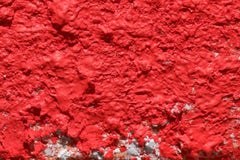
Red from the Being Series, 1991 by Michael David
By Michael David
Located in Long Island City, NY
Artist: Michael David, American (1954 - ) Title: Red from the Being Series Year: 1991 Medium: Lithograph, signed and numbered in pencil Edition: 50 Size: 46 x 35 in. (116.84 x 88.9 cm)
Category

1990s Abstract Michael David Art

Materials

Lithograph

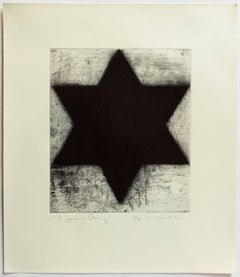
Rare Abstract Expressionist Judaica "A Jew in Germany" Etching Print Jewish Star
By Michael David
Located in Surfside, FL
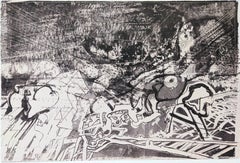
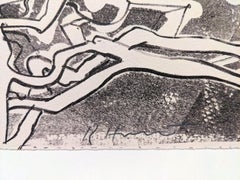
MICHAEL DAVID (American, b. 1954), 'A Jew in Germany', 1993 Hand signed, dated, limited edition print (ed. 18) Etching print on wove paper. Dimensions: 21" x 17.75" sheet. titled in pencil recto under image. Michael David's sculpture 'A Jew in Germany', 1993, encaustic on wood is in the permanent collection of The Jewish Museum, New York, NY. Michael David is an American painter. Born in Reno, Nevada, David's family relocated to Brooklyn, New York, where he was raised. He attended SUNY Fredonia for one year and in 1976 received a B.F.A. from Parson's School of Design. David is classified as an abstract painter, best known for his use of the encaustic technique, which incorporates pigment with heated beeswax. He is also known for his works in mixed-media figure painting, photography and environmental sculpture. His work is included in the permanent public collections of the Metropolitan Museum of Art, the Guggenheim Museum, the Jewish Museum in New York, the Museum of Contemporary Art in Los Angeles, and the Los Angeles County Museum of Art, among others. In 1976 David, erotic photographer Roy Stuart and Fredonia friend Richie Stotts formed a band called The Numbers, with David on bass. The group was a fixture in New York's early punk rock music scene, playing in clubs alongside punk pioneers Television, Blondie and the Ramones. David also played bass with punk innovators Jerry Nolan of The New York Dolls, Cheetah Chrome of The Dead Boys, Marky Ramone, Peter Gordon, David Van Tieghem and the free-improvisation noise music group Borbetomagus. In 1977, The Numbers were approached by impresario Rod Swenson, who was seeking musicians to form a backing band for singer Wendy O. Williams, whose radical persona he sought to exploit as punk music and performance art. The Numbers became The Plasmatics but the attention David began to gain as an important voice in the art world caused him to leave the band to pursue his burgeoning painting career. David's first one-man show was in 1981 at the historic Sidney Janis Gallery. That year he was awarded a Guggenheim Fellowship, at the time the youngest artist ever to do so, and in 1982 was awarded an American Academy of Arts and Letters prize. He went on to exhibit at galleries worldwide and was represented by Knoedler & Co. for the next 25 years. David is best known for using the encaustic technique of painting, which uses pigment combined with heated beeswax. David built his early career on abstraction and religious iconography, which formed the bulk of his output until 1999. Since then he has also experimented with representational painting and traditional photography. In 2001, David began painting one of his best-known series, the "fallen Toreadors", inspired by 19th century French Realist painter Édouard Manet's "The Dead Toreador" of 1864. Of the series, David has said, "My work (became) about compassion. Compassion for those different from us, compassion for each other, and, most importantly, compassion for oneself, for a painter who was reckless enough to hurt himself doing what he loves most." In 1993, David experimented at the "20x24" Polaroid studio in Manhattan, which resulted in a series of portraits of playwright Edward Albee and of friend Jackie Gross, which would become the ongoing "Jackie" series of mixed-media works. When neuropathy rendered him unable to paint during 2003, he returned to the 20x24 camera and shot large-format Polaroids inspired by Caravaggio; nude men and women dressed as Toreadors, and religious imagery. David's work was reviewed in Artforum and Art in America, and is considered one of the last links to the New York School of painting. David may...
Category

1990s Abstract Expressionist Michael David Art
Materials

Etching

Michael David art for sale on 1stDibs.
Find a wide variety of authentic Michael David art available for sale on 1stDibs. If you’re browsing the collection of art to introduce a pop of color in a neutral corner of your living room or bedroom, you can find work that includes elements of red, blue and other colors. You can also browse by medium to find art by Michael David in lithograph, paint, panel and more. Much of the original work by this artist or collective was created during the 20th century and is mostly associated with the abstract style. Not every interior allows for large Michael David art, so small editions measuring 35 inches across are available. Customers who are interested in this artist might also find the work of Kikuo Saito, Judith Kruger, and Friedel Dzubas. Michael David art prices can differ depending upon medium, time period and other attributes. On 1stDibs, the price for these items starts at $1,000 and tops out at $28,000, while the average work can sell for $1,250.
Artists Similar to Michael David