Ray Smith Art

American, Mexican, b. 1959

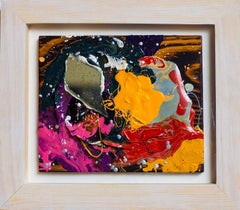
Ray Smith is a contemporary artist who combines the techniques of print- and collage-making with a Cubist aesthetic in his unique signature compositions. His abstract paintings and sculptures can often be classified as Surrealist for their otherworldly qualities. Smith uses anthropomorphism and visual juxtaposition to jar the viewer and give his creations a magically alien quality.

Smith was born in Texas in 1959 but grew up in Central Mexico. He attended art school in both countries before settling in Cuernavaca, Mexico; he also regularly traveled to New York. He held his first solo exhibitions in Mexico at the Instituto Mexicano Norteamericano de Relaciones Culturales in 1979 and in New York at Tower Gallery in 1984.

Smith’s work grew in prestige and popularity over the years for its exuberant style and cross-cultural sensibilities. He drew as much from famed European artists like Pablo Picasso as from the traditional Mexican muralists, exploring themes such as birth, family, culture, war, politics and death. By 1989, Smith was participating in the Whitney Biennial in New York City.

Smith has continued to exhibit his work in the United States and Mexico. His paintings are in the collections of the Brooklyn Museum, the Whitney Museum of American Art, the Metropolitan Museum of Art and the Centro Cultural de Arte Contemporáneo in Mexico City.

In 2019, Smith held a “Celebrating 10 Years of Ray Smith Studio” exhibition at his studio in Brooklyn, New York. Today, he splits his time between New York and Cuernavaca, Mexico.

On 1stDibs, find Ray Smith’s paintings, sculptures and other art.

to
3
12
11
2
2
2
1
Cartas de Japon by Ray Smith surreal Dali esque print Japanese portfolio

Cartas de Japon by Ray Smith surreal Dali esque print Japanese portfolio

By Ray Smith

Located in New York, NY

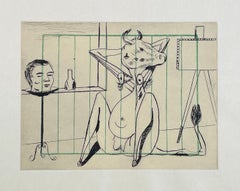
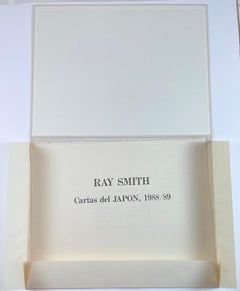
Ray Smith's aptitude for the surreal is apparent in this portfolio of six drypoint prints, presented in a portfolio case. Each image depicts an intriguing, fantastic landscape populated with chimeric nudes. Each one is carefully printed to appear as if doodled on lined notebook paper with ballpoint pen: Japanese letter paper chine-colle on Kizuki Hosho paper. Translated as "Letters from Japan," Cartas de Japon plays on tropes of an exotic, faraway land. The series of prints perhaps pictures Japan in the imagination of westerners, who for centuries speculated that those from other continents had wildly different bodies and customs. The title may be a reference to iconic Mexican director Carlos Velo's 1973 film Letters from Japan. Cartas del Japon, 1988-89 Portfolio of 6 drypoint prints printed on Japanese letter paper mounted on Kizuki Hosho paper Plate 6 x 7.8 in. Paper 18 x 23.4 in. Ed. 30 with three artist proofs. Printed by Hideharu Mishio, Norimasa Mizutani, and Marie Okada at Woodblock Workshop. Published by AC&T CORPORATION, Tokyo, 1989. Per the Broad: "Ray Smith’s paintings incorporate surrealistic and animistic tendencies informed by his Latin heritage as well as deep study of the history of modern art. Smith was born near the Texas/Mexico border...

Category

1980s Pop Art Ray Smith Art

Materials

Drypoint

Sueño de un Boy Scout by Ray Smith surreal nude print in green and yellow

Sueño de un Boy Scout by Ray Smith surreal nude print in green and yellow

By Ray Smith

Located in New York, NY

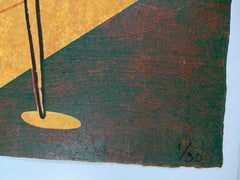
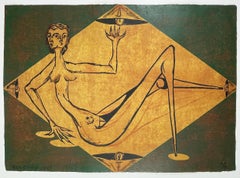
Ray Smith elucidates the "Dream of a Boy Scout" in this surreal green, red, and yellow wood cut print. A woman with two faces sits nude within a diamond-shaped gold field of color, reaching up with her hand and out with her leg to touch the corners of the diamond, which each nestle a light fixture. Sueño de un Boy Scout, 1988-9 Woodcut in black, red and green, on oiled Japon, signed and dated in black ink, numbered 1/30 (there were also 3 artist's proofs) 25 x 39 in. Per the Broad: "Ray Smith’s paintings incorporate surrealistic and animistic tendencies informed by his Latin heritage as well as deep study of the history of modern art. Smith was born near the Texas/Mexico border...

Category

1980s Pop Art Ray Smith Art

Materials

Woodcut

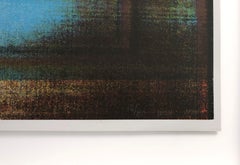
"The Wait" 2020 signed original limited edition silkscreen 12x18in abstract

"The Wait" 2020 signed original limited edition silkscreen 12x18in abstract

By Ray Smith

Located in Miami, FL

Ray Smith (United States, 1959) 'La Espera', 2020 Silkscreen on paper. Edition of 50 11.7 x 17.8 in. (29.5 x 45 cm.) Ref: SMI-101 Ray Smith (American, b.1959) Born in Brownsville, T...

Category

Early 2000s Contemporary Ray Smith Art
Materials

Ink, Screen

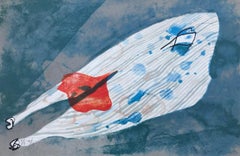
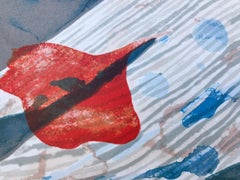
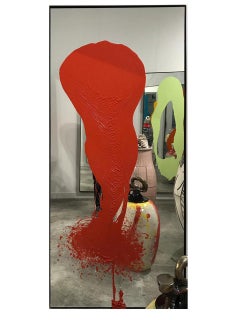
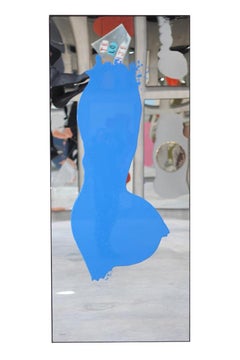
Serie: Mujeres con espejo 5

Serie: Mujeres con espejo 5

By Ray Smith

Located in Cuernavaca, Morelos

Mixed technique

Category

2010s Contemporary Ray Smith Art
Materials

Mirror, Wood, Paint

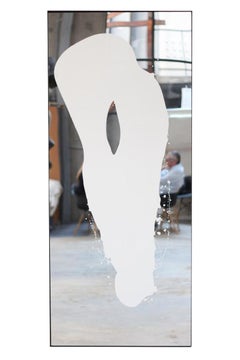
White Mirror
White Mirror

White Mirror

By Ray Smith

Located in Cuernavaca, Morelos

Painted mirror in white

Category

2010s Abstract Ray Smith Art

Materials

Mirror

Blue Mirror
Blue Mirror

Blue Mirror

By Ray Smith

Located in Cuernavaca, Morelos

Painted mirror

Category

2010s Abstract Ray Smith Art

Materials

Mirror

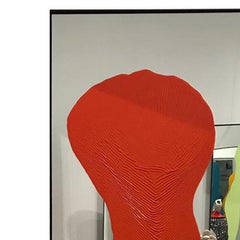
Red Mirror
Red Mirror

Red Mirror

By Ray Smith

Located in Cuernavaca, Morelos

Painted mirror

Category

2010s Abstract Ray Smith Art

Materials

Mirror

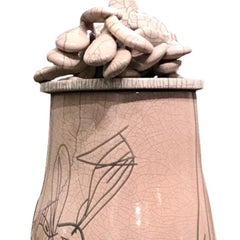
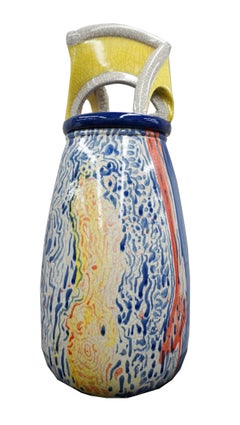
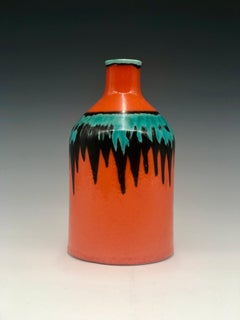
Vase 5
Vase 5

Vase 5

By Ray Smith

Located in Cuernavaca, Morelos

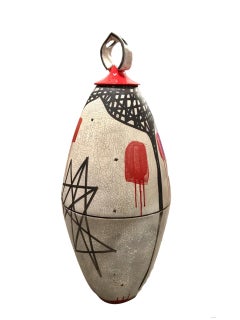
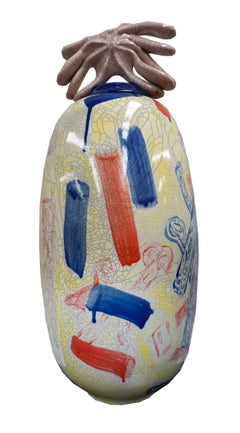
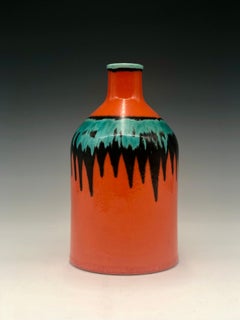
Vase Ceramics

Category

2010s Ray Smith Art

Materials

Ceramic

Vase 3
Vase 3

Vase 3

By Ray Smith

Located in Cuernavaca, Morelos

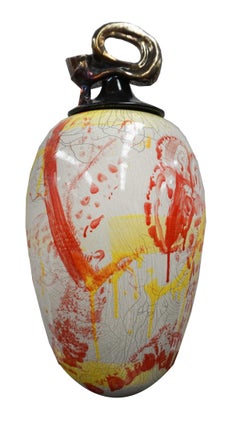
Vase Ceramics

Category

2010s Ray Smith Art

Materials

Ceramic

Vase 2
Vase 2

Vase 2

By Ray Smith

Located in Cuernavaca, Morelos

Vase Ceramics

Category

2010s Ray Smith Art

Materials

Ceramic

Vase 6
Vase 6

Vase 6

By Ray Smith

Located in Cuernavaca, Morelos

Vase Ceramics

Category

2010s Ray Smith Art

Materials

Ceramic

Vase 1
Vase 1

Vase 1

By Ray Smith

Located in Cuernavaca, Morelos

Vase Ceramics

Category

2010s Ray Smith Art

Materials

Ceramic

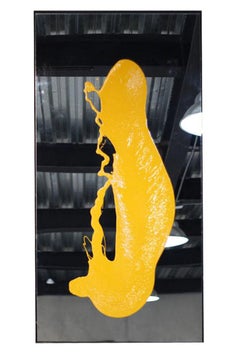
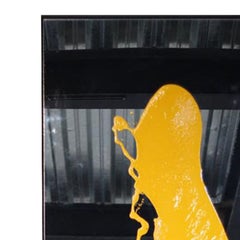
Yellow Mirror
Yellow Mirror

Yellow Mirror

By Ray Smith

Located in Cuernavaca, Morelos

Painted mirror in yellow

Category

2010s Abstract Ray Smith Art

Materials

Mirror

Related Items
"Currency #201" Blue Portrait  Artwork with French Text on Red Background

"Currency #201" Blue Portrait Artwork with French Text on Red Background

By Natasha Lelenco

Located in FISTERRA, ES

“Currency #201” is a circular mixed media portrait on wood featuring a surreal blue figure against a vibrant red background. Around the head, the French inscription reads: “Nous, les...

Category

2010s Pop Art Ray Smith Art

Materials

Wood, Spray Paint, Acrylic

Tea for two – Tod

Harry BunceTea for two – Tod, 2017

$205

H 16.15 in W 19.3 in D 0.04 in

Tea for two – Tod

By Harry Bunce

Located in Deddington, GB

Tea for two – Tod by Harry Bunce [2017] limited_edition Screen Print Edition number 146 Image size: H:25 cm x W:31 cm Complete Size of Unframed Work: H:41 cm x W:49 cm x D:0.3cm Sol...

Category

2010s Contemporary Ray Smith Art
Materials

Paper, Screen

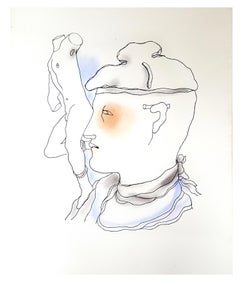
Jean Cocteau - White Book - Original Handcolored Lithograph

Jean Cocteau - White Book - Original Handcolored Lithograph

By Jean Cocteau

Located in Collonge Bellerive, Geneve, CH

Jean Cocteau White Book - Autobiography about Cocteau's discovery of his homosexuality. The book was first published anonymously and created a scandal. Original Handcolored Lithograp...

Category

1930s Modern Ray Smith Art

Materials

Lithograph

after Henri Matisse,  "Sitting Blue Nude"

Henri Matisseafter Henri Matisse, "Sitting Blue Nude"

$1,534

H 29.93 in W 22.05 in D 0.04 in

after Henri Matisse, "Sitting Blue Nude"

By Henri Matisse

Located in Collonge Bellerive, Geneve, CH

Lithograph after Henri Matisse - Sitting Blue Nude Artist : after Henri MATISSE Edition of 200 76 x 56 cm With stamp of the Succession Matisse References : Artvalue - Succession Ma...

Category

1950s Modern Ray Smith Art

Materials

Lithograph

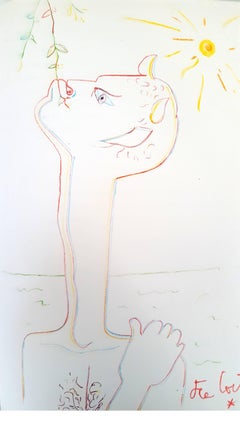
Jean Cocteau - Marine Mountains - Original Lithograph

Jean Cocteau - Marine Mountains - Original Lithograph

By Jean Cocteau

Located in Collonge Bellerive, Geneve, CH

Jean Cocteau - Marine Mountains - Original Lithograph Dimensions: 38 x 28 cm Edition: 200 In Rives From: COCTEAU. — VERDET (André). Montagnes marines. S. l. (Paris), Les Messagers du...

Category

1960s Modern Ray Smith Art

Materials

Lithograph

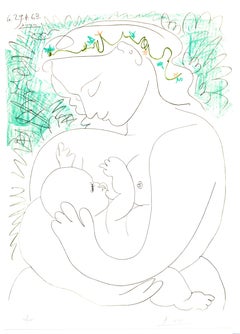
Grand Maternity - Handsigned - (after) Pablo Picasso

Grand Maternity - Handsigned - (after) Pablo Picasso

By Pablo Picasso

Located in Collonge Bellerive, Geneve, CH

After PABLO PICASSO (1881-1973) Maternity (Grande Maternité) 1963 Offset Lithograph on Paper Signed and Dated Handsigned in Pencil Numbered: 73/200 90...

Category

1960s Modern Ray Smith Art

Materials

Lithograph

Portrait Gentleman Armour, Blue Cloak, Diamond Brooch c.1700 French Carved Frame

Portrait Gentleman Armour, Blue Cloak, Diamond Brooch c.1700 French Carved Frame

By Joseph Vivien

Located in London, GB

Portrait of a Gentleman in Armour and Azure Cloak with Diamond Brooch c.1700 Attributed to Joseph Vivienne (1657-1735) The sitter in this superb portrait, offered by Titan Fine Art...

Category

17th Century Old Masters Ray Smith Art

Materials

Oil, Cotton Canvas

Portrait of Lady, Mary Hammond, Oil on Panel c.1618-22, Manor House Provenance

Portrait of Lady, Mary Hammond, Oil on Panel c.1618-22, Manor House Provenance

By Cornelius Johnson

Located in London, GB

Portrait of Mary Hammond in Sumptuous Attire, Jewels and Lace c.1618-22 Circle of Cornelius Johnson (1593-1661) This portrait of a lady, presented by Titan Fine Art, is an exquisite example of early seventeenth-century portraiture, remarkable both for the lavishness of its subject’s attire and for the distinguished provenance that has accompanied it across four centuries that adds a rich layer of historical significance. It was once part of the notable collection of Sir William Temple, 1st Baronet (1628–1699) at Moor Park, a stately mansion in Hertfordshire. Temple was a diplomat, essayist, philosopher, and the patron of Jonathan Swift. He was a key participate at an important period in English history, helping not only to negotiate the Triple Alliance, but also the marriage between William of Orange and Princess Mary. His collection at Moor Park was well known in its day, reflecting both his cultivated taste in art and literature and his international connections. Its fabulous attire, rendered with almost microscopic attention, is not merely decorative but emblematic of a world in which visual display was a language of power. Its provenance, stretching from the English country house and Enlightenment scholarship to modernist circles, forms a microcosm of cultural exchange across four centuries. Thus, the portrait of Mary Hammond stands as both a masterpiece of early seventeenth-century craftsmanship and a witness to the grand narrative of collecting and connoisseurship—a testament to the enduring fascination of beauty, status, and history intertwined. By tradition the portrait depicts Mary Hammond (born c.1602), who was Sir William Temple’s mother, and the daughter of the royal physician who served James I, Dr John Hammond (c.1555–1617) and whose family owned Chertsey Abbey in Surrey. The woman appears between 18 and 25 years old, and Mary would be about 18–20 when the portrait was painted circa 1620, therefore this matches the apparent age of the sitter and the fashion perfectly. Mary stood at the intersection of learned/courtly and gentry worlds. On 22 June 1627 she married her first cousin (a common practice for consolidating family wealth and influence during that era.) Sir John Temple (1600-1677) at St Michael, Cornhill in the City of London. The couple resided nearby, at Blackfriars. Her marriage to Sir Temple placed her at the heart of the social and political circles that shaped British history. The couple had at least five children, and they became highly significant historical figures: The eldest son, Sir William Temple, 1st Baronet, became a distinguished diplomat, statesman, and essayist, famous for his role in the Triple Alliance and as a patron and mentor to the writer Jonathan Swift – our portrait was in his collection. Their daughter, Martha Temple, later Lady Giffard, was a notable figure in her own right. She became her brother William's first biographer and a respected letter-writer, providing a rare female perspective on the events and high society of the time. Another son, also named Sir John Temple, became Attorney General for Ireland and was involved in the turbulent politics surrounding the English Civil War and the Act of Settlement in Ireland. Mary died in November 1638 after giving birth to twins and was buried at Penshurst, Kent. The family's connection to Penshurst Place is a major point of interest as this historic manor was the seat of the Sidney family, a major aristocratic and literary dynasty. The portrait was in the collection of the Mary’s son, Sir William Temple. From there it descended to his daughter, and then to her nephew, the Reverend Nicholas Bacon of Spixworth Park, Norfolk (his mother was Dorothy Temple who died in 1758). Indeed, by this time, many Temple relics were in the collection at Spixworth including the engagement ring of the illustrious Dorothy Osborne, Lady Temple, wife of Sir William Temple. The portrait thus linked two prominent English families—the Temples and the Bacons—for generations. It is listed in a Spixworth Park inventory of 27 October 1910 by the local collector and art historian, Prince Duleep Singh. He described it with characteristic precision as: “No. 69. Lady Half Length, body and face turned towards the sinister, hazel eyes upwards to the dexter, red hair dressed low and over the ears, a jewelled coronet behind, pearl ear-rings tied with black strings. Dress: black, bodice cut low and square, with lace all round the opening and over shoulders, sleeves with double slashes showing red lining and lace under, falling thin pleated lace collar, black strings tied behind it, a jewel suspended on a black string round the neck, and a double row of agate and silver beads all round to the shoulders. M. In brown veined stone frame. Age 30. Date c.1620. It is called ‘Dutch portrait from Moor Park, mentioned by Nicholas Bacon of Coddenham and Shrubland as a very valuable painting.’ A few years later, when Robert Bacon Longe’s executors sold the contents of Spixworth Park (19–22 May 1912), the portrait appeared as lot 262, described as: “A very valuable half-length portrait on panel, ‘Dutch Lady, with deep lace collar and pearl and amethyst necklace, pendant, and ear-rings, and auburn hair, with coronet’ Early Dutch School 1620.” Following this sale the painting entered the collection of David and Constance Garnett, prominent literary figures of the early twentieth century, before being gifted to Andre Vladimervitch Tchernavin by 1949, and subsequently passed by him to the present owners in 1994. The two great houses associated with the painting, Moor Park and Spixworth Park, further underscore its pedigree. Moor Park, in Hertfordshire, was among the grandest country estates of seventeenth-century England—its gardens famously redesigned by Sir William Temple himself and later influencing landscape design across Europe. Sir William's Temple's secretary was Jonathan Swift, who lived at Moor Park between 1689 and 1699. Swift began to write "A Tale of the Tub" and "The Battle of the Books" at Moor Park. Spixworth Park, near Norwich, was an Elizabethan country house in Spixworth, Norfolk, located just north of the city of Norwich. It was home to successive generations of the Bacon family, one of Norfolk’s most distinguished dynasties (later, the Bacon Longe family), who were considerable land owners (owning Reymerston Hall, Norfolk, Hingham Hall, Norfolk, Dunston Hall, Norfolk, Abbot's Hall, Stowmarket, and Yelverton Hall, Norfolk). Spixworth Hall and the surrounding parkland remained in the Longe family for 257 years until 1952, when it was demolished. Rendered with meticulous precision and sumptuous detail, the painting depicts an elegantly dressed woman—her poise, costume, and jewels all communicating a message of wealth, refinement, and social rank. Every brushstroke conveys an artist deeply attuned to the textures of luxury and the nuances of feminine dignity. The sitter’s attire is nothing short of magnificent. Her bodice and sleeves are fashioned from the finest black silk or satin, the fabric absorbing and reflecting light in equal measure, suggesting both depth and lustre. Around her shoulders lies an opulent lace ruff—a deep, radiating lace collar worked in such intricate detail that it testifies to both the artist’s technical skill and the sitter’s extravagant taste. Lace of this quality, especially Venetian or Flemish bobbin lace, was one of the costliest materials available in early seventeenth-century Europe, its weight worth more than gold, and was a marker of prestige that rivalled jewels in value. The painter has taken great care to delineate every loop and scallop of the lace, achieving an almost tactile realism. Pale skin was also a desired beauty standard, sometimes accentuated with contrasting black ribbons or strings. Her jewels amplify this display of affluence. Matching earrings and a delicate coronet or jewelled hair ornament with a feather adorn her hair, which is styled in the modest yet fashionable manner of the time. These details are far from decorative excess—they serve as visual emblems of social standing, refinement, and lineage. Portraits of this kind were statements of both identity and aspiration, intended to project a family’s prosperity and moral virtue to posterity. The portrait was most likely painted in London around 1618-1622. The low-cut, décolletage-revealing neckline was fashionable in the courts of England and France during the late Elizabethan and Jacobean eras (c. 1590s-1610s), this style did not prevail in the public fashion of the Low Countries at this time. This style of lace ruff — delicate needle lace with geometric openwork — was fashionable from c.1615 to 1622, and the jewelled caul (hair net) and lace edging over a stiffened coif are consistent with high-status English women’s portraiture between 1610–1620. The puffed sleeve slash and the use of pink satin beneath black velvet belong squarely to the late Jacobean...

Category

17th Century Old Masters Ray Smith Art

Materials

Oil, Panel

"Savoring Indigo" - Vintage Glass Sculpture

"Savoring Indigo" - Vintage Glass Sculpture

Located in Westport, CT

Resurrect Studio, “Savoring Indigo,” Vintage Glass Sculpture, 11 x 11 x 7 in. “Savoring Indigo” is an evocative vintage glass sculpture by Resurrect Studio, the collaborative practi...

Category

2010s Abstract Ray Smith Art

Materials

Glass, Resin

"Budding Flowering Ripening" - Vintage Glass Sculpture

"Budding Flowering Ripening" - Vintage Glass Sculpture

Located in Westport, CT

Resurrect Studio, “Budding Flowering Ripening,” Vintage Glass Sculpture, 14 x 14 x 12 in. “Budding Flowering Ripening” is a radiant vintage glass sculpture by Resurrect Studio, the ...

Category

2010s Abstract Ray Smith Art

Materials

Glass, Resin

Portrait of a Gentleman in a Red Coat and Periwig, c.1715-1725; Godfrey Kneller

Portrait of a Gentleman in a Red Coat and Periwig, c.1715-1725; Godfrey Kneller

By Sir Godfrey Kneller

Located in London, GB

Portrait of a Gentleman in a Red Coat and Periwig, c.1715-1725 Studio of Sir Godfrey Kneller (1646–1723) This portrait of a gentleman, presented by Titan Fine Art, is a fine and wel...

Category

18th Century Old Masters Ray Smith Art

Materials

Canvas, Oil

Mel Bochner, Kick Against the Pricks (Blah Blah Blah) Silkscreen Signed/N Framed

Mel Bochner, Kick Against the Pricks (Blah Blah Blah) Silkscreen Signed/N Framed

By Mel Bochner

Located in New York, NY

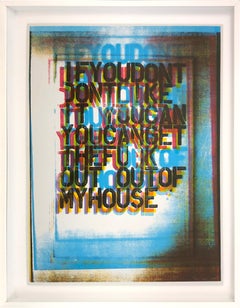
MEL BOCHNER Kick Against the Pricks (Blah..Blah...Blah...), 2018 Two color silkscreen on boutique silk fair paper with blue-colored back, 350 gsm paper Signed, dated, and numbered 29/30 on the front by Mel Bochner Frame included: elegantly framed in a museum quality white wood frame with UV plexiglass is included Measurements: Framed: 12.5 inches x 30 inches x .5 inch Artwork: 10.5 inches x 28 inches Published by Two Palms Press Bibliography Catalogue Raisonné of Editioned Prints Krakow Witkin...

Category

2010s Contemporary Ray Smith Art
Materials

Screen

Previously Available Items
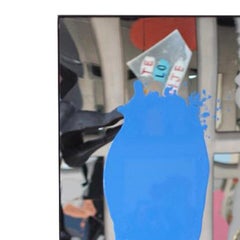
Serie: Abstractos con espejo 2

Serie: Abstractos con espejo 2

By Ray Smith

Located in Cuernavaca, Morelos

Mixed technique

Category

2010s Contemporary Ray Smith Art
Materials

Mirror, Wood, Paint

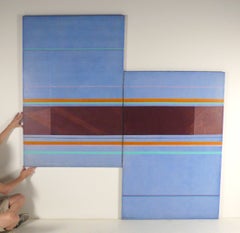
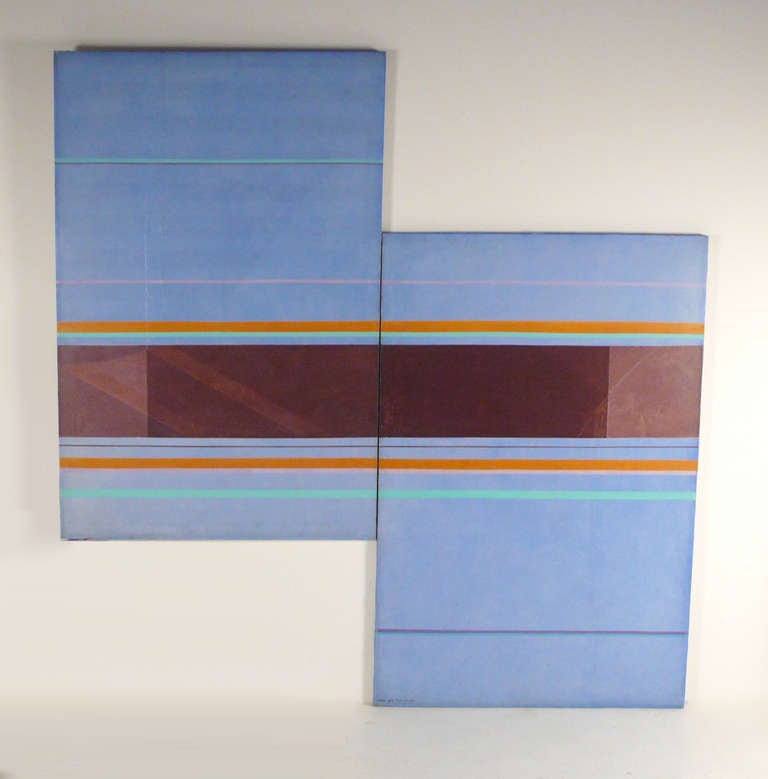
Early Ray Smith Diptych

Early Ray Smith Diptych

Sold

H 59 in W 39 in

Early Ray Smith Diptych

By Ray Smith

Located in Dallas, TX

Early Ray Smith oil painting diptych on canvas titled 'Bride to Wings'. Measurements are for each panel. A very modernist piece that is atypical of Smith's...

Category

1970s Mexican Modern Vintage Ray Smith Art
Materials

Canvas

Ray Smith art for sale on 1stDibs.
Find a wide variety of authentic Ray Smith art available for sale on 1stDibs. You can also browse by medium to find art by Ray Smith in glass, mirror, ceramic and more. Much of the original work by this artist or collective was created during the 21st century and contemporary and is mostly associated with the abstract style. Not every interior allows for large Ray Smith art, so small editions measuring 16 inches across are available. Customers who are interested in this artist might also find the work of Randi Grantham, Duane Paul, and L.G.. Ray Smith art prices can differ depending upon medium, time period and other attributes. On 1stDibs, the price for these items starts at $300 and tops out at $20,000, while the average work can sell for $15,000.
Artists Similar to Ray Smith