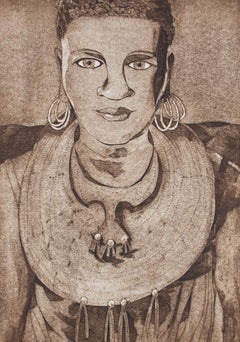
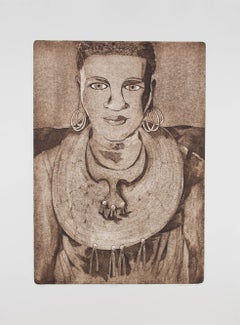
Terry Buchanan (b.1938) - 1998 Collagraph, Africa II
By Terry Buchanan
Located in Corsham, GB
Print 2/10. Signature, date and title inscribed below plate lines. On wove.
Category
1990s Terry Buchanan Prints and Multiples
Materials
Monoprint
Terry Buchanan (b.1938) - 1998 Collagraph, Africa II
By Terry Buchanan
Located in Corsham, GB
Print 2/10. Signature, date and title inscribed below plate lines. On wove.
Monoprint
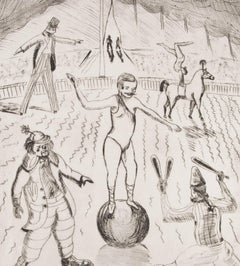
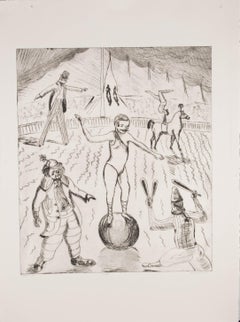
Terry Buchanan (b.1938) - 1997 Drypoint, Cirque II
By Terry Buchanan
Located in Corsham, GB
Drypoint 3/3. Signature, date and title inscribed below plate lines. On watermarked wove.
Etching
$2,250
H 18 in W 13 in
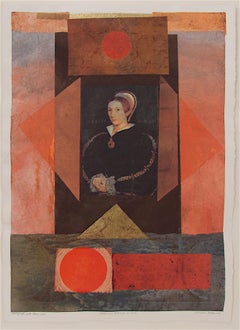
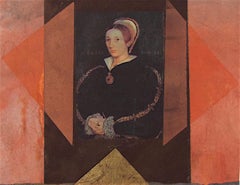
Suzanne Benton_Catherine Howard d. 1542_2003_monoprint, Chine collé_13 x 18 in
By Suzanne Benton
Located in Darien, CT
Suzanne Benton has been a working artist in a wide range of media for more than 60 years, with more than 150 solo exhibitions, 110 group shows, and two retrospectives of her multi-fa...
Monoprint
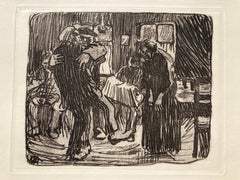
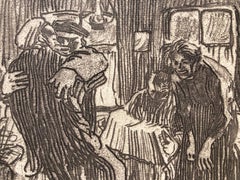
HAMBURGER KNIEPPE
By Käthe Kollwitz
Located in Santa Monica, CA
KATHE KOLLWITZ (1867-1945) HAMBURGER KNIEPPE, 1901) (K.58 IIIb) Soft Ground Etching, Plate 9 ¾ x 8 ¼ sheet 10 ½ x 13 ¾. With the von de Becke blind stamp in the lower right. Prin...
Etching
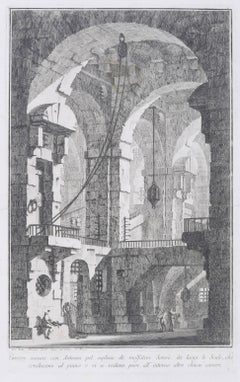
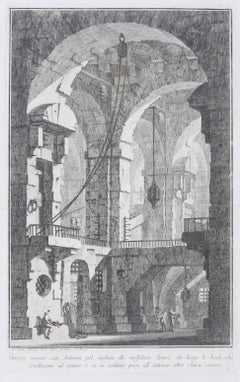
Carcere ascura
By Giovanni Battista Piranesi
Located in Fairlawn, OH
Carcere ascura Etching, 1743 Signed in the plate bottom left corner From: Prima Parte, 1743 Second edition: 1750-1778 Watermark: R 37-39 A lifetime impression printed during Piranesi’s life, before the plates are moved to Paris by his sons in the 1790’s This image foretells Piranesi's famous set, Carceri (Prisons) which is his next creative effort. Condition: Horizontal crease midway in the sheet associated with the manufacture of the paper. Visible watermark verso Small printer crease in the bottom right below the caption plate. Image size: 14 1/2 x 9 1/2 inches Reference: Robison 3 iii/VI Piranesi In Rome: Prima Parte di Architetture e Prospettive "Although Piranesi studied architecture in Venice, he never was able to find work in the field other than a few jobs involving remodeling in Rome. While Piranesi was struggling to support his architectural endeavors upon his arrival in Rome in 1740, he spent a short period of time in the studio of master painter Giovanni Battista Tiepolo (1696-1770) in addition to his apprenticeship with Giuseppe Vasi. The first production of Piranesi’s early years in Rome and a culmination of his training under Vasi, Tiepolo, and his uncle, was the Prima Parte di Architetture e Prospettive (1743). The Prima Parte was a collection of twelve etchings of imaginary temples, palaces, ruins, and a prison. During this time, Piranesi was still developing the unique style of etching he is known for today, and as such the Prima Parte differs significantly in technique compared to later works. In the Frontispiece of the Prima Parte, Piranesi’s lines are definite and exact with very little flow to them, designed in the form of traditional etching. The detail is immaculate, and yet perspective of the piece is oddly simple and familiar to the viewer. Piranesi’s technique employs miniscule markings and lines, intricately woven together to create a stippling effect. The Prima Parte, described as “rigid” by art historian Jonathan Scott, came to be seen as a stark contrast to his later sketches, which were much lighter and freer. Influenced by the style of Tiepolo, which epitomized the lightness and brightness of the Rococo period, Piranesi adopted some of the more painterly techniques of the masters he apprenticed under. Piranesi made the medium of etching appear as though it was a sketch or a painting, hence a “freer” and more fluid design in his later works. For example, the frontispiece of the Prima Parte read as an etching to Piranesi’s audience, but in his later vedute, the style of etching almost appears to be made of brushstrokes. Moreover, at the same time Piranesi was working on the Prima Parte, he aided the artist Giambattista Nolli. There is a small section of Nolli’s map...
Etching
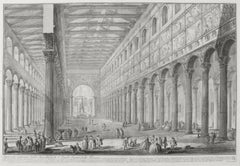
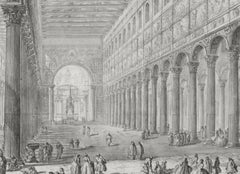
$2,000
H 15.88 in W 24.13 in
S. Paolo Fuori Le Mura (Vedute della Basilica di S. Paolo fuor della mura)
By Giovanni Battista Piranesi
Located in Fairlawn, OH
S. Paolo Fuori Le Mura (Vedute della Basilica di S. Paolo fuor della mura) Etching, 1748 From: Vedute di Roma, Plate 8 An early Roman printing, published by Bouchard e Gravier Watermark: Fleur de Lys in a double circle Signed in the plate Condition: Small margins as are common with Bouchard published impressions. Centerfold (as usual) Rich impression with good contrasts Plate/Image size: 15 7/8 x 24 1/8 inches Sheet size: 17 3/8 x 24 3/4 inches Reference: Focillon 723 Wilton-Ely 138 Hind 6 ii/VI, Bouchard e Gravier printing, before the price and numbers in later states This image is Piranesi’s second interior scene from the Vedute di Roma. The first interior is a less complex composition of the Interior of St. Peters which lacks the challenging perspective that the artist masters in this image. The Papal Basilica of St. Paul Outside the Walls...
Etching
$1,000
H 10 in W 8 in
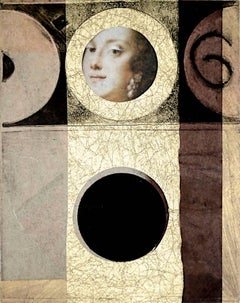
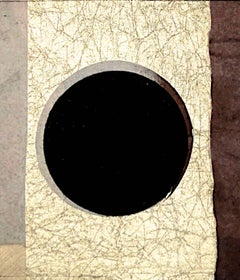
Suzanne Benton, Rosalba, 2014, Monoprint with chine colle_ 10 x 8 inches
By Suzanne Benton
Located in Darien, CT
Suzanne Benton has been a working artist in a wide range of media for more than 60 years, with more than 150 solo exhibitions, 110 group shows, and two retrospectives of her multi-fa...
Monoprint
$3,000
H 36 in W 26 in
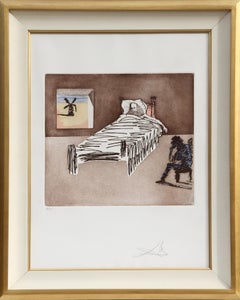
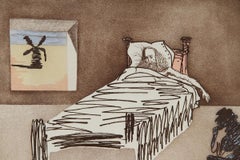
Le Legacy from Historia de Don Quichotte de la Mancha, Etching by Salvador Dali
By Salvador Dalí
Located in Long Island City, NY
Artist: Salvador Dali, Spanish (1904 - 1989) Title: Le Legacy from Historia de Don Quichotte de la Mancha Year: 1981 Medium: Etching on Arches, signed and numbered in pencil Edition:...
Etching

$1,050
H 22 in W 17.375 in
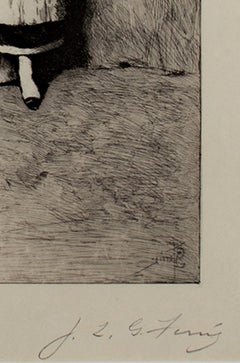
19th century etching black and white figurative print female subject signed
By Jean Leon Gerome Ferris
Located in Milwaukee, WI
"The Spinner" is an original etching by Jean Leon Gerome Ferris. It depicts a woman in an interior next to a spinning wheel. The artist signed the piece lo...
Etching
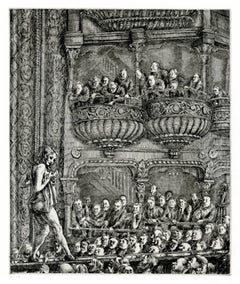
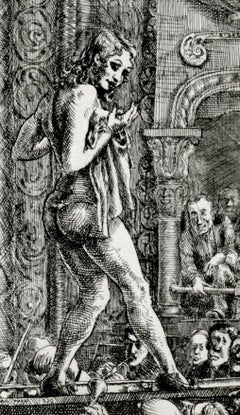
Gaiety Burlesk
By Reginald Marsh
Located in Fairlawn, OH
Gaiety Burlesque Etching, 1930 Unsigned (as usual for the Whitney edition); Numbered in pencil lower left; Blind stamp of the Whitney Museum (WM) lower right Edition: 114, regular ed...
Etching
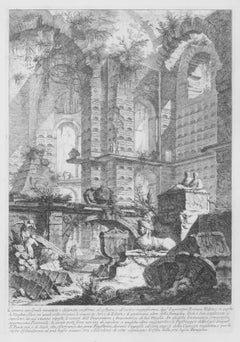
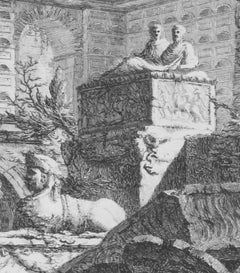
Camera sepolcrale
By Giovanni Battista Piranesi
Located in Fairlawn, OH
Camera sepolcrale Etching 1743 Signed in the bottom left corner From: Prima Parte, 1743 Second edition: 1750-1778 Watermark: R 37-39 A lifetime impression printed during Piranesi’s life, before the plates are moved to Paris by his sons in the 1790’s Condition: Excellent Image size: 14 5/8 x 9 3/4 inches Reference: Robison 20 iii/V Piranesi In Rome: Prima Parte di Architetture e Prospettive "Although Piranesi studied architecture in Venice, he never was able to find work in the field other than a few jobs involving remodeling in Rome. While Piranesi was struggling to support his architectural endeavors upon his arrival in Rome in 1740, he spent a short period of time in the studio of master painter Giovanni Battista Tiepolo (1696-1770) in addition to his apprenticeship with Giuseppe Vasi. The first production of Piranesi’s early years in Rome and a culmination of his training under Vasi, Tiepolo, and his uncle, was the Prima Parte di Architetture e Prospettive (1743). The Prima Parte was a collection of twelve etchings of imaginary temples, palaces, ruins, and a prison. During this time, Piranesi was still developing the unique style of etching he is known for today, and as such the Prima Parte differs significantly in technique compared to later works. In the Frontispiece of the Prima Parte, Piranesi’s lines are definite and exact with very little flow to them, designed in the form of traditional etching. The detail is immaculate, and yet perspective of the piece is oddly simple and familiar to the viewer. Piranesi’s technique employs miniscule markings and lines, intricately woven together to create a stippling effect. The Prima Parte, described as “rigid” by art historian Jonathan Scott, came to be seen as a stark contrast to his later sketches, which were much lighter and freer. Influenced by the style of Tiepolo, which epitomized the lightness and brightness of the Rococo period, Piranesi adopted some of the more painterly techniques of the masters he apprenticed under. Piranesi made the medium of etching appear as though it was a sketch or a painting, hence a “freer” and more fluid design in his later works. For example, the frontispiece of the Prima Parte read as an etching to Piranesi’s audience, but in his later vedute, the style of etching almost appears to be made of brushstrokes. Moreover, at the same time Piranesi was working on the Prima Parte, he aided the artist Giambattista Nolli. There is a small section of Nolli’s map...
Etching
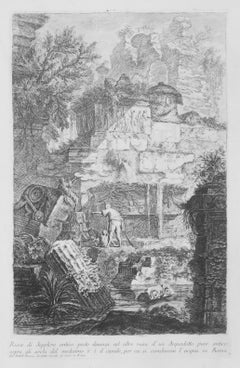
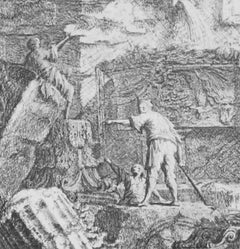
Ruine di Sepolcro antico
By Giovanni Battista Piranesi
Located in Fairlawn, OH
Ruine di Sepolcro antico Etching, 1743 Signed in the plate bottomleft in the caaption plate From: Prima Parte, 1743 Second edition: 1750-1778 Watermark: R 37-39 A lifetime impression printed during Piranesi’s life, before the plates are moved to Paris by his sons in the 1790’s Coniditon: Excellent/Very good Image size: 14 5/8 x 9 3/4 inches Reference: Robison 17 iii/V Piranesi In Rome: Prima Parte di Architetture e Prospettive "Although Piranesi studied architecture in Venice, he never was able to find work in the field other than a few jobs involving remodeling in Rome. While Piranesi was struggling to support his architectural endeavors upon his arrival in Rome in 1740, he spent a short period of time in the studio of master painter Giovanni Battista Tiepolo (1696-1770) in addition to his apprenticeship with Giuseppe Vasi. The first production of Piranesi’s early years in Rome and a culmination of his training under Vasi, Tiepolo, and his uncle, was the Prima Parte di Architetture e Prospettive (1743). The Prima Parte was a collection of twelve etchings of imaginary temples, palaces, ruins, and a prison. During this time, Piranesi was still developing the unique style of etching he is known for today, and as such the Prima Parte differs significantly in technique compared to later works. In the Frontispiece of the Prima Parte, Piranesi’s lines are definite and exact with very little flow to them, designed in the form of traditional etching. The detail is immaculate, and yet perspective of the piece is oddly simple and familiar to the viewer. Piranesi’s technique employs miniscule markings and lines, intricately woven together to create a stippling effect. The Prima Parte, described as “rigid” by art historian Jonathan Scott, came to be seen as a stark contrast to his later sketches, which were much lighter and freer. Influenced by the style of Tiepolo, which epitomized the lightness and brightness of the Rococo period, Piranesi adopted some of the more painterly techniques of the masters he apprenticed under. Piranesi made the medium of etching appear as though it was a sketch or a painting, hence a “freer” and more fluid design in his later works. For example, the frontispiece of the Prima Parte read as an etching to Piranesi’s audience, but in his later vedute, the style of etching almost appears to be made of brushstrokes. Moreover, at the same time Piranesi was working on the Prima Parte, he aided the artist Giambattista Nolli. There is a small section of Nolli’s map...
Etching
$35,000
H 21.38 in W 17.38 in D 1.5 in
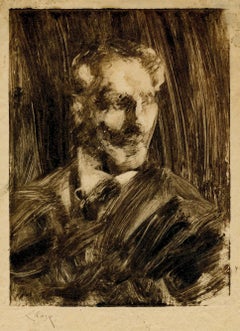
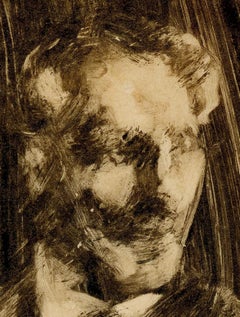
Portrait of a Man Facing Left, Impressionist Monoprint, Circa 1890
By William Merritt Chase
Located in Fairlawn, OH
Portrait of a Man Facing Left Monotype printed in brown ink, c. 1880-1914 Signed in ink lower left: Chase (see photo) Provenance: Helen Chase Storm (the artist's daughter) Jackson Chase Storm (her son) Chapellier Galleries (as agent) James Bergquist, Boston References And Exhibitions: Exhibited at the Museum of Fine Arts, Boston and the Clark Art Institute, Williamstown, MA. (See MFA paperwork in photos) Reference: Ronald G. Pisano, Completed by D. Frederick Baker and Carolyn K. Lane, William Merritt Chase: Still Lifes, Interiors, Figures, Copies of Old Masters, and Drawings, Catalogue Raisonne, Vol. IV (New Haven and London: Yale University Press, 2010), Vol. 1, M. 8. (See photos of entry) William Merritt Chase (1840-2016) Born in Nineveh, Indiana Died New York, New York In 1883 Chase was involved in the organization of an exhibition to help raise funds for a pedestal for the Statute of Liberty. The exhibition featured loans of three works by Manet and urban scenes by the Italian Impressionist Giuseppe de Nittis. Both artists influenced Chase's Impressionistic style that gave rise to a series of New York park scenes. It is also thought that he was influenced by John Singer Sargent's In the Luxembourg Gardens (1879) which was exhibited in New York at this time. Indeed, Chase had met Sargent in Europe in 1881, the two men becoming lifelong friends with Sargent painting Chase's portrait in 1902. On another European trip in 1885, Chase met James McNeill Whistler in London. While Whistler had a reputation for being difficult, the two artists got along famously and agreed to paint one another's portrait. Eventually, however, Whistler's moods began to grate with Chase who wrote home stating "I really begin to feel that I never will get away from here". For his part, Whistler criticized Chase's finished portrait and, according to Hirshler, "complained about Chase for the rest of his life". While no record exists of Whistler's portrait of Chase; Chase's portrait of Whistler remains a well-known piece in his oeuvre. In 1887 Chase married Alice Gerson, the daughter of the manager of a lithography company. Though some fifteen years his junior (Chase was 37), he had known Alice for some time through her family's devotion to the arts. The pair, who would enjoy a happy marriage with Alice in full support of her husband's career, settled initially in Brooklyn...
Monoprint


$760
H 12.6 in W 9.38 in D 0.04 in
Scène de Bistrot - Unknow Artist After Adrian Van Ostade - 18th Century
Located in Roma, IT
Image dimensions: 15 x 12 cm. Scène de bistrot is a black and white etching with burin interventions on paper realized by an anonymous artist, after the Flemish artist Adrian Van Ostade...
Etching
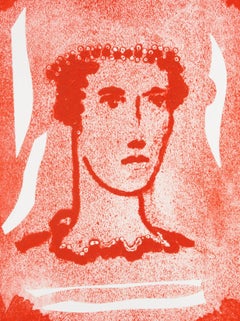
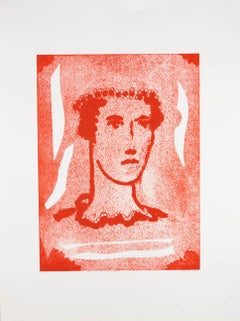
Terry Buchanan (b.1938) - 1998 Collagraph, Ophelia II
By Terry Buchanan
Located in Corsham, GB
Signature, date and title inscribed below plate lines. On watermarked wove.
Monoprint
Sold
H 21.74 in W 12.09 in
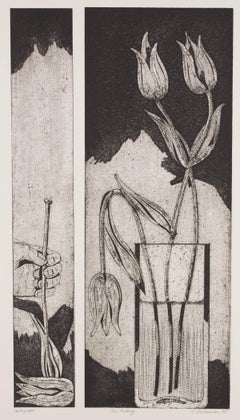
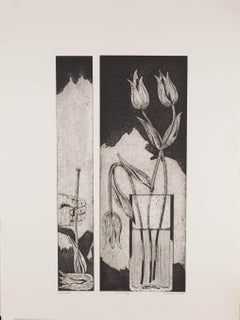
Terry Buchanan (b.1938) - 1998 Collagraph, The Falling II
By Terry Buchanan
Located in Corsham, GB
A beautiful collagraph print by the artist Terry Buchanan, depicting a floral composition. Signed, dated and inscribed with the title below plate lines. On watermarked wove. ...
Monoprint
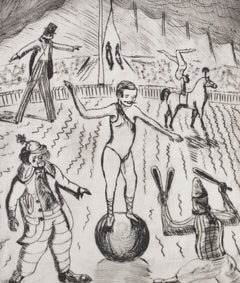
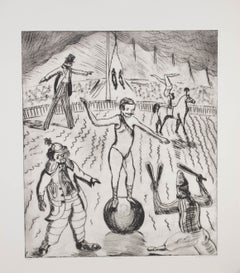
Terry Buchanan (b.1938) - 1997 Drypoint, Cirque
By Terry Buchanan
Located in Corsham, GB
Drypoint 1/3. Signature, date and title inscribed below plate lines. On wove.
Etching
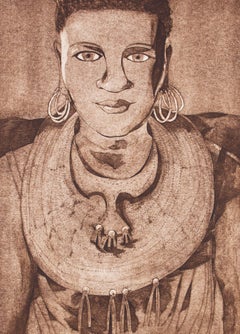
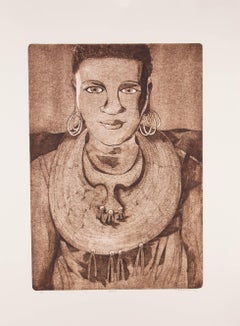
Terry Buchanan (b.1938) - 1998 Collagraph, Africa
By Terry Buchanan
Located in Corsham, GB
Print 1/10. Signature, date and title inscribed below plate lines. On wove.
Monoprint
Sold
H 10.56 in W 21.54 in
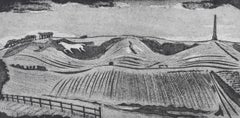
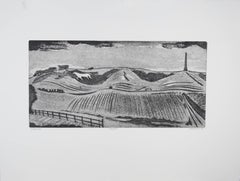
Terry Buchanan (b.1938) - 1998 Collagraph, Cherhill White Horse
By Terry Buchanan
Located in Corsham, GB
In the style of British painter Eric Ravilious, this beautiful print depicts a landscape view of the Cherhill White Horse. Signed, dated and inscribed with the title below plate line...
Monoprint
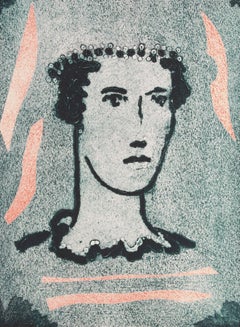
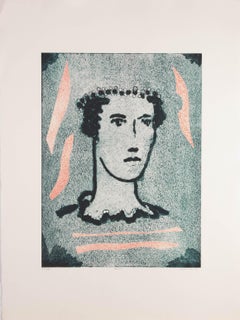
Terry Buchanan (b.1938) - 1998 Collagraph, Ophelia
By Terry Buchanan
Located in Corsham, GB
Signature, date and title inscribed below plate lines. On wove.
Monoprint
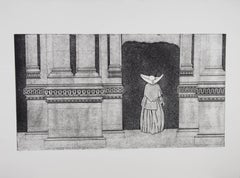
Terry Buchanan (b.1938) - 1998 Etching, Sacre Coeur II
By Terry Buchanan
Located in Corsham, GB
Print 4/10. Signature, title and date inscribed below plate lines. On watermarked wove.
Etching
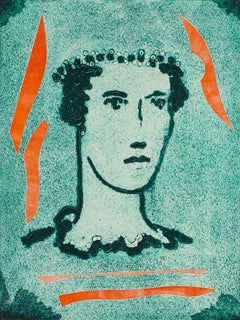

Terry Buchanan (b.1938) - 1998 Collagraph, Ophelia
By Terry Buchanan
Located in Corsham, GB
Signature, date and title inscribed below plate lines.On watermarked wove..
Monoprint