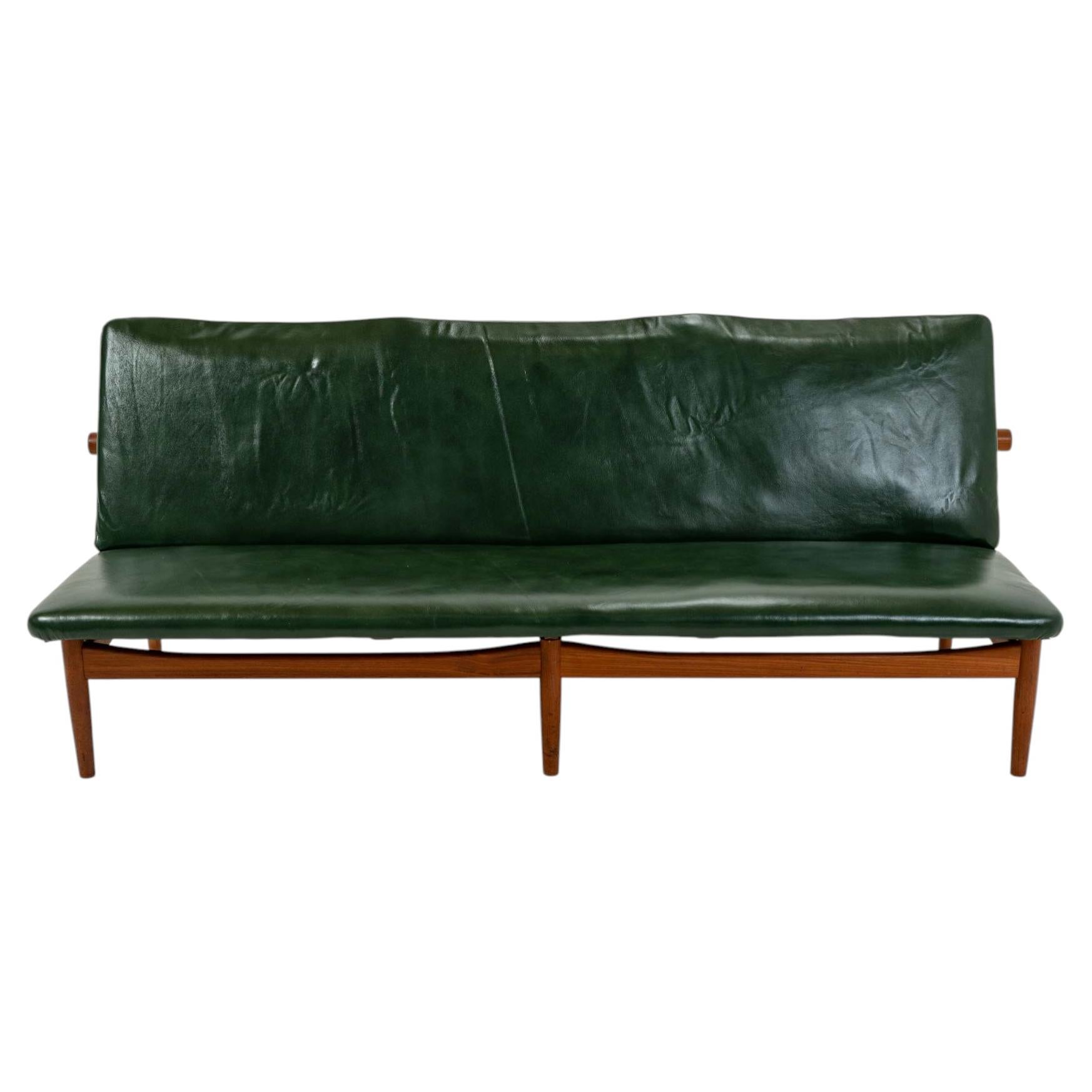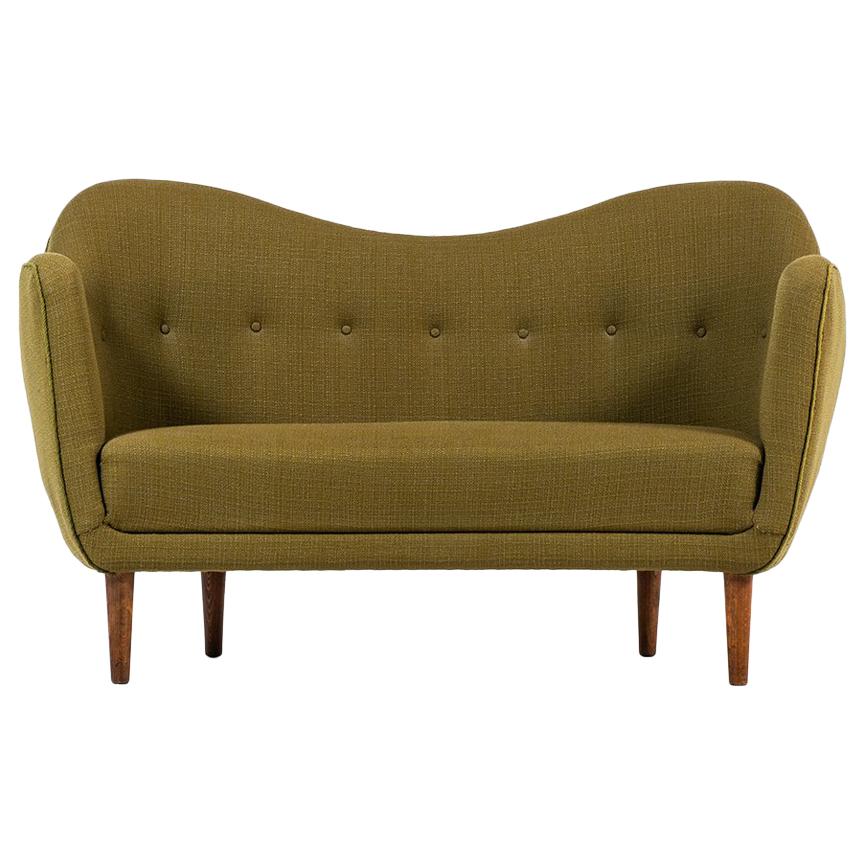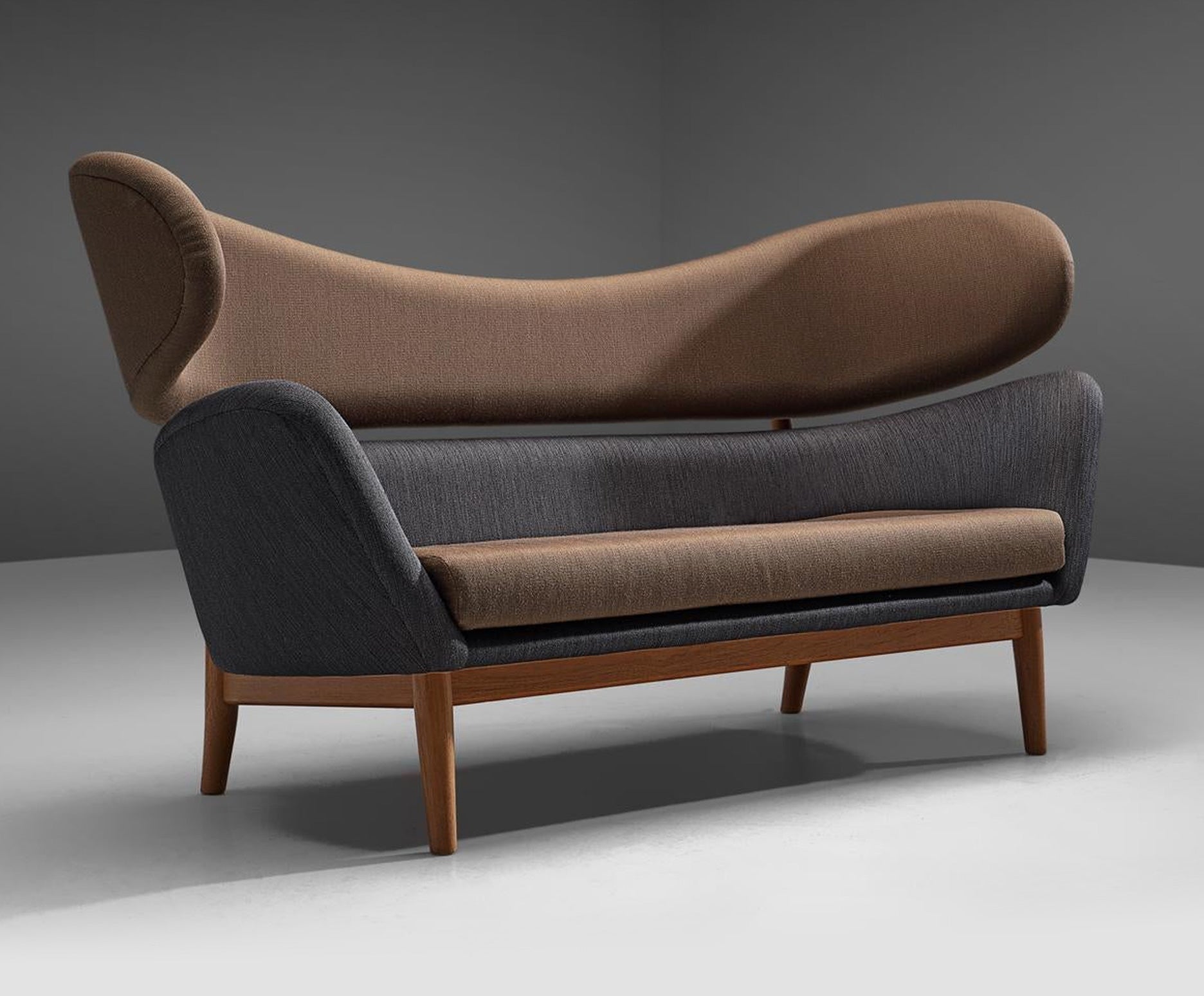
Baker SofaBy Finn Juhl
With the Baker sofa, aesthetics are as important as utility. Its creator, Finn Juhl (1912–89), once said, “Art has always been my main source of inspiration.” This was unusual for a designer associated with Scandinavian modernism, a movement steeped in cabinetmaker traditions and thus laser-focused on craftsmanship. But unlike his peers, Juhl was not trained in cabinetry. While he shared their prevailing interest in materials, details and finishes, he mined the world of modern art for ideas. Beginning with his early work, such as the Pelican chair, Juhl’s designs stood out for their sculptural qualities, evoking both natural forms and the abstract art he loved.
In his youth, Juhl dreamed of becoming an art historian but his father steered him toward architecture, a more financially stable path. He studied at the Royal Danish Academy of Fine Arts and in 1934, was hired to work on interiors for renowned Danish architect Vilhelm Lauritzen. Later, Juhl opened his own practice, specializing in furniture and interior design. In collaborating with esteemed cabinetmaker Niels Vodder, Juhl developed new methods of joining and bending teak. The elegant results of their experiments have been credited with helping make teak synonymous with Danish modernism.
Not long after his designs were the subject of a feature article in Interiors magazine, Juhl was commissioned to create the exhibition design for Chicago’s “Good Design” show as well as contribute his work to the event. In 1950, Grand Rapids, Michigan-based furniture manufacturer Hollis Baker commissioned Juhl to design a collection for the Baker Furniture Company — “Baker Modern,” the firm's inaugural line of modern furniture.
Introduced in 1951, the Baker sofa marked Juhl’s entrance into the American market. The collection was a great success and is credited with igniting the fervor for Danish modernism that dominated the markets in the 1950s and ’60s.
Juhl admitted to being “fascinated by shapes that defy gravity and create a visual lightness,” and in dividing the backrest of the Baker sofa into two separate parts, the design achieved both these objectives. Soft edges and organic shapes show the influence of Juhl’s favorite Surrealist artists, Jean Arp and Joan Miró.
Juhl’s American success included the commission to design the Trusteeship Council Chamber at the United Nations in New York in 1952, and he was awarded five gold medals at the Milan Triennale. With a frame of oak or walnut and upholstery in fabric or leather, the Baker sofa is manufactured by the House of Finn Juhl, a One Collection company. It remains a sophisticated example of how fine craftsmanship and mass production can coexist.