Located in West Palm Beach, FL
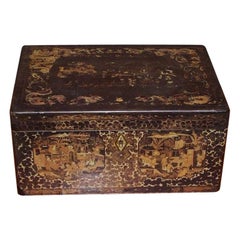
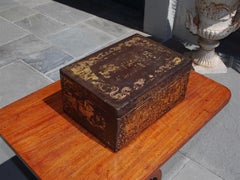
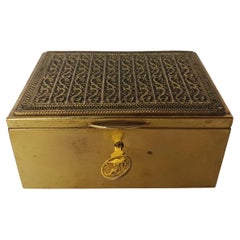
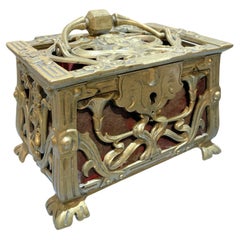
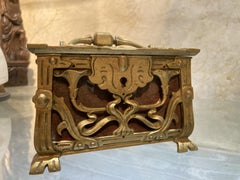
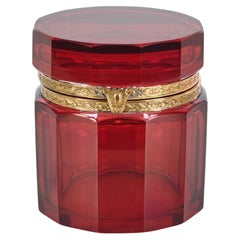
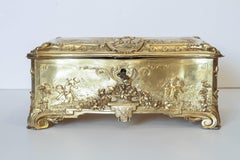
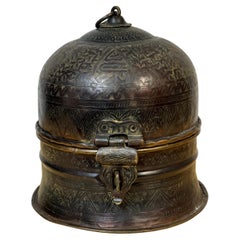
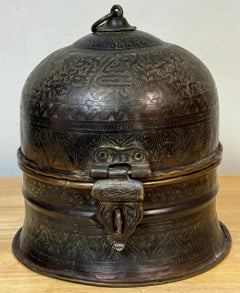
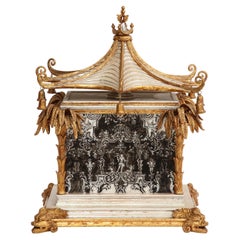
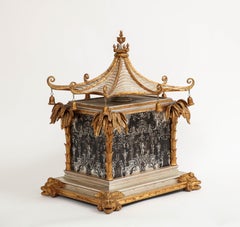
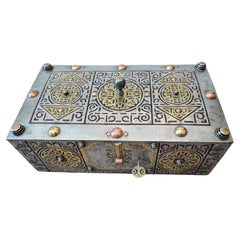
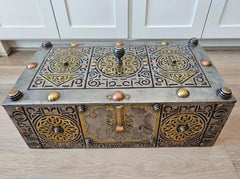
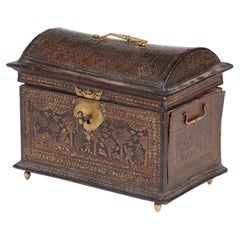
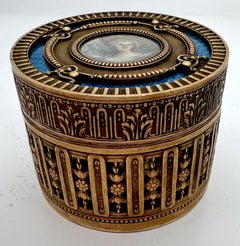
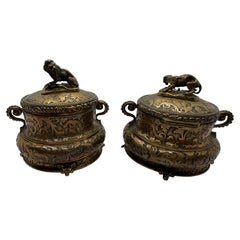
Exquisite Antique Islamic-Mughal Engraved & Gilt Enamel Domed Box, #145 with import label, Persia/IIndia, 20th century
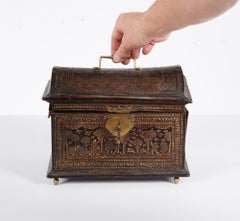
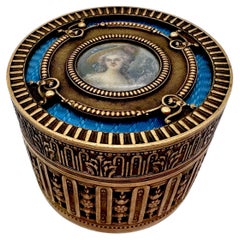
This exquisite antique Mughal domed box is a stunning example of Indo-Islamic artistry from the 20th century, originating from Persia or India. Crafted from patinated cast and forged bronze, this work weighs nearly 10 pounds, emphasizing its substantial and durable construction. Standing 15 inches high with a diameter of 12.5 inches, the circular architectural design is both imposing and elegant.
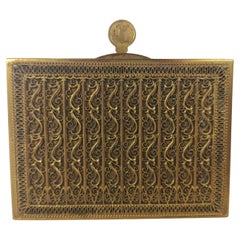
The box features an elaborate front latch hinge, complemented by a matching rear hinge, showcasing meticulous attention to detail in both form and function. Profusely decorated with intricate, exotic fine engravings and gilt enamel work, the surface is adorned with elaborate patterns that reflect the rich artistic heritage of the Mughal era. The patinated finish adds depth and character, enhancing the visual appeal of the engraved and gilded elements.
Numbered 145 and accompanied by an import label, this piece holds not only aesthetic beauty but historic significance. The numbering suggests it may be part of a limited series or collection, adding to its uniqueness and value. Its impressive workmanship and historical roots make it a remarkable find for collectors or an addition to any interior.
Ready to place in any setting, this domed box serves as both a functional storage piece and a captivating decorative object. Its substantial size and weight make it a standout addition to any room, whether displayed on a mantle, side table, or within a curated collection. This Mughal bronze...
Category
Early 20th Century Asian Islamic Gilt Boxes