Gothic Decorative Objects

GOTHIC STYLE

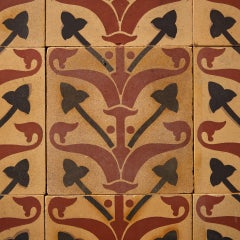
The Gothic Revival movement (also called Victorian Gothic or Neo-Gothic) emerged in Britain in the 1740s, and reached its height in the late-19th century. The style is characterized by such decorative flourishes as pointed arches, floral details, finials, heraldic motifs and linenfold carving. The movement was rooted in religious and social conservatism. Its proponents, who included Charles Barry and A.W.N. Pugin, the architects of London’s Houses of Parliament (designed in 1840), believed that the art and architecture of the Middle Ages were authentically spiritual and inherently moral.

In the United States, the Gothic Revival movement shaped both public buildings and private houses. Numerous American schools were built in the early-19th century in a style now called Collegiate Gothic. Many builders and craftsmen were inspired by Andrew Jackson Downing’s widely read 1850 book Architecture for Country Houses, which posited that a family’s home should exemplify their values — and that the Gothic Revival style was particularly well-suited to scholars and clergymen. Furniture with detailing that mirrored that of Gothic Revival buildings appeared in the same period. Such pieces typically feature dark, intricately carved wood, and upholstery in velvet or leather.

Much like the castle or cathedral that inspired it, a Gothic Revival chair makes a bold design statement. And while you probably don’t have to cross a moat or raise a portcullis to get through your front door, a Gothic Revival piece might make a statement that your home is indeed your castle.

to
11
153
1
65
54
34
1
14
8
5
1
1
1
4
1
27,127
14,364
9,550
5,716
4,027
3,124
2,334
1,719
1,538
1,417
1,267
1,256
1,072
909
897
674
636
615
84
52
35
28
27
102
51
125
52
13
12
12
Height
to
Width
to
154
154
154
1
1
1
1
1
Style: Gothic
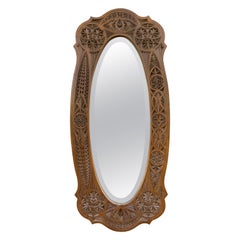
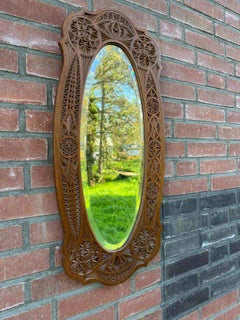
Rare & Beautifully Hand-Carved Antique Dutch Arts & Crafts Beveled Wall Mirror

Rare & Beautifully Hand-Carved Antique Dutch Arts & Crafts Beveled Wall Mirror

Located in Lisse, NL

Striking wall mirror with handcarved geometrical 'flowers' and trefoil symbols. Via one of our foreign contacts we recently purchased this perfectly fine and deeply handcarved, sc...

Category

Early 20th Century European Gothic Decorative Objects

Materials

Mirror, Wood

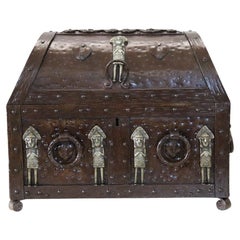
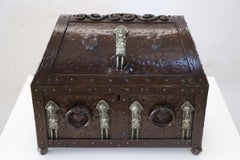
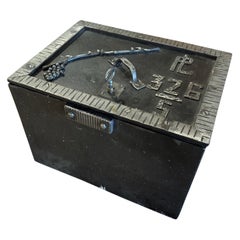
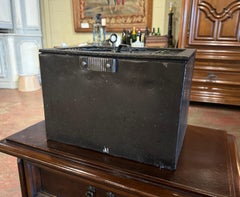
Early 20th Century Italian Gothic style Decorative Boxe or Small Trunk

Early 20th Century Italian Gothic style Decorative Boxe or Small Trunk

Located in Casale Monferrato, IT

We present this beautiful and rare small trunk made in the early 20th century. Made entirely of iron with brass decorations, this trunk has a Gothic-inspired design. A unique decora...

Category

Early 20th Century Italian Gothic Decorative Objects

Materials

Iron

Late 19th Century French Gothic style Walnut Cigar cabinet

Late 19th Century French Gothic style Walnut Cigar cabinet

Located in Casteren, Noord-Brabant

Elegant 19th-century French cigar cabinet in the Gothic style. This beautifully crafted piece features a tambour roll-top door that opens to reveal compartments for cigars and two sm...

Category

1880s French Antique Gothic Decorative Objects

Materials

Brass

Original Gothic Style 1860 Candlesticks 19th Century Emperor of House Habsburg

Original Gothic Style 1860 Candlesticks 19th Century Emperor of House Habsburg

By Woka Lamps

Located in Vienna, AT

Gothic style of Laxenburg so called after the "Laxenburg Castle", the favoured summer-residence of the Austrian Emperor of the house of Habsburg. Material used is carved wood, gilded.

Category

Mid-19th Century Austrian Antique Gothic Decorative Objects

Materials

Wood

Georgian Architectural Model

Georgian Architectural Model

Located in Greenwich, CT

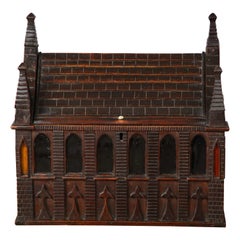
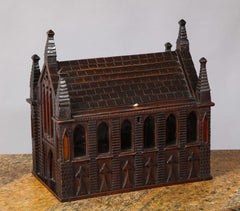
Very fine English early 19th century mahogany architectural model of a church, the multiple steeples flanking a faux carved slate shingled room, wh...

Category

Early 19th Century English Antique Gothic Decorative Objects

Materials

Mahogany

19th Century French Polished Cast Iron Safe with Key and Two-Letter Combination

19th Century French Polished Cast Iron Safe with Key and Two-Letter Combination

Located in Dallas, TX

Keep your jewelry and important documents locked up in this elegant, antique safe from the Champagne-Ardenne region of France. Crafted circa 1880, and built in cast iron, this heavy ...

Category

Late 19th Century French Antique Gothic Decorative Objects

Materials

Brass, Iron

Very Rare Casket Minnekästchen or Box, Germany or Italy, 15th Century

Very Rare Casket Minnekästchen or Box, Germany or Italy, 15th Century

Located in Beuzevillette, FR

Wooden coffret, call minnekästchen, engraved with a dog, a hare and foliage with polychromy remains. During the Middle Age, the hare is a symbol of fertility, joy and represents the Christ...

Category

15th Century and Earlier European Antique Gothic Decorative Objects

Materials

Iron

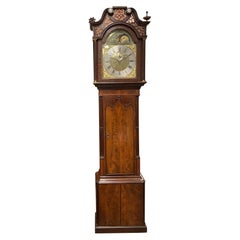
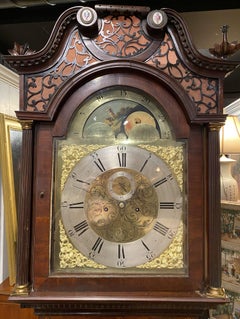
Georgian Mahogany Gothic Style Tall Case Clock with Moon Phase Dial

Georgian Mahogany Gothic Style Tall Case Clock with Moon Phase Dial

Located in Milford, NH

A fine English Georgian Gothic style tall case clock, its bonnet with a swan’s neck broken arch pediment with Battersea enamel oval polychrome urn accents surmounting scrolled fabric...

Category

Late 18th Century English Antique Gothic Decorative Objects

Materials

Metal, Brass

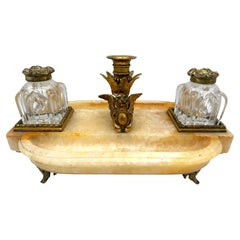
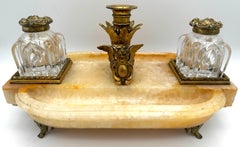
French Gothic Ormolu Cut Glass & Marble/Quartz Double Inkwell

French Gothic Ormolu Cut Glass & Marble/Quartz Double Inkwell

Located in West Palm Beach, FL

French Gothic Ormolu Cut Glass and Marble/Quartz Double Inkwell France, circa 1870s A magnificent French Gothic Ormolu Cut Glass and Marble/Quartz Double Inkwell, dating back to the...

Category

19th Century French Antique Gothic Decorative Objects

Materials

Quartz, Marble, Ormolu

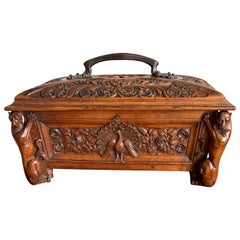
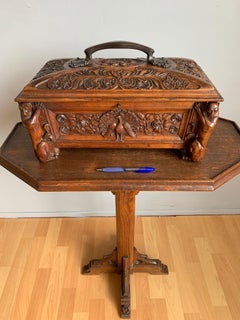
Stunning Handcrafted Late 1800s Gothic Casket with Peacock & Gargoyle Sculptures

Stunning Handcrafted Late 1800s Gothic Casket with Peacock & Gargoyle Sculptures

Located in Lisse, NL

Beautiful and rare Gothic Revival treasure box with bronze handle. If you are a collector of antique boxes and/or if you are looking for an extraordinary jewelry box to grace your credenza or side table then this unique and top quality made specimen in the Gothic style could be perfect. Gothic Revival boxes are very hard to find and we have never seen one with such prodigious carvings on all sides. The unique and cat-like dragon gargoyles (with fangs) that look like they are carrying this casket, are just some of the stunningly carved and detailed sculptures that make this antique rarity even more artistic and impressive. Another great feature are the peacock sculptures. In Christianity the peacock is the symbol of purity. Christians believe that once someone has passed their soul rises and goes to heaven. This is why in earlier times Christians would spread the feathers of a peacock over the deceased since it symbolized a pure soul that was immune to corruption. The peacock also represents immortality, resurrection, and the spiritual teachings of Jesus Christ and the Christian church. Have you also noticed the top quality details on both ends of the bronze handle on top? The quality of that ornamental work is of the absolute highest standard also. There are many more incredibly beautiful, hand carved details and together they show that no expense was spared to create one of the most amazing Gothic caskets...

Category

Late 19th Century Italian Antique Gothic Decorative Objects

Materials

Bronze, Iron

Antique Bronze Box from Belgium Gothic Style

Antique Bronze Box from Belgium Gothic Style

Located in Miami, FL

Gothic Style, very detailed crafted antique bronze box. Marked underneath, made in Belgium. In original good condition. A-444-335

Category

20th Century Belgian Gothic Decorative Objects

Materials

Bronze

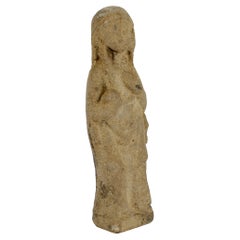
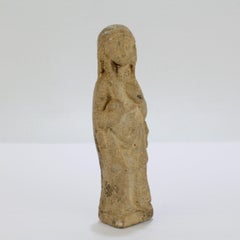
Important 14th Century Polychrome Limestone Virgin from Lorraine

Important 14th Century Polychrome Limestone Virgin from Lorraine

Located in Saint-Ouen, FR

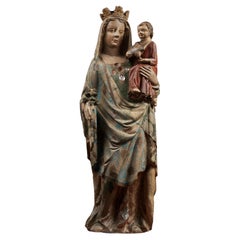
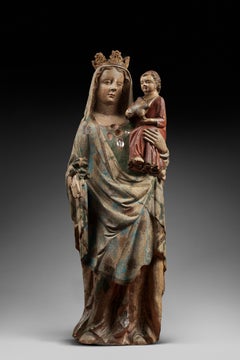
Provenance : - Kunsthaus Heinrich Hahn, Frankfurt am Main, sale 16, June 17, 1930, lot 16. - Sotheby's, Amsterdam, Feb. 26, 2006, lot 201. HISTORIC Located between Moselle valley and Meuse valley, framed by the Vosges Mountains on the south side and the duchy of Luxembourg on the north side, the duchy of Lorraine is the result of several partitions. It starts with the 9th century when the Carolingian empire is divided, with Lothar 1st inheriting Lotharingia. In 959 this territory was in turn divided in two; Lower and Upper Lotharingia, the latter being the forebear of the duchy of Lorraine. This duchy was under the rule of the Holy Roman Germanic Empire until 1736 when it was absorbed by the kingdom of France. All along its history the duchy of Lorraine has found itself in the midst of many conflicts. Alliances and feuds marking European history were always particularly sensible in Lorraine where instability was frequent. Because of its geographic position the duchy of Lorraine was also an artistic crossroad. Hence the duchy of Lorraine becomes from the 13th century onwards an important artistic centre where a particular type of Virgin and Child appears. According to professor J. A. Schmoll the characteristics of Lorraine sculpture burgeon around 1280-1300 in the Aube region. It presents “vigorous volumes, restrained movements, rare but solemn gestures and a strong interiorised and stern expression”. Those Virgins look similar with a wide forehead, a shield- or oval-shaped face, large neck, small lips and a cleft chin. This model is particularly in favour during the 13th century because of the revival for Marial worship and for the theme of the Virgin and Child. It bears witness to a new religious sensibility with a more intimate vision of religious practice. DESCRIPTION The important 14th century Virgin we present to you is one of the most beautiful examples of sculptural art from Eastern France, with her fascinating distant gaze. Her contrapposto posture is induced by the weight of the child she carries high on her left side. The child has a chubby face framed by blond hair with well defined curls and he wears a long red V-collared tunic from which emerge his feet. The fabric is animated by long folds. The position of the right foot turned to the back is a detail we can notice on several Virgins from Lorraine. He holds a bird that seems to be pecking his thumb. “The bird /held by the child in his hands/ has been read as a reference to an episode from Christ’s childhood when he has moulded sparrows with clay before giving them life. It appears in the apocryphal gospel of Pseudo-Matthew (ch. 27) and later in the Quran (III, 43, v. 110). However the iconography seems to be more influenced by the concept of Redemption or of Eucharist, the bird symbolising the soul of the Christian about to be redeemed or revitalised.” Mary wears a long dress with two rock crystal cabochons remaining from the original five. She is covered by a red cloak enriched with old-gold motifs draped as an apron falling in long pleats along her left hip. The relief treatment and the volume of the cloak developing a network of concentric pleats contrast with the the flat pleating of her dress. They nevertheless suggest the curve of her bent right leg. She wears a floret crown securing a short thin veil carved in very low relief. From it emerges her blond curled hair characteristic of the 13th century. The large face with almond-shaped eyes, straight nose, small lips and cleft chin casts its gaze afar in a fashion typical of 13th century Virgins. In her right hand she holds a lily flower. In a very refined manner the artist has carved a band on her right ring-finger. In the back, carefully sculpted, spreads the minutely detailed short veil. COMPARATIVE STUDIES This sculpture of great quality presents obvious similarities with Virgins from Lorraine, designated by William Forsythe...

Category

15th Century and Earlier French Antique Gothic Decorative Objects

Materials

Limestone

Beautiful Gothic Brass Candelabra/Candlestick, circa 1500

Beautiful Gothic Brass Candelabra/Candlestick, circa 1500

Located in Vienna, AT

The item on sale is an original Gothic candelabra that dates back to the 1500s. It was expertly handcrafted from brass and consists of two parts that...

Category

15th Century and Earlier Antique Gothic Decorative Objects

Materials

Brass

Mid 19th Century Gothic Brass Jardiniere with Shields This is a very old piece

Mid 19th Century Gothic Brass Jardiniere with Shields This is a very old piece

Located in Godshill, Isle of Wight

19th Century Gothic Brass Jardiniere with Shields This is a very old piece it is decorated with Lions and Shields and it has a Latin Motto inscribed on both sides which means ‘Virt...

Category

1870s Antique Gothic Decorative Objects

Materials

Brass

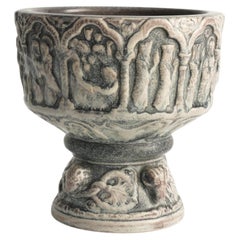
Gothic Ceramic Bowl or Jardiniere by Michael Andersen & Son, 1960s

Gothic Ceramic Bowl or Jardiniere by Michael Andersen & Son, 1960s

By Michael Andersen & Son

Located in Grythyttan, SE

This bowl or jardiniere, crafted by Michael Andersen & Son, is a remarkable reproduction of a baptismal font discovered in a church in Åkirkeby on Bornholm. The original font, adorne...

Category

1960s Vintage Gothic Decorative Objects

Materials

Stoneware

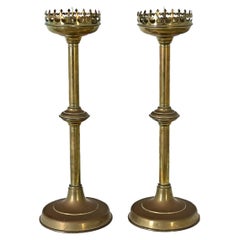
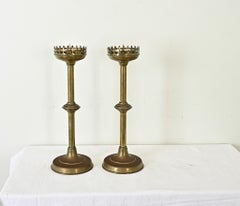
Late 19th Century Brass Gothic Style Candlesticks

Late 19th Century Brass Gothic Style Candlesticks

Located in Casteren, Noord-Brabant

A beautiful pair of antique brass candlesticks. Gothic style. The candlesticks are in good condition. Beautiful color and shine. Sturdy and solid. Estimated age and origin: France, ...

Category

1880s French Antique Gothic Decorative Objects

Materials

Brass

1960s Iridescent Glass and Twisted Iron Candle Sconce

1960s Iridescent Glass and Twisted Iron Candle Sconce

Located in Brooklyn, NY

A 1960s candle sconce. Consists of a panel of iridescent glass framed by twisted iron. Seven fluted brass heads elevate to hold taper candles. Lovely patina throughout. Pair availabl...

Category

1960s Vintage Gothic Decorative Objects

Materials

Brass, Iron

French Gothic Oak Coffer Chest

French Gothic Oak Coffer Chest

Located in Queens, NY

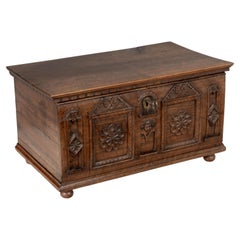
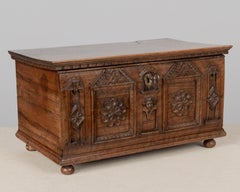
French Gothic-style (19/20th Century) oak coffer chest on stand with tracery carved panels and a domed lid with iron strap work

Category

19th Century French Antique Gothic Decorative Objects

Materials

Iron

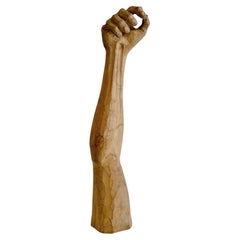
Polychrome carved wood Virgin and Child from the 15th Century

Polychrome carved wood Virgin and Child from the 15th Century

Located in Saint-Ouen, FR

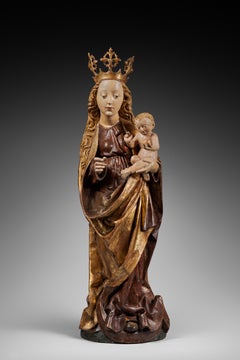
POLYCHROME CARVED WOOD VIRGIN AND CHILD FROM THE 15TH CENTURY   ORIGIN: SOUTH GERMANY, SWABIA, NUREMBERG REGION PERIOD: 15th CENTURY   Height: 94,6cm Width : 28 cm Depth : 18 cm   Lime wood Original Polychromy Good state of conservation     From 1430 onwards, sculpture underwent a profound stylistic renewal which continued until 1530, the so-called late Gothic period. In the Germanic countries, original sculptures flourished in an expressive and sensitive vein.
This renewal was inspired by the art of Nicholas of Leiden, who was active in Strasbourg in the 1460's. His style broke with the refined and delicate art of the international Gothic style in force throughout Europe around 1400. The figures became more authentic and realistic. The bodies became denser. Clothes are animated by deep, broken folds, the fabrics are heavy and have a great decorative value. In addition, the polychromy is intended to be illusionistic. The painting makes it possible to restore the texture of the materials, the richness of the textiles and the natural skin tone of the characters.   The dissemination of images through engraving and the great mobility of the artists led to the success of this style, which conquered the Upper Rhine, Swabian, Tyrolean and Franconian regions, contributing to the formation of a common stylistic identity in these regions. The economic boom in the flourishing German cities was conducive to the development of original production. Attracted by this prosperity, numerous workshops were set up in order to meet the orders of religious communities, the Church and the laity, including a clientele of middle-class rockers.      This precious Virgin and Child is depicted standing on a crescent moon, her head encircled by a crown of tall flowers. Her long wavy hair spreads over her shoulders, framing her beautiful oval face. Under fine eyebrows drawn with a brushstroke, her almond-shaped, slightly drooping eyes look at the Child with infinite softness. She is dressed in a long red dress with a rounded neckline, belted under the chest. The heavy fabric of her dress spreads out in broken folds at her feet. On her shoulders she wears a golden cloak. The drapery has deep folds. She holds out her right hand while she holds the Christ Child with her left.   Christ, with his well-defined hair, is naked. His cheeks are highlighted with red, he holds an apple in his left hand and with the other hand makes a sign of blessing towards the faithful.   Virgins with Child on a crescent moon were very popular in the second half of the 15th century, especially as the central subject of altarpieces in southern Germany and Austria. The crescent moon on which Mary is standing is reminiscent of the Woman of the Apocalypse. Often equated with the Virgin Mary.    This episode is taken from the Book of Revelation (12:1-6)   1 Then a great sign appeared in heaven: a woman clothed with the sun, with the moon under her feet and a crown of twelve stars on her head. ; 2 She was pregnant, and she cried out because she was in labor, in pain from giving birth. ; 3 Then another sign appeared in heaven: it was a great fiery red dragon, with seven heads and ten horns, and seven royal crowns on his heads. ; 4 His tail swept down a third of heaven's stars and threw them to the earth. The dragon stood in front of the woman who was about to give birth so that when she gave birth, he might devour her child. ; 5 She gave birth to a son, a male child who is to rule all the nations with an iron rod. Her child was snatched up to God and his throne. ; 6 Then the woman fled into the desert, where God has prepared a place for her. There she will be taken care of for one thousand two hundred sixty days.   Some theologians see in this woman a reference to the Virgin Mary and in the child, Jesus.    
This remarkable work is a very fine example of sculpture from Swabian workshops in the last decades of the 15th century. It presents all the characteristic stylistic elements: a highly girdled silhouette, an abundant drapery with angular folds, but also a great physical presence accentuated by the polychromy that restores the anatomical details. This group is made of a wooden log. The deep folds of the drapery highlight the movement of the Virgin holding the child.       Bibliography :   Sophie Guillot de Suduiraut, Dévotion et Séduction, Sculptures souabes des musées de France, vers 1460-1530, Paris musée du Louvre-Éditions somogy, 2015   “Revelation 12 -   Common English Bible...

Category

15th Century and Earlier German Antique Gothic Decorative Objects
Materials

Wood

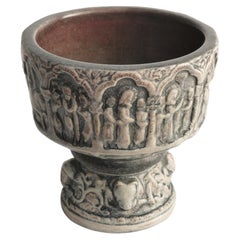
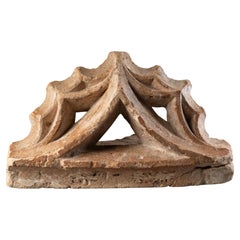
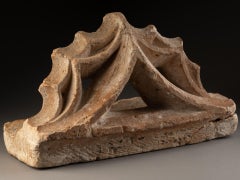
19th Century Victorian Terracotta Model Of A Gothic Font

19th Century Victorian Terracotta Model Of A Gothic Font

Located in Wormelow, Herefordshire

A 19th century Victorian terracotta model of a gothic font. An English architectural model of a font in the ecclesiastical style dated to circa 1850. The octagonal design has a repeating trefoil design on all sides. A pleasing object modelled after an unknown church font...

Category

19th Century English Antique Gothic Decorative Objects

Materials

Terracotta

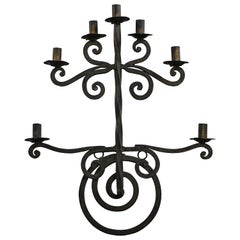
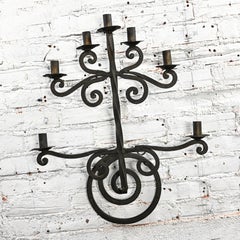
Vintage Gothic Black Wrought Iron Wall Hanging Candelabra Made in Mexico

Vintage Gothic Black Wrought Iron Wall Hanging Candelabra Made in Mexico

Located in Topeka, KS

Awesome vintage Gothic or Spanish Revival handmade solid wrought iron black painted candelabra wall hanging made in Mexico. Beautiful condition, keeping in mind that this is vintage ...

Category

Mid-20th Century Mexican Gothic Decorative Objects

Materials

Wrought Iron

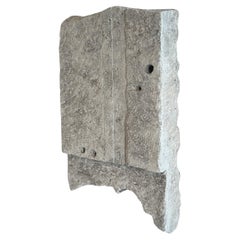
Gothic inscription - France, 15th century

Gothic inscription - France, 15th century

Located in Bruxelles, BE

Fragment of an Inscribed Stone
 France, 15th century
 Limestone
 14 × 24.5 × 5 cm This evocative limestone fragment preserves the refined vestiges of a Gothic inscription carved in ...

Category

15th Century and Earlier French Antique Gothic Decorative Objects

Materials

Limestone

Late 15th Century Polychrome Wood Carving Depicting the Nativity

Late 15th Century Polychrome Wood Carving Depicting the Nativity

Located in Saint-Ouen, FR

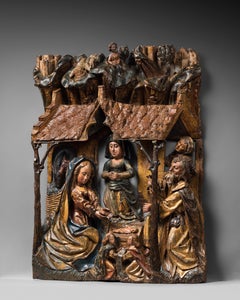
While the birth of Christ is briefly told in the Gospel of Luke (2, 7) it is in the apocryphal texts that we find most of the elements and details that have then inspired artists. As of the 14th century and even more of the 15th century the subject of the Adoration of the Child replaces in Western art the scene of the Birth, much favoured in Byzantine art. Instead of being depicted lying with the new-born swathed in the manger, the Virgin is now kneeling, her hands joined in prayer in front of the naked child. This change was probably hastened by the popularity of the visions of Saint Bridget of Sweden to whom the Virgin allegedly appeared to show how she had given birth to Jesus (Visions, VII, chap. 21). Sheltered by a thatch-roofed structure the Virgin is kneeling in front of the Child Jesus. She wears a magnificent red dress under a large gold cloak. Her curled blond hair is partially veiled. The newborn is lying on a straw mat. Joseph is depicted with a parted beard and stands opposite from the Virgin. He wears a tunic and a coat with a purse hanging from the belt. His costume reminds us of the long journey him and Mary have accomplished to reach Bethlehem. Two other women are present. One is looking through the stable’s window to observe the Holy Family while another one kneels in prayer in front of the divine child. The rich costume of the lady might indicate she is a donator. However they could also both represent the women who took part in the birth of Christ, Zelemi and Salome. Salome, incredulous did not believe in the virginal conception of Mary and she is represented far from the scene. The artist has depicted her with an expression of doubt on her face. Zelemi, on the contrary, is a believer. She is rewarded by a place of honour at the heart of the scene, close to Mary. To the left the donkey and ox that have accompanied Mary and Joseph to Bethlehem observe quietly the scene. On the foreground two angels hold a scroll reading an excerpt from the Gloria : “/Gloria/ in excelsis /Deo/.” One of the angels wears a blue cape while the other’s is red Those two colours are very significant as during Middle-Ages blue symbolises hope and red charity. Together they express the hope in redemption thanks to the advent of Christ and his sacrifice to come. Above the main scene, up a cliff, a small shepherd lets his herd of sheep graze amidst the trees. He is framed by two walled cities. This wood carving is the work of a very skilled and inventive artist. The piece bears witness to his exceptional talent. The realism of the scene is emphasised by the amount of details depicted. The refinement of the carving itself is highlighted by the well preserved polychromy. This key moment of the New Testament is set in a contemporary context thanks to the clothes of the characters and the scenes of rural life. The universal dimension of the scene is intensified while allowing contemporary viewers to grasp its meaning more easily. This care for details, the picturesque realism as well as the extraordinary rendition of the cloths suggest it was made by a Flemish artist during the late 15th century. This relief can be compared with the panel of the Nativity from the Saint-Vaast altarpiece made by Jacques Daret between 1433 and 1435, today in Madrid’s Thyssen-Bronemisza Museum. Literature Louis Réau, Iconographie de l’Art chrétien...

Category

15th Century and Earlier Dutch Antique Gothic Decorative Objects

Materials

Wood

Pair of Plaster Gothic Crocketed Finials

Pair of Plaster Gothic Crocketed Finials

Located in Chicago, IL

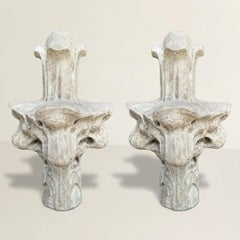
This pair of cast plaster Gothic finials exudes the elegance and intricacy of Gothic architectural design. Each finial is adorned with floral form crockets, meticulously crafted to r...

Category

21st Century and Contemporary French Gothic Decorative Objects

Materials

Plaster

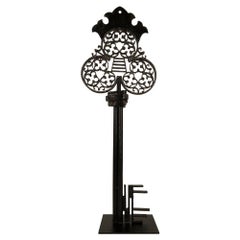
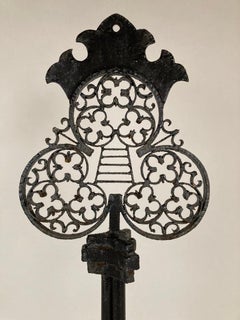
French Gothic Style Wrought Iron Giant Key Locksmith Trade Sign

French Gothic Style Wrought Iron Giant Key Locksmith Trade Sign

Located in Stamford, CT

French wrought iron black painted locksmith trade sign in the form of a large and elaborate key. The trefoil top filled with interlocking Gothic style quatrefoils (like four leaf clovers), with a ladder in the center joining them and a cut metal crest...

Category

Early 20th Century French Gothic Decorative Objects

Materials

Wrought Iron

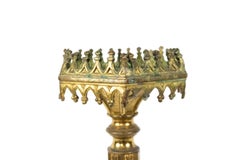
French 19th Century Church Altar Candlesticks

French 19th Century Church Altar Candlesticks

Located in Baton Rouge, LA

A towering pair of 19th century French brass altar candlesticks from a cathedral or church. The center of each bobeche is fitted with a spike, surrounded by a pierced brass crown of ...

Category

19th Century French Antique Gothic Decorative Objects

Materials

Brass

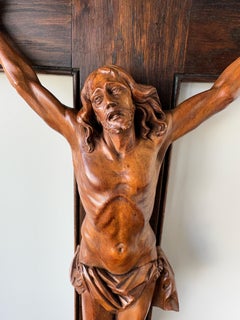
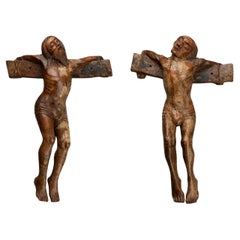
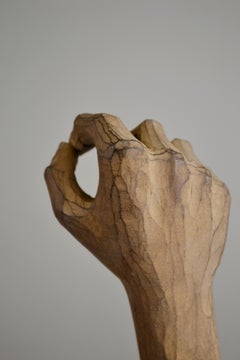
Great Quality Carved & Superb Condition Wooden Corpus Christi on Crucifix, 1800s

Great Quality Carved & Superb Condition Wooden Corpus Christi on Crucifix, 1800s

Located in Lisse, NL

Antique crucifix with stunning hand carved details and an amazing patina. This remarkable and good size crucifix with a sculpture of a suffering Christ on the cross is another one...

Category

Early 19th Century German Antique Gothic Decorative Objects
Materials

Fruitwood, Oak

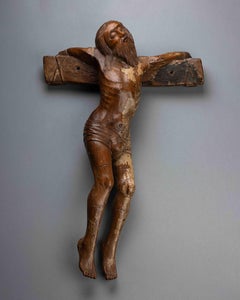
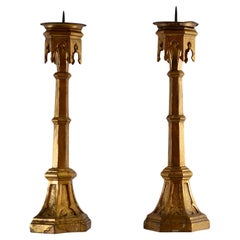
Very Large and Rare Christ on the Cross ( height 130. cms )  14th Century

Very Large and Rare Christ on the Cross ( height 130. cms ) 14th Century

Located in PARIS, FR

Very large Christ on the Cross ( height 1,30 m), Painted and carved in the round in poplar wood. Some old traces of polychromy. Restorations to the fingers. but not recently. South...

Category

15th Century and Earlier German Antique Gothic Decorative Objects
Materials

Poplar

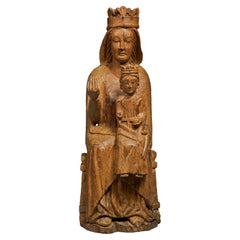
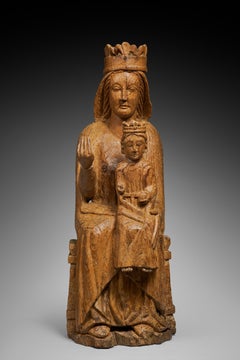
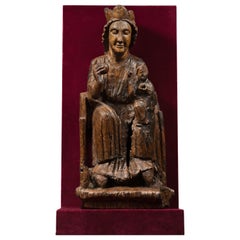
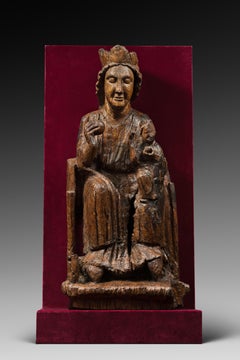
Virgin and Child in Majesty, also known as "Sedes Sapientae"

Virgin and Child in Majesty, also known as "Sedes Sapientae"

Located in Saint-Ouen, FR

VIRGIN AND CHILD IN MAJESTY, ALSO KNOWN AS "SEDES SAPIENTIAE"   ORIGIN : SPAIN, CATALOGNE PERIOD: EARLY 13th CENTURY   Height :  95 cm Width : 32 cm Depth : 28 cm   Softwood No polychromy     In the middle of the 12th century, the Virgin took her place in churches, seated in Majesty, serving as a throne for her son Jesus. She is then called Sedes Sapientiae, meaning the Throne of Wisdom. At that time, she is not represented for herself and only exists because she has been designated as Theotokos, the mother of God, at the Council of Ephesus in 431, where the divine nature of Christ was proclaimed from his birth.   The upright and perfectly hieratic bust of this Virgin and Child in Majesty is seated on a throne-bench. She is dressed in a tunic with a rounded neckline and covered with a fine mantle placed on her narrow shoulders. The supple and natural drapery follows the lines of the body.   Large curls frame her face with delicate and regular features, a long straight nose, almond-shaped eyes, and small lips.   She supports the Infant Jesus with her left hand. Like his mother, he is dressed in a long tunic, and his little feet are visible in the folds. He holds a small sphere in his left hand, while with his right hand, he gestures in blessing. The face of Christ bears a strong resemblance to his mother’s one, and he gives a slight smile.   The position of the Child is no longer as hieratic, nor frontal or central as in the early 12th century, but his face still turns towards the faithful.   The 13th century indeed emerges as a period of transition in the artistic domain. The statuary, while retaining certain characteristics still belonging to the habits of the previous century, also develops new formal solutions.   As a result, Mary maintains a hieratic and frontal position, while her son shifts to place himself well to the left on her knee. Similarly, while the Virgin seems perfectly still, Jesus, on the other hand, appears much more animated, especially in the positioning of his hands. His left hand holds the orb, and judging by the raised right arm directed towards the faithful, one can easily imagine that he was making a gesture of blessing.   The influence of the Sedes Sapientiae from previous centuries still seems particularly prevalent in this work.   These few characteristics allow dating this Spanish Virgin...

Category

15th Century and Earlier Spanish Antique Gothic Decorative Objects

Materials

Softwood

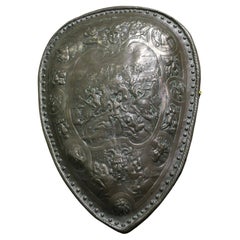
19th Century Brass Wall hanging Shield  A Decorative Gothic wall hanging Shield

19th Century Brass Wall hanging Shield A Decorative Gothic wall hanging Shield

Located in Godshill, Isle of Wight

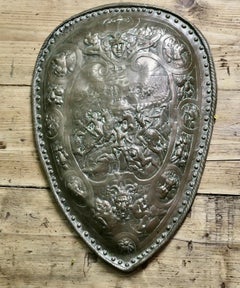
19th Century Brass Wall hanging Shield A Decorative Gothic wall hanging Shield hand made in brass, the shield is decorated with mythical Warriors and beasts, there are 2 images of t...

Category

19th Century Antique Gothic Decorative Objects

Materials

Brass

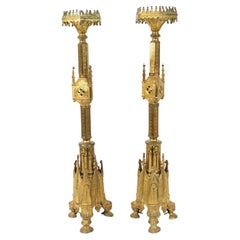
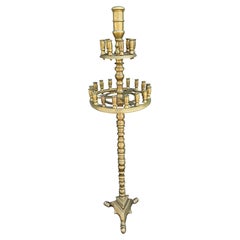
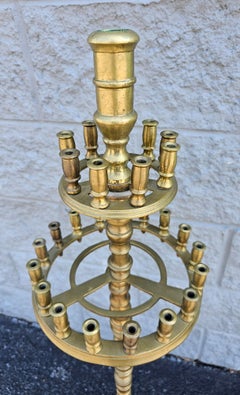
Gothic Style Solid Brass Tiered Floor Standing Candelabra Tripod Bases a Pair

Gothic Style Solid Brass Tiered Floor Standing Candelabra Tripod Bases a Pair

Located in Topeka, KS

Fabulous vintage Gothic style solid cast brass tiered floor standing candelabra with tripod bases, a pair. Beautiful condition, keeping in mind that these are vintage and not new so ...

Category

20th Century Unknown Gothic Decorative Objects

Materials

Brass

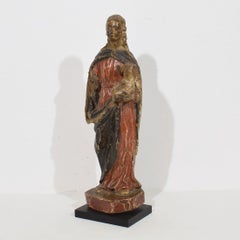
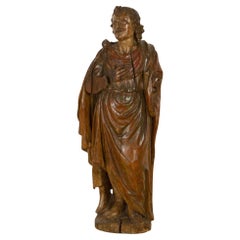
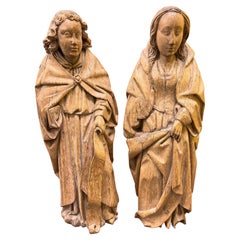
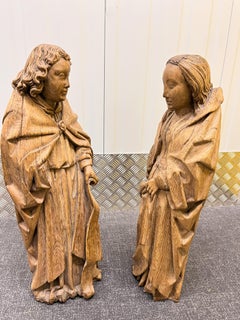
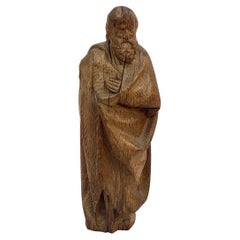
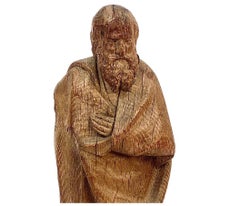
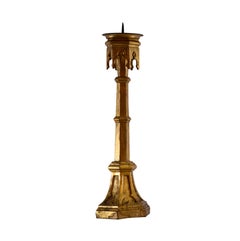
17th Century Carved Figure of a Saint

17th Century Carved Figure of a Saint

Located in Gloucestershire, GB

Mid 17th century Northern European carved figure of a saint. This striking statue depicts a saint who is dressed in robes, whilst holding his hand over his heart. This figure is freestanding and is stood within a leaning position which makes him stand out. It has been beautifully carved from oak and has remnants of its original paintwork. Likely to have stood within a church for many years and would have been removed due to renovation reasons. This historical figure...

Category

17th Century German Antique Gothic Decorative Objects
Materials

Oak, Paint

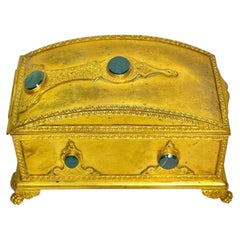
Beautiful German Pieta known as "Vesperbild"

Beautiful German Pieta known as "Vesperbild"

Located in Saint-Ouen, FR

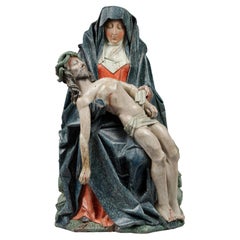
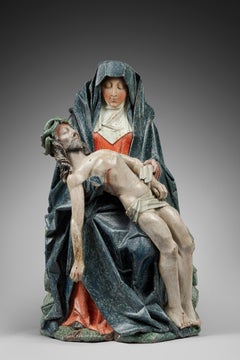
BEAUTIFUL GERMAN PIETA KNOWN AS “VESPERBILD” ORIGIN : GERMANY PERIOD : 15th CENTURUY Height : 74 cm Width : 43 cm Depth : 22,5 cm Good condition Oak wood This beautiful 15th-c...

Category

15th Century and Earlier German Antique Gothic Decorative Objects
Materials

Oak

Pair of English Gothic Revival Style Bronze Altar Candlesticks

Pair of English Gothic Revival Style Bronze Altar Candlesticks

Located in Queens, NY

PAIR of English Gothic Revival-style (19th Century) bronze altar sticks with round pad feet (PRICED AS PAIR)

Category

19th Century British Antique Gothic Decorative Objects
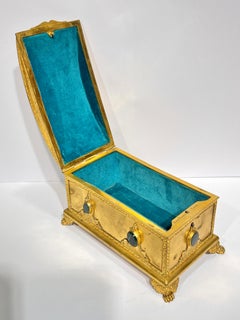
Materials

Bronze

Large rare antique statue of Saint Eligius, France ca. 1550

Large rare antique statue of Saint Eligius, France ca. 1550

Located in Meulebeke, BE

Religious statue of Saint Eligius from the 16th century in full wood found in France. This very rare find has a beautiful patina due to its old age. The hand and staff are missing. A...

Category

16th Century French Antique Gothic Decorative Objects
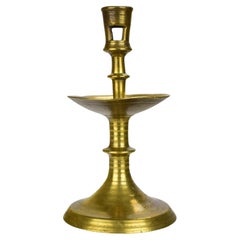
Materials

Wood

Large Hand Forged Iron Candle Sconces, Gothic Style, Italy, 1940s

Large Hand Forged Iron Candle Sconces, Gothic Style, Italy, 1940s

Located in Hopewell, NJ

Pair of impressively large hand forged sconces of iron and tole having 3 arms each for candles. Could be electrified.

Category

1940s Italian Vintage Gothic Decorative Objects

Materials

Iron

The Good and the Bad Thief-gothic sculpture- Brabantine workshop, c. 1480–1490

The Good and the Bad Thief-gothic sculpture- Brabantine workshop, c. 1480–1490

Located in Bruxelles, BE

The Good and the Bad Thief Brabantine workshop, c. 1480–1490
 Carved walnut with traces of polychromy
 56 x 42 x 11 cm 58 x 43 x 11 xm Provenance: 
Formerly in the collection of Ca...

Category

15th Century and Earlier Dutch Antique Gothic Decorative Objects
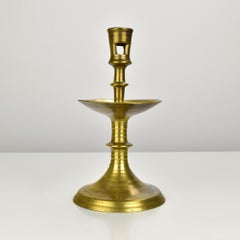
Materials

Walnut

Antique Gothic Style French Gilt Bronze Arch Form Vanity Table Mirror

Antique Gothic Style French Gilt Bronze Arch Form Vanity Table Mirror

Located in New York, NY

Elegant and stylish, Gothic style gilt bronze vanity mirror. France, 19th century Beautiful antique gold patina, fine details, unusual trefoil foliate and berry design. Well propo...

Category

Late 19th Century French Antique Gothic Decorative Objects
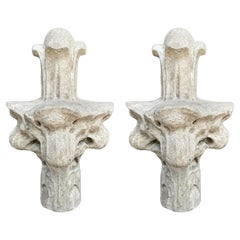
Materials

Bronze

Pair of English Gothic Revival Gilt Bronze Candelabras

Pair of English Gothic Revival Gilt Bronze Candelabras

Located in Queens, NY

PAIR of English Gothic Revival-style (19th Century) gilt bronze 9 arm candelabras (PRICED AS PAIR) Triangular base 8.5\" each side

Category

19th Century British Antique Gothic Decorative Objects
Materials

Bronze

Early 20th Century Gilt Spelter Small Bust Jesus Christ

Early 20th Century Gilt Spelter Small Bust Jesus Christ

Located in Casteren, Noord-Brabant

A small antique bust of Jesus Christ. Made of gilded spelter (zinc alloy). On a black marble plinth. No signature. Minor wear to the gilt patina. Dimensions: 14 (h) x 6 x 6 cm Free...

Category

1920s French Vintage Gothic Decorative Objects

Materials

Marble, Spelter

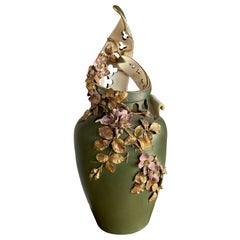
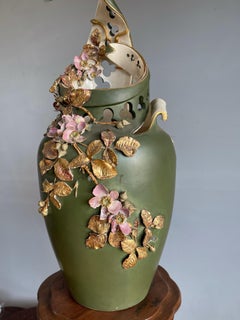
Early 1900s Impressive and Finely Handcrafted Antique Gothic Art Porcelain Vase

Early 1900s Impressive and Finely Handcrafted Antique Gothic Art Porcelain Vase

Located in Lisse, NL

Rare and impressive work of Gothic art pottery. This most skillfully created and highly decorative work of Gothic art is very rare and of a great size. The impressive floral decor o...

Category

Early 20th Century European Gothic Decorative Objects

Materials

Porcelain

Gothic Revival Gilded Brass Wall Candle holders 1890s Holland

Gothic Revival Gilded Brass Wall Candle holders 1890s Holland

Located in Den Haag, NL

Very beathiful set of Gothic revival Wall candle sconces . Hand forced ,Gilded Brass .very nice ornate . super rare to find a set of 4 . Comes with the hand made brackets . All in...

Category

1890s Dutch Antique Gothic Decorative Objects
Materials

Brass

c.1860–1880 Pair of Gothic Revival Bronze Church Candlesticks, France, 16.5in

c.1860–1880 Pair of Gothic Revival Bronze Church Candlesticks, France, 16.5in

Located in SANT ADRIÀ DE BESÒS, ES

Impressive pair of 19th century bronze candlesticks executed in the Gothic Revival style, likely of French or Northern European origin. These sculptural candlesticks feature an archi...

Category

Late 19th Century Antique Gothic Decorative Objects
Materials

Bronze

Carved Amber Figure of Christ

Carved Amber Figure of Christ

Located in Saint-Ouen, FR

This fine amber sculpture depicting Jesus Christ is a very rare object. Exemples of this sort can only be found in Germanic countries. Already used during Prehistoric times, amber have always fascinated people. Because of the virtues associated with this material amber was carved as amulets and prophylactic ornaments. As an expression of luxury and means amber was also used for adornments and small figures collected by the upper classes. This fossilized resin was picked on the Baltic Sea shores and soon entered a intense trade system. From the 14th century onwards knights of the Teutonic Order...

Category

19th Century German Antique Gothic Decorative Objects
Materials

Other

Gothic Virgin and Child from Flanders

Gothic Virgin and Child from Flanders

Located in Saint-Ouen, FR

Exhibition Museum Cantini, 1952, The art of the Middle Ages in the Marseille collections, n°101 Provenance Former collection Louis Bresset (before 1952) Former collection Profe...

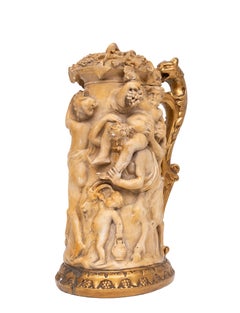
Category

15th Century and Earlier Dutch Antique Gothic Decorative Objects
Materials

Oak

16th Century Giltwood and Polychrome Group Carving – 'God and Mary'

16th Century Giltwood and Polychrome Group Carving – 'God and Mary'

Located in Basildon, GB

A 16th Century Giltwood and Polychromed Carved Group depicting God and Mary seated on a plinth.

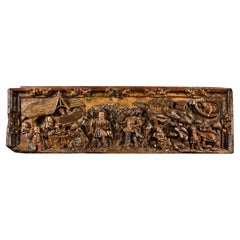
Category

16th Century European Antique Gothic Decorative Objects
Materials

Giltwood

19th Century French Gothic Polished Black and Silver Cast Iron Strongbox Safe

19th Century French Gothic Polished Black and Silver Cast Iron Strongbox Safe

Located in Dallas, TX

Keep your jewelry or important documents locked up in this small antique safe from Northern France. Crafted, circa 1880, the 52 pound cast safe has a chic two-tone black and silver paint finish. The heavy...

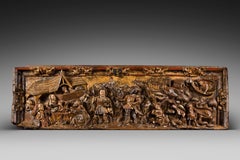
Category

Late 19th Century French Antique Gothic Decorative Objects
Materials

Iron

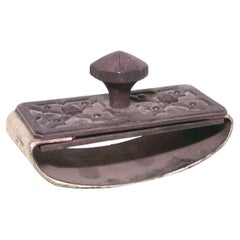
French Gothic Revival Iron Roll Blotter

French Gothic Revival Iron Roll Blotter

Located in Queens, NY

French Gothic Revival-style (19th Century) wrought iron roll blotter with X design and nailheads (Related items: 035057A, 035057B, 048571D)

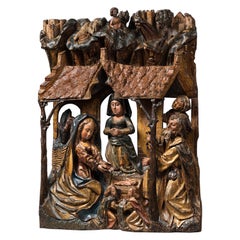
Category

19th Century French Antique Gothic Decorative Objects
Materials

Iron

17th Century German Carved Oak Religious Sculpture

17th Century German Carved Oak Religious Sculpture

Located in Bradenton, FL

17th Century German hand-carved oak religious sculpture. Possibly a saint or a bishop. The bearded man is cloaked in draped fabric with only left ...

Category

17th Century German Antique Gothic Decorative Objects
Materials

Oak

1800s Baroque / Gothic Style Brass Church Candlestick

1800s Baroque / Gothic Style Brass Church Candlestick

Located in Skien, NO

This stunning brass/bronze candlestick features a rustic patina and showcases the craftsmanship of the European Gothic Revival and Baroque styles from the 1800s. Its timeless desig...

Category

19th Century European Antique Gothic Decorative Objects
Materials

Brass, Bronze

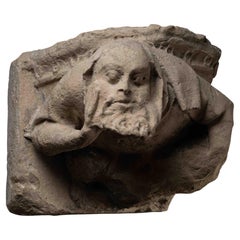
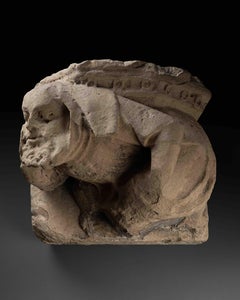
Large Carved Oak Grotesque Corbel

Large Carved Oak Grotesque Corbel

Located in Bradenton, FL

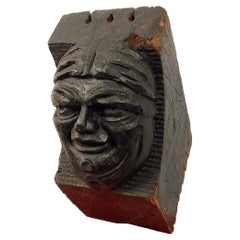
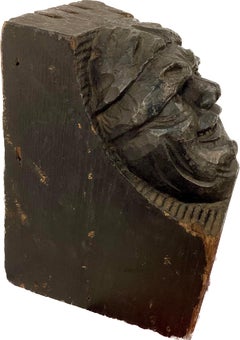
Large heavy 18th century or earlier carved oak corbel. The corbel depicts a large male open-eyed smiling face with broad features. Finly carved details with wonderful old patina.

Category

18th Century European Antique Gothic Decorative Objects
Materials

Oak

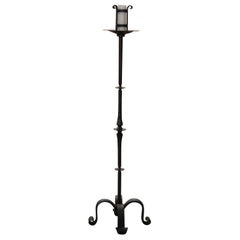
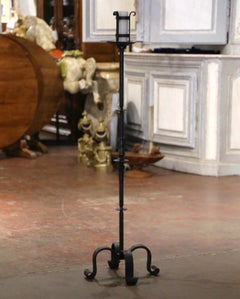
18th Century French Gothic Forged Wrought Iron Candle Holder

18th Century French Gothic Forged Wrought Iron Candle Holder

Located in Dallas, TX

Crafted in France circa 1780 and forged of solid iron, the candle holder stands on four scrolled legs over a turned central shaft decorated with a few ornamental discs. The tall wrou...

Category

Late 18th Century French Antique Gothic Decorative Objects
Materials

Wrought Iron

Dragon relief - North of France, 14th century

Dragon relief - North of France, 14th century

Located in Bruxelles, BE

Dragon relief Limestone architectonic fragment North of France, 14th century 13 x 38 x 16 cm This finely grained limestone block is carved in low relief with a dragon in motion, r...

Category

15th Century and Earlier French Antique Gothic Decorative Objects
Materials

Stone

Antique Hand Carved Stone Sarcophagus

Antique Hand Carved Stone Sarcophagus

Located in Wormelow, Herefordshire

An Antique Hand Carved Stone Sarcophagus. This unusual yet charming architectural model has been carved from York Stone with exceptional attention to detail. Standing on block feet...

Category

17th Century English Antique Gothic Decorative Objects
Materials

Stone

A Collection of 4 Superbly Carved Oak Door Panels

A Collection of 4 Superbly Carved Oak Door Panels

Located in Godshill, Isle of Wight

A Collection of 4 Superbly Carved Oak Door Panels These carved panels have come from a piece of 19th Century Oak Furniture Cupboard, probably of French origin. The carved panels m...

Category

19th Century Antique Gothic Decorative Objects
Materials

Oak

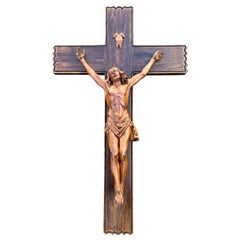
Rare and Remarkable Corpus Christi on a Decorated Wooden Cross with a Skull

Rare and Remarkable Corpus Christi on a Decorated Wooden Cross with a Skull

Located in Antwerp, BE

19th century crucifix or corpus Christi made from wood. Wooden cross with a nice patina and an exquisite shape. This item depicts the Christ in his last agony on the cross, after be...

Category

Late 19th Century Belgian Antique Gothic Decorative Objects
Materials

Wood

Gothic decorative objects for sale on 1stDibs.
Find a broad range of unique Gothic decorative objects for sale on 1stDibs. Many of these items were first offered in the 21st Century and Contemporary, but contemporary artisans have continued to produce works inspired by this style. If you’re looking to add vintage decorative objects created in this style to your space, the works available on 1stDibs include decorative objects, more furniture and collectibles, building and garden elements and other home furnishings, frequently crafted with metal, wood and other materials. If you’re shopping for used Gothic decorative objects made in a specific country, there are Europe, France, and Italy pieces for sale on 1stDibs. While there are many designers and brands associated with original decorative objects, popular names associated with this style include Europa Antiques, Bauche, Edward F. Caldwell & Co., and Maitland Smith. It’s true that these talented designers have at times inspired knockoffs, but our experienced specialists have partnered with only top vetted sellers to offer authentic pieces that come with a buyer protection guarantee. Prices for decorative objects differ depending upon multiple factors, including designer, materials, construction methods, condition and provenance. On 1stDibs, the price for these items starts at $112 and tops out at $134,141 while the average work can sell for $2,965.