Ebonized Decorative Objects

to
24
188
10
2
25
99
64
12
15
23
8
2
3
1
2
3
3
1
24
19
13
11
9
8
7
5
4
4
3
2
2
2
2
175
113
43
35
32
100
93
148
49
48
35
25
Height
to
Width
to
200
193
200
2
2
1
1
1
Technique: Ebonized
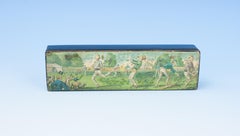
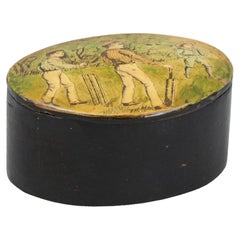
Ebonised Pencil Box With Cricket Scene On The Lid

Ebonised Pencil Box With Cricket Scene On The Lid

Located in Oxfordshire, GB

Vintage Papier Mache Cricket Pencil Case. A black lacquered Papier-mâché pencil box with partitioned interior, hinged lid with applied printed scene. The scene depicting a comical cr...

Category

Late 19th Century Sporting Art Antique Ebonized Decorative Objects

Materials

Wood

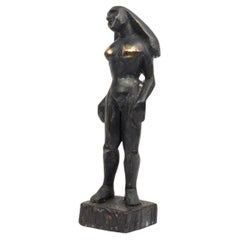
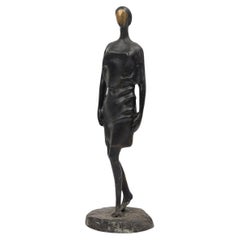
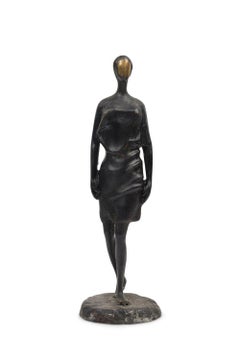
"The Pedestrian" Limited Edition Bronze Brutalist Contemporary Figural Sculpture

"The Pedestrian" Limited Edition Bronze Brutalist Contemporary Figural Sculpture

Located in Queens, NY

Contemporary hand-forged bronze Brutalist-inspired figural sculpture depicting a female walking figure finished in an ebonized patina (PRICED EACH). (\"THE PEDESTRIAN\" - Limited Edi...

Category

20th Century American Modern Ebonized Decorative Objects

Materials

Bronze

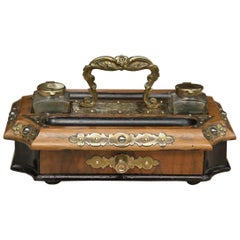
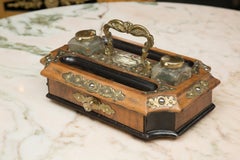
Brass, Walnut and Ebonized Double Inkwell Set

Brass, Walnut and Ebonized Double Inkwell Set

Located in WEST PALM BEACH, FL

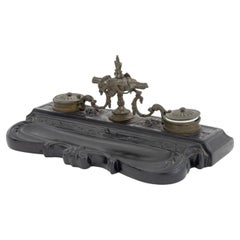
English Victorian inkwell set. This walnut set has been accented with an ebony color and an overall brass decoration, mid-late 10th century.

Category

Mid-19th Century English Victorian Antique Ebonized Decorative Objects

Materials

Brass

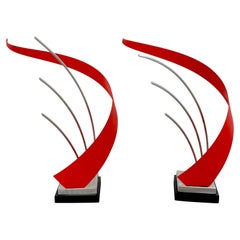
French Modern Enameled Metal Abstract Sculpture, 2nd Available

French Modern Enameled Metal Abstract Sculpture, 2nd Available

Located in West Palm Beach, FL

French modern enameled metal abstract sculpture Dramatic and kinetic in feeling each one has red enameled spiral, flanking three bent rods, on square plinth base. Unsigned Each work ...

Category

20th Century French Modern Ebonized Decorative Objects

Materials

Metal

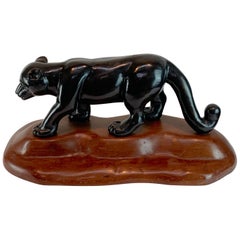
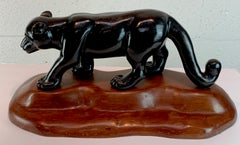
French Modern Carved Wood Sculpture of Black Panther/ Jaguar

French Modern Carved Wood Sculpture of Black Panther/ Jaguar

Located in West Palm Beach, FL

French modern carved wood sculpture of black panther/ jaguar, well carved ebonized walking black panther/ jaguar on a natural rockwork base. The base measures 22.75 x 11" deep The ...

Category

Mid-20th Century French Modern Ebonized Decorative Objects

Materials

Wood

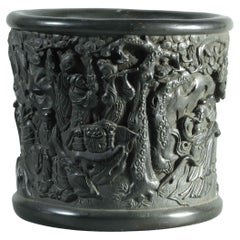
Chinese Finley Moulded Ebonized Plaster Brush Pot Bitong Imitating Carved Zitan

Chinese Finley Moulded Ebonized Plaster Brush Pot Bitong Imitating Carved Zitan

Located in Ottawa, Ontario

Chinese finely moulded ebonized plaster Brush pot bitong imitating carved zitan 20th century Of cylindrical form, decorated with complex designs depicting Tang ladies entertain...

Category

20th Century Chinese Chinese Export Ebonized Decorative Objects

Materials

Plaster

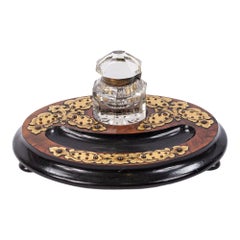
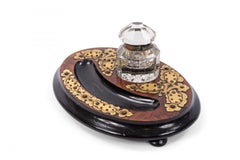
English Victorian Bone and Brass Inkwell

English Victorian Bone and Brass Inkwell

Located in Queens, NY

English Victorian oval burl wood and ebonized inkwell with decorative brass trim and nail heads holding a large 10 sided crystal well.

Category

19th Century British Victorian Antique Ebonized Decorative Objects

Materials

Brass

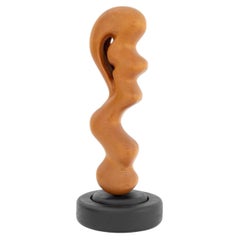
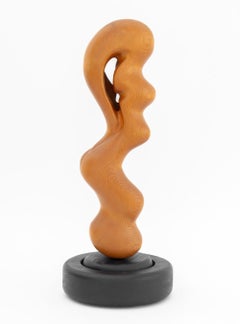
Modernist Biomorphic Wood Revolving Sculpture

Modernist Biomorphic Wood Revolving Sculpture

Located in Astoria, NY

Modernist Biomorphic Carved Wood Revolving Sculpture, mounted on an ebonized wood base. Overall: 20" H x 7.5" Diameter. Provenance: From a New York City Collection.

Category

Late 20th Century American Modern Ebonized Decorative Objects

Materials

Wood

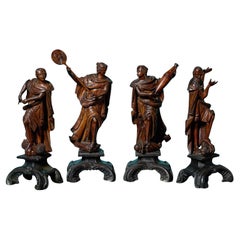
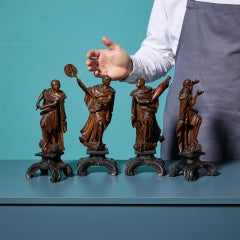
Set of 19th Century Hand Carved Allegorical Figures

Set of 19th Century Hand Carved Allegorical Figures

Located in Wormelow, Herefordshire

A set of 19th century hand carved allegorical figures, possibly depicting the four seasons. Each statue is finely carved in the grand tour style, made from a continental softwood a...

Category

Early 19th Century Antique Ebonized Decorative Objects

Materials

Ebony, Fruitwood

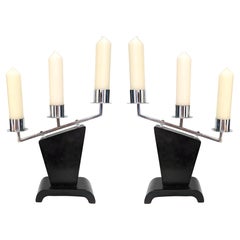
Art Deco Matching Pair 1930's Moderne Stepped Candelabra

Art Deco Matching Pair 1930's Moderne Stepped Candelabra

Located in Devon, England

Really beautiful pair of classic Art Deco 1930's moderne stepped candelabra. The condition of the chromium is very good, free from unsightly blemishes as is the ebonised wood. Perfec...

Category

Mid-20th Century English Art Deco Ebonized Decorative Objects

Materials

Chrome

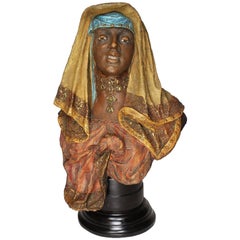
19th-20th Century Orientalist Terracotta Bust of Girl Attributed to Goldscheider

19th-20th Century Orientalist Terracotta Bust of Girl Attributed to Goldscheider

By Goldscheider Manufactory of Vienna

Located in Los Angeles, CA

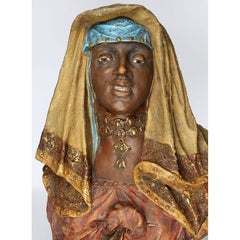
An Austrian 19th-20th century Orientalist terracotta bust of a young girl in Middle-Eastern Garb. The young smiling beauty wearing a head scaft and shawl tied with a broche-pin brooch pin and jewlry around her neck, raised on a circular ebonized wood stand. Probably by Friedrich Goldscheider (Goldscheider'sche Porzellan-Manufactur und Majolica-Fabrik) - The backside stamped: "T - No. 258". circa 1900. The Goldscheider Manufactory and Majolica Factory (German: Goldscheider'sche Porzellan-Manufactur und Majolica-Fabrik, (now) Goldscheider Keramik) is an Austrian ceramic manufactory. In 1885, Friedrich Goldscheider came from the small Bohemian city of Pilsen to Vienna and founded the Goldscheider Manufactory and Majolica Factory. It became one of the most influential ceramic manufactories of terracotta, faience and bronze objects in Austria with subsidiaries in Paris, Leipzig and Florence. For over half a century Goldscheider created masterpieces of historical revivalism, Art Nouveau (Jugendstil) and Art Deco. Famous artists such as Josef Lorenzl, Stefan Dakon, Ida Meisinger and the two perhaps best known Austrian ceramic artists Michael Powolny and Vally Wieselthier worked for Goldscheider. Several of the artists who worked for Goldscheider also worked for other Viennese studios, such as Augarten, Keramos or for the German brands Rosenthal and Meissen. The Goldscheider family emigrated in 1938 to United Kingdom and USA. Walter Goldscheider startet a new factory in Trenton, New Jersey and returned to Vienna in 1950. Marcel Goldscheider went to Stoke-on-Trent and produced figurative ceramics for Myott and opened his own studio in the 1950s in Hanley. Both brothers died in the early 1960s. More than 10,000 different models were created over a period of three generations. Since the very beginning many of these won first prizes and gold medals at innumerable world fairs, exhibitions and trade fairs. Goldscheider figures...

Category

Early 1900s Austrian Agra Antique Ebonized Decorative Objects

Materials

Terracotta, Wood

Louis XV Style Pewter Mounted Double Inkwell Stand

Louis XV Style Pewter Mounted Double Inkwell Stand

Located in Astoria, NY

Louis XV Style Pewter Mounted Double Inkwell Stand, 19th century, with finial handle opening inkwell covers to porcelain liners marked "CE" and ebonized composition pen rest. 5.25" ...

Category

19th Century Louis XV Antique Ebonized Decorative Objects

Materials

Pewter

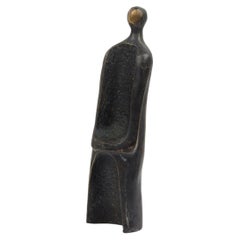
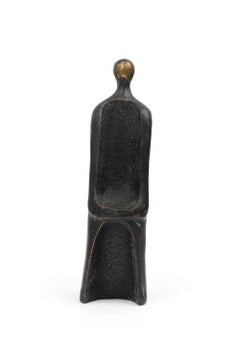
"The Pillar" Limited Edition Bronze Brutalist Contemporary Figural Sculpture

"The Pillar" Limited Edition Bronze Brutalist Contemporary Figural Sculpture

Located in Queens, NY

Contemporary hand-forged bronze Brutalist-inspired figural sculpture depicting an obscure human figure in a supportive pose finished in an ebonized patina (PRICED EACH). (\"THE PILLA...

Category

20th Century American Modern Ebonized Decorative Objects

Materials

Bronze

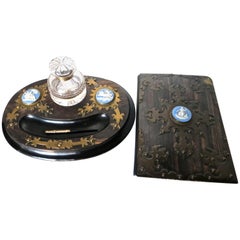
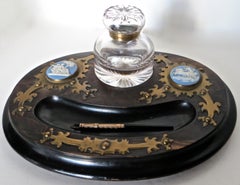
Asprey Desk Set and Document Holder, English, circa 1875

Asprey Desk Set and Document Holder, English, circa 1875

By Asprey International Limited

Located in Incline Village, NV

The Asprey Company is an iconic British luxury home goods maker, located in London, England and was established by William Asprey in 1781, They established their current residence in London on Bond Street between 1847 and 1859 after a couple of acquisitions. They were the Nieman-Marcus of the day and made only the finest products, utilizing the best quality materials; dealing in everything from jewelry to fashion, and appealing to those wanting to buy gifts for weddings, occasions, and events. This is a customized desk set, consisting of a crystal cut glass inkwell with a brass hinged lid, resting in a velvet lined well. Markings on the velvet lining under the inkwell indicate Asprey manufacture and Bond Street location “Asprey London, 166 Bond Street 22 Albemarle Street”. To the sides of the well are two Wedgwood cameos with the typical Greek mythology themed blue and white jasperware. Resting inside the recessed pen holder is a 14-karat gold nib pen marked “no. 3”, made by Aiken & Lambert, an American company (New York City) and manufacturer of fine quality gold fountain pens. Hand engraved brass mounts are applied to the surface, while the oval shaped inkwell and pen holder rests on three bun feet. The wood is an ebonized calamander (coromandel wood) which is a rare and valuable hardwood from Sri Lanka. Also included as part of the desk set is a hinged, fold over, double sided document holder with a blotter lined interior. The exterior of the document holder is also of calamander wood, with hand engraved brass mounts to the top surface. As with the desk inkwell and pen holder, the document holder has a Wedgwood blue and white jasperware cameo...

Category

1870s English Victorian Antique Ebonized Decorative Objects

Materials

Brass

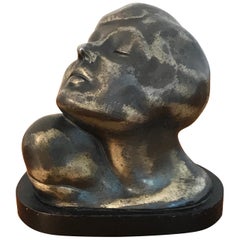
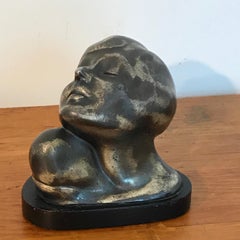
Art Deco Zinc Flapper Portrait Bust

Art Deco Zinc Flapper Portrait Bust

Located in West Palm Beach, FL

Art Deco zinc flapper portrait bust, with her head tilted wearing a bobbed haircut, raised on a ebonized wood plinth base.  

Category

20th Century American Art Deco Ebonized Decorative Objects

Materials

Zinc

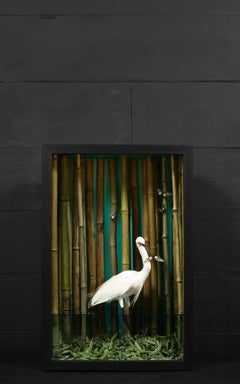
Surrealist Bird & Butterfly Jungle Scene in Illuminated Natural History Diorama

Surrealist Bird & Butterfly Jungle Scene in Illuminated Natural History Diorama

By Tennant New York

Located in Brooklyn, NY

The Flood, 2016, is an illuminated update on the traditional Victorian glass-cased diorama depicting a surreal jungle encounter between an upcycled vintage taxidermied tiny egret and...

Category

2010s American Modern Ebonized Decorative Objects

Materials

Brass

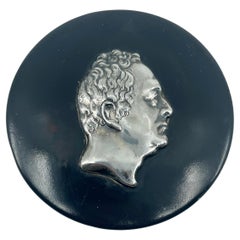
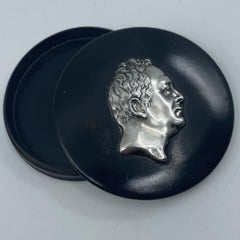
Duke of Clarence Sterling Silver Snuff Box

Duke of Clarence Sterling Silver Snuff Box

Located in New York, NY

Duke of Clarence sterling silver snuff box. Antique ebonized wood and sterling silver box with the profile of the son of Queen Victoria. England, la...

Category

Late 19th Century English Victorian Antique Ebonized Decorative Objects

Materials

Sterling Silver

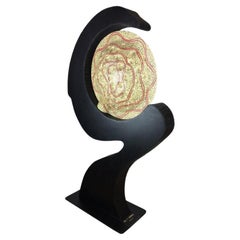
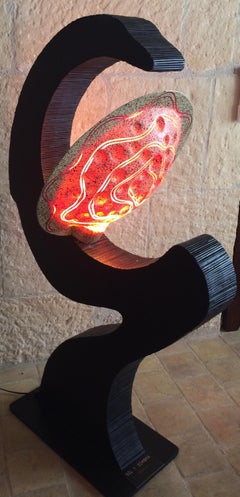
Wooden Sculptural Floor Lamp Ebonized Bamboo and Resin Shade

Wooden Sculptural Floor Lamp Ebonized Bamboo and Resin Shade

Located in Miami, FL

A rare wooden sculptural floor lamp, hand-crafted and signed. Dedicated to the splendors of the sun and shade as is the title "Sol Y Sombra". This French mid-century sculptural flo...

Category

Mid-20th Century French Mid-Century Modern Ebonized Decorative Objects

Materials

Bamboo, Resin, Wood

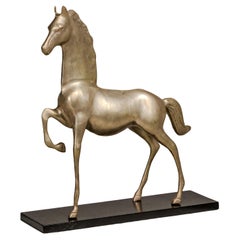
Vintage Silver over Brass Walking Horse Statuette on Ebonized Oak Base

Vintage Silver over Brass Walking Horse Statuette on Ebonized Oak Base

Located in Yonkers, NY

This vintage silver over brass walking horse statuette is an exquisite representation of equine grace and beauty, poised elegantly on an ebonized oak base. The statuette captures the...

Category

Mid-20th Century Ebonized Decorative Objects

Materials

Brass

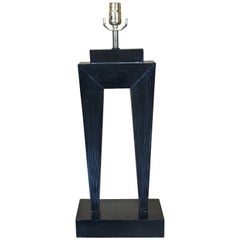
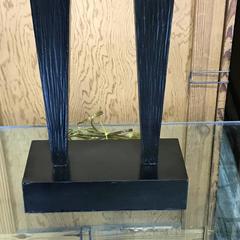
Tom Dixon Style Ebonized Hairpin Table Lamp

Tom Dixon Style Ebonized Hairpin Table Lamp

By Tom Dixon

Located in West Palm Beach, FL

Tom Dixon style ebonized Hairpin table lamp, the ebonized and randomly reeded wood hairpin, rests on a 5" D x 10.5" block base. 27.5" inches high to...

Category

1970s Mid-Century Modern Vintage Ebonized Decorative Objects

Materials

Wood

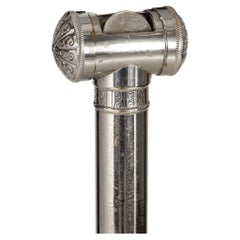
Victorian Antique Smoker’s Cane Walking Stick with Money & Matches Box

Victorian Antique Smoker’s Cane Walking Stick with Money & Matches Box

Located in Shippensburg, PA

VICTORIAN SMOKING CANE WITH A ROTATING MONEY BOX AND MATCH COMPARTMENT Unmarked, probably English; late 19th/early 20th century 35" H x 2 1/8" W An interesting smoker's cane, the ...

Category

20th Century British Folk Art Ebonized Decorative Objects

Materials

Nickel

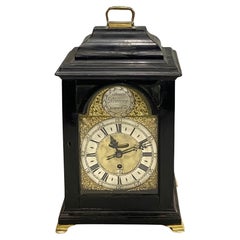
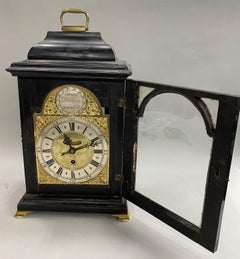
George II Edward Browne of Norwich Bracket Clock in Ebonized Mahogany Case

George II Edward Browne of Norwich Bracket Clock in Ebonized Mahogany Case

Located in Milford, NH

A nice example of a George II bracket clock in an ebonized mahogany case with brass feet made by clockmaker Edward Browne of Norwich. Edward Browne took over the shop of clockmaker J...

Category

Early 18th Century English George II Antique Ebonized Decorative Objects

Materials

Brass

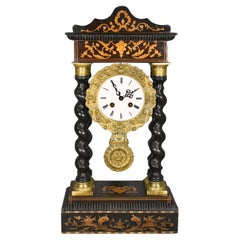
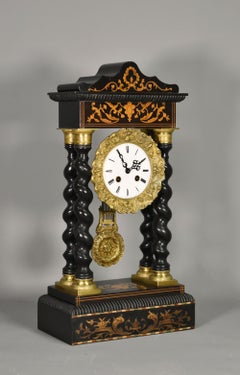
French Portico Barley Twist Clock Napoleon III

French Portico Barley Twist Clock Napoleon III

Located in SAINTE-COLOMBE, FR

French Portico Barley Twist Clock Napoleon III A beautifully detailed Portico Clock from the 19th century with ebonised and floral inlay. The clock features intricate bronze work...

Category

Mid-19th Century French Napoleon III Antique Ebonized Decorative Objects

Materials

Metal, Enamel, Bronze

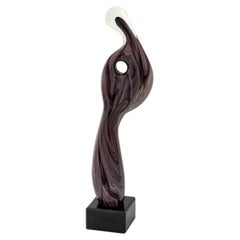
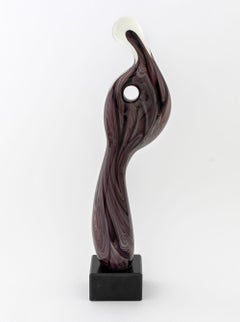
Venetian Murano Art Glass Abstract Sculpture

Venetian Murano Art Glass Abstract Sculpture

Located in Astoria, NY

Venetian Murano Art Glass Abstract Sculpture, in purple, unsigned, mounted on ebonized wood base. 24.5" H x 6.75" W x 4.5" D. Provenance: From a 30 West 63rd Street Collection.

Category

Late 20th Century Italian Ebonized Decorative Objects

Materials

Murano Glass, Wood

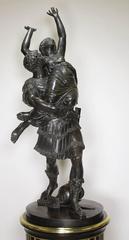
French 19th Century Patinated Bronze Group "The Abduction of the Sabine Women"

French 19th Century Patinated Bronze Group "The Abduction of the Sabine Women"

By Pierre Loison 1

Located in Los Angeles, CA

A very fine and Monumental French 19th century patinated bronze group Titled "The Abduction of the Sabine Women" after a model by Pierre Loison (French, 1816-1886), depicting a young scantily maiden being carried away on the arms of a Roman soldier, raised on circular ebonized wood and brass revolving pedestal stand. Signed at the base: P. Loison, circa: Paris, 1870-1880. Overall height (Sculpture and Pedestal): 91 inches (231.2 cm). Sculpture height: 54 3/4 inches (139.1 cm). Sculpture width: 24 inches (61 cm). Pedestal height: 36 inches (91.5 cm). Pedestal width (Widest): 25 1/2 inches (64.8 cm). Pierre Loison was a French sculptor of the 19th century born in the seaside town of Loir-et-Cher on July 5, 1816 and died in Cannes on February 3, 1886. In 1841, he joined the Pierre-Jean David d'Angers workshop where he became one of his favorite pupils. A year later he attended the School of Fine Arts in Paris. He exhibited for the first time at the Salon des artistes Français where in 1845 he was awarded third-class medal. In 1853 he was awarded First Place medal and at the Universal Exhibition of 1955 he received an honorable mention and another medal award in 1859. On 12 July 1859 and by decree, he was made "Chevalier de la Légion d’Honneur". Pierre Loison is buried at The Montparnasse Cemetery in Paris. Works by Pierre Loison "Femme assise": Terre cuite (1843) au musée Gustave-Moreau à Paris "Jeune fille portant un vase": Statue en marbre blanc, (h. 1,25 m) datée de 1857 et présentée au Salon de 1859 ; la statue fut d’abord placée au Palais-Royal (appartements du prince Napoléon) ; elle est actuellement au musée des Beaux-arts de Dole ; une réplique de taille réduite est au Musée des arts décoratifs de Paris. "La Halle aux grains de Mer": Chaque façade de ce bâtiment, classé à l’inventaire supplémentaire des monuments historiques, comporte un fronton triangulaire et celui de la façade ouest représentant « L’Agriculture distribuant des couronnes aux enfants de Beauce et de Sologne » a été sculpté gracieusement par P. Loison, natif de la commune. "La Justice assise": Allégorie de la Justice au fronton du Palais de justice de Blois (1847). "Buste d’Achille Fould": Au musée du Château de Blois 8; "Nausicaa": Statue en plâtre présentée au Salon de 1874, au musée des Beaux-arts de Vendôme. "Statue de J-B. Pigalle sur la façade de l’hôtel de ville de Paris "Sculptures extérieures du Palais du Louvre": Pierre Loison est l’auteur de neuf statues qui décorent les façades du Louvre "Figure" (1878) au deuxième étage du Pavillon Marsan10; "La Navigation" (1868) sur la balustrade du premier étage du Pavillon des États11; "Pandore" (1861) sur l’aile Est12; « Vénus » (1865) Aile Marsan13; "l’Histoire et la Vérité" (1857)14; "La Poésie et la Philosophie" (1857)15 deux oculi du Pavillon Mollien, coté cour Napoléon ; "Concordet" (1857) sur la balustarde du premier étage de la Rotonde de Beauvais, coté cour Napoléon. "Statue de Sappho sur le rocher de Leucade : datée de 1859, (h. 1,85 m) sur la façade nord de la cour carrée du Palais du Louvre à Paris ; le modèle en plâtre, offert par Mme Loison, est au musée des Beaux-arts de Blois. "Vierge à l’enfant": Statue en marbre en l’église Saint-Pierre de Dampierre-en-Yvelines. "Jeune romain enlevant une Sabine": Groupe présenté au Salon de 1863 qui a été reproduit en bronze par la fonderie d’art Raingo frères. "Sépulture de la famille Hautoy : Au cimetière du Père-Lachaise, deux bas-reliefs en marbre représentant l’un "La vie de Famille," l’autre 'Le chantier," datés de 1880. "Demoiselle d’honneur de la Cour de François Ier": Statue en pierre exposée au Salon des artistes vivants en 1870 ; acquise par l’État à ce Salon, elle a été déposée en 1891, devant la mairie d’Aubin. "La Paix distribuant des palmes aux génies des Beaux-arts": Fronton du Château de Compiègne (1866). "Daphnis et Naïs": Groupe en marbre (1869) au musée de Picardie à Amiens. "Jean-Baptiste Pigalle": Statue en pierre (1881) sur la façade principale, au rez-de-chaussée de l’Hôtel de ville de Paris. "Gisant de Ferdinand-Philippe d'Orléans: dans la chapelle royale de Dreux en collaboration avec Ary Scheffer. "La Grace": Statue en marbre (1875) dans le grand foyer de l’opéra Garnier. The Abduction of the Sabine Women The Abduction of the Sabine Women is an episode in the legendary history of Rome, traditionally dated to 750 BC, in which the first generation of Roman men acquired wives for themselves from the neighboring Sabine families. Recounted by Livy and Plutarch (Parallel Lives II, 15 and 19), it provided a subject for Renaissance and post-Renaissance works of art that combined a suitably inspiring example of the hardihood and courage of ancient Romans with the opportunity to depict multiple figures, including heroically semi-nude figures, in intensely passionate struggle. Comparable themes from Classical Antiquity are the Battle of the Lapiths and Centaurs and the theme of Amazonomachy, the battle of Theseus with the Amazons. The Abduction is supposed to have occurred in the early history of Rome, shortly after its founding by Romulus and his mostly male followers. Seeking wives in order to found families, the Romans negotiated unsuccessfully with the Sabines, who populated the area. Fearing the emergence of a rival society, the Sabines refused to allow their women to marry the Romans. Consequently, the Romans planned to abduct Sabine women, during a festival of Neptune Equester and proclaimed the festival among Rome's neighbours. According to Livy, many people from Rome's neighbours including folk from the Caeninenses, Crustumini, and Antemnates, and many of the Sabines attended. At the festival Romulus gave a Signal, at which the Romans grabbed the Sabine women and fought off the Sabine men. The indignant abductees were soon implored by Romulus to accept Roman husbands. Livy says Romulus offered them free choice and promised civic and property rights to women. According to Livy, Romulus spoke to them each in person, declaring "that what was done was owing to the pride of their fathers, who had refused to grant the privilege of marriage to their neighbours; but notwithstanding, they should be joined in lawful wedlock, participate in all their possessions and civil privileges, and, than which nothing can be dearer to the human heart, in their common children." Responsibility of the men for meeting the needs of the children thus conceived was not included. War with the Sabines and other tribes Outraged at the occurrence, the King of the Caeninenses entered upon Roman territory with his army. Romulus and the Romans met the Caeninenses in battle, killed their king, and routed their army. Romulus later attacked Caenina and took it upon the first assault. Returning to Rome, he dedicated a temple to Jupiter Feretrius (according to Livy, the first temple dedicated in Rome) and offered the spoils of the enemy king as spolia opima. According to the Fasti Triumphales, Romulus celebrated a triumph over the Caeninenses on 1 March 752 BC. At the same time, the army of the Antemnates invaded Roman territory. The Romans retaliated, and the Antemnates were defeated in battle and their town captured. According to the Fasti Triumphales, Romulus celebrated a second triumph in 752 BC over the Antemnates. The Crustumini also started a war, but they too were defeated and their town captured. Roman colonists subsequently were sent to Antemnae and Crustumerium by Romulus, and many citizens of those towns also migrated to Rome (particularly the families of the captured women). The Sabines themselves finally declared war, led into battle by their king, Titus Tatius. Tatius almost succeeded in capturing Rome, thanks to the treason of Tarpeia, daughter of Spurius Tarpeius, governor of the citadel on the Capitoline Hill. She opened the city gates for the Sabines in return for "what they bore on their arms", thinking she would receive their golden bracelets. Instead, the Sabines crushed her to death with their shields, and her body was thrown from a rock known ever since by her name, the Tarpeian Rock. The Romans attacked the Sabines, who now held the citadel. The Roman advance was led by Hostus Hostilius, the Sabine defence by Mettus Curtius. Hostus fell in battle, and the Roman line gave way, They retreated to the gate of the Palatium. Romulus rallied his men by promising to build a temple to Jupiter Stator on the site. He then led them back into battle. Mettus Curtius was unhorsed and fled on foot, and the Romans appeared to be winning. At this point, however, the Sabine women intervened: [They], from the outrage on whom the war originated, with hair dishevelled and garments rent, the timidity of their sex being overcome by such dreadful scenes, had the courage to throw themselves amid the flying weapons, and making a rush across, to part the incensed armies, and assuage their fury; imploring their fathers on the one side, their husbands on the other, "that as fathers-in-law and sons-in-law they would not contaminate each other with impious blood, nor stain their offspring with parricide, the one their grandchildren, the other their children. If you are dissatisfied with the affinity between you, if with our marriages, turn your resentment against us; we are the cause of war, we of wounds and of bloodshed to our husbands and parents. It were better that we perish than live widowed or fatherless without one or other of you." The battle came to an end, and the Sabines agreed to unite in one nation with the Romans. Titus Tatius jointly ruled with Romulus until Tatius's death five years later. The new Sabine residents of Rome settled on the Capitoline Hill, which they had captured in the battle. Artistic representations: The Rape of the Sabine Women by Johann Heinrich Schönfeld The subject was popular during the Renaissance as symbolising the importance of marriage for the continuity of families and cultures. It was also an example of a battle subject in which the artist could demonstrate his skill in depicting female as well as male figures in extreme poses, with the added advantage of a sexual theme. It was depicted regularly on 15th-century Italian cassoni and later in larger paintings. A comparable opportunity from the New Testament was afforded by the theme of the Massacre of the Innocents. Giambologna The sculpture by Giambologna (1579–1583) that was reinterpreted as expressing this theme depicts three figures (a man lifting a woman into the air while a second man crouches) and was carved from a single block of marble. This sculpture is considered Giambologna's masterpiece. Originally intended as nothing more than a demonstration of the artist's ability to create a complex sculptural group, its subject matter, the legendary rape of the Sabines, had to be invented after Francesco I de' Medici, Grand Duke of Tuscany, decreed that it be put on public display in the Loggia dei Lanzi in Piazza della Signoria, Florence. True to mannerist densely packed, intertwined figural compositions and ambitious overinclusive efforts, the statue renders a dynamic panoply of emotions, in poses that offer multiple viewpoints. When contrasted with the serene single-viewpoint pose of the nearby Michelangelo's David, finished nearly 80 years before, this statue is infused with the dynamics that lead towards Baroque, but the tight, uncomfortable, verticality— self-imposed by the author's virtuosic restriction to a composition that could be carved from a single block of marble— lacks the diagonal thrusts that Bernini would achieve forty years later with his Rape of Proserpina and Apollo and Daphne, both at the Galleria Borghese, Rome. The proposed site for the sculpture, opposite Benvenuto Cellini's statue of Perseus, prompted suggestions that the group should illustrate a theme related to the former work, such as the rape of Andromeda by Phineus. The respective rapes of Proserpina and Helen were also mooted as possible themes. It was eventually decided that the sculpture was to be identified as one of the Sabine virgins. The work is signed OPVS IOANNIS BOLONII FLANDRI MDLXXXII ("The work of Johannes of Boulogne of Flanders, 1582"). An early preparatory bronze featuring only two figures is in the Museo Nazionale di Capodimonte in Naples. Giambologna then revised the scheme, this time with a third figure, in two wax models now in the Victoria and Albert Museum, London. The artist's full-scale gesso for the finished sculpture, executed in 1582, is on display at the Accademia Gallery in Florence. Bronze reductions of the sculpture, produced in Giambologna's own studio and imitated by others, were a staple of connoisseurs' collections into the 19th century. Nicolas Poussin Nicolas Poussin produced two major versions of this subject, which enabled him to display to the full his unsurpassed antiquarian knowledge, together with his mastery of complicated relations of figures in dramatic encounter. One, now at the Metropolitan Museum of Art, was executed in Rome, 1634–35. It depicts Romulus at the left giving the Signal for the abduction. The second version, of 1636–37, now at the Louvre Museum, shows that, though some of the principal figures are similar, he had not exhausted the subject. The architectural setting is more developed. Peter Paul Rubens Peter Paul Rubens painted a version of the subject about 1635–40. It is at the National Gallery, London. Jacques-Louis David Jacques-Louis David painted the other end of the story, when the women intervene to reconcile the warring parties. The Sabine Women Enforcing Peace by Running Between the Combatants (also known as The Intervention of the Sabine Women ) was completed in 1799. It is in the Louvre Museum. David had worked on it from 1796, when France was at war with other European nations after a period of civil conflict culminating in the Reign of Terror and the Thermidorian Reaction, during which David himself had been imprisoned as a supporter of Robespierre. After David’s estranged wife visited him in jail, he conceived the IDEA of telling the story, to honor his wife, with the theme being love prevailing over conflict. The painting was also seen as a plea for the people to reunite after the bloodshed of the revolution. The painting depicts Romulus's wife Hersilia — the daughter of Titus Tatius, leader of the Sabines — rushing between her husband and her father and placing her babies between them. A vigorous Romulus prepares to strike a half-retreating Tatius with his spear, but hesitates. Other soldiers are already sheathing their swords. The rocky outcrop in the background is the Tarpeian Rock. John Leech The English 19th century satirical painter John Leech included in his Comic History of Rome a depiction of the Rape of the Sabine Women, where the women are portrayed, with a deliberate anachronism, in Victorian costume...

Category

19th Century French Mannerist Antique Ebonized Decorative Objects

Materials

Bronze

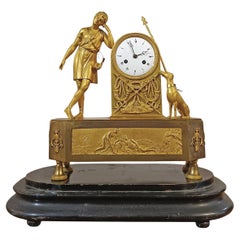
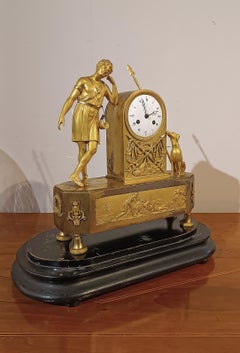
LATE 18th CENTURY GILT BRONZE CLOCK WITH ADONIS

LATE 18th CENTURY GILT BRONZE CLOCK WITH ADONIS

Located in Firenze, FI

Elegant gilt bronze clock, mounted on an ebonized wooden base and featuring a protective glass bell. The clock is decorated with a statuesque figure on the left, identifiable as Adon...

Category

Late 18th Century French Neoclassical Antique Ebonized Decorative Objects

Materials

Bronze

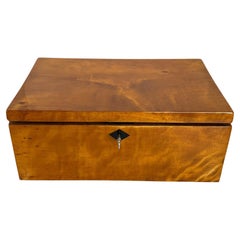
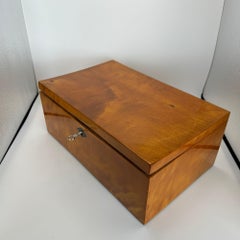
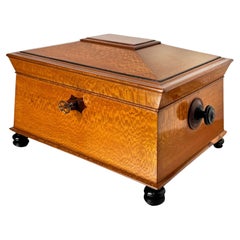
Late Biedermeier Box, Birch Solid Wood, Northern Germany, circa 1840

Late Biedermeier Box, Birch Solid Wood, Northern Germany, circa 1840

Located in Regensburg, DE

Beautiful, unadorned late Biedermeier casket box made of solid birch wood from northern Germany, circa 1840. * Ebonized diamond as key crest. * Original brass lock and hinges. * Insi...

Category

1840s German Biedermeier Antique Ebonized Decorative Objects

Materials

Brass

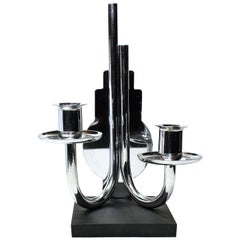
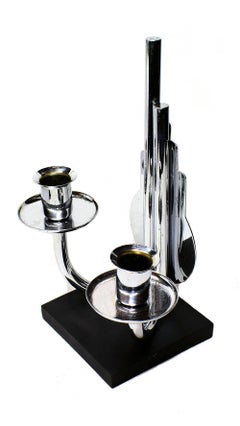
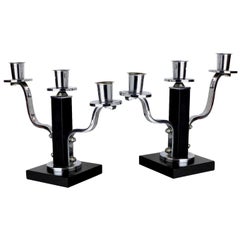
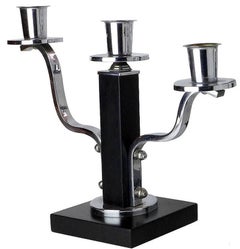
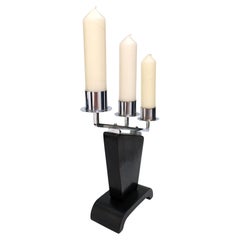
High Style Modernist Art Deco Candlestick

High Style Modernist Art Deco Candlestick

Located in Devon, England

Modernist Art Deco candelabra in lacquered ebonised wood and chromed metal. Dating to the 1930s and originating from Belgium. The condition of the chromium is very good but does sho...

Category

Mid-20th Century Belgian Art Deco Ebonized Decorative Objects

Materials

Chrome

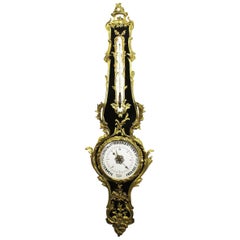
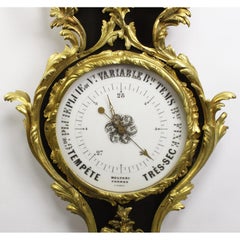
French 19th Century Louis XV Style Gilt-Bronze and Ebonized Wood Wall Barometer

French 19th Century Louis XV Style Gilt-Bronze and Ebonized Wood Wall Barometer

Located in Los Angeles, CA

A fine French 19th century Louis XV style gilt-bronze and ebonized wood wall-mounting barometer - thermometer by Molteni Frères. The elongated ebonized body surmounted with gilt-bron...

Category

19th Century French Louis XV Antique Ebonized Decorative Objects

Materials

Bronze

High Style Pair of Modernist Art Deco Candlesticks

High Style Pair of Modernist Art Deco Candlesticks

Located in Devon, England

Modernist Art Deco pair of matching candelabra in lacquered ebonized wood and chromed metal. Dating to the 1930s and originating from Belgium. The condition of the chromium is excel...

Category

Mid-20th Century Belgian Art Deco Ebonized Decorative Objects

Materials

Chrome

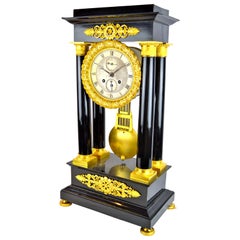
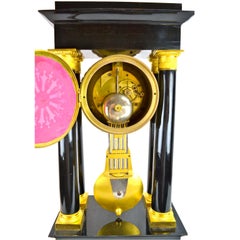
19th Century French Louis Philippe Ebonized Wood and Gilt Bronze Portico Clock

19th Century French Louis Philippe Ebonized Wood and Gilt Bronze Portico Clock

Located in Vancouver, British Columbia

A large and impressive French Louis Philippe portico clock with complications. The ebonized wood case richly embellished with gilded bronze mounts; the 5? silvered dial with roman nu...

Category

Late 19th Century French Louis Philippe Antique Ebonized Decorative Objects

Materials

Wood

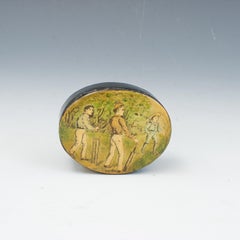
Ebonised Oval Snuff Box With Cricket Scene on The Lid.

Ebonised Oval Snuff Box With Cricket Scene on The Lid.

Located in Oxfordshire, GB

Ebonised Papier Mache Cricket Snuff Box. A black lacquered oval Papier-mâché snuff box with hinged lid with cricket scene. The scene depicting a group of boys playing cricket. A rare...

Category

Late 19th Century Sporting Art Antique Ebonized Decorative Objects
Materials

Wood

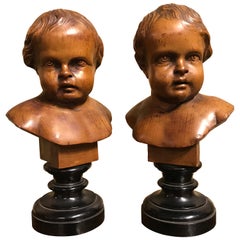
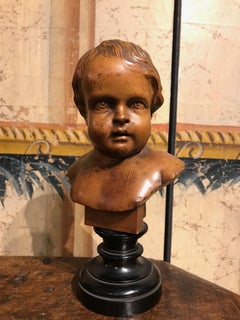
Pair 19th Century Baroque Style German Carved Wood Busts of Putti

Pair 19th Century Baroque Style German Carved Wood Busts of Putti

Located in Stamford, CT

A fine pair of carved fruit wood busts of young boys, or putti, South Germany, late 19th century. The realistically carved faces showing distinct personalities and intense gazes. Mou...

Category

Late 19th Century German Neoclassical Antique Ebonized Decorative Objects
Materials

Fruitwood

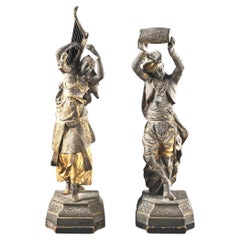
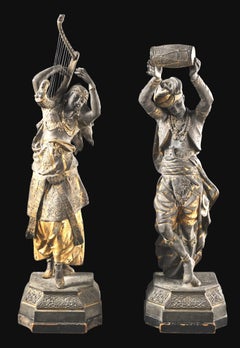
An Impressive Pair of 19th Century Orientalist Spelter Figures, After A. Waagen

An Impressive Pair of 19th Century Orientalist Spelter Figures, After A. Waagen

By Max Arthur Waagen

Located in Ottawa, Ontario

An impressively large & well cast pair of Orientalist figures depicting a pair of Middle Eastern male & female musicians attired in traditional costume. Both figures are mode...

Category

Late 19th Century French Other Antique Ebonized Decorative Objects
Materials

Spelter

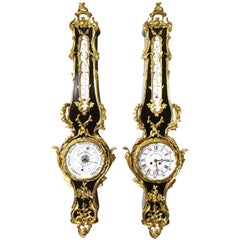
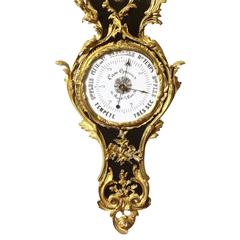
Pair of French 19th Century Louis XV Style Ebonized Cartel Clock and Barometer

Pair of French 19th Century Louis XV Style Ebonized Cartel Clock and Barometer

By CAM Opticien

Located in Los Angeles, CA

A very fine and palatial pair of French 19th- 20th century Louis XV style ebonized and gilt bronze-mounted cartel clock and matching barometer by La Maison Cam Opticien. The pair sim...

Category

1890s French Louis XV Antique Ebonized Decorative Objects
Materials

Bronze

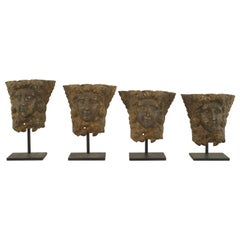
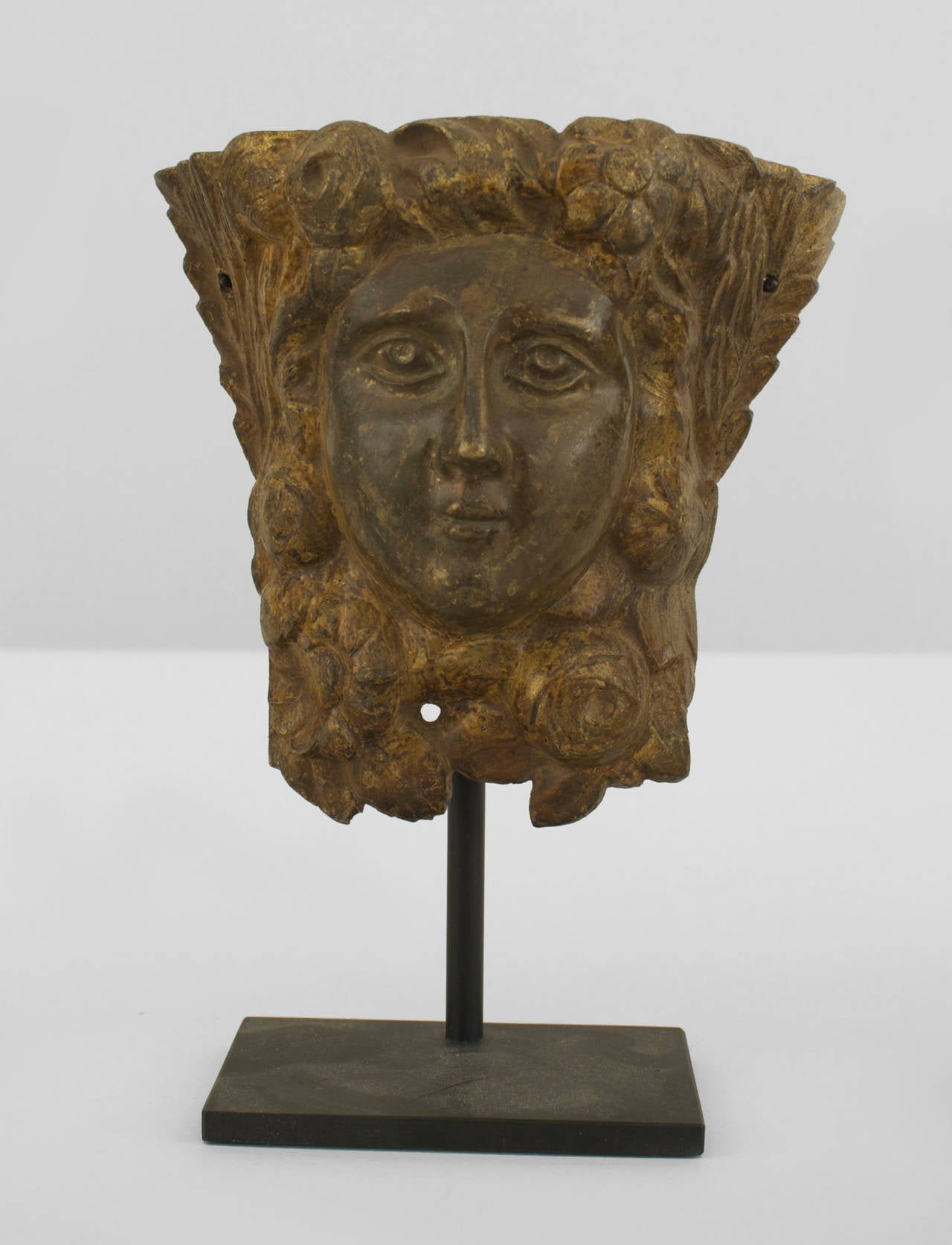
4 Neo-Classic Bronze Woman's Masks

4 Neo-Classic Bronze Woman's Masks

Located in Queens, NY

4 Italian Neo-classic (19th Cent) bronze masks of a classical woman's face mounted on a modern ebonized metal rectangular base. (PRICED EACH) (Vary in height from 7" - 8/5")

Category

19th Century Italian Neoclassical Antique Ebonized Decorative Objects

Materials

Bronze, Metal

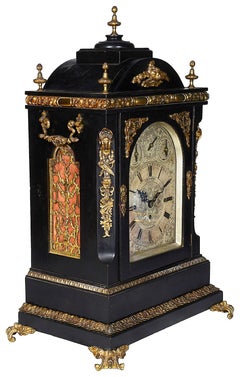
19th Century Westminster chiming mantel clock

19th Century Westminster chiming mantel clock

By James Worrel Clarke

Located in Brighton, Sussex

A very good quality late 19th Century ebonised Victorian silvered dial mantel clock, with Westminster chime on 8 bells or gong. Having a strike / silent dial, an eight day duration movement, striking on every quarter hour. The ebonised case with gilded ormolu mounts, mouldings and finials and raised on scrolling feet. Maker J.W.Clarke . 55 Long Acre...

Category

Late 19th Century English Victorian Antique Ebonized Decorative Objects
Materials

Mahogany

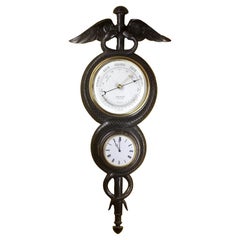
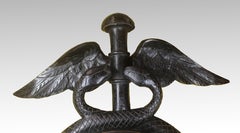
Clock and Barometer in the Shape of a Caduceus

Clock and Barometer in the Shape of a Caduceus

Located in Amersham, GB

An aneroid barometer and timepiece clock movement in an unusual ebonised oak case in the form of a Caduceus (the staff of Hermes or a herald). With...

Category

1890s English Victorian Antique Ebonized Decorative Objects
Materials

Brass, Steel

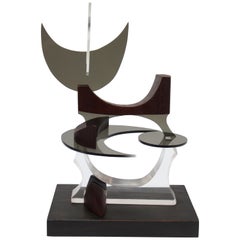
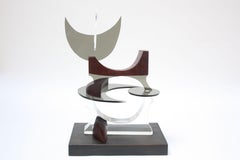
Vintage Acrylic and Teak Abstract Cat Sculpture by Robert D. Harvey

Vintage Acrylic and Teak Abstract Cat Sculpture by Robert D. Harvey

Located in Brooklyn, NY

Robert D. Harvey (b. 1927-2015 - Marshfield, MA, USA) abstract sculpture composed of cut acrylic / Lucite (both smoked and transparent) and sculpted walnut assembled to represent a c...

Category

1970s American Mid-Century Modern Vintage Ebonized Decorative Objects

Materials

Acrylic, Lucite, Walnut, Pine

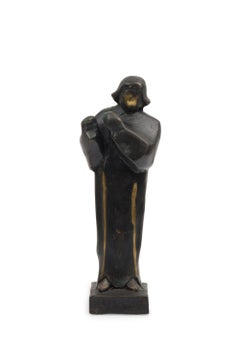
"The Wait" Limited Edition Bronze Brutalist Contemporary Figural Sculpture

"The Wait" Limited Edition Bronze Brutalist Contemporary Figural Sculpture

Located in Queens, NY

Contemporary hand-forged bronze Brutalist-inspired figural sculpture in an idle standing pose finished in an ebonized patina (PRICED EACH). (\"THE WAIT\" - Limited Edition of 10) Ea...

Category

20th Century American Modern Ebonized Decorative Objects

Materials

Bronze

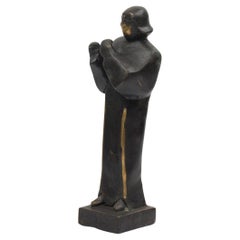
"The Preacher" Limited Edition Bronze Brutalist Contemporary Figural Sculpture

"The Preacher" Limited Edition Bronze Brutalist Contemporary Figural Sculpture

Located in Queens, NY

Contemporary hand-forged bronze Brutalist-inspired figural sculpture depicting a preacher finished in an ebonized patina (PRICED EACH). (\"THE PREACHER\" - Limited Edition of 10) Ea...

Category

20th Century American Modern Ebonized Decorative Objects

Materials

Bronze

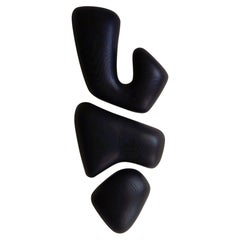
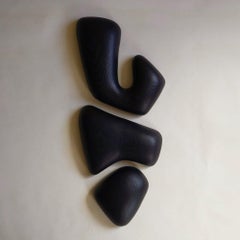
Urbmon 102 Wall Hanging Sculpture by Chandler McLellan

Urbmon 102 Wall Hanging Sculpture by Chandler McLellan

Located in Geneve, CH

Urbmon 102 Wall Hanging Sculpture by Chandler McLellan Dimensions: W 40 x H 119,4 cm. Materials: Ebonized oak. Chandler McLellan I was born in 1993 in Fort Wayne, Indiana. I am a t...

Category

2010s American Modern Ebonized Decorative Objects

Materials

Oak

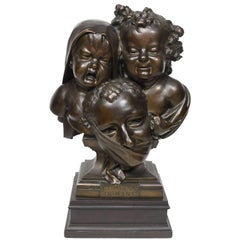
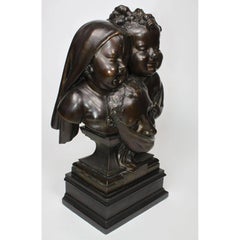
French 19th Century Patinated Bronze "Comedia Humana" after Jean Barnabé Amy

French 19th Century Patinated Bronze "Comedia Humana" after Jean Barnabé Amy

By Jean Barnabé Amy

Located in Los Angeles, CA

Jean Barnabé Amy (French, 1839-1907) a fine French 19th century dark-brown patinated bronze group titled "Comedia Humana" (Human Comedy - Comedie Huma...

Category

Late 19th Century French Greco Roman Antique Ebonized Decorative Objects
Materials

Bronze

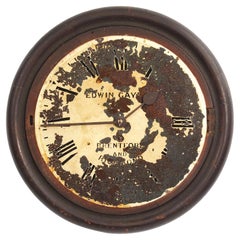
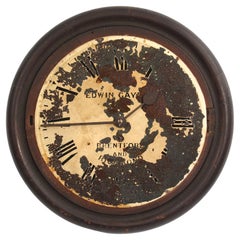
Antique English IRON Clock Dial Face Industrial EDWIN GAY RICHMOND Fully Working

Antique English IRON Clock Dial Face Industrial EDWIN GAY RICHMOND Fully Working

Located in Belper, Derbyshire

A lovely antique painted iron clock dial signed 'EDWIN GAY**, BRENTFORD and RICHMOND' and dating from circa 1890. As reclaimed by our buyer from a derelict building, it bares the sca...

Category

19th Century English Industrial Antique Ebonized Decorative Objects
Materials

Iron

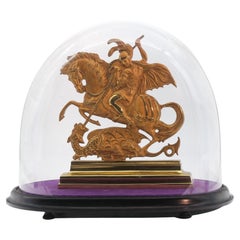
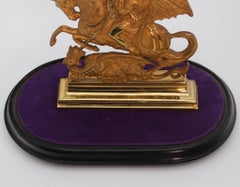
19th Century Bronze & Ormolu Saint George & The Dragon In Domed Glass Cloche

19th Century Bronze & Ormolu Saint George & The Dragon In Domed Glass Cloche

Located in Norwich, GB

19th century patinated bronze and ormolu highlighted Saint George and the Dragon, set on a purple velvet base and ebonised plinth with bun feet. Cased in a glass cloche. Circa 1860. ...

Category

19th Century British Victorian Antique Ebonized Decorative Objects
Materials

Bronze

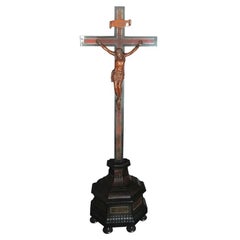
Early 20th Century Carved Limewood & Ebony Jesus on Cross Sculpture

Early 20th Century Carved Limewood & Ebony Jesus on Cross Sculpture

Located in Sarasota, FL

An intricate sculpture of Jesus on the cross. Jesus is finely carved from limewood on a limewood and ebonized mahogany cross. A richly beveled base is inset with limewood panels and ...

Category

Early 20th Century Italian Art Deco Ebonized Decorative Objects
Materials

Mahogany, Softwood

Historicism Box, Floral Ash Veneer, Rosewood, Austria circa 1880

Historicism Box, Floral Ash Veneer, Rosewood, Austria circa 1880

Located in Regensburg, DE

Beautiful restored Historicism Box or small Chest, Floral Ash Veneer from Austria, Vienna Late 19th Century, circa 1880 Flower ash veneered on softwood with rosewood inlays. Ebonized...

Category

1880s Austrian Antique Ebonized Decorative Objects
Materials

Brass

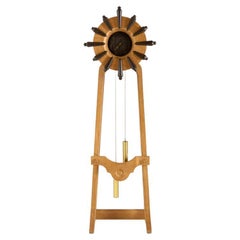
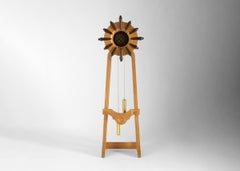
Guillerme et Chambron, Tall Oak Clock, France, Mid-20th Century

Guillerme et Chambron, Tall Oak Clock, France, Mid-20th Century

By Guillerme et Chambron, Votre Maison

Located in New York, NY

Guillerme placed equal emphasis on function and aesthetics, creating an aesthetic as staid as it was arresting. While his work was in many ways distinctively conservative and recogni...

Category

Mid-20th Century French Mid-Century Modern Ebonized Decorative Objects
Materials

Oak

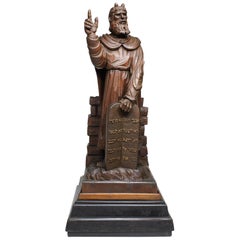
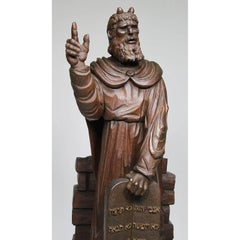
19th-20th Century Renaissance Carved Wood Judica Figure of Michelangelo's Moses

19th-20th Century Renaissance Carved Wood Judica Figure of Michelangelo's Moses

By Michelangelo Buonarroti

Located in Los Angeles, CA

A fine and large continental 19th-20th century Renaissance revival carved walnut judica figure of "Moses with the Ten Commandments". The baroque wood carving...

Category

Early 20th Century Spanish Renaissance Revival Ebonized Decorative Objects
Materials

Wood, Walnut

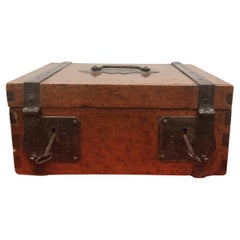
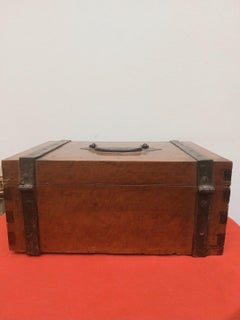
Small walnut briar chest with iron reinforcements with double locks

Small walnut briar chest with iron reinforcements with double locks

Located in Milano, IT

The chest presented here consists of interlocking solid wood base, but the structure is strengthened by two iron bands running across its four faces at the back, top, bottom, and fro...

Category

18th Century Italian Louis XIV Antique Ebonized Decorative Objects
Materials

Wrought Iron

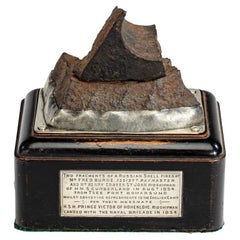
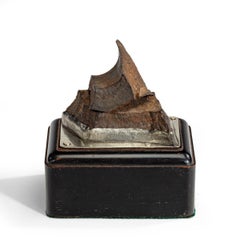
Count Gleichen’s shrapnel paperweight. Russian and English, 1854

Count Gleichen’s shrapnel paperweight. Russian and English, 1854

Located in Lymington, Hampshire

Count Gleichen’s Russian shell paperweight, the tooth shaped fragment of a Russian armament shell set above another of rectangular form both raised on a silver mount on an ebonized rectangular plinth, applied with a plaque reading ‘Two fragments of a Russian shell fired at Mr Fred Burne assist.t paymaster and Mr Henry Crave St John midshipman of H.M.S. Cumberland in Aug.t 1854 from Tsee Fort Bonarsund whilst conveying refreshments to the English camp – for their messmate – H.S.H. Prince Victor of Hohenlohe Midshipman landed with the Naval Brigade in 1854’. With a framed caricature of Count Gleichen inscribed Vanity Fair, London, July 5, 1884. Vice Admiral H.S.H Count Gleichen – the Queen’s Nephew.Russian and English, 1854. The print has the following biography on the reverse and on the mount ‘His Serene Highness Prince Victor …. of Hohenlohe-Langenburg, is better known in England as Count Gleichen and as the Queen’s nephew. Born fifty years ago, he was sent to school at Dresden; but at the age of fourteen he conceived ideas not to be bounded within the confines of the small life of a German principality. So he ran away from school to go to sea, and his aunt the Queen of England, being informed of the fact, proposed to her sister to let her adventurous nephew become naturalised as an Englishman and enter the English Navy. This was accordingly done, and Prince Victor, as he was then called, was appointed to the Powerful on the Mediterranean Station, in 1848. He served in the Crimean War and in the operations in China he proved a popular officer and a good sailor-man, and was three times wounded in battle. In 1861 he married the daughter of Admiral Sir George Seymour, sister of the fifth Marquis of Hertford on which occasion it was that he put down his title of Prince and took up for future use that of Count. He became, in due course a Vice-Admiral, and in the meantime he also became a sculptor. It is in the latter art that he now mainly busies himself, and he has created many pleasing busts of his royal relatives and some works of greater pretensions than family portraits. An Alfred the Great, a Beaconsfield, and a Prince Imperial...

Category

1880s English Antique Ebonized Decorative Objects
Materials

Metal, Silver

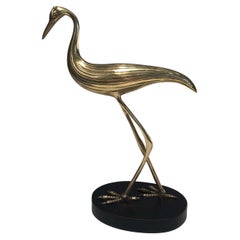
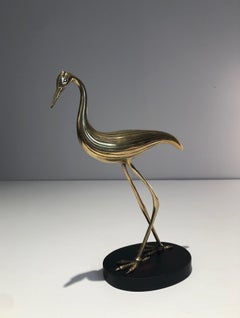
Stylish Brass Bird on a Blackened Base, French Work, Circa 1970

Stylish Brass Bird on a Blackened Base, French Work, Circa 1970

Located in Marcq-en-Barœul, Hauts-de-France

This stylish bird is made of brass on a blackened base. This is a French work. Circa 1970.

Category

1970s French Mid-Century Modern Vintage Ebonized Decorative Objects
Materials

Brass

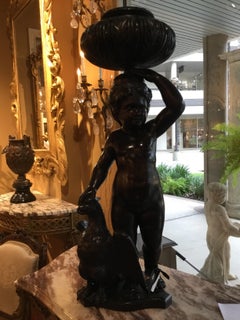
Pair of Antique Italian Ebonized Wooden Carved Figures/ Jardinières

Pair of Antique Italian Ebonized Wooden Carved Figures/ Jardinières

Located in Houston, TX

Exceptional pair of carvings of putti holding a jardinière above their heads. Great carvings of figures with a bird at the foot of one of the figures and an animal blanket at the foot of the other figure. Great carving without problems. Great for an entry or architectural niche.

Category

Late 19th Century Italian Antique Ebonized Decorative Objects
Materials

Hardwood

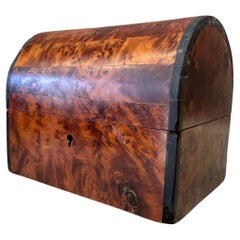
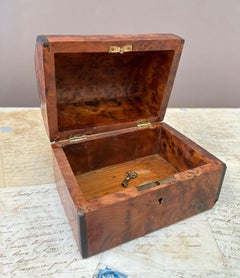
Late 19th Century French Dome-Top Burled Amboyna and Ebony Box with Original Key

Late 19th Century French Dome-Top Burled Amboyna and Ebony Box with Original Key

Located in Middleburg, VA

An elegant late 19th-century French dome-top box, made circa 1900 and constructed from beautifully burled amboyna wood. Renowned for its striking grain and warm, glowing patina, the ...

Category

Early 20th Century Spanish French Provincial Ebonized Decorative Objects
Materials

Metal, Brass

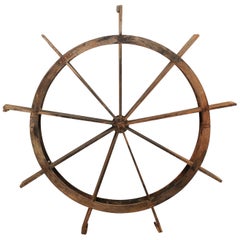
Early 20th Century Wood Water Wheel from Kerala, India

Early 20th Century Wood Water Wheel from Kerala, India

Located in Atlanta, GA

A large antique water wheel from Kerala, India. This Kerala water wheel which stands approximately 6.75 ft tall, also known as a "chakram chavittal...

Category

20th Century Indian Ebonized Decorative Objects
Materials

Metal