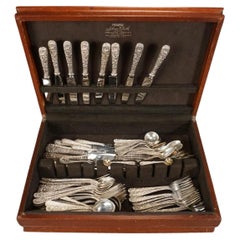
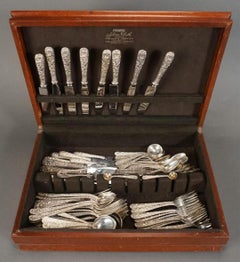
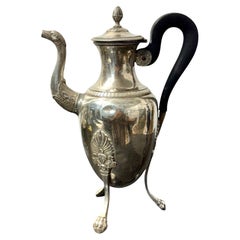
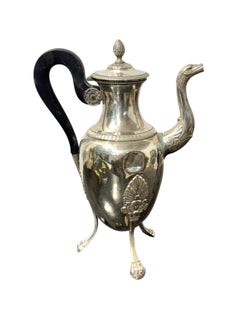
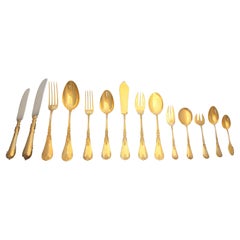
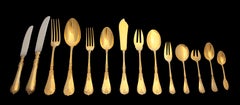
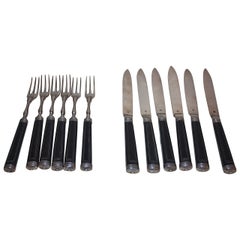
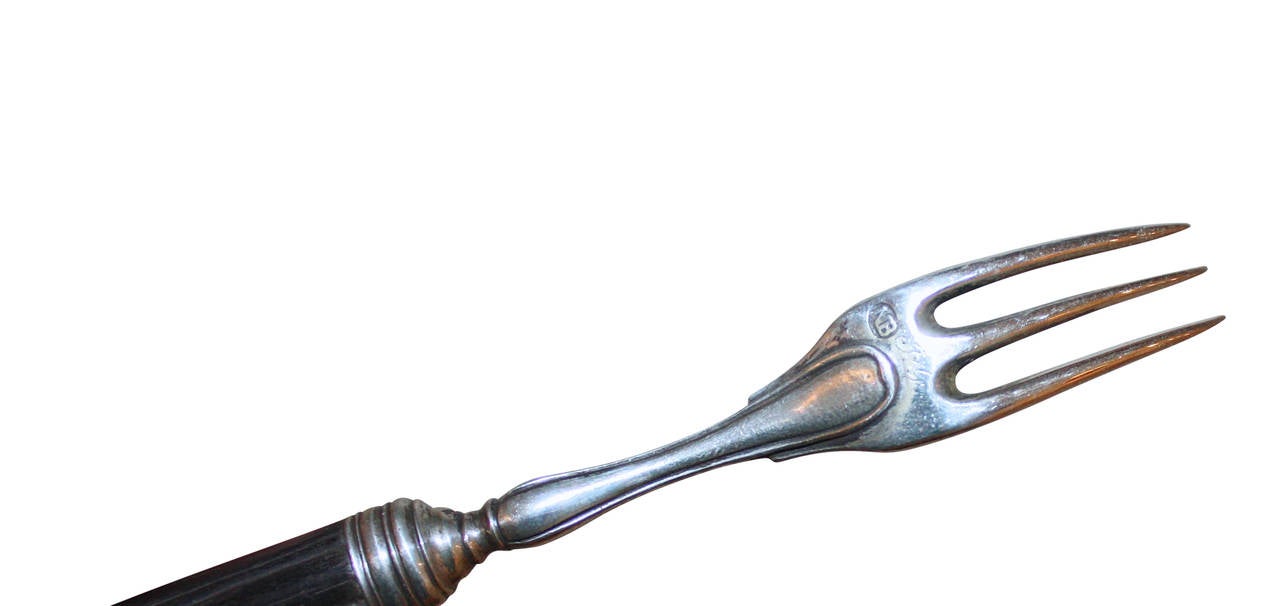
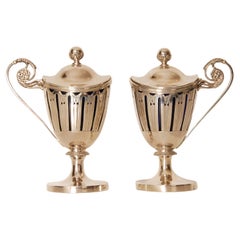
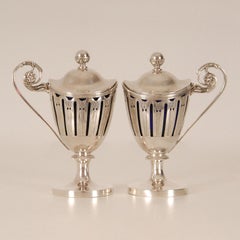
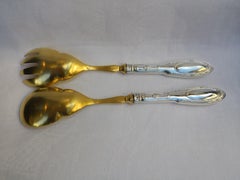
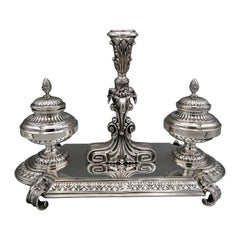
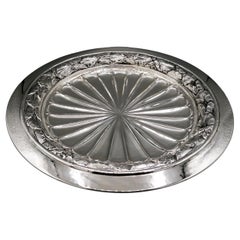
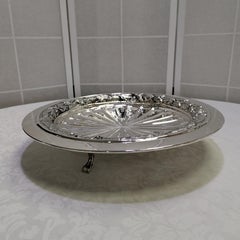
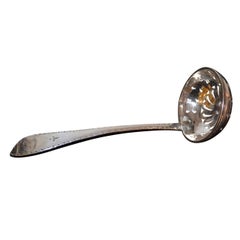
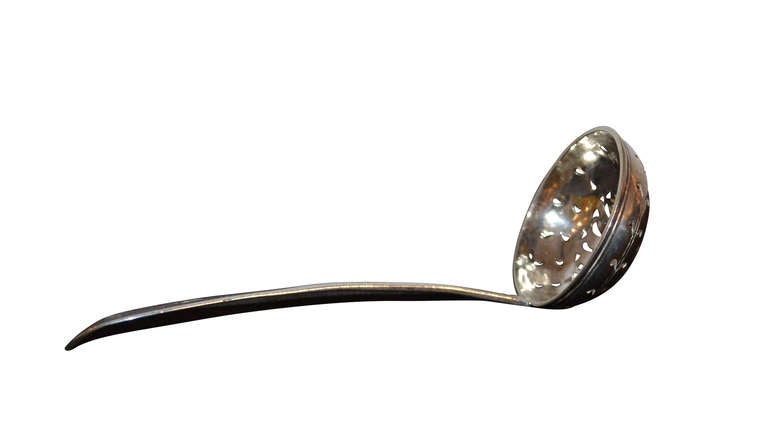
Societe Parisienne d'Orfevrerie (Odiot) - 184pc. French Vermeil Flatware Set
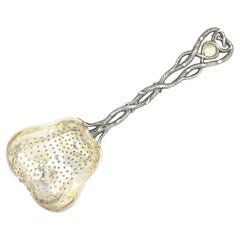
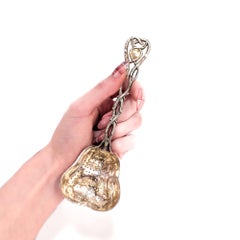
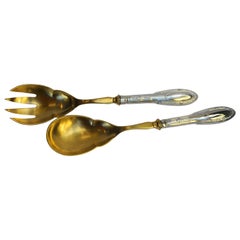
Direct from France: Direct from a private chateau near Paris, a stunning 184pc. gold plated sterling silver (vermeil) flatware set by internationally known French silversmiths "Societe Parisienne d'Orfevrerie" complete with original 6-drawer storage cabinet and 16 magnificent serving pieces, superb condition - circa 1911 and no monograms. The annals of 19th century French silverware bear witness to numerous illustrious workshops, yet few achieved the remarkable synthesis of technical mastery, artistic innovation, and aristocratic prestige as the Société Parisienne d'Orfèvrerie. Founded by Odiot during the flourishing years of the Second Empire, this distinguished Parisian firm carved its legacy through exceptional creations in gold-plated 950 sterling silver, known as vermeil, particularly in the realm of flatware. While maintaining its distinct identity, the firm's close association with the legendary Odiot dynasty - through shared master craftsmen, parallel design philosophies, and overlapping aristocratic patronage - positioned it among the foremost creators of luxury tableware in nineteenth-century Europe.
The Early Years: The emergence of Société Parisienne d'Orfèvrerie coincided with a period of remarkable innovation in French decorative arts during the mid-nineteenth century. Though lacking the multi-generational heritage of the Odiot dynasty, which traced its origins to 1690, SPO rapidly ascended to prominence by adopting and adapting the exacting standards that had made Odiot synonymous with excellence in European silverware. This connection manifested most significantly through the migration of skilled artisans between workshops, as numerous master silversmiths who had trained in Odiot's ateliers brought their expertise to SPO's benches. These craftsmen carried with them not only technical knowledge but also the aesthetic sensibilities that defined French high silverwork during this golden age.
What set Société Parisienne d'Orfèvrerie apart was its particular specialization in vermeil, the art of gold-plating sterling silver. While Odiot certainly produced vermeil pieces among its vast output, SPO made this technique a defining characteristic of its production, particularly in flatware. The process demanded extraordinary precision, involving the plating of 950 sterling silver - an alloy of exceptional purity containing 95% fine silver - with a substantial layer of 24-karat gold. This marriage of precious metals created tableware that combined the structural integrity and luminous quality of silver with the sumptuous warmth of gold, resulting in pieces that glowed with rich, deep radiance. The technical challenges of this process were considerable, requiring perfect preparation of the silver surface and meticulous control of the gilding bath to ensure even, durable coverage that would withstand generations of use.
Master Craftsman in Vermeil: The foundation of SPO's flatware excellence lay in its uncompromising approach to materials and technique. In an era when many manufacturers had begun adopting the 925-sterling standard for economic reasons, SPO remained steadfast in its use of 950 silver, a purer alloy that offered superior workability and a distinctive luminous quality. This higher silver content not only enhanced the metal's natural brilliance but also provided greater resistance to the stresses of daily use, ensuring that pieces maintained their structural integrity over decades of service. The gold plating process itself represented a triumph of French electrochemical innovation, with SPO's craftsmen perfecting a technique that deposited a substantially thicker and more durable layer of gold than conventional gilding methods.
Each component in an SPO flatware service represented countless hours of skilled labor, beginning with the careful forging of blanks that would be transformed through a series of specialized processes. Master chasers employed repoussé techniques to create intricate decorative motifs on handles, working from the reverse side to produce low-relief designs of floral arrangements, mythological scenes, or geometric patterns. Engravers then refined these elements, adding delicate details that brought the designs to life with astonishing realism. The functional elements of each piece received equal attention, with blades and bowls carefully balanced for optimal weight distribution and ergonomic comfort. A single place setting might require weeks of work from multiple specialists, each contributing their expertise to create a harmonious whole.
The most elaborate commissions incorporated personalized elements that transformed functional tableware into bespoke works of art. Aristocratic clients frequently requested custom monograms or family crests, often executed in exquisite detail with additional embellishments of enamel or precious stones. These personalized touches not only demonstrated the owner's status but also served as a testament to SPO's ability to accommodate the most discerning tastes. The firm's workshops maintained extensive pattern books containing hundreds of design variations, allowing for nearly infinite customization while maintaining the cohesive aesthetic that defined SPO's output.
A Favorite of European Royalty: Like its esteemed counterpart Odiot, Société Parisienne d'Orfèvrerie enjoyed considerable favor among European royalty and aristocracy, particularly during the reign of Napoleon III. The Second Empire court's appetite for lavish tableware created ideal conditions for SPO's ascent, with the firm's vermeil flatware becoming a particular favorite for state banquets and diplomatic gifts. The inherent qualities of vermeil - its resistance to tarnishing in humid conditions and its opulent visual appeal - made it especially desirable among the international elite who frequented Paris during this period of unprecedented luxury.
Among SPO's most illustrious commissions was a comprehensive twelve-place vermeil service created for Empress Eugénie, wife of Napoleon III. This magnificent ensemble exemplified the rococo revival style favored by the imperial court, with each piece featuring elaborate rocaille scrollwork intertwined with naturalistic vine motifs. The service's attention to detail extended to its specialized pieces, including fish servers with delicately pierced blades and sauce ladles with perfectly balanced handles. Another significant patron, Tsar Alexander II of Russia, commissioned a vermeil flatware service featuring Cyrillic monograms and subtle references to traditional Russian decorative arts, demonstrating SPO's ability to adapt its designs to diverse cultural preferences.
The firm's clientele extended beyond imperial courts to include the rising financial and industrial elites of the period. American magnates touring Europe, British aristocrats refreshing their country estates, and the newly wealthy bourgeoisie of Paris all sought SPO's creations as tangible symbols of their refined taste and social standing. This broad appeal stemmed from SPO's unique position at the intersection of traditional craftsmanship and innovative production techniques, allowing it to meet the exacting standards of old-world aristocracy while satisfying the practical demands of modern entertaining.
Awards and Accolades: The excellence of Société Parisienne d'Orfèvrerie's creations received formal recognition at the great international exhibitions that served as showcases for industrial and artistic achievement throughout the nineteenth century. The 1855 Paris Exposition Universelle marked a watershed moment for the firm, where its exhibition of vermeil flatware earned a gold medal and lavish praise from the international jury. Contemporary accounts particularly noted the flawless execution of the gilding and the ergonomic perfection of each piece, with one critic remarking that the flatware seemed to "anticipate the hand's movements before being lifted."
Subsequent appearances at the 1862 London International Exhibition and the 1867 Paris World's Fair further cemented SPO's reputation as a leader in luxury flatware...
Category
Early 20th Century Empire Sterling Silver
MaterialsVermeil, Sterling Silver