Located in Amsterdam, Noord Holland
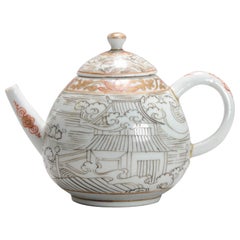
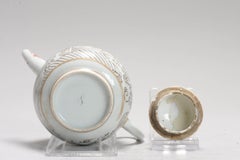
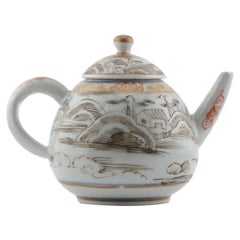
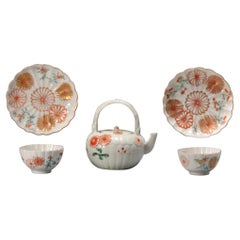
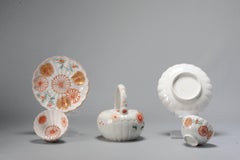
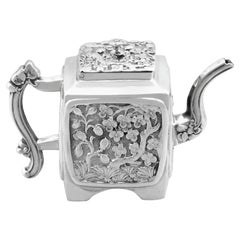
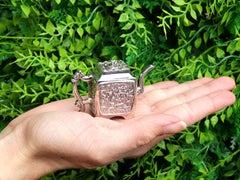
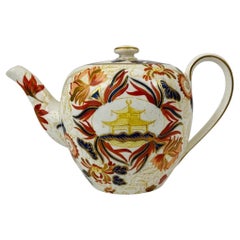
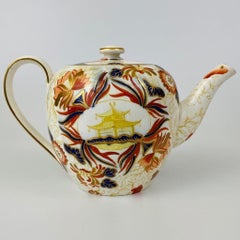
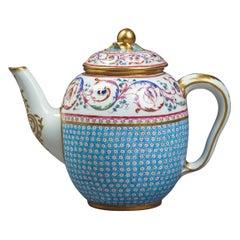
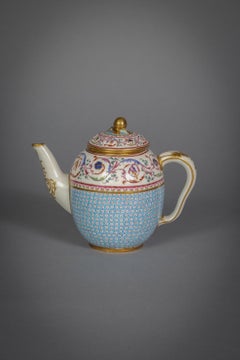
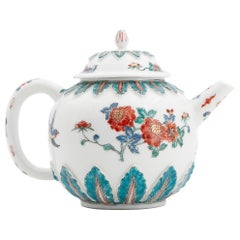
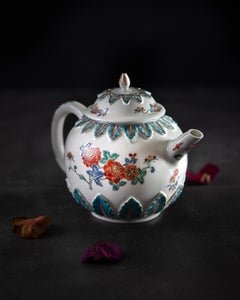
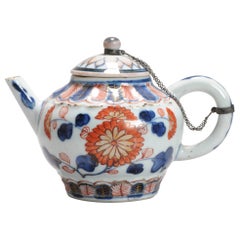
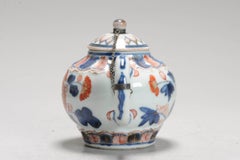
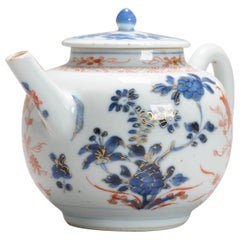
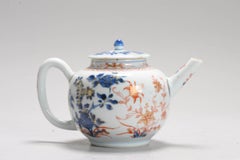
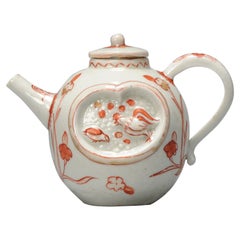
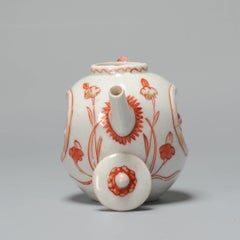
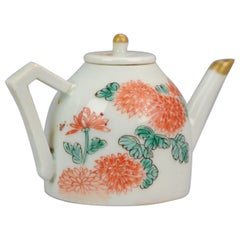
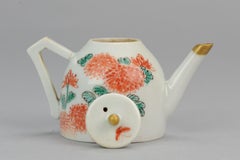
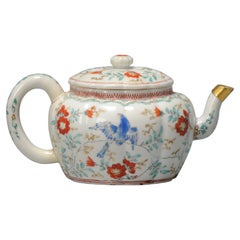
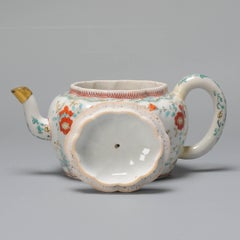
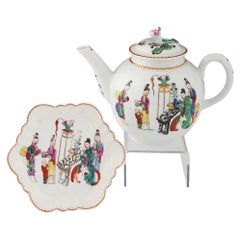
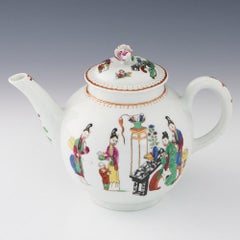
Small teapot, square, rounded body on flat unglazed base. Curved handle and a short straight spout. Small upright mouthrim, flat lid with round knob. Imari decorated in iron-red and gold on the sides with flowering plants and grasses and two deeply recessed kidney-shaped panels with modelled decorations in high relief. One panel with a cock, chicken and two eggs on the other a bird perched on a branch of a prunus tree. Round the base of the spout an upturned pointed leaves pattern border. On the handle a floret between scrolls. On the cover round the base of the knob a leaves pattern border in low relief.
In category 36 'Coloured Imari with no underglaze blue, iron-red and gold only' of his Japanese export porcelain, Impey states that the implication of this singular restriction of palette, without the use of underglaze blue, is that these may be the product of a single enamelling workshop, but may or may not be the product of a single kiln. The restriction is probably one of choice, for it would hardly be cheaper, if at all, to use a wider range of enamels, and no cheaper to use underglaze blue.
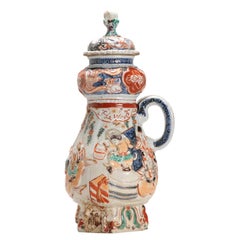
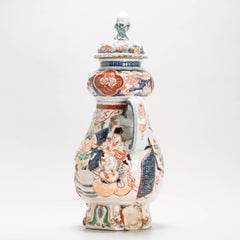
Bottles, vases, teapots and other objects with similar recessed panels that form a kind of window through to a deeper picture layer were only produced for a short period. This was probably because they were too time-consuming to make and therefore expensive. This type of decoration is only found on Japanese pieces; Chinese imitations are still unknown.
Japanese Imari objects decorated in a low relief are rare. In 'Fine & Curious' a bottle cat...
Category
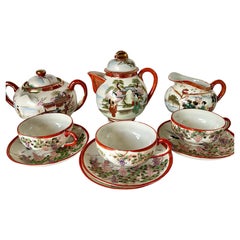
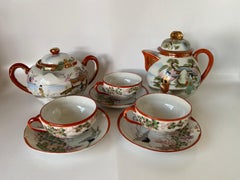
Japanese Antique 17th Century Tea Sets