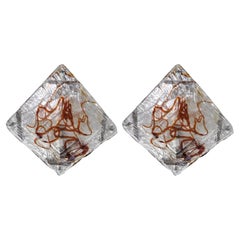
Selection of Modernist Sconces
About the Item
- Creator:Curtis Jeré (Designer),Arteluce (Manufacturer)
- Dimensions:Height: 12.25 in (31.12 cm)Width: 9 in (22.86 cm)Depth: 9.5 in (24.13 cm)
- Style:Mid-Century Modern (Of the Period)
- Materials and Techniques:
- Place of Origin:
- Period:
- Date of Manufacture:1960s
- Condition:Wear consistent with age and use. Very good condition. Retaining original patina and wear. Minor surface scratches, age spotting, and wear. Rewired and ready to use.
- Seller Location:Atlanta, GA
- Reference Number:1stDibs: LU87183617762
Curtis Jeré
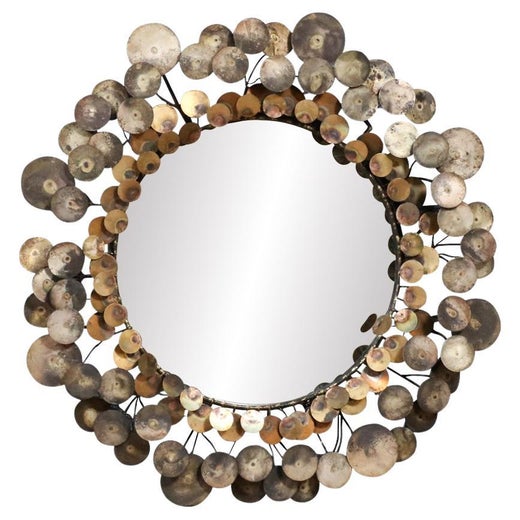
Though the name Curtis Jeré is familiar to many as the maker of ebullient and eccentric modern design from the 1960s and ‘70s, relatively few are aware that it is a pseudonym for the design team of Curtis Freiler and Jerry Fels. Together, the two created some of the most striking and vivid furnishings and decorative objects of their era, from sculptures and dynamically framed mirrors, to lighting and wall decorations.
New Yorkers Freiler and Fels had collaborated for two decades on small jewelry lines before launching a design company called Artisan House in 1964. They combined variants of their names to create an artful persona — sometimes shortened to C. Jeré; the "surname" is pronounced with a rising inflection: jhayr-EH — that stood behind large-scale decorative metalwork, marked by semi-abstract petal forms with burnt and brazed edges. Fels served as head of design, and Freiler, known for his keen handiwork, was the production chief. The pair’s eclectic metalwork has captivated decorative art collectors and interior designers ever since.
The work of Curtis Jeré displays a sense of playfulness and curiosity, while drawing on inspirations and themes that include flowers, discs, geometric forms and animal figures. Freiler and Fels had a masterful ability to work with different materials, such as patinated brass and brilliant chrome.
The price of a Curtis Jeré mirror, lamp, wall-mounted sculpture or tabletop sculpture can range from $400 to $12,000, depending on the size, the rarity of the piece, the intricacy of the metalwork and the materials used in its construction. Other factors like condition can affect the perceived value and, thus, the cost of works by Curtis Jeré.
As you will see on 1stDibs, the imaginative powers of the designers of Curtis Jeré pieces were boundless, and their creations will add a dash of verve in any room.
Arteluce
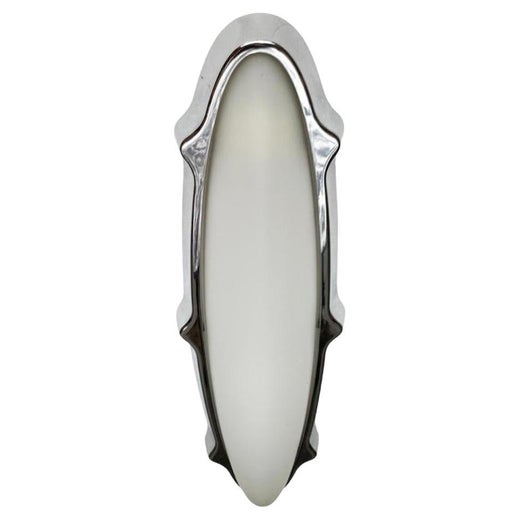
The lighting maker Arteluce was one of the companies at the heart of the creative explosion in postwar Italian design. The firm’s founder and guiding spirit, Gino Sarfatti (1912–85), was an incessant technical and stylistic innovator who almost single-handedly reinvented the chandelier as a modernist lighting form.
Sarfatti attended the University of Genoa to study aeronautical engineering but was forced to drop out when his father’s company went out of business. His mechanical instincts led him to turn his attention to lighting design — and he founded Arteluce as a small workshop in Milan in 1939. Sarfatti’s father was a Jew, so the family fled to Switzerland in 1943, but after the war — largely thanks to Sarfatti’s insistence on efficiency of design and manufacture — Arteluce quickly established itself as a top firm.
Though Sarfatti continued as chief designer through the 1950s and ’60s, he also enlisted other designers such as Franco Albini and Massimo Vignelli to contribute work. Sarfatti sold Arteluce to FLOS — a rival Italian lighting maker — in 1973 and retired to pursue a more traditional avocation: collecting and dealing rare postage stamps.
Sarfatti is regarded by many collectors as a pioneer of minimalist design. He pared down his lighting works to their essentials, focusing on practical aspects such as flexibility of use. His most famous light, the 2097 chandelier, is a brilliant example of reductive modernist design, featuring a central cylinder from which branches numerous supporting fixtures extending like spokes on a wheel.
Similarly, Sarfatti's 566 table lamp is a simple canister, able to be raised or lowered on a stem, holding a half-chrome bulb. Despite the marked functionality of his designs, Sarfatti did have a sprightly side: His 534 table lamp, with its cluster of rounded enameled shades, resembles a vase full of flowers, the Sputnik chandelier (model 2003) was inspired by fireworks and the brightly colored plastic disks of the 2072 chandelier look like lollipops. No matter the style, Sarfatti concentrated first and foremost on the character of light created — and any Arteluce lamp is a modernist masterpiece.
Find vintage Arteluce table lamps, chandeliers, floor lamps and other lighting on 1stDibs.
You May Also Like
20th Century German Mid-Century Modern Wall Lights and Sconces
Metal
1990s German Mid-Century Modern Wall Lights and Sconces
Brass
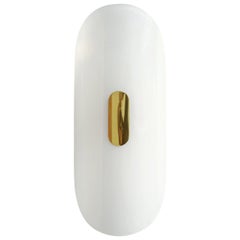
Mid-20th Century Belgian Minimalist Wall Lights and Sconces
Metal
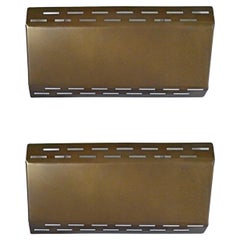
Mid-20th Century French Minimalist Wall Lights and Sconces
Iron, Nickel
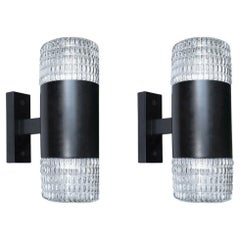
Mid-20th Century German Minimalist Wall Lights and Sconces
Brass, Iron
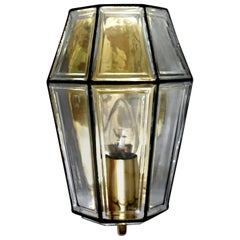
Mid-20th Century French Minimalist Wall Lights and Sconces
Iron, Nickel
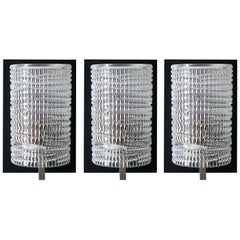
Mid-20th Century German Mid-Century Modern Wall Lights and Sconces
Brass
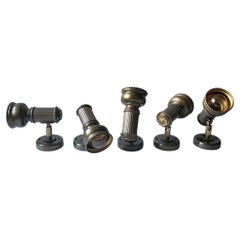
Vintage 1960s Italian Mid-Century Modern Flush Mount
Metal
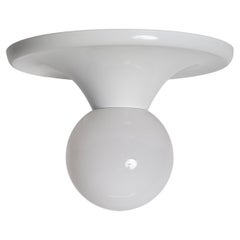
Vintage 1960s German Mid-Century Modern Wall Lights and Sconces
Metal
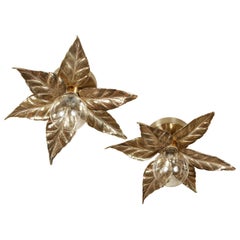
20th Century Italian Mid-Century Modern Wall Lights and Sconces
Nickel
More From This Seller
View AllVintage 1950s American Mid-Century Modern Paintings
Wood, Paper

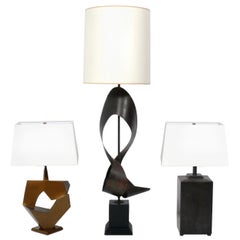
1990s American Mid-Century Modern Table Lamps
Metal, Bronze
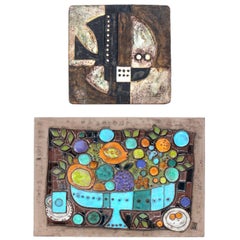
Vintage 1960s Swedish Mid-Century Modern Ceramics
Ceramic
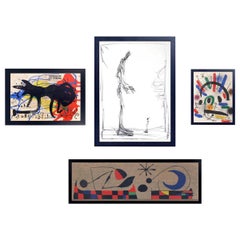
Vintage 1960s French Mid-Century Modern Prints
Glass, Paper, Wood
Vintage 1960s French Mid-Century Modern Prints
Glass, Wood, Paper
Vintage 1960s French Mid-Century Modern Prints
Glass, Wood, Paper